Key Takeaways
- Most water bottles custom programs start at 500-3,000 pcs MOQ, with 30-45 day lead time in Zhejiang
- 304 stainless steel bottles usually cost USD 2.10-4.80 FOB; Tritan can be USD 1.35-3.20
- For retail, a 0.8-1.0 mm steel wall and leak test at 0.3-0.5 bar matter more than a fancy render
- AQL 2.5 on critical defects and REACH-compliant materials are basic, not premium
If you are buying water bottles custom for retail, corporate gifts, sports programs, or ecommerce, the hard part is not finding a factory. It is picking a spec that ships on time, survives transit, and still looks on-brand after 6 months in the field. We see trouble when buyers lump every bottle together. They are not the same. Steel, Tritan, glass, and aluminum all behave differently, and caps, coatings, and print methods change the result fast.
Out of Zhejiang and the wider China drinkware chain, the good factories give you a clear MOQ, a straight lead time, and a spec sheet you can compare line by line. We run 24-hour lid leak checks and still see buyers send a PO with the cap code missing. That kind of typo costs time. If you want a canteen manufacturer, a canteen supplier, or a canteen factory to handle custom drinkware properly, start with use case, then decoration, then price. The math works that way.
Pick the bottle by use case
I’ll rewrite the section in place, keep the HTML intact, and tune the copy to sound like a factory-side sales engineer.Buyers comparing water bottles custom usually start with logo placement. That is the wrong order. Start with use case. The bottle that sells as a canteen promotional giveaway at a 500-person trade show can flop in hiking channels, and a clean office bottle can miss hard with a distributor promo. We run the same check on the line: body, lid, and finish have to match how the end user carries it, washes it, and closes it.
| Use case | Best body | Typical FOB | Why it fits |
|---|---|---|---|
| Corporate gift | 304 stainless vacuum bottle | USD 2.80-4.80 | Premium feel, strong branding |
| Fitness retail | Tritan or aluminum bottle | USD 1.35-3.40 | Light, visible contents, lower cost |
| Outdoor / camping | Single-wall steel or growler style | USD 2.10-5.20 | Durable, simple, easy to carry |
If you work with a canteen distributor or distributor drinkware program, put the use case in writing. QC pulled the sample on a 5 mm lid mismatch before packing, and that saved one buyer from a messy claim. The best canteen manufacturers in Zhejiang do not stop at a quote; they tell you which lid, coating, and carton spec cuts damage in transit. That beats a pretty 3D render. For a custom canteen order, a 5 mm handle shift or a 0.2 mm gasket change can decide whether the program ships clean or comes back as returns.
Compare materials head to head
I’ll rewrite the prose in place, keep the HTML and table structure intact, and make the wording sound like a factory-side sales engineer wrote it.The common mistake is treating “better” material as “better sales.” The math does not work that way. Material choice is a trade-off between weight, dent resistance, print finish, odor control, and landed cost. A canteen customizable order for a school promo ran cleaner in Tritan on our line, while a gift set buyer switched to steel after QC pulled the sample and found the PET look was too cheap. If you build a customizable drinkware range, compare the spec sheet, not the brochure language.
| Material | Pros | Watchouts | Good for |
|---|---|---|---|
| 304 stainless steel | Durable, premium, insulated options | Heavier, higher cost | Retail, gifts, travel |
| Tritan | Clear, lightweight, BPA-free | Scratch risk, lower heat tolerance | Sports, school, daily use |
| Aluminum | Light, low cost, recyclable image | Needs liner, dent-prone | Promotional volume, events |
| Glass | Clean taste, premium look | Breakage risk, packaging cost | Office, wellness, premium gift |
A solid canteen factory in China quotes wall thickness first, not just capacity. For steel, 0.4-0.5 mm fits value lines; 0.6-0.8 mm is the sweet spot for retail; 0.8-1.0 mm gives a firmer hand feel on premium SKUs. For customized drinkware, that gap changes vacuum retention, dent resistance, and print registration. We had one buyer flag a PO typo on a 500 ml SKU because the actual sample weighed 312 g, not the 280 g they expected. If you are sourcing a custom growler, ask whether the seam is laser welded or mechanically joined — the leak test and exterior finish are not the same.
Lids decide returns and complaints
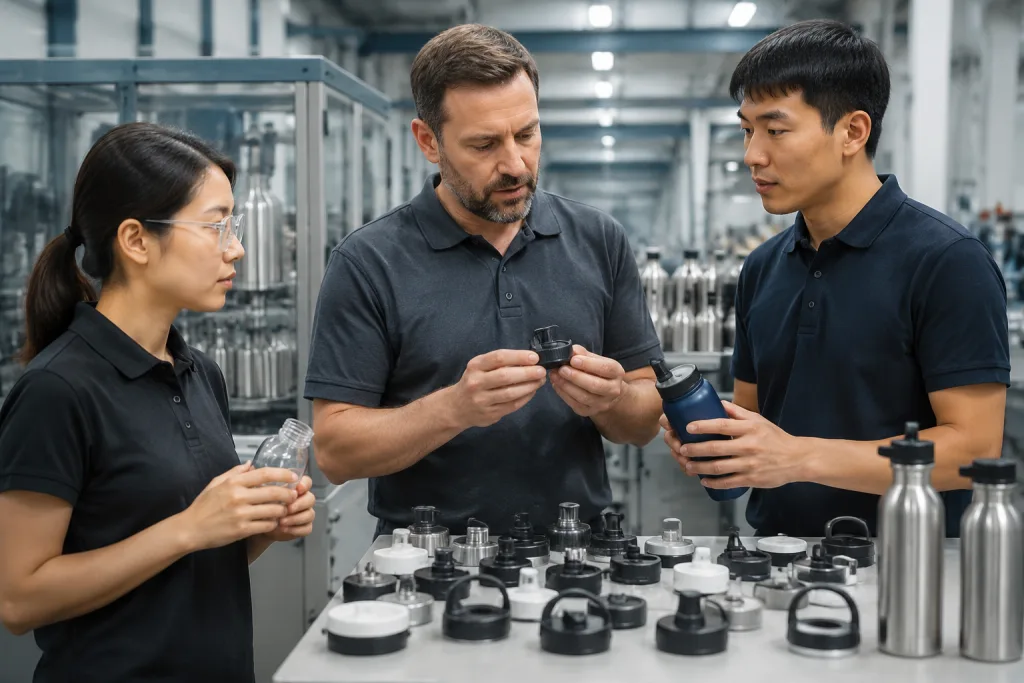
I’ll rewrite this section in-place, keep the HTML untouched, and tighten the sales-engineer tone with concrete factory details and cleaner buyer language.Lid choice is where a lot of B2B margin disappears. The body can pass inspection, then a soft cap brings leak claims, broken hinges, and bad reviews. For a customized canteen, the lid has to fit the channel. A one-handed sports top works for runners. A screw cap with a carry loop works for staff kits. A flip lid looks clean, but it needs tighter mold control than a basic twist top; on our line, we check hinge clearance at 0.2 mm, not by eye.
Use this quick comparison when you are evaluating custom drinkware factories in Zhejiang or elsewhere in China:
- Flip lid: better for office and retail, but the hinge should survive at least 3,000 cycles.
- Straw lid: good for kids and gym, but straw length and gasket fit need a sample check every time.
- Wide-mouth screw cap: the safest, simplest pick for a canteen supplier selling to distributors.
- Carabiner cap: useful for promo runs, less suitable for hot liquids.
If you are talking to canteen vendors or canteen suppliers, ask for a lid leak test at 0.3-0.5 bar, plus drop testing from 1.0 m onto concrete or plywood based on your market spec. We had a buyer flag a 1.5 mm typo on the PO and the cap insert went wrong before QC pulled the sample, so check the drawing twice. A customizable canteen with a weak silicone ring will cost more in claims than you save on unit price. For a distributor canteen program, lock this down before artwork approval.
Decoration methods change margins
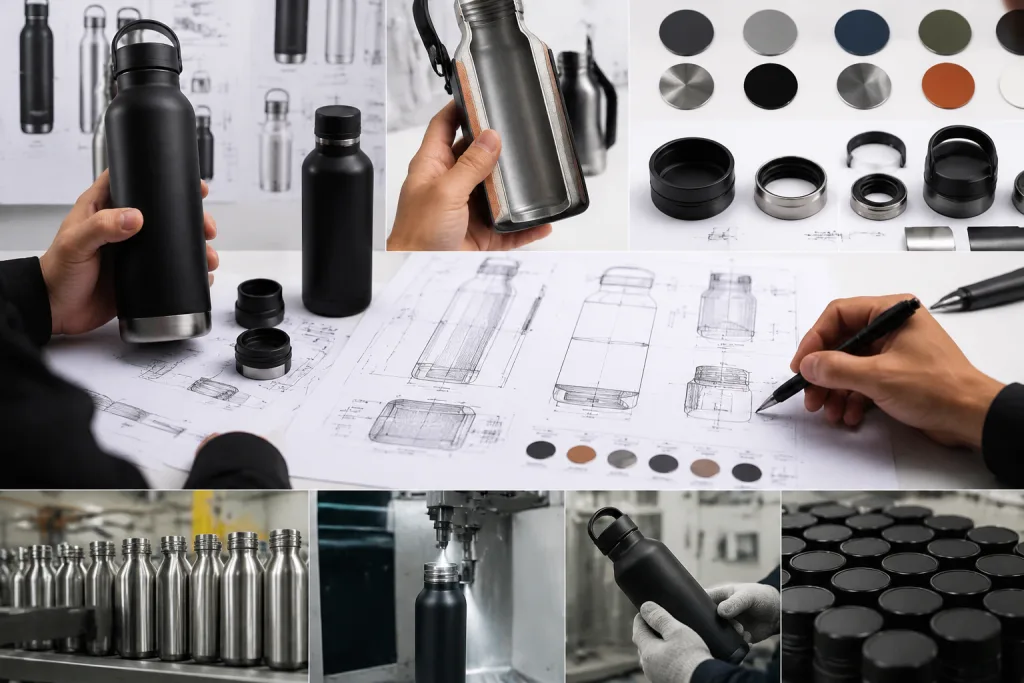
I’ll rewrite the prose in place, keep the HTML exactly as-is, and tune the tone toward a factory-side sales engineer.Print is not just about looks. It changes scrap rate, cycle time, and how the bottle holds up after 50 rub cycles. For buyers of water bottles custom, the right method depends on logo detail, order size, and whether you want a premium shelf look or a plain workhorse finish. A proper factory in Hangzhou or wider Zhejiang should quote method, setup cost, and decoration lead time as separate lines. We run that way on our side. No bundle price games.
| Method | Best on | Typical setup | Buyer note |
|---|---|---|---|
| Silkscreen | Flat areas, simple logos | Low | Best for 1-2 color branding |
| Laser engraving | Stainless steel | Medium | Durable, no ink wear |
| UV print | Complex logos, full color | Medium-high | Check adhesion and scratch resistance |
| Powder coating | Steel bottles | Medium | Improves grip and perceived value |
For a canteen customized look, laser engraving works on brushed stainless steel, but it will not give you bright retail color. For a customized growler, powder coat plus laser usually sells better than printed graphics, especially in North America; we’ve seen buyers push back on this, then come back after the first shelf test. If you need custom canteen units for a distributor program, ask the factory to show abrasion results after 50 rub cycles or the same spec. QC pulled the sample with a smeared edge once because the PO said “sliver logo” instead of “silver logo.” That typo cost a day. A sharp logo is fine. A logo that still reads after shipping and shelf handling gets reordered.
This is also where a canteen manufacturer with real production control beats a middleman. In China, not every supplier controls coating or engraving in-house. The more steps they outsource, the more the finish drifts. Zhejiang factories that run monthly output above 300,000 units usually keep tighter process control, but you still need to check sample-to-sample match. The math doesn’t work any other way.
What a spec sheet should show
I’ll rewrite the prose to sound like a factory-side sales engineer, keep the HTML exactly as-is, and swap in more concrete shop-floor details without changing the structure.If the quotation skips the technical line items, you are not comparing factories. You are comparing sales talk. A serious canteen distributor or distributor growler buyer should ask for a spec sheet with dimensions, material grade, wall thickness, net weight, cap build, coating method, and test standard. We run sample approval off that sheet, not off a pretty PDF.
At minimum, your spec should include:
- Capacity: 500 ml, 750 ml, 1 L, or 64 oz, with tolerance of ±5%.
- Material: 304 or 316 stainless, Tritan, aluminum, or borosilicate glass.
- Wall thickness: 0.4-1.0 mm depending on SKU position.
- Testing: AQL 2.5 for critical defects, BPA-free declaration, REACH or FDA-relevant document set, and leak test result.
- Packing: inner box, master carton, and drop-test expectation.
A factory that can handle customizable growler and customized canteen programs usually keeps tooling, assembly, and QC in separate rooms. That split matters. We’ve seen buyers get burned when a 58 mm cap drawing turns into a 57.5 mm sampling issue, and the line starts missing the gasket seat by 0.3 mm. The best factories in Zhejiang can run 50,000-100,000 pcs per day across multiple lines, but the real check is whether color tolerance and lid fit stay stable on a 3,000-piece repeat order. If you are buying custom drinkware for Amazon or retail, ask for carton dimensions and FNSKU-ready packing before the PO is signed, not after production starts.
Choose the factory, not just the quote
I’ll rewrite the prose in place, keep the HTML exactly as-is, and make it sound like a factory-side sales engineer wrote it.Low prices show up everywhere. Stable output does not. When you source from a canteen factory or canteen manufacturer in Zhejiang, look past FOB and ask how they handle an ECN, first sample, and carton audit. We have seen a quote come in USD 0.20 lower and still cost more when the line slipped 15 days.
What you want is not the cheapest bottle. You want the bottle we can run twice with the same color, the same lid fit, and the same carton count.
Ask these questions before you approve:
- What is the MOQ for this mold and finish: 500, 1,000, or 3,000 pcs?
- What is the normal lead time after sample sign-off: 30, 35, or 45 days?
- Can the factory provide BSCI, ISO 9001, and material compliance documents?
- Does the factory inspect at inline, final, or only pre-shipment?
For a canteen promotional program, a responsive canteen vendor can do the job. For a repeat retail line, you need the plant behind the quote. China has plenty of suppliers; Zhejiang has a fair number that understand export detail. If your order needs artwork revision, packing inserts, or a second color run, the engineering desk matters more than the sales pitch. That is the gap between a one-time supplier and a source we can ship with confidence.
Request a factory quote with real specs
Send your target capacity, lid style, artwork, and market. We will match the right water bottles custom build, MOQ, and lead time from Zhejiang.
Frequently asked questions
What MOQ should I expect for water bottles custom orders?
For standard molds, expect 500-1,000 pcs MOQ for simple steel bottles and 1,000-3,000 pcs for decorated or multi-color SKUs. If you need a new shape, tooling usually starts at 3,000-5,000 pcs commitment, and some Zhejiang factories will ask for 30-35 days after sample approval. If you want mixed colors, confirm whether the MOQ is per color or per order. That detail changes your landed cost fast.
How do I compare a canteen manufacturer quote properly?
Compare the quote line by line: body material, wall thickness, lid type, print method, packing, and test standard. A USD 2.40 bottle with 0.4 mm steel and basic box pack is not the same as a USD 2.80 bottle with 0.8 mm steel, laser logo, and drop-tested carton. Ask for AQL level, leak test result, and whether REACH or FDA documents are included. That is how you separate a real canteen manufacturer from a simple reseller.
Is stainless steel better than Tritan for custom drinkware?
Not always. Stainless steel is better for premium retail, insulation, and dent resistance. Tritan is better when you need low weight, clear body visibility, and a lower entry price. For a 500 ml retail bottle, Tritan can land around USD 1.35-3.20 FOB, while 304 stainless often sits around USD 2.10-4.80 depending on finish. If your buyer wants a lighter promotional item, Tritan or aluminum may be the smarter custom drinkware choice.
What documents should a canteen supplier provide?
At minimum, ask for material composition, BPA-free statement if applicable, REACH test report for Europe, and FDA-related declarations if you sell into the U.S. For stainless products, also ask for grade confirmation and weld/process notes. A good canteen supplier should provide BSCI or factory audit documents if you need retail onboarding. If they cannot send these within 24-48 hours, expect delays later during compliance review.
Can I launch a custom growler or customized growler line profitably?
Yes, if the design is simple and the carton pack is efficient. A customized growler usually works best at 750 ml to 1.9 L, with pricing often starting around USD 4.20 FOB for basic single-wall steel and moving up quickly for vacuum or powder coat finishes. The margin is strongest when you keep decoration to one or two colors, avoid oversized tooling, and ship in carton counts that fit palletization cleanly. For distributors, this is where repeat orders matter more than first-order volume.