Key Takeaways
- Most water bottles custom made orders start at MOQ 1,000-3,000 pcs, with lead times of 25-35 days after sample approval.
- A 0.4 mm 304 stainless body, a 1.2 mm powder coat, and a leak test standard matter more than a pretty mockup.
- FOB China pricing can differ by USD 0.30-1.20 per unit depending on lid type, decoration, and packaging.
- For Europe and North America, ask for REACH, LFGB where needed, and AQL 2.5 inspection language in the PO.
When you buy water bottles custom made, the real mistake is not picking the wrong color. It is signing off on a spec that looks clean on paper, then finding out the lid leaks, the coating chips, or the unit cost jumps after decoration. For B2B drinkware, the spec sheet is the product. Read it line by line, and you can see margin, freight load, and complaint risk before you cut the PO.
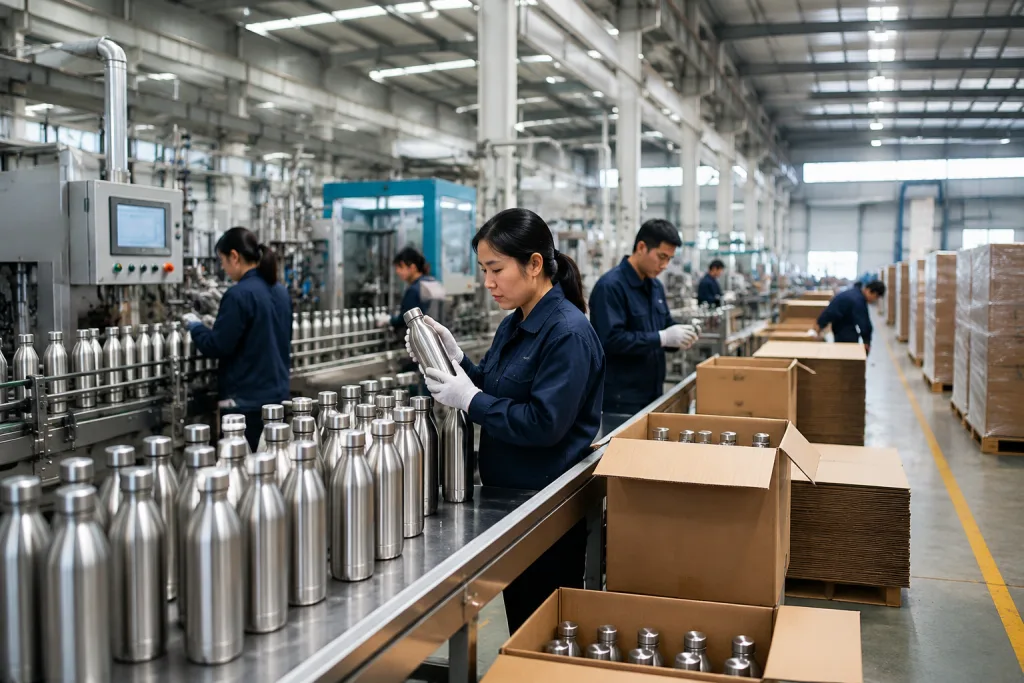
That matters even more when you source from China or Zhejiang, where a canteen factory can throw out a low FOB price and leave out the details that decide performance. At BottleForge in Hangzhou, Zhejiang, we run over 300,000 units per month across stainless steel and plastic drinkware. QC pulled a 500 ml sample last week with a 0.3 mm coating miss at the seam, and that is the kind of thing buyers need to catch early. The buyers who do best ask about wall thickness, coating system, MOQ, and test standards before they talk artwork. That is the right order. If the math does not work on the spec, it will not work in production.
Start with the bottle body
I’ll rewrite just the prose inside the existing tags, keep the structure intact, and tighten it so it sounds like a real factory-side buyer note.The body spec drives weight, hand feel, dent resistance, and landed cost. On stainless steel bottles, the first question is not “what size do you want?” It is what material and wall structure you are buying. We run 18/8 or 304 stainless for the inner and outer shell on beverage-grade builds. For a single-wall canteen custom order, 0.4 mm to 0.5 mm wall thickness is standard. For double-wall vacuum bottles, check the finished wall structure and vacuum hold, not a loose “vacuum insulated” line on the PO.
Why this matters: a 0.35 mm body saves material, but the line dents faster in distributor drinkware shipments, and QC will catch more rejects at AQL 2.5. A 0.5 mm body feels solid, yet freight goes up. If you are sourcing a customizable canteen for retail, keep unit weight tight across the run. A 500 ml bottle at 260-320 g is normal for stainless vacuum builds; a 750 ml bottle often lands near 350-430 g, lid and base included. Ask your canteen manufacturer for body diameter and height tolerance; a 1.5 mm drift is enough to spoil sleeve fit or throw carton counts off. We’ve seen that go sideways on a 12,000-piece order.
Practical rule: if the body spec is vague, the rest of the order will be vague too.
Read insulation like a buyer
I’ll rewrite the section in-place, keep the HTML exactly as-is, and make the copy read like a buyer-facing factory note with tighter numbers and a few shop-floor details.Insulation is where a lot of buyers overpay for sales talk. For a custom growler or vacuum bottle, ask for real numbers: cold retention hours, hot retention hours, and the test condition. “Keeps drinks cold for 24 hours” means nothing until the factory states ambient temperature, fill temperature, and lid type. QC pulled our last 500 ml sample at 20°C room temp, and the only spec that mattered was 6°C to 8°C water held under a closed lid for a set period.
For North America, buyers usually push for 6-12 hours hot-hold and 18-24 hours cold-hold on premium stainless vacuum drinkware. The math changes by build. A slim custom canteen, a wide-mouth custom growler, and a standard sports bottle do not behave the same on the line. Wide mouths bleed heat faster. Single-wall aluminum or plastic canteen promotional items sit in a different category, so do not sell vacuum numbers there. We’ve seen this go sideways when a buyer flagged a PO typo on the lid spec; the bottle was fine, the claim was not. If it is a distributor canteen program, write the spec sheet to match the construction, not the print area.
- Ask for test method: fill temperature, ambient temperature, lid type.
- Ask for retention range: not one optimistic number.
- Ask for sample verification: one pre-production test, not a brochure claim.
Choose the lid system carefully
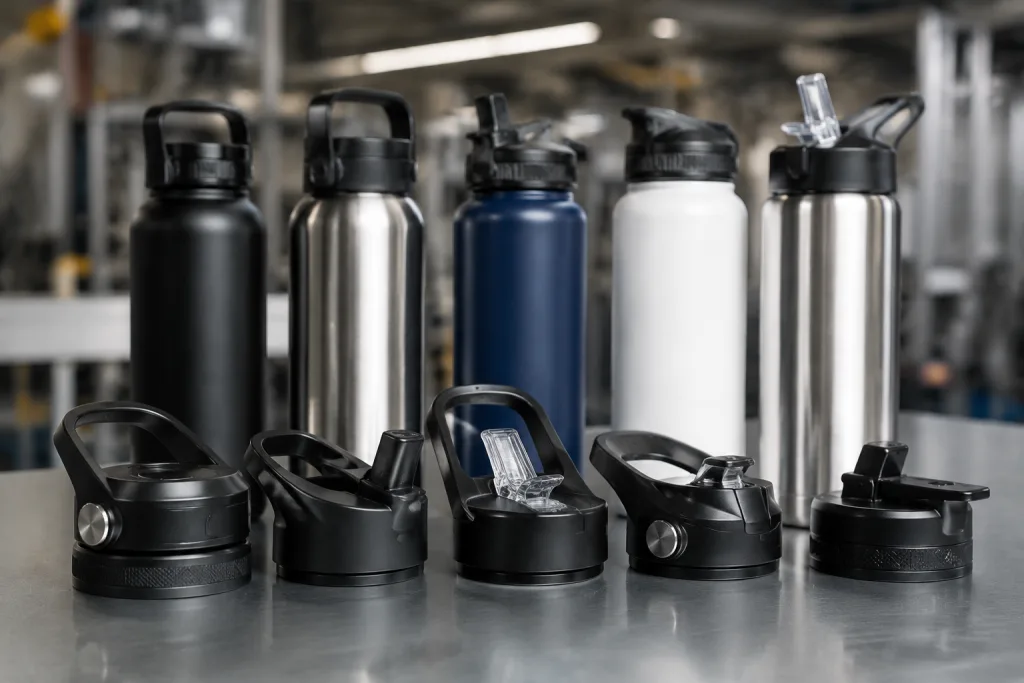
I’ll rewrite the section in place, keep the HTML intact, and tighten the sales-engineer tone with concrete factory details and fewer filler phrases.The lid decides how the bottle feels in hand, how often it leaks, and what the assembly line can hold. A canteen customizable order usually goes wrong at the closure, not the body. Common choices are screw lids, flip lids, straw lids, and push-button lids. For export custom drinkware, we start with a threaded lid, a silicone gasket, and a leak test the QC bench can repeat. If the buyer wants one-handed drinking, a flip-top works, but you take on more parts and a higher defect rate.
For canteen customized projects, ask what the gasket is made from. Food-grade silicone is standard; cheap TPE gaskets deform faster under heat, and we have seen that fail after a 60°C soak. A good canteen factory will tell you whether the lid is PP, Tritan, ABS, or stainless steel trimmed. On the line, that choice moves cost by about USD 0.10-0.60 per unit, and you can feel it in the hinge and in warranty claims later. If you are building a canteen promotional program, keep the lid simple. Simple lids ship cleaner through more channels. If you are a canteen vendor selling into sports or outdoor retail, a carry loop or integrated handle can earn its keep because it helps shelf display and repeat use.
Leak testing belongs in the PO. Ask for 100% leak check on sample units and AQL 2.5 on mass production, or write your own inspection rule if the order is high risk. We once had a buyer flag a PO typo on the lid color code, and that kind of miss turns into a rework day fast. That is the line between a real canteen manufacturer and a quote-only canteen supplier.
Decoration changes the unit economics
I’ll rewrite just the prose, keep the HTML intact, and tighten the economics language so it sounds like a factory-side sales note.Decoration is where margin slips away fast. A plain stainless bottle can still be a good deal, but once you add a logo, texture, or gradient finish, the line changes. Screen printing is usually the cheapest logo method; on our line it often adds about USD 0.05-0.20 per color, depending on size and setup. Laser engraving looks cleaner and holds up better, but it only works on the right surface and usually costs more than a simple print. Powder coating, UV print, and water-transfer patterns sit in the middle, and each one brings its own scrap risk at QC.
If you are buying customizable drinkware for a brand launch, confirm the decoration method before you approve art. We had one canteen customizable order with a full-wrap print where the buyer flagged the seam position on the PO, and the artwork had to move 8 mm to clear the weld. That is the kind of detail that changes the whole quote. For canteen manufacturers in China, especially Zhejiang factories doing mixed OEM work, the real questions are simple: how many print colors, how big is the logo area, and do you need a second-side print or full wrap. A distributor drinkware buyer should also ask about scratch resistance. A logo that looks sharp on day one and rubs off after six weeks is not branding; it is a complaint waiting to happen.
Rule of thumb: the more coverage you ask for, the more defect control you should budget for.
Packaging is part of the spec
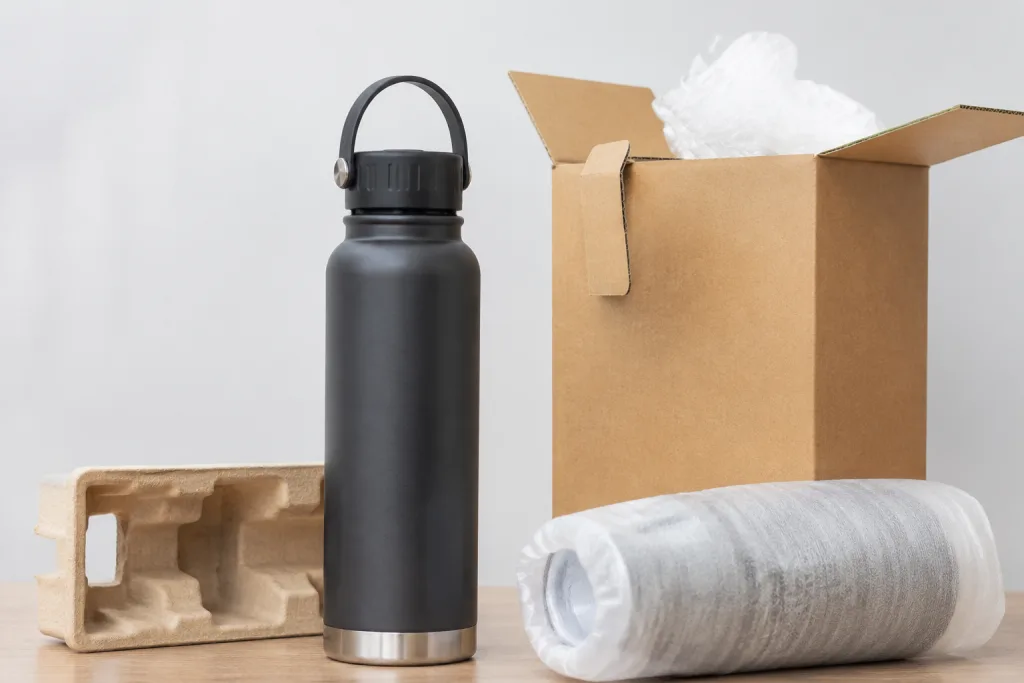
I’ll rewrite the section in-place, keeping the HTML and structure unchanged while making the prose sound like a factory-side sales engineer wrote it.Packaging is part of the spec, not an afterthought. It changes carton size, pallet count, FBA readiness, and damage rate. On a 40HQ, the inner box on water bottles custom made can swing freight cost by 5-12% once you stack the pallets. A plain white box works for wholesale. If you need shelf impact, we run printed boxes, hang tags, and barcode labels. For Amazon or marketplace orders, the buyer flags FNSKU labeling, polybagging, warning labels, and carton marks against the warehouse sheet before we release cargo.
Do not skip drop protection. We had one 350ml canteen pass QC, then arrive with lid scuffs because the insert was too thin and the box wall was only 3 mm. That upgrade costs less than USD 0.15 per unit. Cheap fix. If you work with canteen distributors, lock the packaging across SKUs, or your warehouse team will waste hours repacking mixed cartons. A good canteen supplier should give you carton counts that fit pallet height and container loading. We see this go sideways when the PO says “50 pcs/carton” but the packing list shows 48.
- Confirm carton count: 24, 30, or 50 pcs per master carton.
- Confirm box test: compression and drop standard.
- Confirm label format: barcode, country of origin, SKU, and batch code.
Certifications and QC are not optional
I’ll rewrite the section in-place, keeping the HTML tags and the heading structure intact, while tightening the sales-engineer tone and adding concrete QC details.If your market is the EU or North America, compliance goes into the first quote. For stainless and plastic water bottle custom made orders, ask for REACH documents, food-contact declarations, and any market-specific test your channel wants. For the US, buyers usually ask for FDA food-contact alignment; for Europe, LFGB comes up when the retailer is stricter than the basic import rule. If the product has coating, print, or plastic lids, ask for heavy-metal and migration results by ink system and resin batch. We’ve seen buyers get burned by a clean sample and a bad mass run. If a vendor cannot answer this in plain terms, the line is not export-ready.
QC needs hard numbers. Use AQL 2.5 for major defects and AQL 4.0 for minor defects if you want a standard wholesale setup, then tighten it if the buyer pushes for retail packing. Ask for incoming material checks, in-process leak tests, and final inspection before cartons are sealed; on our line, QC pulls a 1,200 ml sample and checks cap torque at 0.8 N·m before release. At BottleForge in Hangzhou, Zhejiang, we run QC through stage gates because rework after packing eats time and margin. The buyer flagged a quote once because the PO typo said “304SS” on the bottle and “201” on the lid. The math does not work if you skip that check.
If you need a water bottle custom made supplier, ask for production photos, test records, and sample approval with the exact spec revision number. One good sample is not enough. Real repeat business starts when the factory can ship the same wall thickness, the same logo position, and the same carton count on every order.
Send your spec sheet for a quote
If you already have a target price, MOQ, and market, we can turn it into a production-ready custom drinkware spec in 1 business day.
Frequently asked questions
What MOQ should I expect for water bottles custom made?
For most stainless or plastic water bottles custom made, MOQ starts at 1,000 pcs per design and color. Some canteen suppliers will quote 500 pcs for a simple print job, but that usually raises unit cost by USD 0.20-0.80. If you need multiple lid colors or mixed decorations, expect MOQ to rise to 3,000 pcs. For a custom growler or insulated bottle with a special cap, 2,000 pcs is more realistic. Zhejiang factories often keep flexible tooling, but the real limiter is decoration setup and carton planning, not the shell itself.
How do I compare FOB prices from different canteen manufacturers?
Compare them line by line: body material, wall thickness, lid material, decoration method, packaging, and inspection standard. A quote at USD 2.10 FOB China may be cheaper on paper than USD 2.45, but if the lower quote uses thinner steel, fewer leak checks, and basic box packaging, your landed cost can be higher after claims and rework. Ask every canteen manufacturer to quote the same revision. If one canteen factory omits the gasket material or carton count, treat that quote as incomplete, not cheaper.
Which material is better: stainless steel or plastic?
For premium custom drinkware, stainless steel usually wins on perceived value, thermal performance, and repeat use. A 304 stainless vacuum bottle is the better choice for retail, corporate gifting, and distributor drinkware programs. Plastic works well for sports, schools, and lower-cost canteen promotional campaigns, especially when weight matters. If you need a canteen customized for outdoor use, stainless is safer for margin and brand perception. Plastic can still be a good custom canteen choice if the customer wants low cost and a light carry profile.
What compliance documents should I request for EU or US sales?
Request a food-contact declaration, REACH-related documentation for the EU, and any migration or heavy-metal test reports relevant to the build. For the US, many buyers ask for FDA food-contact alignment. If the item is a customized drinkware product with print or coating, ask for ink and coating test data too. For export orders, I also recommend writing AQL 2.5 into the PO. If your product is a customizable growler or insulated bottle, ask for the exact test method and revision number, not a generic certificate scan.
Can I customize packaging for Amazon or retail channels?
Yes, and you should. For marketplace programs, ask for FNSKU labels, suffocation warnings if polybagged, and carton marks that match the warehouse plan. Retail canteen vendors often use printed inner boxes, hang tags, and barcode stickers. The packaging upgrade usually costs less than USD 0.15-0.40 per unit, which is cheaper than repacking in your US warehouse. If the order is a custom canteen or custom growler, confirm that the box insert protects the lid from scratching during transit.