Key Takeaways
- Stock stainless bottles often start around USD 2.10-3.40 per unit at 500 pcs, before freight
- Custom printed bulk drinkware usually needs 7-15 extra days over plain stock orders
- AQL 2.5 is standard for critical defects on export drinkware, but you should confirm carton and logo checks
- MOQ, wall thickness, and packing method can change the water bottle wholesale price by 20%-60%
If you ask for a water bottle wholesale price, you are usually not asking for one number. You want the landed unit cost after MOQ, print method, carton size, and freight. That is the right question. In Zhejiang and across China, the same 500 ml bottle can move 20% to 60% depending on whether it is stainless steel, Tritan, or aluminium, and whether you want a one-color logo or a full-surface wrap.
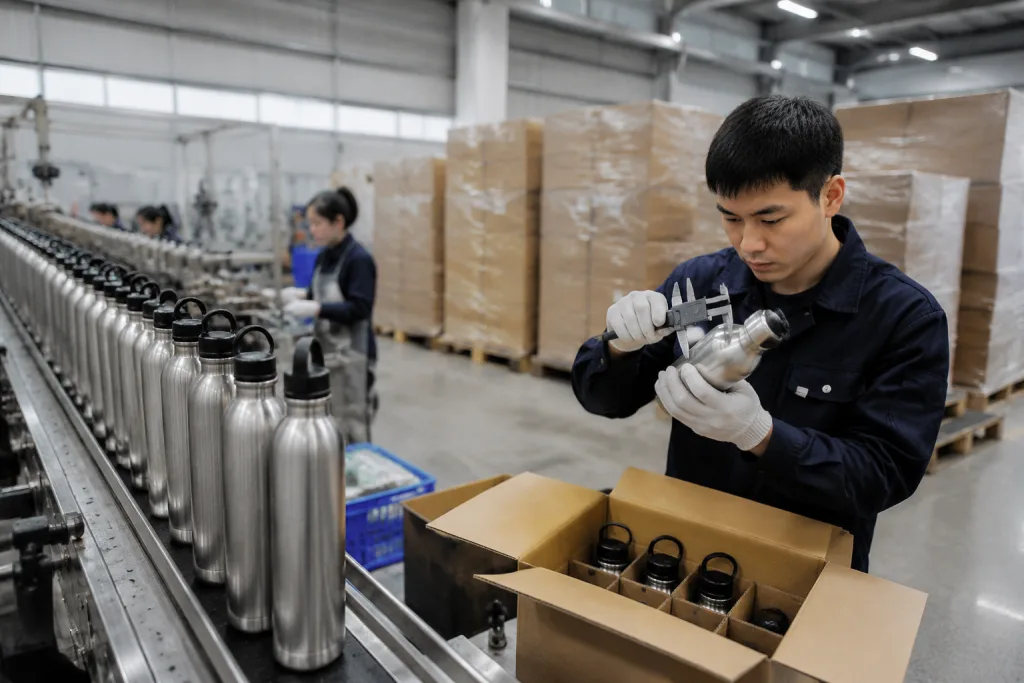
At BottleForge Industrial in Hangzhou, Zhejiang, our export lines run 5,000 to 60,000 units per month, and the usual MOQ is 500 pcs for stock models or 1,000 pcs for custom color or logo work. We run the line this way because the math has to hold at pack-out, not just on the quote sheet. QC pulled a sample last week with a 0.8 mm lid gap, and the buyer flagged it before we shipped. If you buy drinkware wholesale, read the quote like a procurement engineer: what is included, what is optional, and what will break at customs, testing, or retail packing. That is where first-time buyers lose margin.
What drives the unit price?
I’ll rewrite the section in-place, keep the HTML intact, and tune the copy to sound like a factory sales engineer.Q: Why does one water bottle wholesale price look cheap and another look high?
The short answer is spec. A 500 ml double-wall 18/8 stainless bottle with powder coating runs above a single-wall aluminium bottle because the steel gauge, vacuum draw, and coating line all add time and scrap. We see stock stainless models around USD 2.10-3.40 per piece at 500 pcs, while insulated tumblers can land at USD 3.80-6.50 depending on the lid. If the buyer just asks for the best wholesale drink bottle, the quote misses the point.
We split the number into four buckets: product cost, decoration, packing, and compliance. Product cost moves with wall thickness, lid material like PP, AS, or stainless, and whether the order needs BPA-free paperwork. Decoration adds silkscreen, laser, or full-wrap heat transfer. Packing moves too; an egg crate insert with a kraft box is not the same as a retail gift box plus barcode sticker. On our line in Zhejiang, that gap can change the ex-factory price by 12% to 25% on the same mold. The math does not lie.
- Material: 304 stainless, 316 stainless, Tritan, glass, aluminium
- Capacity: 350 ml, 500 ml, 750 ml, 1 L
- Finish: powder coat, matte spray, polished, brushed
- Decoration: one-color print, laser logo, full wrap, embossed mark
How MOQ changes the quote
I’ll rewrite this section in-place, keep the HTML structure intact, and strip the AI-ish phrasing while adding a few shop-floor details and sharper sales-engineer language.Q: Does a lower MOQ always mean a better deal?
No. A lower MOQ usually pushes the unit price up because the factory spreads setup cost across fewer pieces. If a canteen wholesale order is 500 pcs, the math works; if you ask for 100 pcs in five colors, the quote often jumps 18% to 35%. We see the same pattern on canteen bulk, wholesale canteen, and drinkware bulk jobs. The mold, printing screen, carton label, and line change eat time.
For a custom logo order in Zhejiang, our usual floor is 1,000 pcs for one SKU and one decoration method. At that level, the line runs cleanly, QC pulls the sample once, and carton loading on a 20GP starts to make sense. If your buying model is test-and-repeat, start with a stock base instead of a full custom mold. You get a steadier drinkware wholesale price and less drama on first run. We’ve seen this go sideways when a buyer tried to save on MOQ and then paid more on rework.
Ask the supplier for the price at 500 pcs, 1,000 pcs, and 3,000 pcs. A serious quote should show the breakpoints, not one neat number.
What to check before ordering
I’ll rewrite the section in-place, keep the HTML structure untouched, and tighten the prose so it sounds like a sales engineer from the floor.Q: What should I verify before I approve a purchase order?
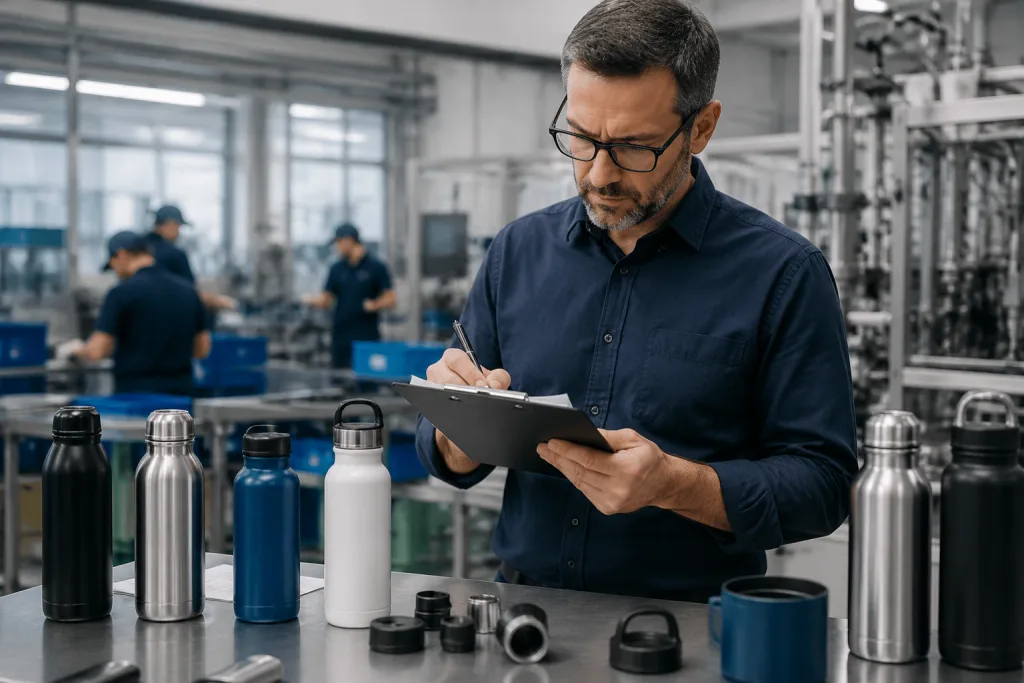
Start with the spec sheet, not the sales pitch. Confirm 304 stainless or the stated resin grade, capacity tolerance, lid sealing method, logo position, and carton count. For export drinkware, we ask for REACH and food contact declarations where they apply, plus a QC plan built around AQL 2.5 for major defects and AQL 4.0 for minor defects. QC pulled the sample with a caliper at 0.5 mm on the rim, and that is the kind of check that saves a buyer from a PO dispute later.
Then check what the price leaves out. On a lot of first quotes, master carton, extra barcode labels, palletization, and forklift loading fees are missing. We’ve also seen inner box artwork changes left off the sheet. For beer tumbler wholesale bulk or beer growler wholesale bulk, ask about pressure points, cap threading, and the carbonation rating. This is the wrong question to ask if you only chase the lowest number. A cheap quote means nothing if the cap leaks or the carton gets crushed on a 12-day ocean leg.
- Confirm material grade and capacity tolerance
- Ask for logo method and artwork size limits
- Verify carton spec, inner packing, and barcode placement
- Request test documents tied to your exact SKU

Different products, different logic
I’ll rewrite the prose in place, keep the HTML tags and structure unchanged, and tighten the sales-engineering voice with concrete sourcing details.Q: How do prices compare across canteens, growlers, and flasks?
Do not lump them together. A bulk canteen for outdoor use is usually priced around light weight and simple tooling; we run those on thinner walls and a basic cap, while a bulk growler or beer growler in bulk needs heavier walls, tighter cap sealing, and a cleaner finish. A glass bottle carries breakage risk and higher carton cost than a stainless bottle. Alcohol flask bulk orders are a different animal: the shape is compact, the print area is small, and leakage in transit is where buyers get burned. QC pulled one flask sample with a 0.8 mm cap gap last month. The buyer flagged it fast.
Typical export ranges in China look like this: a simple canteen bulk item can start around USD 1.40-2.20 at 1,000 pcs; a wholesale growler in stainless may run USD 4.50-8.50; an alcohol flask wholesale piece can be USD 1.20-2.80 depending on thickness and finish. If you need beer tumbler bulk or beer tumbler in bulk for retail, check coating adhesion and dishwasher claims first. For a wholesale canteen for sports or school, the cap and carry loop matter more than a fancy print. A 20 oz tumbler with a bad powder coat will come back in inspection. We’ve seen that go sideways.
Put the product split into your RFQ. Asking one supplier for bulk drinkware, growler bulk, and alcohol flask wholesale bulk in the same form blurs the numbers, and the math does not work. Break it into SKU families, line up the spec sheet, and compare like for like. We had a PO once with “flask” typed where “growler” should have been; that typo changed the quote by USD 1.10 a piece.
Checklist for a clean RFQ
I’ll rewrite the HTML prose tightly, keep the tags and list structure intact, and strip the AI-ish phrasing while adding the factory-floor specifics the brief asks for.Q: What should I send to get a useful quote fast?
Send a short RFQ that works like a buying sheet. Put in the target SKU, market, capacity, material, finish, decoration, and packing spec. State FOB Ningbo, FOB Shanghai, or another port. Shipping assumptions move the water bottle wholesale price, and if you are buying out of Zhejiang, the truck yard and booking slot can change landed cost by several cents per unit on a 20,000-piece order.
Attach vector artwork, the Pantone code, master carton count, and the compliance files you need. If the buyer flagged Amazon-ready packing, retailer barcodes, FNSKU labels, or shelf-ready trays, say it in the first line. QC pulled the sample last week and found a 2 mm logo shift because the PO skipped the print area, so this is the wrong question to ask after the quote goes out. A clean RFQ cuts back-and-forth from 3 days to 1 day.
- Product type and capacity
- Material and finish
- Logo method and print area
- Packing method and carton count
- Target Incoterm and port
- Compliance documents required
When a higher price is cheaper
I’ll rewrite this section in place, keep the HTML exactly as-is, and tighten the sales-engineer voice with concrete factory detail and cleaner pricing logic.Q: When should I accept a higher quote?
If the higher quote cuts real risk, take it. Paying USD 0.18 more for a better lid or USD 0.12 more for heavier carton board is cheap insurance on a 20,000-unit order. The cheapest number is not always the best wholesale drink bottle deal once you count breakage, returns, and chargebacks. We’ve seen one leaking carton turn into a full pallet claim at the port.
For wholesale growler, beer growler wholesale, or wholesale growler programs, a stronger cap and tighter seam control can beat a lower unit price. The same goes for alcohol flask in bulk and alcohol flask wholesale bulk: a clean shell means little if the seam line drifts by 0.3 mm. On our line, QC pulled the sample three times when the torque spec missed the target, and that saved a headache later. Factories in Zhejiang that spend on process control usually give fewer surprises on repeat orders. The math is simple.
If your brand sells on Amazon, in retail chains, or through distributors, run the full landed cost and the defect rate, not just the ex-factory quote. A stable supplier with a 30- to 45-day lead time and clear QC often beats a bargain quote that needs daily follow-up.
Request a real wholesale quote today
Send your SKU, target quantity, and packing needs. We’ll price it clearly from our Hangzhou, Zhejiang factory with no guessing.
Frequently asked questions
What is a realistic water bottle wholesale price for 500 pcs?
For a basic single-wall stainless bottle, expect roughly USD 2.10-3.40 per unit at 500 pcs. A double-wall insulated model is often USD 3.80-6.50, depending on lid type and finish. If you add a one-color logo, budget another USD 0.10-0.35. A custom color or gift box can add more. Freight is separate, so compare FOB and landed cost carefully.
How much does MOQ affect drinkware wholesale pricing?
MOQ has a direct effect. Moving from 500 pcs to 1,000 pcs can cut the unit price by 8% to 18% on common bottle programs, especially in Zhejiang factories with stable production lines. If you drop below 300 pcs, the price often rises because setup time and waste are spread across fewer units. For custom color or custom lid combinations, MOQ usually moves to 1,000 pcs per SKU.
What lead time should I plan for wholesale drinkware?
For stock-based orders, 20-30 days is common. For custom logo or custom color orders, plan 30-45 days. If you request new tooling, full-wrap print, or a special carton, it can extend to 45-60 days. A serious supplier in China should tell you where the time is spent: molding, sample approval, production, QC, or export booking.
Which compliance documents should I ask for?
For Europe and North America, ask for food contact declarations, REACH-related documents where applicable, and any material test reports tied to your exact SKU. For insulated stainless products, check the finish, liner, and lid materials separately. If you are selling on Amazon, ask whether the pack can be labeled with FNSKU and whether the carton size fits inbound rules. Keep the paperwork matched to the production batch.
How do I compare canteen wholesale and growler wholesale quotes?
Do not compare only the final number. Compare capacity, wall thickness, cap type, finish, carton spec, and test requirements. A bulk canteen may be lighter and cheaper to pack, while a beer growler in bulk needs tighter sealing and usually a heavier build. For alcohol flask wholesale bulk or beer tumbler wholesale bulk, ask for exact material grade and logo method so you know the quote is actually comparable.