Key Takeaways
- A serious water bottle supplier should quote MOQ, lead time, and FOB terms in the first reply, not after 5 follow-up emails.
- For most custom drinkware programs, expect MOQs from 1,000 to 3,000 units and 30-45 days after sample approval.
- Ask for REACH, FDA, LFGB, or ASTM-related testing depending on market and material, plus AQL 2.5 inspection photos.
- In Zhejiang, a capable canteen factory may run 300,000-500,000 units per month, but capacity only matters if the QC system is stable.
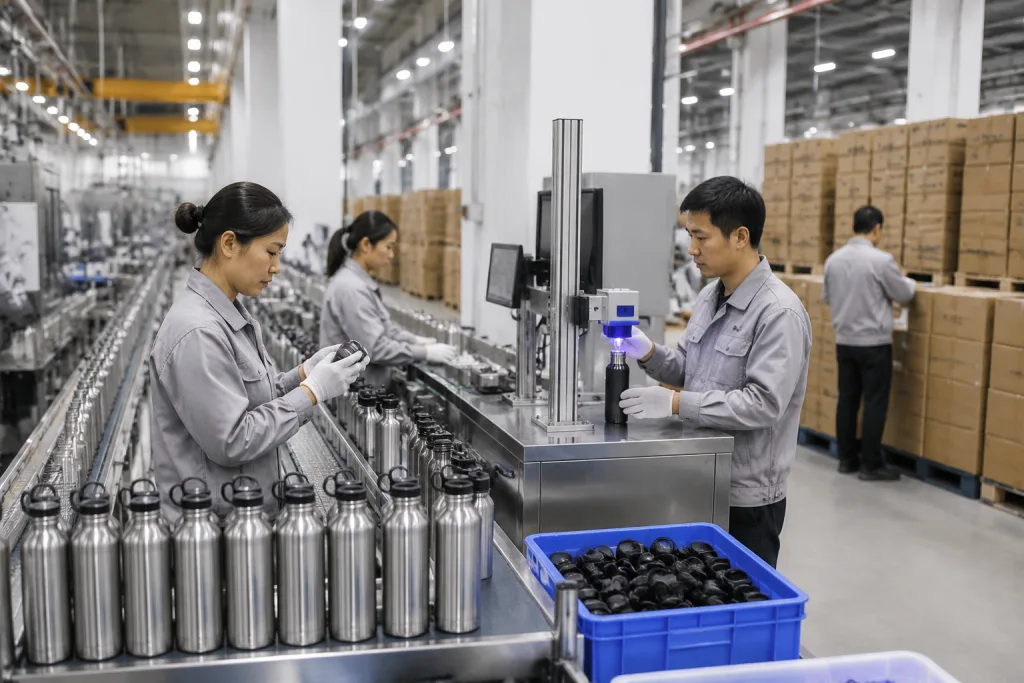
If you buy from a water bottle supplier, the hard part is not finding a factory. It is telling a real production partner from a smooth-talking middleman who quotes low and slips the ship date by 30 days. We see that problem every week. For procurement managers, brand owners, and distributors, the split shows up in MOQ, print sharpness, leak rate, and whether the same spec survives a repeat order. QC pulled the sample on the line, and one 0.3 mm pad print shift was enough to reject it.
In Zhejiang and across China, the better drinkware makers answer fast and with numbers: can they handle 3,000-10,000 unit runs, pass REACH for Europe, and hold a 30-45 day lead time after sample approval? That is the right test. The math does not work if the supplier talks big but cannot keep the line moving after you confirm the PO. If you need custom drinkware that ships on time, treat the supplier like a production partner, not a sales desk.
What should you ask first?
I’ll rewrite the prose in place, keep the HTML structure intact, and tighten it so it reads like a factory-side sales engineer.Start by asking the questions that tell you if you are dealing with a water bottle supplier, a canteen manufacturer, or just a trading desk. Ask for factory type, monthly capacity, MOQ, sample lead time, and which decoration methods they run in-house. If the reply stays fuzzy, stop the call. A plant that cannot say whether it is a canteen factory, canteen vendor, or canteen supplier will struggle with a repeat order. We have seen that go sideways on a 2,000-unit PO with a wrong logo file.
Use a simple checklist:
- Factory status: canteen factory, canteen manufacturer, or outsourced broker
- Production capacity: 300,000 units/month, 500,000 units/month, or higher
- MOQ: 1,000, 2,000, or 3,000 units per SKU
- Lead time: 7 days for samples, 30-45 days for mass production
- Compliance: REACH, FDA, LFGB, California Proposition 65 if needed
A solid partner gives you those numbers straight. The weak ones say “depends” and burn a week. QC pulled the sample on a 304 stainless bottle last month because the print register was off by 1.5 mm, and that starts with a sloppy first conversation. If you buy custom drinkware from China, the first call should sound like a production briefing, not a brochure pitch.
How do MOQs actually work?
I’ll rewrite the section in-place, keep the HTML exactly as-is, and make the prose sound like a factory-side sales engineer.MOQ is where most first-time buyers lose time. A canteen distributor may promise flexibility, but the real floor comes from tooling, decoration setup, carton packing, and color-change waste. On our line, a simple single-color screen print can start at 1,000 units. Once you add multiple colors, matte coating, or a special lid, the MOQ usually jumps to 3,000 units or more. For a custom growler or insulated stainless model, 2,000-5,000 units is normal because the body and lid parts need more setup.
Do not ask only for the lowest MOQ. Ask what the unit cost does at 1,000, 3,000, and 5,000 pieces. That is the right question. A serious water bottle supplier will show the breakpoints. For example, a basic 750 ml stainless bottle may land at USD 2.10-2.80 FOB at 3,000 units, while a fully customized growler with powder coat and laser logo can move to USD 5.20-7.80 FOB depending on structure and packing. QC pulled the sample, checked the carton drop test, and that extra packing insert added real money. A quote with no spec sheet usually means hidden charges later.
If you are buying for a distributor canteen or distributor drinkware program, ask whether the factory can hold safety stock on repeat colors. We ship repeat orders that way all the time. One buyer once flagged a PO typo on Pantone code 186C, and the whole re-order slipped by 12 days. If the factory keeps 500-1,000 pcs of your core color, the next run is much cleaner.
Which specs matter most?
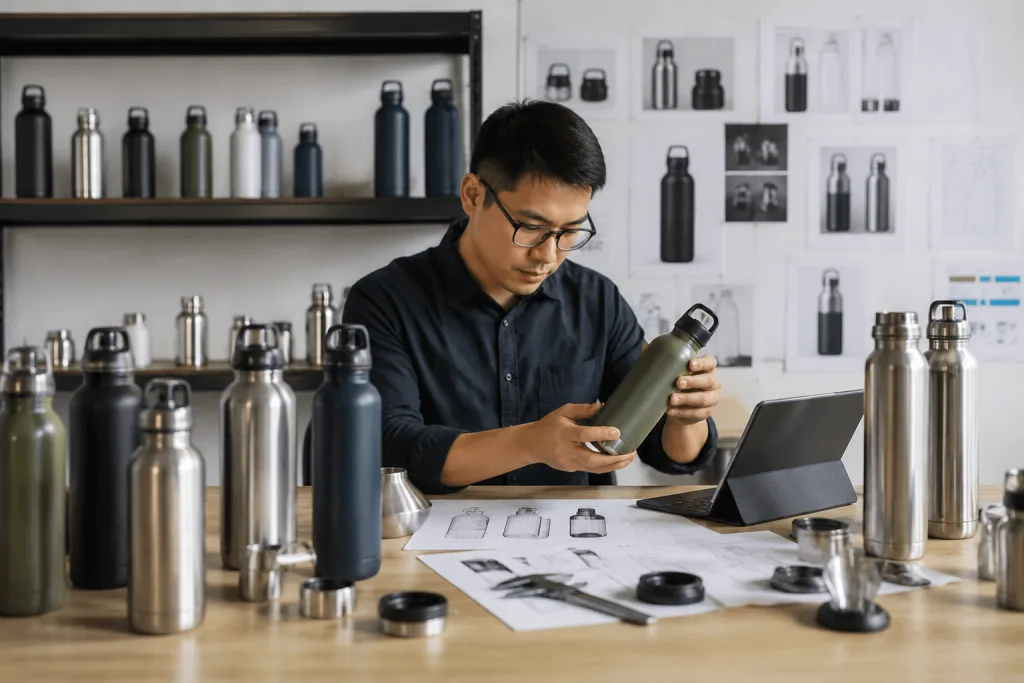
I’ll rewrite the prose in place, keep the HTML exactly as-is, and tighten it to sound like a factory-side sales engineer.Procurement teams often obsess over the logo and miss the body spec. That is the wrong place to save time. Returns, complaints, and repeat orders usually come down to the functional spec. For stainless steel drinkware, we ask for steel grade, wall thickness, lid material, and gasket type. A standard insulated bottle we run uses 18/8 stainless with an outer wall around 0.4 mm and an inner wall around 0.35-0.4 mm. For plastic canteen customizable programs, check the Tritan or PP resin grade, cap thread accuracy, and whether the bottle is BPA-free with test reports.
For a custom canteen or customized canteen, these points matter:
- Volume: 500 ml, 750 ml, 1 L, or 1.5 L
- Seal: silicone ring with documented food-grade material
- Finish: matte powder coat, gloss spray, or raw stainless
- Decoration: silk screen, laser engraving, heat transfer, or UV print
- Packing: bulk, color box, mailer, or retail-ready carton
A customized drinkware project goes wrong when the seller treats those as extras. QC pulled the sample on one 750 ml run because the lid torque was off by 2 mm on the gauge. If you are making canteen promotional items for a brand campaign, the bottle has to survive handling, shipping, and unboxing. If you are sourcing canteen custom merchandise for retail, the carton and barcode are part of the product, not an afterthought.
Can the factory handle compliance?
I’ll rewrite the section with tighter, factory-floor language and keep the HTML structure unchanged. Then I’ll do a quick pass to make sure the compliance details and numbers stay intact.For Europe and North America, compliance is not decoration. It is part of supplier qualification. A solid canteen factory in Zhejiang should hand over material declarations, migration tests where they apply, and batch traceability. If they ship export orders every week, they should know FDA for the U.S. market, LFGB for Germany-facing orders, and REACH for EU chemical safety.
Ask for recent test reports, not a screenshot of a certificate. Match the report to the exact material, color, and ink on your PO. A black silicone lid and a clear lid are not the same, and QC pulled the sample to prove it. If you need customized growler or canteen customized packaging for Amazon, ask about FNSKU labels, carton drop tests, and master carton size. We’ve seen one wrong carton spec add USD 0.40-0.80 per unit in rework and wasted freight.
Good compliance is boring. That is the point. If the water bottle supplier makes it sound special, they probably do it too rarely.
In China, especially Zhejiang, the better factories run export discipline as standard work. One typo on a packing list can hold customs, push a retail launch, or slow a distributor rollout by 7 to 14 days.
What does quality control look like?
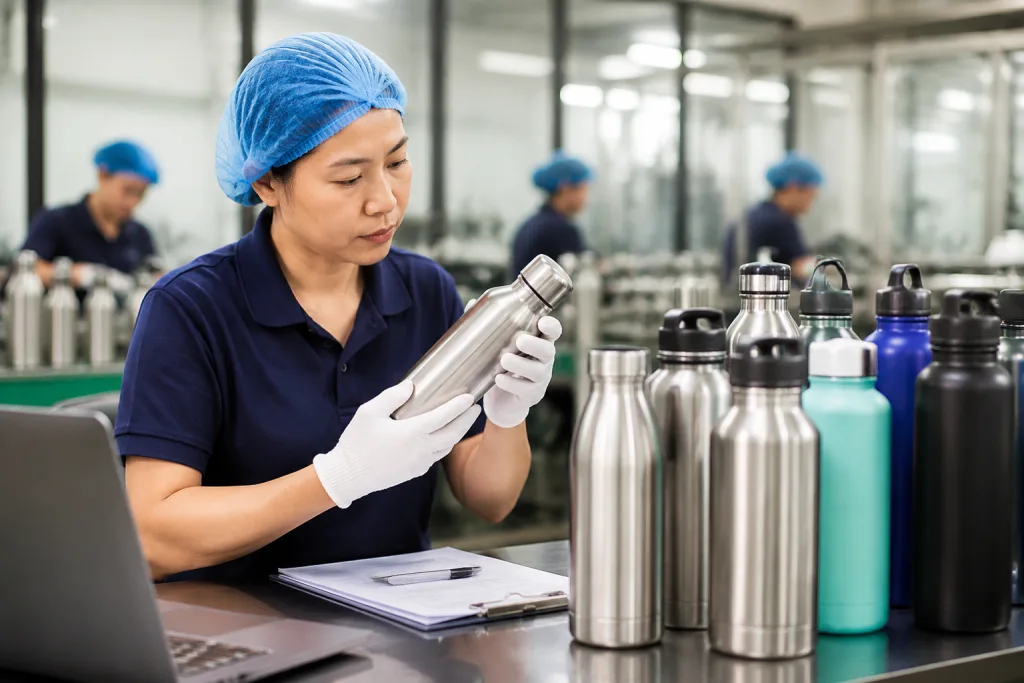
I’ll rewrite the prose only, keep the HTML structure intact, and make it sound like a factory-side sales engineer wrote it.QC has to show up before mass production. Ask for pre-production samples, in-line checks, and final inspection to AQL 2.5 or the standard you put in the PO. If a supplier cannot tell you where they check sealing, coating adhesion, and logo position, they are not ready for a serious run. On our line, QC pulled the sample at 9:20 a.m. and found a 1.5 mm lid gap; that is the kind of detail you want to see, not “our QC is strict.”
Use this practical checklist:
- Sample approval: lock shape, color, print, and lid torque
- In-line control: random checks during assembly and decoration
- Leak test: inverted hold test or pressure test, depending on structure
- Drop test: especially for distributor drinkware and travel sets
- Final inspection: AQL 2.5 or tighter on critical defects
Some canteen vendors talk about flexibility, but flexibility without QC just gives you variation. We run the same spec from order one to order six, because your customer will compare them side by side. That is the wrong question to ask after shipment. If the Pantone shifts 5-10%, the buyer flags it fast, and we have seen that go sideways on a 3,000-piece reorder when the PO typo said “matte blue” instead of the approved code.
For custom growler and customizable growler orders, check dent resistance, cap durability, and whether the powder coat chips at the base after a 1 m drop. Those details decide whether the piece feels like premium custom drinkware or a cheap promo item. We also watch base thickness at 0.8 mm and do a torque test on the cap, because the math does not work if the finish looks good but the shell dents on the first transit.
How do you compare supplier types?
I’ll rewrite the section in place, keep the HTML structure unchanged, and make the copy sound like a factory-side sales engineer.Not every supplier model fits the same buyer. We’ve seen a distributor in Ningbo save a rush order on 420 mixed cartons, then the buyer came back asking why the Pantone shade drifted 2 delta E on reorder. A manufacturer is the better call when your brand needs repeatability, exact color control, and lower landed cost. A promo run can live with a wider tolerance window. A retail program usually cannot.
Think of it like this:
- Factory direct: best for 2,000+ unit custom canteen or customized drinkware runs; one line, one QC sheet, fewer handoffs
- Distributor: useful for testing 300-500 sample packs or mixed cartons; we’ve shipped these with 12-day lead time when the buyer needs quick market feedback
- Vendor/intermediary: faster quoting, but usually less control over tooling and QC; the math gets ugly when the PO has a typo on the lid code
- Specialist manufacturer: best for canteen customized lids, packaging, or repeat color matching; QC can pull the sample against the master card before the line runs
The right water bottle supplier should tell you which model fits your timeline and budget. If you only need a short retail test, a canteen vendor may be enough. If you plan to scale into five or ten SKUs, go direct to a canteen factory in Zhejiang or another export-oriented region in China. You usually cut one round of revisions and keep tighter control over samples, molds, and reorders.
For brand owners, the decision is not just about price. It is about whether the factory can become your long-term canteen manufacturer instead of a one-off order taker.
Get a factory quote that matches your spec
Send your volume, logo method, and target market. We’ll answer with MOQ, FOB price, lead time, and compliance notes from our Zhejiang production team.
Frequently asked questions
What is a normal MOQ for a custom water bottle order?
For a standard custom water bottle or custom canteen, MOQ is often 1,000-3,000 units per SKU. Simple screen print runs may start at 1,000 pieces, while insulated stainless or customized growler models usually need 2,000-5,000 pieces because of tooling and setup. If a supplier offers 100-piece MOQ, check whether they are a stock trader, not a factory. Ask for tiered pricing at 1,000, 3,000, and 5,000 units so you can see the real cost curve.
How long should production take in China?
A normal export schedule from a water bottle supplier in China is 7-10 days for sample approval and 30-45 days for mass production after deposit and artwork confirmation. For a more complex canteen customized project with new mold work, add 15-25 days. Zhejiang factories with stable lines can sometimes move faster, but only if your color, lid, and carton specs are locked. If you need 10,000 units by a fixed launch date, build in at least 1 extra week for inspection and freight booking.
What compliance documents should I request?
Ask for material declarations, recent test reports, and market-specific compliance such as REACH for the EU, FDA-related material declarations for the U.S., and LFGB where relevant. For customized drinkware, make sure the report matches the exact resin, steel grade, ink, and coating used on your order. If your canteen supplier cannot provide batch traceability and product photos tied to the test report, treat that as a red flag. For Amazon programs, also request carton dimensions and FNSKU-ready packing confirmation.
Is a lower FOB price always better?
No. A low FOB price can hide thin steel, weak lids, poor printing, or weak packing. For example, a stainless bottle at USD 2.20 FOB and another at USD 2.80 FOB may look close, but the cheaper one may use thinner walls or a lower-grade gasket. When you buy from canteen manufacturers in China, compare the full spec: steel grade, coating, logo method, carton, and inspection standard. If one quote is 8% lower but misses QC steps, the real cost may be higher.
How do I choose between factory direct and distributor?
Choose factory direct if you need repeat orders, exact branding, or MOQ above 2,000 units. Choose a distributor canteen or distributor drinkware source if you need mixed styles, lower-volume testing, or very fast sourcing. A factory in Zhejiang or elsewhere in China is usually better for long-term custom drinkware programs because it controls molds, assembly, and QC. A distributor is better when you want breadth, not depth. If you are building a brand, depth usually wins.