Key Takeaways
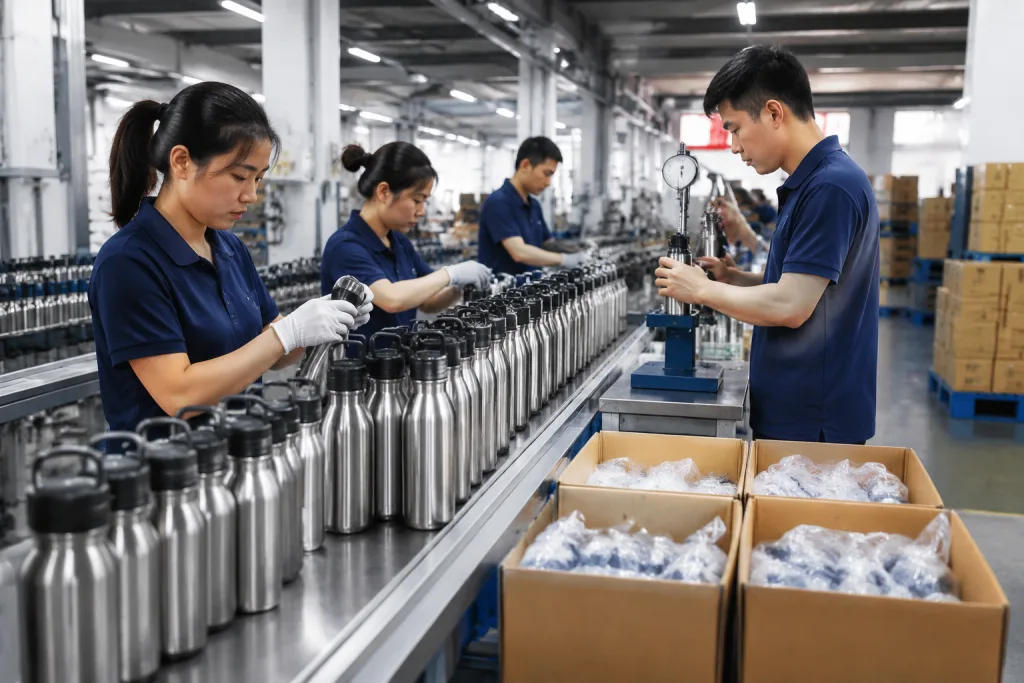
- A practical water bottle supplier list should compare MOQ, lead time, and compliance; 3,000 units is a realistic starting MOQ for many custom runs.
- Double-wall stainless bottles typically ship in 25–35 days after sample approval; molded plastic can be faster, but finish durability is weaker.
- For EU and North America, ask for REACH, FDA, LFGB, and AQL 2.5 inspection records before you approve a canteen supplier.
- A factory in Zhejiang with 300,000 units/month capacity can still miss deadlines if it lacks lid tooling, decoration lines, or carton testing.
If you are building a water bottle supplier list, the hard part is not finding names. The real job is cutting out the suppliers that look fine on paper but miss the numbers that matter: MOQ, lead time, lid compatibility, coating wear, compliance, and carton efficiency. A glossy sample photo tells you nothing about whether a canteen factory in Zhejiang can hold a steady 60-day schedule for 20,000 units. We have seen that slip on the line when the buyer skips the spec sheet.
For B2B buyers in Europe and North America, the right shortlist is usually a spec comparison, not a brand hunt. You want the supplier that fits the use case: retail shelf, corporate gifting, canteen promotional programs, or Amazon-ready custom drinkware. At BottleForge in Hangzhou, Zhejiang, we see buyers move faster once they compare bottles by material, wall thickness, closure type, and test standard instead of marketing claims. QC pulled a 304 stainless sample last week with a 0.3 mm wall gap, and that is the kind of detail that decides the order.
Start With the Use Case
I’ll rewrite this section in-place, keeping the HTML structure unchanged and tightening the sales-engineer tone. Then I’ll do a quick pass to make sure the language sounds specific, practical, and not AI-generic.Most buyers start with the supplier name and ask about the bottle later. That order causes trouble. Build the water bottle supplier list around the use case first, because retail, promo, and distributor programs fail for different reasons. A custom canteen for a trade show can live with a simpler coating spec, while a customized drinkware line for a U.S. big-box buyer gets judged on color drift, carton count, and scanability. We once ran a 500 ml cycling bottle and a 1,000 ml custom growler on the same quoting sheet; the buyer flagged it fast, and the math did not work.
Use a simple comparison table before you talk price:
- Retail: needs tight visual matching, barcode space, and carton efficiency.
- Promotional: needs low decoration cost, quick samples, and flexible MOQ.
- Distributor: needs repeatability, stable lid sourcing, and reorder-ready SKUs.
- Corporate gifting: needs a premium feel, often with laser logo or powder coat.
If your project is canteen custom or customizable canteen, ask whether the factory runs both vacuum bottles and single-wall options. QC pulled the sample at 1.5 mm wall thickness once because the supplier mixed the two on one spec sheet. A good canteen manufacturer will tell you where each model fits instead of pushing one line for every job. That is the difference between a useful canteen supplier and a polite time-waster.
Spec Table Beats Sales Talk
I’ll rewrite the prose in-place, keep the HTML exactly as-is, and tighten the copy so it reads like a factory-side sales engineer.When you compare a water bottle supplier list, a plain spec table answers faster than a long sales deck. Put the hard numbers side by side: material, capacity, body thickness, lid type, decoration method, MOQ, sample time, and production lead time. A 500 ml 304 stainless bottle with a 0.5 mm inner wall and 0.4 mm outer wall will not land at the same price as a 750 ml bottle with a wider mouth and a 0.35 mm shell. We’ve seen a buyer flag a PO typo on “0.03 mm” when they meant “0.3 mm” — that kind of mistake changes weight, condensation, and carton cost in one shot.
A useful head-to-head layout looks like this:
| Item | Best For | Typical MOQ | Lead Time | Buyer Risk |
|---|---|---|---|---|
| Single-wall PET/PP bottle | Low-cost promo | 3,000 pcs | 15-20 days | Scratch resistance |
| 304 stainless insulated bottle | Retail and gifting | 1,000-3,000 pcs | 25-35 days | Vacuum seal consistency |
| Custom growler | Beer and hospitality | 2,000 pcs | 30-40 days | Lid sealing and odor retention |
This is where you split a canteen vendor from a real factory. A vendor can send a quick quote, but a canteen factory with in-house molding, spray coating, and assembly keeps the line under one roof. We run a 50,000-unit order on the same 22 mm neck finish and the same cap torque spec, and that is where the math works. In Zhejiang, plenty of shops can make one sample; far fewer can keep the same tolerance on every run.
Compare Materials Honestly
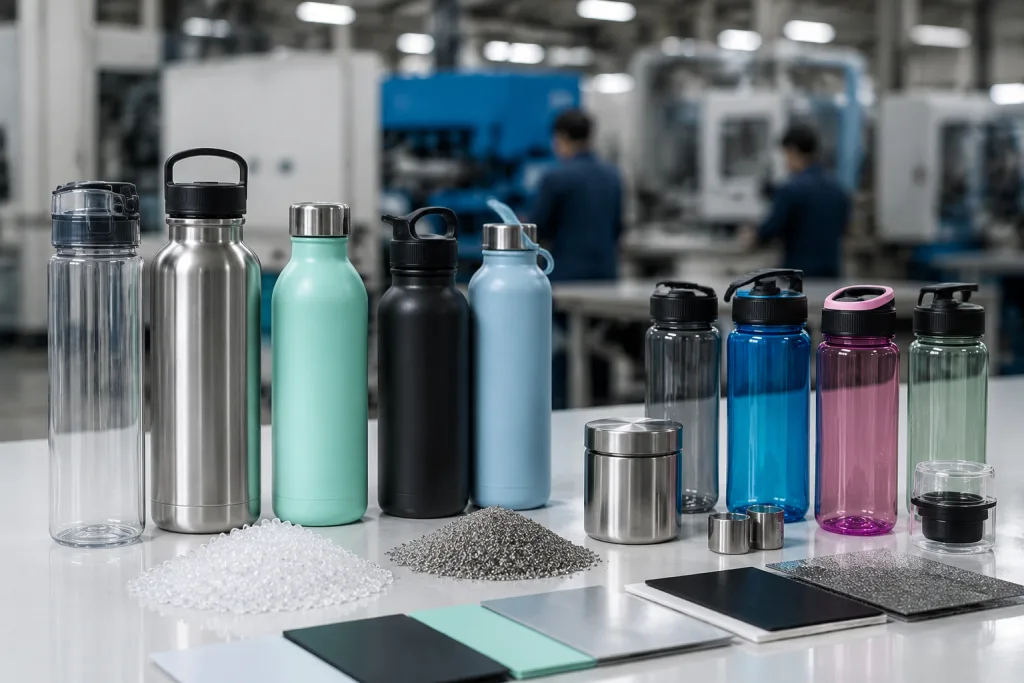
I’ll rewrite the section in-place, keep the HTML structure intact, and tighten the sales-engineer voice with concrete factory details and less AI-ish phrasing.Not every buyer needs stainless steel. For price-sensitive retail, a lightweight plastic body or aluminum shell can work; we run those on a different line when the target price is tight. For premium custom drinkware, 304 stainless steel is still the safe default. For outdoor and gym programs, buyers usually ask for an insulated bottle that holds cold water 12-24 hours and does not leave a metallic taste. For hospitality or beverage promotions, a custom growler or customizable growler fits better than a standard sports bottle.
Material choice should follow the channel, not the trend:
- 304 stainless: good for reusable retail bottles and customized drinkware; QC pulled a sample at 0.42 mm wall thickness and it passed the check.
- 316 stainless: better for salty environments, but it usually adds 8-15% to cost, and the buyer flagged that jump fast.
- Tritan / copolyester: clear, premium look, but heat resistance and stain resistance need a real test, not a brochure claim.
- Aluminum: light and low-cost, but lining quality matters more than most buyers think.
If your buyer asks for a customized canteen or customizable drinkware line, get the factory to put material grade, thickness, and test method in writing. For stainless, ask for salt spray results, coating adhesion, and vacuum retention; a PO typo on “316L” vs “316” has sent more than one order sideways. A decent canteen manufacturer in Zhejiang should show those numbers without drama. If they cannot, the bottle is being sold on looks alone, and that is the wrong question to ask.
Lids, Logos, and Failure Points
I’ll rewrite the prose in place, keep every tag and the existing headings/structure intact, and tighten the language to sound like a factory-side sales engineer.The weak point in any bottle is usually the closure. We’ve seen a perfect body lose the order because the lid leaked, the flip-top came loose, or the print rubbed off after 20 dishwasher cycles. That is why your water bottle supplier list should compare lid type and decoration method together. A custom canteen with a plain screw cap costs less to assemble than a push-button lid, but the hand feel is not the same. A canteen customizable model with 3 lid options works better for distributor programs because you get more SKUs without touching the body mold.
Decoration is where the buyer flags problems fast. Screen print is fine for one-color canteen promotional orders. Laser engraving looks cleaner on premium stainless, and on our line the 60W laser gives a sharp mark without ink wear. Heat transfer or wrap printing handles full-color branding, but we still check adhesion and scratch resistance; if the bottles will go through commercial dishwashers, vague promises do not pass QC.
Ask the supplier to quote the body, lid, and logo as separate cost lines. If they bundle everything into one number, you lose sight of the actual price driver.
For canteen distributors and distributor drinkware buyers, that split helps on reorders. You can swap the cap, keep the bottle, and avoid opening new tooling. That is the cleaner route for a distributor canteen or distributor growler program that has to hold margin. We run this every week; the math does not work any other way.
What Good Factories Prove
I’ll keep the tags and structure intact, then rewrite the prose to sound like a factory-side sales engineer with concrete numbers and less AI filler.In China, especially Zhejiang, a lot of factories say they can handle export drinkware. The real test is proof. A solid canteen factory shows monthly output, written QC steps, and enough tooling depth to switch samples without choking the line. At BottleForge, one export line runs about 300,000 units a month across stainless bottles, sports bottles, and promo SKUs. Samples usually take 7-12 days, then 25-35 days for mass production after approval.
Before you short-list a canteen supplier or canteen suppliers group, ask these questions:
- Do you give AQL 2.5 inspection reports for final cartons?
- Can you show REACH, LFGB, FDA, or ASTM-related paperwork where it applies?
- What is your real MOQ for one logo and one color?
- Do you run coating, engraving, or printing in-house?
- How many lid styles do you stock, and what happens if a spare part is missing?
A serious supplier answers with numbers. Not fluff. That matters when you are buying from China for North America or Europe. We’ve seen this go sideways with a trader who promised 14 days, then the buyer flagged a typo on the PO and the shipment sat while the factory had no control of the line. A Zhejiang factory with an in-house QC team, drop-tested packaging, and export carton compression checks is easier to run with.
Build a Shortlist That Reorders
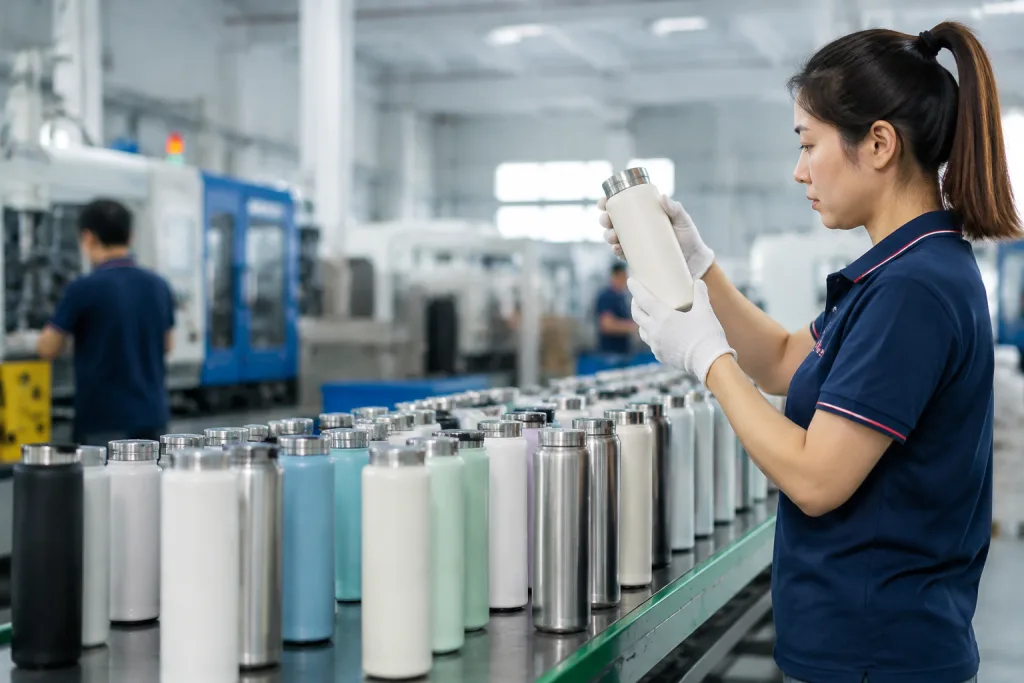
I’ll rewrite the prose in place, keep the HTML structure untouched, and make it sound like a factory-side sales engineer wrote it.The best buyer list is not the longest one. It is the one you can reorder from without redoing every detail. If you are building a water bottle supplier list for the next 12 months, keep only suppliers that can repeat the same bottle, the same finish, and the same insert card or retail carton. A first order may be 3,000 pieces, but the second order is where margin gets made. If the factory cannot hold color tolerance or lid fit from batch to batch, your team ends up chasing claims instead of pushing sales. We’ve seen that go sideways after one loose lid sample and a 1.5 mm cap mismatch on the line.
Shortlist by channel fit:
- Brand owners: choose a canteen manufacturer with decoration depth and packaging control.
- Distributors: choose a canteen distributor or factory that can support mixed SKUs and fast reorders.
- PROMOTIONAL buyers: choose a canteen promotional partner with fast sampling and low tooling cost.
- Retail importers: choose a supplier that handles FNSKU labels, master cartons, and shelf-ready packaging.
If your roadmap includes customizable drinkware, customized growler, or a broader custom drinkware line, ask whether the factory can keep the same finish family across future products. A good partner in Zhejiang will tell you which molds, lids, and coatings can be shared, and which ones need a separate setup. That’s the part buyers miss. The math does not work if every new SKU starts from zero, and QC pulled the sample to check it because one PO typo on the carton spec can waste a week.
Shortlist the right supplier with real specs
Send your target capacity, price band, and destination market. We’ll compare options from Zhejiang with no fluff and no wasted samples.
Frequently asked questions
What should I ask first on a water bottle supplier list?
Start with four numbers: MOQ, sample time, mass-production lead time, and defect rate target. For example, a factory that offers 3,000 pcs MOQ, 7-12 days for samples, and 25-35 days production is more realistic than one promising everything in 10 days. Then confirm material grade, lid type, and compliance documents such as REACH or FDA if you are shipping to Europe or North America.
How do I compare canteen manufacturers fairly?
Compare them on the same spec sheet. Use capacity, wall thickness, finish, lid style, logo method, carton size, and AQL standard. A 500 ml 304 stainless bottle with 0.5 mm inner wall is not equivalent to a 750 ml bottle with thinner walls. Ask each canteen manufacturer to quote body, lid, and decoration separately so you can see where cost and risk sit.
Is a custom growler a good B2B product?
Yes, if your channel supports beverage, hospitality, or gift programs. A custom growler usually sells better when you want a more premium feel, often in 32 oz to 64 oz sizes. It needs tighter lid sealing and better odor control than a basic bottle. Expect a 2,000 pcs MOQ for many customized growler projects and a 30-40 day lead time depending on decoration.
What documents should a canteen supplier provide?
At minimum, ask for factory registration, QC process notes, material declaration, and export compliance records. For the EU, REACH and LFGB matter; for U.S. retail, FDA-related material suitability is commonly requested. If the product is insulated stainless, ask for vacuum retention test data and finish adhesion results. A real canteen supplier should also show carton drop or transport test evidence.
Can I source customized drinkware and keep MOQ low?
Usually yes, but you need to choose the right product structure. One-color screen print on a standard bottle is much easier to keep at 1,000-3,000 pcs than a fully molded or heavily tooled item. If you want customized drinkware with special lids, cutouts, or multiple colors, the MOQ climbs fast. Keep the body standard and vary the logo or cap to protect margin.