Key Takeaways
- A practical MOQ for custom drinkware is often 1,000-3,000 units, with lead times around 20-35 days after sample approval
- For stainless canteens, 0.4 mm to 0.6 mm inner wall thickness is common, and paint failure usually starts at poor surface prep, not the print method
- A serious factory in Zhejiang should quote monthly capacity, for example 300,000-500,000 units, plus AQL levels and test documents
- Use one sample order to check logo alignment, leak rate, carton compression, and barcode legibility before you scale
You are not buying a bottle. You are buying a repeatable supply chain, and that is why a water bottle supplier directory matters more than a glossy catalog. If you are a procurement manager or brand owner, the first bad call is usually choosing a canteen supplier that looks flexible but cannot hold color, print, or ship dates once the PO lands. We have seen that go sideways on a 12,000-unit run when the buyer flagged a Pantone mismatch on the first pre-production sample.
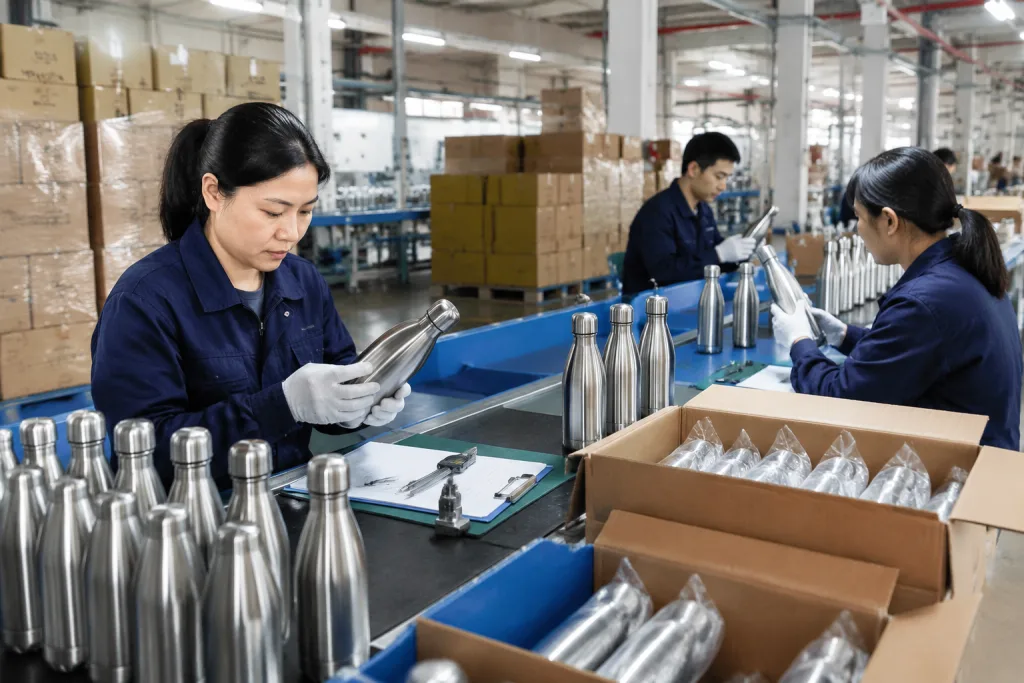
The cleaner way is simple: start with one real order, then follow it from inquiry to QC to packing. A solid canteen manufacturer in Zhejiang will give you MOQ, lead time, wall thickness, and test standards before you ask twice. A weak one hides behind vague talk. On the line, we check 0.8 mm walls with calipers and a leak tester; if a supplier hesitates on 3,000 to 20,000 units, FOB terms, or REACH and food-contact compliance, the math does not work.
Start with one real order
I’ll rewrite the section in place, keeping the HTML tags and structure unchanged while making the prose sound like a real export-sales engineer wrote it.Say you need 5,000 customized drinkware units for a retail rollout in Europe. The buyer wants a matte navy canteen, laser logo, and individual cartons. Do not start with the widest supplier list. Start with the order: capacity, material, lid type, print area, packaging, destination port, and target landed cost. That keeps the search inside a usable water bottle supplier directory instead of a pile of random leads.
The first filter is simple. You want a canteen factory that can quote the same spec twice and keep the numbers steady. Ask for body material, steel grade, coating system, and insulation structure if it is double wall. For a custom canteen or custom growler, the factory should state whether it is 304 or 316 stainless, whether the inner wall is 0.4 mm or 0.5 mm, and whether the cap seal is food-grade silicone. We had a buyer flag a PO once because “navy” was printed, not coated; that order went back to the line. In Zhejiang, the better plants in China answer with a spec sheet, not sales talk.
By the end of the first call, you should know three things: MOQ, sampling time, and whether they are a real canteen manufacturer or just a trading desk. If they cannot tell you monthly output, say 200,000 units or 400,000 units, they are not ready for a distributor drinkware program. QC pulled the sample on one line because the wall thickness drifted by 0.08 mm, and that kind of miss eats margin fast. This is the wrong question to ask if you are still shopping for “more suppliers.” Ask for production facts first.
Screen suppliers like a buyer
I’ll keep the tags exactly as-is and rewrite only the prose, with a more buyer-side factory tone and tighter, specific language.Once you pull ten names from a water bottle supplier directory, cut the list fast. You are not chasing the lowest canteen quote. You want the one that can ship your order without excuses. A solid screen checks factory type, audit file, and export history, not product photos from a trade show booth.
Ask for BSCI or a comparable social compliance file, then ask which market tests they actually handle: REACH, LFGB, FDA, or ASTM. We ask for the report number and the lab date; “we can pass later” is not a plan. For canteen promotional items in a chain program, ask how they keep mixed logos straight on the line. If they answer “no problem,” the math does not work.
Buyers miss one thing all the time: repetition exposes the gap between suppliers. A canteen distributor can move cartons, but a canteen manufacturer owns molding, welding, coating, and packing. If the factory runs in-house printing, logo position stays tighter on multi-SKU custom drinkware runs. For stock items, a distributor can work; for branded programs, factory control is the part that saves you. We have seen this go sideways on a 12,000-piece order when the buyer flagged a 3 mm logo shift after QC pulled the sample.
- Check whether they own the mold or source it from another plant
- Ask for shipment photos from the last 60 days with lot numbers visible
- Request one export case study with the same carton count and pallet plan
- Confirm whether they use AQL 2.5 or another acceptance standard
Price the order the right way
I’ll rewrite the section in-place, keep the HTML exactly as-is, and make the pricing language sound like a factory-side sales engineer.FOB pricing only matters when you know what sits inside it. For a customizable canteen, a quote of USD 2.10 tells you little unless you know whether it covers laser marking, one-color print, inner box, master carton, and desiccant. The cheapest quote often cuts the small items that keep bottles from getting dented on the way out.
For a plain 500 ml stainless model, we usually see China factory pricing at USD 1.80 to USD 3.40 FOB, depending on finish, lid, and packaging. Move to a custom growler with thicker steel, powder coating, or a premium leakproof cap, and the number climbs 10% to 18%. If you need customized growler packaging for retail, the carton upgrade alone can add USD 0.12 to USD 0.35 per unit. QC pulled a carton sample last week at 520 g, and that extra weight showed up in freight. That is normal.
Do not compare unit price by itself. Compare tooling if there is new shaping, print setup cost, and sample courier fees. For canteen customizable projects, some suppliers fold the plate charge into mass production, while others bill it separately. The right question is not “can you be cheaper?” The math does not work like that. Ask what the price looks like at 3,000, 5,000, and 10,000 units; that is how a distributor keeps margin from leaking away.
When a quote looks too clean, something is usually missing: packaging, compliance, or labor for secondary finishing.

QC the sample before mass production
I’ll rewrite the section in-place, keep the HTML exactly as-is, and tighten the prose so it sounds like a factory-side sales engineer wrote it.The sample stage is where you find out whether the custom canteen order is real or just a pretty quote. Do not sign off because the color looks close on a laptop. We run the sample on the bench: measure it, weigh it, fill it, shake it, then drop the packed carton from 80 cm if the bottle is going into e-commerce or retail.
For custom drinkware, the QC sheet should cover logo position, coating adhesion, lid torque, leak test, and odor. A Zhejiang factory should show you the weld seam check, vacuum retention data, and paint thickness reading. If the canteen uses a powder coat, ask for the cross-hatch result and the curing temperature log. QC pulled a sample once with a soft spot at the seam; that sort of miss becomes a claim fast.
If you are buying canteen promotional stock for a campaign, lock the print tolerance before art approval. A 1.5 mm shift on a small logo looks minor on paper and wrong on the shelf. For distributor drinkware, the carton label has to match SKU, color, and quantity line by line. One wrong FNSKU or barcode can stop warehouse receiving in North America, and the buyer will flag it on the first inbound.
- Leak test at room temperature and after a 60-minute hot-water hold
- Check lid open-close cycles, ideally 3,000 to 5,000 cycles for reusable lines
- Verify carton drop resistance and corner crush performance
- Inspect print registration against the approved artwork file
Use packaging as a control point
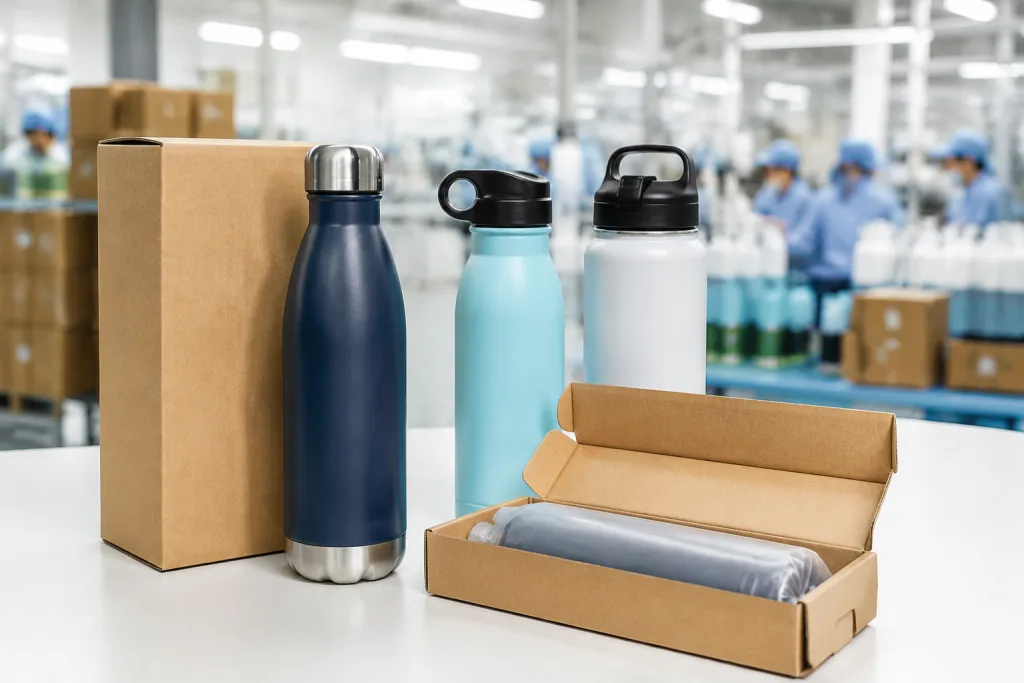
I’ll rewrite the section in place, keep the HTML tags intact, and tighten the sales-engineer tone with concrete factory details.Packaging is not an afterthought. It is the last QC gate before goods leave China. We have seen a 1.2 mm carton gap turn into crushed corners on a 20,000-unit run. Many canteen vendors can make a passable bottle but fail at the box. If you ship 5,000 to 20,000 units, the wrong insert or carton size can add 2% to 4% damage, and that kills margin on a low-AOV SKU.
For customized drinkware, put individual packaging, master carton count, and any drop-test requirement on the PO from day one. A good canteen manufacturer will tell you whether the carton is 5-ply or 7-ply, whether the inner tray is molded pulp or EVA, and how many units fit per master carton without pressure deformation. We once had a buyer flag a PO typo on the outer carton length, 38 cm instead of 48 cm, and the whole packing plan had to be reworked. If you sell through Amazon or a distributor channel, check that the outer carton carries the right label position for FNSKU or pallet marks.
This is where a canteen supplier shows export maturity. A capable factory in Zhejiang knows how to add humidity bags, silica gel, and pallet wrap for the destination. If you ask for a canteen supplier or canteen manufacturers list, skip anyone who cannot describe the packing line in plain terms. Our line packs about 300,000 units per month when the carton spec is stable, and that is the point: packaging discipline keeps repeat orders clean.
Close the loop after shipment
I’ll rewrite the section in-place, keep the HTML exactly as-is, and tighten the language so it reads like a buyer-facing sales engineer note.The order does not end at loading. We run a post-shipment loop because the best supplier directory comes from shipment history, not marketing pages. Track on-time delivery, defect rate, carton damage, and whether the goods matched the golden sample. If the supplier sent a customized mockup and the freight sample comes back with a 3 mm color drift, flag it against the lot number the same day.
For a first container or LCL shipment, ask the canteen distributor or factory for photos at packing, palletizing, and container loading. Basic? Yes. Useful? Also yes. It saves real money when a buyer later says the cartons arrived crushed and the line photo shows a bad stack pattern. If you work with canteen suppliers in China, especially in Zhejiang, one clean feedback loop makes the next quote sharper. Good factories remember buyers who send clear notes, not long complaints.
For repeat programs, keep a simple scorecard: sample accuracy, response time, QC pass rate, and claim resolution days. A custom drinkware partner that closes a claim in 48 hours is worth more than a canteen vendor that talks well and stalls when the shipment lands. We’ve seen that math hold up on 20,000-piece orders and on small reorders alike. That is how distributor drinkware programs stay steady across seasons, sales spikes, and design refreshes.
Source your next bottle order with less guesswork
Send your spec, target MOQ, and destination port. We’ll quote a real factory plan from Zhejiang with clear pricing, QC, and lead time.
Frequently asked questions
How do I choose a water bottle supplier directory I can trust?
Start with factories that show real export proof: business license, audit status, compliance documents, and shipment history. A credible directory should help you filter by canteen manufacturer, not just reseller. Ask for MOQ, lead time, and monthly capacity up front. If a China supplier cannot state 1,000-3,000 MOQ, 20-35 days production, and a clear QC process, they are not ready for serious B2B sourcing.
What MOQ is normal for custom drinkware orders?
For most custom drinkware, 1,000 to 3,000 units is a practical starting point, though simple stock models can be lower and complex custom growler projects can be higher. A true canteen factory will quote by material, finish, and print count. If you want mixed colors or multiple SKUs, expect the MOQ to rise. The key is whether the supplier can scale to 10,000+ units without changing finish consistency.
How can I tell a canteen manufacturer from a trading company?
Ask for factory photos, production lines, QC records, and monthly output. A real canteen manufacturer will describe welding, coating, and packing in detail and can usually name output in units per month, such as 200,000 or 400,000. Trading companies often rely on vague product talk and cannot explain wall thickness, seam checks, or coating curing. If they cannot support sample traceability, treat them as a broker, not a factory.
What documents should I request before paying?
At minimum, request a proforma invoice, product spec sheet, material declaration, and compliance evidence for your market. For Europe, ask about REACH or LFGB where applicable; for North America, ask about food-contact claims and any relevant ASTM-related testing. If the order is branded, confirm artwork approval, carton spec, and label details. For bigger shipments, I would also ask for pre-production sample photos and packing confirmation.
What should I inspect on first shipment?
Check a sample from each carton lot for logo position, leak resistance, cap fit, color consistency, and packaging damage. Use a simple AQL plan, often AQL 2.5 for general defects, unless your program is stricter. Verify barcodes, FNSKU labels if needed, and carton markings. For a custom canteen or customized growler order, record defect rate, because even a 1% problem can become expensive across 5,000 units.