Key Takeaways
- MOQ for custom water bottles often starts at 3,000-5,000 pcs; printed lids can push it to 8,000 pcs
- A 0.5 mm wall on a 304 stainless bottle usually lands better than 0.4 mm for dent resistance and shipping damage
- Typical lead time is 18-35 days after sample approval, depending on decoration and packaging
- For compliance, ask for REACH, LFGB, FDA, and AQL 2.5/4.0 inspection records before deposit
You are not buying a water bottle. You are buying a spec sheet that has to survive freight, retail handling, and the buyer asking why landed cost jumped 8% overnight. That is the real test in water bottle online wholesale: the listing looks simple, but the money sits in material grade, lid tolerance, coating yield, and the factory’s monthly output. We run the line against those four numbers first.
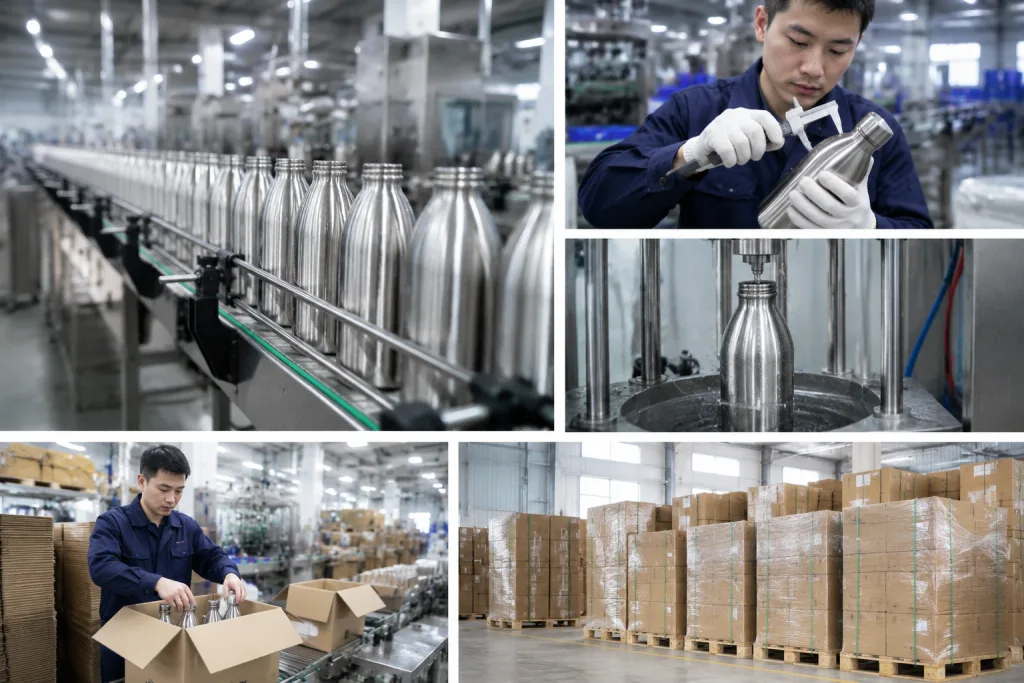
If you source from Zhejiang or wider China, you already know the pattern: a supplier quotes a low unit price, then the sample, the carton, or the compliance file tells a different story. Read each line like a procurement engineer. Check wall thickness, cap system, test standards, MOQ, and FOB basis before you send artwork. The buyer flagged a 0.3 mm gap on one cap and the whole order stalled. BottleForge Industrial in Hangzhou runs 500,000 units per month across stainless, Tritan, and aluminum programs, so the numbers below come from export orders we ship every week, not catalog copy.
Start with the base material
I’ll rewrite this section in-place, keep the HTML structure unchanged, and tighten the sales-engineer voice while preserving the numbers and tags.The first line on any spec sheet decides whether your margin survives the season. For water bottle online wholesale, material choice sets cost, weight, odor control, and scrap rate. A 304 stainless steel bottle is the default for most retail programs because it gives stable corrosion resistance at a workable price. For premium hydration SKUs, 18/8 stainless is what buyers ask for, even when the mill cert comes from the same family. For plastic, Tritan copolyester still works when you need clarity and BPA-free positioning, but it is not the cheap route. QC pulled the sample on a 500 ml run last week, and the wall finish told the story fast.
Read the material in context, not as a marketing label. A 500 ml stainless bottle at 0.4 mm wall thickness may quote at USD 1.85 FOB Ningbo, while the same body at 0.5 mm moves to USD 2.05-2.25 because of higher metal use and a slower forming process. That extra 20 cents often pays back in fewer dents and fewer customer claims. We’ve seen this go sideways when a buyer chases the lower quote and then flags 3% damage after carton drop testing. In Zhejiang, the line will tell you the same thing: cheap material is not cheap landed cost.
- 304 stainless: the default for mainstream bulk drinkware and drinkware wholesale programs
- 316 stainless: use it only for premium or corrosive-use categories; the math does not work elsewhere
- Tritan: good for clear sports bottles and canteen wholesale sets
- Aluminum: lighter, but coating and lining quality matter more than the metal itself
Capacity changes the economics
I’ll rewrite the section in place, keep the HTML intact, and tune the copy to sound like a buyer-facing factory note with concrete sourcing detail.Capacity looks like a consumer choice, but in procurement it changes unit economics, carton density, and freight. A 400-500 ml bottle packs tighter, ships cheaper, and usually moves faster in school, corporate gift, and travel channels. A 750 ml or 1 L bottle costs more to move because the carton cube climbs faster than the selling price. We see this on the packing table all the time. That is why buyers usually split the line into a compact SKU and a hero SKU instead of forcing one bottle to do everything.
When you request quotes, put the capacity and the use case on the same line. A 600 ml double-wall bottle may fit gym and office orders, but a 1 L version often wins for outdoor equipment. If you are building a bulk canteen program, send the neck diameter, handle geometry, and cap torque together; QC pulled a sample last week at 38 mm neck ID and the buyer flagged the cap as too loose after the first drop test. For beer growler wholesale or growler bulk programs, capacity has to match carbonation targets and country fill lines, especially when the end user refills in hospitality settings. The math does not work if you treat all liters the same.
Practical volume bands
- 350-500 ml: good for gift sets, kids, commute, and low-cube shipping
- 600-750 ml: common for sports, outdoor, and retail shelf programs
- 900 ml-1 L: useful for bulk growler, bulk canteen, and workplace hydration
Wall thickness and feel
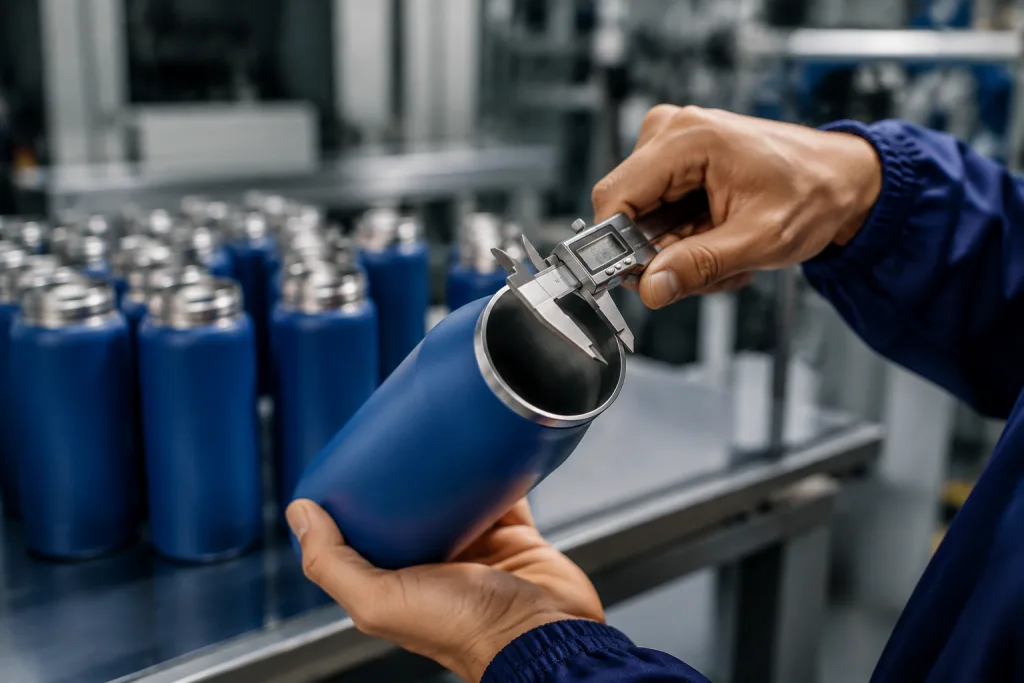
I’ll rewrite this section in a more field-tested sales-engineer voice, keep the HTML structure intact, and preserve the specific numbers.Buyers often miss wall thickness because they only notice it after the sample lands. That is the wrong place to learn it. The gap between 0.35 mm and 0.5 mm stainless changes dent resistance, weld stability, and the way a bottle rings when QC sets it on the stainless bench. If your brand sells on feel, a thin wall makes a 24-ounce bottle read cheap even with clean print.
For export orders, 0.45-0.5 mm is the range we run on stainless bodies. Go thinner only when the target price is tight and you accept more transit marks. On vacuum bottles, check the inner and outer wall for consistency; a mismatch can move insulation performance by 5-10% in a hot/cold cycle. We ask for cut sections from the line, not just photos. A factory that does serious export work will send them. If they stall, the variation is usually real.
“If the supplier cannot tell you wall thickness, they are selling appearance, not engineering.”
Cap system drives leakage risk
I’ll rewrite the section in-place, keep the HTML structure intact, and tighten the prose so it sounds like a factory-side sales engineer.The cap is where most leakage claims start. A screw lid looks simple until you check thread pitch, gasket material, and torque repeatability on the line. If you are buying drinkware bulk for e-commerce or retail, the leakage target should be zero in normal use and near-zero after thermal cycling. We treat the lid as a system, not a top accessory. The gasket should be food-grade silicone or TPE, and the retention design needs to survive repeated opening without losing compression.
For water bottle online wholesale, lid style also changes your stock plan. A sports cap fits active channels, while a bamboo or stainless lid sells better in premium gift sets. For canteen bulk and wholesale canteen orders, handle-integrated lids improve usability, but the hinge area can push scrap up if the wall thickness is off by 0.3 mm. QC pulled a 50-cycle open-close test, a 24-hour leak test, and a 1-meter drop test on the assembled bottle. That is not overkill; the math does not work if cartons reach your warehouse as refunds.
- Ask for thread drawings and gasket spec, not just a photo
- Confirm cap torque range in N·m if the factory can provide it
- Require assembled leak testing after print and before final carton packing
Decoration decides your usable margin
I’ll rewrite just the prose, keep the HTML tags intact, and tune it to sound like a factory-side sales engineer with concrete numbers and field detail.Decoration is where wholesale drinkware margin gets eaten in small bites. A one-color silkscreen looks cheap on paper, then the buyer sends a logo with 5 mm text and a curved body, and the line slows down. Laser engraving on stainless is clean, but setup takes time and the cycle is different on powder-coated cups. UV print gives strong color, yet if pretreatment is weak the adhesion test fails fast.
On a standard 500 ml stainless bottle, one-color silkscreen usually adds USD 0.12-0.25 per piece at 3,000 pcs. Laser engraving is more like USD 0.18-0.35, depending on logo size and placement. Full-wrap print raises the scrap risk, especially on a taper; we’ve seen a 2 mm registration shift turn into a buyer complaint. If you sell on Amazon or a similar channel, consistency beats a pretty one-off sample. A sample that runs clean once but falls apart at 10,000 pieces is the wrong sample to approve.
For beer tumbler wholesale bulk, alcohol flask wholesale bulk, or beer growler wholesale bulk orders, decoration has to match how the product gets used. Matte coating hides fingerprints better. Gloss looks sharper in retail photos, but QC pulled the sample and the handprint marks showed up after one pass. A factory with a steady decoration line will give you a yield number before production; ask for that number, not just the mockup. The math does not lie.
MOQ, lead time, and production reality
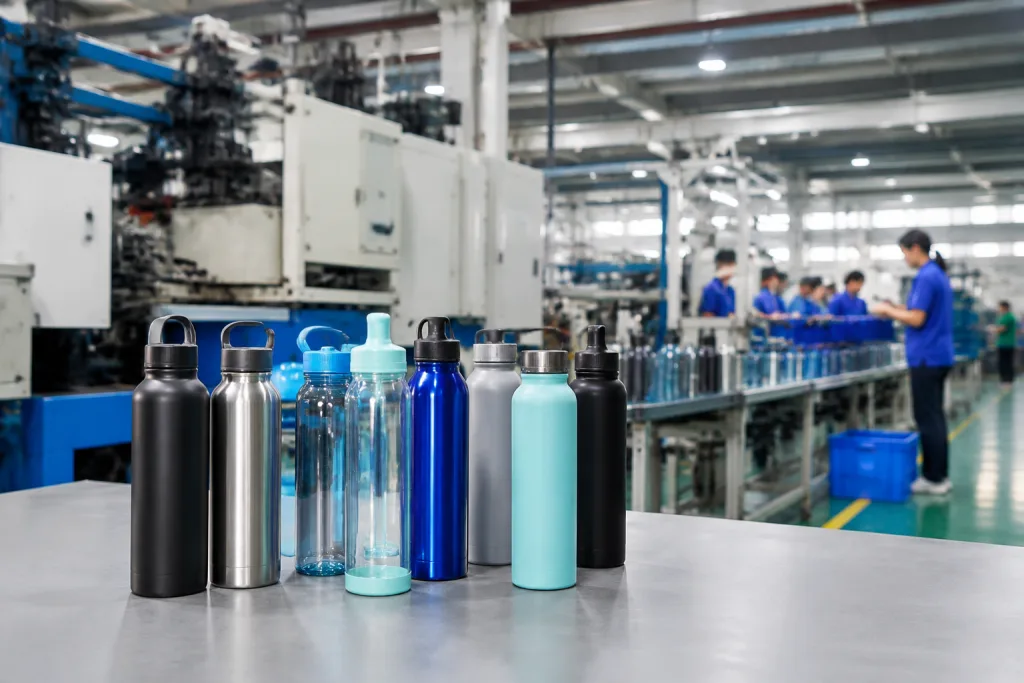
I’ll rewrite the section in place, keep the HTML untouched, and tighten the copy so it reads like a factory-side sales engineer wrote it.MOQ is not a random number. It comes from mold setup, coating changeover, silk-screen setup, and how many pieces we can run without stopping the line for another job. For standard stock shapes, 1,000 pcs is doable. For custom shapes, 3,000-5,000 pcs is the usual floor. For special finishes or multi-step decoration, 8,000 pcs is normal. If a Zhejiang factory claims 500 pcs with full customization and sharp pricing, the math does not work; we have seen that go sideways when the buyer checks the quote line by line.
Lead time follows the same logic. A stock bottle with logo can leave in 18-25 days after deposit. A custom cap or custom color run usually needs 30-35 days. Add 7-10 days if the buyer wants third-party inspection, export carton printing, or retail inserts. We once had a PO with a typo on the carton spec, and QC pulled the sample before loading; that kind of slip costs time. If you plan seasonal shipments, leave a 15-day buffer for freight trouble. That matters on China-to-North America or Europe lanes, where a booking delay can erase the savings from a cheaper EXW quote.
Ask the factory for monthly output, not just lead time. BottleForge Industrial’s 500,000-unit monthly capacity tells you whether a 20,000-piece reorder is a normal run or a line change that slows everything down. A procurement manager should ask that first. Otherwise you are buying a sample story, not a supply plan.
Compliance and inspection should be written down
I’ll rewrite the section in-place, keep the HTML exactly as-is, and make the prose sound like a factory-side sales engineer wrote it.If a supplier says “food safe,” ask for the standard number and the report. For Europe, that usually means REACH and LFGB where they apply. For the U.S., ask for FDA food-contact confirmation plus a material declaration. If the bottle has coating, printing, or a mixed-material lid, the file has to cover every contact part, not just the cup body. For insulated bottles, we check the solder line and run a vacuum retention test; last week QC pulled a sample that held pressure for 24 hours, which is the kind of proof buyers should ask for.
Inspection is the other half of compliance. AQL 2.5 is common for major defects and AQL 4.0 for minor defects, but the plan should match your channel and damage risk. If you are shipping wholesale growler, beer growler bulk, or alcohol flask in bulk to gift buyers, the cosmetic bar is often tighter than a warehouse club order because shelf appeal drives the sale. Ask for pre-shipment photos, carton drop-test results, and a third-party inspection report if the order size justifies it. We’ve seen this go sideways when a buyer approved the sample but skipped carton checks; the cartons failed at 2.0 kg corner drops and the claim landed back on both sides.
- Request test reports by SKU, not by factory name alone
- Confirm ink, coating, and gasket compliance separately
- Use a signed sample seal before mass production
Send your spec sheet for a quote
We will check material, MOQ, lead time, and compliance line by line before you commit. Get a China FOB quote that matches your market.
Frequently asked questions
What is a realistic MOQ for water bottle online wholesale orders?
For stock shapes with a simple logo, 1,000-2,000 pcs is possible. For a custom color, custom lid, or special packaging, expect 3,000-5,000 pcs. If you need multicolor print, matte coating, or retail inserts, 8,000 pcs is a more realistic planning number. In Zhejiang, factories that quote below that often mean they will charge a setup premium or use existing stock parts. Always ask whether the MOQ applies per SKU, per color, or per decoration method.
How much should I budget per piece?
For a 500 ml stainless bottle at FOB China, a practical wholesale range is USD 1.85-3.20 depending on wall thickness, lid type, and print. A Tritan sports bottle may sit around USD 1.20-2.40, while premium insulated models are usually higher. If you add laser engraving, special coating, or gift packaging, budget another USD 0.12-0.60 per unit. For drinkware wholesale, the cheapest quote is rarely the best landed cost once damage, freight cube, and returns are included.
Which compliance documents should I request before paying deposit?
Ask for material declarations, food-contact compliance, and the latest test reports for the exact SKU. For Europe, REACH and LFGB are common asks depending on material and market. For the U.S., FDA food-contact support is the usual baseline. If your bottle includes a printed logo, coated surface, or silicone gasket, request proof for all contact components. If the factory is in China and exports regularly, they should also have MSDS or equivalent material data available on request.
How do I compare bulk canteen and bulk drinkware quotes fairly?
Normalize the quote by the same capacity, same wall thickness, same lid structure, and same decoration. A canteen bulk quote at USD 2.10 may look cheaper than a drinkware bulk quote at USD 2.25 until you see that the first uses 0.35 mm wall and a lighter carton. Compare FOB terms, carton count, master carton strength, and sample approval conditions. If one supplier includes leak testing and the other does not, the lower price is not actually lower.
What is the best wholesale drink bottle for Amazon or retail channels?
For broad retail demand, a 500-750 ml stainless bottle with a leakproof screw lid and one-color logo is the safest starting point. It is easy to photograph, easy to ship, and easy to explain. If you sell outdoors or fitness, a sport-cap Tritan bottle can work well. For Amazon-style programs, make sure the bottle dimensions match your FNSKU labeling plan and carton pack-out, because oversize cartons increase fees fast. The best wholesale drink bottle is the one that survives both the warehouse and the review section.