Key Takeaways
- A 0.2 mm wall-thickness gap can change weight by 8-12% and affect thermal retention.
- Typical OEM MOQ for a printed stainless bottle starts at 500-1,000 pcs; special caps may need 3,000 pcs.
- For export programs, ask for REACH, FDA/LFGB, and AQL 2.5 inspection references before you approve PO.
- A factory in Zhejiang should state capacity, lead time, and decoration method in one quote, not three follow-up emails.
When you buy from a water bottle oem manufacturer, the bad move is not choosing the wrong shape. It is approving samples without reading the spec sheet like a procurement guy. A 500 ml bottle can look the same on a screen and still differ by 0.2 mm in wall thickness, 18/8 versus 18/10 steel, or a cap that passes hand tests but starts leaking after 30 dishwasher cycles. We have seen that go sideways fast.
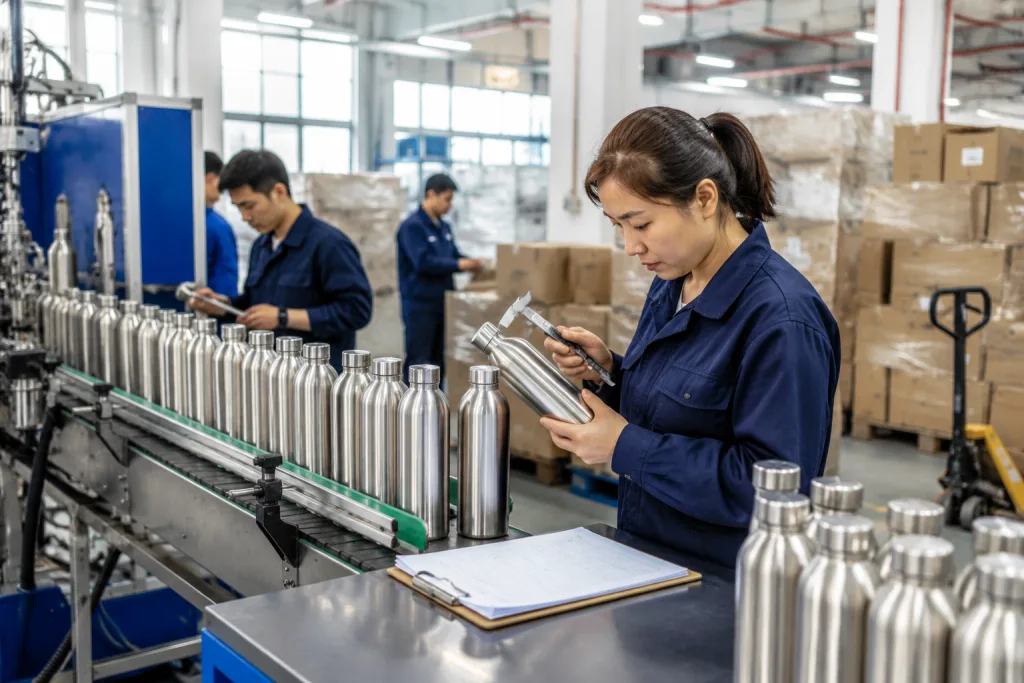
If you source from Zhejiang or anywhere in China, treat the supplier like a production line, not a catalog. A serious factory in Zhejiang should quote MOQ, lead time, test standard, and packing format before decoration comes up. At BottleForge Industrial in Hangzhou, we run 800,000 units a month, and our typical OEM lead time is 25-35 days after sample approval. That is the baseline we use when buyers compare any canteen manufacturer, canteen supplier, or distributor drinkware partner.
Read the spec sheet first
I’ll rewrite just the prose inside the existing HTML, keep every tag and number intact, and make it read like a factory-side sales engineer wrote it.Most buyers start with appearance. Experienced buyers start with the spec sheet. The sheet tells you if the bottle is a real OEM line or a trading listing with a logo slapped on. For a water bottle oem manufacturer, the first five lines matter most: capacity, material, wall structure, finish, and closure type. If those are vague, the project drifts the moment you ask for pricing, artwork, or compliance.
Look at capacity in both nominal and fill volume. A 750 ml bottle may hold 730 ml to the shoulder, and that 20 ml gap matters when the buyer is an athlete brand or an office program that checks usable volume. Check whether the body is single-wall, vacuum insulated, or double-wall with a 0.35 mm inner liner. For stainless steel, 304 is standard for most custom drinkware; 316 adds roughly 10-18% to cost and only earns its keep in harsher use or premium custom growler programs. If the factory cannot give you the exact material grade and test report reference, don’t trust it with a repeat order. QC pulled the sample, and that’s where bad specs usually show up.
Ask for the spec sheet in the same format every time. Then you can compare a canteen custom project against a customizable drinkware line without mixing up details. A proper OEM partner in China should put the spec on one page, not bury it in a sales pitch. We run the line this way because a PO typo on finish or cap type can waste a whole week.
Materials change the business case
I’ll rewrite the section in place, keep the HTML exactly as-is, and tighten the sales-engineering tone while adding a few concrete factory-floor details.Material choice decides more than hand feel. It sets unit cost, defect risk, branding method, and whether the buyer reorders after the first shipment. On the line, we keep a steel gauge chart taped near the press, and that chart saves arguments. For stainless steel, 304 is the workhorse; if a quote says “food-grade stainless” without the grade, push back and ask for the spec sheet. For plastic, Tritan and PP are common, but you still need BPA-free declarations and migration test references. For glass, check wall thickness and thermal shock tolerance, because a bottle that cracks in transit is dead stock, not premium product.
In practical terms, a 500 ml vacuum bottle with 304 steel usually lands in the USD 3.20-5.80 FOB range, depending on cap design, surface treatment, and packaging. A simpler custom canteen in single-wall steel may start around USD 1.40-2.20 FOB at 1,000 pcs. The math does not work if you chase the lowest quote and then add a heavy paint system or a tricky lid; we’ve seen that eat margin faster than the metal cost itself. QC pulled a sample last month and flagged a lid that added 18 seconds on assembly, which is enough to move your landed cost.
Buyers of canteen suppliers often miss one basic point: material controls branding, too. Laser engraving stays clean on powder-coated steel, but silk screen on a soft-touch finish wears faster, and the buyer will blame the bottle, not the artwork. If you are building a distributor canteen line, match the decoration method to the sell-through plan, not just the launch photo. The same rule applies to customizable canteen and customized canteen programs: the base material should support the decoration, not fight it. We had a PO typo once where “matte black” became “metal black”; the buyer flagged it before production, and that saved a full reprint.
Closure design makes or breaks returns
I’ll rewrite the section in-place, keep the HTML untouched, and tighten the sales-engineering tone with concrete factory details and fewer AI-ish fillers.Leaking lids still turn a good order into a loss. We’ve seen it on the line. When you check a cap, don’t stop at the closing style. Look at the gasket compound, the opening cycle count, and the torque test report. A cap can feel solid in hand and still fail after 5,000 open-close cycles if the hinge geometry is weak or the thread pitch is off by 0.2 mm.
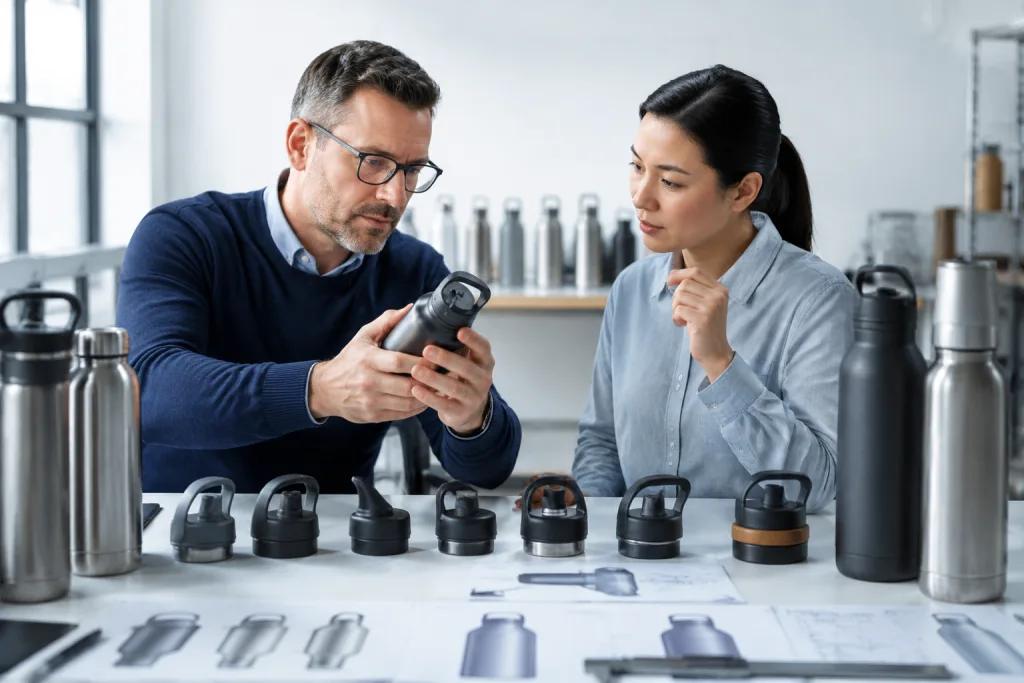
For B2B buyers, closure design belongs on the BOM, not in a late email. A plain screw cap may add almost nothing to unit cost, but a flip lid, straw lid, or push-button lid can add USD 0.35-1.20 per unit and slow packing by one extra station. If you want canteen customizable options, lock the lid choice first; the tooling and carton insert follow it. A canteen manufacturer in Zhejiang should show standard lid families with fitment data, not push you into a new mold for every PO.
For distributor canteen and distributor growler programs, ask for spare parts up front. QC pulled the sample, and the buyer flagged the missing gasket bag right away. Replacement lids help aftersales and cut claim noise. This is where a lot of programs go sideways. It also matters for canteen distributors serving retail chains that want stable SKU support for 12 months, not a promise that slips after the first season.
Decoration is not just branding
I’ll rewrite just the prose inside the existing `` tags, keep the HTML intact, and tighten the language so it sounds like a buyer-facing factory note.
Decoration changes cost, lead time, and the way buyers judge the bottle on shelf. Silk screen is still the cheap workhorse for a flat one-color logo. Laser engraving gives a hard-wearing premium look on brushed steel and powder coat. UV print opens up full color, but the line needs cleaner surface prep and one extra QC check. If you are buying canteens for a promo run, ask a simple question: does the logo need to survive abrasion, or just get through the launch season?
A one-color silk screen usually adds USD 0.08-0.18 per unit. Laser engraving often lands at USD 0.20-0.45, depending on coverage and setup. Full-wrap color goes higher fast. We run this math every week. A 3% print reject rate on 10,000 pcs means 300 pieces back on the table, and that kills ship dates when the buyer flagged a tight retailer PO or Amazon FNSKU window. One missed alignment on the jig can turn into overtime on the line.
For custom drinkware sold through distributors, print consistency matters as much as the logo design. If a canteen vendor says artwork tolerance is “about right,” that is the wrong answer. A serious custom drinkware supplier in China should give you placement tolerance, Pantone references, and proof approval before production starts. QC pulled the sample on one job because the logo sat 2.5 mm too low; we caught it before mass production, which saved a reprint and a lot of back-and-forth.
Packaging decides landed cost
I’ll rewrite the section in-place, keep the HTML structure intact, and tighten the sales-engineer tone with concrete packout details and factory-floor language.Packaging is where importers lose money on the quiet. The box can look cheap on paper, but if it pushes you into oversized cartons or bad pallet use, freight starts eating the margin. We’ve seen a 24-bottle carton fail where a 20-bottle pack would have worked, just because the insert left dead space; that extra volume weight hurts both ocean and air. For a bottle moving from Zhejiang to North America, a 6% carton-efficiency gain can matter more than cutting USD 0.05 from the lid.
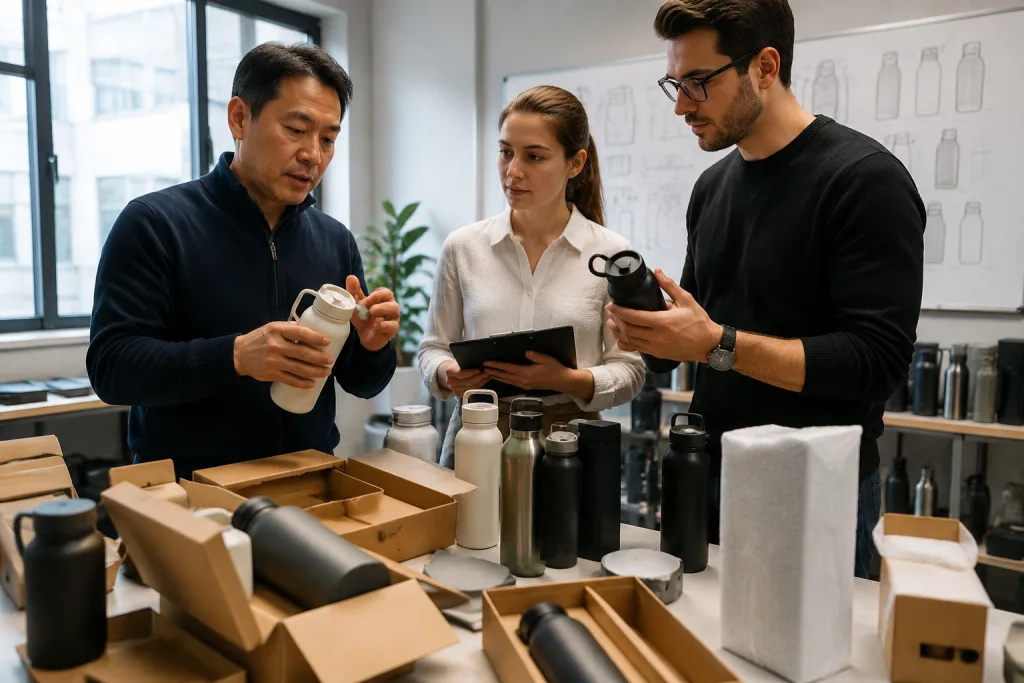
Ask for the packout sheet, not just a pretty render: inner box count, master carton size, drop-test result, and whether the barcode label is applied on the line or at your warehouse. If you need retail-ready units, lock in FNSKU, UPC, or plain SKU before the sample stage; the buyer flagged a PO typo on label format once, and we had to rework 12,000 sets. For canteen distributors handling 8 to 15 accounts, pack flexibility is not a nice-to-have. It lets us run one bottle body with three customer packs without touching the mold.
Good packaging is also a QC signal. If your customized drinkware lands with scuffed bodies or dented corners, you take the hit twice: claims, then time spent chasing photo evidence. QC pulled a sample from the pallet corner once and found crushed outer cartons after a 1.2-meter drop; that told us the insert was too loose. A canteen supplier who can show carton drop-test data and pallet plans is usually the safer bet than one chasing only a low FOB number — that math does not work.
Test plans protect your reorder
I’ll rewrite the section in place, keep the HTML exactly as-is, and make the prose sound like a factory-side sales engineer wrote it.A clean sample is not the finish line. QC pulled the sample, and the line still needs a test plan. Ask for leak testing, dishwasher resistance where it applies, coating adhesion, and material compliance. For Europe and North America, REACH plus LFGB or FDA food-contact support should be on file before shipment leaves the warehouse. If the bottle uses insulation, ask for thermal retention at hot and cold intervals, with the actual test setup and timing—not a box claim.
Put inspection terms into the PO. AQL 2.5 for major defects and 4.0 for minor defects is common on consumer drinkware, but for a key program we often tighten it. If you are buying a customized growler or custom growler line for hospitality or retail, add cap torque, seam integrity, and vacuum loss checks. If you are buying canteen customized items for government or school use, ask for batch traceability by production date and shift number; we have seen one typo on a PO turn into the wrong lot being held.
Factories in Zhejiang that run scale usually have process controls, but that does not protect your reorder by itself. The right canteen manufacturer should hand over test data, not a reassurance email. We’ve seen this go sideways: one failed run across three warehouses costs far more than writing the test standard before mass production starts. A 20,000-piece order deserves that discipline.
Send your spec sheet for a factory quote
We’ll review material, MOQ, decoration, and lead time line by line, then quote with clear FOB pricing from Hangzhou, Zhejiang.
Frequently asked questions
What MOQ should I expect from a water bottle OEM manufacturer?
For a standard stainless bottle with one-color logo, a realistic MOQ is 500-1,000 pcs. If you want a custom lid, two-tone body, or special coating, MOQ often rises to 3,000 pcs because of setup loss and parts stocking. For a canteen custom project with a new mold, the tooling MOQ can effectively start at 5,000 pcs if you want a reasonable unit cost. A serious factory in Zhejiang should tell you the MOQ by component, not just by finished bottle.
How much does a custom drinkware bottle usually cost FOB?
For a 500 ml stainless vacuum bottle, FOB China pricing often sits around USD 3.20-5.80 depending on steel grade, lid complexity, and decoration. A simple single-wall custom canteen can be closer to USD 1.40-2.20 at 1,000 pcs. Add USD 0.08-0.18 for one-color silk screen, USD 0.20-0.45 for laser engraving, and more for full-wrap print. If a canteen supplier quotes far below that, check whether packing, testing, or accessory costs were left out.
Which compliance documents should I request?
For Europe and North America, ask for food-contact declarations, REACH support, and LFGB or FDA-related documentation where relevant. For insulated stainless products, request material grade confirmation and internal QC records. If you are importing as a canteen distributor, also ask for AQL inspection terms, batch traceability, and carton drop-test results. A canteen manufacturer worth working with should have these documents ready before mass production, not after your freight has sailed.
What lead time is normal for OEM drinkware from China?
For repeat orders with existing tooling, 25-35 days after sample approval is normal at a capable factory in Zhejiang. New decoration or accessory changes can add 5-10 days. New molds or custom lids can push total timing to 45-60 days. If you are buying customized drinkware for a seasonal launch, build in buffer time for art approval, sample sign-off, and pre-shipment inspection. Fast quotes are common; fast production is what actually matters.
How do I choose between a canteen supplier and a canteen manufacturer?
If you need control over material, lid, coating, and QC, choose a canteen manufacturer or canteen factory with direct production. If you only need low-volume mixed SKUs, a canteen supplier or canteen vendor may work, but you usually give up margin and consistency. For distributor drinkware programs, direct factory sourcing in China usually gives better tooling control and lower FOB cost. Ask who owns the mold, who inspects the line, and who signs off on the final AQL report.