Key Takeaways
- A workable water bottle factory direct order usually starts at 500-3,000 pcs MOQ, with 25-35 day lead times after sample approval.
- Ask for PO line items by bottle body, lid, decoration, packaging, and test reports; one lump-sum PO hides cost drift.
- For stainless steel custom drinkware, confirm 304 or 316 grade, 0.5-0.8 mm wall thickness, and leak testing before bulk.
- Zhejiang factories can handle 80,000-150,000 units/month, but only if your artwork, lid spec, and carton data are locked before production.
If you buy drinkware for a brand, distributor, or retail program, “water bottle factory direct” is not a slogan. It is how you protect margin, cut the quote chain from 12 days to 6, and avoid middlemen mistakes we see on the line. Skip one step and you get the wrong coating, the wrong lid, or a sample that passes eye check and fails in bulk.
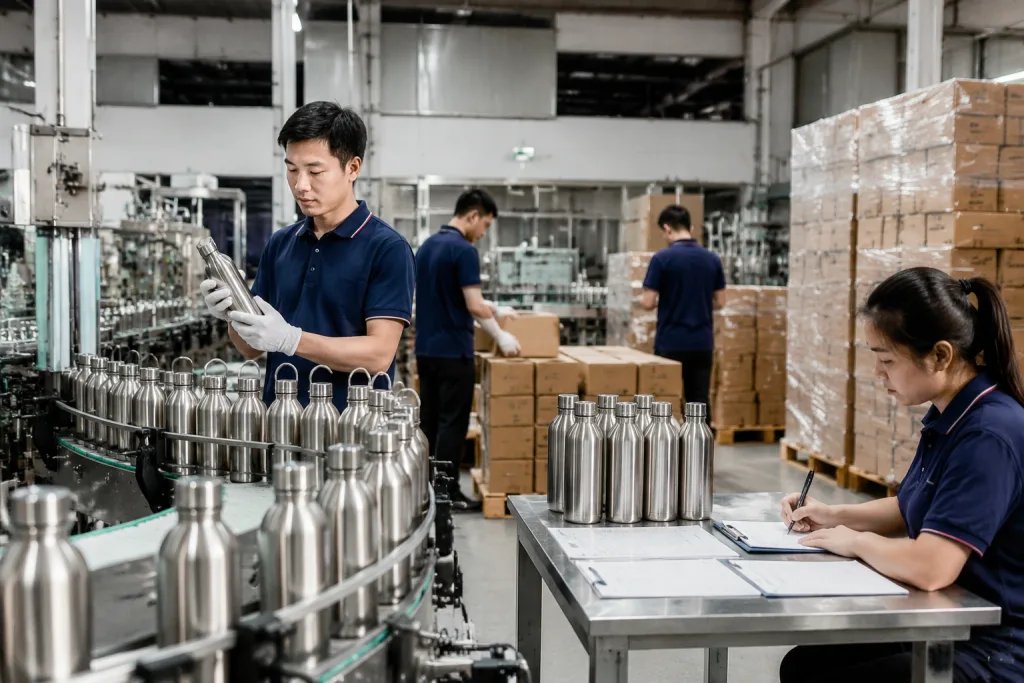
In Zhejiang, China, we see this every week: buyers want a fast quote, a clean sample, and a bulk order that ships on time. That works if you run sourcing in order: RFQ, sample, pilot approval, bulk PO, final inspection. A good canteen manufacturer or canteen supplier gives hard numbers early — MOQ, lead time, carton count, and test reports — not soft talk. QC pulled a sample with a 2 mm lid gap last month, and the buyer flagged it before we cut steel.
Start With the RFQ
I’ll rewrite the section in-place, keeping the exact HTML structure and making the prose sound like a factory-side sales engineer.Your first RFQ should do more than ask for a price. If you want a real water bottle factory direct quotation, send a clear brief: capacity, material, lid style, decoration method, target market, and packing requirement. We see one-line RFQs every week, and the math does not work. A canteen factory cannot quote cleanly from a logo and a guess.
For a standard 750 ml stainless steel canteen customized for retail, include these PO line items in your RFQ draft:
- Bottle body: 304 stainless steel, 0.6 mm wall
- Lid: PP screw cap with silicone seal
- Finish: powder coat, one Pantone color
- Logo: 1-color silk screen or laser engraving
- Pack: individual white box, 24 pcs/carton
State your commercial terms early: FOB Ningbo or FOB Shanghai, target annual volume, and whether you need Amazon-style labeling or master carton marks. If you are a canteen distributor or drinkware buyer for distribution, say it straight. The buyer flagged it on one job because the carton count was off by 6 pcs, and we had to rework the packing plan. We run better quotes when the buyer acts like an operator, not a haggler.
A practical RFQ should ask for MOQ, sample charge, sample lead time, mass production lead time, and testing standards. If the supplier dodges those numbers, you are not talking to a serious canteen supplier or canteen vendor. QC pulled the sample, checked the cap torque, and found the answer fast. You are talking to a trader who still needs to find a factory.
Turn Quote Into Sample
I’ll rewrite the section in place, keep the HTML structure intact, and strip the AI-style phrasing while adding a few factory-floor specifics and sharper sales-engineer tone.Once the quote lands, go straight to samples. This is where a buyer either protects margin or pays for it later. A sample is not just about looks; we check weight, thread fit, seal line, and print registration on the bench. For customizable drinkware, especially a customizable canteen or customizable growler, small shifts bite hard. A 1 mm change in lid depth can turn a leak-free cap into a return.
Ask the canteen manufacturer for a pre-production sample and, if the artwork is fixed, a decorated sample too. If your order includes custom canteen artwork, get a digital proof first, then a physical sample with the final print position locked. For powder-coated bottles, confirm gloss level and surface texture. For vacuum bottles, ask whether the retention spec is measured at 24 hours or 12 hours. The buyer flagged this on one PO because the spec line was missing the test time, and that typo cost two days.
Use your sample checklist like a line-item PO:
- Body material and finish approved
- Lid color and seal approved
- Logo size and placement approved
- Carton artwork and barcode approved
- Drop test and leak test passed
A canteen customizable program often needs two or three sample rounds. That is normal. We run the line in Zhejiang every week, and the better factories know where 0.2 mm matters and where it does not. If a sample looks clean but feels too light, ask for a wall-thickness report from the ultrasonic gauge. For stainless, 0.5 mm works for promo use, while 0.8 mm fits premium retail. If you are selling canteen promotional items, price can beat thickness. Just make that call with the math in front of you.
Lock the PO Line Items
I’ll keep the HTML structure exactly as-is and rewrite the prose to sound like a factory-side sales engineer. I’m also watching for the banned filler phrases, and I’ll add a few concrete floor details without touching the tags.After sample approval, build the purchase order line by line. That is where factory direct pricing turns into a real number. A clean PO keeps hidden add-ons off the table, especially decoration, packaging, and freight. We’ve seen buyers chase a unit price and then lose 8-15% on the landed cost because those lines were left loose.
Use separate PO lines for:
- Product body and lid
- Decoration method
- Inner packaging and master carton
- Testing requirements
- Spare parts or replacement lids
If you are buying custom growler units or customized growler sets, put the neck finish and closure type in writing. QC pulled a cap that passed the sample but failed the PO; the buyer flagged it fast. Growlers go sideways when someone changes the closure without notice. The same rule applies to custom drinkware and customized drinkware programs across bottle families: one missing spec can break the retail rollout.
For larger distributor canteen or distributor growler orders, ask the factory to quote with reserve stock and without it. A smart canteen distributor does not ship all units at once if the next refill is six months out. On our line, 500 pcs is a clean split point for many programs, and the second drop often ships 5-7 days faster when the forecast is locked. The math does not work if the buyer waits until the last minute.
Do not skip the commercial terms: payment terms, Incoterms, inspection standard, and claim window. A common setup is 30% deposit, 70% against copy of B/L for FOB orders. We’ve also moved long-term accounts to 20/80 after two clean shipments. That is earned, not automatic.
Check Quality Before Bulk
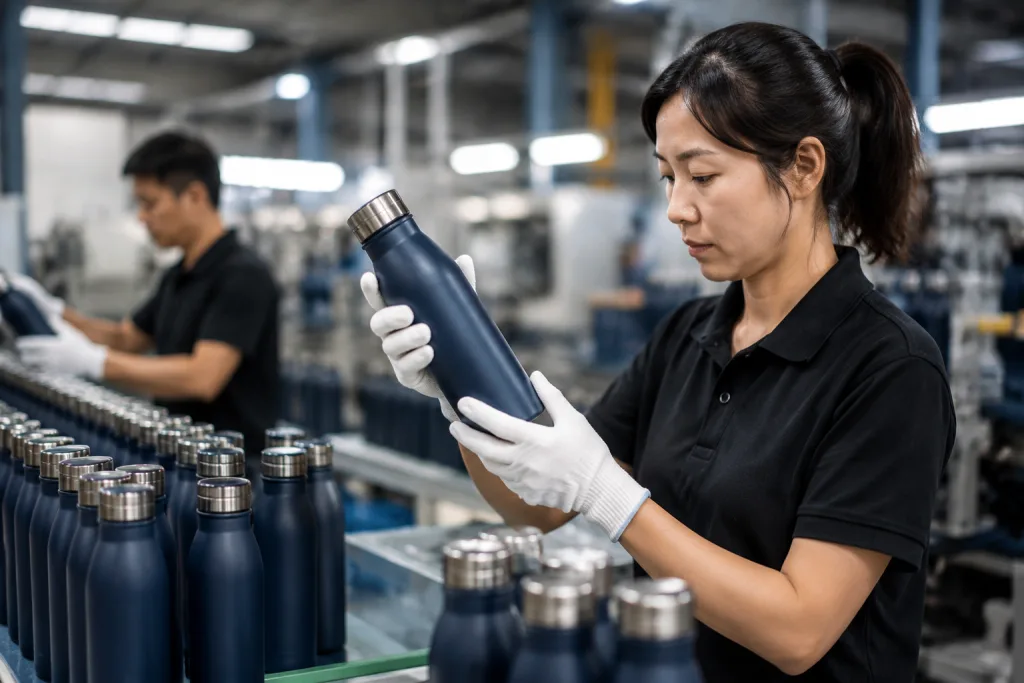
I’ll keep the HTML structure intact and rewrite the prose to sound like a factory-side sales engineer, with sharper numbers and one shop-floor detail per paragraph.Do not start bulk production until the pre-production sample is signed off and the factory has matched the material spec. That is where a real canteen factory earns the margin. We run incoming material control, in-process checks, and final AQL on the line. For export drinkware, AQL 2.5 for major defects and 4.0 for minor defects is a normal starting point, though some premium programs ask for tighter limits.
Ask for practical tests, not paper only:
- Leak test on 100% of lids or at least first-run verification
- Vacuum test for insulated models
- Dishwasher or abrasion test if your market requires it
- Food-contact compliance documents: REACH, LFGB, FDA, or ASTM as applicable
A canteen manufacturers list can look solid on a screen, but the process tells you if the line is stable. Ask for photos of the production floor, the coating line, and the packing station. We have seen buyers accept a supplier’s “same color” promise, then QC pulled the sample and found a stray black lid in a blue carton. That is a bad day.
For a typical Zhejiang production run, a well-run factory can ship 80,000-150,000 units per month across multiple SKU families. That number matters because it shows whether your order is a side job or a slot on the main line. If your order is only 1,000 pcs, you still deserve control, but the factory will batch it with other jobs. Ask how they isolate your custom canteen parts from stock items so you do not get the wrong lid or carton.
Move from Trial to Bulk
I’ll keep the tags intact and rewrite the four paragraphs plus the list with more factory-floor detail, tighter language, and a natural sales-engineer tone.Bulk is where buyers get too relaxed. Sample approved, PO signed, and then they assume the line will mirror it. That’s how surprises show up. We run it cleaner when the buyer asks for a production schedule with dates for raw material arrival, first article check, midline inspection, and packing completion. A simple canteen promo order can slide by on memory; a multi-SKU custom drinkware run needs a written timeline.
Before you release bulk, check these PO line items again:
- Approved artwork file name and revision date
- Approved sample reference number
- Packaging configuration and carton count
- Shipping mark format and SKU labels
- Inspection plan and release signoff
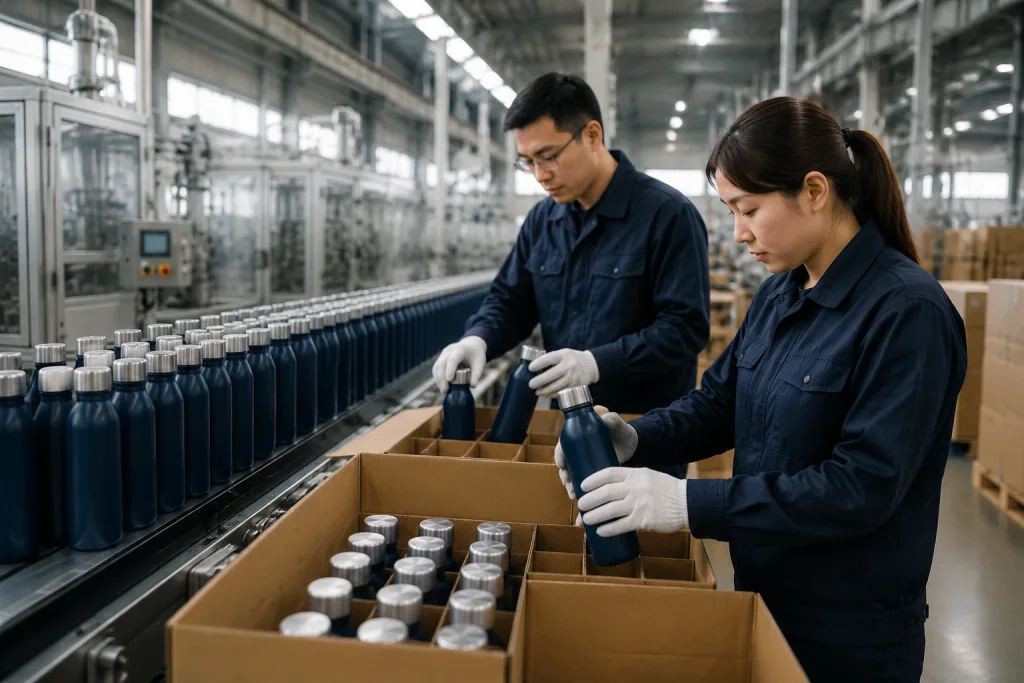
If you sell on Amazon or a similar channel, put the FNSKU or retail barcode position into the artwork proof. If you sell wholesale, the master carton size has to fit the warehouse pallet spec, or the buyer will flag it later. We’ve seen that go sideways on a 40HQ load because the carton was 2 mm off and the pallet plan no longer worked. This is the part where a canteen supplier who knows distributor drinkware saves time, because they prep the bottle for your channel, not just for the line.
For a water bottle factory direct deal, bulk should feel controlled, not rushed. Faster is not better if it creates rework. A good factory in Zhejiang usually needs 25-35 days after sample approval for standard stainless steel bottles, and 35-45 days for more complex customized canteen or customized drinkware projects with multiple components. If you need 10,000 pcs in 20 days, say it on day one. The math doesn’t work unless you already have stock components, and a serious supplier will tell you that straight.
Manage Delivery and Reorders
I’ll rewrite the section in-place, keeping the HTML tags and the existing numbers/codes intact, while making it sound like a factory-side sales engineer.Delivery is not the finish line. It is the first live test of your sourcing setup. Once the containers leave China, we check whether the packing list, commercial invoice, and carton marks match the approved PO. If the first shipment lands clean, the reorder gets easier and cheaper. That is the real pull of factory direct sourcing: after the spec settles, the next run needs fewer fixes.
Track three numbers after every shipment: defect rate, on-time rate, and landed cost variance. QC pulled the sample, and if the defect rate stays under 1.5% and the supplier hits the ship date within 3 days, the program is workable. If the buyer flagged a carton typo or a weld mark issue, fix that root cause before you place the same order again. A canteen distributor running five SKUs with steady reorders is worth more to us than a one-time buyer chasing the lowest price. The math does not work otherwise.
For seasonal programs, pre-book capacity. Zhejiang factories fill fast before spring and autumn selling seasons, and the line can swing from open to booked in a week. If you need 20,000 units, do not wait until the last week. A canteen promotional item or custom growler campaign only pays when stock lands before the sales window opens. That holds whether you sell direct, through wholesale, or through a distributor canteen channel.
When the second order is ready, renegotiate on real data, not hope. If the first run used 0.6 mm steel and the product held up, keep it. If the packaging crushed in transit, change the carton spec. We have seen this go sideways when buyers try to reset everything at once. Factory direct works best when each shipment is a controlled upgrade, not a fresh gamble.
Send your RFQ and get a factory quote
Share your capacity, material, logo, and target market. We’ll return a clear water bottle factory direct quotation with MOQ, lead time, and PO line items.
Frequently asked questions
What MOQ should I expect from a water bottle factory direct supplier?
For standard stainless steel bottles, MOQ often starts at 500 to 1,000 pcs per color and can go to 3,000 pcs for custom prints or complex lids. For a custom canteen with special tooling, some canteen manufacturers ask for 3,000 to 5,000 pcs. If the product is simple and the factory already has the mold, you can sometimes negotiate 300 pcs for a sample-to-market launch, but the unit price will be higher. A serious canteen supplier should tell you the MOQ for body, lid, and decoration separately.
How long does sample and bulk production usually take?
A simple sample can take 5 to 10 days. Decorated samples or a customized growler with special finish may take 10 to 15 days. After sample approval, bulk production for standard drinkware is usually 25 to 35 days, while more complex customizable drinkware orders can take 35 to 45 days. If your project needs new tooling, add 15 to 25 days. A reliable factory in China or Zhejiang will give you a calendar, not a vague promise.
What should be on the PO for custom drinkware?
Separate the PO into clear lines: bottle body, lid, decoration, inner pack, master carton, compliance documents, and spare parts if needed. For a canteen custom order, specify material grade, wall thickness, color code, logo method, and carton count. If you need FNSKU labels, say so. If the order is for a distributor drinkware program, include reserve stock terms and ship windows. That structure prevents billing disputes and keeps the factory from guessing.
How do I check whether a canteen factory is reliable?
Ask for business license, export experience, inspection process, and recent test reports. A real canteen factory should show AQL standards, leak testing, and compliance documents such as REACH or FDA when relevant. Ask how many units per month they produce; 80,000 to 150,000 units/month is common for an established Zhejiang plant across several lines. If they cannot explain how they separate raw material, decoration, and packing control, treat that as a warning.
Can I source canteen promotional items and retail bottles from the same supplier?
Yes, if the supplier has both low-cost and premium production lines. Many canteen suppliers handle canteen promotional projects, custom growler orders, and retail-grade customized canteen programs in the same facility or group. The important point is not just product range; it is process control. A supplier that can do 500 pcs promo and 20,000 pcs retail should still give you distinct specs, packaging, and QC plans for each.