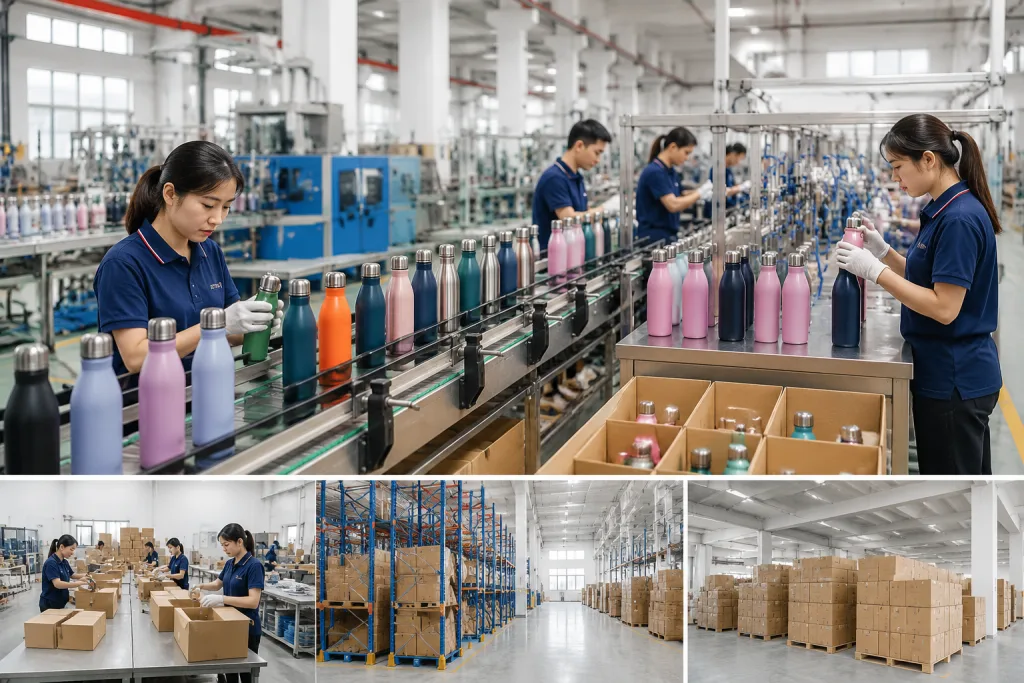
Key Takeaways
- Specify wall thickness, lid torque, and leak test criteria before sample approval; thin stainless bottles under 0.35 mm fail more often
- For water bottle customized orders, MOQ often starts at 500-1,000 pcs per SKU and lead time is usually 25-35 days after sample confirmation
- AQL 2.5 for major defects and 4.0 for minor defects is a practical baseline for canteen customizable programs
- FOB China pricing for simple customized drinkware can start around USD 1.20-2.80 per unit depending on material, capacity, and decoration
If you are buying water bottle customized for retail, promotions, or private label, the hard part is not finding a supplier. The hard part is stopping the problems that show up after payment: logo fade, leaking lids, off-center printing, dents from thin walls, and cartons that fail at Amazon or customs. We see this all the time on the line, and the buyer usually flags it too late.
Most of those problems come from the spec sheet, not from “the factory.” A capable canteen factory in Zhejiang or elsewhere in China can run good custom drinkware at scale if the bottle, lid, decoration, and test method are written clearly. Our Hangzhou team ships 300,000 units per month, and a 1 mm wall change, a bad artwork file, or a missing AQL 2.5 note can turn a clean PO into a mess.
Where production usually breaks
Most rejects show up at the same stations: forming, laser weld, powder coat, print, lid assembly, and final pack-out. If you buy water bottle customized without checking those points, you are betting on a clean sample, not stable output. We have seen a 0.3 mm wall dent after the first drop test, and a cap that looked fine until QC pulled the sample and found the gasket pinched on one side.
For stainless canteen custom projects, body material is one line on the PO. The line also needs gauge, seam width, and neck finish. On 304 stainless, 0.4-0.5 mm works for many single-wall runs; double-wall vacuum bottles usually sit at 0.35-0.45 mm inner and outer shells. Push below that to save 0.08 RMB, and the math does not work: the body oil-cans at the forming press, the neck goes out of round, and vacuum sealing starts throwing scrap. This is the wrong question to ask if you are chasing the lowest unit price.
Watch for four classic failure modes:
- Leakage: cap thread mismatch, gasket compression outside spec, or torque that was never checked on the assembly jig
- Print failure: weak surface prep, wrong curing temp, or artwork placed too close to the seam, where the pad slides
- Vacuum loss: bad weld integrity, dirty rim before sealing, or unstable solder settings on the line
- Carton damage: weak inserts, poor drop protection, or master cartons packed past the 15 kg mark
If you work with canteen suppliers in Zhejiang, ask them to walk you through the process flow, not just the sample. A factory that knows where bottles fail will talk about weld bead width, oven temp, and the AQL 2.5 check sheet, not only decoration options. We have seen this go sideways fast when a buyer accepted a nice photo and never asked for the neck gauge.
Spec the bottle before the quote
I’ll rewrite the prose only, keep the HTML exactly as-is, and make it read like a factory-side sales engineer wrote it.The fastest way to overpay is to ask for a quote with a vague brief. “500 ml stainless bottle with logo” is not a spec. It gives the canteen vendor room to fill the gaps with the cheapest build they can ship. If you want a stable program, pin down the commercial and technical targets first.
For custom drinkware, the base spec should cover capacity, material grade, wall thickness, finish, lid type, decoration method, packaging, and testing standard. For a custom canteen or customizable canteen, add the insulation claim, temperature hold target, and whether the bottle has to fit cup holders or gym racks. We’ve had buyers skip that last part, then the line runs 73 mm caps that miss the rack by 2 mm. If you need a custom growler or customizable growler, spell out carbonation tolerance and closure style; growlers fail differently than standard bottles because pressure and seal integrity do the real work.
Use numbers, not adjectives:
- Capacity: 350 ml, 500 ml, 750 ml, or 1 L
- Material: 304, 316, Tritan, or borosilicate glass
- Finish: matte powder coat, glossy spray, brushed steel, or silicone sleeve
- Decoration: one-color silkscreen, 4-color UV print, laser engraving, or wrap decal
- Packing: individual box + 24 pcs master carton + drop test requirement
A proper brief also helps when you compare canteen distributors and canteen manufacturers. We once saw a PO typo drop the carton spec from 24 pcs to 4 pcs; QC pulled the sample, and the math fell apart fast. The quote can look close, but one price may include a tested lid and export carton while another leaves both out. That is how “cheap” turns expensive.
Lids fail more than bodies
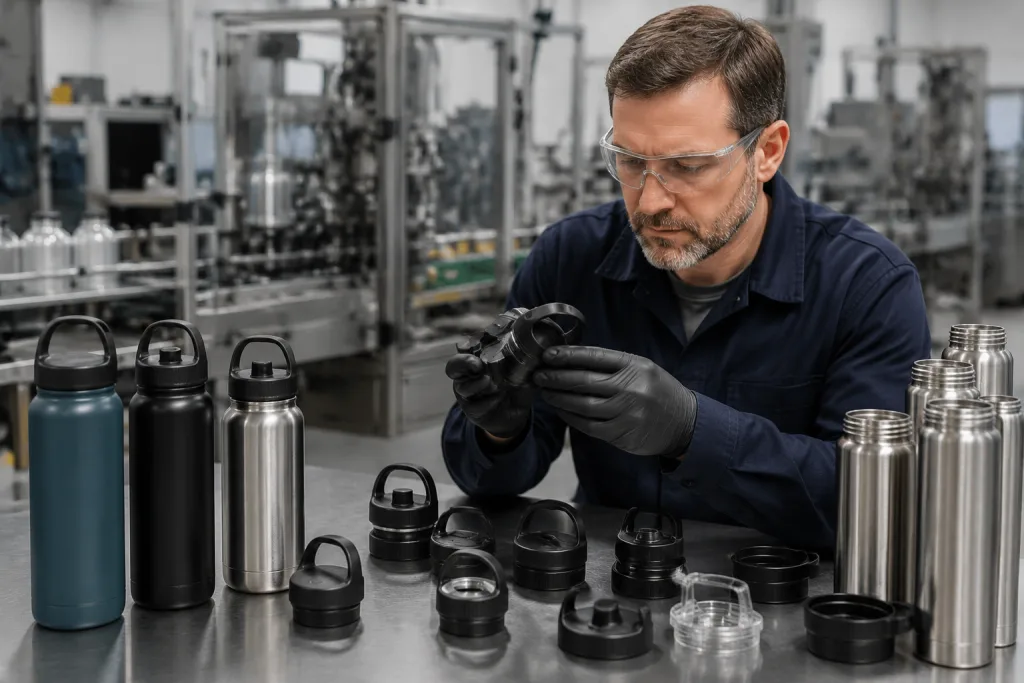
I’ll keep the HTML structure exactly as-is and rewrite the prose to sound like a factory-side sales engineer, with sharper numbers and a few floor-level details.If you want fewer customer complaints, start with the lid. Body flaws show up on the line. Lid flaws slip through sample sign-off and hit the market later. That is why a lot of canteen buyers put closure systems first. A good bottle with a bad lid is still a bad bottle.
We see the usual failure points: weak hinge pins, spring fatigue, poor O-ring fit, cracked PP at the thread, and button tops that start sticking after 500-1,000 cycles. On insulated bottles, the lid often decides whether the thermal claim holds up. On sports bottles, the spout and lock do the real work. For a distributor drinkware program, we want the lid to pass at least 3,000 open-close cycles if you expect retail sell-through. The math does not work any other way.
Ask your canteen supplier to confirm:
- Leak test at room temperature and at 50-60°C water fill
- Torque range for threaded lids
- Silicone hardness, typically 50-70 Shore A
- Cycle test target, ideally 1,000+ cycles for promotional SKUs and 3,000+ for retail
If you are buying canteen promotional stock for an event, the lid still matters. We’ve seen a 10,000-piece order get flagged because the cap dripped in a tote bag. That is not a small issue. For China sourcing, minor lid tooling problems show up all the time, and QC pulled the sample for a loose seal more than once. Approve the functional sample, not just the visual one.
Decoration goes wrong fast
I’ll rewrite the section in place, keep the HTML structure intact, and tighten the sales-engineer voice while adding concrete factory-floor detail.Decoration is where a lot of water bottle customized programs lose margin. The art looks clean on a screen, then it hits the bottle and wraps crooked, bleeds at the seam, or rubs off in transit. We see it on curved bodies, powder-coated shells, and textured finishes. Thin fonts and QR codes make the risk jump fast.
Match the decoration method to the surface. Silkscreen works for 1-2 spot colors on flat or gently curved areas. Laser engraving holds up on bare stainless and gives a sharp look, but it will not work on every coated surface. UV printing carries more detail, but pretreatment and curing need control at the line. If you want a logo that survives abrasion, ask for an alcohol rub test and a tape pull test before mass production. We usually call out a 3M 600 or equivalent tape pull requirement for painted bottles.
That holds for custom drinkware and customized drinkware too, because the same artwork failures show up on bottles, tumblers, and growlers. A canteen customizable order often needs the logo kept away from the seam and weld lines, with at least 5 mm margin. If the buyer flags the PO because the artwork file has a tiny typo or the vendor says “no problem” but will not show a decorated pre-production sample, the math does not work.
Good decoration is not about day one. It has to look right after shipping, retail handling, and six months of use.
For distributor growler or distributor canteen programs, push for artwork proofs that show the exact print area in mm. QC pulled a sample here last month and the buyer caught a 2 mm shift before we ran the 5,000-piece order. That kind of check saves brand damage when the shipment lands in North America or Europe.
QC needs numbers, not promises
I’ll rewrite the section in place, keeping the HTML tags and list structure intact while making the QC language sound like a factory-side sales engineer wrote it.QC is where B2B buyers stop being polite and start asking for numbers. A decent canteen factory will take that straight away. Ask for incoming inspection, in-process checks, and final inspection criteria. If the supplier cannot spell out defect classes, they are not ready for a real export order.
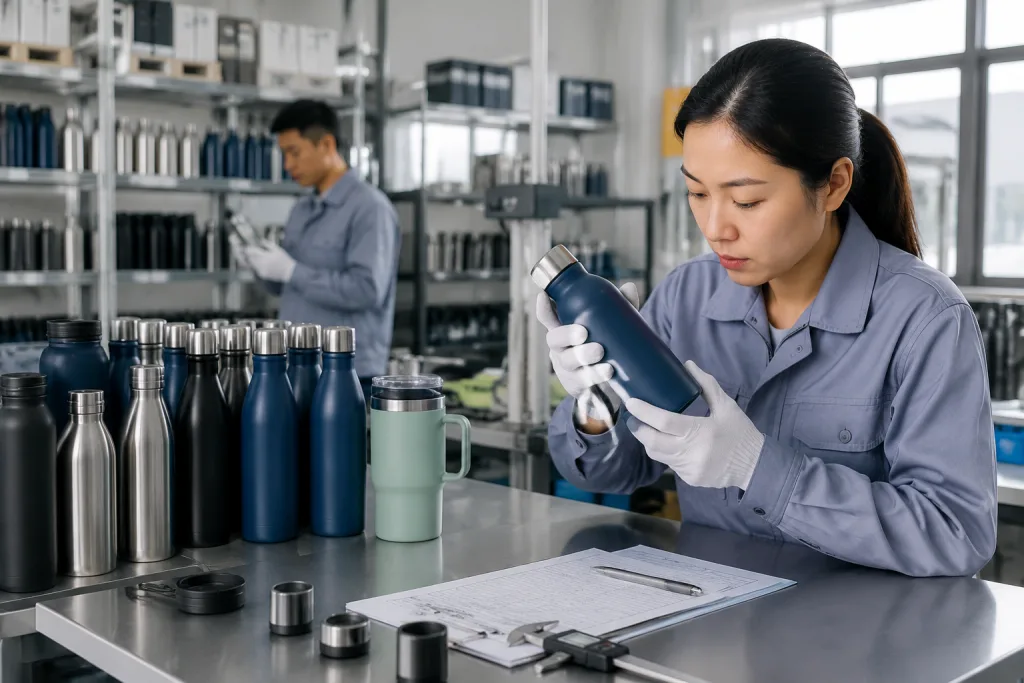
Use AQL as the base language. For custom drinkware, we run AQL 2.5 for major defects and 4.0 for minor defects, with zero tolerance for critical defects like leakage, sharp edges, or toxic material mismatch. For a 5,000 pcs order, that is the conversation. If the market needs tighter compliance, ask for REACH, LFGB, or FDA papers based on the material and destination. For stainless items, confirm food-contact declarations and material traceability. For coatings, ask which solvents and curing system the line uses.
Specific checks that matter:
- Drop test: 1.0 m on six faces for retail bottles
- Leak test: inverted water hold for 2-4 hours
- Thermal test: 6-hour or 12-hour hold, depending on claim
- Odor test: no plastic smell after hot-water rinse
- Carton test: ISTA-style compression or at least a basic drop check
A serious canteen manufacturer in China should send inspection photos, batch codes, and a sample retention plan. Last month, QC pulled the sample because the lid torque was 0.8 N·m off spec, and the buyer flagged it before shipment. If you need traceability for a distributor roll-out, ask for carton labels, lot numbers, and FNSKU-ready packing for Amazon. Cheap QC is false savings.
Price is driven by detail
I’ll rewrite just the prose, keep the HTML structure intact, and tune the wording to sound like a real factory-side sales engineer.Buyers usually ask for the unit price first, but the spec sheet drives the number. A plain 500 ml stainless bottle with one-color print and a basic box can land around USD 1.20-1.80 FOB China at higher volumes. Add double-wall vacuum, powder coating, laser logo, and retail packaging, and the price can move to USD 2.50-4.50 or more. We once had a PO with “matte black” typed twice and no lid code; QC pulled the sample and the buyer had to reset the whole spec pack. A customized growler with specialty lid hardware pushes it up again.
There is no single “fair” price for a canteen customizable project. The number depends on steel thickness, mold ownership, print passes, carton strength, and whether you pay for stock tooling or a new mold. A vendor quoting too low may be running thinner steel, simpler packing, or slower QC. That is fine only if you accept the trade-off. The wrong question is “why is yours higher?” The better one is “what did you cut?”
Use these levers to hold cost down without hurting the order:
- Keep lid count to one standard SKU per order
- Use one decoration method instead of mixing methods
- Choose standard capacities like 500 ml or 750 ml
- Confirm whether tooling is amortized or one-time charged
- Set a clear MOQ, usually 500-1,000 pcs per design for custom canteen programs
China and Zhejiang factories can stay sharp on price if you give a clean brief. We run faster on a simple 2-page spec than on a messy email chain, and the math works better too. The cost gap between a controlled order and a messy one is usually not the bottle; it is the rework, the late freight booking, and the cartons that get flagged at inspection.
Choosing the right supplier type
I’ll rewrite the section in place, keep the HTML structure unchanged, and make the wording sound like a factory-side sales engineer.You do not need every seller to be a factory, but you do need to know what role they play. A canteen supplier can be an exporter, a trader, or a direct plant. A canteen distributor usually answers faster and carries mixed product lines; a canteen manufacturer or canteen factory has tighter control over tooling, molding, and the line schedule. None of those models wins every time. The right pick depends on your order size, customization depth, and ship date.
If the job is simple, a solid canteen distributor can work well. If you need new molds, exact print placement, or a cross-category program with custom growler and custom canteen SKUs, go direct to the canteen factory. We run lead time from sample sign-off to shipment at 25-35 days for recurring orders in Zhejiang, then add ocean or air freight. For seasonal canteen promotional stock, ask if the supplier can hold semi-finished stock or lock production slots before peak season. We’ve seen buyers miss a launch because they asked this too late.
Ask every potential partner these questions:
- What is your monthly output for customized drinkware?
- Can you show BSCI, ISO 9001, or similar audit records?
- What is your MOQ for one logo and one color box?
- How do you handle change orders after sample approval?
That is the clean way to separate canteen manufacturers from middlemen and see whether canteen suppliers in China can ship on schedule without excuses. QC pulled the sample at 10:20, and that is usually where the truth shows up.
Send your bottle spec for a fast quote
We’ll check your logo, material, MOQ, and QC points before production so your water bottle customized order lands cleanly.
Frequently asked questions
What MOQ should I expect for water bottle customized orders?
For most custom drinkware programs, a realistic MOQ is 500-1,000 pcs per SKU. Simple one-color print on stock models can sometimes start at 300 pcs, but once you add new lids, specialty packaging, or multiple logo placements, the MOQ rises. A canteen factory in Zhejiang will usually quote lower MOQ for repeat buyers and higher MOQ for new tooling. If you need multiple capacities or colorways, treat each as a separate SKU. That keeps the order cleaner and reduces rework.
How do I reduce leakage claims in retail sales?
Start with the cap system, not the body. Ask for inverted leak testing, torque specs, and gasket material confirmation. For screw-top bottles, a good baseline is a 2-4 hour inverted hold with room-temperature water, plus a hot-fill test if the product will see tea or coffee. For sports caps and canteen customizable lids, cycle testing matters too. If the supplier cannot show leak-test data, you are taking a field-failure risk that will cost more than the extra sample round.
What certifications matter for Europe and North America?
It depends on material and claim, but the usual requests are REACH-related material compliance, food-contact declarations, and ISO 9001 or BSCI audit evidence. For stainless or plastic custom drinkware, ask for traceable material documentation and test reports from a recognized lab. If you sell through Amazon, also plan for carton labels, FNSKU labeling, and packaging that survives transit. Compliance paperwork is not enough if the product still fails leak or odor tests.
Is laser engraving better than printing?
Not always. Laser engraving is durable on bare stainless and looks premium, but it is limited on coated surfaces and gives no color. Silkscreen is cheaper and works well for one or two colors, especially on promotional bottles. UV printing handles more detail and gradients, but it depends heavily on surface prep and curing. If your priority is abrasion resistance, laser is strong. If you need a colorful brand presentation, printing is usually the better fit.
How long does production take in China?
For a standard customized drinkware order, expect 25-35 days after sample confirmation. Add 7-15 days if you need new tooling, complex packaging, or a special cap. Freight time to Europe or North America is separate. A well-run canteen manufacturer in Zhejiang should give you a clear schedule for sample making, mass production, QC, and packing. If a supplier promises impossible speed without details, ask how they will handle decoration curing, inspection, and carton drying time.