Key Takeaways
- Most water bottle bulk programs start at 1,000-3,000 units per SKU depending on mold, logo, and finish
- 304 stainless steel at 0.45-0.55 mm wall thickness is the safer default for reusable retail drinkware
- Vacuum products need 100% thermal testing, while single-wall bottles usually follow AQL 2.5/4.0 inspection
- FOB China pricing often ranges from USD 2.20 for basic bottles to USD 9.80 for larger growlers
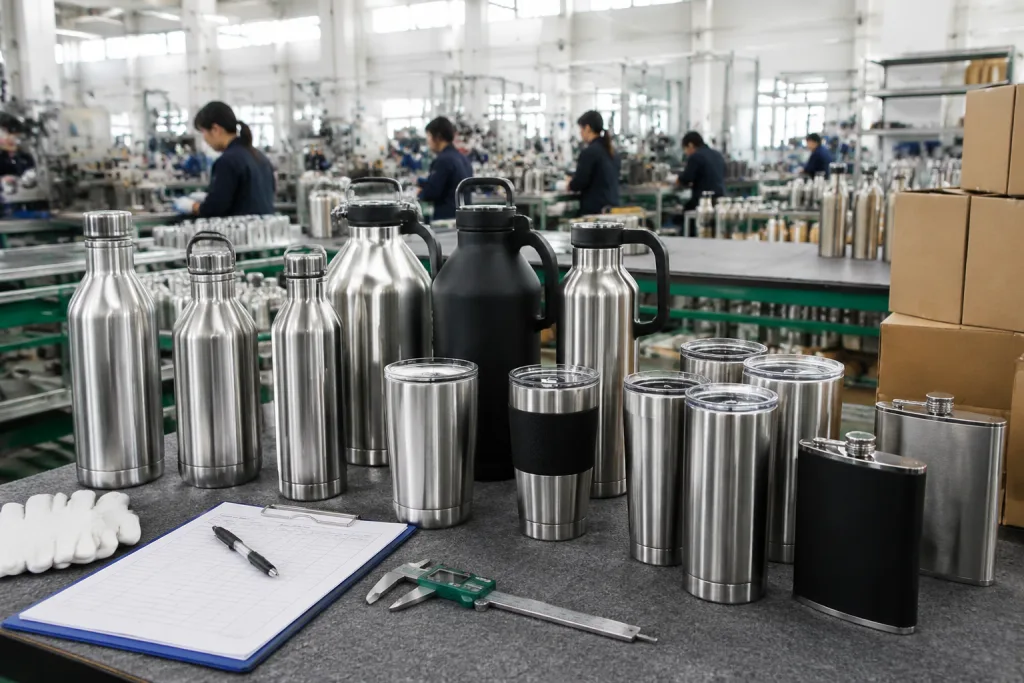
Buying water bottle bulk is not hard because factories are rare. The hard part is that 42 models can look identical on a PDF quote once the render is shrunk to 60 mm wide. We see this every week. A 750 ml sports bottle, a vacuum canteen, a beer growler, and an alcohol flask may all be filed under bulk drinkware, but the tooling cost, leak test pressure, surface finish risk, and shelf margin are not even close. QC pulled one 750 ml sample last month because the lid thread was 0.35 mm off; on paper it still looked “standard.”
If you are a procurement manager or brand owner, compare the build first, then ask for samples. Asking “what is your best price?” is the wrong question to ask at the first round; the math does not work until wall thickness, cap structure, coating, carton drop requirement, and logo method are locked. BottleForge Industrial in Hangzhou, Zhejiang ships custom drinkware from China for EU and North American buyers, with typical MOQ from 1,000 units per SKU and production lead time around 25-40 days after artwork approval. We run the line with calipers on mouth ID, salt-spray checks for coated parts, and a PO review step because one buyer once typed 304 stainless on the spec sheet but 201 stainless on the purchase order.
The Spec Table Buyers Actually Need
Don’t compare water bottle bulk suppliers by color first. Start with the job. A gym giveaway bottle fails at the cap thread and logo rub; a brewery growler gets judged on seal and stainless weight; an outdoor canteen has to survive a backpack drop. We run this spec table before quoting, then check the neck diameter with a 0.02 mm caliper because one buyer once approved artwork fast and flagged the cap fit only after the PPS landed.
| Product type | Best fit | Typical capacity | Material | FOB range | MOQ |
|---|---|---|---|---|---|
| Single-wall sports bottle | Promotions, events, school packs | 500-1,000 ml | 304 SS or Tritan | USD 2.20-4.20 | 1,000-3,000 |
| Vacuum canteen | Outdoor, corporate retail, travel | 600-1,200 ml | 304/316 SS | USD 4.80-8.50 | 1,000 |
| Beer growler | Brewery merchandise, refill retail | 32-64 oz | 304 SS | USD 6.20-9.80 | 800-1,500 |
| Beer tumbler | Taproom, tailgate, gifting | 12-20 oz | 304 SS | USD 3.50-6.50 | 1,000 |
| Alcohol flask | Gift sets, travel accessories | 5-8 oz | 304 SS | USD 1.80-3.80 | 2,000 |
Asking for the “best wholesale drink bottle” is the wrong question to ask. Match the bottle to the selling channel, the compliance file, carton size, and the defect level the buyer will accept at AQL 2.5. A bulk canteen looks like better shelf value than a sports bottle, but the line still needs vacuum testing, lid torque checks, and 5-layer carton protection. QC pulled the sample. A growler bulk order might ship fewer pieces, yet one 64 oz carton can hit 18.4 kg instead of 12.6 kg, so the freight math goes sideways fast.
Sports Bottle Versus Canteen
For water bottle bulk orders, the first split is simple: single-wall sports bottle or insulated canteen. If the buyer wants a low-cost promo piece, single-wall wins every time. If the program is retail, gift sets, or a premium corporate line, vacuum insulation is the better spend.
A single-wall stainless bottle usually runs 0.45-0.50 mm 304 stainless steel. Light on the hand. Cheap to press. Fast on the line. We’ve seen buyers push back on this spec, then the sample passed a 1.2 m drop check and they changed their mind after QC found only a loose lid ring, not a steel issue. With the right steel and coating source, it can clear LFGB, FDA, and REACH checks. The weak points are dents, cap leakage, powder coat adhesion, and that thin body feel people notice right away. For drinkware bulk used in events or giveaways, AQL 2.5 major and AQL 4.0 minor is a sensible target.
A vacuum canteen bulk program is a different job. Double-wall build means welding, vacuum sealing, copper lining options, and thermal retention tests. A standard 750 ml canteen can keep water above 55°C after 6 hours when filled at 95°C. We ship enough of these to know the math matters, and a vague “keeps hot 12 hours” claim is not something we accept without a test method and the actual fill temperature.
For wholesale canteen and canteen wholesale orders, we usually spec 304 stainless inside and outside for mainstream retail, or 316 stainless inner wall for marine, acidic beverage, and higher-end outdoor channels. Common Zhejiang models land around USD 4.80-8.50 FOB Ningbo or Shanghai, depending on lid build and coating. A 1,000-unit MOQ is normal for standard shapes with custom logo; full custom molds start higher. One PO typo on a 1,000 ml order once changed the lid thread, and the buyer flagged it before production. That is the wrong question to ask after tooling starts.
Growlers Are Not Oversized Bottles
A bulk growler is not a stretched water bottle. The buyer usually fills it with beer, cider, kombucha, cold brew, or carbonated drinks, so we look at lid thread, gasket squeeze, inner polish, and pressure behavior first. On the line, QC pulled a 64 oz sample and checked the mouth finish with a 3-point gauge; that tells you more than the catalog photo ever will.
For beer growler bulk and beer growler wholesale programs, 32 oz and 64 oz are the standard sizes. Most buyers choose 304 stainless steel with a screw cap, swing cap, or wide-mouth insulated lid. If the growler is for carbonated refill, ask for pressure-cycle leak results, not a sales promise. We run inverted leak testing, then random pressure checks before packing each unit in a polybag or paper wrap with divider cartons for export.
Wholesale growler pricing sits above normal water bottles because the steel is heavier and the finish area is larger. A 64 oz insulated growler can use 0.55 mm outer wall material and weigh 650-900 g before packaging. That changes both FOB cost and landed cost. A growler wholesale quote at USD 5.00 looks tempting, but if the steel is thin, the weld is soft, or the cap sits loose, the return rate will bite you.
Use growler bulk programs when the brand has a clear channel: brewery merch, outdoor retail, refill stations, or gift sets. Do not buy one just because it looks premium in photos. That is the wrong question to ask. It ships bulky, takes more shelf space, and needs a stronger carton, usually a 5-ply export carton with edge protection. For beer growler in bulk, branding can be laser engraving, screen print, or powder coating with logo print; laser engraving holds up better against abrasion, while full powder coat gives stronger retail color but needs a cross-hatch adhesion check.
Beer Tumblers And Flasks
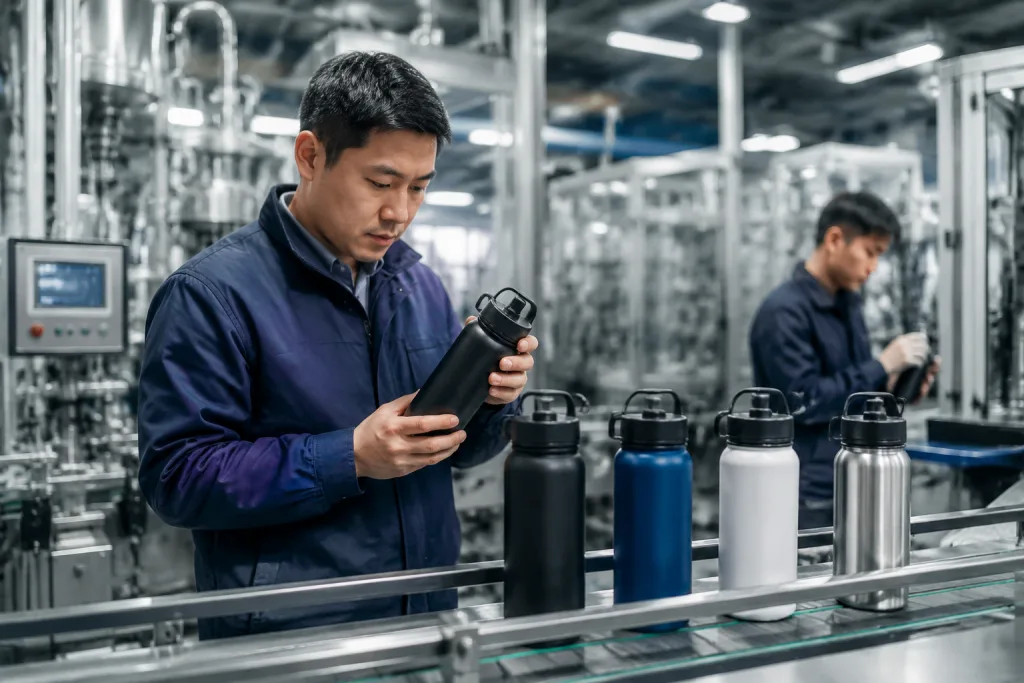
Beer tumbler bulk and alcohol flask bulk orders do not behave like standard water bottle bulk orders. Most land as gift sets, hotel minibar items, brewery merch, or Q4 promotion stock, so the buyer usually argues about logo position and box scuffing before they argue about the cup. We had one PO last year with “mat black” typed instead of “matte black”; QC pulled the sample at packing because the color card said something different. Small typo, 18 cartons held.
A beer tumbler in bulk is usually 12 oz, 16 oz, or 20 oz. We run double-wall stainless for most jobs, either open mouth or with a plastic sliding lid. For beer tumbler wholesale, ask one blunt question: is the lid splash-resistant or leakproof? This is the wrong question to leave vague. About 7 out of 10 sliding lids we see are splash-resistant only, and calling them leakproof creates refund photos from buyers later. A practical spec is 304 stainless inner wall, 0.45-0.50 mm steel checked by micrometer, powder coat or brushed finish, BPA-free lid, and carton drop test from 76 cm on packed export cartons.
Beer tumbler wholesale bulk projects fit breweries, beverage distributors, sports retail programs, and corporate gifting when the artwork file is locked early. They also work for Amazon FBA if each unit has a barcode or FNSKU, suffocation warning where required, and a carton label format agreed before production. Do not leave FNSKU labeling until the goods are packed. The math doesn't work: relabeling 5,000 units in China means opening cartons, scanning bags, repacking, then reweighing on the line, and that can turn a 12-day packing window into 18 days.
An alcohol flask wholesale program is usually lower in unit price but less forgiving on finishing. Flat panels show scratches, fingerprints, welding marks, and engraving drift under a simple 45-degree light check. For alcohol flask in bulk, we normally suggest brushed stainless or matte coating instead of mirror polish unless the buyer accepts higher cosmetic rejects; we have seen mirror flasks fail AQL 2.5 because 31 pieces in one lot showed hairline rub marks from the tray. Alcohol flask wholesale bulk orders often start at 2,000 units because the unit value is low and packaging setup eats time. If you want a gift box with a foam insert plus a funnel and sleeve, approve a pre-production sample with the full packaging, not just the flask.
Compliance And Inspection Points
Compliance is not paperwork to chase after the deposit lands. It decides which 304 stainless, PP lids, silicone rings, powder coat, and logo ink we can run on the line. For EU buyers, the usual file set is LFGB food-contact testing, REACH for restricted substances, and sometimes PAHs when there are TPR grips or coated parts. For North America, FDA food-contact expectations, Prop 65 screening, and ASTM-related physical safety checks can apply by channel and product type. QC pulled one black soft-touch sample last month because the coating code on the BOM was 1 digit off from the test report.
For water bottle bulk, ask for test reports that match the actual material and finish. A report for uncoated stainless steel does not cover a 750 ml powder-coated bottle with a 2-color printed logo and silicone boot. “Same material” is the wrong answer. Ask for the report date, model scope, tested components, and whether the lab tested the gasket, straw, lid, coating, and ink. In Zhejiang and across China, serious exporters are used to this. We ship these files before PP sample sign-off; factories that argue about basic documentation are usually not ready for wholesale drinkware programs.
Inspection belongs in the purchase order, not in a WeChat message 3 days before loading. A normal approach is pre-production sample approval, inline inspection when 20-30% is complete for complex orders, and final random inspection using ISO 2859-1 sampling. For standard drinkware wholesale, AQL 2.5 major and 4.0 minor is common. Critical defects, such as sharp edges, food-contact contamination, severe leakage, or broken glass where applicable, should be zero tolerance. We once had a PO typo that said “matte blue” while the approved sample card read “matte navy”; the buyer flagged it at 6,000 pcs packed, and the math did not work.
Vacuum bottles, canteen bulk orders, and beer growler wholesale bulk need tighter process controls. We recommend 100% vacuum performance screening at the factory, plus sample-based thermal retention verification, usually 6 hours and 12 hours against the approved spec. Leak testing should cover upright, inverted, and shaking conditions appropriate to the lid claim; on our line, the fixture clamps 12 bottles per cycle before cartons reach the packing table. For kids’ bottles, add small-parts checks and avoid detachable parts that can fail reasonable-use testing. If a factory cannot explain its leak test fixture, it is guessing.
Cost Drivers Behind The Quote
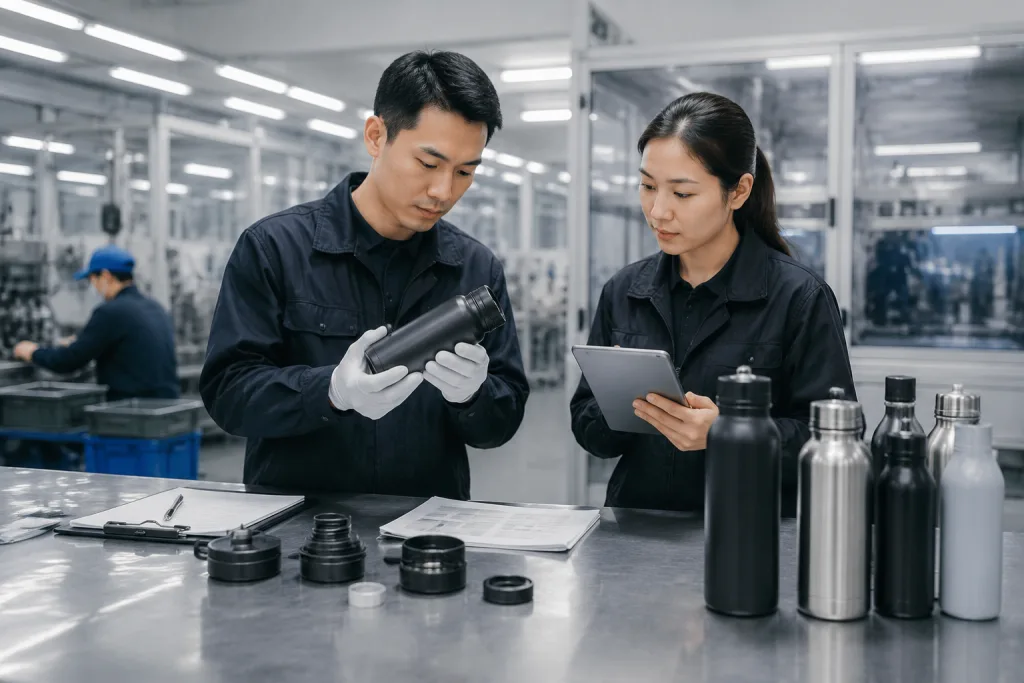
Two water bottle bulk quotes can be USD 1.20 apart and both can still be honest. We see this every week. The wrong question is “why is your price higher?” The better question is “what did you include?” Last month a buyer flagged a USD 0.68 gap on a 10,000 pcs PO, then QC pulled the cheaper sample and found a loose inner wall rattle after the drop test.
Material grade comes first. 201 stainless steel saves money, but we do not like it as the default for export drinkware because the rust risk comes back to the buyer, not the factory. 304 stainless is the normal baseline; 316 inner wall is a premium choice for certain canteen wholesale and growler wholesale programs. Wall thickness matters too. Moving from 0.40 mm to 0.50 mm gives better hand feel and dent resistance, but it adds steel cost and shipping weight. On the line, our caliper check often catches 0.02 mm variation before polishing, and that tiny number still changes the quote when you ship 18,000 bottles.
Finish is second. Plain brushed stainless is stable and easy to inspect under the light box. Powder coating adds color and shelf value, but it needs pretreatment, curing control, cross-cut adhesion testing, and stronger packing. Rubberized paint feels good in the hand, but we have seen it go sideways: scratches after carton rub, odor after 48 hours in a sealed polybag, or failure on the alcohol rub test when a supplier saves on coating. Laser engraving is reliable for logos. Multi-color screen print needs tighter artwork files, a clean Pantone callout, and usually higher setup cost; one buyer once sent “PMS Black C” and “matte black” on the same PO, and the line stopped for half a day.
Lid design is third. A simple PP screw cap is cheap. A straw lid with a carry loop, silicone seal, steel cap, or flip mechanism adds tooling, assembly time, and more places for failure. For wholesale drinkware, the lid creates more complaints than the bottle body. No contest. Specify gasket material, spare gasket requirement, and whether replacement lids are available. QC pulled the sample on a 5,000 pcs run after the silicone ring measured 1.6 mm instead of 1.8 mm, because that small gap can cause slow leakage in a carton laid flat during trucking.
Order structure is fourth. A 3,000-unit order in one color runs clean. The same 3,000 units split into six colors and four logos means 24 changeovers, extra film checks, more carton labels, and a higher chance someone catches a typo on the shipping mark at 9 p.m. At BottleForge Industrial, standard production capacity is about 600,000 stainless drinkware units per month, but capacity does not erase setup time. A realistic timeline is 7-10 days for samples, 25-40 days for mass production, and 3-6 weeks ocean freight depending on destination port.
Choosing The Right Bulk Mix
The real buying question is not “which bottle is best?” It is “which mix keeps inventory from sitting dead on the shelf?” If you are new to drinkware bulk, do not start with 8 SKUs unless you already have repeat orders. We usually run 2 or 3 shapes first, and QC pulled the sample at AQL 2.5 before we locked the carton plan.
For corporate and distributor programs, a clean mix is one 750 ml single-wall sports bottle, one 600 ml vacuum bottle, and one 20 oz tumbler. That gives you low, mid, and premium price points without tying up cash in heavy stock. For outdoor and camping channels, swap the tumbler for a 1 L canteen or 64 oz growler. For brewery channels, build around beer tumbler wholesale and beer growler wholesale, then add alcohol flask wholesale only if gift sets are on the order. We’ve seen buyers push for five styles here; the math does not work unless they already have shelf space.
Packaging has to match the channel. E-commerce needs stronger individual boxes, barcode labels, drop-test checks, and product photos that show the real finish; our drop test on the line is 1.2 m, not a guess. Retail distribution wants shelf-ready cartons, clear color codes, and master carton sizes that stack clean on a pallet. Promotional buyers can use simpler bulk packing, but they still need scratch protection. Saving USD 0.08 on packing and losing 3% to scuffs is bad buying. The buyer flagged that fast.
Ask suppliers for one comparison quote with the same inputs: FOB port, Incoterms, steel grade, capacity tolerance, finish, logo method, packaging, test standard, and lead time. If those items are not lined up, you are comparing guesses, not factories. A solid China supplier should help narrow the options, not throw every catalog item at you. Check the PO too; we have seen “20 oz” turn into “200 oz” in a typo, and that kind of mistake burns a week. The right water bottle bulk order is the one you can inspect, ship, sell, and reorder without drama.
Send Your Bulk Bottle Spec For Factory Review
Share capacity, material, logo, packaging, and target price. We will check feasibility, MOQ, lead time, and FOB China cost.
Frequently asked questions
What MOQ should I expect for water bottle bulk orders?
For standard BottleForge Industrial models, the practical MOQ is usually 1,000 units per SKU for stainless bottles and tumblers. Single-wall promotional bottles may require 2,000-3,000 units if you need a custom color. Alcohol flask bulk orders often start at 2,000 units because the unit price is low. Beer growler bulk orders can sometimes start at 800-1,500 units, depending on size and finish. If you split one order into many colors or logos, each split may need its own MOQ because coating, printing, and packing lines must be set up separately.
How long does a China wholesale drinkware order take?
A normal wholesale drinkware timeline is 7-10 days for a logo sample after artwork confirmation, then 25-40 days for mass production after sample approval and deposit. Complex powder-coated canteen bulk orders, gift-box alcohol flask wholesale bulk sets, or beer growler wholesale bulk programs can take longer, especially during peak season before summer or Q4. Ocean freight to North America or Europe usually adds 3-6 weeks depending on port, sailing schedule, and customs clearance. Air freight is possible but rarely economical for heavy stainless drinkware.
Which material is safest for reusable water bottles?
For most water bottle bulk and drinkware wholesale programs, 304 stainless steel is the safest commercial default. It balances corrosion resistance, cost, availability, and food-contact compliance. For higher-end canteen wholesale or growler wholesale products, some buyers choose 316 stainless inner wall, especially when selling to outdoor, marine, or acidic beverage users. Avoid 201 stainless for export retail drinkware unless you fully understand the corrosion trade-off. For plastic bottles, Tritan is common, but you still need food-contact reports and temperature-use limits.
Can I mix bottles, tumblers, growlers, and flasks in one order?
Yes, but mixed bulk drinkware orders need clean planning. You can combine water bottles, beer tumbler wholesale items, wholesale growler SKUs, and alcohol flask wholesale products in one shipment, but each product normally keeps its own MOQ, artwork setup, carton size, and inspection criteria. Mixing SKUs can improve container utilization if the carton dimensions work together. It can also slow production if every item uses a different coating, logo, and packaging. For a first order, 2-4 SKUs is easier to control than 10 SKUs.
What inspection standard should I put in the purchase order?
Use ISO 2859-1 sampling with AQL 2.5 for major defects and AQL 4.0 for minor defects as a common baseline for drinkware bulk. Critical defects should be zero tolerance. Define critical defects clearly: sharp edges, severe leakage, broken components, wrong material, contamination, and unsafe packaging. For vacuum canteens and beer growler in bulk, add 100% factory vacuum screening and sample-based thermal testing. For printed logos, include adhesion, color, position tolerance, and rub testing. Put these requirements in the PO before deposit, not after goods are finished.