Key Takeaways
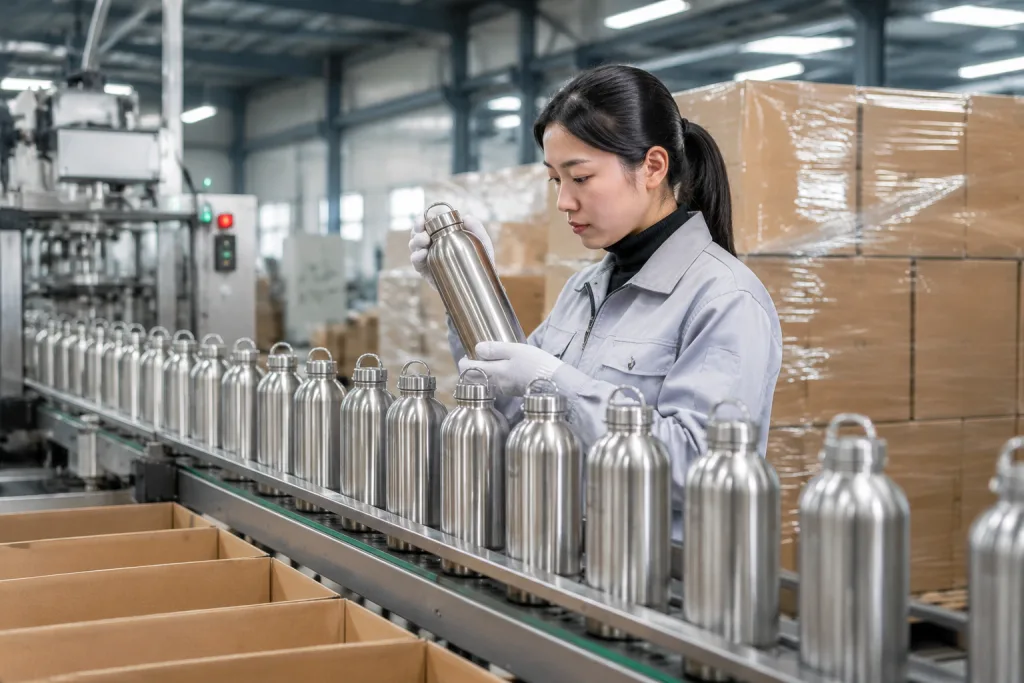
- A 500ml 304 stainless vendors water bottle often lands at USD 2.10-3.20 FOB at 3,000 pcs, before print and packaging
- Expect sample lead time of 7-10 days and mass production of 30-40 days from a Zhejiang canteen factory
- Use AQL 2.5 for general defects and confirm 100% leak testing on every vacuum bottle order
- A logo change, lid swap, or box upgrade can add USD 0.12-0.45 per unit fast
You are not buying a water bottle. You are buying a repeat order that has to hold spec through pricing, 2 rounds of samples, pad printing, a 76 cm carton drop test, and customs paperwork. This is where 7 out of 10 vendors water bottle programs start to slip. The quote looks clean, then the lid mold changes, the logo moves 4 mm, and QC pulls the first pallet with mixed carton marks and no LFGB test report.
If you work with a canteen factory in Zhejiang or another China sourcing base, treat the order like a controlled production run. Ask for the exact material grade, decoration method, carton spec, and QC checkpoints from day one; “same as last order” is the wrong question to ask when the PO typo says 304 stainless but the artwork file says plastic insert. We run the line by the approved sample, not by memory. That is how a canteen supplier becomes a long-term partner instead of another canteen vendor chasing price by 0.12 USD.
Start With the Real Buyer Brief
The best vendors water bottle orders start with a buyer brief, not a “send best price” email. If you are a distributor, brand owner, or procurement manager, write the use case before the RFQ. A European outdoor account may need a 500ml insulated bottle with 0.5mm body thickness, matte powder coat, one-color laser logo, and a carton that survives retail shelf handling. A North American corporate program may need a lighter commuter bottle, a lower unit cost, and delivery in 18 days instead of 32. Different jobs. Both get called custom drinkware, which is exactly where buyers lose control of the quote.
For one recent order, the brief looked like this: 8,000 pcs, 500ml, SUS304 inner and outer, leak-proof push lid, one Pantone body color, one laser logo, and master cartons for palletizing. The buyer sent it to three canteen manufacturers in Zhejiang and one canteen distributor in the same day. QC pulled the pre-production sample with a digital caliper because one lid gasket sat 0.8mm proud, and the buyer flagged it before deposit. The factory quotes only lined up after the buyer fixed five variables:
- Capacity: 350ml, 500ml, or 750ml — each size needs its own mold check and carton cube
- Material: 304, 316, or single-wall stainless — not the same cost, weight, or welding setup
- Decoration: print, laser, wrap, or emboss — laser is clean, but powder-coat color affects contrast
- Lid type: screw, flip, straw, or vacuum cap — one wrong lid code on a PO can change the whole test result
- Packaging: white box, color box, or retail set — pallet height and drop-test risk change fast
If you leave those open, every canteen supplier will guess. We’ve seen this go sideways: three quotes, three wall thicknesses, two lid designs, and one “cheap” price that failed the leak test after 30 minutes upside down. The math doesn’t work unless the brief is tight. A clean brief tells the canteen factory whether we run the line for promotional speed, retail margin, or a higher-end customized canteen planned for a 12-month reorder program.
Price Comes From the BOM
Once the brief is locked, the price starts to make sense. A plain 500ml 304 stainless vendors water bottle from China can sit around USD 2.10-3.20 FOB at 3,000 pcs, depending on wall thickness, cap parts, and finish. On our line, QC checks body weight on a 0.1g scale before we cost the steel. Add a one-color screen print and the print shop usually adds USD 0.12-0.25 per unit. Laser engraving is often USD 0.18-0.35. A stronger export carton or molded pulp tray can add USD 0.20-0.45. So no, a canteen custom quote is not just a bottle price.
The bill of materials also explains why one canteen manufacturer quotes lower than another. A 0.5 mm wall body costs less than a heavier 0.6 mm version, and the difference shows up fast when we run 3,000 pcs through the hydraulic forming press. A standard PP lid is cheaper than a double-wall lid with silicone seal, color-matched insert, and extra mold work. A 316 inner liner costs more than 304, but the math does not work unless your drink needs stronger corrosion resistance. If you are sourcing a custom growler or customizable growler for a beverage program, the same rule applies: bigger capacity, heavier steel, and thicker gaskets push the price up.
Good canteen manufacturers in Zhejiang and other parts of China usually break out the quote line by line. We ship clearer when the buyer can see steel, lid, printing, packing, and carton costs instead of one mystery number. Last month a buyer flagged a USD 0.38 gap between two quotes; the cheaper one used a 5-ply carton that failed our 12 kg drop test. If a canteen vendor refuses to show the BOM logic, you are probably paying for margin, not engineering.
For a distributor drinkware program, I would rather see a clear FOB China quote with known options than a low number that moves after artwork approval. We have seen this go sideways when a PO says “matte black” but the sample tag says “powder coated black,” and the buyer only catches it after the carton mark is printed. Clear costing saves time and gives you a stable re-order base when the first 8,000 units sell out.
Sample Before You Approve Anything
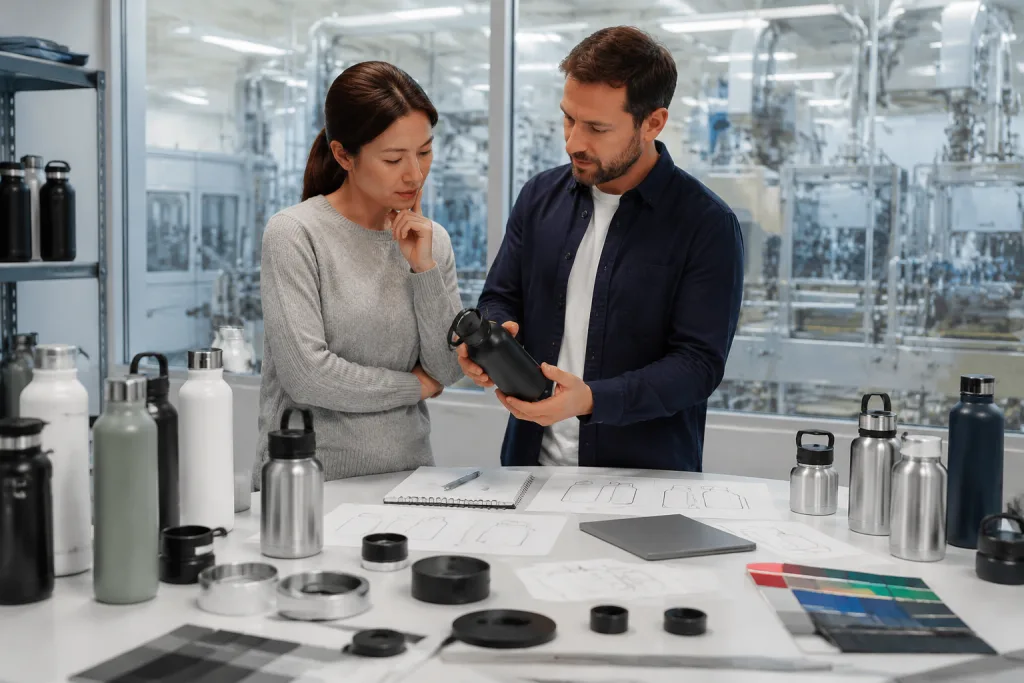
The sample is where the real job starts. A canteen customizable order should not go to mass production until your team has the bottle on the desk, not just a 20-second WeChat video from the sales rep. We run 2 samples: one for appearance and one for functional testing. From a Zhejiang canteen factory, sample lead time is commonly 7-10 days if the mold is already available, and 14-18 days if the lid insert or logo plate needs new tooling. Last month QC pulled a 500ml sample where the logo was 3 mm off center; on camera it looked fine.
Check the sample against numbers, not taste. Measure body diameter with a digital caliper, check lid fit with 3 open-close cycles, and mark logo position from the bottom seam. For a 500ml bottle, a wall thickness around 0.45-0.60 mm is common depending on the build. If you are buying customized canteen or canteen customized stock for retail, test the cap thread and dent resistance with a 1 kg drop check on the line. Run a 24-hour leak test upside down. If it is insulated, fill it at 95°C and record the temperature after 6 hours, 12 hours, and 24 hours. No test sheet, no approval.
Buyers who skip sample testing usually discover the problem after 2,000 units are already packed.
For Europe, ask for REACH and food-contact paperwork where relevant. For the US, many buyers still ask for FDA-related declarations from the canteen supplier. If the order is for a branded campaign, ask for BSCI or equivalent social compliance before release. A real canteen distributor should send these documents before the PI is signed; we have seen buyers flag this only after the carton marks were printed. A weak one will stall.
This is also where canteen promotional orders go wrong. A bottle that looks fine on a render can print badly on a curved surface or ghost after 10 dishwasher cycles. Sample early, sample hard, then approve only what you can measure. If the buyer asks, “Does it look premium?” that is the wrong question to ask; the math sits in print alignment, coating adhesion, leak rate, and whether the PO says matte black while the artwork file says PMS Black 6C.
QC the Line, Not the Promise
Once production starts, watch the line like you plan to place the next PO. A Zhejiang canteen factory should have inline checks, a final gate, and batch cards tied to the same lot number. On an 8,000 pcs order, we ask for AQL 2.5 on general defects and tighter calls on leakage, sharp edges, and print position. If you buy through a distributor, ask who signs the report; we’ve seen “factory QC” PDFs that were just forwarded from a trading desk.
Here’s the flow we use: sample sign-off, first-article check on the first 30 pcs, mid-line check at 10-20%, then pre-shipment before cartons are taped. At the end of the line, QC should open random cartons, run a leak test in a 50°C water bath, drop master cartons from 80 cm, and check logo placement with a steel ruler. A 1.5-2.0 mm print shift can pass on a promo job, but it fails on premium custom drinkware.
- Check seal rings for cuts, twists, or missing silicone; we reject those at the bench with a flashlight
- Check that every cap torques the same and does not cross-thread on the gauge fixture
- Check carton markings, SKU labels, and case count against the packing list; one PO typo can send the wrong code into 500 cartons
- Check odor, especially on new plastic lids, right after the parts come off the drying rack
A line that ships 300,000 units a month should have this on paper and on the floor. If the plant cannot pull the inspection log, it is not a real manufacturer. We ship plenty of bottles, and the math gets ugly fast when a bad batch reaches the warehouse.
Packout Matters as Much as the Bottle
By the time cartons are taped, the job is still not done. Carton spec, pallet height, and label placement decide whether the load reaches the warehouse clean or turns into a claim. We have seen a buyer lose a week because the FNSKU was printed 3 mm off and the scanner would not read it. If the shipment goes to Amazon or another retailer, get the carton count, barcode position, and pallet label right before the first truck leaves China.
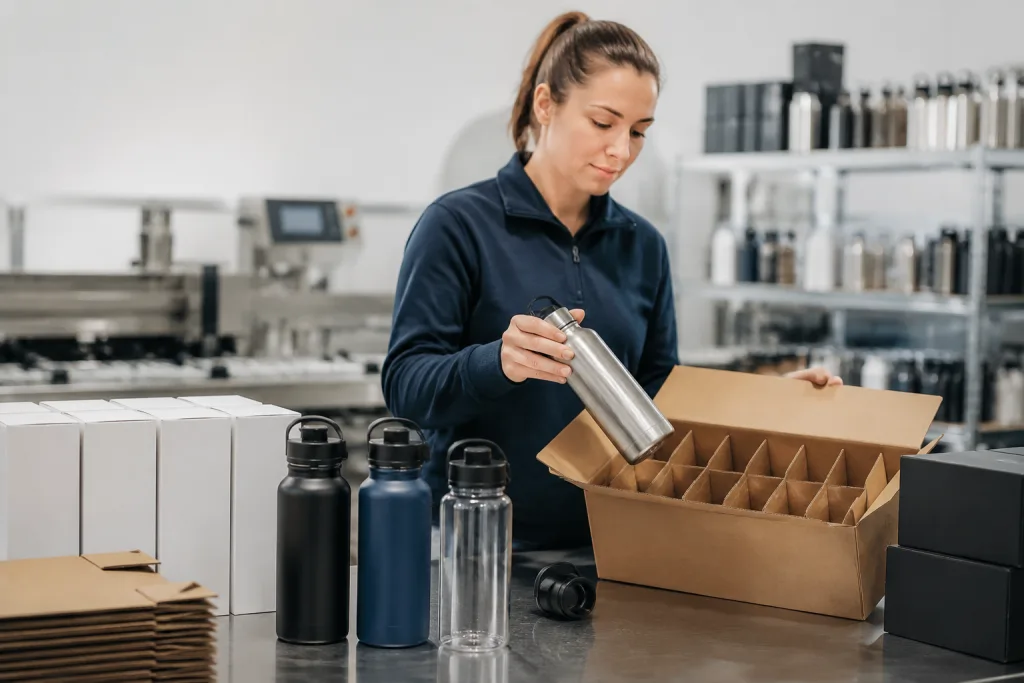
For a standard 500ml vendors water bottle order, we usually ask for 5-ply export cartons, 12-24 pcs per carton depending on size, and a drop test before release. That is the floor, not a bonus. For a custom growler, we add corner pads and a tighter inner tray because the body is larger and the impact load hits harder. The same goes for a customizable canteen with a fitted lid and coated finish; one 2 mm rub mark on the coating and the buyer flags it.
Do not skip the paperwork stack. The commercial invoice must match the packing list, the carton count must match the booking, and the color code must match the signed sample. We once caught a PO typo where “matte black” was entered as “matt black,” and the forwarder held the file until the buyer confirmed it. If you buy from a canteen supplier in Zhejiang, ask for pallet photos before pickup; a solid team sends them without a second chase.
That last 5% of discipline is what turns a one-time canteen promotional order into a repeat order. Buyers remember a clean unpacking more than a 30-cent price gap. We ship plenty of orders where the bottle was fine, but the packout saved the account. That is the part people underestimate.
Use the First Order to Build the Next One
Your first order should show you how the factory really runs. After delivery, we compare the landed result against the quote: unit price, defect rate, transit damage, and rework cost. If the order was 8,000 pcs and we found 12 leaking units, that is 0.15%—fine for one program, a problem for another. QC pulled the sample, so write down the defect type too. A logo scratch points to process. A loose cap points to torque or tooling. A crushed carton means the packout needs work.
This is where vendor quality shows up. A canteen supplier that helps tune the next run is worth more than a canteen vendor that only chases the first PO. We keep the winning spec in writing: exact body color, lid code, logo file, carton spec, and approved test standard. Last month a buyer flagged a PO typo on the lid code, and that small error would have sent the wrong cap into production. If you run multiple product lines, build one master spec sheet for each custom canteen and custom drinkware item. Then a distributor canteen order in Q4 does not inherit the mistakes from a Q1 trial.
For repeat business, I like to lock three things: the approved sample, the inspection standard, and the reorder lead time. In Zhejiang, a stable canteen factory can often repeat a familiar model in 25-35 days once tooling is proven and materials are in stock. We run this check with a 1.0 mm gauge on lid fit before we release the next batch. That predictability matters more than a slightly cheaper quote from a new canteen manufacturer. If you are building a long-term canteen distributors program, discipline beats luck every time.
Send your spec sheet and get a real quote
We can review your bottle spec, suggest cost-saving options, and quote a Zhejiang production plan with MOQ, lead time, and QC terms.
Frequently asked questions
What MOQ should I expect for vendors water bottle orders?
For a standard 500ml stainless vendors water bottle, MOQ is often 500-1,000 pcs if the factory already has tooling and standard materials. For a fully custom canteen with a new lid or color-matched finish, 3,000 pcs is more realistic. A plain logo print is easier than a new mold. In Zhejiang, many canteen suppliers can still quote smaller trial runs, but the unit price rises fast when you go below 500 pcs. If you want retail packaging, expect another 7-10 days for sample approval and 30-40 days for mass production after deposit.
How do I compare a factory quote and a distributor quote?
Start by matching the same spec sheet: material grade, lid type, finish, logo method, packaging, and test standard. A direct canteen factory quote is usually lower, sometimes by 10-18%, because there is no middle margin. A canteen distributor can still be useful if you need mixed items, smaller MOQs, or local service, but ask who actually makes the product. For an honest comparison, request FOB China pricing, sample cost, lead time, and QC terms from both sides. If one quote hides carton spec or testing, it is not a true comparison.
Which compliance documents matter for Europe and North America?
For Europe, buyers often ask for REACH-related declarations and, depending on market and material, LFGB or food-contact documentation. For North America, many request FDA-related declarations for food-contact drinkware. If the program is retail or corporate, BSCI or a similar social audit can matter too. A serious canteen manufacturer should also provide material data for SUS304, PP, and silicone parts. Do not ask for just one certificate. Ask for the product test report, the material declaration, and the factory audit if you are placing a larger order.
Can I customize lids, colors, and logos in one order?
Yes, but each change affects MOQ, cost, and lead time. One-color print on a customized canteen may add only USD 0.12-0.25 per unit, while laser engraving may add USD 0.18-0.35. A custom lid or two-color body can trigger new tooling and add 10-20 days. If you want canteen customizable options without blowing up the budget, keep the body shape standard and vary the decoration. That is the easiest way to build customized drinkware without turning the order into a mold project.
What should I inspect when the order arrives?
Check the outer cartons first for crush, water damage, and correct labels. Then open random cartons and inspect leakage, lid torque, odor, print position, and surface defects. For a 1,000-8,000 pc order, many buyers sample with AQL 2.5 logic and pay special attention to critical defects like leaks and sharp edges. If the product is a custom growler or insulated bottle, also check temperature retention and gasket fit. Do one quick fit test with your warehouse or Amazon prep process, including barcode or FNSKU placement if needed.