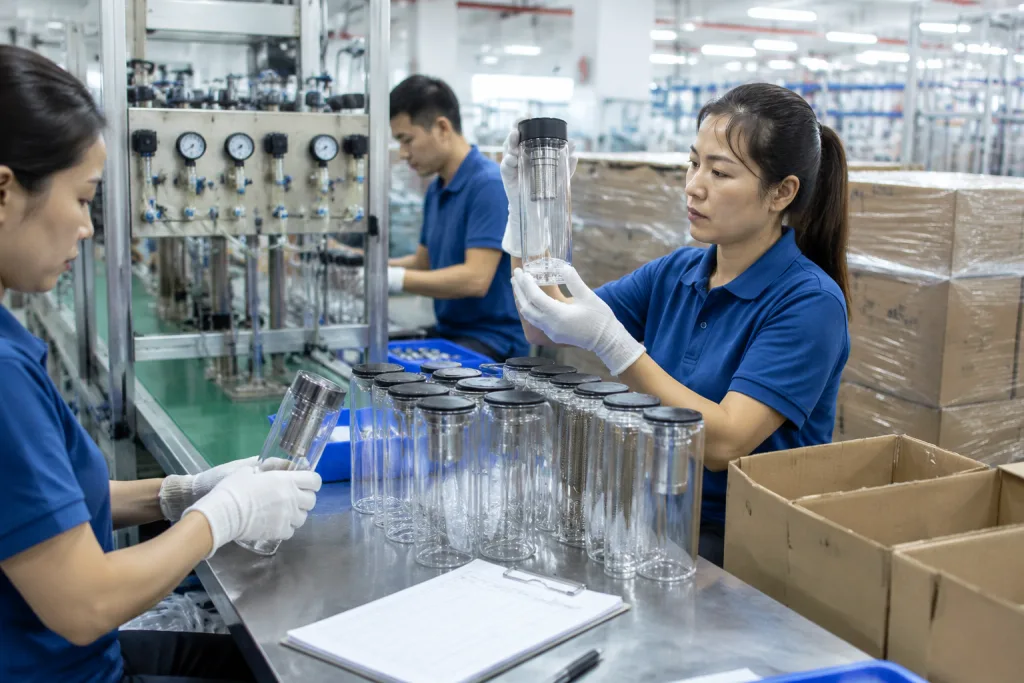
Key Takeaways
- Use 304 stainless steel infuser baskets with 0.4-0.5 mm sheet thickness for most tea programs
- A practical MOQ is 1,000 units per color for custom logo infuser bottle orders
- Run 100% leak testing plus AQL 2.5/4.0 final inspection before shipment
- Normal production lead time is 25-35 days after artwork and deposit approval
A vendors tea infuser bottle project usually fails on small checks: a lid thread that passed the hand sample but seeped on carton 42, a 304 stainless infuser basket with tea stain after 24 hours, or a silk-screen logo that rubbed off after 30 passes on the 3M tape test. We’ve seen bulk infuser bottle shipments get stuck because QC pulled the sample and found 7 leaking lids in a 200-piece pilot run. Painful stuff.
At BottleForge Industrial in Hangzhou, Zhejiang, we see this from first-time buyers and distributors who already ship 12 containers a year. China can produce a solid custom tea infuser bottle, but the PO must spell out material, test method, AQL level, packing, and signed approval sample; if it says “good quality bottle” only, the math doesn’t work. On our line, one buyer flagged a 0.3 mm gap between the strainer rim and lid seal, and that tiny detail decided whether the bottle passed or leaked in transit.
The Leak Starts At The Thread
The most expensive failure in a vendors tea infuser bottle order is not a cracked body. It is a slow leak from the cap thread or silicone seal. QC pulled one sample last month that sat upright on the sales desk for 2 hours with no mark on the tissue, then leaked 6 ml after 15 minutes on its side. That is exactly how a buyer ends up with tea inside a customer’s gym bag.
For a custom infuser bottle, put the cap system into the PO, not just the artwork file. We need the thread pitch in mm, the gasket hardness shown as Shore A 50-60 for food-grade silicone, and the leak test written with fill level plus test time. Softer gaskets seal fast on the line, but they take a set after compression. Harder gaskets last better, but the cap mold needs tighter control; our toolroom checks this with a thread gauge before we run bulk. For Tritan or PP lids, thread engagement should normally be at least 2.5 turns. A shallow decorative thread is the wrong place to save resin.
Ask your factory infuser bottle supplier to test each unit upside down for 30 minutes after filling to 95% capacity with room-temperature water. For sports or wellness channels, add a shake test: 20 seconds by hand or 60 cycles on a simple fixture. We run this on a small clamp fixture beside the packing line, and the buyer flagged it once because the PO said “leak proof” but never said hot or cold. If your bottle is marketed for hot tea, be careful. Many fruit infuser bottle bulk models are made for cold water only, even if they visually resemble a tea product.
For bulk tea infuser bottle orders, we also recommend carton drop testing before mass production is packed. A cap that passes leak testing before transport can shift after a 76 cm drop if the packaging allows lid impact. The fix is usually cheap: add a PE bag for cap protection, or use a tighter egg-crate divider so lids do not hit the carton wall. We have seen this go sideways when the outer carton looked clean but 9 inner boxes had wet corners after the drop. The cost is often USD 0.03-0.08 per unit, far less than replacing wet cartons after import.
Infuser Baskets Create Hidden Complaints
The infuser basket looks like a 12-gram small part, but it is where complaints start. We see 6 out of 10 buyer comments on sample rounds point back to the basket: leaves leaking, pulp stuck, or a sharp rim after washing. If the mesh holes are too large, tea leaves escape. Too small, and fruit pulp blocks flow. Bad rolled edge? QC pulled the sample last month because it scratched a nitrile glove during the wash test. These are not cosmetic issues; they are product experience issues.
For a factory tea infuser bottle, specify 304 stainless steel for the basket unless your market accepts PP plastic. For premium wellness brands, 304 stainless is the safer default because it handles tea acidity, fruit slices, and 50+ wash cycles better. A common basket wall thickness is 0.4-0.5 mm; we check it with a digital caliper before the basket goes to assembly. Mesh or perforation size depends on use. Fine loose tea usually needs holes around 0.8-1.2 mm. Fruit infusion can use larger perforations, around 1.5-2.0 mm, because flow matters more than trapping tiny particles.
A custom fruit infuser bottle and a custom tea infuser bottle are not always the same design. This is where buyers sometimes ask the wrong question: “Can one basket do both?” It can, but the math gets tight. Tea buyers want fine filtration and hot-water tolerance. Fruit buyers want more basket volume, easy cleaning, and visible ingredients for retail photos. If you are building a customizable tea infuser bottle for both uses, choose a removable long basket with a smooth rolled rim and at least 25 mm opening width; we run a 25 mm plug gauge on the line so users are not forced to clean it with a pencil-thin bottle brush.
For customized infuser bottle production, require a salt spray or passivation check if the basket is stainless steel. Low-grade stainless can rust around punched holes because the tooling damages the surface; we have seen this go sideways after only 24 hours in a salt spray cabinet. We inspect basket burrs, discoloration, weld marks, and lid fit on the line before assembly. Final AQL is too late. Catch it while the baskets are still in the blue turnover bins.
Plastic Clarity Can Mislead Buyers
Clear bottles move because shoppers can see lemon slices, berries, mint leaves, or tea color through the wall. That shine can fool buyers. We have seen a 620 ml AS sample look close to Tritan under a sales-room light box, then crack at the shoulder after a 1.2 m drop test on the QC bench. Clarity does not prove impact strength, dishwasher change after 20 cycles, or food-contact status. A customizable fruit infuser bottle made from low-cost AS plastic can look clean on a video call, but the math does not work if the buyer plans hot tea, retail returns, and repeat washing.
For wellness brands selling in Europe or North America, we usually quote four material routes: Tritan for a clear bulk fruit infuser bottle with better drop performance; food-grade PP when the buyer wants lower cost and better temperature handling but accepts a cloudier look; borosilicate glass when the shelf needs a clean premium feel and the carton can absorb breakage risk; stainless steel for thermal tea bottles where fruit visibility is no longer the selling point. On the line, Tritan bodies come off with fewer whitening marks around the thread than cheaper commodity plastics, and QC checks the mouth diameter with a 0.02 mm caliper before matching the infuser basket.
If you sell through retailers, ask for LFGB or EU food-contact test reports for Europe, and FDA food-contact documentation for the US. Colored lids need REACH and heavy metal checks for pigments; we had one buyer flag a blue lid because the PO said “navy” but the approved chip was Pantone 2965 C. For children or family wellness lines, ASTM-related physical safety expectations may apply depending on age positioning. Do not let a factory direct infuser bottle quote skip compliance because the product is “just a bottle.” Customs and retailer QC teams will not laugh that off.
At our Zhejiang facility, a typical custom made infuser bottle program runs 1,000 units per color for MOQ, with 80,000-120,000 units/month output depending on material and decoration. Those numbers matter. If a supplier promises 500 units in six colors at a rock-bottom price, ask whether they are mixing stock lids, shared infuser baskets, and leftover resin. We run color control on molded parts with a spectrophotometer, and when the buyer pushes for 12 days instead of an 18-day production window, stable custom mold work is usually the first thing that goes sideways.
Logo Decoration Fails Quietly
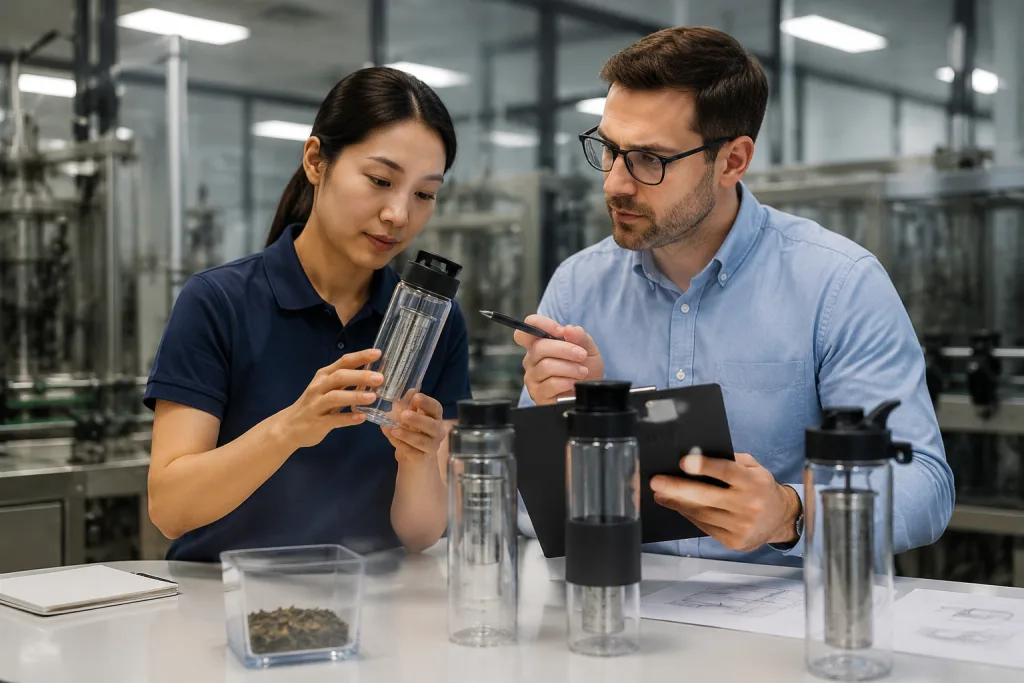
Logo trouble usually shows up late. The carton passes first inspection, the unboxing looks clean, then the mark starts lifting after a few hand washes. For a custom logo infuser bottle, the decoration has to match the body material and the way the buyer will use it. A wellness brand may care more about a soft-touch finish and exact brand color, while a distributor program may push harder on unit cost. We’ve seen both go sideways when nobody ran a proper wear check.
Silkscreen printing is a good fit for one- or two-color logos on straight bottle walls. On our line, that usually lands around USD 0.05-0.15 per unit, depending on logo size, color count, and setup time. Heat transfer can carry more color, but the adhesion test matters. Laser engraving works on stainless steel and some coated parts, not on clear plastic bodies. UV printing gives sharp gradients, but if the bottle is going into cup holders or bike cages, we run an abrasion test before we sign off.
For any customized tea infuser bottle, approve artwork from vector files, not screenshots. A PO with a blurry JPG is the kind of thing that causes pain later. Call out Pantone numbers for lids, straps, sleeves, and print, then ask for a decorated pre-production sample before mass production. A plain sample only proves the shape. If you are ordering a customizable infuser bottle with multiple SKUs, lock the logo position on a drawing with height from the base, print width, and the angle to the lid hinge or carry loop.
A simple decoration QC plan covers most orders: tape test, 50-rub alcohol test where the material allows it, visual color check under D65 light, and AQL inspection for scratches, ghosting, misalignment, and ink pinholes. For Amazon-style fulfillment or subscription boxes, we also check barcode readability if the label is applied at the factory. One typo on an FNSKU can stall a warehouse receiving team for a day, and that is the wrong place to save a few cents.
Packaging Is Part Of The Product
About 6 out of 10 distributor tea infuser bottle projects we quote come in with packaging under-spec’d because the buyer treats it as freight filler. That is the wrong question to ask. Packaging decides two things fast: how many bottles arrive clean, and how much labor your warehouse burns scanning and repacking. For glass or clear plastic infuser bottles, QC often finds rub marks after vibration testing when the bottle can move 3-5 mm inside a loose polybag or a thin B-flute carton.
For a distributor fruit infuser bottle order, lock the pack style before artwork starts: bulk pack, white box, color box, or ecommerce mailer. Bulk pack works for promo channels and we usually run 24 or 48 units per master carton, with dividers if the bottle wall is glossy. White box gives basic protection and still leaves room for private-label stickers. Color box sells better on a shelf, but it adds dieline checks, barcode proofing, and usually USD 0.12-0.35 per unit. Ecommerce mailers cost more; the math works when the order ships direct to consumers and one cracked cap means a reshipment plus a bad review.
If your product is a bulk infuser bottle for marketplace selling, ask the China factory to apply FNSKU or UPC labels, but send the label rules in writing: label size in mm, exact placement, scan direction, and whether the barcode sits outside the polybag or retail box. We have had a buyer flag a 2 mm label shift because their Amazon warehouse scanner missed 7 cartons out of 120. For North America, master carton markings should show SKU, quantity, gross weight, net weight, carton size, country of origin, and required compliance marks. Print one carton first. QC should scan it with a handheld Zebra scanner before the line packs the full PO.
Drop test standards vary by retailer, but a practical starting point is a 76 cm carton drop on one corner, three edges, and six faces for export packaging. Do it packed, not empty. If the inner box deforms or the cap scratches the bottle body, change the insert before production; a 1.5 mm thicker EVA ring or tighter pulp tray often fixes the contact point. Packaging revisions after mass packing are slow and expensive, and we have seen this go sideways when 3,000 units had to be opened and reboxed before FOB Ningbo shipment. Spend two extra days on a packed sample.
Cheap Quotes Hide Scope Gaps
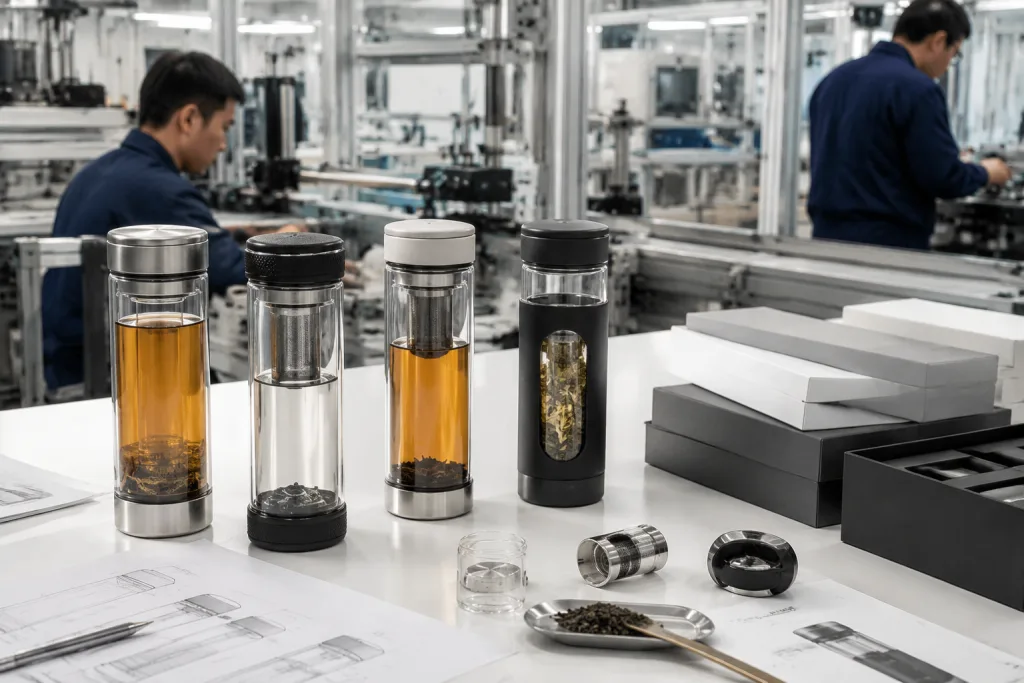
Buyers often compare factory fruit infuser bottle quotes by unit price and miss the scope. We see it every RFQ week. One supplier includes a 304 stainless basket, 0.7 mm silicone seal, color box, carton drop test, and FOB Ningbo. Another shows USD 0.18 less with a PP plastic basket, 0.45 mm gasket, bulk pack, and EXW factory terms. On the quote sheet, the cheap one looks clean. On the packing line, QC pulled the sample and found the lid seal sitting loose after 3 opening cycles. The math doesn't work if the buyer has to add a color box, local trucking, and replacement gaskets later.
For a customized fruit infuser bottle, send each supplier the same quote sheet: capacity in ml, body material, lid material, basket material, gasket material, decoration method, packaging, inspection level, incoterm, sample fee, mold fee if any, lead time, and payment terms. Put tolerances on the sheet too, such as ±3 mm logo position and 12 kg master carton limit, or the line will make its own call. For most custom infuser bottle projects, realistic China pricing may range from USD 1.20-2.80 for plastic models, USD 2.50-5.50 for glass with stainless infuser, and USD 4.50-9.00 for insulated stainless designs. Capacity, lid complexity, and packaging move those numbers fast; a buyer once flagged a PO typo where “single wall” became “double wall,” and that changed the quote by USD 1.35 per piece.
We usually quote FOB Ningbo or FOB Shanghai from Zhejiang because freight routing is predictable for Europe and North America. Our forwarder can book Ningbo to Hamburg in 18 days on a direct sailing, while a cheaper transshipment route has taken 31 days when space got tight. Standard payment terms are often 30% deposit and 70% before shipment after inspection. If a vendor demands 100% upfront on a repeatable factory direct infuser bottle order, ask why. If they offer 90-day credit on a first order, ask why as well. We've seen this go sideways; one buyer pushed for open account before we had even checked their final artwork against the Pantone book.
Lead time traps buyers more than price. A plain stock distributor tea infuser bottle may ship in 7-15 days if the warehouse has the color and the inner cartons are already printed. A custom color, logo, and retail box program is more often 25-35 days after deposit and sample approval; for a 3,000 pcs MOQ run, we need time for color mixing, pad-printing fixture setup, and AQL 2.5 inspection. New mold work can add 20-45 days. If your launch date is fixed, build backward from the vessel closing date, not from the day your team wants product photos.
Inspection Must Match The Risk
A final inspection is not magic. It is a sampling tool. For a 5,000 pcs bulk tea infuser bottle order, the checklist has to follow the parts that fail on the line, not just carton count and logo position. We run the leak test on the vacuum leak tester at 0.06 MPa; check cap torque by hand and with a torque meter; confirm every silicone gasket is seated; drop the stainless basket into the neck gauge to catch tight fit, burrs, and tilt. QC also checks odor, color match under a D65 lamp, retail box crushing, barcode scan rate, and master carton edge strength.
For most distributor infuser bottle shipments, AQL 2.5 for major defects and AQL 4.0 for minor defects is a practical baseline. Critical defects should be zero tolerance. A missing gasket, sharp basket edge, cracked body, wrong food-contact material, or unreadable compliance label belongs in critical or major, depending on the sales channel. We had one buyer flag a 2 mm sharp point on the infuser rim after QC pulled the sample, and they were right. Cosmetic scuffs can sit in minor only when the shelf price and retail brief allow it; for gift-channel goods, the math does not work.
Do not rely on a golden sample kept by the supplier. Keep one approved sample in your office and one sealed at the factory, with the PO number and date written across the tamper label. For each custom made infuser bottle run, compare mass production against both samples before packing starts. Color drift shows up fast on translucent plastics, especially pale smoke, amber, and brand pastel shades; last month our injection line saw a visible shift after 38 kg of masterbatch from a new drum. A Delta E target suits larger programs, while smaller startup orders can use approved physical chips and a D65 light box review.
The best vendors tea infuser bottle projects are boring by shipment day. That is the goal. The factory has a signed spec, the sample is sealed, line QC knows the 180-degree inverted leak test, and the inspector carries photos showing acceptable and reject defects. We ship repeat SKUs when these details are locked before mass production; we have seen this go sideways when the buyer asks inspection to “judge by experience” on loading day. That is how a customizable tea infuser bottle becomes a repeat SKU instead of a one-time headache.
Send Your Infuser Bottle Spec Before You Quote
Share capacity, material, logo, packaging, and target market. BottleForge will return practical MOQ, lead time, and factory-direct pricing.
Frequently asked questions
What MOQ should I expect for a vendors tea infuser bottle order?
For a custom tea infuser bottle with logo and standard existing mold, 1,000 units per color is a realistic MOQ at our Zhejiang factory. If you need a custom Pantone lid, retail box, and stainless infuser basket, some suppliers may push MOQ to 2,000-3,000 units because color matching and component purchasing create setup waste. Stock-color bulk infuser bottle programs can sometimes start at 500 units, but you will have fewer packaging and decoration choices. New mold development is different: expect 5,000-10,000 units as a practical first production quantity, plus tooling cost and 20-45 days for mold work.
Is Tritan better than glass for a bulk fruit infuser bottle?
Tritan is usually better for fitness, workplace hydration, and youth-oriented wellness channels because it is lighter and more impact-resistant than glass. A 700 ml Tritan custom fruit infuser bottle may weigh 140-180 g before packaging, while a glass version can be 350-500 g. That difference affects freight, drop damage, and customer handling. Glass feels more premium and resists odor well, but you need stronger packaging and clearer breakage warnings. For ecommerce, Tritan often gives fewer damage claims. For boutique retail, glass can work if the margin supports better inserts and carton testing.
Can one design work as both tea and fruit infuser bottle bulk product?
Yes, but you must choose the basket carefully. Tea needs smaller holes, often around 0.8-1.2 mm, to stop loose leaves. Fruit needs larger openings and more chamber volume so water flows around lemon, mint, or berries. A compromise design uses a removable 304 stainless basket with medium perforation, a rolled rim, and a wide mouth of at least 45 mm for cleaning. If you market the same customized infuser bottle for hot tea, confirm the body and lid can handle the stated temperature. Many clear plastic fruit bottles should not be sold for boiling water.
What certifications do distributors tea infuser bottle buyers need?
For Europe, ask for EU food-contact or LFGB testing for materials that touch water, tea, or fruit. REACH is important for pigments, coatings, and some accessories. For the US, request FDA food-contact documentation for plastic, silicone, stainless steel, or glass parts. If the factory claims BSCI, ISO 9001, or similar audit status, ask for the current certificate and scope, not just a logo on a quotation. Compliance cost depends on materials and lab scope, but a serious custom logo infuser bottle project should budget several hundred USD for updated third-party testing when entering a new retail channel.
How long does a customized tea infuser bottle order take from China?
For an existing mold with custom logo, color box, and approved materials, plan 25-35 days for production after deposit and artwork approval. Samples usually take 5-10 days if parts are available. Sea freight from China to North America or Europe commonly adds 25-45 days depending on port pair and season. Air freight is faster but often too expensive for low-margin bulk tea infuser bottle orders. If you need new tooling, add 20-45 days before production. The safest launch calendar starts from your required warehouse arrival date and works backward through inspection, vessel cutoff, packing, and sample approval.