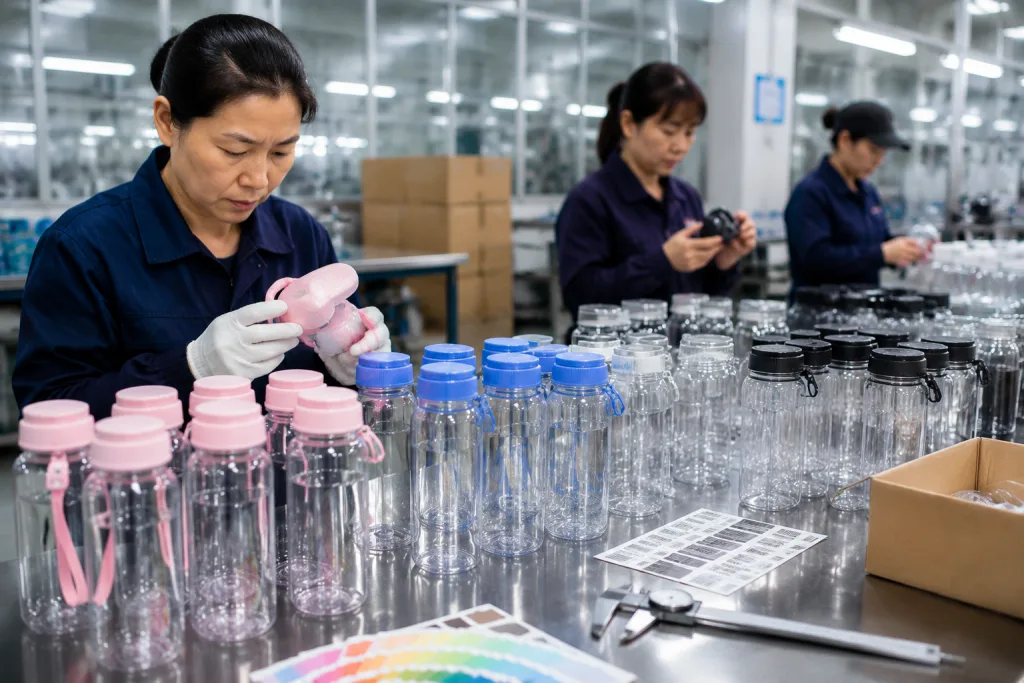
Key Takeaways
- For most plastic water bottle programs, realistic MOQ starts at 1,000-3,000 units per color
- BPA-free Tritan, PP, PE, and PETG solve different buyer problems; do not approve material by photo
- AQL 2.5/4.0 inspection should be written into the PO before mass production starts
- Typical custom logo lead time from Zhejiang, China is 25-40 days after sample approval
If you search for vendors plastic water bottle, you usually get a stack of catalogs, not answers. A catalog shows 500 ml, blue, and a flip lid. It won’t tell you if the 1.2 mm wall can survive a school run, if the cap thread starts weeping after 500 opens, or if the carton holds up through LTL handling in Canada. We run those checks on the line, and QC pulled a 500 ml sample with a torque gauge last week for exactly that reason.
At BottleForge Industrial in Hangzhou, Zhejiang, we quote plastic bottles, custom canteen jobs, and distributor drinkware orders every week. The useful talk starts with the spec sheet. Skip that, and the math doesn’t work: you get sample delays, tooling surprises, and claims after shipment from China. A clean spec sheet saves margin; a loose one burns time. That’s the wrong question to ask if you want a stable order.
Capacity Line: Real Fill Volume
The first line on a plastic bottle spec sheet is usually capacity: 500 ml, 650 ml, 750 ml, 1,000 ml. Buyers read that as a simple number. It is not. You need to confirm brimful capacity or usable fill capacity, because a 750 ml bottle may only take 700 ml in real use once you add a straw lid, shaker ball, or pressure-relief insert. QC pulled the sample and filled it to the shoulder line. This is the wrong question to leave vague, because end users will compare the printed claim with the water they can actually pour in.
For B2B buying, capacity also drives carton size, freight, retail shelf fit, and FBA dimensional weight. A 1,000 ml plastic sports bottle can look cheap on the unit quote and turn expensive in freight if the diameter pushes the master carton over 0.08 cbm for 24 pieces. We have seen buyers flag a PO after the packing table tape check showed the carton was 18 mm wider than planned. The math does not work. For a distributor canteen program going into mixed retail channels, we usually push 600-750 ml because it gives a better hand feel, enough logo space, and cleaner shipping numbers.
If you are sourcing from a canteen factory in China, ask for three figures: brimful capacity, recommended fill line, and tolerance. A normal tolerance is +/-3% for blow-molded plastic bottles. Injection-molded bodies can run tighter, but the mold cost goes up fast. Our Zhejiang line can turn out about 450,000 plastic drinkware units per month across PP, PE, PETG, and Tritan-style copolyester jobs, but we still lock capacity by approved sample, not by catalog wording. We have also seen a PO typo where 750 ml became 700 ml, and that kind of slip ends in a buyer dispute.
Material Code: Cost Versus Claims
The material line is where 6 quotes for the same bottle can stop matching. PP is the low-cost workhorse: light, easy to mold, and common on squeeze bottles or canteen customized projects where the buyer is chasing a USD 0.20 saving. PE feels softer in the hand and works better for flexible sport bottles. PETG gives clearer walls and a nicer shelf look, but don't let a vendor sell it as premium copolyester. Tritan-type copolyester costs more, looks closer to glass, takes drop impact better, and supports a higher retail tag. We run a 1.2 m drop check on the line because the math doesn't work if a cheap resin saves USD 0.08 and cracks at the cap shoulder.
Do not accept “eco plastic” or “food grade plastic” as a complete material spec. Ask for the resin name, grade, supplier or equivalent, BPA-free statement, and the compliance target written on the PI, not buried in a chat screenshot. For Europe, ask about EU 10/2011 food-contact requirements and REACH screening for restricted substances. For the United States, ask for FDA food-contact suitability; if children are involved, ask for CPSIA and ASTM-related review based on the age positioning. A kids bottle is not the same compliance file as a gym bottle. Last month QC pulled the sample after the PO said “PET” while the artwork sheet said “PETG”; that one typo held the sample room for 2 days.
Material also changes decoration. A canteen supplier may quote the same logo price for PP and PETG, but ink adhesion can fail in different places. Laser marking makes little sense on translucent plastic unless we add a marking additive or switch to a label method. Silkscreen needs a cross-cut tape test, heat transfer needs edge-rub checks, and in-mold label or wrap decal needs dishwasher simulation if you plan to claim durability. For customized drinkware, a USD 0.08 cheaper resin can cost you USD 0.30 in returns if the bottle clouds, cracks, or smells after warm-water use. We've seen this go sideways after 500 ml bottles sat in a 55°C test cabinet overnight.
Wall Thickness And Drop Risk
Wall thickness is not glamorous, but it decides how the bottle feels in hand and how it holds up in transit. For lightweight PP promotional bottles, 0.8-1.0 mm body thickness is common. For reusable PETG or copolyester bottles, 1.2-1.8 mm makes sense depending on shape and capacity. Thicker is not a free upgrade. It pushes cycle time, unit cost, and weight up, and the buyer ends up paying for plastic they may not need. On the line, we check with a wall gauge at the shoulder before the mold gets signed off.
Ask the canteen manufacturer to give thickness at three points: shoulder, side wall, and base. That is where the trouble shows up. We have seen cracks start at the shoulder radius and whitening at the bottom push-up while the straight wall still looked fine. If you are buying a customized canteen with a carry loop, check the lid hinge and pin diameter too. A 3.0 mm hinge pin takes abuse better than a thin molded flap. The buyer pushback is usually, “Why do we need that much?” Fair question. The math does not work if the bottle is for school, outdoor, or construction-site use.
Drop testing should match the channel, not factory habit. We usually test an empty bottle and a filled bottle from 1.0 m onto concrete or a steel plate, with drops on base, side, shoulder, and lid. For premium distributor drinkware, 1.2 m is a better benchmark. If the product ships by parcel after retail sale, carton drop testing matters too. We have shipped nice custom growlers that passed the factory test and still arrived cracked because the individual box had no corner protection. QC pulled that sample, and the carton showed a 12 mm corner crush. That is the wrong question to ask if someone only wants a low bottle price.
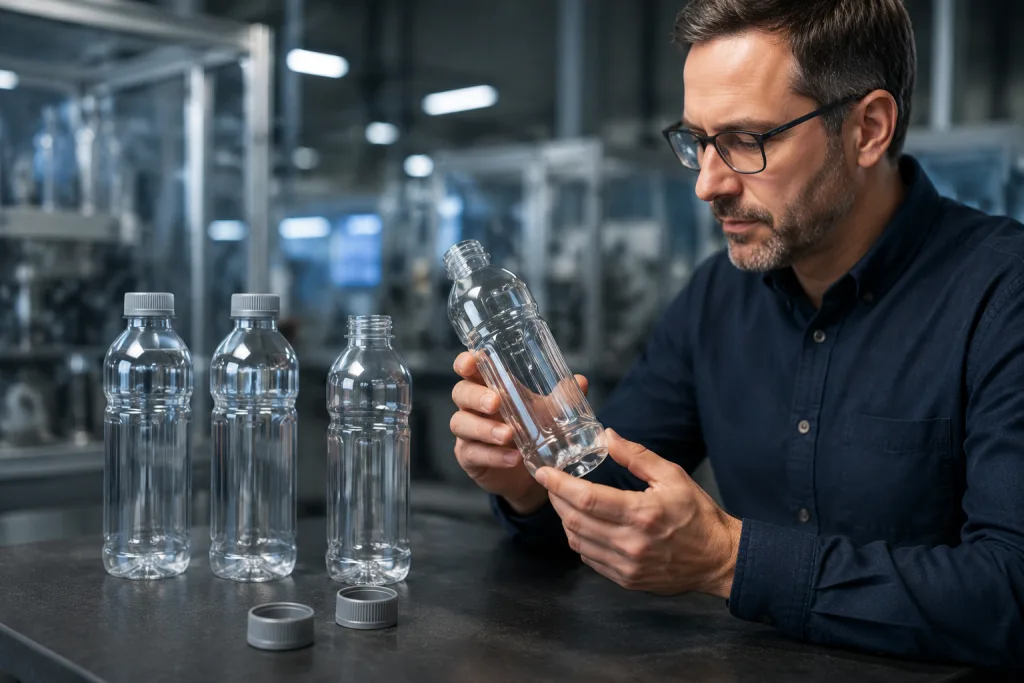
Lid System And Leak Standard
The lid line matters more than the bottle body. We see good bottles get kicked back because the cap weeps, smells off, or cracks at the thread after a few uses. On the spec sheet, name the lid material, gasket material, thread type, opening style, straw material if there is one, and whether spare lids can be supplied. For a canteen vendor selling repeat programs, that spare-lid line item is not a nice-to-have, it is how you keep the account alive. We run this every day on the assembly bench, and the buyer usually asks about the cap first.
Leak testing needs plain language. A practical shop test is simple: fill to the marked line with room-temperature water, close the lid, turn it upside down for 30 minutes, then shake it 20 times and check for any wet spot on the carton or bench. For straw lids, spell out whether “leakproof” means the straw is locked or whether it also covers the open position. This is the wrong question to leave vague. We’ve seen buyers complain after marketing a straw bottle as leakproof when it was only spill-resistant, and the buyer flagged it on the first sample. QC pulled the sample again, and the result did not change.
Gasket quality hides cost in plain sight. Silicone costs more than low-grade TPR, but it usually holds shape longer and picks up less odor. If you are sourcing canteen promotional bottles for a 3-day event, the cheaper gasket can work. For retail, use food-grade silicone and state Shore hardness, often around 50-60A for flexible sealing. One PO typo we catch often is the gasket spec left blank, and that turns into a delay at the line. Zhejiang factories can make plenty of lid styles, but a new lid mold still runs USD 2,000-8,000 depending on sliders, buttons, and inserts, so talk about that before the design team gets attached to a cap sketch.
Logo Area And Decoration Method
The decoration line is where custom drinkware turns into a brand asset or a headache. We need artwork size, print position, max color count, Pantone numbers, and the registration tolerance before the line runs. On a cylindrical bottle, a 1-color silkscreen logo usually holds well at 60-90 mm wide. If the art wraps fully, heat transfer or a shrink sleeve is the cleaner call, especially on bodies with curves, grip panels, or molded measurement marks.
Silkscreen is still the cheapest move for a simple logo. Our usual setup charge sits around USD 35-80 per color, and running cost is about USD 0.04-0.12 per imprint, depending on size. Heat transfer lands at USD 0.18-0.45 per piece and handles gradients better. In-mold labeling looks sharp for high-volume canteen customizable programs, but MOQ often starts at 5,000-10,000 pieces because the label line needs steady volume. If a canteen distributor is testing a new market, I’d take silkscreen or transfer first. The math works; expensive tooling usually does not.
Decoration durability should be checked on the bench, not guessed from a PDF. We run tape adhesion tests, alcohol rub checks, and hand-wash simulation as basic control points. Dishwasher-safe claims need more discipline; 50 cycles at 65-70°C is a better check than washing one sample in a staff kitchen. If your sales copy says “dishwasher safe,” tell the canteen supplier before quotation. Ink, curing time, resin choice, and packing all shift. For customized growler and distributor growler jobs, the logo also fights for space with measurement windows and warning text, so do not leave that line until final artwork week. QC pulled a sample last month because the logo crossed the fill mark by 3 mm.
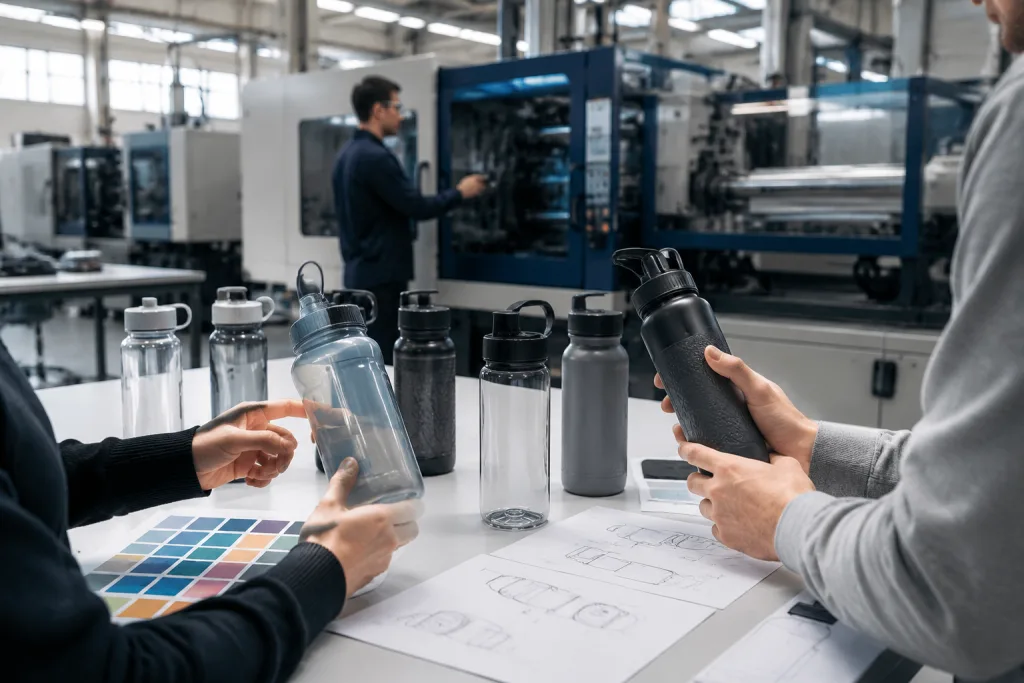
Packing, Barcode, And Channel Fit
Packing is part of the spec, not a side note. A bulk-packed bottle for a marathon giveaway is a different job from a retail-ready bottle for a North American distributor. On our packing sheet, we spell out polybag or no polybag, hangtag, instruction sheet, color box, master carton quantity, carton dimensions, gross weight, and pallet plan. If you need FNSKU labels, carton labels, suffocation warnings, or country-of-origin marking, lock that in at quotation stage. We had one PO last month with the label SKU typed wrong, and the whole carton run had to stop.
For Amazon-style parcel channels, we normally push individual kraft box or color box protection, even if it adds USD 0.12-0.35 per unit. That is the right spend; the parcel math is simple. For wholesale canteen vendors shipping to stores, a 24-piece master carton works well. For club or education channels, 48 pieces per carton can cut handling cost, but only if the carton stays under control. Once a carton goes past 18 kg, the line sees more corner crush and more complaints from loading crews. QC pulled one sample last week with a split seam after drop test, so we tightened the outer case spec.
FOB Ningbo or FOB Shanghai are common for a Hangzhou, Zhejiang factory. EXW looks cheaper on paper, but it pushes local trucking, export declaration, and loading risk back to you. For new buyers, FOB is the cleaner call. If your canteen distributors need mixed SKUs in one container, ask early whether the factory can consolidate colors and lids without slowing the line. We run MOQ from 1,000 units for standard plastic bottle models and 3,000 units for custom color bodies, with 25-40 days lead time after approved pre-production sample and deposit. One buyer once asked for mixed lids on a 20-foot load, then flagged the pallet count later; that kind of change burns time fast.
Inspection Terms Before Deposit
The last spec-sheet block is quality control. Agree it before deposit. Do not leave it for a WeChat argument after the line has packed 120 cartons. We run drinkware inspections with AQL language: Critical 0, Major 2.5, Minor 4.0 is a common starting point for drinkware. Critical means the buyer can reject the lot: sharp burrs on the mouth, wrong material, oil contamination, or a bottle that leaks during a 30-minute inverted test. Major covers logo position off by 2 mm, cap threads that skip, color outside the signed sample, or cartons missing the item code and PO number. Minor is small sink marks or light scratches that do not affect use. QC pulled the sample for this exact issue last month, and the buyer flagged the carton label before we loaded the container.
Color control needs a physical approved sample or Pantone target with tolerance. Plastic resin color shifts between batches, and translucent bottles show it faster than solid colors. If your brand color is tight, pay for a pre-production color chip or first-article sample before mass production. This is the wrong place to save USD 60. For a canteen manufacturer, stopping production after 5,000 pieces because the buyer dislikes “slightly blue clear” burns machine time, packing labor, and resin already mixed in the hopper. We usually sign 2 color chips, keep 1 at the factory, and send 1 to the buyer for approval.
Payment terms belong beside the quality line. A common China export structure is 30% deposit and 70% balance before shipment after inspection approval. For long-term canteen suppliers or larger distributor canteen programs, terms can improve after 2 or 3 clean orders, but new buyers should expect standard terms. If you need BSCI audit records, ISO 9001 documentation, material test reports, or social compliance questionnaires, request them before sampling, not 2 days before vessel closing. We have seen this go sideways when a PO had the wrong factory name typed in the audit request. Good vendors plastic water bottle projects do not run on trust alone. They run on written specs, signed samples, and inspection checkpoints both sides can follow.
Send Your Bottle Spec Sheet For Review
We will check material, MOQ, decoration, packing, compliance, and FOB cost before you commit to sampling or tooling.
Frequently asked questions
What MOQ should I expect from vendors plastic water bottle programs?
For standard plastic bottle molds, a practical MOQ is usually 1,000 units per design and 1,000-3,000 units per color. If you need a custom body color matched to Pantone, many canteen manufacturers require 3,000 units because resin coloring and machine setup waste are real costs. For a fully customized canteen with new mold tooling, MOQ often starts at 5,000-10,000 units depending on mold cost and part complexity. Smaller trial orders are possible when you accept stock colors, simple silkscreen decoration, and flexible packing. The lowest MOQ is not always the best buy; freight, setup charges, and inspection cost can make 500 units more expensive per piece than 1,500.
How much does a custom plastic canteen usually cost?
A basic PP promotional bottle may quote around USD 0.75-1.40 FOB China for 1,000-3,000 units with 1-color print. A clearer PETG or copolyester bottle with better lid construction may run USD 1.80-3.80 depending on capacity, wall thickness, and packaging. A custom canteen with special lid, silicone gasket, retail box, and heat-transfer artwork can move above USD 4.00. Tooling is separate: a new lid mold may cost USD 2,000-8,000, while a new bottle body mold can be higher. Always compare quotes with the same material, carton pack, inspection level, and FOB port, or the numbers are not comparable.
Can one canteen supplier handle plastic bottles and growlers?
Sometimes, but check the production process. Plastic sports bottles, stainless insulated bottles, and custom growler projects use different workshops, machines, and QC points. A strong canteen supplier may coordinate several categories under one export team, which helps distributor drinkware buyers consolidate orders. But the spec sheet must stay separate. A plastic bottle needs resin, injection or blow-molding controls, and leak tests. A customized growler may need stainless steel grade, vacuum insulation testing, powder coating, and thread inspection. At BottleForge in Zhejiang, China, we manage plastic, stainless, and glass projects, but we still sample and inspect each category by its own standard.
What tests should I request before approving mass production?
At minimum, request material compliance documents, leak testing, drop testing, logo adhesion testing, and packaging drop review. For Europe, ask for EU food-contact and REACH-related documentation. For the United States, ask about FDA food-contact suitability, and CPSIA review if the item is marketed to children. A practical pre-production approval set includes 3-5 physical samples: one kept by you, one by the factory, and one for inspection reference. For mass production, use AQL inspection, commonly Critical 0, Major 2.5, Minor 4.0. If the bottle will claim dishwasher safety, define the cycle count and temperature before you approve the ink and resin.
How long does a customized drinkware order take from China?
For standard molds with custom logo and normal packing, plan 25-40 days after deposit and approved pre-production sample. Sampling usually takes 5-10 days for stock mold and stock color, or 10-20 days if you need custom color matching or special decoration. New tooling can add 25-45 days before sampling, depending on mold complexity. Sea freight to North America or Europe often adds 25-40 days port to port, plus customs and inland time. If your retail launch date is fixed, work backward at least 90 days. Rush production can help, but it cannot fix late artwork, missing compliance requirements, or undecided packaging.