Key Takeaways
- A usable RFQ for vendors kids drink bottle orders should list 8–12 exact fields, not a vague price request.
- For most kids bottles, expect MOQ from 3,000 to 5,000 pcs, with samples in 5–10 days and bulk in 25–35 days.
- Insist on AQL 2.5 major and 4.0 minor, plus REACH, FDA, or LFGB documents depending on market.
- Build the PO around bottle capacity, lid style, straw parts, decoration method, carton spec, and spare-part ratio.
Kids bottles look simple on a catalog page. On the line, they are not. One wrong cap, a straw that pulls out too easily, or a missing LFGB report can bounce an order back fast. For retail, school programs, or distributor orders, we treat a vendors kids drink bottle job like any custom drinkware run: confirm the spec, sign off the sample, then buy to the PO, not to a verbal promise.
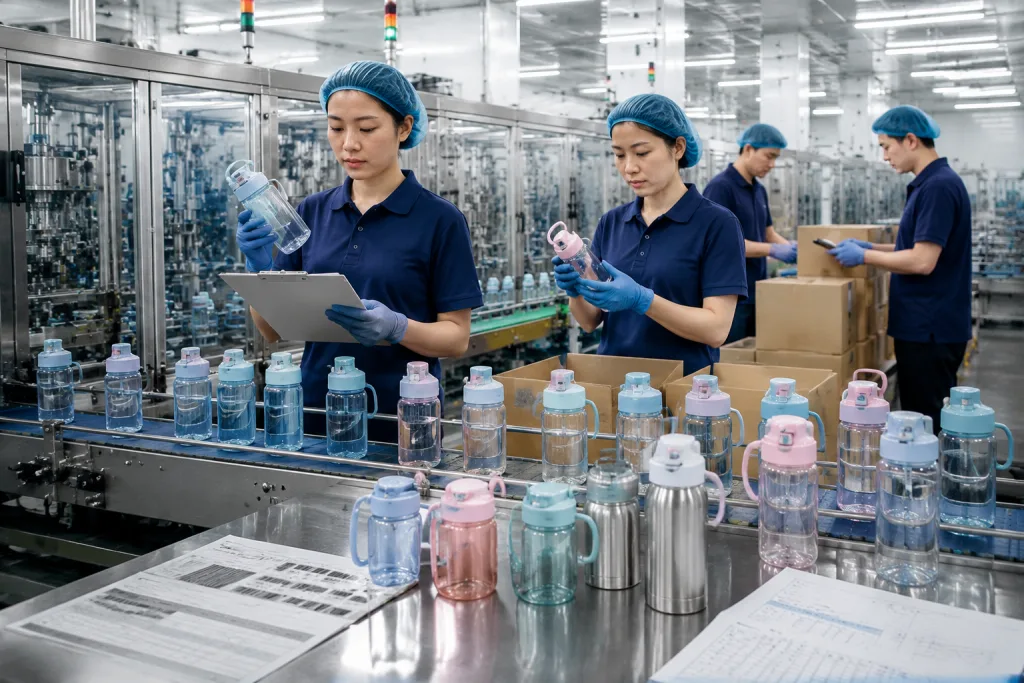
We run these jobs in Zhejiang, China. A typical kids bottle line here ships 180,000 units per month, with sample lead times around 7 days and bulk lead times of 25 to 35 days depending on decoration and testing. Last week QC pulled a sample with a 0.8 mm gap at the lid; the buyer flagged it, and that is the kind of detail that saves a claim later. The buyers who move fastest are the ones who stop asking for “cheap” and start locking the exact build before the first carton moves.
Start with a buyer brief
Before you ask for a quote, write the brief like a canteen distributor who has already sold the shelf space. If the factory has to guess, the cost shows up later: a 0.3 mm tooling tweak, a print color that misses the approved sample, or a lid that passes the leak test but gets rejected by parents because small hands cannot open it. We saw one buyer flag this after 2,000 pcs pilot stock arrived; the bottle was technically fine, but the channel needed one-hand opening. For vendors kids drink bottle sourcing, the brief should say who will use the bottle, where it will sell, and how rough the daily use will be.
Use a tight structure: age range, target capacity, material, lid type, decoration, packing, and compliance target. A 480 ml Tritan bottle for school retail is a different job from a 350 ml insulated model for a custom drinkware gift program; the line setup, lid mold, and drop-test plan change. Small typo, big mess. We once received a PO marked “Trian” instead of Tritan, and QC pulled the sample before mass production because the resin code on the material sheet did not match. If your program also includes a canteen customizable or customizable drinkware line, keep those SKUs separated. Mixing one RFQ for a kids bottle with a custom canteen or custom growler request gives you bad pricing because the tooling and material assumptions do not match.
- Capacity: 300 ml, 350 ml, 450 ml, or 600 ml
- Material: PP, Tritan, or stainless steel inner liner
- Closure: flip lid, straw lid, push-button, or screw cap
- Decoration: one-color silk screen, UV print, laser, or full-wrap sleeve
- Carton: single box, display box, or bulk pack
This is where a canteen vendor earns trust. A canteen manufacturer in Zhejiang that asks about MOQ, carton drop height, and whether the straw needs a dust cap is not selling slowly. They are stopping the job from going sideways before the first PP sample hits the bench.
Quote the right PO line items
A clean RFQ should read almost like a draft PO. That cuts fuzzy pricing. For a vendors kids drink bottle order, split the request into lines the factory can price one by one. If the supplier sends one lump-sum number, you cannot see whether the cost is sitting in the lid mold, the silicone strap, or the color box. We run this way in Hangzhou because purchasing also needs separate BOM codes before the line can release material from the warehouse.
Ask for separate pricing on the bottle body, lid assembly, strap, gasket, decoration, individual box, and master carton. For a canteen promotional program, ask for a second quote with simpler print or cheaper packing, such as a white box instead of a 350 gsm color box. Then you can compare a premium retail build against a distributor drinkware build without guessing. For example, a 500 ml Tritan kids bottle with one-color print may land around USD 1.35 to 1.95 FOB at 3,000 pcs, while a more complex customized drinkware version with gradient print and gift box can move above USD 2.40 FOB. We have seen this go sideways when a buyer approved the bottle price but forgot the strap line; QC pulled the sample and the actual strap was 12 mm wide instead of the 18 mm shown in the artwork.
Do not skip the boring details. The math does not work if the PO only says “kids bottle, blue, print logo.” A good PO line sheet should include:
- Product code and artwork file version, such as KB-500-A with AI file V3, not the old V2 the buyer flagged last time
- Capacity and tolerance, usually ±5%, checked with a 500 ml measuring cylinder during incoming sample review
- Material grade and wall thickness, such as 1.5 mm to 2.0 mm for plastic bodies, measured by caliper before mass production
- Color reference, Pantone or physical sample, because “light blue” on a PO has caused 2 different lid batches on the line
- Carton spec, drop-test target, and spare gasket ratio, including carton kg limit if your warehouse rejects crushed corners
That line-item discipline separates a reliable canteen supplier from a canteen vendor that only works when nothing changes. Small detail, big difference. We ship smoother when the PO tells production exactly what to build, pack, and inspect under AQL 2.5.
Treat samples like a contract
Buyers often sign off a sample in a hurry, then the bulk arrives with a different lid feel or print height and the factory gets blamed. That is the wrong place to start. For a kids drink bottle order, the sample is the control standard. If the first sample is loose on seal or off on color, we already know the line will drift.
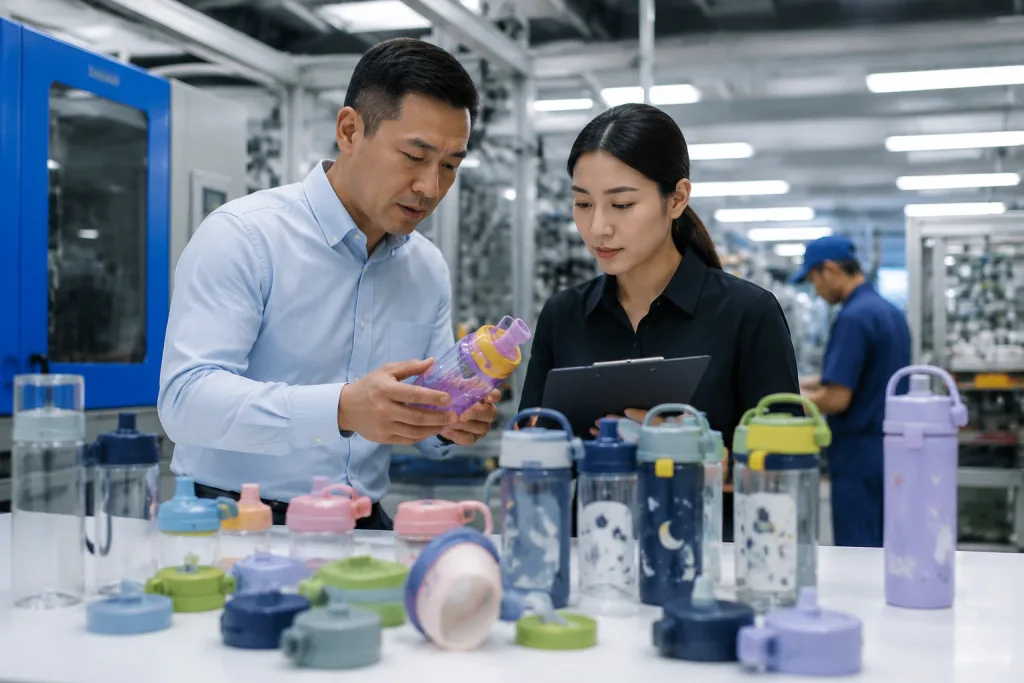
Ask for three samples, not one. Take a blank structural sample to check fit, smell, and cap torque, then a decorated pre-production sample for pantone and logo position, then an assembly sample if the lid has a spring, silicone valve, or straw set. On our line in Hangzhou, we can usually ship that in 5 to 10 days if the mold is ready. New tooling is a different story, and no one should pretend otherwise.
Use a short acceptance sheet with numbers, not comments like “looks okay.” Check fill volume, a 45-degree leak test, a 1-meter drop test, and hot-water or dishwasher resistance if the buyer asked for it. For Europe, ask for REACH material declarations. For North America, confirm FDA food-contact paperwork where it applies. If the bottle is stainless, ask for traceability and wall thickness. A 0.4 mm to 0.5 mm outer wall is common in mass-market builds, but the math changes with weight and target price. QC pulled one sample last month where the PO said 0.45 mm and the approved sample was 0.38 mm. That is the kind of typo that starts trouble.
Do not approve a sample because it “looks fine.” Approve it only when the dimensions, closure, and print match your PO.
This is where a canteen manufacturers shortlist helps. You want one factory that can repeat the approved sample, not three factories that only know how to quote a pretty version.
Run a small pilot order
Do not move from sample to full container unless the SKU is low risk and the buyer can live with a miss. A pilot order of 300 to 1,000 pcs is cheap insurance. It shows whether the factory can hold color, keep assembly tight, and pack the way you asked. On kids drink bottle jobs, we have seen a cap spring sit 0.5 mm off and turn into leakage in week one, so this is the right place to catch trouble.
Build the pilot PO like the bulk PO, just smaller. Same art file, same carton spec, same test list, same barcode format. If you sell on Amazon or another marketplace, lock the FNSKU or UPC location before the line starts. If you ship through distribution, say whether you want a distributor canteen label or a neutral carton. A distributor growler run and a kids bottle run are different animals, but the math is the same: first batch proves the process before you scale.
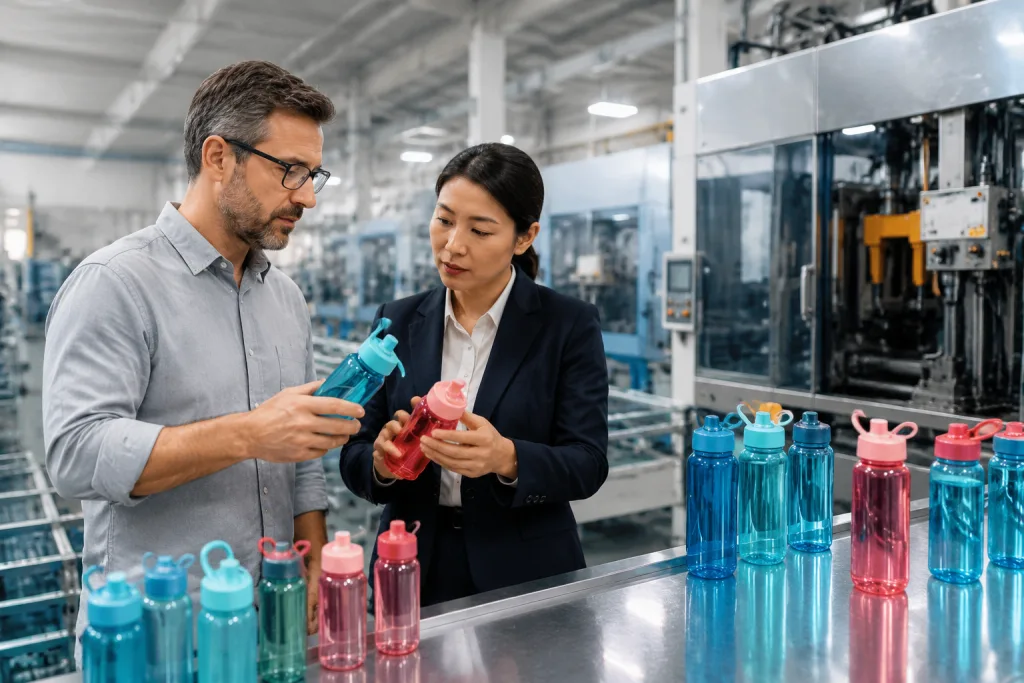
For QC, we run AQL 2.5 for major defects and 4.0 for minor defects unless the retail buyer asks for tighter limits. Put a kill list on the PO: leakage, cracked lid, misprint, missing part, wrong color, odor. Ask the factory for line photos at 30%, 60%, and 100% completion. QC pulled the sample at 60% once and caught a lid gasket mismatch before packing; that saved a headache. Good canteen suppliers in China usually accept this if your PO is clean.
A pilot lot usually lands at 8% to 15% more per unit than bulk because setup cost is spread over fewer pieces. That is normal. If someone offers pilot pricing that looks too cheap, ask where they hid the risk. We have seen that go sideways on a 500 pcs run when the supplier skipped rework time and the cartons arrived with scuffed lids.
Lock bulk production details
Bulk production is where a missing detail turns into a claim. Once the PO is signed, we build to the last approved spec, not the version stuck in someone’s inbox. So the production file has to spell out every point. If you are buying from a canteen factory in Zhejiang or anywhere else in China, keep it tight and leave no room for guesswork.
List the order quantity, overrun limit, material code, decoration method, packing method, and spare-part rule. For kids bottles, we usually see a 1% to 2% spare allowance on silicone rings, straws, or clips when the design uses them. On the line, QC pulled the gasket sample with a 15 mm caliper last week, and that fit check saved a lot of noise later. If you are ordering a custom canteen or a growler-style body for older kids or sports use, ask whether the lid tooling is shared with another model. Shared parts cut cost, but the math only works if the fit stays stable.
- PO line 1: bottle body with material and finish
- PO line 2: lid assembly and gasket count
- PO line 3: decoration file and print position
- PO line 4: inner pack, master carton, and carton marks
- PO line 5: test report requirements and photo checkpoint dates
On pricing, a repeat bulk run can land 10% to 20% lower than the pilot once the same design hits 5,000 pcs or more. The first buy is not the finish line. We had a buyer flag a one-word typo on the carton mark before shipment, and that kind of miss is exactly why the second order usually cleans up the margin and the paperwork.
Check shipping before you pay
The last mistake buyers make is assuming production is the hard part. Wrong question. We run into more trouble after packing: wrong carton marks, missing shipper address, a BL draft with one digit off, or a carton label printed 8 mm too low for the customer’s scanner. Those issues can hold a container 12 days instead of clearing in 3. For a vendors kids drink bottle order, treat the export checklist like the sample checklist. Zhejiang factories move fast; paperwork from the buyer often does not.
Confirm Incoterms before the deposit. FOB works when your own forwarder controls the booking. CIF is workable for small distributor drinkware shipments under 3 CBM, but only after you check destination port fees, D/O charges, and warehouse handling. For cartons, ask for 5-ply master cartons that pass a 76 cm drop test, with the barcode placed where your warehouse scans it. QC pulled a sample last month where the GS1 code was on the bottom flap. The buyer flagged it. If your customer needs shelf-ready packs, tell us before the line starts. Repacking in Dallas or Rotterdam makes the math ugly.
Ask for the final document pack before you send balance: commercial invoice with HS code, packing list with carton count, bill of lading draft, test reports, plus finished-carton photos from the packing area. If the product is a canteen promotional model or a customized drinkware gift item, keep the signed artwork proof and color approval in the same file. We have seen one PO typo change “blue lid” to “black lid.” Small word. Big claim. A reliable canteen supplier should give batch traceability and lot numbers when you ask, not after the forwarder is chasing cut-off time.
Do not skip final factory QC before balance payment. A two-person inspection on 500 pcs is cheaper than a complaint on 5,000 pcs, especially when the issue is a loose straw plug or a 1.5 mm gap at the lid seal. We ship kids bottles to buyers who check AQL 2.5 before release, and that habit saves arguments. Good canteen vendors know North American and European buyers want clean handover, correct cartons, and fewer surprises.
Send your RFQ and get a real quote
We can price the sample, pilot, and bulk order separately, with clear PO line items, fast feedback from Zhejiang, and no guesswork.
Frequently asked questions
What is a normal MOQ for vendors kids drink bottle orders?
For standard molded kids bottles, MOQ is often 3,000 to 5,000 pcs per color or per artwork version. If you use a stock mold and simple one-color print, some Zhejiang factories can start at 1,000 to 2,000 pcs, but unit cost usually rises 12% to 25%. Custom lids, new tooling, or multi-color decoration push MOQ higher. If you also need a canteen custom program or custom growler size, keep those SKUs separate because the tooling and setup economics are different. The cleanest buying method is one SKU, one spec sheet, one PO.
How fast can a canteen factory deliver samples and bulk?
If the mold already exists, sample lead time is usually 5 to 10 days. For a new kids bottle mold, allow 20 to 35 days just for tooling and first samples. Bulk production is commonly 25 to 35 days after sample approval for regular plastic or stainless designs. Add another 7 to 12 days for sea freight documentation and port handling if you ship FOB from China. In Zhejiang, a well-run line can move faster, but only if your artwork, carton spec, and testing requirements are frozen before production starts.
Which compliance documents should I ask from canteen suppliers?
For Europe, ask for REACH-related declarations and food-contact material statements. For the US market, ask for FDA food-contact compliance support where applicable. If the product includes coated metal, request material traceability and any relevant migration or safety reports. For children’s products, also ask for a clear statement on age grading and choking-risk parts if the lid has detachable components. Good canteen suppliers in China will provide a document pack that includes test reports, batch traceability, and carton photos. If they cannot, that is a sourcing risk, not a paperwork delay.
How do I compare a custom drinkware quote across factories?
Compare by line item, not by total price. Separate the bottle, lid, decoration, packaging, and test cost. A quote that looks USD 0.20 cheaper may simply omit an individual box, an extra gasket, or a compliance report. Ask each canteen manufacturer to quote the same Incoterm, same artwork version, same carton spec, and same spare-part rate. For a 500 ml kids bottle, a fair comparison often shows a spread of 8% to 18% between factories once the hidden items are normalized. That is normal in China and worth cleaning up before you place the PO.
Can I source canteen customized and kids bottle programs together?
Yes, but only if the specification logic is separated. A canteen customized program for older users, a canteen promotional gift item, and a vendors kids drink bottle line should not share one messy RFQ. They may share a supplier, but they should not share the same technical sheet unless the body, lid, and decoration are truly identical. A smart canteen vendor can bundle tooling and packaging if the parts overlap. If they do not, bundle pricing often becomes fake savings. Keep each SKU’s MOQ, print method, and packing structure clear, then negotiate from there.