Key Takeaways
- Start with 304 stainless steel, 0.40-0.50 mm inner wall, and 0.50-0.60 mm outer wall for most double wall bottles
- A practical MOQ for custom drinkware is 1,000-3,000 units per color, depending on coating and logo method
- Normal production lead time from Zhejiang, China is 25-35 days after sample approval and deposit
- Use AQL 2.5/4.0 inspection plus 100% vacuum leak testing for distributor drinkware orders
You do not choose a vendors double wall bottle program from one clean catalog photo. You choose it by deciding which risk you can live with: 6-hour heat retention, powder coat scratch marks after 3M tape test, 3,000 pcs MOQ, 5-layer K=A carton strength, FDA or LFGB files, and whether the line can repeat the same bottle after Chinese New Year. QC pulled a 500 ml sample last month where the cup mouth was 0.35 mm out of round. Small number. Big headache.
For B2B buyers, finding a canteen vendor in China is not the hard part. The hard part is knowing which questions separate a trading quote from a real canteen factory quote. From Zhejiang, we see buyers lose money on loose specs at least 8 times for every 1 time they lose it on unit price. Ask only “what is your best price?” and the math does not work; we have seen this go sideways when a PO said “matte black” but the approved sample was actually Pantone Black 6C powder coating.
Decide The Bottle Platform First
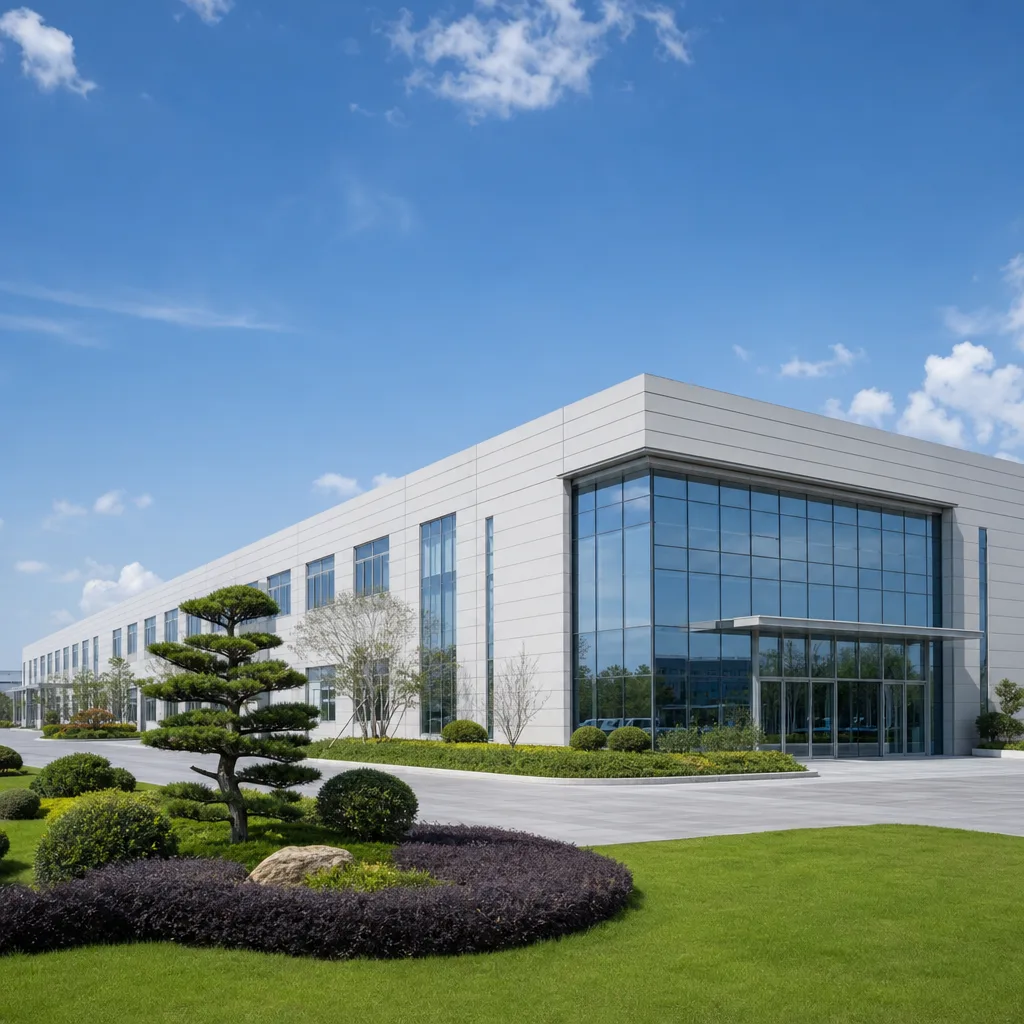
Decide the bottle platform before anyone talks logo. For a double wall bottle, we usually mean stainless steel vacuum insulation: inner shell, outer shell, welded mouth, vacuum layer, and sometimes copper plating for better heat retention. On our Hangzhou line, QC checks the mouth weld with a 0.02 mm feeler gauge before the vacuum test, because one weak weld can kill the whole heat result. If you are sourcing for retail, distributor drinkware, or canteen promotional campaigns, this structure sets almost every later cost.
For most B2B programs, we run 304 stainless steel on food-contact parts. A common wall specification is 0.40-0.50 mm for the inner wall and 0.50-0.60 mm for the outer wall. Thinner steel can cut FOB cost by USD 0.15-0.35 per unit, but the math does not work if cartons get stacked 6 layers high in a Ningbo container and 2% come back with shoulder dents. For outdoor or school canteen customized programs, that saving is usually false economy.
Capacity is the next filter. The popular range is 500 ml, 750 ml, and 1,000 ml. A custom growler or customized growler program may use 1.2 L to 1.9 L bodies, but tooling and carton strength start to matter; last month QC pulled a 1.9 L sample after a 76 cm drop test because the base ring shifted 1.5 mm. If you are a canteen distributor selling to clubs, camps, or uniform programs, 750 ml is often the safer middle ground: enough water, manageable freight cube, and a clean branding panel.
Do not ask five canteen suppliers for “a similar bottle” and compare the cheapest line. That is the wrong question to ask. Ask for body diameter, height, mouth diameter, steel grade, lid material, gasket material, coating type, carton drop test method, and declared insulation result. We have seen this go sideways when a PO said “wide mouth” but missed the 53 mm opening size, and the buyer flagged it only after lid samples arrived. A serious canteen manufacturer will answer those points before pushing decoration options.
Match Decoration To Sales Channel
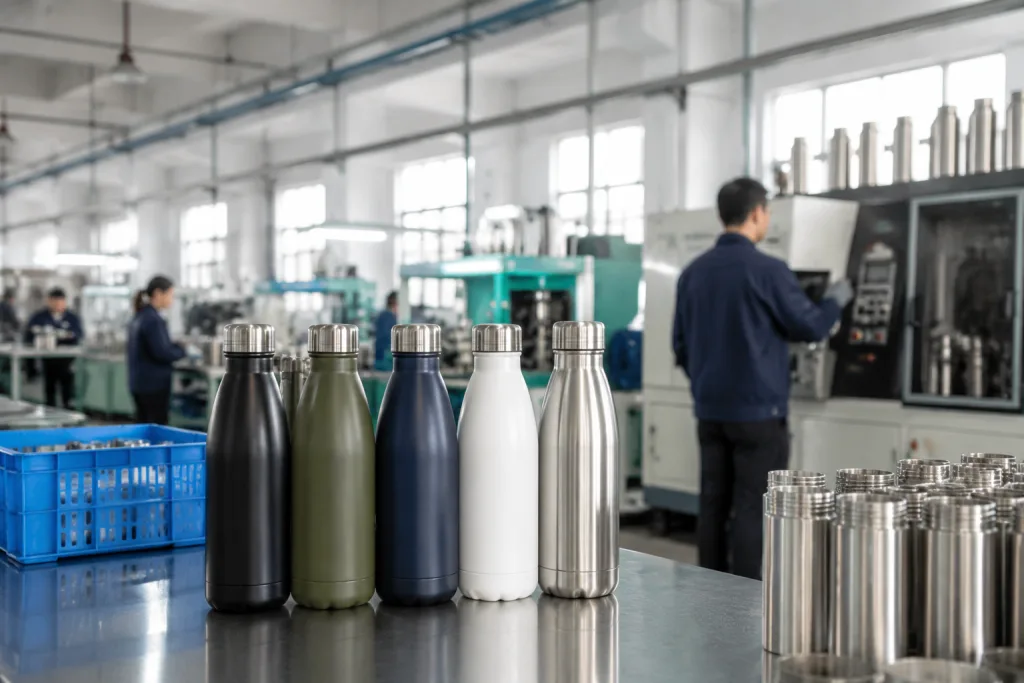
The second decision is decoration. Customizable drinkware is not one standard process. We run laser logos, one-color silkscreen, full-wrap heat transfer, powder coating, UV print, and embossing on different lines, with different scrap rates. On a 3,000 pcs double wall bottle order last month, QC pulled 47 pcs for logo tilt over 1.5 mm after the buyer changed from laser to silkscreen. A canteen customizable project for a corporate gift only needs the logo to look sharp in the conference room. A retail shelf program has barcode position, color box artwork, and seasonal graphics to fight with.
Laser engraving is clean and durable on stainless steel or powder-coated bottles. It normally adds USD 0.08-0.25 per position, depending on size and order quantity. Silkscreen is cheaper for simple one- or two-color logos, but curved surfaces need a proper jig, not a worker “holding steady” by hand. We check the fixture with a 0.5 mm feeler gauge before the line starts. Heat transfer and UV printing give more color, but the buyer should run abrasion and dishwasher checks if the bottle is sold for daily use. We have seen this go sideways when a catalog says “dishwasher safe” and the logo rubs after 20 cycles.
For a canteen promotional order, keep the design simple unless the campaign needs shelf impact. One logo on one side ships faster and fails less often than a four-color wrap. Simple wins. For a customized canteen sold through retail, you need tighter color control: Pantone tolerance, gloss level, and repeatability between batches should be written on the PO, not discussed on WeChat. Powder coating looks good, but the factory needs consistent pretreatment, curing temperature, and film thickness, typically around 60-80 microns. Our QC team uses a coating thickness gauge before packing; if black powder coat reads 42 microns near the bottom radius, the math doesn't work for scratch complaints.
If you are comparing canteen vendors, ask them to show physical samples made with the same decoration method, not just a digital mockup. Ask whether logo setup fees are included. Ask whether the sample uses the production line or a separate sample room process. This is the wrong place to save USD 50. We once had a PO typo that said “UV logo” while the approved sample was laser; the buyer flagged it during carton drop test review, and it cost 4 days before mass production could start. A pretty pre-production sample that cannot be repeated at 10,000 units is not a sourcing solution.
Price Around Real Specifications
The third decision is commercial: what quote basis you accept. FOB Ningbo or FOB Shanghai is normal for Zhejiang and nearby China factories; we quote both every week because the trucking sheet from Hangzhou to Ningbo is not the same as to Shanghai. EXW looks cheaper on the first line, then the buyer owns local trucking, export handling, and the 6 p.m. call when the forwarder says the SI cutoff was missed. For North America and Europe, most buyers compare FOB because freight forwarders can price it cleanly and landed cost does not turn into a spreadsheet fight.
A standard 750 ml double wall stainless bottle with powder coating and one laser logo may sit roughly around USD 3.20-5.20 FOB China at 3,000 units, depending on steel thickness, lid design, packaging, and inspection requirements. We run 0.45 mm and 0.50 mm body options on different jobs, and QC pulled the sample last month because the buyer’s PO said “matte black” while the approved swatch was Pantone Black 6C gloss. A basic stainless finish costs less. A premium lid, retail color box, full-wrap print, or custom mold can push the price up by USD 0.40-1.50 per unit. If a quote is 25% below the pack, this is the wrong question to ask; assume something changed in steel thickness, vacuum reject handling, coating quality, packaging, or compliance support.
MOQ is where 7 out of 10 new buyers get surprised. A practical MOQ is 1,000 units for simple custom canteen work using existing bottle bodies, 3,000 units per color for powder-coated programs, and 5,000-10,000 units when you want a new lid mold or special body shape. For BottleForge Industrial in Hangzhou, Zhejiang, typical double wall bottle output is about 450,000 units/month, but production slots are still scheduled by color, coating line, and assembly load. The line is not magic. If the spray booth is set for white on Monday, changing to sand beige for 600 pcs means powder purge loss, 2 kg of test coating, and a slower first-hour inspection.
Payment terms matter because they decide who carries the factory risk before the goods move. For a new buyer, 30% deposit and 70% balance before shipment is common. Larger distributor canteen buyers with repeat orders may negotiate staged payments after stable performance, usually after 3-5 clean shipments and AQL 2.5 reports with no major repeat findings. We have seen this go sideways when a buyer asked for 60-day terms on a first order while also pushing for a new cap mold; the math does not work when tooling, steel, and cartons must be paid before the container leaves Ningbo.
Check Compliance Before Artwork
The fourth decision is regulatory fit. For Europe, ask for LFGB and REACH files by part, not just a cover page: 304 stainless body, PP or Tritan lid, silicone gasket, powder coating, and print ink each need their own trail. For the United States, FDA food-contact expectations and the right ASTM checks depend on the sales channel; Target-style retail and Amazon kids listings do not ask the same questions. If the bottle is for children, the burden jumps because QC will check coating adhesion with a cross-cut tester, pull small parts, and read every packaging claim against the test report.
A serious canteen supplier knows compliance is not one certificate that follows the product forever. Change the lid plastic from PP to Tritan, switch from matte black to Pantone 186C powder coat, or move from laser logo to 2-color silk print, and the old report may no longer cover the order. If you are buying for a national retailer or a regulated distributor drinkware account, put testing cost and time into the PO schedule before deposit. Lab testing can add 7-12 working days; we have seen 12 days turn into 18 days after the buyer flagged a missing silicone gasket line item.
Factory audits also matter. BSCI, ISO 9001, and customer-specific social audits are common requests, and our document team usually gets asked for traceability records, worker attendance sheets, and CAP photos from the last audit. They do not guarantee a clean shipment. Still, they show whether the canteen manufacturers can control batch numbers, material incoming records, and corrective action instead of hunting files after QC pulled the sample. If you need recycled stainless steel claims or low-impact packaging, ask early; the math does not work if the claim is printed first and the supplier starts looking for GRS paperwork later.
One practical rule: approve compliance before mass artwork release. We have seen this go sideways after 20,000 printed units, when the ink passed rub testing but the lid material did not match the buyer’s market requirement. Painful job. A cautious canteen manufacturer in China will slow you down here, ask for the exact market, and hold the AI file until the lab scope is clear. That is usually a good sign.
Control Samples And Inspection
Sampling is where a quote becomes an order we can control on the line. For customizable canteen projects, start with a blank reference sample if the bottle body already exists in our mold rack. Then approve a decorated sample with the real logo size in mm, coating color under the light box, lid fit checked by thread gauge, and the actual packing layout. We run 5-7 days for laser or silkscreen on available stock, and 10-15 days for powder coating or complex print work. If the buyer asks, “Can we skip the decorated sample to save time?”, the answer is usually no. We have seen this go sideways over a 3 mm logo shift.
Keep one signed golden sample at the factory and one in your office. Simple rule. The golden sample should lock the logo position, Pantone or coating reference, surface finish, lid assembly torque, barcode placement, and packing method with carton marks. Photos help, but physical samples settle arguments faster when QC pulled the sample and the buyer flagged a shade difference. For customized drinkware orders, write these points into the purchase order instead of relying on email history. One PO typo in “matte black” versus “gloss black” can burn 2 days before mass production even starts.
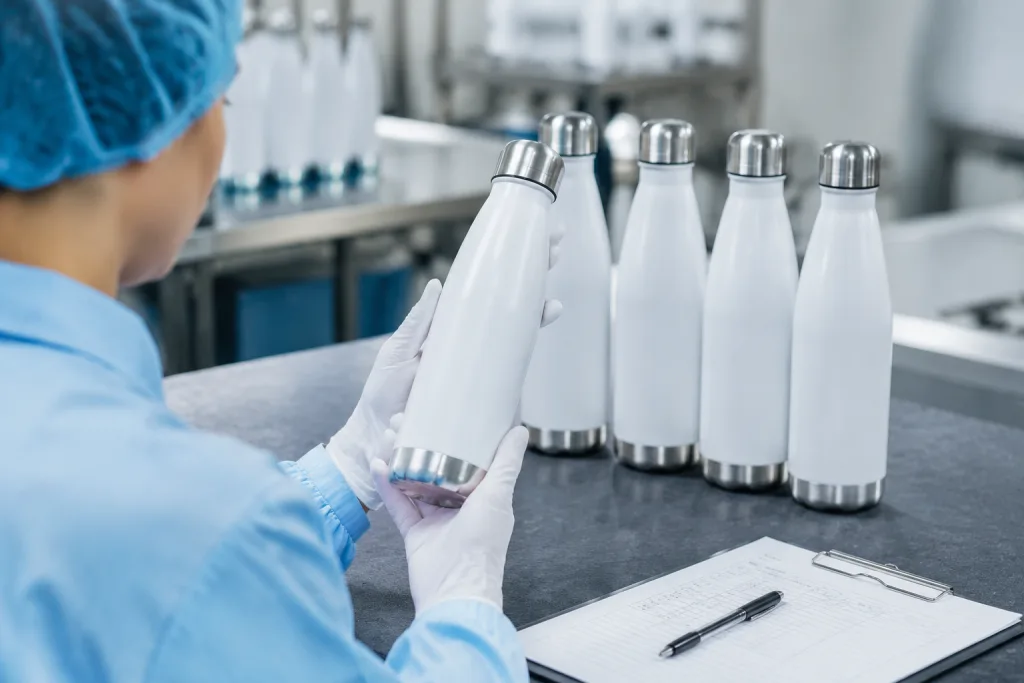
Production inspection should use numbers, not feelings. AQL 2.5 for major defects and AQL 4.0 for minor defects is common. Critical defects, such as leakage, unsafe sharp edges, contamination, or wrong material, should be zero tolerance. For vacuum bottles, we run 100% leak testing, then vacuum performance checks from the batch table. You can request random insulation testing, for example hot water at 95°C and temperature reading after 6 or 12 hours. The wrong question is “Does it look good?” Ask how many pieces failed, what defect code QC used, and whether the reworked units were separated with red tags.
Carton testing gets ignored until the first damage claim lands in your inbox. Ask for 5-ply export cartons for heavier bottles, inner dividers where the body can rub, and a drop test method matched to your sales route. Amazon FBA-style shipments need cleaner carton edges and barcode scans; club store pallets need stacking strength; wholesale distributor growler orders need room for forklift abuse. Packaging should be specified by route, not copied from the last project. We once saw corner crush on 18 kg master cartons after a 76 cm drop test, and the math did not work for that packing plan.
Choose Factory Or Trading Partner
The last choice is simple: who carries the risk when the bottle leaks, the logo shifts 2 mm, or the cap thread feels rough. A canteen factory gives you direct access to engineering, capacity planning, and root-cause fixes on the line. A trading company can make sense if you need 40 SKUs across bottles, mugs, lunch boxes, and gift sets with one contact window. Neither side is magic. The risk starts when the PO says “factory direct,” but QC pulled the sample from a subcontracted line 180 km away.
If you need repeatable custom drinkware, ask production questions that force real answers. What is the monthly capacity by product type: 120,000 double wall bottles, 80,000 tumblers, or something else? Which steps are in-house: tube cutting, welding, polishing, vacuuming, coating, printing, assembly? What gets sent out? On a normal 10,000 pc batch, is the vacuum reject rate 1.5% or 4%? How are failed bottles marked, crushed, or reworked? A real canteen supplier can answer while standing beside the vacuum tester, not after three days of “checking with production.”
For a canteen distributor or distributor canteen program, continuity beats a USD 0.10 saving. We have seen this go sideways. The buyer saved USD 860 on the first 8,600 pcs, then paid more than that to replace mismatched lids after shipment. You need replacement lids after the first container. You need the same powder color next season, checked against a Pantone card under the light box. You need spare cartons, updated FNSKU labels, and the same pallet pattern. A vendor that disappears after shipment is expensive, even if the first invoice looked clean.
At BottleForge Industrial in Hangzhou, Zhejiang, we prefer buyers who bring clear channel requirements: retail, promotional, online marketplace, outdoor, school, or hospitality. Better channel notes mean fewer guesses for the China factory. Tell us if Target shelf height is 260 mm, if Amazon needs a 1.2 m drop test, or if the school buyer flagged straw lids as a choking-risk concern. Then we run the customized canteen or customizable growler program around real constraints, not sales-page promises.
Send Your Bottle Specs For A Factory Quote
Share capacity, finish, logo method, MOQ, market, and target FOB price. We will return a practical production route and timeline.
Frequently asked questions
What MOQ should I expect for a custom double wall bottle?
For an existing bottle body, 1,000 units is possible for simple laser engraving or one-color silkscreen. For powder coating, expect 3,000 units per color because coating lines need setup, cleaning, and color control. For a new lid mold, special body shape, or customized growler structure, 5,000-10,000 units is more realistic. Some canteen vendors will quote lower MOQ, but check whether they are using stock bottles, mixed production, or a trading warehouse. Lower MOQ can be useful for testing, but unit price may rise by USD 0.30-0.80 because setup costs are spread over fewer pieces.
How long does production take after I approve the sample?
A normal lead time from Zhejiang, China is 25-35 days after sample approval and deposit for a standard stainless double wall bottle. Add 5-10 days if you need lab testing, complex color matching, or retail packaging approval. New molds can add 25-45 days before mass production begins. If your order includes multiple colors, the schedule depends on coating line slots, not only total quantity. Before placing the PO, ask the canteen factory for a dated timeline covering material purchase, coating, printing, assembly, inspection, and shipment booking.
Is 304 stainless steel always required?
For food-contact double wall bottles, 304 stainless steel is the safe default and widely accepted for Europe and North America. Some suppliers may suggest 201 stainless steel for the outer wall to reduce cost. That can work for certain price-sensitive promotional orders, but it has weaker corrosion resistance and can create customer complaints if the surface is scratched or exposed to moisture. For the inner wall, use 304 stainless steel. If you are selling premium customized drinkware, outdoor bottles, or canteen promotional products tied to a long-term brand, the cost saving from lower-grade steel is rarely worth the risk.
Which logo method is best for distributor drinkware?
For repeat distributor drinkware programs, laser engraving and one- or two-color silkscreen are usually the most controllable. Laser is durable, clean, and good for smaller logos, with typical add-on cost around USD 0.08-0.25 per position. Silkscreen works well for simple brand marks and larger areas, but it needs good fixtures on curved bottles. Full-wrap UV or heat transfer gives stronger visual impact, but buyers should approve abrasion testing and dishwasher guidance before launch. If you sell through multiple channels, keep one standard decoration process for replenishment orders.
What should I ask before choosing a canteen supplier?
Ask for steel grade, wall thickness, vacuum test method, monthly capacity, MOQ by color, sample lead time, FOB port, compliance documents, and AQL inspection standard. Also ask which processes are in-house and which are outsourced. A reliable canteen supplier should explain coating thickness, lid material, gasket material, carton specification, and how they handle vacuum rejects. For a first order, request a pre-production sample and third-party inspection before balance payment. If the supplier avoids specific answers and only sends catalog photos, treat the quote as incomplete, not cheap.