Key Takeaways
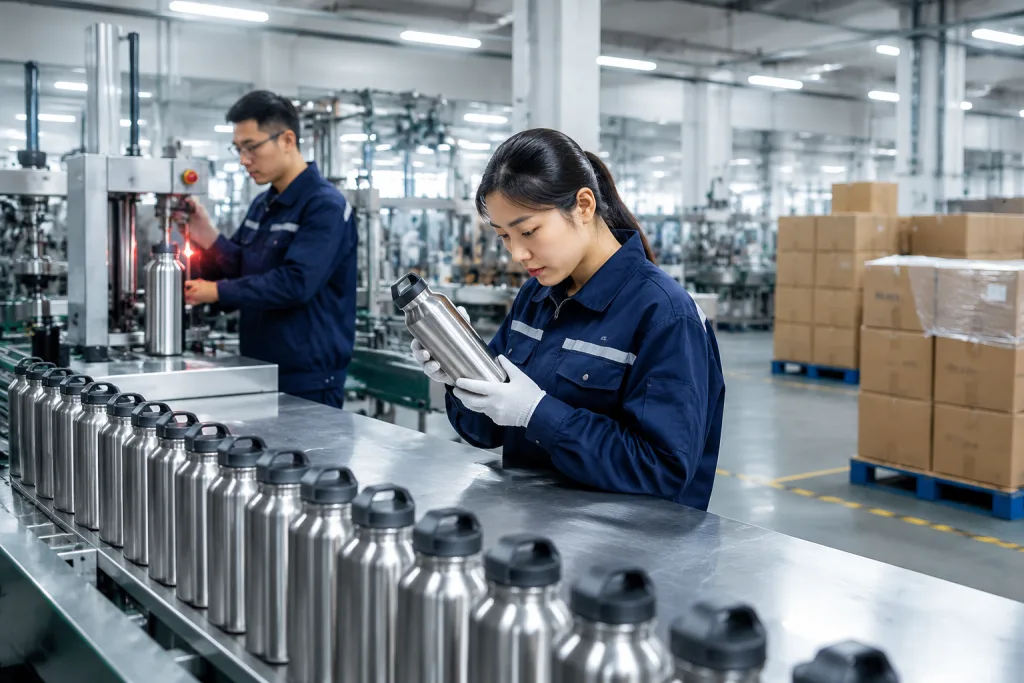
- A workable MOQ for a custom vendor hydration bottle is usually 1,000 pcs; stock-color runs can start at 500 pcs.
- For export, ask for REACH, FDA, or LFGB support plus AQL 2.5 major and 4.0 minor inspection terms.
- A 0.5 mm 304 stainless wall is common; 0.4 mm is lighter but easier to dent in transit.
- At a Zhejiang factory with 180,000 units/month capacity, lead time is often 18-25 days after sample approval.
A vendor hydration bottle looks simple until the PO lands on our desk at 17:40 with a cap code typo. Then the questions start fast: does the lid fit the sales channel, will the logo pass a 3M tape test after carton rubbing, and do the FDA or LFGB files match Europe or North America? In Zhejiang, China, we run the same 750 ml bottle as a promo giveaway, a retail SKU, or a distributor program by changing the coating, insert card, carton mark, and test report set.
If you buy custom drinkware for a brand, chain, or wholesale program, a pretty sample is not enough. You need a canteen manufacturer that holds the mouth tolerance within 0.3 mm, quotes tooling and packing clearly, and ships 5,000 pcs without turning week 4 into week 7. A canteen custom job that looks cheap on paper is often the wrong question to ask; we have seen the math go sideways after QC pulled 32 leaking samples from a pre-shipment lot and the buyer flagged courier claims, wet cartons, and rework cost.
Start with the real use case
What is the bottle actually for?
Basic question. It is also where bad POs start. A vendor hydration bottle for staff gifting should not run the same cap, powder coating, or K=K export carton as a custom canteen sold through 80 distributor doors. For a canteen promotional item, we can run a simpler silk print and a lower-cost PP lid; QC still checks torque with the cap wrench, but the shelf face is not doing the selling. A canteen distributor selling retail needs cleaner barcode placement, better drop resistance, and a coating that survives a 1.2 m carton drop without corner chips.
Ask one blunt question before pricing: who uses it, and how many times per week? A reusable office bottle, a gym bottle, and a custom growler all hold liquid, but they fail in different places. Office users complain when a flip lid leaks beside a laptop; we had one buyer flag 3 ml seepage after a 30-minute upside-down test. Gym buyers want grip and low weight, usually under 320 g for a 750 ml single-wall bottle. Beer accounts care about odor control, a tight seal, and a cap finish that does not chip after 50 dishwasher cycles.
If you are a canteen supplier or canteen vendor, put the use case in the brief. We run faster that way. It stops the line from quoting the wrong body style or packing spec, and it avoids the “same as last order” mistake when last order was for a campus giveaway. In Zhejiang, China, we see buyers cut 15-20% off avoidable cost by choosing the correct application first. Arguing over USD 0.12 on logo print after sample approval is the wrong fight; the math does not work when the body, lid, and carton were wrong from day one.
Buy the use case, not just the bottle.
Specs that stop returns
Which details actually matter?
For a vendor hydration bottle, the shell is not where returns usually start. The trouble starts at the part the customer opens 8 times a day: the lid, the mouth thread, the gasket. We run calipers on wall thickness before the line signs off. On stainless models, 0.5 mm 304 inner and outer walls give a good balance for most promo and retail orders. At 0.4 mm, freight weight drops, but our QC team usually sees 3 to 5 more dents per 1,000 pcs after carton handling. Go heavier only for hard-use distributor drinkware or outdoor resale. The math does not work for a basic giveaway bottle.
For hydration bottles and canteen customized programs, check thread pitch, gasket fit, and lid torque as separate specs. Do not bundle them into “lid quality.” A lid can feel tight in the sample room and still back off after a 1-meter drop test or a 24-hour leak test; QC pulled one 750 ml sample last month where the gasket sat 0.6 mm proud and leaked only after the second shake. If the bottle is vacuum insulated, put temperature retention targets on the PO, such as 6 hours hot at above 60°C and 12 hours cold at below 10°C under test conditions. Do not accept “keeps drinks cold all day.” We have seen that go sideways.
A practical checklist for the spec sheet looks like this:
- Capacity: 500 ml for events, 750 ml for retail shelves, or 1,000 ml for outdoor buyers
- Body: 304 stainless for vacuum bottles, Tritan for clear sports bottles, or BPA-free PP for price-sensitive programs
- Seal: food-grade silicone, 50-60 Shore A, checked with a Shore durometer on incoming material
- Finish: powder coat for better scratch resistance, spray paint for lower MOQ, or bare steel for simple logo work
- Test: leak test, 1-meter drop test, and carton compression test before we ship
That is the gap between a one-time custom drinkware order and a repeat custom canteen program. Small specs save big arguments.
Materials and compliance matter
What will customs or a retailer ask for?
If you sell into Europe or North America, material choice is not a catalog detail. It changes the compliance file, the claim risk, and whether a buyer will even open the PO. We run 304 and 316 stainless, Tritan copolyester, PP, and silicone on the line, and each one needs a clean food-contact paper trail. For Europe, ask for REACH and LFGB support. For the US, ask for FDA food-contact declarations. If a buyer asks for ASTM references, get the test report before they send the deposit. The wrong question is whether the bottle looks good in the sample room.
Do not let anyone sell you a "customizable canteen" with no documents. That works for a 200-piece promo run and falls apart in a retailer program. On a proper custom drinkware line, we keep four things together: material spec, supplier declaration, ink or coating data, and carton marks. Last month QC pulled a sample because the outer carton barcode sat over the warning text by 6 mm; that is the kind of small miss that turns into a chargeback. If the buyer wants Amazon FBA, make sure the unit pack, master carton, and shipping carton can take the FNSKU or barcode without hiding safety marks.
Good Zhejiang factories should answer these points fast. If they cannot tell you what changed between a sample and a 5,000-piece run, walk away. We have seen that go sideways when a PO typo moved the cap color from black to blue and the seller blamed "factory confusion." A factory that knows export paperwork is worth more than shaving $0.08 off FOB.
Logo work that survives shipping
Which decoration method fits your brand?
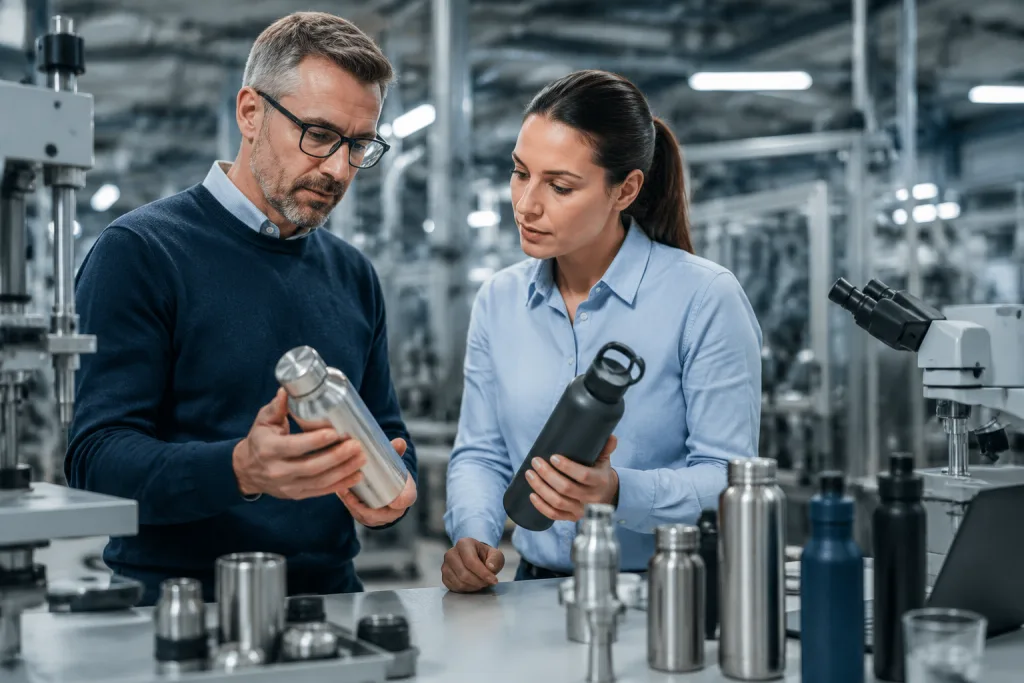
Logo choice changes the look and the margin. Silk screen is still the low-cost pick for a simple one-color mark on a vendor hydration bottle; on our line, a 70 mm logo usually runs clean with a 120T mesh and a quick tape test before packing. Laser engraving gives a sharp permanent mark on 304 stainless surfaces, so it fits a premium custom canteen or a custom growler. Heat transfer and UV print make sense for gradients or 4-color artwork, but the math does not work if the buyer expects screen-print pricing and retail-shelf graphics.
If you are buying canteen customizable or customized canteen programs for 3 or 4 markets, set the decoration method by price tier. Entry-level canteen promotional bottles can use one-color print and a common carton with a 500 pcs MOQ per logo. Mid-tier custom drinkware can use laser plus color box; QC pulled one sample last month where the logo sat 2 mm off-center, and the buyer flagged it before shipment. Premium distributor growler programs can carry full-wrap print, separate retail sleeves, and carton-level barcode labeling, but only when the selling price covers the extra sorting.
Do not chase decoration for its own sake. The logo has to look right after 300 km of trucking and one warehouse re-stack, not just under the sample-room light box. Ask the canteen suppliers for abrasion resistance data or a clear rub test method; we run 50 dry rubs and 20 alcohol rubs on riskier prints before we sign off. A logo that fades after routine use is a return waiting to happen. At BottleForge in Zhejiang, we usually match print method to expected selling price, not to the buyer’s excitement on sample day.
Rule of thumb: if the artwork matters more than the price, do not choose the cheapest print method.
MOQ, price, and lead time
What numbers should you expect?
For a normal vendor hydration bottle order, real numbers beat showroom talk. We run up to 180,000 units per month in our Hangzhou, Zhejiang plant, but MOQ is still decided by mold status, Pantone color, and decoration process. Stock colors can start at 500 pcs. A true custom canteen with custom color and logo is usually 1,000-3,000 pcs. Special lids, gift boxes, or a customized growler format push the minimum higher because the line needs separate cap fitting, box die-cut setup, and a 0.2 mm color tolerance check on the powder coat panel.
On price, a basic stainless 750 ml bottle with one-color print may land around USD 2.10-2.80 FOB China at 500 pcs. Add vacuum insulation, powder coat, and laser engraving, and you may be closer to USD 4.80-8.50. Packaging can add another USD 0.25-0.90 depending on retail style. Ask for the split: bottle cost, decoration cost, carton cost. We had one buyer flag a quote because the carton was “free”; the math did not work once QC pulled the 5-ply export carton and checked the 12.5 kg packed weight.
Lead time is usually 18-25 days after sample approval for standard custom drinkware. If you need new tooling, special packaging, or a canteen customized cap, plan 35-45 days. Sea freight from China to North America or Europe can add 20-35 days depending on the lane. Fast delivery is not the wrong goal, but “how fast can you ship?” is the wrong first question to ask. Ask what gets skipped. We have seen this go sideways when a supplier saved 2 days by cutting the 24-hour leak test, then the buyer found wet inner cartons during inbound inspection.
Your pre-PO checklist
What should you confirm before approval?
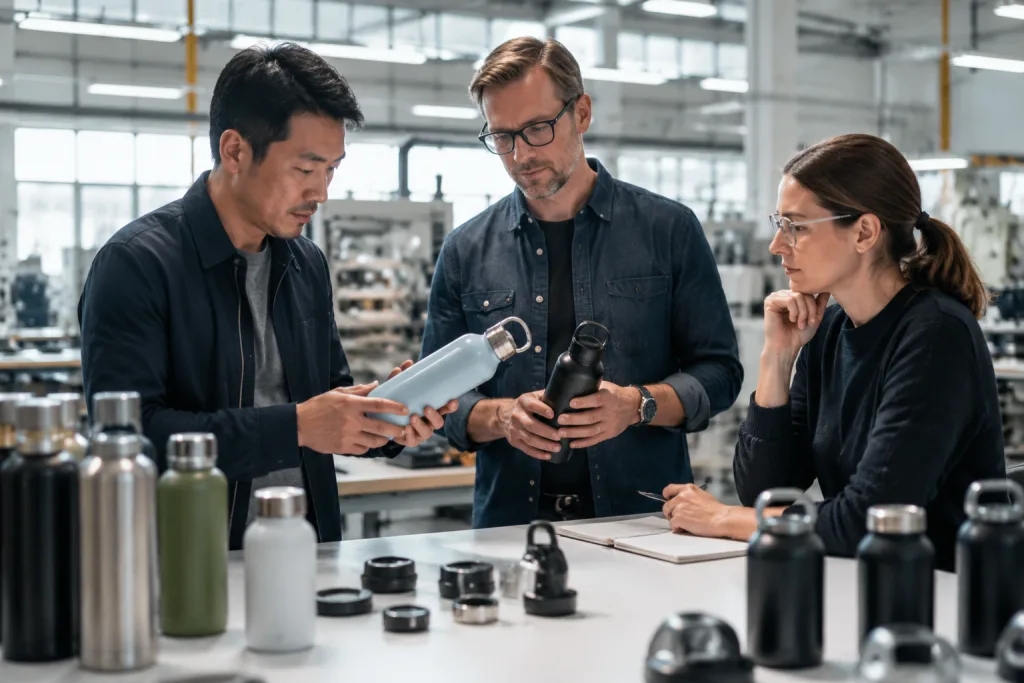
A clean PO starts with a clean checklist. Before we run a vendor hydration bottle order, we want 4 files matched: approved sample photo, artwork proof, carton spec, and inspection standard. For a canteen distributor or distributor drinkware program, ask the factory to keep 1 signed sample in the sample room and 1 sealed production reference near the line. QC pulled the sample last month because the logo sat 3 mm too low; the buyer flagged it before mass packing, so nobody argued over “close enough” later.
- Confirm material grade and wall thickness in mm, not just “standard body”
- Approve one master sample with signature and date, not three loose samples from different revisions
- Write the leak test and drop test method into the PO, including test height and hold time
- Set AQL terms: 2.5 major, 4.0 minor is common
- Check carton marks, barcode, and country of origin against the buyer’s packing manual
- Ask whether the lot will be 100% inspected or spot checked, and who signs the QC report
If you are buying custom canteen or customizable drinkware for a chain, ask for batch photos before loading and a packing list with carton count. Simple request. A good canteen factory in China should not push back on this; we ship enough Zhejiang orders to know the better plants expect it. The wrong question is “Can you make it?” The right question is whether the same bottle, same lid torque, same carton mark, and same barcode will pass again when the repeat PO comes 60 days later. We have seen this go sideways from one PO typo: “matte black” on the artwork, “black glossy” on the order sheet.
Put the inspection standard in writing before production starts.
Send your spec, get a real factory quote
Share capacity, logo, and target market. We will match the right custom drinkware build, MOQ, and compliance path without guesswork.
Frequently asked questions
What is a normal MOQ for a vendor hydration bottle?
For stock-color stock-style bottles, 500 pcs is a realistic entry point. For a true custom canteen with custom logo and special finish, 1,000 pcs is more common, and 3,000 pcs is normal if you want new lids, retail packaging, or a fully customized canteen program. If you need canteen promotional stock for one event, some canteen suppliers can mix colors from existing inventory, but price per unit will be higher. The cleanest comparison is always FOB China based on one spec, one artwork file, and one carton requirement.
Which material should I choose for Europe or North America?
For a stainless vendor hydration bottle, 304 stainless is the safest default. If you need premium corrosion resistance or heavy-use retail, 316 can work, but it costs more. For plastic lids or clear bottles, choose BPA-free PP or Tritan and ask the canteen manufacturer for REACH and LFGB support if you sell into Europe. In the US, request food-contact declarations and confirm whether inks, coatings, and silicone seals are documented. If a canteen vendor cannot give material paperwork, do not treat the sample as compliance proof.
Can you do canteen customized logos and packaging?
Yes. Most canteen manufacturers can do silk screen, laser engraving, heat transfer, or UV print, plus retail boxes, sleeves, and barcode labels. For a custom canteen or custom growler, the logo method should match the target price: one-color screen for low-cost distributor canteen programs, laser for premium metal bottles, and full-wrap print for customized drinkware with strong shelf impact. Ask for artwork proofs and a physical sample before mass production. If your logo has fine lines or small text, get a print test at the real size, not just a digital mockup.
How long does production usually take in China?
For standard custom drinkware from Zhejiang, lead time is often 18-25 days after sample approval. If your order needs new tooling, a special lid, or customized growler packaging, allow 35-45 days. Sea freight to Europe or North America adds another 20-35 days depending on port and season. If a supplier promises a fast turn but cannot explain QC or packing, be cautious. A reliable canteen factory should be able to show you a production schedule, inspection points, and carton count before the PO is released.
How do I check if a canteen supplier is reliable?
Ask for factory capacity, audit status, and inspection method. A serious canteen supplier should state monthly output, for example 180,000 units, and explain whether the lot will be checked at AQL 2.5 major and 4.0 minor. Request product photos, test reports, and a sample with the exact finish. If you are working with canteen distributors or distributor drinkware accounts, also confirm packing consistency, barcode placement, and carton compression resistance. A vendor hydration bottle program fails more often from sloppy packing than from the bottle shape itself.