Key Takeaways
- A practical vendor glass bottle MOQ starts around 3,000 pcs per shape for custom logo work
- FOB China pricing usually changes more from cap, sleeve, and carton design than from glass body alone
- Use AQL 2.5 for major defects and AQL 4.0 for minor visual defects on bulk inspections
- Ask for a 1.2 m carton drop test and 24-hour leak test before approving mass production
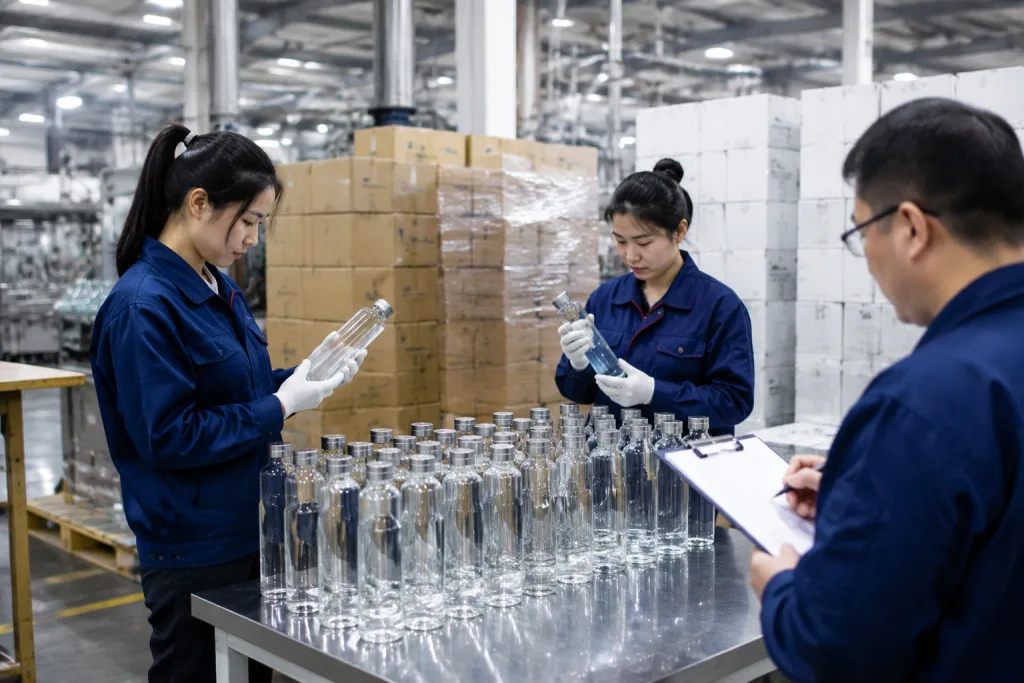
You search for a vendor glass bottle because a stock catalog SKU will not carry the order. You need a bottle that clears the buyer’s checks, prints the logo without ghosting, survives the carton drop test, and still leaves margin after sea freight. Glass looks simple. Then procurement asks for wall thickness in mm, cap liner material, REACH files, rub-test results, and the replacement rate after QC pulled the sample from the line.
From Hangzhou, Zhejiang, we see the same mistake on 7 out of 10 RFQs from North American and European buyers: the quote sheet compares only unit price. That is the wrong question to ask. We run vendor glass bottle orders where a cheaper 0.18 USD bottle lost the deal because the carton failed a 1.2 m drop test and the buyer flagged 34 cracked pieces during AQL 2.5 inspection. A proper RFQ should compare glass type, cap material, MOQ, inspection method, packaging, and who pays when 2% of a shipment arrives cracked.
What are you actually buying?
A vendor glass bottle program is not just “a bottle.” You are buying the molded glass body, cap system, sealing gasket, surface decoration, protective packaging, compliance paperwork, and the factory habit of holding the same result for 3,000 or 30,000 pcs. We run calipers on the neck finish before logo sampling because a 0.4 mm drift can make a good-looking cap leak. Treat it like a cheap giveaway and the math doesn’t work.
The first buyer question is usually simple: is this for retail, corporate gifting, hospitality, or distributor drinkware inventory? Retail needs tighter cosmetic standards and barcode control; last month QC pulled 18 pcs from a pilot run because the EAN sticker sat 6 mm off-center. Hospitality buyers push us harder on dishwasher resistance and replenishment speed. A distributor canteen or distributor growler program often needs 4 body colors and 3 logo versions in one shipment, so the line spends more time on packing marks and label checks.
For glass, lock the body specification before artwork. Common soda-lime glass bottles for promotional and retail use run from 2.2 mm to 3.5 mm wall thickness depending on volume and mold design. Borosilicate glass costs more but handles temperature change better. A 500 ml bottle with bamboo lid, silicone sleeve, and one-color silkscreen might quote around USD 1.25-2.10 FOB Ningbo at 5,000 pcs, while a heavier 750 ml design with custom cap and color box can move above USD 2.80. On the factory floor, we weigh 10 random bodies on a 0.1 g scale before quoting freight; a “similar” bottle can jump one carton by 1.8 kg.
Do not let a canteen supplier quote only “glass bottle with logo.” Ask for capacity tolerance, unit weight, cap material, gasket material, sleeve grade, carton quantity, and gross weight. These details decide freight cost and defect risk. We’ve seen this go sideways when a PO typo changed “silicone gasket” to “rubber gasket,” then the buyer flagged odor in inspection. A good canteen manufacturer in Zhejiang should give these numbers before sampling, not after your deposit is paid.
Questions before you send artwork
Artwork is not step one. First, we check whether the bottle platform fits the sales channel and the landed-cost target. On our Hangzhou sample table, we usually run 5 checks before the CAD mold drawing or AI printing file gets opened.
- What is the target landed cost? If your landed cost ceiling is USD 2.50, a 650 g customized growler with color box and molded silicone sleeve will miss the math before production starts.
- Where will it be sold? EU buyers often ask for LFGB, REACH, food contact declarations, and BSCI audit records. US buyers usually check FDA food contact, Prop 65 review, and ASTM packaging test needs.
- How will it ship? Amazon FBA needs FNSKU labels, carton weight control under the buyer’s limit, and clean carton markings. Distributor pallets need stronger cartons and SKU separation the warehouse team can read at 7 a.m.
- How many logo versions? Ten logo versions at 1,000 pcs each slow the line more than one 10,000 pcs run because every screen, jig, and QC record changes.
- Is repeat ordering likely? If yes, avoid odd caps, gaskets, or sleeves that only one canteen factory can reproduce. We have seen this go sideways after a buyer lost 45 days waiting for a special lid.
These questions apply beyond glass. If you also source a custom canteen, canteen customized set, or customizable growler, use the same order: sales channel first, then material and decoration. Procurement managers sometimes ask us to quote 12 options at once; this looks careful, but the line cannot price 12 mold, cap, and packaging combinations cleanly in one pass. Last month, QC pulled the sample because one PO said “matte black lid” while the artwork file said “glossy black lid.” Small typo. Big delay.
A tighter RFQ works better: one preferred capacity, two cap choices, one logo method, target MOQ, and required certifications. For example: “500 ml clear glass, bamboo lid, food-grade silicone gasket, one-color logo, kraft box, 5,000 pcs, FOB Ningbo, EU market, AQL inspection.” That is quotable. A canteen vendor can check glass weight, gasket size in mm, carton pack method, and test cost without guessing. A vague message asking for “best price customizable drinkware” gets lazy numbers, and the buyer usually flags the gap after 3 email rounds.
MOQ, pricing, and lead time
MOQ is where buyers and factories often miss each other. For a standard vendor glass bottle shape, we run 3,000 pcs as a workable MOQ for logo printing, as long as the artwork fits the existing screen plate size, usually within 80 mm wide. For a custom color sleeve, custom cap finish, or private retail box, 5,000 pcs is the cleaner starting point because the sleeve vendor and box printer both need setup time. For a new glass mold, expect 10,000-30,000 pcs depending on size, mold complexity, and how much development cost you are willing to pay upfront. Asking for 500 pcs with a new mold is the wrong question to ask. The math does not work.
At BottleForge Industrial in Hangzhou, Zhejiang, our normal custom drinkware sample lead time is 7-12 days after artwork approval. Bulk production is usually 25-35 days after deposit and approved pre-production sample for standard glass bottle programs. On the line, QC pulls the sample against the signed Pantone chip and checks the logo position with a caliper before we release mass printing. Our partner lines in China can handle about 450,000 drinkware units per month across glass, stainless steel, and plastic categories, but capacity gets tight before Q4 retail and spring promotional seasons. We have seen 25 days become 35 days when buyers approve artwork 6 days late.
Price depends on more than glass weight. A canteen promotional bottle with a simple one-color logo can be low cost, but a gift-ready customized canteen set with sleeve, insert card, color box, and barcode label adds handwork at the packing table. Last month QC flagged 14 barcode labels on one PO because the buyer’s file had one digit wrong. A cap change from PP to bamboo may add USD 0.18-0.45. A silicone sleeve can add USD 0.25-0.70 depending on thickness and coverage. Individual color boxes often add USD 0.18-0.40, and stronger export cartons add a few cents more but reduce claims. Cheap cartons look fine in the quote. They look bad after a 23 kg master carton drops at the warehouse.
Here is the practical checklist before accepting a price:
- Confirm FOB port, usually Ningbo or Shanghai for Zhejiang production, and make sure the PO does not say “FOB China” only.
- Check whether the quote includes logo setup, sample cost, and inner box, because a missing USD 45 screen charge still becomes an argument.
- Ask carton dimensions and units per carton for freight calculation; we normally need L × W × H in cm and gross weight in kg.
- Lock the inspection standard before production, not after defects appear, with AQL 2.5 if that is your buying rule.
- Clarify spare parts or replacement policy for caps and broken units, especially if the buyer expects 1% free caps in the shipment.
A low quote without these points is not a real quote. It is a conversation starter. We have seen this go sideways when the buyer flagged freight cost after cartons were already printed.
Decoration choices that survive use
Most customized drinkware complaints we see are not about the glass body. They come from logos rubbing off, silicone sleeves sitting 1.5 mm loose, or a brand red drifting from the buyer’s Pantone book. Decoration should be picked by use case, not by the best-looking sample photo. We’ve seen this go sideways on promo orders where the buyer approved a clean desk sample, then QC pulled the sample after carton drop handling and found the sleeve twisting by hand.
Silkscreen printing is the usual choice for a vendor glass bottle. It is cost-efficient, clean, and works best for one or two solid colors; three colors are still workable, but registration on a curved 65 mm body needs room. Small text is the first trap. Anything below 5 pt can blur, fill in, or break after the screen is washed 200 times on the line. Decal printing handles richer graphics, but it costs more and needs controlled firing or curing. Laser engraving belongs on metal caps in most standard programs, not on the glass body. For a canteen customizable project with stainless caps, we run printed glass plus an engraved cap when the buyer wants the item to feel closer to retail shelf grade.
For color matching, ask whether the canteen manufacturer works from Pantone coated references and whether the quote includes a pre-production print sample. A digital mockup is the wrong proof to approve. On glass, ink opacity shifts with bottle color, wall thickness, and whether the bottle is filled with water during checking. White ink on clear glass often needs a heavier deposit than buyers expect; last month our QC table rejected a logo because the white looked 12% gray against a filled 500 ml bottle under the D65 light box.
For durability, request a tape test, 3M rub test, or dishwasher simulation based on the claim printed on your packaging. Be careful with “dishwasher safe” wording. We hear 7 out of 10 canteen suppliers say yes too quickly, but printed logos can fade after 20-50 wash cycles if the ink system was built for hand wash only. If your packaging promises dishwasher safety, put the test requirement in the purchase order, down to cycle count and water temperature. A canteen vendor who refuses a simple rub test is not the right partner for retail-grade work; the math does not work when a $0.03 ink shortcut creates a chargeback.
Quality checks for glass shipments
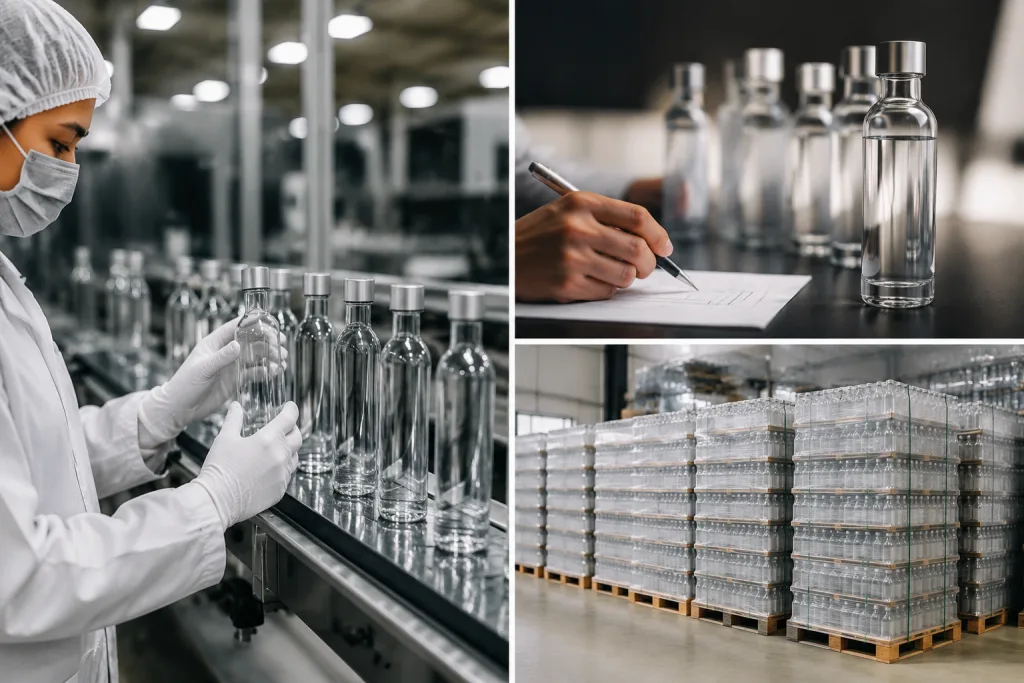
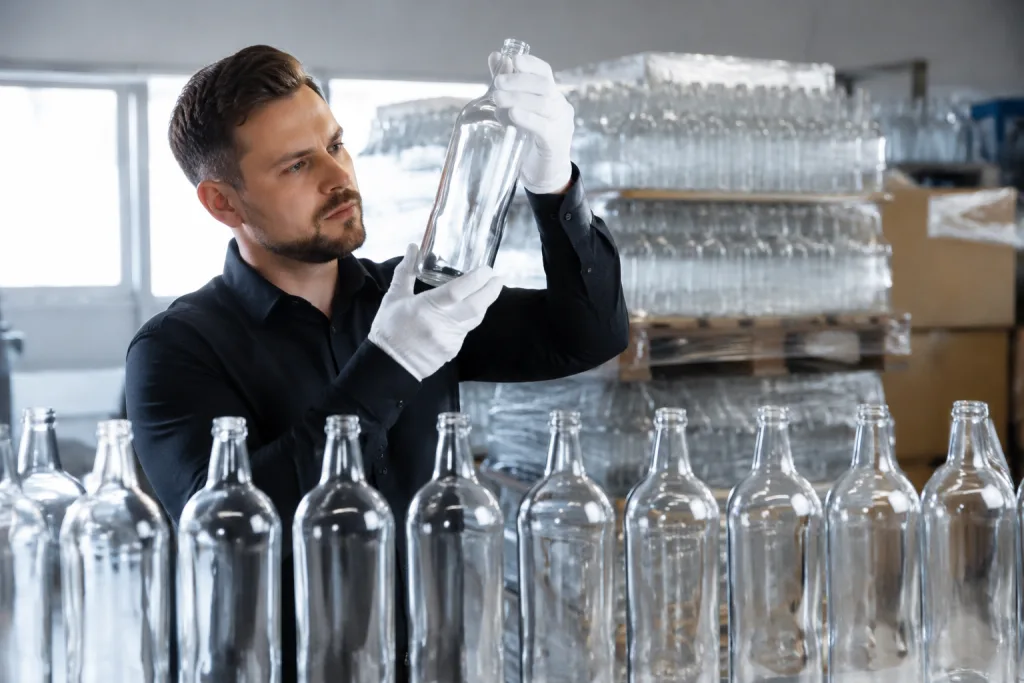
Glass defects are visible, measurable, and expensive once the container lands. Your checklist needs numbers, not “looks okay.” For a standard vendor glass bottle shipment, we run AQL 2.5 for major defects and AQL 4.0 for minor defects, with critical defects set to zero tolerance. Critical defects include sharp edges, glass cracks, foreign matter inside the bottle, severe leakage, or unsafe cap fit. QC pulled 32 samples last month and found 2 bottles with chipped inner mouths after the go/no-go gauge caught a 0.4 mm burr. That carton did not ship.
Major defects include obvious logo misplacement, heavy scratches, wrong capacity, loose cap threading, incorrect color, and sleeve deformation. Minor defects include small bubbles, light scuffs, tiny print dust, or slight shade variation within an approved range. Glass will never look as uniform as machined stainless steel, and this is the wrong question to ask if the buyer expects every bottle to match like CNC parts. Define the limit before packing starts: 1 bubble under 1 mm on the lower body is different from 3 bubbles sitting beside the logo. We’ve seen this go sideways when the approved sample had a warm gray sleeve, but the PO typo said “warm green.”
Use these checks with your canteen factory or third-party inspector:
- Measure capacity with water at room temperature; allow a realistic tolerance such as ±3% unless the mold is precision specified.
- Run a 24-hour inverted leak test on filled samples.
- Perform a 1.2 m carton drop test on export-packed cartons.
- Check cap torque by hand and confirm gasket seating.
- Verify barcode, FNSKU, country-of-origin mark, and carton labels against the packing list.
For European buyers, paperwork must match the bottle on the table. A REACH report for a silicone sleeve is not the same as a food contact declaration for a lid gasket. For North American buyers, check FDA food-contact suitability and state-level labeling concerns before the mold deposit is paid. Good canteen manufacturers in China keep material declarations sorted by component, usually glass body, PP lid, silicone gasket, sleeve, ink, and outer carton. Weak canteen vendors send one 2021 test report for a different SKU and hope you stop asking. The buyer flagged that once on a 5,000 pcs order, and the math did not work after re-testing delayed shipment by 9 days.
How to compare suppliers fairly
If you ask five canteen suppliers for “same bottle, best price,” you often get five quotes that do not line up. One includes inner boxes, one shifts to lighter cartons, one leaves out logo setup, one assumes a lower-grade cap, and one quotes a bottle that looks close but weighs 15% less. We see this all the time on PO review. Compare line by line.
A fair supplier comparison starts with the company role, not just unit price. Are you dealing with a canteen manufacturer, trading company, or canteen distributor? None is automatically a bad choice. A trading team can handle mixed orders better than a small single-line factory, but you still need to know who owns production, inspection, and corrective action. If your launch includes glass bottles, a custom growler, and a customizable canteen, one managed China supply chain is often cleaner than chasing three factories on your own.
Ask each canteen supplier for the same RFQ table: item code, capacity, unit weight, material breakdown, logo method, MOQ, sample cost, sample days, mass production days, carton specification, FOB port, payment terms, and inspection standard. Then ask for photos from current production, not showroom shots. On our line, a 0.8 mm wall-thickness note, a typo in the carton size, or a missed AQL 2.5 callout can change the whole quote. BSCI, ISO 9001, and retailer audit history help, but they do not replace batch inspection.
Check how the supplier answers technical questions. A serious canteen vendor gives a straight number when you ask for glass wall thickness. “High quality, no problem” is the wrong answer. We’ve seen that go sideways. The best vendor is not always the cheapest, but it cuts rework and claims. For B2B buyers, avoiding one shipment dispute can matter more than saving USD 0.08 per unit.
A buyer checklist before deposit
Before you pay a deposit, make the project boring. Boring means the spec sheet is locked, the approval path has names and dates, and nobody is saying “same as last time” from memory. We see this bite canteen distributors and brand owners running 6 or 12 SKUs in one PO; one cap color missed on the line can hold the whole container.
Use this pre-deposit checklist for a vendor glass bottle or wider customized drinkware program:
- Approved quote with FOB terms, MOQ, payment terms, and production lead time written the same way as the PO.
- Final artwork file in AI, PDF, or CDR format with Pantone references; our print room checks this against a Pantone book before film output.
- Confirmed physical sample or signed pre-production sample plan, with the sample seal number recorded by sales and QC.
- Material list for glass, cap, gasket, sleeve, coating, and packaging, including thickness in mm where the buyer has a retail shelf test.
- Compliance requirements listed by sales market: REACH, LFGB, FDA, Prop 65, or other buyer-specific rules.
- AQL levels, defect definitions, and carton drop test requirement written into the PO; AQL 2.5 means nothing if “scratch” is not defined.
- Packaging layout, barcode rules, FNSKU labels, and country-of-origin marking approved; we once had QC pull 300 cartons because “Made in China” was 2 mm under the buyer’s guide.
- Responsibility for breakage, shortage, and replacement parts agreed in writing, including whether we ship spare lids with the first order or later by courier.
This checklist also works when your assortment includes canteen promotional items, a distributor growler, or a canteen customized gift set. The product changes. The purchasing risk does not. Unclear specs turn into expensive arguments later, and we have seen this go sideways over a 1-character typo in an FNSKU on the PO.
One practical opinion from our Zhejiang export desk: do not rush the pre-production sample to save three days. The math doesn't work. Those three days are cheaper than air-freighting 500 replacement caps or explaining to a retail buyer why the logo is 8 mm too low. China can produce quickly, but fast production only helps when the approved standard is precise and QC can measure it with a caliper, not guess it by eye.
Send your bottle RFQ before sampling
Share capacity, logo file, target market, MOQ, and packaging needs. We will return a practical FOB China quote with production risks flagged.
Frequently asked questions
What MOQ should I expect for a vendor glass bottle with logo?
For a standard glass bottle shape, expect about 3,000 pcs MOQ for one logo and one packaging style. If you need a custom silicone sleeve, special cap finish, private color box, or several logo versions, 5,000 pcs is more realistic. A new glass mold usually starts from 10,000-30,000 pcs because mold cost, furnace scheduling, and trial loss are higher than for stainless steel drinkware. For mixed distributor drinkware orders, we can sometimes combine glass bottles with custom canteen or customized growler SKUs, but each item still needs its own production minimum.
How do I know if a canteen supplier is a real factory?
Ask for a business license, production photos from the current month, audit reports if available, and a quote that lists material, unit weight, carton size, and lead time. A real canteen factory or canteen manufacturer should answer technical questions such as glass thickness, cap material, gasket grade, and inspection process. You can also request a live video call on the production floor. Trading companies are not automatically a problem, especially for multi-category custom drinkware, but they should be honest about their role and show how they control QC in China.
Can glass bottles be used for canteen promotional campaigns?
Yes, but only if the campaign budget includes proper packaging. For canteen promotional programs, glass looks more premium than plastic, but breakage risk is higher. Use individual kraft boxes or color boxes, dividers where needed, and a 1.2 m carton drop test. For event giveaways, one-color silkscreen on a 500 ml bottle is usually the cleanest cost option. If the item ships to employees’ homes, budget for stronger mailer packaging. Many canteen distributors underestimate last-mile damage, which can easily exceed 2% without protective packing.
What is the difference between custom canteen and glass bottle sourcing?
A custom canteen often means stainless steel or aluminum, where insulation, powder coating, and metal wall thickness drive quality. A vendor glass bottle depends more on glass molding consistency, cap seal, breakage control, and print adhesion. Stainless products can dent; glass can crack or shatter. Inspection standards should reflect that. For glass, set zero tolerance for cracks, sharp edges, and foreign matter. For stainless canteen customized programs, you also check vacuum performance, coating adhesion, and rust resistance. If you buy both, do not use one generic QC checklist.
How long does a customized drinkware order take from China?
For standard vendor glass bottle projects, sampling usually takes 7-12 days after artwork approval, and mass production takes 25-35 days after deposit and sample approval. Add 3-7 days if you need special packaging, multiple barcode labels, or retailer compliance documents. Sea freight to Europe or North America can add 25-45 days depending on port and season. If you need a customizable canteen, custom growler, and glass bottle in one launch, plan the schedule around the slowest item, not the easiest item.