Key Takeaways
- For a vendor blender bottle, define capacity tolerance at ±5% and steel grade before sampling
- A practical MOQ is 1,000 units per color for custom logo and 3,000 units for molded parts
- Logo method changes cost by USD 0.08-0.55 per unit depending on artwork and finish
- AQL inspection should cover leakage, lid torque, coating adhesion, carton drop, and barcode accuracy
A vendor blender bottle looks simple on a quote sheet until the order goes sideways. We’ve seen lids fail a 3-minute upside-down leak test, 201 mixing balls get quoted as “stainless,” logos scratch after 6 kg cartons rub in transit, and single-wall cartons collapse before the distributor even opens them. The trouble usually starts before sampling, when a buyer signs off on “stainless shaker, custom logo, 700 ml.” That is not a spec. It is a claim waiting to cost money.
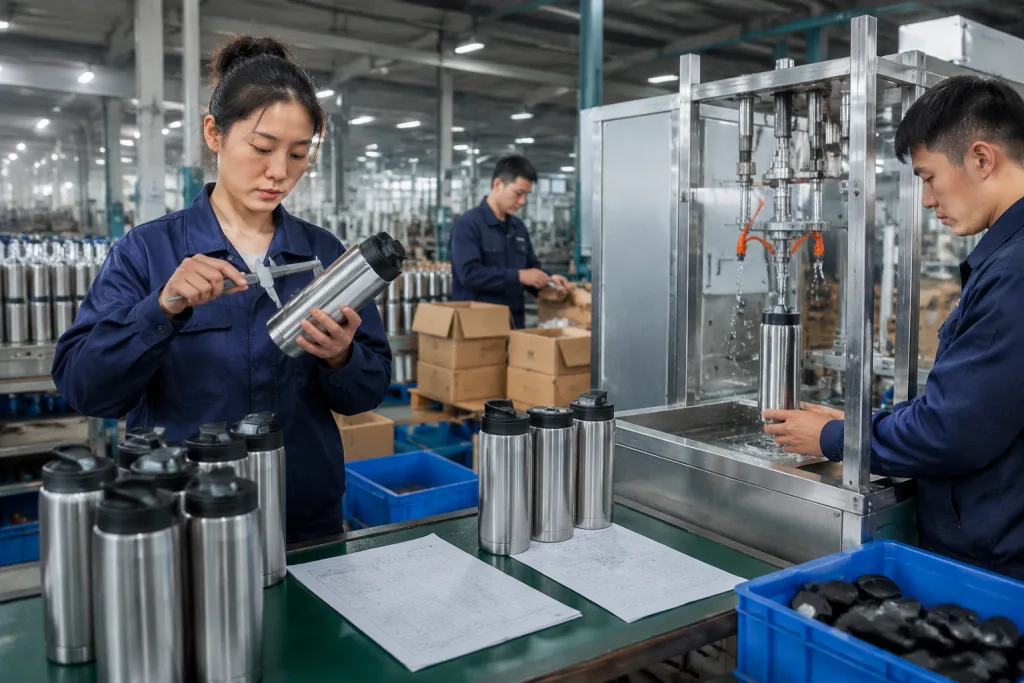
If you buy custom drinkware for retail chains, gym programs, corporate gifting, or canteen distributors, read the spec line by line before you pay the sample fee. BottleForge Industrial is based in Hangzhou, Zhejiang, and we manufacture in China for European and North American B2B buyers who want the same bottle on shipment 2 as shipment 1. QC pulled one sample last month because the silicone seal measured 1.8 mm instead of the approved 2.2 mm; small gap, big leak complaint.
Capacity is not just volume
The first spec line for a vendor blender bottle is usually capacity: 500 ml, 600 ml, 700 ml, or 800 ml. Buyers often read it as a front-panel claim. We read it as tooling, shrinkage, and tolerance. A 700 ml bottle might hold 720 ml brim-full, but only 650 ml once you leave safe shaking space. Big difference. If your label says 24 oz, confirm whether that means brim-full, usable volume, or the printed fill line; QC pulled 12 samples last month where the silk-screen line sat 8 mm lower than the drawing.
For B2B programs, we write the capacity spec like this: “700 ml usable volume, ±5%, with 100 ml headspace after fill line.” That one sentence saves the argument when your receiving team checks samples with a graduated cylinder. We have seen this go sideways: a buyer flagged a 30 ml shortfall after arrival because the PO said “700 ml” and the factory meant brim capacity. The math doesn’t work after cartons are already in the warehouse.
The body diameter matters as much as the volume. A 72 mm diameter fits plenty of gym-bike holders poorly, while 68-70 mm is safer for fitness and commuter use. If you run a custom canteen or customizable canteen line beside blender bottles, keep the diameter family consistent; our carton engineer can usually hold one insert size instead of cutting 2 molds for the EPE tray. Small choice. Fewer shelf fixture headaches.
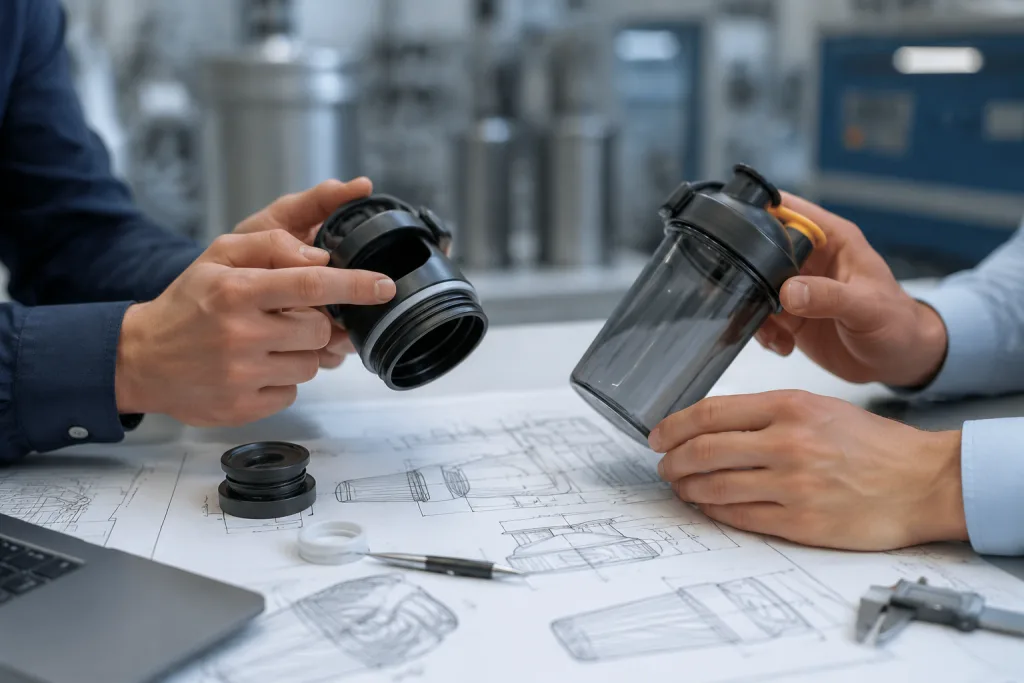
Do not approve a bottle from a photo. Ask for a drawing with height, diameter, mouth opening, fill line position, and tolerance. In Zhejiang, our sample room checks production parts with 0.02 mm digital calipers before sending pre-production samples, and the line records the mouth ID because shaker balls jam when the opening is too tight. It is slower than shipping a random stock bottle, but it gives you a spec we can run again without guessing.
Material grades change buyer risk
The body material line should never say only “stainless steel.” Put the grade on the spec sheet and PO. For a vendor blender bottle, we usually quote SS304 inside and outside, or SS304 inner with SS201 outer when the buyer is chasing price by about USD 0.18-0.35 per piece. SS304 handles protein powder, electrolyte drinks, and daily washing better, so we run it as the safe liquid-contact default. SS201 is fine for an outer shell. Not inside. Last year QC pulled a salt-spray sample from the line and the SS201 contact cup showed pin spots after 24 hours; that buyer flagged it before shipment.
For a single-wall shaker, wall thickness is typically 0.45-0.60 mm. For double-wall vacuum custom drinkware, 0.40-0.50 mm per wall is common, with a 0.8-1.2 mm total rim structure depending on mouth design. Thinner metal saves cost, but the math does not work if 3% of cartons arrive with dent photos. We check rims with a digital caliper at incoming and again after polishing, because a 0.05 mm miss at the mouth can turn into lid wobble. If your sales channel includes canteen distributors, gyms, or field teams, dents are not a minor issue; they become return photos.
Plastic lids should identify PP, Tritan, or the named resin clearly. “Plastic lid” on a PO is how claims go sideways. The mixing ball is usually SS304 wire, around 0.6-0.8 mm gauge, and we check the coil gap with a go/no-go gauge before packing. Silicone gaskets should be food-grade LFGB or FDA compliant, depending on the market. For Europe, ask your canteen supplier for REACH and LFGB documentation where applicable. For North America, FDA food-contact documentation and Prop 65 review may be needed depending on your claims and destination.
A responsible canteen manufacturer will also separate material test reports from finished goods inspection. Material certificates show the steel and resin are acceptable. AQL inspection shows the production lot was made correctly. We ship both in the order file, because a clean LFGB report does not catch a loose flip cap, a missing gasket, or the “304 stainles” typo we once saw on a buyer’s artwork file. You need both if you want fewer surprises from China shipments.
Lid geometry decides leakage
Most blender bottle complaints hit the lid first, not the cup body. We see it in after-sales photos: wet gym bags, powder stuck around the spout, and buyers asking why 304 stainless passed but the cap didn’t. Your spec sheet needs thread type, gasket position, flip cap structure, drinking spout diameter in mm, and whether the lid is one-piece or built from separate parts. Looks can fool you. QC pulled one PP lid sample last month that looked clean in the lightbox, but the 0.6 mm gap under the plug leaked after 12 shakes.
Thread engagement has to resist cross-threading when the user closes it fast with wet hands. For wide-mouth bottles, we prefer at least 2.5 turns from open to fully closed. The gasket should come out for cleaning, but it cannot drop into the sink during washing. A gasket hardness of 50-60 Shore A is common for silicone seals. Too soft, and it deforms. Too hard, and it leaks when the rim tolerance shifts. On the line, we check this with a thread gauge and a simple pull test; if the gasket pops out under about 1 kg of finger pressure, the buyer will flag it.
Leak testing belongs in the PO, not in someone’s memory. Our standard test is fill to the marked line, close the lid, invert for 30 minutes, then shake 20 times by hand and inspect the lid, spout, and thread. For higher-risk distributor canteen orders, we add pressure simulation and random carton-level sampling. This is practical, not theatrical. AQL 2.5 for major defects and 4.0 for minor defects is a common starting point. We’ve seen this go sideways when a PO says “leak proof” with no test method; the factory passes a desk check, then the distributor rejects 186 cartons after warehouse spot checks.
If you plan a canteen promotional campaign, do not pick a dramatic lid shape just because it looks different. This is the wrong question to ask. Ask whether a user can clean it after protein powder dries inside the hinge. Molded novelty lids often require a higher MOQ, usually 3,000-5,000 units, and every extra hinge, plug, or insert adds failure points. A simple lid with stable sealing usually beats a clever lid that your customer cannot clean. We run trial assembly with a torque driver before mass production; if operators need two hands to snap the flip cap shut, the math doesn't work for repeat orders.
Logo method affects reorder consistency
The decoration line is where about 6 in 10 buyers under-specify the job. “Custom logo” can mean silk screen, heat transfer, laser engraving, pad printing, UV printing, embossing, debossing, or full-wrap powder coating, and those are not interchangeable on the line. We run a 30 mm tape-test strip on new artwork because a 2-color screen logo that looks fine on a flat proof can lift on the shaker curve after curing. The right method depends on the bottle material, logo size, retail price, and how much rubbing the cup will take in a gym bag.
For stainless steel vendor blender bottle programs, laser engraving gives the cleanest reorder match on powder-coated bodies. It usually adds USD 0.15-0.35 per unit depending on logo size and production speed. One-color silk screen can be cheaper, often USD 0.08-0.18 per unit, but the math does not work if the logo sits across a tapered body and QC keeps pulling samples for pinholes. Adhesion depends on surface prep, ink curing, and whether the operator wipes the body with alcohol before printing. Full-color heat transfer can look sharp for promotional drinkware, but we insist on tape testing and tight dishwasher claim control.
If you are sourcing customized drinkware for retail, ask for a Pantone target and a tolerance note on the PO. Powder coating can shift by Delta E 1.5-3.0 between batches, especially on matte colors; last May, a buyer flagged a black set because the reordered lid looked 1 shade warmer under a D65 light box. That may pass for canteen vendors, but not when your brand puts multiple SKUs side by side on the same shelf. For repeat programs, keep 1 retained production sample in Zhejiang and 1 with your buying office.
For canteen customizable or customizable drinkware programs, do not promise unlimited personalization unless the factory workflow supports it. Individual names, FNSKU labels, and mixed artwork cartons slow packing; we have seen a clean 12-day packing plan become 18 days after the buyer added 240 name files and 16 carton marks. They may add 3-7 days to lead time and USD 0.10-0.40 per unit. The quote should separate product cost, decoration cost, setup fee, and special packing cost, or your margin gets buried inside vague FOB pricing.
Packaging specs protect the margin
Packaging gets treated like the last line on the PO, but it decides whether your margin survives freight and warehouse handling. For a vendor blender bottle, we usually quote poly bag, white box, kraft box, color box, or retail sleeve after checking the buyer’s sales channel. A standard export carton holds 24 units, uses 5-ply corrugated board, and stays under 15 kg gross weight so one warehouse worker can lift it without throwing it. QC pulled one 24-unit carton last month where the tape gap was 8 mm at the center seam. That carton failed before the bottle did.
If the product ships to a marketplace warehouse, lock down the barcode type, FNSKU placement, suffocation warning for poly bags, master carton labels, and carton drop test standard on the artwork sheet. For retail and distributor growler or distributor drinkware programs, inner box crush strength matters because cartons get opened, counted, and repacked 2 or 3 times before they reach the shelf. A pretty 300 gsm color box can still arrive crushed if the master carton is weak. We’ve seen this go sideways when the buyer flagged “retail-ready” on email, but the PO only said “color box.”
We normally run carton drop tests from 76 cm on one corner, three edges, and six faces for export packaging checks. The line uses a marked steel drop plate, not a soft warehouse floor. For heavier custom growler and customizable growler items, we may cut the carton from 24 units to 12 units or lower the drop height based on the packed weight. This is why we prefer confirming packing dimensions before final quote. Ocean freight CBM and warehouse pallet count can move your landed cost by more than the logo cost.
If your canteen factory quote is USD 0.20 cheaper but uses a thin carton, the math doesn't work after 3% damage claims. Packaging is not a place to be romantic. Ask for carton size, net weight, gross weight, units per carton, board grade, and whether the carton passed a real drop test. We ship better when the buyer signs off on a packing spec, not just a bottle drawing.
MOQ, lead time, and audits
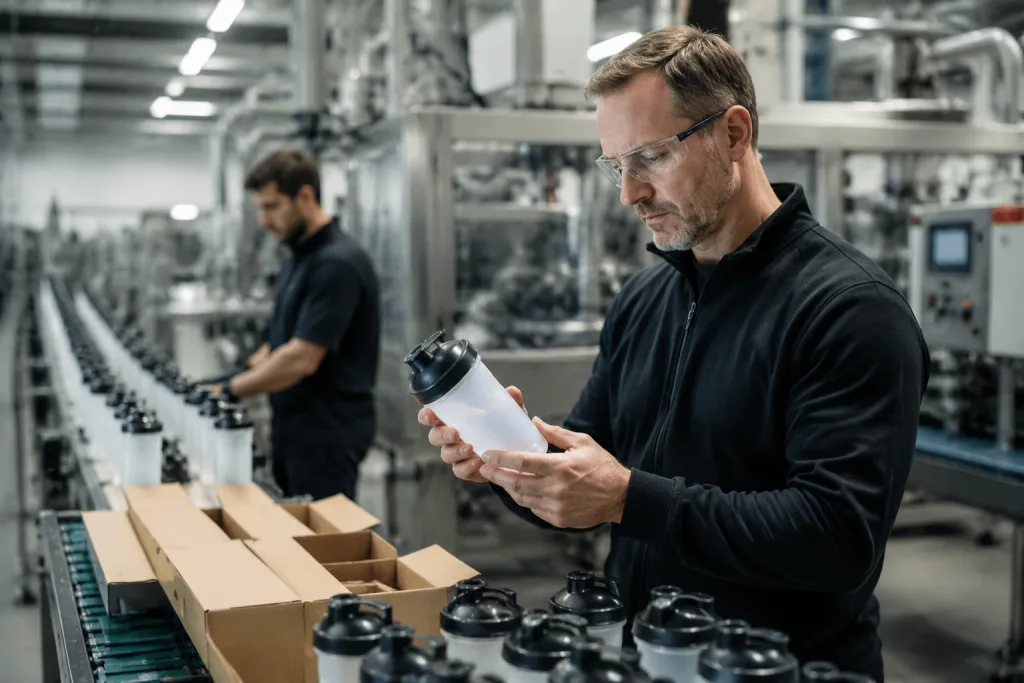
A serious quote needs the commercial basics in writing: MOQ, sample lead time, mass production lead time, payment terms, Incoterms, audit status, packing spec, and test scope. In our Zhejiang line, we run 1,000 units per color for a stock body with custom logo, 2,000 units for custom powder coating, and 3,000-5,000 units when a new lid mold or body mold is involved. Our drinkware capacity is about 450,000 units per month across stainless bottles, tumblers, shaker bottles, and canteen customized projects. Last month QC pulled a blender bottle sample because the logo was 1.8 mm off center; that is the kind of detail a quote should already control.
Sample lead time is usually 7-10 days for a stock shape with logo, 15-20 days for custom color and packaging, and 30-45 days for new tooling. Mass production is commonly 30-40 days after deposit and approved pre-production sample. Dates matter. If your launch date is fixed, count backward from vessel ETD, not from the day you want goods in your warehouse. We have seen buyers lose 12 days because the PO said “mat black” while the artwork file said “matte black,” and the powder coating line would not release panels without written confirmation.
FOB Ningbo or FOB Shanghai is normal for buyers shipping from China. EXW can look cheaper on the first quote, but then you own local trucking, export handling, customs paperwork, and every small handoff before the container gate. For new buyers, FOB is cleaner. The math often does not work on EXW once you add a 1,200 kg pickup, warehouse loading, and document charges. If you are comparing canteen suppliers, make sure every quote uses the same Incoterm, carton size, inner bag spec, drop test, and packaging requirements.
Audit language should be plain. BSCI, Sedex, ISO 9001, and factory social compliance reports help qualify a supplier, but they do not replace product inspection. A canteen vendor with a clean audit can still ship a bad batch if the production spec is loose. We have seen this go sideways: the audit passed, then final inspection found 9 leaking lids in a 200-piece AQL 2.5 sample pull. Use audits to screen the factory, then control the order with drawings, approved samples, AQL, and final inspection.
Fit the bottle to the channel
The right spec depends on the sales channel, not the prettiest sample on the table. For a gym chain, we push leak resistance, grip, and 15-day replenishment planning because front-desk staff do not want members coming back with wet gym bags. A corporate gifting buyer usually checks the logo edge under a 3M tape test and opens the gift box first. A canteen distributor needs a tougher item that can sit in 12 kg mixed cartons with custom canteen, customized canteen, and canteen promotional products without foam sleeves or special warehouse handling.
If you sell through canteen manufacturers or private-label programs, define the commercial role before approving the sample. Is this a low-cost giveaway at USD 2.20-3.20 FOB, a mid-range retail shaker at USD 4.00-6.50 FOB, or an insulated premium item at USD 7.50-11.00 FOB? Those price bands change the steel grade, lid structure, coating, packaging, and inspection plan. The math does not work if the buyer asks for a USD 2.80 FOB shaker with 304 stainless, two-color powder coating, a printed kraft box, and AQL 2.5 full cosmetic sorting; we have seen that go sideways by the second pre-shipment inspection.
For a customized growler or distributor growler line, the same spec discipline applies, but the risk moves to vacuum hold, handle pull strength, and carton weight. We run vacuum checks after 24 hours, and QC pulled one 64 oz sample last month because the handle pin had 0.6 mm side play after a drop test. For a vendor blender bottle, the weak points are leakage, mixing performance, odor retention, logo durability, and lid fatigue. A good canteen supplier should tell you which features earn their cost and which ones are just sales decoration.
China can produce almost any drinkware shape you can sketch, but not every sketch deserves tooling. Start with a spec sheet. Challenge every line. Make the factory quote against that document, down to lid PP grade, silicone ring hardness, logo size in mm, carton pack, and MOQ. You will get fewer surprises, cleaner comparisons between canteen vendors, and a product your distributor can reorder from the same drawing instead of starting from zero because someone typed “mat black” instead of “matte black” on the PO.
Send your blender bottle spec for review
We will check the drawing, materials, logo method, MOQ, packing, and QC plan before you commit to sampling.
Frequently asked questions
What MOQ should I expect for a vendor blender bottle order?
For a stock body with your logo, 1,000 units per color is a realistic MOQ. If you need custom powder coating, plan around 2,000 units per color because coating setup and line cleaning take time. For a new lid, new body mold, or custom mixing insert, expect 3,000-5,000 units. Some canteen suppliers offer 300-unit trial orders, but the unit price is usually higher and color control is weaker. If you are testing a distributor drinkware program, I suggest starting with one stable body shape, one or two colors, and one logo method before adding custom packaging.
How do I compare quotes from different canteen manufacturers fairly?
Put every canteen manufacturer on the same spec sheet. Include capacity definition, steel grade, wall thickness, lid material, gasket material, logo method, packaging, carton quantity, AQL level, Incoterm, and lead time. A USD 3.80 FOB quote and a USD 4.15 FOB quote may not be comparable if one uses SS304 and the other uses SS201, or if one includes a 5-ply carton and the other does not. Ask for drawings and physical samples, not only photos. Also confirm whether testing documents cover raw materials or finished goods. Those are different things.
Can I use one supplier for blender bottles, canteens, and growlers?
Yes, if the factory has the right production mix. Blender bottles require lid sealing control and plastic part assembly. Custom canteen and customizable growler items may require vacuum insulation, larger welding fixtures, and stronger carton design. A broad canteen factory can handle all three, but you should still approve each product family separately. Do not assume a factory that makes a good tumbler automatically makes a good shaker lid. At BottleForge Industrial in Zhejiang, we separate QC checklists by product type because leakage, vacuum loss, and coating scratches are different failure modes.
What tests should be included before shipment?
For a vendor blender bottle, include capacity check, visual inspection, coating adhesion test, logo rub test, lid torque check, leakage test, gasket fit check, barcode scan, carton drop test, and AQL inspection. A common AQL setup is 2.5 for major defects and 4.0 for minor defects, with critical defects not accepted. If the bottle is sold in Europe, ask about REACH, LFGB, and food-contact documentation. For North America, FDA food-contact support and ASTM-related packaging checks may be relevant. The exact test list should be written into the purchase order.
How long does a custom drinkware project take from sample to delivery?
For a stock vendor blender bottle with logo, expect 7-10 days for samples and 30-40 days for mass production after sample approval and deposit. Add 15-20 days if you need custom color matching and retail packaging. Add 30-45 days if new tooling is required. Ocean transit to Europe or North America can add 25-40 days depending on port and season. If your launch is tied to a promotion, send artwork, Pantone references, packaging files, and barcode rules at the RFQ stage, not after the price is approved.