Key Takeaways
- A 750 ml double-wall bottle normally uses 304 stainless steel at 0.4-0.5 mm inner wall thickness
- A realistic custom vacuum bottle MOQ starts at 1,000-3,000 units per color depending on finish
- Pre-production sampling usually takes 7-12 days after artwork and deposit approval
- Final inspection should use AQL 2.5 for major defects and AQL 4.0 for minor defects
You are not buying a bottle. You are buying a retail-ready carton and the whole lane behind it: artwork check, leak test, drop test, freight booking, duty math, and a shipment that lands on time. We see new custom drinkware jobs stall when the buyer signs off a clean sample but never pins down wall thickness, cap torque, or print placement; then the 10,000 pcs bulk run shows the gap.
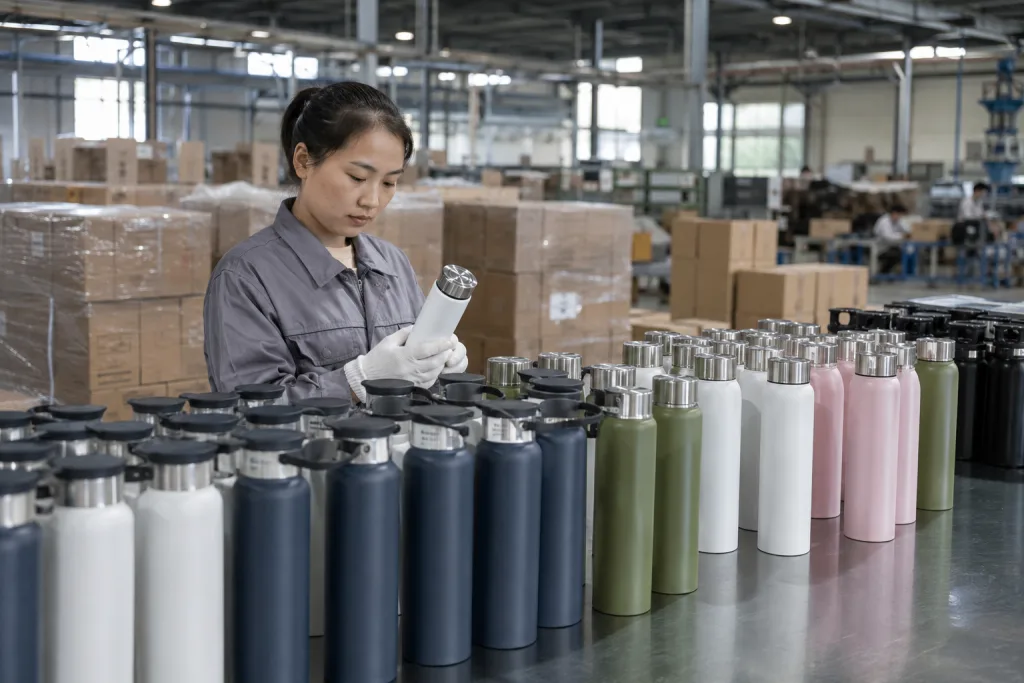
Take one real order: a 750 ml stainless vacuum bottle for a European outdoor distributor. At BottleForge Industrial in Hangzhou, Zhejiang, we run these jobs for canteen distributors, retail brands, and promo buyers from China; QC pulled the sample on a 2 m drop test before packing, and the buyer still flagged a 1.5 mm logo shift on the PO. The numbers here come from the floor, not a sales deck.
Start With The Distributor Brief
A solid vacuum insulated bottle distributor brief is not a mood board. It is a buying sheet. For this case, we run the quote on 6,000 units of a 750 ml bottle for wholesale distribution in Germany and the Netherlands, with two body colors and one laser logo. Mid-market retail means the bottle has to pass insulation checks and look clean on shelf; the math does not work if you spend USD 0.45 per unit on gift packaging nobody asked for. On our line, QC pulled the sample after laser marking once because the logo sat 3 mm off-center, so put the logo position in the brief, not just the artwork file.
The first call is the bottle platform. A canteen factory in Zhejiang usually has existing molds for 350 ml, 500 ml, 750 ml, 1,000 ml, and 1,900 ml growler sizes. Choose an existing mold and you avoid tooling, with lead time around 35-45 days after pre-production sample approval. Ask for a new shape and add 25-40 days for mold development, plus at least USD 1,500-4,500 in tooling, depending on cap complexity. We use calipers on the neck thread during trial assembly; a 0.2 mm miss there can turn into 600 leaking caps in a 6,000-piece run.
For this order, I would spec 750 ml, 304 stainless steel inner and outer shell, copper-coated vacuum layer, powder coating, leakproof screw cap, and individual kraft box. This base works for outdoor and corporate channels without making the buyer pay for fragile ideas. Skip odd cap geometry and soft-touch coatings unless you have test history. We have seen this go sideways: the buyer loved a rubberized finish, then QC found 18 scratched bodies after a 24-hour carton rub test.
Use plain language with canteen manufacturers. Say if you are a canteen distributor, distributor drinkware importer, or brand owner. The factory needs to know whether cartons ship to your warehouse, Amazon FBA, a 3PL, or retail customers. Packaging, barcodes, carton marks, and drop-test rules change by channel. Small details matter here; we once had a PO with “Nethlands” on the carton mark, and the buyer flagged it only after the 20 kg master carton sample was printed.
Lock The Product Specification
The spec sheet is where you protect your margin. Two vacuum bottles can look the same in a WhatsApp photo, then land with different steel grade, 0.1 mm less wall thickness, weaker vacuum hold, loose cap seal, poor coating adhesion, or a carton that crushes at 18 kg. We run the first check with a digital caliper and a water leak rack before the sales quote leaves Hangzhou.
For a 750 ml custom canteen, we normally quote 304 stainless steel for food-contact parts, 0.4-0.5 mm body wall thickness, silicone sealing ring, PP or stainless cap components depending on design, and a target insulation performance of 6 hours above 65°C when filled with 95°C water at room temperature. Some buyers ask for 12 or 24 hour claims. Fine. Put the test method in writing: fill temperature, room temperature, cap closed time, and thermometer point. The buyer flagged this once after a PO said “24H hot” but the approved sample only passed 12 hours above 50°C; that is how returns start.
Surface finish affects cost more than new buyers expect. Single-color powder coating is stable and usually adds USD 0.25-0.45 per unit compared with plain stainless, depending on quantity and color. Gradient coating and rubber coating look good, but the line needs slower curing, tighter color matching, and a higher rejection allowance. Metallic effects are fussier. QC pulled 32 scratched samples from a 1,000 pcs pilot run last May because the packing sleeve rubbed the coating during carton vibration. For a distributor canteen order, powder coating is the safer first run.
Logo method matters too. Laser engraving is durable and clean for stainless or powder-coated bottles, especially for corporate custom drinkware. Silkscreen is cheaper for large logos, but the ink system must pass the 3M tape pull and basic abrasion rub; otherwise the math doesn't work after replacements. Heat transfer allows detailed artwork, but QC has to watch edge lifting, film bubbles, and position drift over 2 mm. If your order is canteen promotional for events, silkscreen may be enough. If the item will sit in retail for two seasons, laser is safer.
For this scenario, the quote should name the bottle capacity, steel grade, coating, cap structure, logo method, box style, master carton size, units per carton, net weight, gross weight, and FOB port. We also add carton dimensions in cm and carton drop-test notes when the buyer ships by Amazon-style small parcel channels. If a canteen supplier only sends a photo and a unit price, you do not yet have a quote. You have a price guess.
Price The Order Like Landed Cost
Factory price is only one line in your distributor math. For a 6,000-unit order from China, the FOB Ningbo or FOB Shanghai price might sit around USD 3.20-4.80 per unit for a 750 ml powder-coated vacuum bottle, depending on cap type, coating finish, retail box spec, and AQL 2.5 inspection scope. We run the costing sheet by grams of 304 stainless, spray loss, lid assembly, and carton CBM. A customized growler or 1,900 ml custom growler will be higher, often USD 7.50-12.00 FOB, because material weight jumps and the master carton fills a pallet fast.
Do not compare canteen vendors only by unit price. This is the wrong question to ask. Ask what is included: pre-production sample cost, logo setup, 5-ply export cartons, polybags, and inner box style. Plain kraft, white box, and printed retail box do not cost the same. Last month QC pulled a sample where the quote said “export carton,” but the line packed it in thin domestic board; the buyer flagged crushed corners after a 1.2 m drop test. A USD 0.18 cheaper bottle can become more expensive after repacking, extra labels, or rework.
For distributors, MOQ is a practical constraint. At BottleForge Industrial, a normal MOQ is 1,000 units per color for existing bottle bodies, 3,000 units for some custom coating colors, and 5,000 units or more for fully customized caps or private molds. Our Hangzhou, Zhejiang production partners and in-house QC team can coordinate around 300,000 drinkware units per month across stainless bottles, tumblers, and growlers, but capacity still has to be booked. We ship by line slot, not wishful thinking. If powder coating is backed up by 4 days, a promised 35-day lead time becomes 39 days before the forwarder even measures CBM.
Payment terms should also be clear. A common structure is 30% deposit and 70% balance before shipment after inspection. For repeat distributor growler or canteen customized programs, staged shipments or partial container loading can be discussed, but new buyers should expect standard terms until order history is established. We have seen this go sideways when a PO typo changed “matte black” to “matt back,” and nobody caught it until the pre-production sample was on the desk with a Pantone chip beside it.
If you are comparing canteen suppliers, ask for FOB price, estimated carton CBM, sample charge, mold charge if any, production lead time, and validity date. Stainless steel, coating powder, and carton costs move. A quote with no validity period is not useful for procurement planning. Ask for 15-day or 30-day validity in writing, then check whether the carton size is stated in cm and the gross weight is stated in kg. The math doesn't work if your freight quote uses 0.065 CBM per carton and the factory later packs at 0.082 CBM.
Approve Samples Without Guesswork
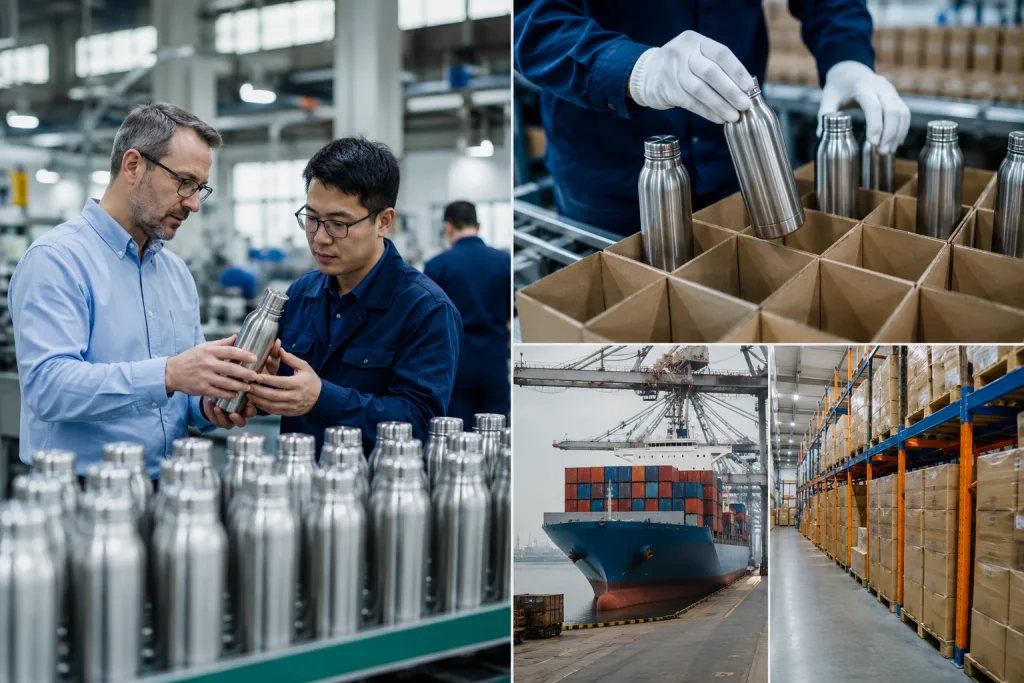
The sample stage is not a courtesy. It is the order sitting on your desk. For this buyer case, ask for 1 blank physical sample first if your team is still checking the grip, shoulder shape, and cap feel, then approve 1 pre-production sample with final color, logo, cap, and packaging. We run into trouble when buyers skip the blank sample and later say the 750 ml bottle feels too fat in hand. The first sample helps your sales team sell. The second one protects the PO.
A workable sample schedule is 3-5 days for available blank samples and 7-12 days for logo and color samples after artwork approval. Pantone-matched powder coating needs extra time, and the math doesn't work if the color house asks for a 20 kg powder batch for a 300 pcs trial order. Send vector artwork in AI, EPS, or PDF format, and confirm logo size in millimeters. Simple rule: “make it like the picture” is not a spec. Last month QC pulled a sample where the logo was 42 mm wide, but the buyer’s PDF showed 38 mm.
For a customizable canteen or customizable growler, ask the canteen manufacturer to send photos and videos before dispatching the sample: front, back, cap, inside mouth, base mark, packaging, carton mark, and a short leak test. This catches basic mistakes before you burn DHL money. We ship enough samples to know this saves 2-3 days when the line catches a wrong lid color or a missing bottom laser mark. It still does not replace holding the bottle in your hand.
When the sample arrives, test it like a buyer, not like a consumer. Fill it with hot water, weigh the empty and full bottle on a bench scale, check actual capacity, turn it upside down for 30 minutes, measure logo position, rub the print, and inspect the coating under daylight. Use a caliper if the logo placement matters. If you have a retail customer, get their written approval on the same sample version. We have seen this go sideways: the distributor approved a matte black sample, while the retailer expected a soft-touch finish from an earlier photo.
Once approved, freeze the sample. Photograph it, label it with date and version, and state in the purchase order that bulk production must match the approved pre-production sample within agreed tolerances. Put the sample version on the PO, not just in WeChat. A typo like “PP sample V2” instead of “PP sample V3” can cost a full carton rework when QC checks bulk goods against the wrong bottle.
Build QC Into The Purchase Order
Do not wait until cartons sit by the loading dock to talk about QC. Put the inspection rules in the purchase order before the 30% deposit leaves your account. For stainless vacuum bottles, we write the checkpoints line by line: 304 stainless material declaration, capacity check with a graduated cylinder, appearance inspection under a light box, coating adhesion by 3M tape test, logo position measured in mm, leak testing, insulation testing, cap fit, odor check, barcode scan if used, and carton drop test. QC pulled the sample once on a 750 ml bottle and found the logo 6 mm off center; without a PO tolerance, that argument eats half a day.
For bulk inspection, most distributor buyers we work with use ANSI/ASQ Z1.4 sampling with AQL 2.5 for major defects and AQL 4.0 for minor defects. Critical defects should be zero tolerance. A critical defect means sharp metal burrs on the mouth, contaminated interior, leaking cap, or wrong food-contact material. A major defect means poor vacuum performance, a coating scratch over the agreed mm limit, wrong logo color against the Pantone number, or barcode failure on the scanner. Minor defects include small dust points or slight carton scuffing inside the signed limit sample. We run this on the packing floor with a caliper, barcode gun, and boiling-water insulation log, not by looking at five pretty bottles from the showroom.
For this 6,000-unit order, final random inspection should happen when production is 100% finished and at least 80% packed. Inspect at 60% packed and you usually see the best cartons the line prepared for you. Inspect after the container is loaded and the math does not work; you are arguing with a sealed truck, not a supplier. A factory-side QC report helps, but distributor buyers should still book third-party inspection for first orders above USD 15,000. We have seen this go sideways on a first PO where the buyer typed “mat black” instead of “matte black,” and nobody caught the coating mismatch until 118 cartons were already taped.
Compliance depends on your market. For Europe, ask for LFGB food-contact testing, REACH restricted substances checks, and packaging waste documentation where relevant. For North America, FDA food-contact expectations and California Proposition 65 may apply depending on the sales channel. For children’s bottles, this is the wrong question to ask if you treat it like normal drinkware; ASTM, CPSIA, small parts, and coating requirements may apply. On the factory side, we usually ask for the age grade, lid structure drawing, and coating spec before quoting, because a 38 mm flip button can change the whole test route.
A capable canteen supplier in China will not object to written QC terms. They may negotiate the sampling level, defect photos, or whether the carton drop is 76 cm or 61 cm, but they should not push back against inspection itself. If a canteen vendor says inspection is unnecessary because “we always make good quality,” keep your deposit in your account. We ship repeat orders faster when the PO is strict; the line knows the target, QC knows what to reject, and the buyer does not need a 23-message WeChat fight over one leaking cap.
Prepare Packaging And Logistics Early
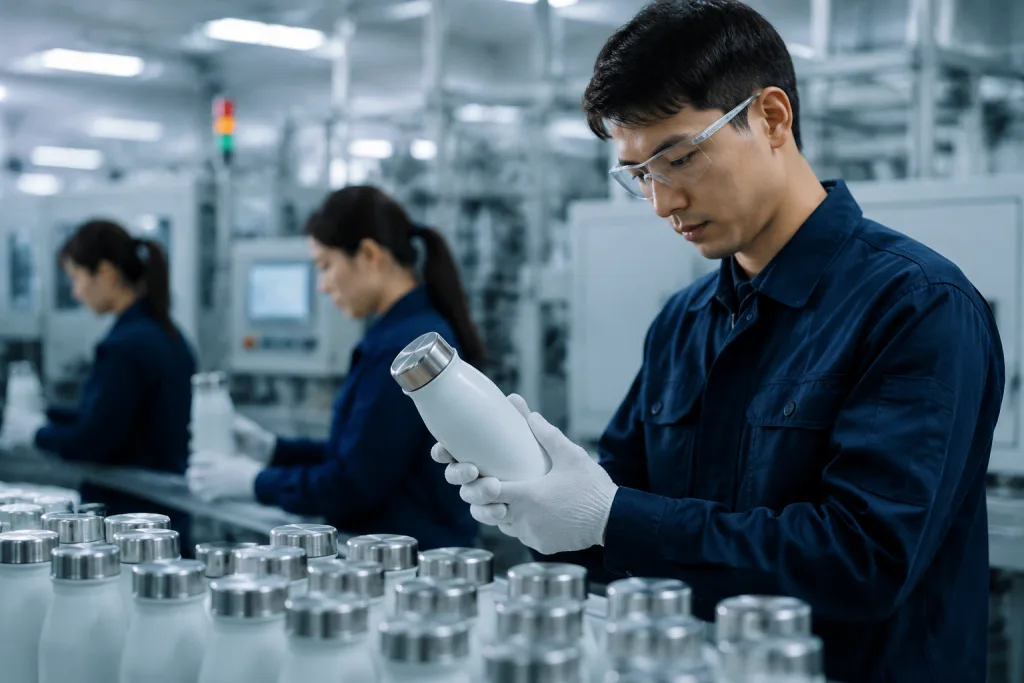
Packaging is where distributor bottle orders lose days. We’ve had finished stock sitting in our Hangzhou packing area for 3 days because the buyer had not approved carton marks and FNSKU placement. The bottles were ready. The truck was not. Lock the retail box, master carton marks, pallet limit, and barcode files before the line starts packing, not after QC has sealed 250 cartons with 48 mm tape.
For wholesale distribution, we usually run one bottle in one kraft box or printed color box, 24 units per master carton, with a 5-ply export carton and carton gross weight kept under 18 kg where possible. For a 750 ml vacuum bottle, the carton may land around 52 x 35 x 29 cm for 24 units, but cap height and gift-box foam can change that by 20–35 mm. Ask for exact CBM from the packing sample. The math doesn't work if your forwarder quotes by volume and your PO only shows unit weight.
If the order goes to Amazon FBA, labels are production data, same as a Pantone number or logo file. Confirm the FNSKU position in mm from the box edge, the suffocation warning text if polybags are used, the carton label layout, and the mixed-SKU rule before packing. If the order goes to a European distributor warehouse, confirm pallet height and EAN barcode first, then carton direction and bilingual marks. We can apply labels on the line, but final PDF files need to arrive before packing; last month QC pulled the sample because “matte black” was typed as “matt black” on the PO.
FOB Ningbo is common for Zhejiang drinkware shipments. FOB Shanghai also works when the vessel schedule is cleaner or your forwarder has better space there. For 6,000 bottles, we may ship LCL if the buyer needs stock fast, or combine SKUs to fill a 20-foot or 40-foot container. If you are buying multiple lines such as customized drinkware and custom growler or travel tumbler products, consolidation can cut freight per unit, but only if carton sizes are confirmed before booking. We’ve seen this go sideways when a buyer changed the retail box after the forwarder had already planned the load.
Build at least 7 days into your schedule for inspection, balance payment, booking, customs documents, and loading. A 40-day production lead time does not put goods in your warehouse in 40 days; for a US West Coast shipment, 40 days production plus 18 days ocean transit is already 58 days before customs and inland trucking. Our shipping clerk still needs the HS code, commercial invoice, packing list, and booking confirmation before the container can be loaded. Procurement calendars should show sample time, production, inspection, export handling, ocean transit, customs clearance, and inland delivery as separate lines.
Choose Suppliers By Control Points
The best canteen suppliers are not always the ones with the lowest opening quote. For a vacuum insulated bottle distributor, the better test is control. Can they trace 304 stainless coil back to the mill cert? Can the line hold welding burn marks under 0.5 mm before polishing? Can the vacuum station show pull data instead of saying “the weather was humid”? We’ve seen this go sideways: the first order looked clean, then the second order shifted the logo 3 mm toward the seam and the buyer flagged it during shelf-photo approval.
When comparing canteen manufacturers, ask for export shipments from the last 12 months by market, BSCI or ISO 9001 status if relevant, food-contact test reports for similar products, production photos from the actual line, and a written QC flow with checkpoints. A trading company is not automatically a problem if it controls the factory and sends its own inspector with calipers, tape test grids, and AQL 2.5 sampling records. A direct canteen factory can still be risky if it hides subcontracting or answers every defect question with one sentence. We had one PO where the buyer typed “matte sand black” but approved a “matte black” sample tag, and QC pulled the sample before bulk coating saved 8,000 pcs from the wrong texture.
For repeat distributor canteen programs, check whether the supplier can hold spare caps, maintain color standards, and support reorder consistency with dated samples. We run a color master card and keep approved caps in sealed bags, not loose in a dusty carton beside the packing tables. If your retailer sells the same customized canteen for three seasons, a cap color shift or different powder texture becomes a commercial problem. This is the wrong question to ask: “Who is USD 0.10 cheaper?” The better question is whether the vendor can ship reorder 2 and reorder 3 within the same visual tolerance, because one rejected retail replenishment can eat the saving on 20,000 pcs.
BottleForge Industrial works from Hangzhou, Zhejiang with China-based production and QC teams focused on stainless drinkware. We are not trying to sell every buyer the most expensive option. Sometimes the correct answer is a stock mold, one powder color, laser logo, and plain box because that protects your first order and keeps the MOQ realistic at 1,000 pcs. Simple wins early. Once sell-through is proven, then we can move into canteen customizable colors, customized growler sets with matched lids, printed retail boxes with drop-test cartons, or private tooling after the 3D drawing and sample mold are approved.
Your supplier should make the buying process boring in the best way: confirmed specs, realistic MOQ, signed sample, controlled production, documented inspection, clean cartons, and export documents that match the shipment. The math doesn’t work if a “cheap” supplier saves USD 300 and then ships cartons with a missing item number or a packing list that does not match the container load. We ship with carton marks checked against the PI, and QC takes photos of the first packed carton before sealing bulk. That is what lets you reorder instead of firefighting.
Send Your Bottle Brief For A Factory Quote
Share capacity, quantity, logo method, market, and packaging needs. We will reply with MOQ, FOB pricing, sample timing, and QC notes.
Frequently asked questions
What MOQ should I expect for a custom vacuum insulated bottle order?
For an existing bottle mold, a realistic MOQ is usually 1,000 units per color for laser logo or simple silkscreen. If you need a special powder coating color, many canteen manufacturers ask for 3,000 units because coating lines and powder batches need efficiency. Fully customized caps, private molds, or unusual sizes may start at 5,000 units or more. For distributor testing, we often suggest one proven 500 ml or 750 ml model in two colors rather than five SKUs with weak volume. You get cleaner production, easier QC, and better freight efficiency.
How long does production take after I approve the sample?
For a standard stainless vacuum bottle from China using an existing mold, plan on 35-45 days after pre-production sample approval and deposit. Add 7-12 days before that for logo and color sample preparation. If you require printed retail boxes, special caps, Pantone coating, or third-party lab testing, add another 5-15 days depending on workload. Zhejiang factories are efficient, but coating, vacuum testing, and packaging still need sequence. Do not promise your customer a delivery date based only on the factory production lead time; include inspection, booking, ocean freight, customs, and inland delivery.
Which logo method is best for distributor drinkware programs?
Laser engraving is the safest choice for many distributor drinkware orders because it is durable, clean, and performs well on powder-coated stainless bottles. It usually costs about USD 0.10-0.25 per unit depending on logo size and quantity. Silkscreen can be cheaper and works for larger one-color graphics, but you should request an adhesion or abrasion check. Heat transfer is better for full-color artwork, yet it adds more QC risk. For a first custom canteen order, choose laser unless your brand artwork requires color.
What inspection standard should I put on the purchase order?
Use ANSI/ASQ Z1.4 or ISO 2859-1 sampling with AQL 2.5 for major defects and AQL 4.0 for minor defects. Critical defects should be zero tolerance. For vacuum bottles, critical points include leakage, sharp burrs, dirty interior, unsafe material, and broken cap structure. Also define functional tests: capacity check, 30-minute inversion leak test, insulation test at 6 hours, coating tape test, barcode scan, and carton drop test. For first orders over about USD 15,000, a third-party final inspection is a sensible cost, not an insult to the factory.
Can one supplier handle canteen, growler, and tumbler SKUs together?
Yes, if the supplier has real stainless drinkware capacity and packaging coordination. Combining a custom canteen, customizable growler, and travel tumbler can reduce admin work and improve container utilization. The risk is that different SKUs may come from different workshops, so you need one consolidated QC plan and one shipment schedule. Ask for production timelines by SKU, carton dimensions, CBM, and inspection readiness date. At BottleForge Industrial, mixed drinkware programs are common, but we still treat each SKU with its own approved sample, AQL checklist, and carton mark file.