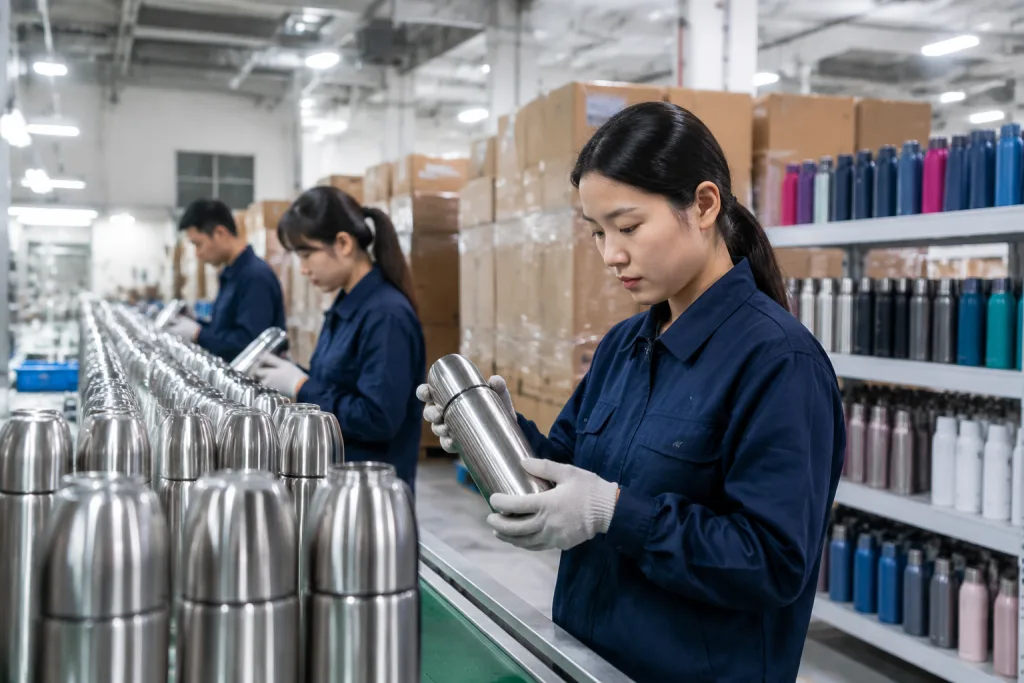
Key Takeaways
- Start with 1,000 pcs MOQ for standard vacuum flask private label models and 3,000-5,000 pcs for custom mold changes
- 304 stainless steel is enough for most bodies; 316 stainless is worth quoting for tea, salt-air, or premium outdoor positioning
- Normal production lead time is 25-35 days after deposit and artwork approval for repeatable customized thermos orders
- Use AQL 2.5/4.0 inspection plus 12-24 hour heat-retention testing for serious distributor thermos programs
A vacuum flask private label project looks simple until the buyer starts signing off on lids, powder coating, logo methods, cartons, and compliance files. Outdoor retailers ask us for bottles that pass trail-pack abuse, not just a clean studio photo. Promotional brands usually care about 3 things on the PO: the custom thermos must look sharp in campaign shots, ship before the event date, and avoid after-sales complaints about leaks. QC pulled 12 samples last month because a flip lid looked fine at 25°C, then leaked after the 1.2 m drop test.
We manufacture stainless drinkware in Hangzhou, Zhejiang, and most buying mistakes we see are not design mistakes. They are spec mistakes. A buyer asks for a 500 ml flask, approves a good-looking sample, then finds the retail carton crushes at 18 kg, the logo scratches after 30 tape pulls, or the thermos bulk price never included drop testing. That is the wrong place to save money. Here is the practical Q&A and checklist we run with new B2B buyers sourcing from China, including the small details the line needs before we cut tooling or print the first carton.
Start With The Selling Channel
The right vacuum flask private label spec starts with the shelf, not the catalog. An outdoor retailer will ask about 6-hour and 12-hour heat data, scuff marks from a backpack test, and whether the retail box survives a 90 cm drop. A promotional thermos buyer pushes harder on logo space, unit cost, and the event date. A distributor thermos program sits in the middle: margin that still works after freight, repeat colors under the same Pantone code, barcode control, and fewer after-sale claims. We run the coating tape test on the line because one buyer flagged black powder coating chips after only 3 weeks in store samples.
Do not begin with “send your catalog.” That is the wrong question to ask. Begin with these buying answers:
- Target retail price: USD 14.99, USD 24.99, or USD 39.99 changes the stainless grade, cap structure, silicone gasket choice, and color box budget.
- Order size: 1,000 pcs is realistic for a standard factory thermos model; 500 pcs works only with stock lids, existing colors, and no new mold charge.
- Sales environment: outdoor store shelf, e-commerce, gift-with-purchase, corporate merchandise, or club distributor. Each one changes the carton mark, barcode sticker, and drop-test pressure.
- Required compliance: LFGB or REACH for Europe, FDA food-contact expectations for North America, and Prop 65 review for California exposure. QC pulled one sample last month because the PO typed “LFGB” while the artwork file said “FDA.”
A 750 ml hiking flask with a carry handle and textured powder coating is not the same product as a 500 ml office flask with a laser logo. Same name. Different math. The hiking flask needs handle pull testing, thicker coating checked by a coating thickness gauge, and stronger export cartons. The office flask usually lives or dies on logo sharpness, lid feel, and gift-box finish. Lid tooling, leak testing, coating thickness, and carton strength can move the FOB Ningbo price by USD 0.25-1.20 per unit.
At BottleForge in Zhejiang, China, our stainless thermos line runs about 480,000 units/month across standard and customized thermos orders. Capacity helps, but it does not fix a weak purchase brief. If you tell a thermos supplier only the capacity and logo, you are asking the factory to choose your market position. We have seen this go sideways: 2,000 pcs of 500 ml flasks passed leak testing, then the buyer rejected the first shipment because the carton was built for warehouse dispatch, not retail shelf display.
What Should The Flask Be Made From
For most vacuum flask private label orders, 304 stainless steel is the safe pick for the inner liner and outer shell. It is food-safe, easy to source, welds cleanly on the seam line, and takes polishing or powder coating without drama. On our line, we usually quote 304 first because the buyer wants stable supply and a clean finish. If you sell to marine, fishing, tea, or premium outdoor customers, ask for a 316 inner liner quote. It costs more, usually USD 0.20-0.55 per piece depending on size, but it handles salty drinks, acidic tea, and electrolyte mixes better. This is the wrong place to chase the lowest number.
Wall thickness is where sloppy specs cause trouble. Many bulk thermos models use 0.4-0.5 mm stainless sheet for the outer wall and 0.3-0.4 mm for the inner liner. We check that with a micrometer at incoming QC, because a 0.05 mm miss shows up later in dent resistance and welding stability. Heavier 0.6 mm construction feels premium, but it adds material cost and freight weight. For an outdoor retailer, that trade-off can work. For a large thermos promotional order by air freight, the math does not work.
Vacuum insulation depends more on welding, evacuation, and copper plating than on marketing claims. A good 500 ml stainless vacuum flask should normally keep hot water above 60°C after 6 hours when tested from 95°C in a 20°C room. Last week, QC pulled the sample after the evacuation line and the curve held, which is the kind of result we want before mass production. Premium construction may hold stronger performance at 12 hours, but ask how the test is run. If a manufacturer thermos quote says “24 hours hot” without temperature curve data, treat it as sales copy.
For lids, PP and silicone are common. Tritan is used for transparent parts. Silicone seals should be food-grade and fitted correctly; a 0.2 mm tolerance issue can create leaks. We saw a buyer flag a PO typo on lid color once, and the sample still failed because the gasket groove was off by 0.3 mm. Ask your thermos manufacturer for a spare gasket policy if you plan repeat distributor sales. A straight answer here beats a glossy catalog every time.
How Private Label Customization Works
Private label is a range, not a fixed package. It might be a 30 mm laser logo on our stock flask, a Pantone-matched powder coat, a printed gift box, a lid with a different silicone pull tab, or a buyer-owned mold. The bigger the change, the more you pay in MOQ, tooling, sampling time, and QC risk; we’ve seen this go sideways when a buyer asked for a new lid on a 1,008 pcs trial order. Bad math. For most first orders, we run a proven body and lid from the line, then change color, logo, and packaging. That is the safer route for a thermos custom launch.
Common branding methods come with different trade-offs:
- Laser engraving: clean edge, durable finish, good on bare 304 stainless or powder coat; we usually set logo width at 25-45 mm for 1-color premium marks.
- Silk screen printing: lower cost for simple logos; QC checks adhesion with 3M tape because weak ink will lift before shipment.
- UV printing: works for colorful artwork; QC pulled the sample for 500-cycle abrasion testing before one retail buyer approved it.
- Embossed or debossed mold logo: premium look, but tooling is normal and 3,000-5,000 pcs MOQ is usually where the math starts to work.
- Full wrap transfer: strong shelf impact; seams and curved shoulders create more rejects, often 2-4% if the artwork is not adjusted.
For a customizable thermos program, color consistency matters. Send Pantone numbers, then approve a real powder-coated swatch plate, not just a PDF on email. Powder coating on stainless will not match printed paper exactly; last month the buyer flagged matte sand because the box proof looked warmer than the cup body under a D65 light booth. Outdoor brands often pick matte black, forest green, sand, navy, or clay red. A realistic tolerance is Delta E under 1.5-2.0 for controlled colors, though 6 out of 10 promotional campaigns accept wider variation.
Retail packaging needs its own checklist. Confirm dieline, barcode, warning text, country of origin, carton drop test, and whether the box must show “Made in China.” For Amazon or 3PL shipments, add FNSKU, carton labels, and master carton dimensions early; we once caught a 1-digit FNSKU typo on the PO after the first 2,400 boxes were printed. Changing packaging after mass production starts is a painful way to lose 7-10 days.
Private label stays cheapest when the bottle platform is stable, the visible brand assets are locked, and QC is not chasing last-minute artwork changes at the packing table.
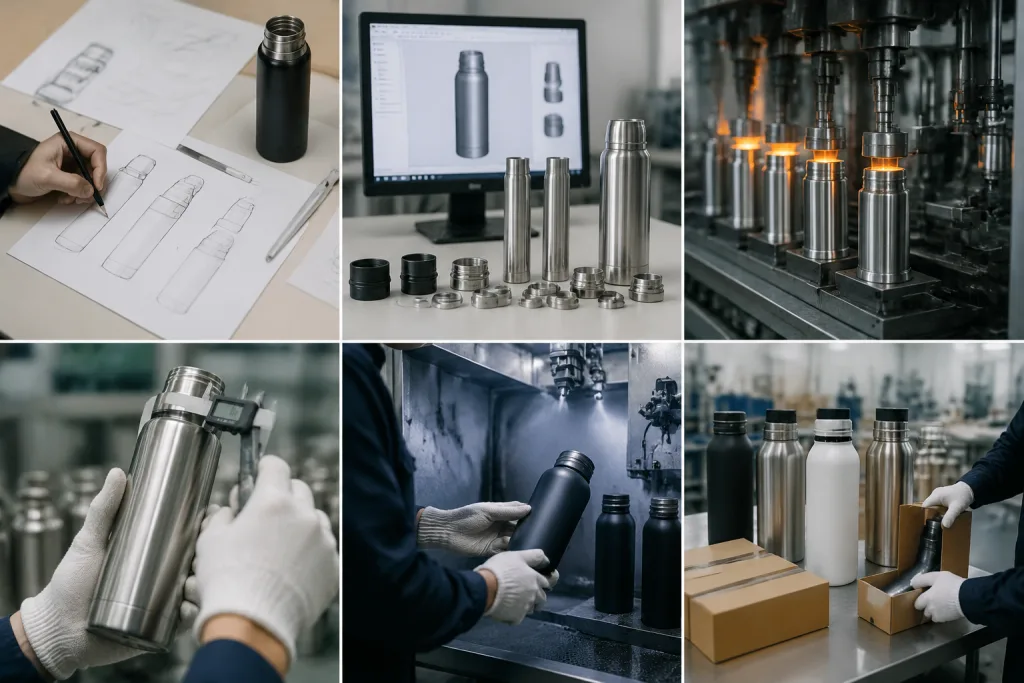
MOQ, Pricing, And Lead Time Reality
A serious supplier thermos quotation should name capacity, material, finish, logo method, packaging, MOQ, sample cost, production lead time, payment term, and trade term. If the reply says only “best price USD 3.20,” you do not have a buying price yet. You have a placeholder. We see this weekly: the buyer sends a PO, then QC pulls the golden sample and finds the carton spec or logo position was never priced.
For standard stainless vacuum flasks from our Hangzhou, Zhejiang factory, we run a normal MOQ of 1,000 pcs per model and 500 pcs per color when the order uses an existing coating. For special Pantone powder coating, plan around 1,000 pcs per color, because the spray line needs a separate powder batch and color board approval under the D65 light box. For modified lids or exclusive shapes, 3,000-5,000 pcs is more realistic because tooling, lid fixtures, and assembly validation are involved. The math does not work at 800 pcs if we need a new injection mold.
Typical FOB China price bands for bulk thermos orders are:
- 350-500 ml standard flask: about USD 3.20-5.80 depending on lid seal, spray finish, and whether the logo is laser engraved or silk printed.
- 750 ml outdoor flask: about USD 4.80-8.50 depending on handle type, coating thickness, and master carton strength; we check cartons with a 12 kg stacking test.
- 1 L heavy-duty flask: about USD 6.20-11.00 depending on wall thickness, cap structure, and whether the stopper passes our 6-hour hot water leak check.
Sampling takes 7-12 days for logo samples after artwork confirmation. Fast is possible only when the blank body is in stock. Mass production is commonly 25-35 days after deposit and approved pre-production sample; the line needs that signed sample beside the packing table. Peak season in China, mainly before Q4 promotional shipments and before Chinese New Year, can add 10-20 days if lids, silicone rings, or color powder are not reserved.
Payment terms for new buyers are normally 30% deposit and 70% balance before shipment or against inspection pass. For repeat thermos distributors with stable volume, terms can improve, but factories rarely offer credit on the first order. We have seen this go sideways when a buyer asks for 60-day credit on a first PO and still wants a 25-day ship date. If cash flow is tight, negotiate split shipments or rolling forecasts instead of pushing the thermos vendor into payment promises it may not honor.
Quality Checks Buyers Should Require
Quality control for a vacuum flask private label program is not a quick scratch check under the packing-room lamp. Ask for tests that match real use: coffee in a car cup holder, a bottle rolling inside a gym bag, a cap opened 30 times a week. A promotional order may accept a 0.5 mm coating speck if the logo is clean. An outdoor retailer will reject one leaking cap because the buyer has already seen returns from wet backpacks. We have seen this go sideways.
Set a written inspection standard before the line starts. We usually run AQL 2.5 for major defects and AQL 4.0 for minor defects, with critical defects set to zero acceptance. Critical defects include leaking, sharp edges, broken welds, unsafe contamination, wrong material, or failed food-contact documentation. Major defects include poor vacuum performance, wrong logo position, severe coating scratches, loose lids, and incorrect carton labels. Put the defect photos on a golden sample board next to the QC table; a 2 mm logo shift looks small until the buyer flags it across 8,000 pcs.
Your checklist should include:
- Capacity check with water fill tolerance, usually ±5% unless otherwise agreed; QC should use a digital scale, not guess from the rim line.
- Leak test after inversion and 30-second shaking for screw lids or push-button lids.
- Heat-retention test on random samples for 6, 12, or 24 hours, with starting water temperature recorded on the inspection sheet.
- Coating adhesion test using cross-hatch tape method where applicable; 3M tape is the normal tool on our line.
- Logo rub test, especially for silk screen and UV printed artwork, because matte powder coat can eat weak ink fast.
- Carton drop test for export packing, often 10 drops from 76 cm for typical master cartons; check the corner crush after the last drop.
For Europe, request LFGB food-contact test reports when needed and REACH screening for surface coatings. For North America, ask for FDA-relevant food-contact material declarations and Prop 65 review when the product enters California. BSCI or Sedex factory audit documentation may matter if you sell into large retailers. Do not ask for “all certificates” and call it done; the math does not work if the report covers 304 stainless but your order uses a painted PP lid gasket from a new supplier. QC pulled that mismatch once during a pre-shipment file check, 3 days before booking.
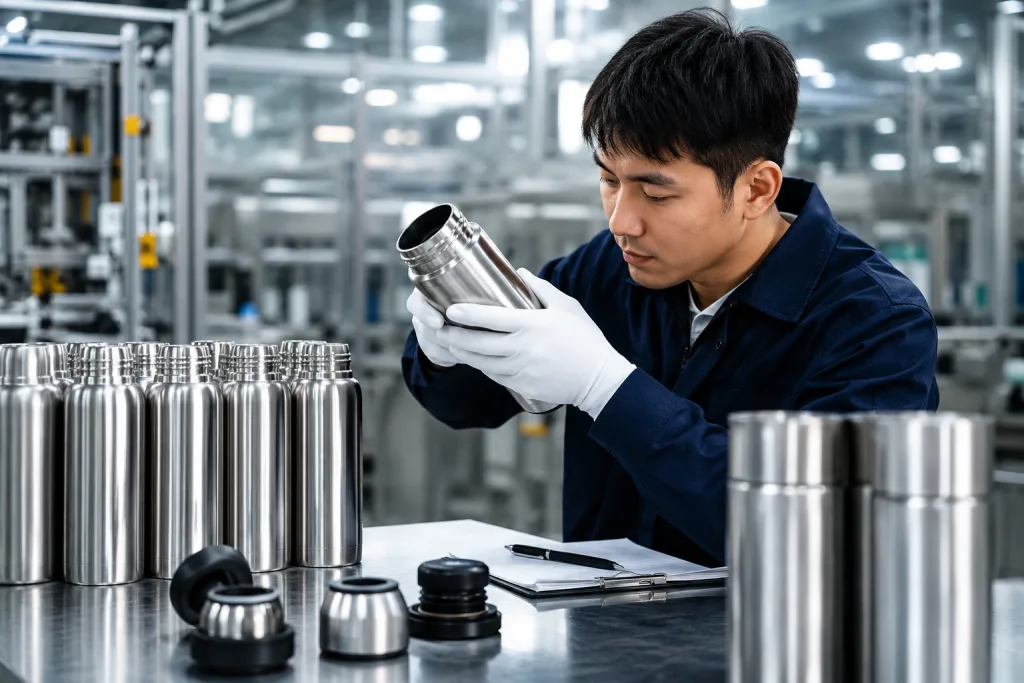
One practical note: inspection timing matters. Inspect finished packed goods, not loose semi-finished bottles. A thermos manufacturer can have clean bottles and still fail your shipment with weak inner boxes, wrong UPC labels, or carton compression issues. We ship by master carton, so test the actual packed set: inner box, polybag, silica gel, barcode, carton mark, and 9 kg stacking load. This is the wrong question to ask: “Are the bottles finished?” Ask whether the packed goods can survive the warehouse.
Checklist Before You Place PO
Before you issue a purchase order for a customized thermos or thermos bulk program, lock the details on paper. We see 7 out of 10 delays start with late changes: “Can we change the lid color?” “Can the logo move 8 mm lower?” “Can the gift box change from 300 gsm to 350 gsm paper?” Fine during sampling. Painful after the line has bought powder, cartons, silicone rings, and laser jigs.
Use this PO checklist before our merchandiser opens the ERP order:
- Product: model number, capacity, height and diameter in mm, net weight in g, stainless grade, lid material, silicone seal type, and any spare gasket requirement.
- Performance: heat-retention target after 6 or 12 hours, leak test method such as upside-down 30 minutes, coating adhesion standard, and drop-test height.
- Branding: logo file in AI or PDF, logo size in mm, position drawing with distance from rim or base, Pantone color, and branding method such as laser, silk print, or heat transfer.
- Packaging: retail box dieline, master carton size, carton gross weight limit, barcode, FNSKU if needed, country-of-origin text, and warning labels.
- Commercials: unit price, MOQ, payment term, FOB port, lead time, inspection responsibility, and spare-parts agreement in pieces or percentage.
- Documents: commercial invoice, packing list, test reports, certificate of origin if required, and audit files if the retailer asks for them before shipment booking.
If you are comparing thermos suppliers, compare the same checklist line by line. We had one buyer flag a USD 0.18 gap last month; the lower quote used bulk packing, while ours included individual white boxes and 5-ply export cartons. One thermos manufacturers price may include laser engraving at 45 mm wide; another may add the laser charge after artwork approval. The cheapest number is often the least complete quote. The math doesn't work once cartons, inserts, and logo setup are added back.
For outdoor retailers, request one golden sample and keep it sealed; QC pulled the sample only when the first 200 pcs came off the line. For promotional brands, approve a signed color and logo sample before mass production, not a phone photo with “looks close” in the email. For distributors thermos programs, build a repeat order file with SKU code, carton photos, approved artwork, and QC results. We’ve seen this go sideways when a PO typo changed “matte black” to “black,” and 3,000 pcs came out with the wrong coating gloss. A clean record saves about 2 days on every reorder and cuts silent specification drift.
How To Work With A China Factory
A solid China factory relationship is not built on 900-word email chains. It is built on clear drawings, signed samples, AQL 2.5 inspection standards, and dates the line can actually hit. If you work directly with a thermos team in Zhejiang, expect engineering feedback in 24 to 48 hours, not magic. Give us a 2D drawing with diameter, height, lid thread, and logo size in mm. We run decisions fast when the target is locked. We do not guess.
Send the inquiry in one clean message: model preference, capacity, annual volume, first order quantity, destination market, logo method, packaging style, required certificates, and target FOB price if you have one. Better: attach a simple spec sheet and mark the must-haves in red. Last month a buyer wrote “500ml matte black” on the PO, then the carton artwork said “510ml gloss black”; QC pulled the sample and the line stopped for half a day. If you are a thermos distributor, tell us whether you reorder every 45 days or twice a year. If it is a promotional thermos campaign, give the delivery date and say if sea freight works, because 12 days by air vs 28 days by sea changes the whole quote.
Ask direct questions before paying a deposit:
- Is the model already in mass production, or only a showroom sample?
- What parts are shared with other models, and what parts are unique?
- Can you provide pre-shipment inspection photos and videos by SKU?
- What happens if more than 2.5% of units fail leak testing?
- How many spare lids or silicone gaskets can be supplied with the order?
A trading company is fine for mixed small orders, especially 6 to 10 SKUs under one shipment. The wrong question is “factory or trader?” The better question is who can solve the problem when the powder coating chips at the cup bottom, the logo laser burns too light, or the lid gasket measures 0.3mm short. If you are building a long-term manufacturer thermos or thermos manufacturer private label line, direct technical talk saves time. You get cleaner answers on tooling, welding, vacuum failure rate, coating limits, and carton drop-test fixes. We have seen cheap suppliers go sideways when the buyer flagged leakage at final inspection and nobody knew which valve setting was used on the vacuum machine.
Build Your Stainless Thermos Program With Factory Clarity
Send your target capacity, MOQ, logo method, and market. We will return a practical FOB quote, timeline, and QC checklist.
Frequently asked questions
What MOQ should I expect for a vacuum flask private label order?
For a standard stainless vacuum flask using existing molds, expect 1,000 pcs MOQ per model from a China factory. Some stock-color orders can start at 500 pcs, but that usually limits color and packaging choices. If you need Pantone powder coating, plan for 1,000 pcs per color. If you want a custom lid, changed body shape, embossed logo, or exclusive mold, 3,000-5,000 pcs is more realistic. Small trial orders are possible, but the unit price may rise by 15-35% because setup, logo sampling, carton printing, and inspection costs are spread across fewer units.
How much does a custom thermos usually cost FOB China?
A 500 ml custom thermos normally falls around USD 3.20-5.80 FOB China when using 304 stainless steel, standard lid, one logo, and retail box. A 750 ml outdoor flask is often USD 4.80-8.50, while a 1 L heavy-duty model may be USD 6.20-11.00. The big price drivers are lid complexity, stainless thickness, 316 inner liner, powder coating, logo method, and packaging strength. Always ask whether the quote includes logo, color matching, inner box, export carton, and pre-shipment inspection support. Otherwise two thermos suppliers can look USD 0.40 apart while quoting different products.
Which logo method is best for a promotional thermos?
For a promotional thermos, laser engraving is the safest option when the logo is one color and the bottle has powder coating or bare stainless steel. It is durable, clean, and usually adds about USD 0.10-0.35 per unit depending on logo size. Silk screen printing is cheaper for simple large runs, but it needs rub testing because poor ink adhesion creates complaints. UV printing works for colorful artwork, but it is more sensitive to surface curves and abrasion. For outdoor or retail products, we usually recommend laser engraving first, then UV only when color branding is essential.
What certifications do outdoor retailers normally request?
European buyers often request LFGB food-contact reports and REACH screening for coatings, inks, and accessible parts. North American buyers usually ask for FDA-relevant food-contact material declarations, plus Prop 65 review if products enter California. Larger retailers may also request BSCI, Sedex, or ISO 9001 factory documentation. For kids or family outdoor products, ASTM or CPSIA questions may appear depending on product design and marketing claims. Ask your thermos manufacturer for current reports before sampling, not after production. Reports should match the material and coating system used for your actual order, not only a similar old model.
How long does production take after I approve samples?
For a standard vacuum flask private label order, sampling normally takes 7-12 days after artwork and color details are confirmed. Mass production usually takes 25-35 days after deposit and approved pre-production sample. Add 5-10 days if packaging artwork is complex or the retailer requires carton testing. During peak China export periods, especially September-November and before Chinese New Year, lead time can stretch by 10-20 days. If your campaign date is fixed, lock artwork, coating color, carton layout, and inspection plan before placing the PO. Late packaging changes are the most common cause of missed shipment dates.