Key Takeaways
- Start with 500 ml, 750 ml, or 1,000 ml before requesting a thermos bulk quote
- For powder coating, expect 3-5% process loss unless color tolerance is controlled early
- AQL 2.5/4.0 inspection catches most leak, cosmetic, and carton issues before shipment
- FOB Ningbo or Shanghai normally gives better control than mixed courier-style wholesale offers
Buying for an outdoor retail line or a promo campaign looks simple until the quotes hit your desk. One vacuum flask online wholesale quote says 304 stainless steel, the next says 316 inner wall, and the real cost sits in the lid mold, spray-paint pass rate, 5-layer carton spec, and AQL 2.5 inspection. Sorting only by unit price is the wrong question to ask. We have seen a 5,000-unit order pass PDF review, then QC pulled the sample for a 0.8 mm lid gap, side dents after the 76 cm drop test, and a Pantone color drifting 2 shades from the approved chip.
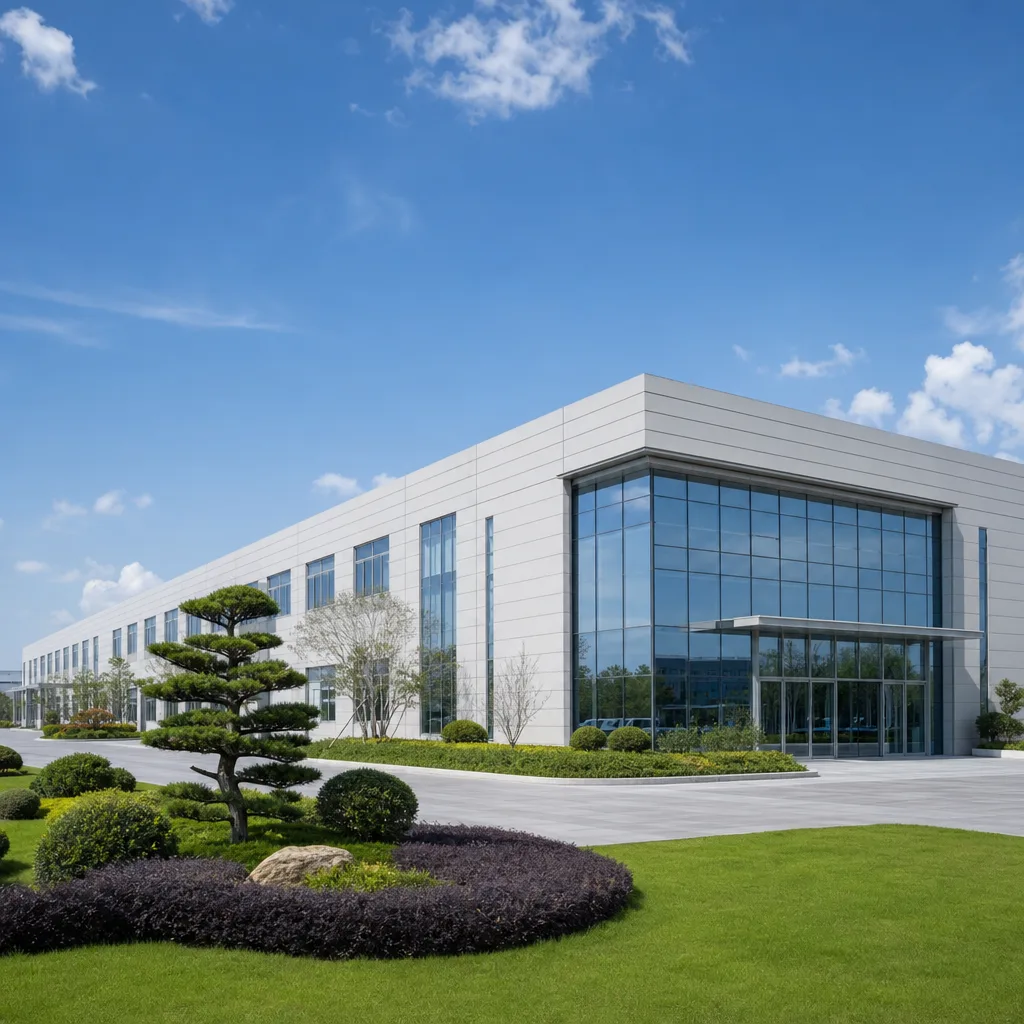
Start with four decisions: capacity and body shape with exact mm drawings, insulation target by hour and test temperature, logo and surface finish with a real sample plate, then compliance and packing. BottleForge Industrial manufactures in Hangzhou, Zhejiang, and we ship custom thermos projects from China for outdoor retailers, promo gift buyers, and distributors placing mixed-carton thermos orders. Our typical MOQ is 1,000 units per SKU, with 30-40 days mass production after approved sample; if the buyer changes the PO logo file after sample sign-off, the line stops and the math gets ugly.
Choose The Flask Job First
A vacuum flask is not one product. A 500 ml office flask, a 750 ml trail bottle, and a 1,000 ml family camping bottle pull cost from different places: body weight, lid tooling, coating loss, and carton drop-test packing. Pick the job first. On our line, a 750 ml outdoor bottle with 0.5 mm outer wall and powder coating runs slower than a plain 500 ml gift flask because QC checks dents under the LED light box before packing. Outdoor retailers ask about grip, dent resistance, one-hand pouring, and heat retention after 6 hours outside. Promotional brands ask about logo area, 12-day delivery vs 18-day delivery, carton safety, and whether the unit price jumps after laser engraving or silk printing.
For vacuum flask online wholesale, the practical capacity range is 350 ml to 1,200 ml. Below 350 ml, buyers start calling it a coffee tumbler. Above 1,200 ml, the math gets ugly: freight weight rises, shelf space gets tight, and a 24 pcs master carton becomes hard to handle in a warehouse. For outdoor retail, 750 ml is the safe volume because it balances carry weight and perceived value. We ship a lot of 500 ml and 600 ml for corporate gifting because they fit mailer boxes better; last month a buyer flagged a 2 mm squeeze issue in a molded gift tray, and the 750 ml body failed that set.
The second decision is mouth diameter. A narrow mouth around 38-45 mm pours cleanly and holds heat a little better. A wide mouth around 50-58 mm takes ice cubes, cleans faster with a bottle brush, and sells well for sports channels, but the lid stack costs more and heat escapes faster when users open it 20 times a day. This is where we've seen programs go sideways. A distributor thermos program with mixed buyers usually needs two bodies under one design language, not one SKU forced into office desks, hiking packs, and school bags.
Do not ask for the cheapest factory thermos first. Wrong question. Ask what the flask has to survive: dishwasher claims, courier drops, winter use, or a 3-color logo on curved powder coating. A good thermos manufacturer in China can then quote wall thickness, lid structure, coating, and packing honestly; otherwise the factory strips 20 g from the body, swaps the silicone ring, or cuts the inner carton, and QC pulled the sample only after the buyer has already approved the PO.
Set Insulation And Steel Specs
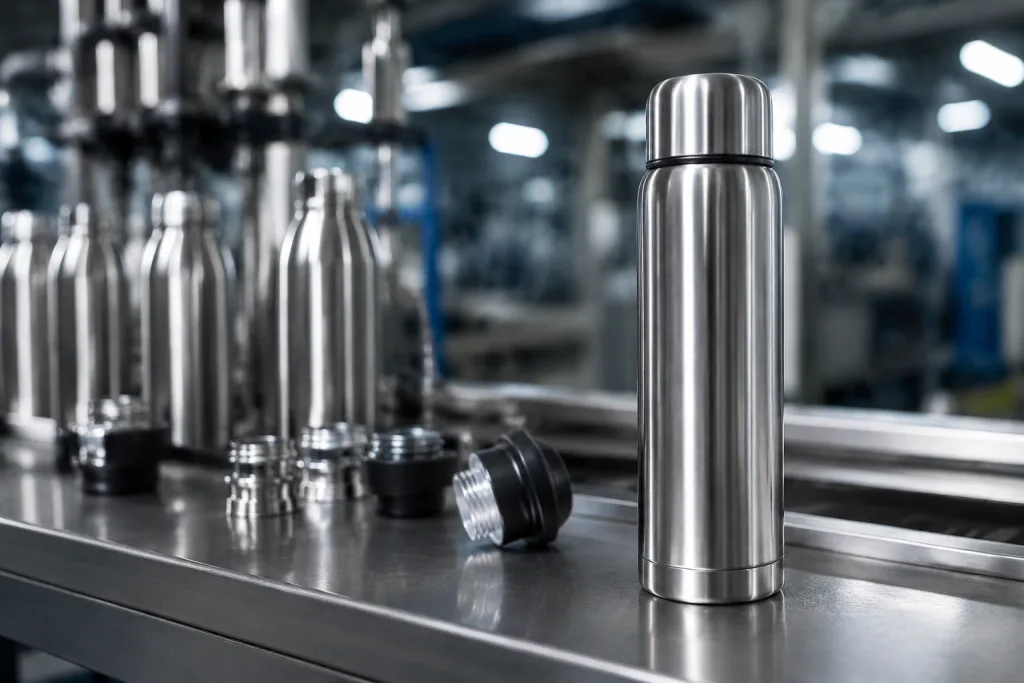
The standard build for a stainless vacuum flask is double-wall 18/8 stainless steel, with SUS304 on both inner and outer walls in most orders. Some buyers ask for SUS316 on the inner wall, usually for acidic drinks or a higher-end line. That request is fine, but it does not fix a weak vacuum. For most custom thermos orders, SUS304 inside and outside is the clean baseline.
Wall thickness moves the needle more than many buyers think. A common spec is 0.5 mm outer wall and about 0.4 mm inner wall. For rough outdoor retail, we can go to 0.6 mm on the outer wall, but the bottle gets heavier and the press shop sees more scrap on deep draw parts. We had one buyer flag the carton drop test after choosing a thinner shell; the bottle survived, the pack-out did not.
Insulation claims should be written as test conditions, not slogans. A practical check is 95°C water, lid closed for 6 hours at about 20°C room temperature, then measure the remaining temperature. On a stable line, many 500-750 ml bottles still land around 68-75°C after 6 hours. Cold retention with 4°C water can be checked over 12 or 24 hours. Ask the supplier for the test method and probe point, not just the headline number.
There are trade-offs. Copper lining can lift insulation, but it adds cost and makes recycling talk messier. A larger lid cup helps outdoor use, yet if the gasket is soft or the thread is off by 0.2 mm, leakage shows up fast. A silicone base cuts noise and protects shelves, but it adds one more part and one more color match. A proper quotation should break each option out line by line.
For a 750 ml stainless flask, a realistic FOB China range is often USD 4.20-7.80 before special packaging, depending on coating, lid, steel grade, and order quantity.
Pick Branding That Survives Use
Logo method is where 6 out of 10 customizable thermos programs get into trouble. A logo can look premium on a pre-production sample, then fail after 500 abrasion cycles, 20 dishwasher runs, or two weeks bouncing inside a commuter backpack. Match the branding method to the surface and to how the buyer says the flask will be used. QC pulled one black 500 ml sample last month because the white logo lifted at the lid-side edge after a 3M 610 tape pull.
Laser engraving is the safer choice for outdoor retailers. It removes the top coating and exposes 304 stainless steel, so there is no ink layer to peel. We run it on powder coating and brushed stainless bodies, and the line checks logo depth with a 10x loupe before packing. The trade-off is simple: laser cannot print full-color artwork. Fine lines below about 0.25 mm often break on curved bodies, especially near the shoulder where the laser head angle starts to fight the radius.
Silkscreen printing costs less for one- or two-color logos and fits promotional thermos campaigns. The setup cost is modest, often USD 30-60 per color, but ink adhesion lives or dies on coating prep and oven curing time. For a large thermos promotional order, ask for a 3M tape test and an alcohol rub test on the approved sample; we use 95% alcohol and 50 back-and-forth rubs with a cotton pad. Heat transfer or water transfer can make full-wrap artwork, but the math gets ugly if the buyer accepts only AQL 2.5 and the wrap crosses a seam.
Powder coating is now the default for premium custom thermos projects because it feels durable and gives strong retail color. Standard colors are cheaper and faster; we usually keep black, white, navy, and army green powder in stock for repeat orders. Pantone matching usually needs 7-10 days for lab dips and may require a tolerance of Delta E 1.5-2.0 if your brand team is strict. Matte coatings show oil marks after handling on the packing table. Gloss coatings can show hairline scratches under store lighting, and buyers flag that fast during pre-shipment inspection.
If your customized thermos program is for a distributor, keep decoration repeatable. One body, two coating colors, one logo position, and one carton format is still the cleanest reorder setup, even if the sales deck asks for more SKUs. We’ve seen this go sideways: a PO typo changed “front logo 35 mm” to “front logo 53 mm,” and 2,000 cartons had to wait while the buyer re-approved artwork. Your thermos vendor should push back when a design adds production risk without adding sell-through value.
Compare MOQ, Price, And Lead Time
MOQ is not a punishment. It is the break-even point where 304 stainless coil buying, powder-coating line setup, silk-screen plate making, AQL 2.5 inspection, and export paperwork stop fighting the unit cost. At BottleForge Industrial in Zhejiang, we usually run standard custom stainless flask orders from 1,000 units per color and logo, with samples taking 7-12 days and mass production taking 30-40 days after approval. The line can ship about 450,000 units per month across bottles, tumblers, and vacuum flasks; last month QC pulled 32 pcs from a 1,200-unit matte black batch because the logo sat 2 mm too low.
For vacuum flask online wholesale, be careful with listings promising 100 customized units at a bottom price. We see this go sideways. Those offers are usually stock goods with one laser logo position or a small pad-print area, not a controlled manufacturer thermos project with locked steel batch and spare lid plan. Stock works for urgent events, but you give up control over 304 stainless source, silicone ring replacement, 48 x 36 x 28 cm carton sizing, and whether the same item can be repeated 6 months later.
Price needs to be compared at the same Incoterm and packing level. FOB Ningbo or FOB Shanghai stays clean for most North America and Europe buyers because the quote keeps export declaration, local port handling, and factory-side trucking on our side. EXW looks cheaper on paper, then the buyer’s forwarder asks for inland trucking, customs documents, and CFS charges; we had one PO where “EXW Hangzhou” was typed as “FOB Ningbo,” and the freight math did not work. DDP suits small promotional orders, but it hides freight assumptions and makes landed cost harder to audit.
- 1,000 units: workable for one SKU, but the unit price still carries coating setup, logo jig adjustment, and carton artwork cost.
- 3,000 units: better coating efficiency because the spray booth changeover is spread across more pcs, and carton purchasing gets easier.
- 5,000-10,000 units: stronger position for custom lid color, printed insert cards, retail packaging, and a backup 2% spare lid plan.
- 20,000 units: worth discussing dedicated tooling or a private mold feature, especially if the buyer wants a different handle or cup shape.
If you are a thermos distributor building a seasonal line, plan backward from the shelf date. Add 10 days for sample approval, 35 days for production, 7 days for inspection and booking, and 28-40 days ocean transit to European or North American ports such as Hamburg, Rotterdam, Los Angeles, or New York. Rush production can happen, but rushing color approval and leak testing is the wrong place to save 3 days; our pressure tester at 0.6 MPa has caught loose stopper fits that looked fine on the assembly table.
Check Compliance Before Artwork
Do not wait until artwork is finished to check compliance. We run into this on stainless thermos orders when the logo file is approved, then the buyer flags missing warning text on the gift box dieline. Compliance affects material declarations, labeling, warning copy, packaging, and sometimes the coating formula. For Europe, buyers commonly ask for LFGB food-contact testing, EU 1935/2004 documentation, REACH SVHC screening, and sometimes BSCI or SMETA social audit records. For the United States, FDA food-contact expectations and California Proposition 65 risk review are common. Kids-related bottles may trigger additional ASTM or CPSIA discussions, especially when the cap has a straw or small flip part under 31.7 mm.
A stainless vacuum flask has 5 contact points we check first: inner stainless steel, lid plastic, silicone gasket, straw if included, and any coating near the mouth area. Tritan, PP, and silicone are common lid materials, but each one should trace back to a material lot, not just a nice line in a sales sheet. We’ve seen this go sideways. QC pulled the sample, the lid was marked PP on the PO, but the supplier’s test report named ABS. If your supplier thermos quotation only says “food grade” without test reports or material names, ask again.
Quality inspection should be written into the purchase order, not discussed after packing. A normal approach is AQL 2.5 for major defects and AQL 4.0 for minor defects, with critical defects at zero tolerance. Critical defects include leakage, sharp edges, wrong material, severe odor, and contamination. Major defects include poor vacuum performance, wrong logo position, serious dents, and non-functioning lids. Minor defects include small coating specks within an agreed limit, for example 1 speck under 0.5 mm outside the front logo area. On the line, we use a vacuum tester, torque gauge, and 100°C hot-water leak check before the inspector opens cartons.
For outdoor retailers, carton drop testing matters because heavy stainless flasks can knock each other during freight. A 750 ml flask packed in a thin color box may look fine at the factory but arrive with crushed corners after 32 days on the water to Hamburg. Use 5-ply export cartons for heavier thermos bulk shipments, and define gross weight limits around 12-15 kg per master carton when workers must handle them repeatedly. The math doesn’t work if the buyer asks for 24 pcs per carton on a 1.2 kg flask; we usually push back and pack 12 pcs with corner protectors.
China factories can produce excellent quality, but the buyer’s standard has to be written down before we start mass production. Zhejiang export manufacturers are used to AQL, REACH, LFGB, and carton requirements, yet they still need your exact market and channel before the first 50 pcs come off the polishing line. Small detail, big cost. We once had a PO typo saying “matte black” while the approved sample was “powder black,” and that 1 word changed the coating check.
Build A Wholesale Quote Sheet
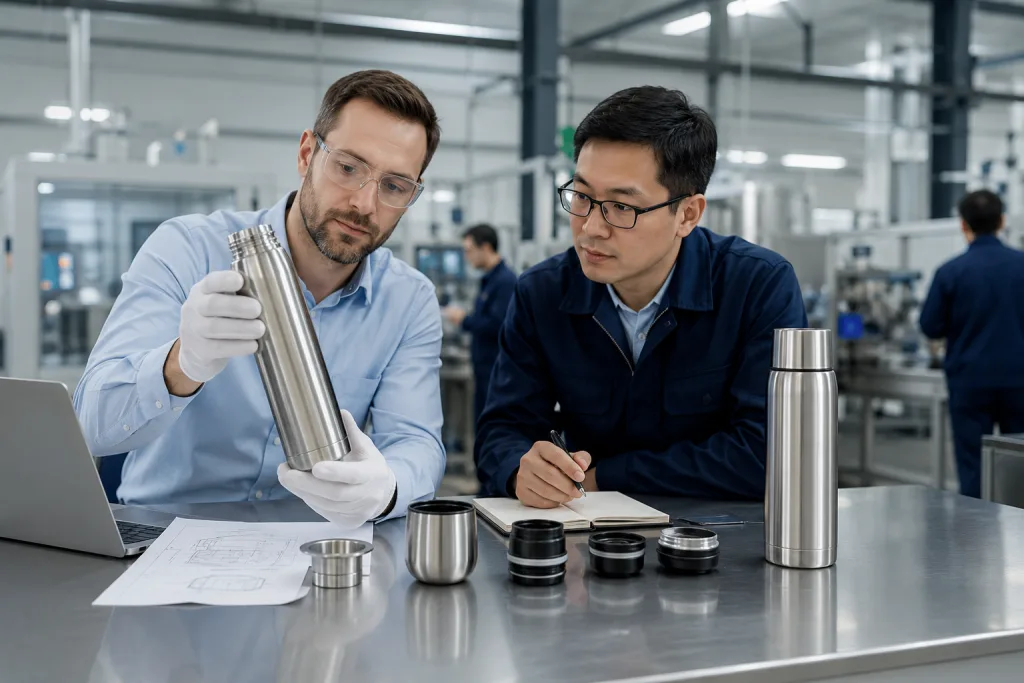
A clean RFQ beats hard bargaining. Ask three thermos manufacturers for “best price for custom bottle” and you will get three different assumptions: one quotes 304 stainless, one cuts wall thickness by 0.05 mm, and one changes the lid gasket to save USD 0.08. We see this every month. For vacuum flask online wholesale, send one quote sheet and make each thermos factory fill the same blanks, line by line, so the numbers sit on the same table.
Start with the body: capacity, fixed dimensions, mouth diameter, steel grade, wall thickness, and target weight in grams. Then list lid type, gasket material, handle or strap, and spare parts. For branding, state coating color with Pantone code, logo method, logo size in mm, print colors, and artwork format. For packing, state color box, kraft box, mailer box, insert card, barcode, FNSKU if selling through fulfillment channels, and master carton strength. Small detail, big trouble: last March a PO said “matte black,” but the buyer’s artwork file named it BK-02, so QC pulled the sample before the powder room ran 3,000 wrong shells.
Ask for pricing at two quantities, not one. Use 1,000 and 3,000 units for a promotional campaign, or 3,000 and 10,000 units for a retail launch. That split shows whether the supplier thermos price is driven by setup, coating loss, carton MOQ, or stainless sheet cost. The math doesn’t work if you compare a 1,000-unit trial price against another factory’s 10,000-unit ladder price. Ask for sample cost too, and whether it is refundable after the mass order. A normal custom sample may cost USD 80-150 depending on logo and coating; on our line, laser logo samples usually move faster than full powder coating samples because the curing oven queue adds 2-3 days.
Payment terms are usually 30% deposit and 70% balance before shipment for new buyers. Repeat buyers can push for better terms after 2-3 clean orders, but making payment the first fight is the wrong question to ask. Lock down inspection rights, approved sample retention, spare gasket percentage, and who pays for rework if goods fail agreed standards. We keep one signed sample in the QC room with a label showing order number, color code, and approved weight; when AQL 2.5 inspection finds lid leakage or carton crush, nobody has to argue from memory.
If you are buying for a distributors thermos network, write the reorder logic into the quote sheet. Will the color be kept for 12 months? Can the lid be reordered separately at 500 pcs? What happens if the coating supplier changes powder batch? We’ve seen this go sideways: first container passed, second order looked half a shade warmer under the D65 light box, and the buyer flagged it at receiving. A dependable thermos suppliers relationship is built around repeatability, not just the first container.
Avoid The Common Buying Traps
The first trap is over-customizing before the order has any sales proof. We see new buyers ask for a private mold body, new lid, silicone boot, gift box, and six PMS colors on a first 1,000-unit PO. The math doesn't work. We run this safer: start with an existing thermos body from the line, adjust the powder coating and laser logo, then open tooling after 2-3 repeat orders prove demand. A private mold can cost USD 3,000-15,000 or more depending on lid complexity and body shape; one lid tool we quoted last month needed a 0.15 mm thread tolerance, so the tooling shop would not price it like a simple cap.
The second trap is treating the lid like decoration. Buyers ask about vacuum performance first, but 7 out of 10 complaint emails we see are lid problems: leakage, loose threads, odor, cracked push buttons, or gaskets dropping into the sink during cleaning. Ask for lid cycle testing, upside-down leak testing for at least 30 minutes, and spare gasket availability. QC pulled one sample after 600 open-close cycles because the push button started sticking. If your product is sold as a rugged outdoor flask, a weak lid will hurt reviews faster than a 2°C insulation difference.
The third trap is approving a nice sample, then leaving the mass order loose. Keep a signed golden sample at the factory and one in your office. Write down color, logo position tolerance, acceptable coating defects, carton marks, barcode placement, and packing photos before production starts. Photos help, but they do not replace written tolerances for thermos customized projects. We once had a PO typo that listed the logo 35 mm from the base instead of 53 mm; the buyer flagged it only because the golden sample had a caliper note taped to the box.
The fourth trap is treating China wholesale like an online retail checkout. A real thermos manufacturer needs your forecast, sales market, compliance requirements, and receiving method before the line books material. If you need mixed cartons, Amazon FBA labels, distributor carton labels, or pallet height limits, say it before production. Changing packing after goods are finished can add 3-7 days and extra labor cost. We've seen this go sideways when 42 cartons were already sealed, then the buyer asked for FBA labels and a 1.6 m pallet limit.
Work with a suppliers thermos partner that pushes back on unclear requirements. If a quotation looks too clean and nobody asks questions, they may plan to choose the details for you. Easy now. Painful later. That convenience ends fast when your buyer rejects the shipment over a carton mark, missing spare gasket, or label position that was never written on the PO.
Send Your Vacuum Flask Spec For Factory Pricing
Share capacity, logo, coating, packing, and target quantity. We will return a practical FOB China quote with MOQ, sample timing, and options.
Frequently asked questions
What MOQ should I expect for custom stainless vacuum flasks?
For a real custom thermos order, expect 1,000 units per SKU, color, and logo as a practical MOQ. Below that, most factories use stock bodies and limited decoration because coating setup, logo fixtures, inspection, and export handling do not scale well. At 3,000 units, pricing usually improves because powder coating and printing losses are spread over more bottles. At 5,000-10,000 units, you can discuss custom lid colors, insert cards, retail boxes, and stronger carton optimization. If you need only 100-300 units for an event, ask for stock vacuum flasks with laser logo instead of pretending it is a full factory thermos project.
How long does a vacuum flask online wholesale order take from China?
For a customized thermos project from Zhejiang, China, a realistic schedule is 7-12 days for sample production, 2-5 days for buyer review, and 30-40 days for mass production after sample approval and deposit. Add inspection, booking, and export paperwork, usually another 5-7 days. Ocean freight to Europe or North America often takes 28-40 days port-to-port, depending on destination and season. Air freight is possible for urgent promotional thermos launches, but stainless flasks are heavy, so freight can exceed the product cost. Plan 75-95 days from RFQ to warehouse if you want a controlled wholesale order.
Which logo method is best for outdoor retail thermos products?
Laser engraving is usually best for outdoor retail because it is durable, clean, and does not peel under normal use. It works especially well on powder-coated stainless steel and brushed stainless bodies. Silkscreen printing is better when you need a low-cost one-color promotional logo, but you should require adhesion testing before mass production. Heat transfer works for full-color artwork, yet it adds cost and more cosmetic risk on curved flasks. For a premium distributor thermos line, many buyers use powder coating plus laser logo, then reserve full-color printing for gift campaigns where shelf-life and abrasion demands are lower.
What certifications do I need for stainless thermos wholesale?
For Europe, ask your thermos supplier for LFGB or relevant food-contact testing, EU 1935/2004 support, REACH SVHC screening, and material declarations for stainless steel, plastic, and silicone. For the United States, FDA food-contact expectations and Proposition 65 review are common. If the bottle is for children, discuss CPSIA and applicable ASTM requirements before design approval. Factory audits such as BSCI or SMETA may be required by retailers, especially for larger programs. Do not accept only the phrase “food grade.” Ask for test reports with product photos, material names, report dates, and a lab recognized by your market.
How do I compare quotes from different thermos manufacturers?
Make every thermos manufacturer quote the same specification: capacity, steel grade, wall thickness, lid material, coating type, logo method, packaging, Incoterm, sample cost, MOQ, production lead time, and inspection standard. A USD 0.30 cheaper quote may disappear if one supplier uses a thinner carton, lower-grade lid plastic, or excludes retail packaging. Compare FOB Ningbo or FOB Shanghai pricing first, then calculate freight separately. Ask for prices at 1,000 and 3,000 units, or 3,000 and 10,000 units, so you can see the scale effect. The best thermos vendor is not always cheapest; it is the one with fewer hidden assumptions.