Key Takeaways
- Factory direct MOQ is usually 1,000 units/color for powder-coated stainless vacuum flasks
- 304 stainless steel at 0.45-0.55 mm wall thickness covers most outdoor and promotional programs
- Laser engraving is slower than screen print but survives 500+ wash cycles better
- AQL 2.5/4.0 inspection and 100% leak testing are more important than a 3% lower FOB price
If you buy for an outdoor retailer or a promotional brand, finding a stainless bottle is not the hard part. Picking a vacuum flask factory direct program is where orders get messy: 6-hour heat retention misses the spec, artwork sits 4 days waiting for approval, cartons arrive with mixed corner crush, or QC pulls a lid sample that looks clean in photos but leaks after a 30-minute backpack shake test.
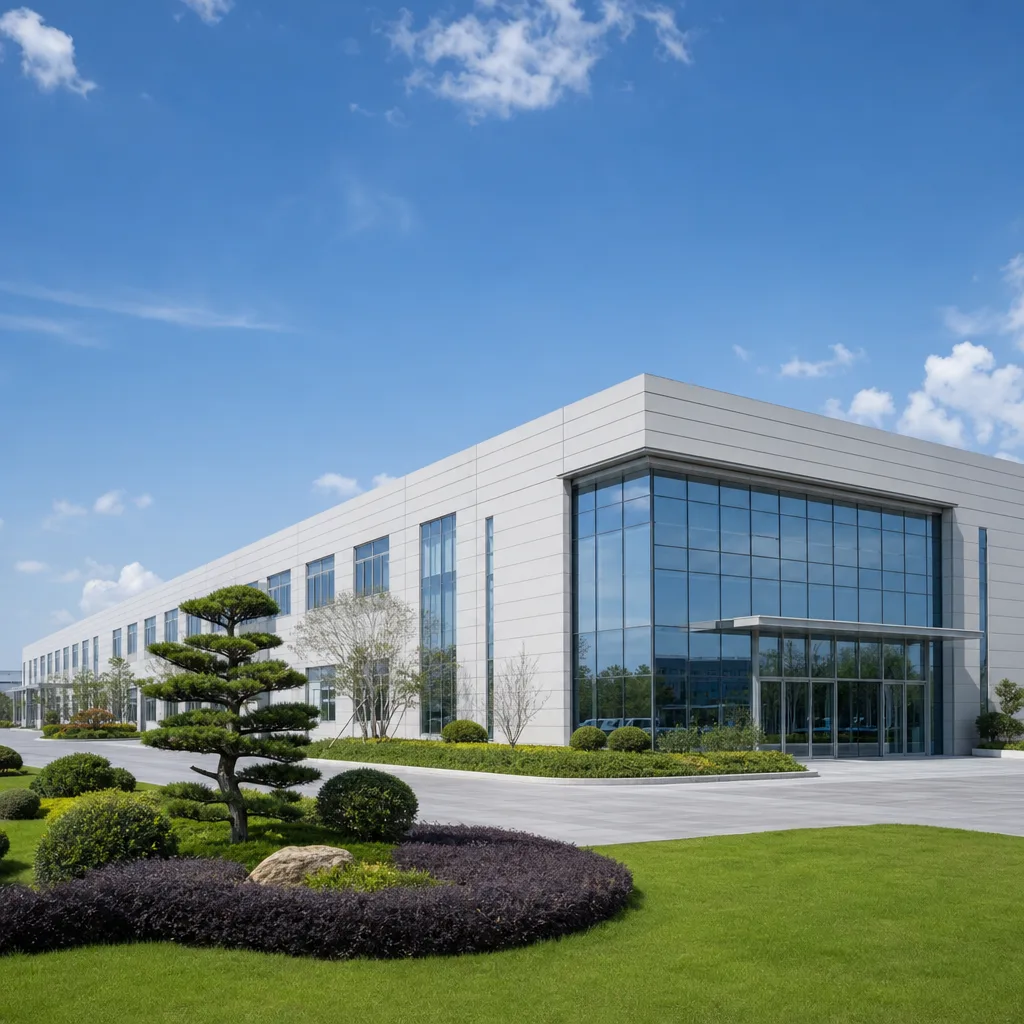
Factory direct sourcing from Zhejiang, China gives you control over steel grade, coating, logo method, packaging, and FOB price. It also adds decisions, and the wrong question is “who is cheapest?” We run stainless thermos lines at BottleForge Industrial in Hangzhou, Zhejiang at about 280,000 units/month, with standard custom thermos MOQ from 1,000 units per color and 30-40 day mass production after sample approval; on the line, our inspector checks coating thickness with a dry film gauge before logo printing starts.
Factory direct versus trading channel
With a vacuum flask factory direct order, you are buying the production call sheet, not a catalog SKU. We set the cup body drawing, lid fit, powder-coating code, logo position, carton layout, and inspection plan before the line opens. That matters for a customized thermos in a retail set, a promotional thermos tied to a beverage launch, or a distributor thermos line that repeats every season. If you need 120 units next week, the math doesn't work; our laser room will still need artwork confirmation and a pre-production sample before bulk.
Here is the practical head-to-head we use when a buyer asks whether to run factory direct or buy stock:
| Route | Typical MOQ | Best fit | Main risk |
|---|---|---|---|
| Thermos factory direct | 1,000-3,000 units/color | Outdoor retail with fixed Pantone coating, private label cartons, repeat distributor thermos programs with the same lid and UPC | You must lock specs early; changing the lid gasket after PP sample approval can burn 7-10 days |
| Thermos vendor with stock | 100-500 units | Events, urgent giveaways, small tests where existing colors and carton marks are acceptable | Limited color and logo room; the buyer often flags mixed 304 stainless claims after receiving photos |
| Mixed thermos suppliers | 500-1,000 units/model | Assorted promotional thermos orders split across 2-4 shapes or gift sets | Quality shifts by sub-factory; QC pulled the sample last month for weak coating at the bottom radius |
A real thermos manufacturer should answer wall thickness, vacuum failure rate, coating adhesion, AQL level, and carton drop testing questions without sending three days of soft replies. Ask for numbers. We usually quote inner wall and outer wall in mm, run a 100°C hot-water retention check, and record vacuum failures during aging. If you ask a thermos supplier for 18/8 stainless steel and they only send lifestyle photos, keep pushing.
For outdoor retailers, factory direct usually wins because the spec has to repeat: same lid torque, same color, same carton size, same UPC placement. QC checks the lid with a torque meter, not by hand feel. For promotional brands, it depends. If your customer needs 2,000 bulk thermos units with a logo, a thermos factory in China can price it cleanly and control the print. If they need 200 pieces for a conference on Friday, factory direct is the wrong tool; we've seen this go sideways when the PO even had the logo color typed as “Panton 286C.”
Spec table for real use cases
Most buyers start with capacity and Pantone color. Wrong question. Start with where the bottle will sit after delivery, then lock the construction. On our line, QC pulled two 500 ml office samples last month at 0.46 mm outer wall; they passed desk-drop use, but the same build felt top-heavy when we stretched it to 1,000 ml for a hiking brief. A 500 ml office flask and a 1,000 ml hiking flask are not the same shell with extra volume. The hiking unit needs a deeper silicone gasket seat, better bottom weight, and insulation test wording that matches the actual 6-hour water temperature chart.
| Use case | Capacity | Steel | Wall | Lid | FOB China target |
|---|---|---|---|---|---|
| Outdoor retail shelf | 750-1,000 ml | 304 inner/304 outer | 0.50-0.55 mm | Screw cap or cup lid | USD 4.20-6.80 |
| Corporate promotional thermos | 500-750 ml | 304 inner/201 or 304 outer | 0.45-0.50 mm | Push button or simple screw | USD 3.10-5.20 |
| Distributor thermos range | 350/500/750 ml family | 304 inner/304 outer | 0.45-0.55 mm | Shared lid tooling | USD 3.40-6.40 |
| Premium gift set | 500 ml plus cups | 316 or 304 inner | 0.50 mm | Tea filter or cup cap | USD 5.80-9.50 |
If your customer asks for a thermos customizable across 12 colors, do not approve 12 colors at 1,000 units each unless their sell-through data can carry it. We have seen this go sideways. A cleaner first order is 3 colors at 2,000 units each, with one lid mold and one 5-layer export carton structure. The math works better for spare lids, and the carton mark file has fewer chances for the usual PO typo, like “matte balck” turning into a reprint at inspection time.
For manufacturer thermos projects in Zhejiang, we usually recommend 304 stainless steel for both inner and outer walls when the bottle is sold through outdoor retail. For lower-budget thermos promotional work, 304 inner with 201 or 304 outer can pass if the powder coating survives cross-hatch tape testing and the buyer is not selling it as premium. Do not use 201 inner wall for hot drinks. Our QC team checks that with a handheld XRF gun before mass production, because fixing wrong inner steel after welding is not a fix at all.
Logo methods face off
Logo choice is where 7 out of 10 custom thermos margin problems start. The lowest print line on the quotation can turn expensive after rejects, Pantone rework, and buyer complaints from the first shelf check. We see it on the line: QC pulled a matte black 500 ml sample last month because the white ink shifted 1.5 mm at the curve. A promo brand usually wants bright artwork. An outdoor retailer usually wants a quiet mark that survives dents and dish soap. Same bottle, different job.
| Method | Best for | MOQ impact | Durability | Cost add-on |
|---|---|---|---|---|
| Laser engraving | Premium stainless or powder coat | No major MOQ change | Excellent | USD 0.15-0.45/unit |
| Silkscreen print | 1-2 color logos | Screen fee per color | Good with proper curing | USD 0.08-0.25/unit |
| Heat transfer | Full-color graphics | Usually 1,000+ units | Medium to good | USD 0.30-0.80/unit |
| 3D emboss or deboss | Retail private mold look | Tooling required | Excellent | USD 800-2,500 tooling |
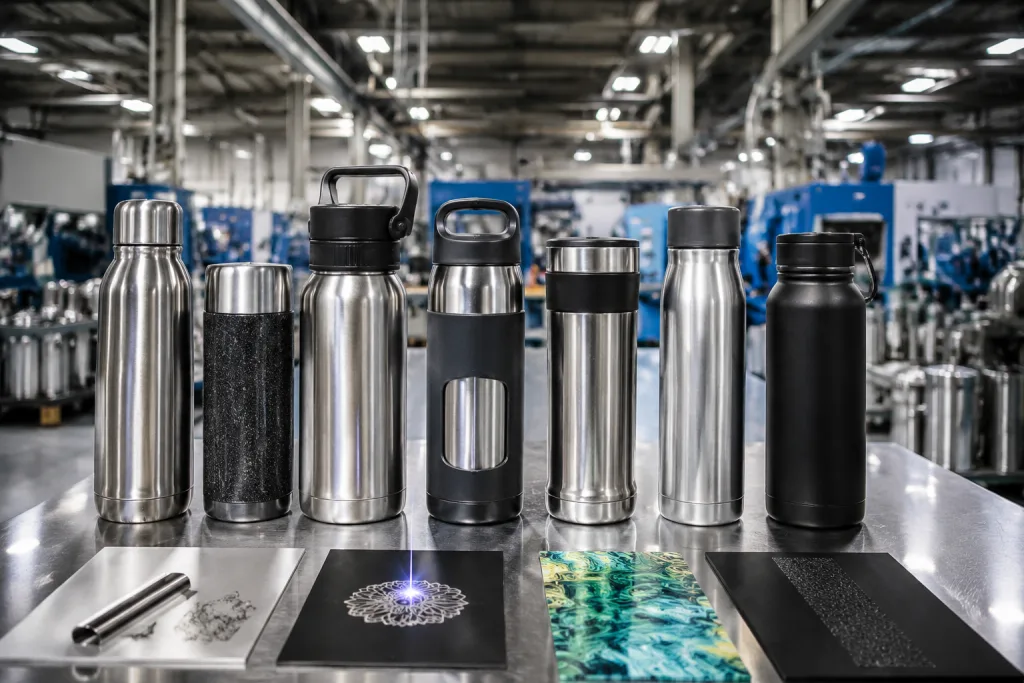
Laser is still the safest choice for a customized thermos sold through outdoor channels. It will not peel. It also looks right on matte black, army green, sand, and brushed steel, especially when we run a 20W fiber laser at steady speed instead of rushing the mark. Silkscreen works well for thermos bulk campaigns because it is quick and the math is clean at 3,000 units. The catch is artwork size: a 90 mm wide print across a curved 750 ml flask needs tighter jig control than a 35 mm front logo, and this is where we have seen orders go sideways.
For a thermos custom program, send vector artwork in AI, PDF, or EPS. Pantone references should be solid coated numbers, not screenshots pasted into a PO. Small detail, big headache. On first production, approve a pre-production sample, not only a digital mockup; last season one buyer flagged “PMS 186C” on email while the PO showed “PMS 185C,” and the sample room had to stop before mixing ink. A China factory can match color closely, but stainless curvature, coating texture, and 160°C curing temperature all change how ink looks under retail lighting.
Insulation claims need proof
Heat retention is cheap to print on a color box and painful to defend after shipment. Outdoor retail buyers often run their own bench test; one German buyer sent back photos of a probe reading 54°C at 6 hours and flagged the claim before paying the balance. Promo orders are no safer. If coffee feels lukewarm after lunch, the complaint lands on the importer first. We run insulation checks by batch, because hope is not a QC method.
A fair test for a 500-750 ml vacuum flask is simple: fill it with 95°C water, close the lid, leave it for 6 hours in a 20°C room, then record the internal temperature with a calibrated probe. We use a 1 mm tip thermometer and log the reading before the sample leaves the QC bench. A decent stainless vacuum flask should hold about 68-78°C after 6 hours, depending on capacity, neck diameter, lid design, and wall structure. Larger 1,000 ml flasks often perform better because they carry more liquid mass. Wide-mouth models lose heat faster. No surprise there.
For factory thermos production, BottleForge uses vacuum testing, 100% leak testing, and random heat retention checks before packing. On export orders, a practical QC plan is AQL 2.5 for major defects and AQL 4.0 for minor defects, with critical defects set at 0. Critical defects include leaking lids, sharp burrs, rust contamination, incorrect material, and failed vacuum. Last month QC pulled a sample with a tiny burr on the inner thread; the line stopped for 28 minutes while the polishing wheel was adjusted. Cosmetic scratches can be minor or major depending on retail grade.
Ask your thermos suppliers for the testing method, not just the result. A claim of “keeps hot 24 hours” often means the water is still above body temperature, and this is the wrong question to ask if your customer expects drinkable coffee. For most retail packaging, “hot up to 12 hours, cold up to 24 hours” is cleaner, as long as an internal test report supports it. We have seen overclaims go sideways in Europe and North America: 3 cartons opened, 12 bottles tested, then a return request before the second PO.
Compliance and packaging choices
A thermos manufacturer in China has to treat export compliance as part of the BOM, the same as the lid gasket or 304 stainless liner. For Europe, we ask for LFGB food-contact testing, REACH checks on coatings and inks, plus packaging material limits before the artwork file goes to CTP. For the United States, FDA food-contact expectations and ASTM-related mechanical safety checks depend on the channel; Target-style retail and Amazon do not read risk the same way. If the flask is for children, this is the wrong place to save USD 0.03 on ink. QC pulled one kids bottle sample last year because the silicone straw colorant was not covered in the test scope.
Packaging changes the unit math fast. A plain white box may add USD 0.12-0.25 per unit. A full-color retail box usually adds USD 0.35-0.80 depending on paper grade, print coverage, and order quantity; for 3,000 pcs, the plate charge still bites. EVA inserts and magnetic gift boxes look premium, but they can increase carton volume by 20-40%. Kraft tubes are worse than they look on the CBM sheet. If we ship air freight, the math doesn't work.
For a distributors thermos line, packaging should be standardized. Use one box structure across 500 ml and 750 ml if the height gap stays within 28 mm, or keep the same visual system so warehouse staff do not mix SKUs during pick-and-pack. For online sellers, confirm barcode placement, suffocation warnings for polybags, FNSKU labels if shipping into fulfillment centers, and master carton markings with the exact PO number. We once had a buyer flag a carton mark because “matte black” was typed as “mate black” on the PO. Carton drop testing to ISTA 1A-style handling costs less than replacing 86 dented bottles after a rough LTL transfer.
Do not ignore carton weight. A 24-piece carton of 1,000 ml stainless flasks can exceed 16-18 kg gross weight depending on packaging. Many North American warehouses prefer cartons under 15 kg for easier handling; one 3PL in Ontario rejected 19.2 kg cartons at receiving and charged a relabeling fee. A good thermos factory will flag this on the carton layout before production, not after the line has packed 600 cartons.
Costs, MOQ, and lead time
Factory direct pricing is not magic. You cut the trading-company margin, then you own the small choices the middleman used to bury. We quote a thermos line item by line item: bottle body, logo method, color, packaging, sample fee, tooling if needed, and FOB port. Last month a buyer sent us a PO with “laser logo” typed as “silk logo”; QC pulled the gold sample before packing because the cost difference was USD 0.18/unit and the finish was wrong. If a supplier hides everything inside one round number, the comparison is already dirty.
| Order type | MOQ | Sample time | Mass production | Typical payment |
|---|---|---|---|---|
| Stock color with logo | 500-1,000 units | 5-7 days | 20-30 days | 30% deposit, 70% before shipment |
| Custom color powder coat | 1,000 units/color | 7-10 days | 30-40 days | 30/70 by T/T |
| Private mold lid or body | 3,000-5,000 units | 25-35 days tooling | 45-60 days | Tooling plus deposit |
For thermos bulk orders, FOB Ningbo or FOB Shanghai are normal from Zhejiang. From our Hangzhou area line, Ningbo is usually the cleaner move: the truck run is about 3.5 hours, not 5.5 hours to Shanghai when the G60 is jammed. We ship both. Still, this is the wrong question to ask if one quote is DDP and the other is FOB. Ask for DDP as a separate number, with carton size, gross weight, and destination ZIP shown, then compare it straight.
Price pressure has a floor. If a 750 ml 304/304 powder-coated flask with a leakproof lid is quoted at USD 2.40 FOB, the math doesn't work unless something is cut: 0.4 mm steel becomes 0.32 mm, vacuum time gets shortened, powder thickness drops under 60 μm, AQL 2.5 inspection gets skipped, or the carton is made too weak. We have seen this go sideways. One buyer flagged dents after Amazon receiving; the inner carton was 3-ply instead of 5-ply, and saving USD 0.06/unit became a claims bill.
For a first order, keep it tight: one model, two colors, one logo position, and retail packaging checked before mass production. Three colors sounds better in a meeting, but 500 units split across three shades leaves the coating room cleaning guns too often and pushes lead time from 22 days to 29 days. We run smoother when the first PO proves the shape, lid fit, barcode, and shelf box. After sell-through data, add thermos customized colors, lid variants, or bundle sets.
When each option fits
The right sourcing route depends on how much control you need. If your outdoor retail customer is building a three-year private label stainless range, go factory direct. You need a thermos manufacturer that can hold the same Pantone powder coat, keep lid torque within spec, repeat the carton dieline, and file inspection records by PO. QC pulled a sample last month where the lid gasket sat 0.6 mm high; that is the kind of issue a trading stock order usually catches too late. If your promotional customer needs 2,000 fast gifts for a bank event, a stock thermos supplier is the cleaner route.
Use this rule of thumb: choose a vacuum flask factory direct project when annual demand is at least 5,000-10,000 units per model, when you need custom packaging, or when the product will sit on a retail shelf under your brand. Choose a thermos vendor with local stock when delivery is under 14 days, artwork is a one-color logo, and speed matters more than saving USD 0.18 per unit. The math doesn't work if tooling review, PPS approval, and carton drop test all need to fit inside 10 days. We run better when the buyer gives us a delivery window before we open the BOM.
For distributor thermos buyers, the stronger setup is usually a modular family: 350 ml for kids and commuter bags, 500 ml for daily office use, 750 ml for hiking channels, and 1,000 ml for jobsite or camping buyers. Keep related silhouettes and shared finishing so the line can change size without changing every jig and spray rack. It sells cleaner. Your sales team presents a full range, while production keeps fewer lids, fewer color changeovers, and fewer carton sizes. For promotional brands, keep a short list of proven models, then offer thermos customizable options around color, logo, lid, and box.
BottleForge Industrial works from Hangzhou, China, close to Zhejiang stainless and coating suppliers. That helps when a buyer flags a cap color mismatch or a PO typo like “matte back” instead of “matte black,” but location does not replace disciplined specs. Send your target retail price, market, compliance needs, annual forecast, and preferred delivery window with the inquiry. A serious thermos manufacturers quotation should show trade-offs: 304 stainless thickness, coating choice, MOQ, packing method, and lead time. Not just a lower number.
Send your thermos specs for a factory quote
Share capacity, logo, packaging, quantity, and target market. We will return practical options with MOQ, lead time, and FOB China pricing.
Frequently asked questions
What MOQ should I expect for a factory direct custom stainless thermos?
For most vacuum flask factory direct programs, expect 1,000 units per color for powder coating and logo printing. If you use stock colors with laser engraving, some factories can start at 500 units, but pricing is less efficient. Private mold lids or unique body shapes usually need 3,000-5,000 units to justify tooling. At BottleForge in Zhejiang, China, standard custom thermos MOQ is 1,000 units/color, with samples in 7-10 days and mass production in about 30-40 days after sample approval.
Is 304 stainless steel enough for outdoor retail thermos programs?
Yes, 304 stainless steel is the normal choice for outdoor retail and promotional thermos projects. A 304 inner wall is the important minimum for food contact and corrosion resistance. For better positioning, use 304 inner and 304 outer at 0.45-0.55 mm wall thickness. 316 inner steel can be used for premium or high-salt environments, but it raises FOB cost by roughly USD 0.30-0.90 per unit depending on capacity. Avoid 201 stainless for the inner wall on hot drink products.
How do I compare quotes from different thermos suppliers fairly?
Put every quote into the same format: capacity, steel grade, wall thickness, lid type, coating, logo method, packaging, MOQ, sample time, production lead time, inspection level, and trade term. FOB Ningbo at USD 4.80 is not comparable with DDP Los Angeles at USD 6.20. Also check whether the quote includes retail box, barcode label, spare gasket, and AQL inspection. A lower supplier thermos price often removes coating thickness, carton strength, or testing time.
Which logo method is best for promotional thermos orders?
For 1-2 color promotional thermos orders, silkscreen is usually the best cost option at about USD 0.08-0.25 per unit, plus screen setup. For premium gifts or outdoor retail, laser engraving is safer because it does not peel and costs about USD 0.15-0.45 per unit. Heat transfer works for full-color artwork but needs careful adhesion testing, especially on textured powder coating. Always approve a physical pre-production sample before mass production, not only a mockup.
What quality checks should I require before shipment?
Require 100% leak testing, vacuum performance checks, visual inspection, carton drop review, and an AQL inspection before balance payment. A common export standard is AQL 2.5 for major defects and AQL 4.0 for minor defects, with critical defects at 0. For stainless vacuum flasks, critical defects include leaking lids, failed vacuum, rust, sharp burrs, wrong material, and unsafe food-contact parts. For retail orders, also check barcode scanning, carton marks, color consistency, and packaging crush resistance.