Key Takeaways
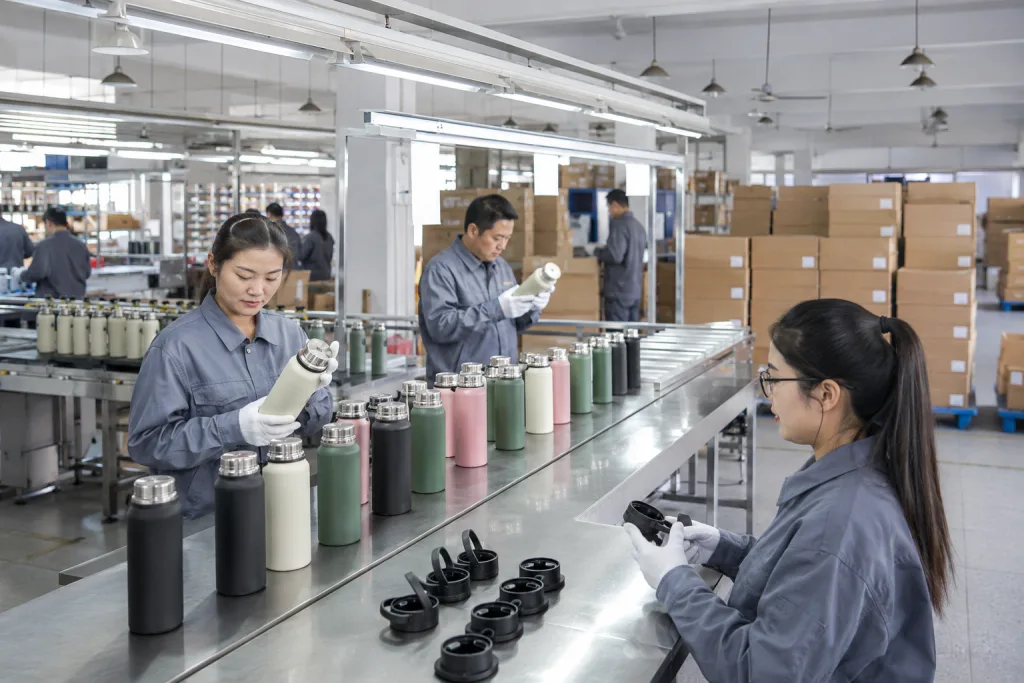
- For most vacuum bottle in bulk projects, plan 1,000 pcs MOQ per color and 25–35 days mass production
- 304 stainless steel is standard for inner walls; 316 is useful for premium outdoor or coastal positioning
- AQL 2.5/4.0 inspection catches cosmetic, leakage, packaging, and function defects before shipment
- Logo method, lid design, coating, and carton spec affect cost more than small capacity changes
If you are buying a vacuum bottle in bulk, finding a factory is the easy part. China has 3,000+ shops willing to quote it. The risky part is writing the bottle spec so the cartons that land match your retail shelf, promo date, and complaint-rate target. We have seen this go sideways: a 500 ml stainless thermos looked fine in photos, then QC pulled the sample and found 201 steel on the inner wall instead of 304 stainless. Same shape. Different result. Steel grade, vacuum retention, powder coating, lid torque, drop-test carton strength, and barcode position all need to be locked before the PI is signed.
BottleForge Industrial works from Hangzhou, Zhejiang, within a 2–3 hour truck run of key stainless drinkware suppliers in Yongkang, Wuyi, and nearby coating lines. Our typical stainless thermos MOQ starts at 1,000 pcs per color for standard molds, with sample lead time around 7 days and bulk production usually 25–35 days after artwork approval. On the line, we run leak checks with 95°C water and inspect logo placement with a 0.5 mm tolerance gauge; buyers often push back on MOQ, but for custom colors below 1,000 pcs, the coating-loss math does not work.
Start with the buying scenario
Start a vacuum bottle in bulk order with the sales channel, not the body shape. This is the wrong question to ask first. We’ve seen 27 orders go sideways because the buyer picked a nice 750 ml shape before checking how it would be packed, displayed, or shipped. Outdoor retailers care about dented shoulders after drop tests, paint rub on shelf trays, and return rate. Promotional brands care about event dates, logo position within ±1 mm, and whether the cup feels light when the end customer picks it up. Distributor thermos programs need reorder pricing that holds for 6–12 months, mixed cartons like 12 pcs black plus 12 pcs white, and color continuity between batches.
Before asking any thermos manufacturer for a quote, write the use case in plain numbers. Capacity: 500 ml, 750 ml, or 1,000 ml. Target FOB China price: for example USD 3.20–5.80 for common 500–750 ml stainless vacuum bottles depending on lid, coating, and packaging. Sales channel: retail, outdoor kit, corporate gift, or marketplace fulfillment. Required certifications: LFGB, REACH, FDA food contact, or California Prop 65 depending on market. We run the first costing sheet from these points, then check the caliper reading on body thickness, lid weight in grams, carton size, and MOQ by color before giving a serious number.
A factory thermos quote without this context is usually a guess. Two bottles can both be called a custom thermos, but one may have a 0.4 mm inner wall, powder coating, silicone carry strap, and individual kraft box, while another uses thinner body material, spray paint, and bulk polybag packing. The price gap is real. So is the complaint gap. Last month QC pulled the sample from a 2,000 pcs trial order because the buyer’s PO said “matte navy,” but the approved Pantone note in the email was “dark blue 296C”; that small mismatch cost 5 days before production could restart.
Procurement question: What should I send the supplier thermos team first?
- Target capacity and lid style, including screw lid, straw lid, or push-button lid
- Annual volume estimate and first order quantity, for example 12,000 pcs per year and 3,000 pcs first run
- Logo file in AI, PDF, or EPS format, with print size in mm
- Destination port or warehouse country, because carton strength and label rules change
- Required testing standard and inspection level, such as LFGB with AQL 2.5
What stainless steel actually means
Most thermos suppliers put “304 stainless steel” in the quotation, then leave the real detail out. Ask where the 304 is used. On the line we run most 500 ml vacuum bottles with 304 stainless steel on the inner wall, 201 or 304 on the outer shell, and food-grade PP or Tritan in the lid. For outdoor retail, about 7 out of 10 buyers ask for 304 inner and 304 outer after their buyer flagged dent risk on a 201 shell sample. For acidic drinks, salt-air sales channels, or a higher shelf price, 316 inner stainless steel is an option, but the math does not always work: it adds cost and can push MOQ from 1,000 pcs to 3,000 pcs.
Wall thickness matters. It gets oversold. A typical stainless vacuum bottle uses 0.38–0.50 mm sheet, depending on capacity and how the body is drawn on the hydraulic forming machine. Thicker steel does not save a bottle if the weld line is rough, the polishing wheel burns the neck, or the vacuum station does not pull down cleanly. QC pulled one 0.50 mm sample last month because heat retention failed, while the 0.42 mm body from the same batch passed. The vacuum layer and copper plating, when specified, affect heat retention more than an extra 0.05 mm of steel.
For a bulk thermos program, ask for a heat retention test with the method written down. No guessing. For a 500 ml bottle, we usually test with initial water temperature above 95°C, then record at 6 hours and 12 hours in a room around 20°C, using a calibrated probe thermometer. Retail-grade bottles often hold above 60°C after 6 hours; in our factory records, 18 of 24 standard narrow-mouth samples hit that mark last quarter. Premium designs can test higher, but wide-mouth bottles and straw lids lose heat faster than narrow screw-cap designs. We have seen this go sideways when a PO says “keeps hot 24H” and the approved lid is actually a straw lid.
Checklist before approving material:
- Inner wall grade: 304 for standard food contact, 316 stainless steel when the buyer specifies salt-air or acidic-drink use
- Outer wall grade: 201 for price-sensitive programs, 304 for stronger retail positioning, or a specified alternative written on the PO
- Plastic parts: PP body parts, Tritan clear pieces, silicone gasket with no odor after the hot-water test
- Coating: powder coating for grip, spray paint for lower-cost color work, or stainless finish checked under the light box for scratches
- Food contact reports: FDA, LFGB, or relevant EU documentation matched to the material batch, not just an old factory PDF
Good thermos manufacturers in China will answer these questions without acting insulted. Vague answers are the warning sign. If the sales sheet says 304 but the material card beside the press machine says 201 outer, ask again before deposit.
Logo options and their tradeoffs
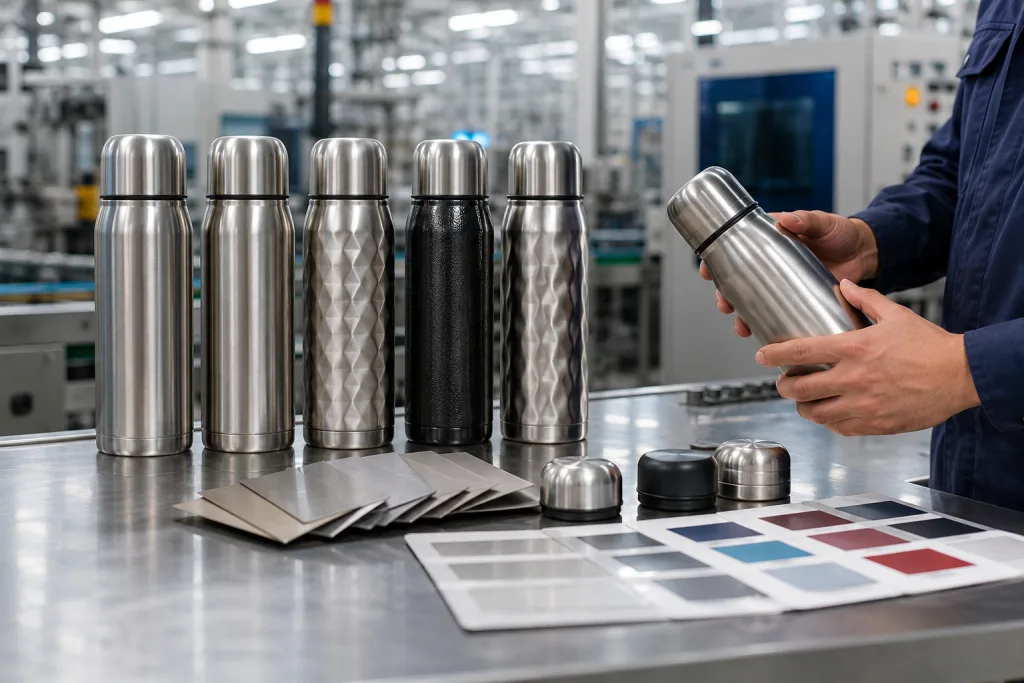
A customizable thermos is not a blank bottle with a logo slapped on at the end. Decoration changes the unit cost, sample lead time, scratch resistance, and MOQ. We run laser engraving at about 800–1,200 pcs per shift on 500 ml bodies, while a 2-color screen print needs film, fixture setup, and drying rack space. Outdoor retailers often push us for a cleaner, tougher finish, so laser engraving or powder coating makes sense. Promo orders are different. If the buyer needs a 70 mm wide red logo on 5,000 bottles for a trade show, screen printing or heat transfer may keep the math under control.
Laser engraving works well on stainless finish and powder-coated surfaces. It lasts because the laser marks the surface instead of sitting ink on top; QC pulled the sample last month after 30 tape pulls and the logo still held. The tradeoff is color. Most laser logos come out metallic, grey, or tone-on-tone. Screen printing costs less for one or two colors and works for 1,000–5,000 pcs orders, but curved bottle bodies need a proper jig, not a quick hand setup. We check ink adhesion with 3M tape and a 1 mm cross-hatch blade. Heat transfer handles full-color artwork, but it adds plate cost and needs peeling tests after dishwasher or abrasion exposure if the branding is sold as long-life.
For a customized thermos, send vector artwork. AI, PDF, or EPS is fine. Do not send a 300 px PNG and expect a sharp edge on stainless steel. Standard logo placement is 40–80 mm wide on a 500 ml bottle; our print tech checks the body with calipers before confirming anything larger. Straight walls give more room. Tapered bodies limit wraparound prints, and we have seen this go sideways when the buyer approved a flat mockup without checking the actual bottle curve.
Buyer question: Which decoration should I choose?
- Retail outdoor brand: laser engraving for a clean metal mark, or powder-coated screen print when the brand color must show
- Corporate giveaway: 1-color screen print for price control, or laser logo when the buyer wants no ink risk
- Full-color campaign: heat transfer or UV print after tape, rub, and dishwasher testing
- Premium gift set: laser logo plus custom box, with the logo size matched to the box insert artwork
At BottleForge in Zhejiang, we recommend a pre-production sample after logo approval, even for repeat buyers. The extra 3–5 days are cheaper than arguing about 10,000 wrong logos after shipment. One buyer once sent a PO with “matte black” in the item line and “gloss black” in the logo note; the sample caught it before the line started.
MOQ, pricing, and quotation traps
MOQ is where 7 out of 10 vacuum bottle in bulk projects start to lose shape. We run 500 pcs for a plain stock bottle if the buyer accepts current color and carton, but custom powder coating, logo printing, and retail box setup usually put the real MOQ at 1,000 pcs per color. For a fully custom mold, expect 5,000–10,000 pcs initial volume and tooling costs from USD 1,500 to over USD 8,000, depending on body shape, lid parts, and handle structure. Last month QC pulled a 500 ml sample from the coating line and found a 0.4 mm color edge mismatch near the base; at 300 pcs, the rework math simply does not work.
FOB pricing for a 500 ml stainless vacuum bottle often sits around USD 3.00–6.50. A 750 ml or 1,000 ml outdoor bottle may range from USD 4.50–9.00. Treat these as guardrails, not promises. Final price changes with steel grade, vacuum hold target, cap structure, coating, logo method, packaging, and inspection level. If one thermos vendor is 25% lower than the rest, ask what was removed. We have seen this go sideways: 304 stainless became 201 on the inner wall, the body sheet dropped by 0.1 mm, or the color box changed from 350 gsm paper to a thin white box without warning.
A proper quotation should show Incoterm, validity period, MOQ, sample cost, production lead time, carton size, gross weight, payment terms, and HS code. If you sell through retail or marketplace channels, ask whether individual barcode labels, FNSKU labels, suffocation warnings, and carton marks are included. Small labels cause big delays. One buyer sent a PO with “FNSK” instead of FNSKU, and the line waited 2 days while our packing team checked the label file against the Amazon carton mark.
Quotation checklist:
- FOB Ningbo or FOB Shanghai, with port written clearly instead of “best price”
- MOQ by color and by logo version, for example 1,000 pcs black with laser logo and 1,000 pcs white with silk print
- Sample lead time and mass production lead time, such as 7 days for stock sample and 35 days after deposit for bulk
- Packaging type: white box, kraft box, color box, or gift box, including paper gsm and insert material
- Testing and third-party inspection cost responsibility, including AQL 2.5 if the buyer requires it
Thermos bulk buying rewards buyers who lock the boring details early. The wrong question is “What is your cheapest price?” Ask what is included, what is excluded, and what changes after sample approval. The expensive surprises usually sit in assumptions, not in the unit price line; we ship cleaner orders when the carton mark, barcode size, and logo position in mm are confirmed before deposit.
Quality checks before shipment
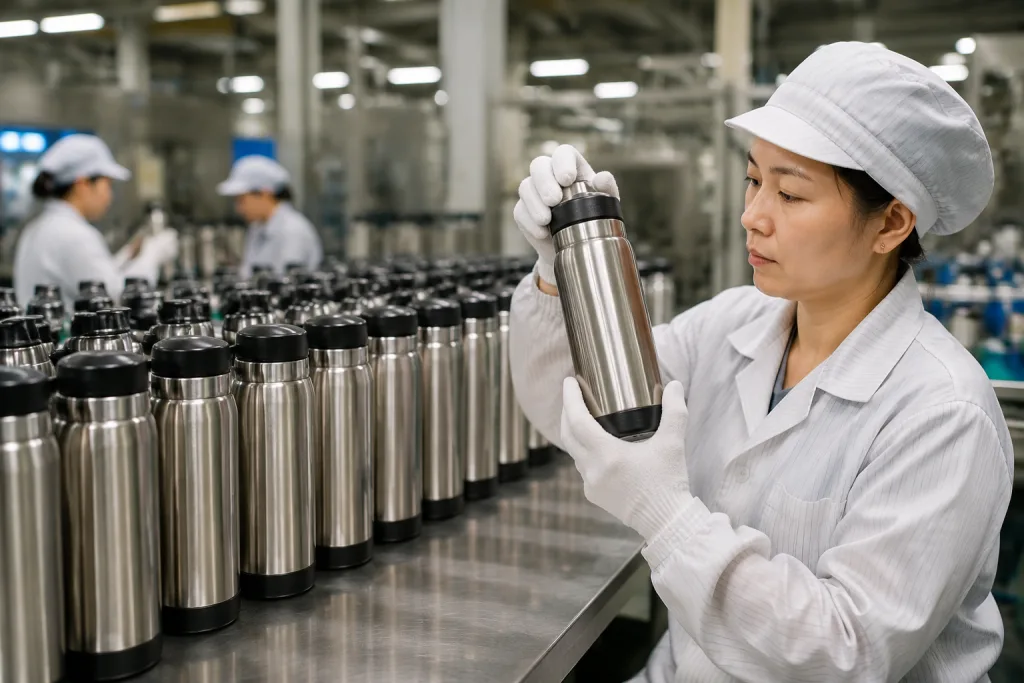
For a manufacturer thermos order, we build inspection into the production schedule, not the last 6 hours before loading. A normal final random inspection uses AQL 2.5 for major defects and AQL 4.0 for minor defects. Critical defects, such as sharp edges, contamination, or serious leakage, should be zero tolerance. For retail programs, we also run DUPRO checks when the order is above 5,000 pcs or uses a new lid structure; last month QC pulled 80 pcs from the line and found 7 lids with rough thread start before polishing was adjusted.
The key tests are not fancy. Fill the bottle with 95°C hot water, shake it 20 times, then leave it inverted for 3 minutes. Check lid opening and closing for clean thread engagement, not that gritty half-turn feel buyers complain about. Run cross-hatch tape testing on coated bottles where applicable, measure logo position against approved artwork with a 0.5 mm caliper, and check carton drop strength if the goods will move through courier networks or Amazon-style handling. We've seen this go sideways when a buyer approved the bottle but forgot the carton spec.
Vacuum failure is the defect that hurts a stainless thermos program most because consumers notice it on day one. The factory test is practical: fill bottles with hot water and check outside wall temperature with an infrared thermometer after 5 minutes and 30 minutes. A bottle with poor vacuum insulation gets warm on the outside much faster than a good unit. Do it before packing. Once the container leaves Ningbo or Shanghai, sorting 12,000 pcs in a warehouse costs more than catching 18 bad units beside the packing table.
Inspection points you should put on the PO:
- No leakage after 3 minutes inverted and shaken; QC should record the water temperature and sample quantity
- No rust, dents, oil marks, or sharp burrs; pay attention to the mouth rim and bottom welding line
- Logo position tolerance within agreed artwork range, measured in mm from the bottle base or seam line
- Capacity tolerance checked by water fill, using a scale instead of guessing from the inner wall
- Carton marks and barcode labels verified against packing list, including SKU, color code, and shipping mark spelling
Good thermos suppliers welcome clear inspection rules. The math doesn't work when “acceptable” gets decided after production starts. We prefer the PO to spell out the test method, sample size, and defect limits before stainless steel sheet is even cut, because one typo on a color code can hold 300 cartons at final inspection.
Packaging for retail and promotion
Packaging can add USD 0.10 or USD 1.20 per unit, so we price it early, not after the bottle cost is settled. For a promotional thermos handed out at an event, we usually run a 300 gsm white box or kraft box, and QC checks the glue seam with a 3M tape pull. For outdoor retail, the box needs stronger board, clean printing, barcode placement, recycling marks, plus a hangtag or instruction insert if the retailer asks for it. For e-commerce, we quote a 5-ply export carton, clear individual polybag rules, FNSKU label position within 2 mm, and packaging that survives courier handling.
A common packing format for 500 ml bottles is 24 pcs per master carton. Larger 750 ml or 1,000 ml bottles may be 12 or 18 pcs per carton depending on box size. Keep carton weight below 15–18 kg if cartons will be handled manually in distributor warehouses; our scale at final packing catches this before the carton is strapped. Heavy cartons save a little freight. The math often fails after crushed color boxes, repacking labor, and one warehouse manager sending photos of split corners.
For a thermos distributor serving multiple retailers, neutral packaging plus retailer-specific barcode labels works well when SKUs change every season. We ship this way for buyers who send 6 barcode versions on one PO, and the line applies them with a label jig so the scan area stays consistent. For a brand owner, custom color boxes improve shelf value but require artwork control. Print colors on packaging should be approved with a digital proof first and, for large runs, a physical print proof if the brand color is strict; we have seen this go sideways when “navy” on the PO became purple on coated paper.
Ask your thermos supplier these packaging questions:
- What is the box board thickness or paper weight, for example 300 gsm, 350 gsm, or corrugated E-flute?
- How many pieces per export carton, and what is the loaded carton weight in kg?
- Can the factory apply EAN, UPC, or FNSKU labels, and will QC scan 20 labels before sealing the cartons?
- Are instruction sheets included, in which language, and who checks the warning text against the approved artwork?
- Does the carton pass a basic drop test for courier handling, such as 6 sides and 1 corner from 80 cm?
Packaging is not decoration only. It is damage control, warehouse speed, and shelf presentation sitting in one cost line. On our packing table, QC pulled the sample last month because the carton mark showed 24 pcs while the PO said 12 pcs—small typo, big receiving problem.
How to run the first order
Run the first custom thermos order as a learning batch, not a warehouse bet. If your forecast is 20,000 pcs for the year, start with 2,000–3,000 pcs across two colors, not six colors at MOQ. We have seen this go sideways: QC pulled 48 samples from a mixed-color order and found one lid sticker version matched the old PO artwork. Too many SKUs mean slow movers, extra inspection points, and more chances for logo, barcode, or color-box mistakes.
A clean first-order timeline looks like this: 2–3 days for quotation confirmation, 5–7 days for logo sample or digital mockup, 7–10 days for pre-production sample if coating and logo are new, then 25–35 days for mass production after sample approval and deposit. Sea freight to Europe or North America adds roughly 25–45 days depending on port and season. Air freight works for urgent promotional orders, but the math often fails on stainless bottles; one buyer flagged a 500 ml bottle where air cost was USD 1.85 per pc against a USD 1.62 product price. Check early.
Payment terms for new buyers are commonly 30% deposit and 70% balance before shipment after inspection. Larger distributor thermos programs can negotiate better terms after 3–4 stable orders with clean payment records. For FOB China shipments, make sure your forwarder gets carton dimensions, gross weight, ready date, and commercial invoice details early; our shipping clerk once caught a PO typo showing 12 kg instead of 10.2 kg per carton. Zhejiang factories often ship through Ningbo or Shanghai, both practical ports for drinkware exports.
First order checklist:
- Approve physical sample before mass production, including lid fit, coating touch, and logo position in mm
- Lock logo size, Pantone color, and packaging artwork before the line opens materials
- Confirm AQL inspection standard on purchase order, then tell QC who signs off the report
- Book freight space before production finishes, especially before May and September sailings
- Keep 2% spare packaging if your warehouse relabels cartons or changes FBA marks
A steady supplier thermos relationship is built on clear specs, realistic lead times, and repeatable quality. Chasing the lowest quote sounds good on a spreadsheet, but we ship bulk programs that survive because the cap torque, carton drop test, and logo file stay controlled from order one.
Send your thermos spec for a practical quote
Share capacity, logo file, order quantity, destination, and packaging needs. We will reply with MOQ, FOB China pricing, and lead time.
Frequently asked questions
What is the normal MOQ for a vacuum bottle in bulk order?
For standard BottleForge stainless thermos molds, the normal MOQ is 1,000 pcs per color with a custom logo. Some stock-color orders can be discussed from 500 pcs, but that is usually not ideal for serious retail or distributor thermos programs because logo setup, carton labeling, and inspection costs spread poorly. For custom powder coating, custom lid color, or private packaging, plan around 1,000–3,000 pcs. A fully customized thermos mold normally needs 5,000–10,000 pcs to make tooling and trial production worthwhile.
How long does production take after I approve the sample?
For most thermos custom orders, sample preparation takes about 7 days for laser logo or screen print on an existing bottle. A pre-production sample with new coating or custom packaging can take 10–14 days. After written approval and deposit, bulk production is normally 25–35 days for 1,000–10,000 pcs. Add inspection time of 1–2 days and ocean freight of roughly 25–45 days to Europe or North America. Promotional thermos orders with fixed event dates should be planned at least 75–90 days ahead.
Can I mix colors or logo versions in one bulk thermos order?
Yes, but each color or logo version affects setup and control. A practical rule is 1,000 pcs per color for custom coating and 500–1,000 pcs per logo version depending on decoration method. If you split 2,000 pcs into four colors and three logos, the thermos factory has more changeovers, more label risks, and more inspection points. For a first order, two colors and one logo version is cleaner. Distributors thermos buyers can later add colors once sales data shows which SKU moves fastest.
Which certification do I need for stainless thermos bottles?
For the EU, buyers often request LFGB food contact testing, REACH compliance for restricted substances, and sometimes BSCI or Sedex factory audit information for social compliance. For the United States, FDA food contact requirements and California Prop 65 review may apply depending on sales state and retailer policy. For kids or family products, ASTM-related packaging or safety review may be requested by specific retailers. Tell your thermos supplier the destination market before quoting because testing scope can add several hundred to over 1,000 USD.
Is laser engraving better than printing for a custom thermos?
Laser engraving is usually the safest choice for outdoor bottles because it is durable, clean, and does not peel. It works especially well on powder-coated or stainless surfaces, but the logo color is limited. Screen printing is better when you need a specific Pantone color at a lower cost, especially for 1-color promotional thermos orders above 1,000 pcs. Heat transfer or UV printing can handle full-color designs, but you should approve a physical sample and run adhesion checks. For retail, durability should matter more than a slightly lower decoration cost.