Key Takeaways
- A 500 ml vacuum bottle customized project usually starts at 1,000-3,000 pcs MOQ depending on finish and logo method
- FOB China cost can range from USD 3.20-8.50 for common stainless thermos bulk orders
- Pre-production samples normally take 7-12 days; mass production takes 25-40 days after approval
- Powder coating, copper lining, custom lids, gift boxes, and AQL inspection add more cost than the bottle body
A vacuum bottle customized for an outdoor retailer or promo brand does not get expensive because 304 stainless is some magic material. It gets expensive when the brief is loose: 500 ml or 750 ml, powder coating or spray paint, flip lid or screw lid, laser logo or 1-color silk print, 24 pcs carton or inner box, AQL 2.5 or “factory standard.” That spec sheet is what moves a custom thermos from USD 3.20 to USD 8.50 FOB China. We see it on the line every week.
From our Hangzhou, Zhejiang export desk, the wrong question is “Can you send your best thermos price?” before the product is locked. Last month a buyer sent 5 suppliers the same vague RFQ and got prices from USD 3.05 to USD 6.40; QC pulled the sample later and found one quote used 201 stainless on the outer shell. No clean comparison. A proper manufacturer thermos quote should spell out MOQ, sample days, production lead time, packing method, AQL level, and the compliance documents included.
Start With The Real Unit Cost
For a vacuum bottle customized project, the bottle body is only one line on the cost sheet. We run a basic 500 ml double-wall bottle with 304 inner and 201 outer steel at about USD 3.20-4.10 FOB Ningbo or Shanghai at 3,000 pcs, depending on lid mold and finish. Change it to 304 inner and 304 outer, add copper coating, require 12-hour heat retention above 55°C, and the same bottle moves to USD 4.60-6.20 before the box is even discussed. Last month QC pulled 24 samples from a 3,000 pcs run; 2 failed the hot-water hold after the vacuum oven cycle, so that “small” spec change was not small on the line.
Outdoor retailers usually push us on dents, coating chips, and cap leakage, not only the cheapest quote. Promotional thermos buyers push harder on logo position and whether the gift box looks clean on a conference table. Those two orders should not carry the same price. A retail custom thermos may need a heavier body, 0.45-0.55 mm steel, stronger powder coating, silicone carry loop, printed retail box, barcode label, and drop-test packing. A short-event thermos promotional order may accept lighter specs if the brand risk is low. We have seen this go sideways when a buyer approved a 0.38 mm body for outdoor retail; the buyer flagged 37 dented pieces after a 1.2 m carton drop test.
The main cost drivers are practical:
- Steel grade: 304/304 costs more than 304/201, but it gives cleaner retailer positioning in Europe and North America, especially when the buyer asks for LFGB or food-contact paperwork.
- Vacuum performance: tighter leak and insulation testing adds process time; our line holds samples in the temperature test rack before packing, not after the cartons are sealed.
- Surface finish: powder coating costs more than single-color spray paint, but it survives key-scratch checks better when QC uses the 3M tape test and a basic cross-cut blade.
- Logo method: laser engraving is clean on stainless steel; multi-color silkscreen needs screen setup, Pantone matching, and at least one pre-production sample sign-off.
- Packaging: white box, color box, kraft box, insert card, master carton, and pallet rules change cost fast; a 5-layer K=K carton is not priced like a thin B-flute gift box.
When you compare a supplier thermos quote, ask whether the price includes inner carton, export carton, PP bag, silica gel, user manual, barcode, and drop-test carton strength. This is the wrong place to chase a USD 0.08 saving. If one supplier’s thermos price excludes retail packaging and another includes it, the cheaper quote is not cheaper. We once had a PO typo that said “white box” while the artwork file showed a 4-color box; the math changed by USD 0.32 per pc before freight.
MOQ Tiers That Actually Matter
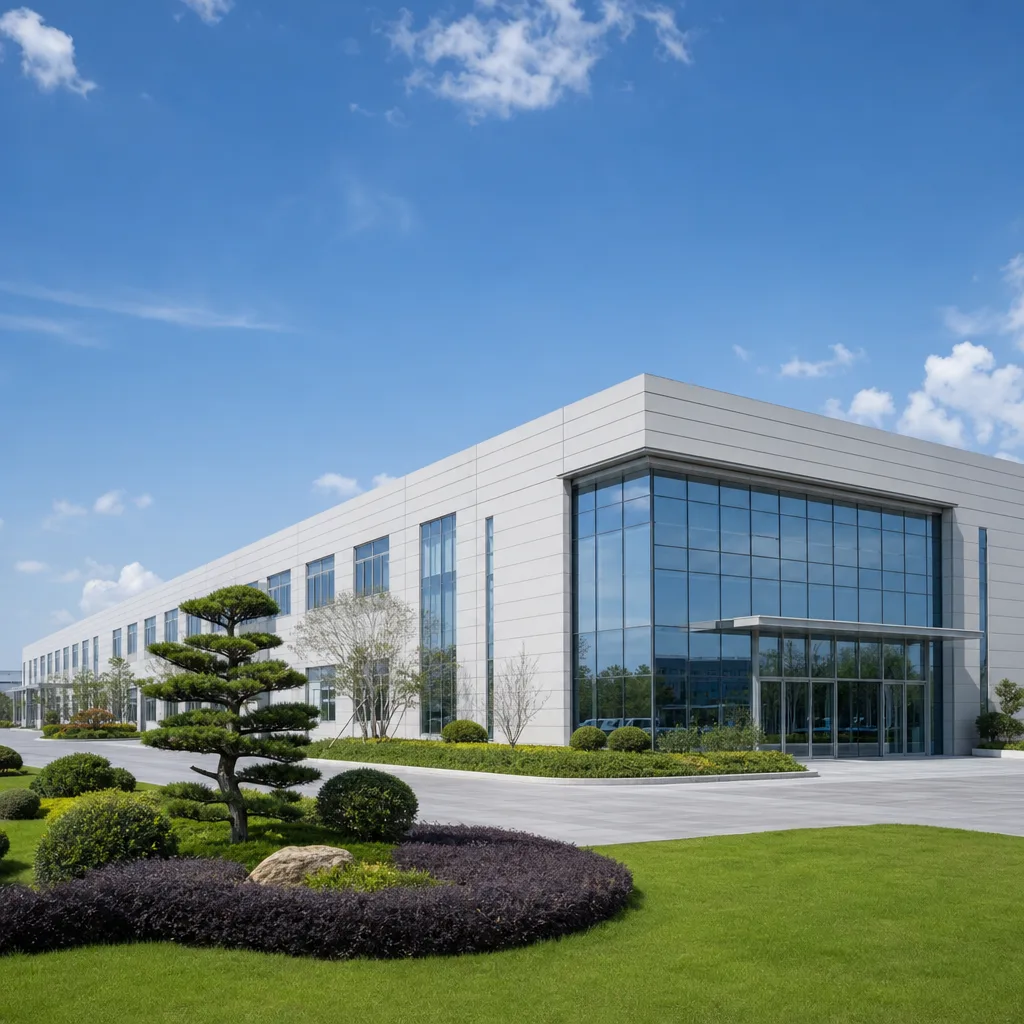
MOQ is not a punishment. It is the break point where setup labor, coating loss, logo fixture time, and carton printing stop eating the order. At BottleForge Industrial in Zhejiang, a standard factory thermos line can produce about 450,000 stainless drinkware units per month across bottles and tumblers, with food jars run on a separate welding schedule, but a customized thermos still needs batching. The spray booth hates tiny color changes. We once ran 200 pcs in Pantone 186C after 200 pcs in black; QC pulled the sample because the first 37 bottles had red dust in the shoulder groove.
For common 350-750 ml stainless bottles, these MOQ tiers are the ones buyers should price against:
- 500 pcs: workable for stock shape, stock color, laser logo, and plain bulk thermos packing. Unit cost is higher, often 12-25% above the 3,000 pcs level, because the laser jig still needs setting and the line still loses 8-12 kg of powder during color setup.
- 1,000 pcs: realistic entry point for one custom color, one logo position, and standard box. This is where 6 out of 10 promotional brands start after the buyer flags budget risk on the first quotation.
- 3,000 pcs: better price tier for thermos bulk orders and color box printing, with steadier production scheduling. The carton supplier usually stops complaining here because the flexo plate cost can spread across enough boxes.
- 5,000-10,000 pcs: suitable for distributor thermos programs with multiple SKUs, seasonal forecast, and repeat carton artwork. We ship these against a packing plan, not a last-minute PO with “matte balck” typed in the color field.
If you need a custom lid mold, 1,000 pcs is the wrong question to ask. A private lid can require USD 1,500-5,000 tooling depending on complexity, plus 20-35 days for mold opening and testing. For a new body shape, tooling can go much higher and needs engineering drawings, 3D samples, and leak testing before production; our QC bench uses a 24-hour inverted leak test before we talk about mass production. For most outdoor retailers, an existing manufacturer thermos body with custom coating, logo, lid color, and packaging is the smarter first run.
A thermos vendor who accepts 300 pcs with six Pantone colors, four logos, and custom box printing is probably planning to subcontract or shave process steps. We have seen this go sideways: mixed gloss levels, crooked pad print at 1.5 mm off center, and cartons arriving with the barcode 4 mm too low for the buyer’s warehouse scanner. Small MOQ works for testing, but the compromises need to be written on the quotation.
Where Lead Time Gets Lost
A normal vacuum bottle customized timeline is not “30 days production.” We start counting after the AI artwork, 30% deposit, signed sample approval, and dieline files are locked. One buyer once sent the PO with “matte balck” on line 6, and QC held the pre-production sample until the finish was confirmed. If your retail launch is fixed, put the buffer before PO release. Waiting until the vessel is late is the wrong question to ask.
A practical schedule for a customizable thermos order looks like this:
- Quote and spec alignment: 1-3 working days if you send capacity in ml, 304 stainless steel requirement, finish, logo file, packaging type, target quantity, and any test standard such as FDA or LFGB.
- Digital mockup: 1-2 days for logo position, print size in mm, and box layout direction. We usually check it against a caliper measurement from the curved body, not just the catalog photo.
- Physical sample: 7-12 days for laser logo or one-color print on an existing bottle; 12-18 days for custom coating with a new spray card or multi-position decoration.
- Sample shipping: 3-6 days by courier to Europe or North America. DHL often asks for the HS code and declared sample value before pickup.
- Mass production: 25-40 days after sample approval and deposit for 1,000-10,000 pcs. For powder coating, the line normally books by color batch, so a late color change can push the run behind 3 other jobs.
- Sea freight: roughly 28-38 days to major European ports and 18-30 days to West Coast North America, excluding customs delays. A 40HQ loading plan also depends on carton size, not just pcs count.
The delay we see most is not welding or vacuuming. It is artwork. A 72 dpi logo, missing Pantone code, late FNSKU request, or carton mark change after printing can burn 5-7 days. We had QC pull a sample because the barcode scanned at 42 mm wide on the box proof, while the buyer’s Amazon file required 50 mm. If your order goes to Amazon or retail shelves, confirm barcode size, country-of-origin mark, suffocation warning, carton weight limit, and inner pack quantity before we print anything.
China holidays matter. Orders placed near Chinese New Year can face 10-20 extra days because workers, coating suppliers, and carton factories restart on different dates. In Hangzhou, we can get the bottle line back faster than the printed carton vendor if their laminating machine crew returns 4 days late. Zhejiang factories move fast, but the math does not work if every upstream supplier is asked to recover the same lost week.

Decoration Changes Both Price And Risk
Decoration is where a custom thermos stops looking like a blank factory bottle and starts carrying the buyer’s brand. It is also where we see defects that vacuum testing will never catch. QC pulled 32 pieces from one line last season: insulation was fine, but the logo sat 3 mm too low after the fixture pin wore loose. For outdoor retail and promotional thermos programs, pick the logo method by how the bottle will be used, not by the cleanest catalog photo.
Laser engraving is the low-risk choice for most stainless finishes. We run it on exposed 304 stainless, powder coating, and plated shells, and it usually adds about USD 0.10-0.30 per piece depending on logo size and position. The mark survives carton rub tests better than ink, especially after 500 km of truck vibration. The catch is simple. No color. If the brand needs a red leaf or a blue icon, engraving is the wrong tool.
Silkscreen printing is common for one- to three-color logos. Setup fees may run USD 30-80 per color, and unit cost can add USD 0.05-0.25. It works for larger thermos bulk orders, but the math gets ugly when the buyer asks for 6 pt text on a curved 500 ml body. Textured coating drags the mesh, and we have seen tiny letters fill in during the second pass. Heat-transfer and water-transfer printing cover bigger areas, including wraparound patterns, but each bottle gets more hand handling, so we add cross-cut adhesion checks before packing.
Powder coating needs a harder conversation up front. It feels more premium and resists wear better than basic spray paint, but Pantone matching on metal is not the same as printing on paper. A Delta E tolerance should be agreed before production if color accuracy is critical; our coating room checks chips under a D65 light box, not beside a sunny window. For North American outdoor retail, matte black and forest green stay steady, while sand, navy, and off-white move by season and buyer. For promotional brands, confirm coating MOQ before promising a campaign palette, because a 600 piece order will not always justify a fresh 25 kg powder batch.
For repeat distributor thermos orders, keep a physical approved color chip and a signed gold sample. Photos on a screen are not a production standard, and we have seen this go sideways when a PO says “same as last order” but the buyer changed monitors.
Quality Checks Before You Pay Balance
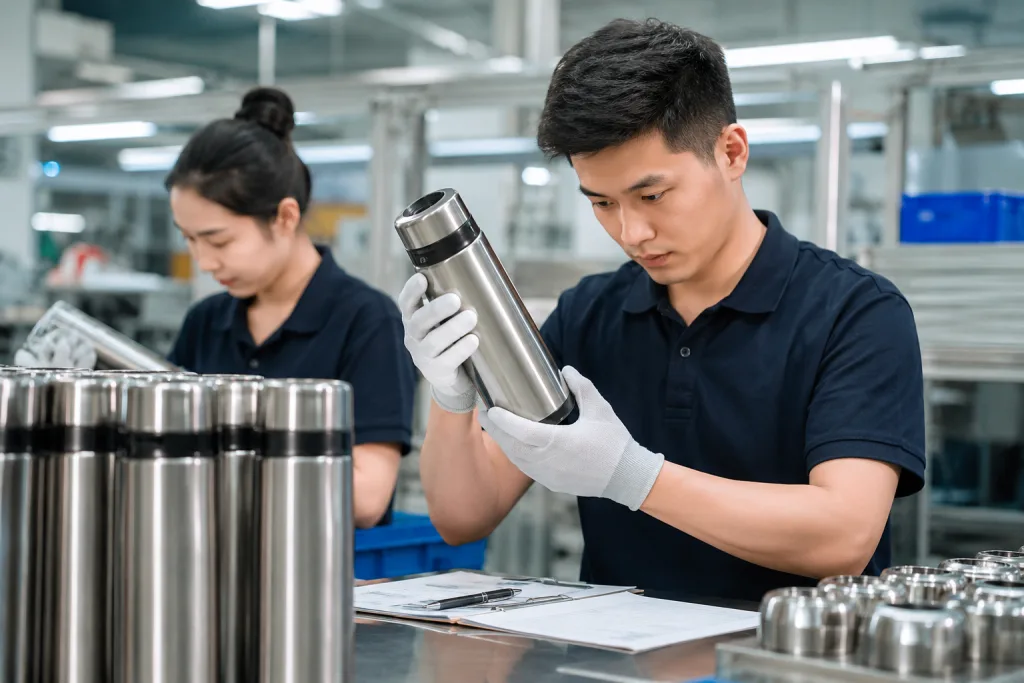
A manufacturer thermos order needs inspection against numbers you can write on the QC sheet. “Good quality” means nothing at balance-payment time. For drinkware, we run AQL inspection with critical defects at 0, major defects at 2.5, and minor defects at 4.0, unless your retailer manual calls for a tighter plan. Timing matters. Inspection should start after at least 80% of goods are packed and before balance payment; last month QC pulled 200 cartons from a 12,000 pcs lot and found 17 bottles with dust under the clear coat, which is exactly the kind of issue you want to catch before the final wire.
Key checks for a thermos customized order include vacuum retention and leakage first, then coating adhesion, odor, logo position, carton strength, and packing accuracy with SKU labels matched to the PO. For heat retention, a common field test is filling the bottle with hot water around 95°C, closing it, and checking temperature after 6 or 12 hours under controlled room conditions; on our line we log room temperature with a UNI-T meter because 18°C vs 28°C changes the result. For leakage, inspectors should test upside down and side placement after tightening the lid to normal hand torque. Do not accept a test where a worker cranks the lid hard to make the result pass. We have seen this go sideways.
Compliance depends on your market and sales channel. For Europe, buyers commonly ask for LFGB or EU food-contact reports, REACH for coating or restricted substances, and sometimes BSCI or SMETA factory social audit documents. For the United States, FDA food-contact expectations and California Proposition 65 screening apply on some retail programs; one buyer flagged a matte black powder coat because the report covered only silver 304 stainless body material, not the coating. Kids items may need ASTM or CPSIA considerations, but adult stainless thermos products usually need fewer files.
Ask the thermos supplier for current reports, not old PDF files with a different model, different material, or expired test date. A report for a glass bottle does not prove a stainless bottle lid is compliant. A report for raw stainless does not prove painted coating is compliant. This is the wrong place to save 2 days. We check the model number, material line, lab date, and lid gasket description before shipment; once a PO came in with “silicone ring: black” typed as “silicon ring: blank,” and QC caught it before mass packing. Careful thermos suppliers push back before the goods are on the water.
Packing And Freight Math
About 7 out of 10 new buyers ask us for the FOB unit price first and skip the carton spec. Wrong question. A 500 ml custom thermos often ships 24 pcs per master carton, with gross weight around 9-12 kg depending on steel thickness and box type. For a 1,000 pc order, we usually see 42 cartons on the packing list and about 3.2-4.0 CBM after QC measures the carton with a tape ruler. Drinkware is heavy, rigid, and easy to dent when the carton board is soft. Carton damage still triggers retailer chargebacks, even when the bottles inside pass inspection.
Basic export packing is usually one bottle in a PP bag or thin paper wrap, then a white box, then a 5-ply master carton. Retail packing adds real work: color box artwork checks, molded pulp insert fit, instruction sheet folding, hang tag stringing, barcode scan test, and carton label placement within 5 mm of the buyer’s mark. For club, outdoor, or promotional channels, we run case-pack rules such as 6 pcs inner carton or 12 pcs master carton. That can add USD 0.20-0.80 per piece. The math still works if it saves your warehouse from opening 84 cartons and rebuilding packs by hand.
FOB China means the supplier covers production, export packing, inland movement to port, customs export handling, and loading-related local charges under the agreed port terms. It does not include ocean freight, insurance, destination customs, import duty, or final delivery. If you ask for DDP pricing, require the quote to split product cost, freight, duty, and last-mile assumptions. We have seen this go sideways when a buyer compared two DDP offers and one supplier buried a thinner 304 stainless body inside the freight number. Freight rates move every week. Bottle specs should not move with them.
For Amazon-style programs, FNSKU labels, carton labels, polybag warnings, and drop-test requirements belong in the purchase order before mass production. Put the label file name, carton side, barcode size, and ship-to code on the PO; one buyer once sent “FNSKU-Black-750ml” but the artwork folder said 700 ml, so QC pulled the sample before sealing. If you add these items after production, the thermos factory has to reopen cartons, relabel goods, reseal with BOPP tape, and charge labor. Boring work. It protects your launch date.
Choosing The Right Factory Partner
A good thermos manufacturer is not the one with the lowest Excel quote. You need a partner who can explain why a 750 ml powder-coated bottle prices higher than a 500 ml brushed bottle, why a 42 mm logo needs a flatter printable panel, and why a 5-ply export carton beats a thin local carton for sea shipment. We see this weekly. If the sales team cannot answer these points, the line has probably not measured your risk with a caliper, a coating thickness gauge, or a drop-test corner yet.
For outdoor retailers, ask about steel grade control, vacuum testing percentage, coating line capacity, salt-spray or adhesion test options. Also ask whether spare lids can be packed at 1-2% for after-sales service, because lost lids create noisy claims. For promotional brands, ask how fast the supplier thermos team can produce samples, whether mixed carton colors are allowed, and how they manage urgent event deadlines. The buyer flagged this on a 6,000 pcs order last spring: the bottle color was right, but the barcode moved 18 mm between two reorders. A distributors thermos program needs repeatability on color, lid fit, carton size, and barcode position.
At BottleForge Industrial in Hangzhou, Zhejiang, typical stainless thermos MOQ starts at 1,000 pcs for stock mold customization and 3,000 pcs for custom coating with retail box printing. Standard lead time is 25-35 days after approved sample for repeat items, and 35-45 days for first orders with new coating plates, retail box proofing, or extra testing. The math does not work if someone promises 18 days for a new powder coat, logo, packing, and inspection unless they already blocked the coating line. We run the schedule from sample approval, not from the first WhatsApp message.
Before paying a deposit, send one clean specification sheet. Include capacity, fixed dimensions, material grade, lid type, coating, logo artwork, packaging, testing requirement, destination market, and target delivery date. One PO typo can hurt: we once saw “304 stainless” on the spec sheet and “201 stainless” on the purchase order, and QC pulled the sample before mass production. A serious thermos manufacturers quote gets sharper when every supplier prices the same bottle, not three guesses dressed up as offers.
Send Your Thermos Spec For A Real Quote
Share capacity, quantity, logo, finish, packaging, and delivery date. We will return MOQ, FOB price, sample timing, and production lead time.
Frequently asked questions
What is the normal MOQ for a vacuum bottle customized order?
For an existing stainless thermos mold, 1,000 pcs is a practical starting MOQ for one logo and one standard color. If you need custom powder coating and printed retail boxes, 3,000 pcs is cleaner because coating loss, carton printing, and line setup are easier to control. Some stock-color laser logo orders can run at 500 pcs, but expect a 12-25% higher unit price. For a private lid or new body tooling, plan 5,000-10,000 pcs or pay separate mold charges from about USD 1,500 upward.
How much should I budget for a custom stainless thermos?
For common 350-750 ml models, budget roughly USD 3.20-8.50 FOB China depending on material, finish, lid, decoration, and packaging. A simple 500 ml 304 inner/201 outer bottle with laser logo may sit near USD 3.20-4.10 at 3,000 pcs. A 304/304 customized thermos with powder coating, copper lining, retail color box, and stronger heat retention can move to USD 5.00-8.50. Tooling, courier samples, third-party inspection, and sea freight are usually separate unless stated clearly in the quote.
How long does sampling and production take?
A physical sample for a stock-shape custom thermos usually takes 7-12 days if you use laser engraving or simple printing. Custom coating, wraparound artwork, or special packaging can take 12-18 days. After sample approval and deposit, mass production normally takes 25-40 days for 1,000-10,000 pcs. Add 3-6 days for courier sample delivery, plus ocean freight if shipping by sea. Around Chinese New Year, add 10-20 days of buffer because Zhejiang and wider China supply chains restart in stages.
Which logo method is best for outdoor retail bottles?
Laser engraving is usually the safest for outdoor retail because it is permanent, clean, and handles abrasion better than many print methods. It typically adds USD 0.10-0.30 per piece. Silkscreen is better when you need brand colors, but small text, curved surfaces, and textured powder coating need testing. Heat-transfer works for larger graphics, though it adds handling cost and adhesion risk. For a premium customizable thermos, approve a physical gold sample and run tape adhesion, rub, and dishwasher-related checks if your sales claim mentions easy cleaning.
What quality documents should I ask a thermos supplier for?
Ask for food-contact test reports that match the actual bottle parts: stainless body, lid plastic, silicone gasket, coating, and any printed surface that may be handled. Europe buyers often request LFGB or EU food-contact reports plus REACH checks. US buyers may need FDA-related food-contact confirmation and Proposition 65 screening depending on channel. For factory review, BSCI, SMETA, or ISO 9001 documents may be useful. Also require pre-shipment AQL inspection, usually critical 0, major 2.5, minor 4.0, before balance payment.