Key Takeaways
- Set the PO with capacity tolerance, 304 stainless steel, coating, lid type, logo method, carton size, and AQL 2.5/4.0 before sampling
- A realistic MOQ for a custom thermos is 3,000 pcs per model/color, while laser logo trials can start from 500 pcs on stock bodies
- Sample development usually takes 7-12 days for laser or print and 18-25 days for new color coating or custom lid tooling
- For EU and North America, budget FOB China pricing from USD 3.80-8.90 depending on capacity, coating, lid, packaging, and inspection level
You do not buy a custom stainless thermos by picking a catalog shape and sending a logo file. We have seen this go sideways: lids fail the 8 kg pull check, powder coat comes back 12 μm thinner than the approved sample, cartons get mixed on the packing line, and the PO says “500 ml bottle” with no steel grade, insulation claim, packaging spec, or test standard.
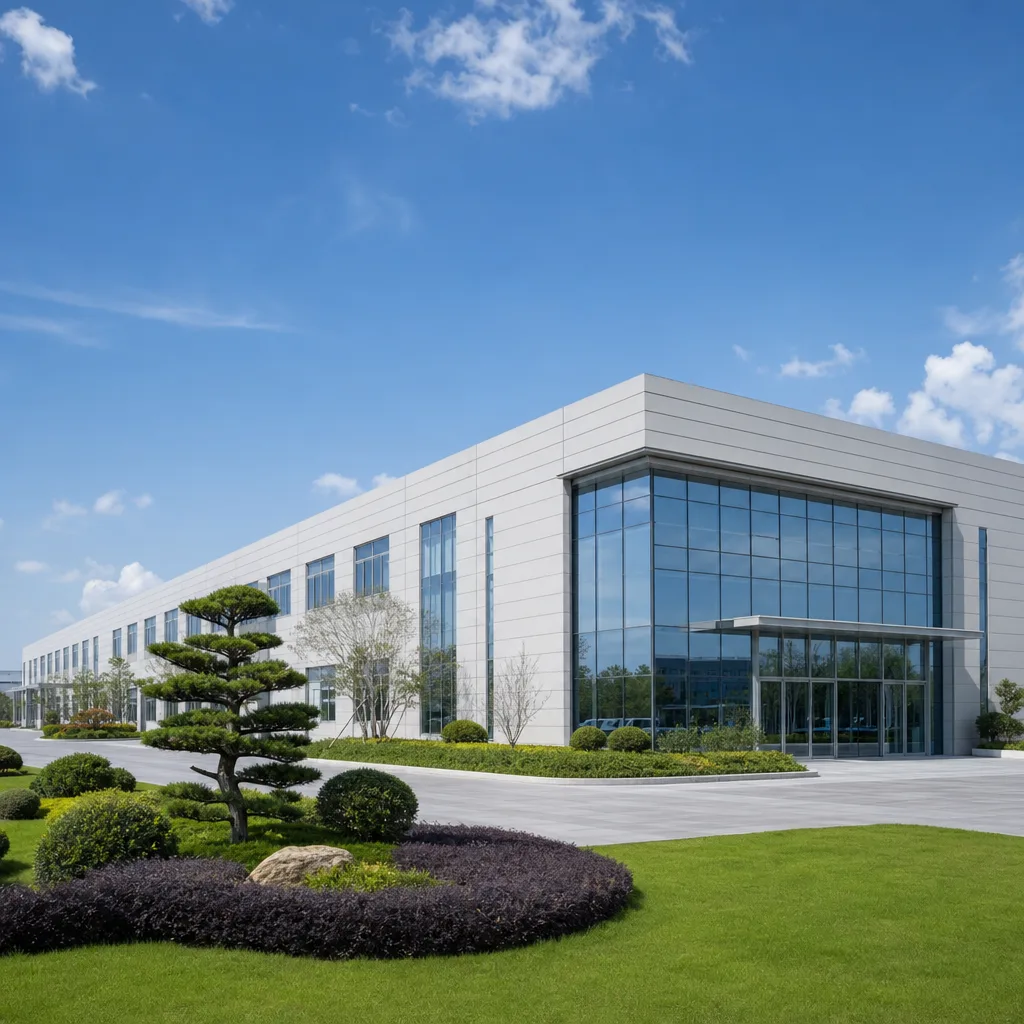
If you source a vacuum bottle customizable from China, run the job in this order: RFQ, specification lock, sample, pre-production approval, bulk PO, inspection, shipment. No shortcuts. Our Hangzhou, Zhejiang team handles outdoor retail and promotional thermos projects with 3,000 pcs MOQ per model, 180,000 units/month capacity, and 30-45 day bulk lead time after sample approval; before bulk, QC pulls the sample with a digital caliper and checks mouth diameter, lid fit, logo position, and carton mark against the buyer’s artwork.
Start With A Clean RFQ
A clean RFQ for a vacuum bottle customizable project is not “quote 20 oz stainless bottle with logo.” That is how mistakes start. Send a table that states the commercial use case first: outdoor retail, employee gift, event giveaway, subscription box, or distributor thermos program with repeat orders. Last month a buyer sent “premium bottle” only, and QC pulled the sample at pre-production because the lid hinge failed after 280 open-close cycles. The use case drives wall thickness, lid structure, packaging, and the inspection level we run on the line.
For a 500 ml or 750 ml stainless vacuum bottle, put these RFQ fields in one sheet: capacity in ml and oz, outside diameter, height limit, target weight, mouth diameter, steel grade, lid material, coating type, and logo size with print position in mm. Add packaging, delivery term, destination port, forecast quantity, and target launch date. If you need REACH, LFGB, FDA, or California Prop 65 documentation, write it in the RFQ before pricing. We once had a PO typo showing “LFGB” as “LFBG,” and the buyer flagged it only after the carton marks were drafted.
For a standard outdoor retail custom thermos, we usually quote 304 stainless steel inner and outer shell, 0.4-0.5 mm wall thickness, copper-plated vacuum layer, powder coating or spray painting, and leak-proof PP lid with silicone seal. A low-cost promotional thermos can use thinner outer steel and a white box instead of color packaging. Fair enough. But this is the wrong question to ask if the bottle must survive retail returns; saving USD 0.18 on steel can turn into 3% dent complaints after ocean shipping. Our inspector checks coating adhesion with a 3M tape test before the sample leaves Hangzhou.
Your RFQ should separate one-time charges from unit pricing. A proper quotation from a factory thermos partner in Zhejiang, China should show sample cost, logo setup, mold or tooling fee if any, unit FOB price, carton dimensions, gross weight, MOQ, production lead time, and validity period. Ask for carton data in cm and kg, not “standard export carton.” If the thermos manufacturer sends one blended number, ask again. We’ve seen this go sideways: the buyer approved USD 4.20 FOB, then found out the laser logo setup and insert card were buried outside the unit price.
Lock The PO Specification
The PO is where we see bulk thermos orders go sideways. Last quarter, 6 out of 19 bottle claims started with one line on the PO: “same as sample.” That is the wrong shortcut. For a thermos custom order, the line needs measurable requirements the workshop can set on calipers, color cards, and packing tables. Samples get misplaced, the buyer’s office and our coating subcontractor may read the finish differently, and QC pulled the sample more than once to find the lid had a 1 mm gasket change. The PO should read like a production instruction, not a mood board.
At minimum, each PO line item should include: model number and approved sample code, capacity with test method, body material and inner wall material, lid material and gasket spec, coating with Pantone color, logo process with artwork version, packaging version with barcode/FNSKU if needed, carton pack count and gross weight limit, inspection standard, and approved sample reference. If you sell through outdoor retailers, add hang tag, warning label, country of origin mark, and spare gasket requirements with quantity per carton. We run this against the pre-production sheet before the line opens; one buyer once typed “PMS 553C” instead of “PMS 5535C” on the PO, and the spray room caught it only because the color chip was stapled to the file.
Use tolerances. Put them in writing. For example: capacity 750 ml ±3%, height 285 mm ±2 mm, body diameter 78 mm ±1.5 mm, powder coating thickness 60-80 microns, logo position tolerance ±2 mm, and carton weight not above 16 kg. Our incoming QC uses a digital caliper and coating thickness gauge, not a feeling from the sales photo. A supplier thermos quotation without tolerances will create arguments during inspection, and the math does not work if 3,000 pcs arrive with a logo shifted 4 mm but nobody defined the pass line.
A practical PO line might say: “750 ml vacuum bottle customizable, 304 inner/304 outer stainless steel, powder coat PMS 5535C, laser engraved logo 45 x 28 mm on front center, PP lid with food-grade silicone gasket, 1 pc/kraft box, 24 pcs/export carton, AQL 2.5 major/4.0 minor, FOB Ningbo, lead time 38 days after deposit and artwork approval.” It is not pretty. It works. With this wording, the laser fixture, carton mark file, gasket bin, and final inspection checklist all point to the same target before we ship.
Choose Customization Before Sampling
Customization is not one decision. On our line, a customizable thermos usually means 1 of 7 routes: logo only, body color, lid color, retail box, accessory set, new body shape, or full private mold. Each route changes MOQ, lead time, reject rate, and price. Decide the full customization stack before you ask for a sample. Otherwise QC signs off one bottle with a caliper check at 73.5 mm body diameter, then the PO arrives with a different lid color and printed box artwork. We have seen this go sideways.
For logo work, laser engraving is the safer choice for outdoor retail because it will not peel and it runs clean on curved 304 stainless bodies. It suits one-color metal marks and costs about USD 0.08-0.25 per unit depending on logo size and engraving time. Silk screen works on flat or slightly curved areas and larger color logos, but adhesion depends on coating quality and oven curing. Heat transfer can carry full-color graphics, but QC pulled samples for abrasion testing after 500 rubs because one buyer flagged scuff marks near the thumb grip.
For color, powder coating beats standard spray paint for bottles that sit in backpacks, cup holders, and store demo racks. We normally specify 60-80 microns coating thickness for outdoor bottles and check it with a coating thickness gauge before packing. A cheaper spray finish can pass a quick visual check, then fail after 3 weeks of normal handling. If you sell through outdoor retailers, ask for cross-hatch adhesion testing and 3M tape pull checks on the approved coating. Skipping this to save 2 days is the wrong math.
Packaging is customization too. A promotional thermos may only need a white box and 5-layer master carton, while a retail thermos needs printed box artwork, barcode, warning text, product claims, and drop-test planning. For Amazon or 3PL programs, FNSKU labels and carton labels must be locked before mass packing. We once had a PO with “matte balck” on the carton mark file, and the buyer caught it 1 day before packing. This is where a thermos vendor with export packing experience saves real time.
Approve Samples With Test Notes
Sampling is not photo approval. It is the first physical check against the PO, spec sheet, and the buyer’s artwork file. For a thermos customizable order using an existing mold, a logo sample usually takes 7-12 days. A new Pantone coating takes 12-18 days, not 7 days vs 18 days, because the spray booth needs a drawdown card, oven curing, and adhesion checks before we risk a full body. A new lid or mold can take 25-45 days depending on tooling complexity; if the lid thread is off by 0.3 mm, the line stops.
When the sample arrives, do more than check the logo. Fill it with 95°C water, close the lid, weigh it full on a 0.1 g scale, turn it upside down for 30 minutes, then measure temperature after 6, 12, and 24 hours with a probe thermometer. Simple test. A common acceptable benchmark for a 500-750 ml stainless vacuum bottle is hot water above 55°C after 12 hours from a 95°C start at 20°C room temperature. If your market claim is stricter, the factory thermos design must support it; the math doesn't work if you ask a slim 500 ml bottle to perform like a wide 1,000 ml flask.
Record sample approval with a short sheet: sample date, model, color, logo method, measured capacity, empty weight, lid torque feel, leak result, coating result, packaging notes, and approval status. We run this next to the sample on the QC desk, with a digital caliper for mouth diameter and a torque-by-hand note for the lid. If you request changes, list them in numbered points and ask the thermos manufacturer to confirm each point before bulk production. One PO typo, such as “mat sand” instead of “matte sand,” can turn into 3,000 wrong cartons.
For promotional brands, sample speed matters, but rushing the wrong sample costs more. We’ve seen this go sideways. If the logo is approved on a black bottle but your PO is for matte sand, ask for at least one color chip or coated body confirmation before we ship pre-production. Different coating colors can behave differently during laser engraving; light beige can burn yellow, and textured finishes sometimes leave rough edges that QC pulled the sample for under a 10x loupe.
Price The Bulk Order Honestly
FOB China pricing for a customized thermos is not just a capacity question. A 500 ml bottle can cost more than a 750 ml bottle when the lid has 6 parts, the base uses silicone instead of EVA, or the coating needs a second pass on the powder line. We run current Zhejiang jobs where a standard 500 ml 304 stainless vacuum bottle with laser logo and kraft box sits around USD 3.80-5.20 FOB Ningbo at 3,000-5,000 pcs. A heavier 750 ml outdoor bottle with powder coating, carry handle, retail box, and barcode labeling may run USD 5.60-8.90 FOB. QC pulled one 750 ml sample last month because the barcode sticker was 4 mm off center. Small issue. Buyers still notice.
Ask the thermos suppliers to break out the options that move the price. Powder coating versus spray paint may add USD 0.25-0.60, depending on coating thickness and whether we need 2 color changes on the same day. A flip lid versus screw cap may add USD 0.35-0.90 because the mold has more inserts and the gasket fit needs checking with a feeler gauge. Retail color box may add USD 0.18-0.55 depending on paper grade and print coverage. Individual polybag, spare gasket, hang tag, and carton label look like small money, but on a 5,000 pcs thermos bulk order the math adds up fast.
MOQ is a commercial lever, not a factory trick. For our Hangzhou, Zhejiang line, normal MOQ is 3,000 pcs per model/color for custom coating, 1,000 pcs for logo on available stock color when inventory is open, and 500 pcs for some laser-only promotional runs. A private mold usually starts at 10,000-20,000 pcs forecast because tooling, testing, and process setup need volume. We had one PO typo last quarter: buyer wrote 300 pcs custom Pantone coating, then flagged the MOQ after the PI. The line cannot wash the spray booth and set up fixtures for 300 pcs; the math doesn't work.
Do not chase the lowest unit quote without checking inspection and material. If one manufacturers thermos quote is USD 0.70 lower, ask about steel grade, vacuum failure allowance, coating thickness, lid resin, silicone certification, and carton strength. We check wall thickness with a digital caliper and run hot-water vacuum tests before shipment; cheap quotes often skip those steps or hide them outside the price. In China, the cheapest quote often removes something you assumed was included, and we have seen this go sideways at AQL inspection.
Control Production Before Packing
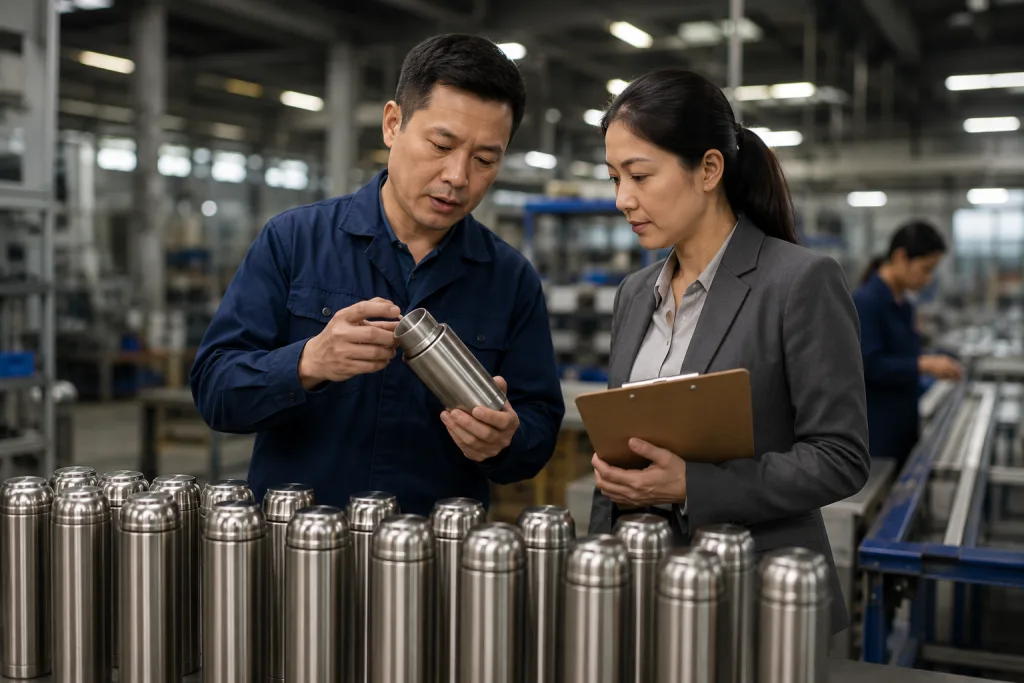
Once the deposit lands, the production clock starts, but the buyer’s job is not over. Before we run bulk assembly, lock the pre-production sample, carton mark, barcode file, and PO specification one more time. For a distributor thermos program with 6 SKUs, build a control sheet showing SKU, Pantone color, logo artwork code, box version, barcode number, carton quantity, and destination warehouse. We’ve seen this go sideways when the buyer approved “blue” in an email, while the PO said navy and the carton mark file still showed sky blue. QC pulled the sample at the line, measured the logo at 42 mm from the bottom with a steel ruler, and caught it before packing.
A normal production timeline is 3-5 days for material preparation, 7-12 days for forming and welding, 5-8 days for vacuum and testing, 5-10 days for coating, 3-6 days for logo and packing, then inspection. Total lead time is usually 30-45 days after all approvals. In peak season before summer and Q4 gifting, the same order can move from 33 days to 45 days because coating ovens and vacuum chambers get booked first. Book early. If your promotional thermos is for a fixed event date, the wrong question is “can you rush it?” The better question is whether the line has open capacity, enough 304 stainless sheet in stock, and a confirmed packing team for your ship week.
Inspection should use AQL, not “check carefully.” For most bulk thermos orders we recommend AQL 2.5 for major defects and 4.0 for minor defects. Critical defects such as leakage, unsafe sharp edges, wrong material contact parts, or incorrect barcode should be zero-tolerance. Inspection checks should include measured capacity with a digital scale, appearance under a light box, logo placement in mm, coating adhesion with 3M tape, lid fit by hand torque, leak test after inversion, insulation spot test, carton drop condition, and carton count. Last month, QC found 11 lids with rough inner threads in one 2,000 pcs lot; the math doesn’t work if those reach a supermarket buyer.
If you use a third-party inspector, send the PO and approved sample sheet before they arrive at the factory gate. If you rely on factory QC, ask for production photos, inline defect rate, vacuum test report, and final carton photos with carton numbers visible. A serious thermos factory will not object to this. They may push back on claims like “24 hours hot for every bottle,” because testing depends on room temperature, water temperature, and fill volume. They should not push back on measurable QC. We ship cleaner when the buyer flags details early, even small ones like a PO typo changing 24 pcs/carton to 48 pcs/carton.
Ship With Complete Documents
After inspection passes, shipping turns into paperwork. For FOB Ningbo or Shanghai, we prepare the commercial invoice, packing list, booking details, HS code, carton dimensions, gross and net weight, and country of origin marking. On our line, QC signs off the AQL 2.5 report first, then the merchandiser checks carton marks against the PO. Stainless vacuum bottles are usually declared as vacuum flask or stainless drinkware, but this is the wrong place to guess; your broker should confirm the exact HS code for your import market.
Outdoor retailers and promotional distributors often ask for more than basic shipping papers. We normally keep material declarations, FDA or LFGB food-contact test reports, REACH-related statements for EU orders, BSCI or factory audit files when the retailer asks, and clean product photos for catalog loading. One buyer flagged a 1 mm shift on the FNSKU label after cartons were sealed. Not fun. If you sell online, confirm barcode scan quality and FNSKU placement before the cartons leave China.
Carton design affects freight claims. A 24 pcs carton for 750 ml bottles may weigh 13-16 kg depending on the color box, foam bag, and divider. We try to keep export cartons below 18 kg because the math doesn't work when warehouse teams start dropping heavy cartons from waist height. If bottles ship in color boxes, request a five-layer export carton and ask QC to run corner compression checks; we have seen long routes to Europe or North America punish weak cartons by day 12 at the forwarder warehouse.
Tie final payment to passed inspection and complete documents. A practical term is 30% deposit and 70% balance before shipment after QC approval. For a repeat distributor thermos line, save the approved PO, artwork, carton marks, and inspection report as the reorder standard; we also keep the Pantone code and laser logo position in mm in the production file. Reorders move faster when the manufacturer thermos file is complete, not rebuilt from 18 old emails and one PO with a typo in the lid color.
Send Your Thermos RFQ For A Practical Quote
Share capacity, logo, color, quantity, market, and delivery date. We will return FOB pricing, MOQ, sampling plan, and PO specification notes.
Frequently asked questions
What MOQ should I expect for a vacuum bottle customizable order?
For a true custom thermos with your own body color, logo, and packaging, expect 3,000 pcs per model/color as a realistic MOQ in China. If you use a stock stainless body and only add laser engraving, some thermos suppliers can start at 500-1,000 pcs, depending on inventory. A new mold or private lid design normally needs a 10,000-20,000 pcs forecast because tooling, testing, and production setup costs are higher. For promotional brands testing a campaign, start with a stock shape and custom logo. For outdoor retailers building a permanent SKU, 3,000-5,000 pcs is a healthier first run.
How long does custom stainless thermos sampling take?
A logo-only sample on an existing bottle usually takes 7-12 days after artwork confirmation. A new Pantone powder coating or spray color usually takes 12-18 days because color matching and curing checks are needed. A new lid, handle, base, or private mold can take 25-45 days before you see the first functional sample. Add 3-6 days for international courier transit to Europe or North America. If your launch date is fixed, approve material, logo size, and packaging before sampling starts. Changing the lid or color after sample approval can reset the schedule.
Which logo method is best for a promotional thermos?
Laser engraving is the most durable option for stainless vacuum bottles and usually costs about USD 0.08-0.25 per unit depending on logo size. It works especially well on powder-coated bottles because it removes the coating and exposes the metal underneath. Silk screen is better when you need a solid color logo, but it should be tested for adhesion and scratch resistance. Heat transfer can handle full-color artwork, but it is more sensitive to abrasion. For outdoor retail, laser is usually safest. For short-term event giveaways, silk screen can be fine if the budget is tight.
What should be written on the bulk thermos PO?
Your PO should include model number, capacity, 304 stainless steel inner and outer shell, lid material, silicone gasket, coating type and Pantone color, logo method and size, packaging, carton quantity, barcode or FNSKU, FOB port, lead time, payment terms, and AQL level. Add measurable tolerances: capacity ±3%, logo position ±2 mm, coating thickness 60-80 microns if powder coated, and carton weight limit. Attach approved artwork and packaging files. A PO that only says “customized thermos, 5,000 pcs” is too weak and will not protect you during inspection.
How do I compare thermos manufacturers without only looking at price?
Ask each thermos manufacturer for the same specification and require a line-by-line quote. Compare steel grade, wall thickness, vacuum insulation claim, lid resin, silicone certification, coating process, packaging, MOQ, lead time, defect handling, and AQL support. A USD 0.50 lower unit price may mean thinner steel, weaker coating, simpler lid, or no proper inspection allowance. Also ask for monthly capacity, recent export markets, and whether they support FDA, LFGB, REACH, or BSCI documents. A good suppliers thermos partner should explain trade-offs clearly instead of promising every feature at the lowest price.