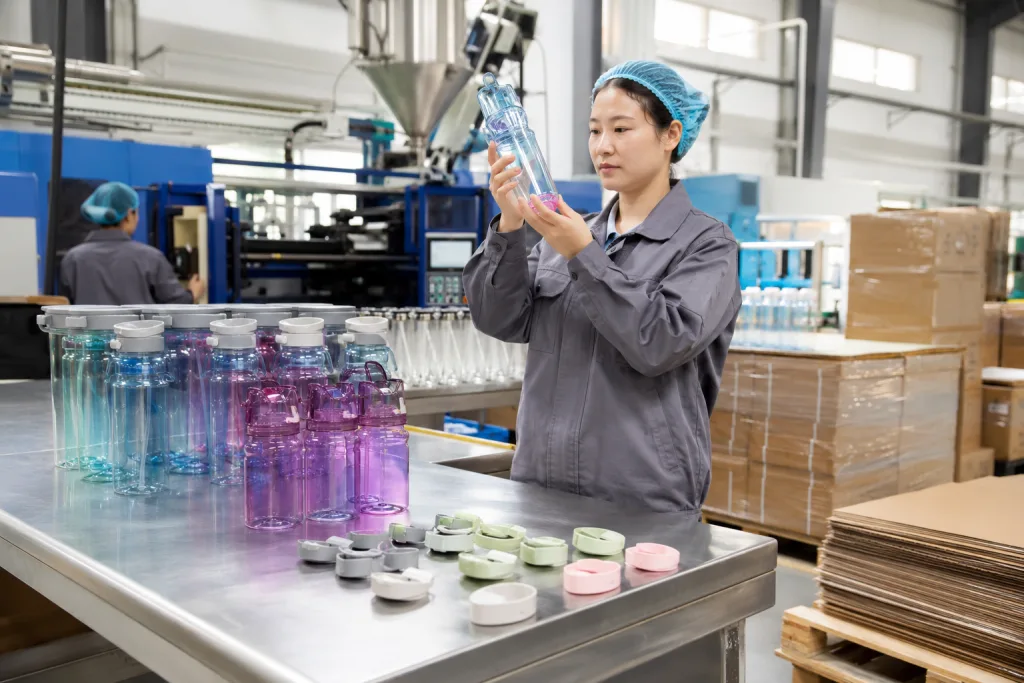
Key Takeaways
- A practical MOQ for Tritan thermal bottle projects is usually 1,000-3,000 pcs per color
- Ask for resin grade, lid material, gasket material, and temperature limits before asking for FOB price
- Sampling normally takes 7-12 days for stock mold items and 20-30 days if new tooling is involved
- Use AQL 2.5/4.0 inspection and carton drop testing before releasing final balance
A tritan thermal bottle supplier can look sharp on a quotation and still give you trouble after the PO lands: unclear resin grade, lids that leak at 45° tilt, pad-print logos peeling after 50 dishwasher cycles, or 5-layer cartons splitting during a 76 cm warehouse drop test. We see this on the line. If you buy custom drinkware for Europe or North America, the costly mistakes usually happen before the deposit, when the buyer accepts “Tritan” without asking for the exact resin code, test method, and packing spec.
From Hangzhou, Zhejiang, we see the same pattern with new B2B buyers: 7 out of 10 ask for unit price first, then find out MOQ, tooling charge, packaging size, compliance documents, and lead time after their customer has already approved the concept. That order is wrong. QC pulled one sample last quarter where the PO said “black lid,” but the artwork file named Pantone 432C and the carton mark showed 433C; small typo, big argument. A clean China sourcing process should start with RFQ control, then sample evidence, then bulk PO line items, with every commercial and technical point written in numbers, not promises.
Start with a controlled RFQ
Your RFQ should not stop at, “Please quote 750 ml Tritan bottle with logo.” We see this 9 times a month. It lets every canteen supplier price a different bottle: single-wall body, cheaper lid, thinner gasket, different carton. Then your team spends 5 working days comparing numbers that never matched in the first place. Give a tritan thermal bottle supplier the same inputs you would give for an engineered packaging item: capacity, resin, lid structure, insulation target, logo process, packing, destination market, and trade term. This is the wrong place to be vague. Last month QC pulled the sample and found the buyer’s PO said “blue lid,” while the approved sample had PMS 286C body with a black flip cap.
For Tritan, write BPA-free copolyester for food contact, then ask the factory to confirm the exact resin grade on the quotation. If the bottle uses a stainless steel bottom cap, silicone sleeve, PP lid, straw, handle, or double-wall air-insulated body, name every part. “Thermal” causes trouble. Some buyers mean double-wall plastic to cut condensation on a gym bag. Others expect cold water to stay noticeably cooler for 4-6 hours at 23°C room temperature. Tritan is not vacuum stainless steel, so the math doesn't work on a casual 12-hour cold-retention claim unless the structure has test data behind it. On the line, we check wall thickness with a digital caliper; a 1.2 mm body and a 1.8 mm body do not perform the same.
A clean RFQ should include these PO-style lines from the first message:
- Item: 650 ml Tritan thermal sports bottle, stock mold or proposed mold number, plus target order quantity such as 3,000 pcs or 5,000 pcs.
- Material: Tritan body, PP lid, food-grade silicone gasket, optional stainless insert if used; ask for resin grade and color masterbatch confirmation.
- Decoration: 1-color silk screen, laser on metal part, or UV print, with artwork size in mm and print position from the mold parting line.
- Packaging: white box, color box, kraft box, or bulk pack; carton drop requirement and expected carton weight, for example under 15 kg.
- Compliance: EU food contact, REACH/SVHC screening, LFGB if required, FDA for US; tell us if the buyer needs a test report under the importer name.
- Trade term: FOB Ningbo or Shanghai, USD, with carton dimensions and gross weight; we ship from Zhejiang and quote better when the carton plan is fixed.
For BottleForge Industrial in Zhejiang, we can prepare a normal RFQ response for stock Tritan molds within 24-48 hours when the buyer gives these details. Without them, the quotation is a guess. Guesses turn into change fees later. We’ve seen this go sideways when a buyer approved a 650 ml sample, then the final PO quietly changed to 750 ml with the same color box; the box knife die had to be remade, and that added 3 days before mass production.
Lock the commercial PO skeleton
Before you pay for samples, lock the commercial bones of the order. This is where a real canteen manufacturer shows up, and a quotation collector starts dodging. We ask buyers to name the channel first: retail shelf, promo order, Amazon/FBA, school program, corporate gifting, or distributor replenishment. Last month one buyer flagged “gift box” on WeChat, while the PO only said “white box”; QC pulled the sample carton and the 42×32×28 cm master carton spec no longer matched the freight quote.
MOQ is the first hard number. For a custom canteen in Tritan, stock bottle body with one-color logo may start around 1,000 pcs per design. For a canteen customized with exclusive color matching, silicone sleeve, printed color box, or Pantone lid parts, the workable MOQ is often 2,000-3,000 pcs per color. If you request a new mold, expect tooling costs commonly from USD 2,500 to USD 8,000 depending on lid complexity and cavity count. Cheap tooling is rarely cheap once you need stable threads and leak-proof assembly. We have seen this go sideways when a buyer saves USD 600 on tooling, then the lid thread is off by 0.25 mm on the go/no-go gauge and the line cannot pass leak test at 100% speed.
Your PO skeleton should show line items even if the final purchase order comes later. Do it early. Our merchandiser checks this against the PI, artwork file, and carton mark sheet before we open the sample job:
- Unit price: FOB Ningbo, based on 3,000 pcs, including 1-color logo and individual white box. State whether the logo is silk print, pad print, or laser, because the setup time is not the same.
- Sample fee: USD 80-150 for logo sample, refundable against bulk order if agreed. Put the refund rule on the PI, not only in chat.
- Payment: 30% deposit, 70% after inspection before shipment; avoid 100% prepayment. The math does not work for buyers if defects are found after full payment.
- Lead time: 30-40 days after deposit and pre-production sample approval for stock molds. If artwork approval slips 6 days, do not expect the line to recover all 6 days.
- Spare parts: 1% extra lids or gaskets if the sales channel needs after-sales support. For school programs, we run 2% more gaskets because kids lose them.
Read price together with capacity. A canteen factory producing 450,000-600,000 drinkware units per month can take seasonal distributor canteen demand better than a small workshop buying lids from three outside vendors. Ask where assembly, leak testing, printing, and packing happen. If those steps sit in different places, your risk is schedule control as much as quality. On our floor, the leak-test bench sits beside final packing, so when QC finds 3 leaking lids in a 200 pcs patrol check, the line leader can stop the lot before cartons are sealed.
Build samples that prove risk
A sample is not a souvenir. It is a risk test before the bulk PO. For a new customizable drinkware project, we ask buyers to approve two sample stages: a blank functional sample and a decorated pre-production sample. The blank sample checks hand feel, lid torque, straw flow, cap fit, and thermal expectation; on our line we use a torque meter on the lid and record the reading in N·cm, not “feels OK.” The decorated sample checks artwork position, color, adhesion, and packaging presentation.
For stock mold Tritan bottles, blank samples usually ship in 3-5 days if the warehouse has parts ready. Logo samples normally need 7-12 days after artwork confirmation because the screen plate, jig setup, and 24-hour ink curing cannot be rushed. If you are developing a custom growler, customized growler lid, or special canteen customizable body shape, new mold sampling can take 20-30 days for T1 samples, sometimes 35 days if the cap has 3 sealing points and the first silicone ring compression is wrong. We have seen this go sideways.
Do not approve samples only by photos. Ask for a short test report from the supplier’s QC team, even if it is internal. At minimum, it should cover leak test, lid open-close cycle, logo adhesion tape test, odor check, and carton fit; QC pulled one sample last month because the bottle passed photos but leaked at the straw vent after 18 minutes upside down. A practical leak test is 100% water fill, invert for 30 minutes, then shake for 20 seconds. For logo adhesion, 3M 600 or equivalent tape test after 24 hours curing beats touching the print with a thumb.
Your sample PO should include:
- Artwork file: AI or PDF vector, logo height and width in mm, with the print area marked against the bottle seam.
- Color standard: Pantone code for body, lid, sleeve, and print; do not write “same as picture” because the math does not work on resin color matching.
- Function test: leak test, dishwasher claim if any, temperature range confirmation, plus the lid open-close cycle count you expect.
- Courier: DHL, FedEx, UPS account, or prepaid freight shown separately; one wrong digit on a FedEx account can hold samples for 2 days.
- Approval rule: bulk production cannot start until buyer signs sample approval by email, with the approved sample code written on the PO.
This step is where 7 out of 10 rushed canteen vendors try to push you. Do not let them. A two-day delay in sample approval is cheaper than 3,000 leaking bottles in a distributor warehouse, and the buyer will remember the leak, not your fast sample promise.
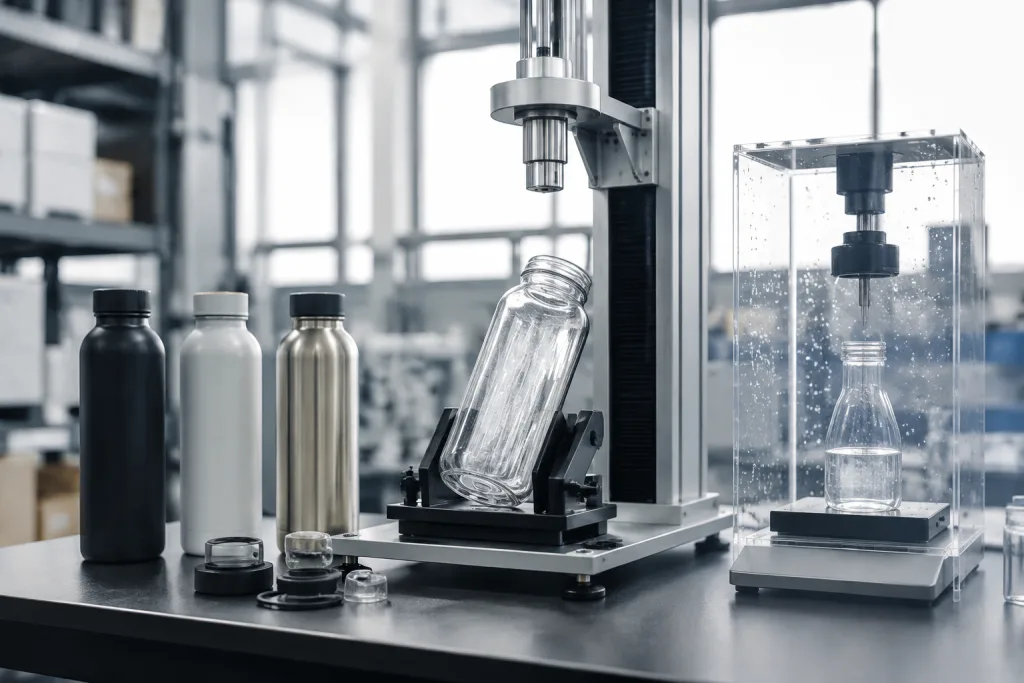
Check compliance before deposit
Compliance is not a folder you collect after the line has finished. For Europe and North America, ask before deposit whether the canteen manufacturer has current material declarations and test history for the same or close construction. We check this against the BOM, not against a product photo. A Tritan body, PP lid, silicone gasket, coating, ink, straw, and packaging each raise a separate question. One clean bottle body does not make the whole product compliant.
For EU buyers, common requirements include food contact testing under EU Regulation 10/2011 for plastic materials, LFGB if selling into Germany, and REACH/SVHC screening for components and decoration. For US buyers, FDA food-contact expectations apply, and children’s products may trigger CPSIA and ASTM considerations depending on design, age grading, and packaging claims. Kids bottles need tighter control. If your bottle is marketed for kids, school programs, or promotional youth events, treating it like a normal adult sports bottle is the wrong call. We have seen a buyer flag a hangtag that said “back to school,” which changed the compliance review after the sample was already approved.
Ask the supplier for test reports issued within the last 12-24 months, but read the report names line by line. Does the report cover Tritan, PP, silicone, and printing ink, or only the bottle body? Is the tested item similar in color and material? If the report is for a clear bottle and you order a black tinted bottle with colored silicone, extra testing is usually the safer spend. QC pulled one sample last season where the silicone gasket color code on the report was “transparent,” while the PO called for Pantone 186C red. That mismatch would not pass a careful retailer review.
For BSCI, ISO 9001, Sedex, or other audit requests, be direct. Around 6 in 10 canteen manufacturers in China can supply audit documents quickly, but a subcontracted printer or packing partner may sit outside the audit scope. Ask for the site name and address on the certificate, then compare it with the factory address on the PI. If your retailer requires social compliance, write it into the PO as a condition, not as a casual email request. We have seen this go sideways over one missing packing-site audit.
Practical rule: if a compliance document is important to your customer, it belongs in the quotation, proforma invoice, and final PO. Otherwise it becomes an argument.
At BottleForge Industrial in Hangzhou, Zhejiang, we prefer buyers to raise compliance early because it changes material choice, ink choice, and final cost. The math does not work if a USD 0.03 cheaper ink adds 12 days of retesting before shipment. On the factory floor, this can mean changing the pad-printing ink before mass production instead of scraping 8,000 printed lids after QC finds the report gap.
Convert sample approval into PO lines
After the sample is signed off, move every visible and hidden spec into the PO lines. Boring work. Necessary work. This is how we avoid the old fight we hear 6 or 7 times a year: “The sample was like this, but bulk is different.” The PO cannot depend on WeChat screenshots, a sales note, or somebody remembering what QC pulled from the line on Tuesday.
For a canteen promotional project, the PO must spell out decoration tolerance. Use numbers: logo position ±2 mm, print color ΔE tolerance if you work from a measured color standard, and no visible scratches at 30 cm viewing distance under normal light. Our print master checks this with a steel ruler and a D65 light box before the first 50 pcs move forward. For a distributor growler or distributor canteen program, write the reorder rule clearly: same mold, same Pantone, same packaging, same barcode placement unless written approval changes it.
Treat packaging as product engineering, not afterthought work for the warehouse. If your channel is Amazon FBA or a retail DC, label requirements matter because one wrong sticker can block 3,000 pcs at receiving. Each unit may need UPC, EAN, warning label, country of origin, suffocation warning for polybags, and sometimes FNSKU. A solid canteen factory can run these labels, but send label files, placement drawings, and scan-test requirements; we scan with a Zebra DS2208 before carton sealing. Carton markings should show item number, color, quantity, gross weight, net weight, carton size, and made in China. For mixed-color cartons, list the assortment ratio in the PO.
Typical bulk PO lines should include:
- Product: 750 ml customized drinkware Tritan thermal bottle, mold BF-TB750 or equivalent, with approved cap gasket and straw length checked by caliper.
- Quantity: 3,000 pcs total: 1,000 pcs clear, 1,000 pcs smoke gray, 1,000 pcs blue; do not write “assorted” unless the split can change.
- Decoration: 1-color silk screen, white, 60 x 35 mm, front centered, logo position ±2 mm from the approved sample.
- Packaging: individual kraft box, 24 pcs per export carton, 5-ply K=A carton, with drop-test concern flagged if gross weight passes 12 kg.
- Inspection: third-party or buyer inspection, AQL 2.5 major / 4.0 minor, with sealing, print rub, barcode scan, and carton mark checks included.
- Shipment: FOB Ningbo, delivery 35 days after deposit and final artwork approval, not 35 days after a half-finished PO with missing barcode files.
If a canteen vendor refuses to put details into the PO, that tells you plenty. We have seen this go sideways. It usually means they want room to swap a carton grade, shift logo placement by 4 mm, or ship with a “close enough” label when the line is under pressure.

Control bulk production checkpoints
Bulk production needs checkpoints, not silence until the freight bill lands. For custom drinkware, we run four that actually work: incoming material, first article approval, inline inspection, and final random inspection. You do not need to babysit a steady canteen supplier, but you do need proof at each gate.
Incoming material checks cover resin, color masterbatch, lid parts, gaskets, and packaging. Tritan pellets stay sealed and dry; we check moisture with a meter because clarity and surface finish go sideways fast when the resin picks up water. First article approval means the first assembled and printed units are matched against the approved sample before the line goes full speed. Ask for photos of the first 10-20 pcs with logo, lid, base, packaging, and carton marks. Better yet, ask for a first-article sheet with actual weight and fill volume, not just a thumbs-up from sales.
Inline inspection at 20-30% of production catches repeat defects while the line still has room to recover. We see the same problems over and over: black specks in clear bodies, warped lid threads, loose carry handles, silicone gasket misfit, print pinholes, and color drift between body and lid. Final random inspection should follow ANSI/ASQ Z1.4 or ISO 2859-1 sampling with AQL 2.5 for major defects and 4.0 for minor defects. Sharp edges, contamination, and leaks stay zero tolerance. QC pulled the sample, and if it leaks on a 1.5-meter bench test, the batch is not ready.
Ask your tritan thermal bottle supplier to prepare sealed cartons for inspection, not hand-picked hero units. When packaging is custom or retail-facing, we also run a carton drop test. A common distributor request is 10 drops from 76 cm for cartons under 10 kg, then we adjust it to the buyer’s standard. If your cartons move from Zhejiang to Ningbo port, then by ocean to Rotterdam, Hamburg, Los Angeles, or Vancouver, weak outer boxes will fail before the bottles ever reach your warehouse.
Ship only after documents match
The last step is not “pay balance and ship.” The last step is document matching. The commercial invoice, packing list, bill of lading instructions, carton marks, HS code note, and origin marking need to follow the PO line by line. We have seen one PO typo, “TB-750B” typed as “TB-7508,” hold 286 cartons at the buyer’s warehouse dock. If you buy for canteen distributors or a distributor drinkware catalog, small document errors turn into receiving claims fast.
Before releasing the 70% balance, check the final inspection report, carton photos, pallet plan if required, and shipping document drafts. QC pulled the sample, weighed the export carton at 12.6 kg gross, and checked the 5-layer carton size against the packing list before we released one recent FOB Ningbo order. FOB Ningbo or FOB Shanghai should cover local trucking, export declaration, and China-side port charges unless your agreement says something else. If the supplier quotes EXW, compare the math carefully; EXW looks cheaper on page 1, then your forwarder gets stuck with inland pickup and export paperwork.
For North America, confirm country-of-origin marking on the bottle bottom, sleeve, or retail box before mass packing. For Europe, confirm importer details if your channel requires them, and make sure any sustainability claim has backup. The buyer flagged “eco-friendly” on a customizable canteen last year because the only proof was “Tritan is reusable.” That is the wrong question to ask. Reusable is a product feature; environmental claims need testable evidence and careful wording.
Your final shipment PO checklist should include:
- Balance condition: payable after passed inspection and written document approval.
- Carton data: quantity per carton, gross weight, net weight, dimensions, and CBM checked against the export carton label.
- Shipping marks: item code, color, PO number, carton count, and destination printed exactly as the buyer approved.
- Documents: commercial invoice, packing list, test reports, and BL draft instructions with consignee details checked before vessel closing.
- After-sales file: spare parts list, defect photo standard, and claim window, often 15-30 days after receipt.
A good canteen manufacturer wants clean documents because clean documents reduce disputes. We run a last file check with the merchandiser, QC, and shipping clerk before the line releases cartons to the truck. The buyer gets predictable receiving. The factory gets paid on time. Boring is good here.
Send your Tritan bottle RFQ for review
Share capacity, logo, MOQ, market, and packaging needs. BottleForge will return a practical FOB quote and sample plan.
Frequently asked questions
What MOQ should I expect from a Tritan thermal bottle supplier?
For stock mold Tritan thermal bottles, expect 1,000 pcs as a realistic starting MOQ for one-color logo printing. If you need Pantone-matched lids, silicone sleeves, custom color bodies, or retail color boxes, 2,000-3,000 pcs per color is more practical. For new mold development, the MOQ may rise to 5,000 pcs or more because the canteen factory needs to amortize setup, tooling trials, color matching, and production loss. Be careful with suppliers offering 300 pcs at a very low price; they may be reselling stock, skipping proper logo curing, or packing with weak cartons. For distributor drinkware programs, ask for both first-order MOQ and reorder MOQ, because the second number affects your inventory planning.
Can Tritan bottles really be called thermal bottles?
They can, but you should define what “thermal” means in the PO. Tritan is a plastic copolyester, not vacuum-insulated stainless steel. A double-wall Tritan design can reduce condensation and slow temperature change, but it will not perform like a vacuum bottle. A reasonable claim may be cooler hand feel, reduced sweating, or improved short-term cold retention for 2-4 hours depending on structure, liquid temperature, and ambient conditions. If a canteen supplier promises 12 hours cold retention for a simple Tritan bottle, ask for lab data and test conditions. For strong insulation claims, you may need stainless vacuum construction instead of Tritan. Misleading thermal claims can create retail compliance and customer service problems.
What should be included in a custom canteen sample order?
Your sample order should include the exact bottle mold, capacity, body color, lid color, logo method, artwork size, packaging type, and test expectations. For a canteen customized project, ask for one blank functional sample and at least two decorated samples. Typical logo sample cost is USD 80-150, plus courier freight, and timing is usually 7-12 days after artwork approval for stock molds. If the product needs a custom growler-style lid, new handle, or special body shape, sampling can take 20-30 days after tooling starts. Also request basic checks: 30-minute inverted leak test, logo tape test after curing, odor check, and photo confirmation of carton or retail box layout.
Which compliance tests matter for Europe and North America?
For Europe, ask for food contact testing aligned with EU Regulation 10/2011 for plastic components, plus LFGB if Germany is a target market. REACH/SVHC screening is also common, especially for colored parts, coatings, and inks. For the US, ask for FDA food-contact suitability for materials, and check CPSIA or ASTM requirements if the bottle is intended for children. Do not accept a body-only test report as proof for the whole item. The lid, silicone gasket, straw, ink, and coating may need separate consideration. A reliable canteen manufacturer in China should tell you which reports are current, which are similar-item reports, and which tests need to be repeated for your exact customized canteen.
How do I compare prices from different canteen vendors fairly?
Normalize the quotation before comparing. Use the same capacity, resin grade, lid structure, logo method, packaging, MOQ, trade term, compliance requirement, and inspection standard. A USD 1.85 FOB price with bulk packing is not cheaper than USD 2.10 FOB with individual kraft box, barcode label, 5-ply export carton, and AQL inspection included. Ask each canteen vendor for carton quantity, carton size, gross weight, lead time, sample fee, tooling fee if any, and payment terms. Also ask whether printing, assembly, and leak testing are done inside the same factory. For canteen distributors, landed cost and defect rate usually matter more than the lowest line-item unit price.