Key Takeaways
- Tritan Renew works well for transparent bodies, but stainless wins for 6-24 hour thermal performance
- A practical custom thermos MOQ is 1,000 units per color for standard shapes and 3,000-5,000 for new molds
- 304 stainless at 0.45-0.55 mm wall thickness is the usual outdoor retail baseline
- For EU and North America, request LFGB, FDA, REACH, CA Prop 65, and AQL 2.5 inspection planning
If you searched for a tritan renew thermos manufacturer, you are likely trying to fix two jobs with one RFQ: a lower-impact material claim for the shelf card and an insulated bottle that can take a dent in a hiking pack. That is the wrong question to ask first. Tritan Renew works well for clear lids, straws, and some outer parts, but it does not behave like 18/8 stainless steel when our line checks vacuum loss in the 95°C hot-water test.
At our Zhejiang, China drinkware factory, we see this wording mixed up in buyer briefs about 6 times a month. One PO even called for a “Tritan Renew stainless inner wall,” and QC pulled the sample before tooling because the math doesn’t work. A clear custom thermos specification saves money faster than hard price pushing. BottleForge runs about 300,000 drinkware units per month, with stainless thermos MOQ from 1,000 units per color and typical production lead time of 35-45 days after sample approval.
Material Matchup Buyers Actually Need
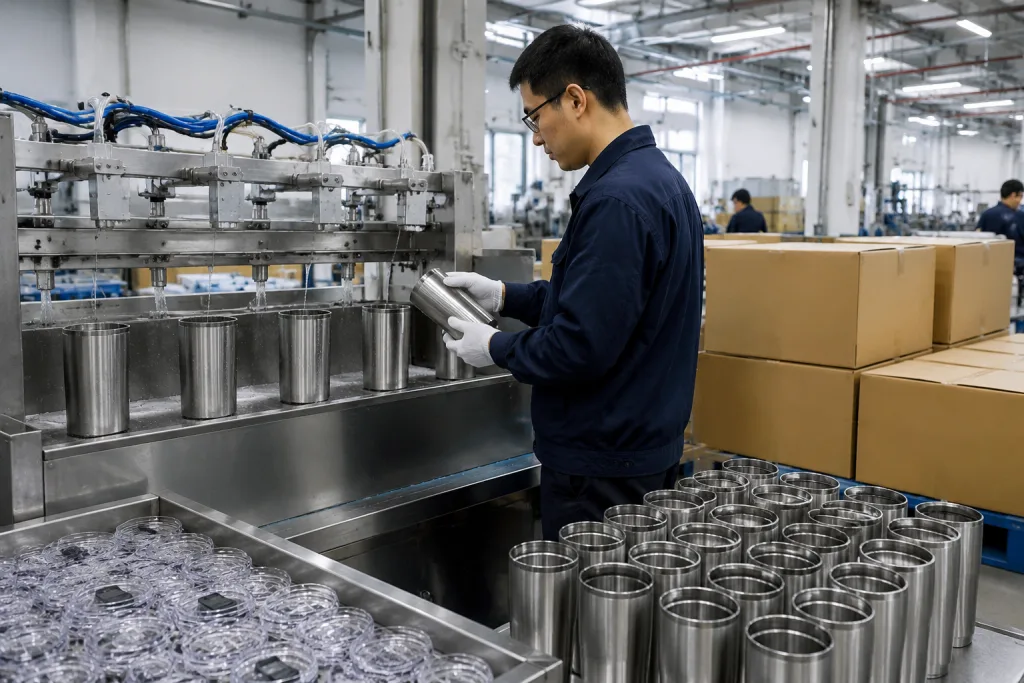
First fix the wording: Tritan Renew is a copolyester, not stainless steel. We run it on clear sports bottles, lid parts, straws, infuser cages, and non-hot inner pieces; the injection line checks gate blush with a 10x loupe before packing. A real vacuum thermos body is double-wall stainless because the insulation comes from the vacuum gap, welded steel shells, and a copper or aluminum reflective layer. If a supplier brief says “Tritan Renew thermos,” ask one hard question: do you want a transparent bottle with light insulation claims, or a stainless vacuum flask using recycled-content plastic parts?
For outdoor retail, the wrong question is “which material is better?” Use-case decides it. Tritan Renew gives clear visibility, lower carry weight around 85-140 g for a 650 ml body, drop-friendly impact resistance, and a recycled-content story buyers can put on shelf tags. Stainless gives real hot and cold performance, fewer complaints after backpack dents when the gauge is right, and stronger margin in gift and outdoor channels. We had one EU buyer flag this last season: their PO said “boiling water safe Tritan body,” and the math did not work.
| Spec | Tritan Renew body | Stainless vacuum thermos |
|---|---|---|
| Typical capacity | 500-1,000 ml | 350-1,200 ml |
| Hot retention | Not suitable for boiling water programs | 6-12 hours common, 24 hours cold |
| Body wall | Single-wall molded copolyester | 0.45-0.55 mm 304 stainless |
| Branding | 1-color silkscreen, or full-wrap sleeve when artwork needs coverage | Laser on bare steel; powder coat with silkscreen for color bodies; emboss after tooling sign-off |
| Best channel | Fitness bottles and kids hydration ranges | Outdoor retail and corporate gift programs |
If the product must sell as a custom thermos, let stainless do the thermal work. Tritan Renew still has a place in the lid, cup, tea strainer housing, or a transparent window if the drawing leaves enough wall thickness. QC pulled one 750 ml sample last month because the plastic window sat 0.8 mm proud after ultrasonic welding; small mismatch, big leak risk.
Use Case Fit Before Unit Price
A low FOB price turns into a trap when the bottle goes into the wrong channel. We have seen this go sideways: one buyer pushed for a conference-gift price, then placed the same bottle in 42 camping shops and got coating complaints after shelf handling. A giveaway thermos does not need the same coating life as a camping-store SKU. Outdoor retailers ask for 60-80 μm powder coating, 100% lid leak check on the line, and a 5-layer export carton that does not crush under pallet stacking. Promotional brands care more about a clean 45 mm logo window, Pantone color approval, and the ship date printed on the PO.
For a hiking or ski retail program, we run buyers toward 18/8 stainless steel, vacuum insulation, a leakproof screw lid, and powder coating tested by cross-hatch adhesion. QC pulled the sample with a 3M 600 tape test last month, and the weak coating failed at the shoulder radius, not on the flat body. A 500 ml or 750 ml customized thermos in this class lands around USD 3.20-6.80 FOB Ningbo or Shanghai depending on cap structure, coating, carton size, and inspection scope. A premium 1,000 ml wide-mouth unit with handle lid moves higher if the buyer adds a silicone boot, retail color box, and spare gasket kit. The math does not work if you compare that to a giveaway bottle.
For a promotional thermos, a simpler manufacturer thermos configuration is often the right call: 500 ml straight body, one-color powder coat, laser logo, white box, packed 24 pieces per export carton. Simple wins. At thermos bulk quantities, that spec is easier to hold because the line only needs one laser jig and one lid torque setting. It also cuts surprise charges. The biggest mistake is asking a thermos factory for 10 lid options, 3 coatings, and 4 logo methods at 1,000 units. We had one PO where the buyer typed “matte black lid” in one line and “gloss black lid” in another; sampling took 12 days instead of 6, and they still chose the standard screw lid.
For transparent hydration, choose Tritan Renew and do not pretend it is a hot beverage flask. We check those bodies with a go/no-go gauge at the neck because cap fit shifts fast when the wall thickness is off by 0.2 mm. For hot coffee, soup, ski lodge retail, or winter corporate gifting, choose stainless. That is the honest split.
Spec Table For Factory Quotes
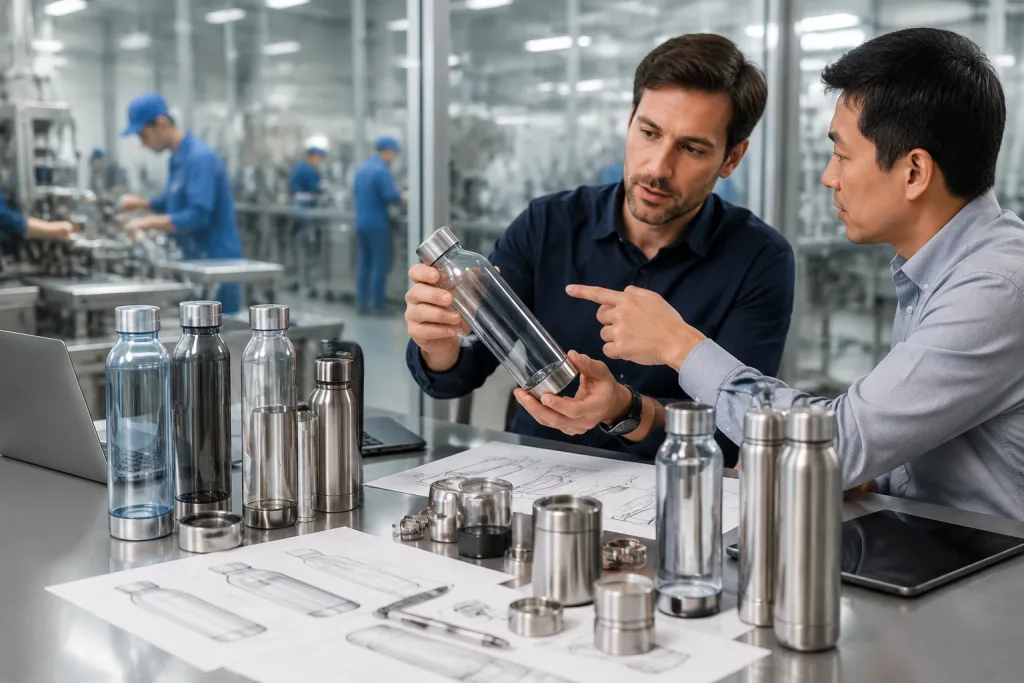
Ask a China thermos factory for pricing with a spec table, not a mood board. A mood board gives us color direction, but the line still needs steel weight, lid structure, coating loss, carton cube, and QC time before we can quote. Last month one buyer sent 12 reference photos and no wall thickness; our caliper check on the closest sample showed 0.42 mm outer, which changed the price by USD 0.28 per piece. Numbers stop the guessing.
| Line item | Retail outdoor spec | Promo spec |
|---|---|---|
| Body material | 304 inner / 304 outer stainless | 304 inner / 201 or 304 outer |
| Wall thickness | 0.50 mm outer, 0.45 mm inner | 0.40-0.45 mm outer |
| Capacity tolerance | ±5% | ±5% |
| Insulation test | 95°C start, 6 hours above 60°C | 95°C start, 6 hours above 50°C |
| Leak test | Inverted 30 minutes | Inverted 10-15 minutes |
| Coating | Powder coat, 3M tape test | Spray paint or powder coat |
| Inspection | AQL 2.5 major / 4.0 minor | AQL 2.5 or 4.0 agreed |
This is where a customizable thermos program gets real. Want soft-touch paint? Put it in the RFQ. Need Pantone 5605C within a Delta E target? Write the target, because “dark green” turns into 3 lab dips and 6 wasted days. If the bottle ships to Germany, ask for LFGB food-contact testing. If it ships to California, include CA Prop 65 review. For children’s drinkware, ask early about ASTM and CPSIA where applicable; QC pulled one kid lid sample where the straw valve failed after 300 bend cycles, and that finding killed the schedule.
At BottleForge in Zhejiang, we quote bulk thermos orders against the actual configuration, not just capacity. Two 750 ml bottles can differ by USD 1.00 because one has a molded carry handle, silicone base, copper lining, and retail box, while the other is a straight cylinder with a basic lid. We’ve seen this go sideways when the PO says “same as approved sample” but the attachment names a different lid code, so our sales desk now checks lid drawing, carton mark, MOQ, and barcode before we release the PI.
Branding Options That Survive Shelves
Branding is where 6 out of 10 custom thermos projects get overcooked. You do not need every decoration method on the quote sheet. You need the one that fits your sales channel, logo detail, and target landed cost. Laser engraving is still the safe pick for stainless: it does not peel, it cuts clean on powder coat, and our 20W fiber laser holds small text down to about 0.8 mm without turning it muddy. Silkscreen costs less for large simple graphics, but QC pulled samples last month where the ink failed a 3M tape test because the coating and ink system were not matched. Heat transfer gives full-color artwork, but it adds cost and extra rejection points.
For outdoor retail, I prefer powder coat plus laser engraving for most custom thermos programs. Simple sells. A 30 x 60 mm logo area is enough for most bottle brands, and the mark looks permanent on the shelf. For promotional thermos campaigns where the logo must be bright or full color, silkscreen or UV print works best on a straight body; curved tapers and texture coatings make registration harder. We have seen this go sideways when a buyer approved artwork from a flat PDF, then flagged a 1.5 mm logo drift on the first line sample.
Typical pre-production sampling takes 7-12 days for an existing stainless mold with laser logo and standard coating. Custom color powder coating may add 3-5 days because we run a separate spray booth setup and bake panel cards before touching the bottle body. A new lid mold or special body profile can push development to 25-40 days before mass production starts. The math does not work if your distributor thermos shipment must hit a spring outdoor reset or a November promotional window and the PO arrives with the color code typo still sitting in line 4.
Ask your thermos manufacturer for a decoration map with maximum printable height, wrap gap, logo tolerance, and coating limitations. A serious thermos vendor will tell you when your artwork sits too close to a shoulder curve or bottom radius. That honesty beats a quick yes. On our line, we mark the safe print zone in mm on the dieline, then QC checks the first 5 pcs against the approved sample before packing cartons.
Compliance And Inspection Split
Plan compliance by destination, not by habit. EU and North American buyers ask for similar safety proof, but the file is not the same. For EU outdoor retailers, we usually prepare LFGB, REACH, food-contact migration, and packaging checks before the first PP sample leaves Hangzhou. For the United States, confirm FDA food-contact expectations, CA Prop 65 screening, and CPSIA or ASTM only when the bottle is sold for children’s use. Canada often needs bilingual packaging and distributor details printed in the right place; last March, QC caught a French warning line missing on a 750 ml box before mass printing.
A responsible thermos suppliers conversation also needs factory audits. BSCI, ISO 9001, and Sedex are the 3 audit names buyers ask us for most often. They do not guarantee a clean shipment, but they show whether the manufacturers thermos line has basic process control, document control, and traceable corrective actions. For a new thermos distributor program, I trust a steady audit record plus clear QC photos more than a showroom video. We have seen this go sideways: one buyer accepted nice sample photos, then flagged mixed 304 stainless and Tritan Renew cap material on the PO after deposit.
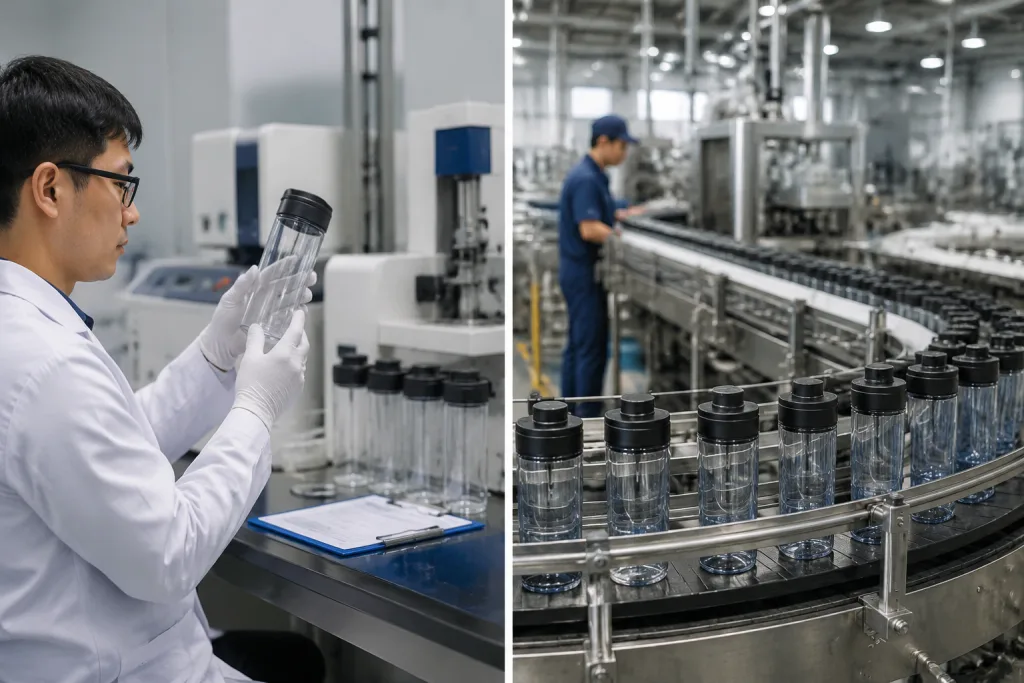
Inspection should cover more than appearance. For stainless vacuum bottles, we run vacuum performance, leak testing, coating adhesion with 3M tape, logo position within 1.5 mm, odor check, inner wall polish, cap thread fit, and carton drop test. A common plan is AQL 2.5 for major defects and 4.0 for minor defects, with critical defects at 0. For a 5,000 unit thermos bulk order, that usually means a third-party inspector checks a statistically selected sample, not every unit. The line moves fast. QC pulled the sample last week because 6 lids showed light silicone flash around the drinking spout.
China export drinkware is mature, but that does not make the order automatic. Zhejiang factories have strong stainless supply chains, and we can source Tritan Renew parts faster than most inland plants, but your brief still decides the result. If you only write “high quality thermos customized with logo,” the math doesn't work. Which logo size? Which Pantone? Which lid material? Put the inspection checklist in the purchase order before deposit, not after the goods are packed; a 2 mm logo shift is cheap to fix on the laser jig, painful after 120 cartons are sealed.
Commercial Terms Without Surprises
Most stainless thermos factory quotes go out as FOB Ningbo or FOB Shanghai. From our Hangzhou plant, a 40HQ truck to Ningbo often runs about 3.5 hours if the warehouse releases before 2 p.m. EXW looks cheaper on paper, but then you own the local trucking, customs handoff, booking follow-up, and the small mess when the forwarder writes the wrong factory address on the SO. For North American and European buyers without a China office, FOB is the cleaner buy. The math usually works.
For a first order, we normally run 30% deposit and 70% balance before shipment, or 70% against inspection pass before cargo release. QC pulled the sample, AQL 2.5 passed, then finance releases the original documents or telex release. Large retailers can ask for different terms after credit review, but open account on a first 1,000-3,000 unit order is the wrong expectation. If a thermos suppliers quote lands 12% below the other 3 quotes, check the exclusions: logo setup, color box, inner carton, testing, FNSKU labeling, spare lids, and whether the PO says 304 stainless or just “stainless steel.” We have seen that typo go sideways.
MOQ depends on how deep the customization goes. For standard stainless bodies with stock lids, 1,000 units per color is realistic, and the line can usually change powder coating color after a 30-minute gun clean. For custom molded lids, plan 3,000-5,000 units because the injection mold trial, silicone gasket fit, and leak test need stable volume. For a fully customized thermos body with new tooling, the practical discussion starts around 10,000 units, plus mold cost. Tritan Renew molded bodies follow the same tooling logic, and the recycled-content document should be checked before your marketing team prints “sustainable” on 8,000 color boxes.
Carton math matters for outdoor retailers and distributors thermos programs. A 750 ml bottle in color box may pack 24 pieces per master carton, around 15-18 kg gross weight depending on accessories; we still measure the final carton with a tape because one thicker EVA insert can push the size over the fulfillment center limit. If you sell through ecommerce or fulfillment centers, put barcode, FNSKU, carton label, polybag warning where needed, and drop-test requirements into the RFQ, not after mass production. Small details decide whether your cheap bulk thermos order stays cheap after rework. Re-labeling 120 cartons by hand is not a strategy.
Choosing The Right Hybrid Brief
The best answer to a tritan renew thermos manufacturer search is often a hybrid brief: stainless vacuum body for heat retention, Tritan Renew or another compliant plastic only where clear viewing or recycled-content wording earns its place. Think clear drinking lid, removable infuser, 60 ml measuring cup, or a retail companion bottle in the same series. Do not force a clear plastic body into a job where the buyer expects 6-hour hot coffee. The math doesn't work. On our line, QC checks the vacuum body with a 95°C water test before the plastic lid even reaches the assembly table.
For outdoor retailers, build a two-SKU family if the shelf story needs sustainability and insulation. One SKU can be a 750 ml stainless vacuum thermos for coffee, tea, and cold water. The second can be a 700 ml Tritan Renew sports bottle for cold hydration. Match the powder-coat color code, cap silhouette, and carton artwork, but keep the technical jobs separate. Cleaner shelf block. Fewer headaches. Last season a buyer flagged a 1.5 mm height mismatch between bottle and printed tray, so we now check the display fit with a caliper before mass packing.
For promotional brands, keep the offer simple. A stainless body, laser logo, and one proven colorway will beat a complicated thermos customizable concept that misses the event date. If the campaign needs recycled-content wording, put it into the lid or packaging only when the paperwork backs the claim. Procurement teams in Europe and North America are stricter about loose “eco” language, and they should be. We have seen this go sideways when a PO said “recycled bottle body” but the approved sample only had a Tritan Renew lid insert.
A good thermos vendor should push back on the brief before taking the deposit. Ask which parts are standard, which need tooling, which tests are already on file, and which claims need fresh lab reports. Real answers sound like this: standard mold, MOQ 1,000 pcs, laser logo ready in 2 days, new LFGB report needed for the drinking spout. If the reply is just screenshots and “no problem,” you are probably dealing with a trading desk, not a thermos manufacturer with people standing beside the leak-test machine.
Send BottleForge your thermos spec table today
We will review material fit, MOQ, testing, packaging, and FOB pricing before you commit to tooling or a bulk order.
Frequently asked questions
Can a Tritan Renew bottle be a real vacuum thermos?
Not in the usual stainless vacuum thermos sense. Tritan Renew is a copolyester used for clear drinkware and plastic components. A real vacuum thermos needs two rigid walls, a sealed vacuum gap, and welded construction; 304 stainless steel is the normal material because it handles heat, pressure, and welding. Tritan Renew can be used for lids, cups, infusers, or a matching cold-water bottle in the same product range. If you need 6 hours hot retention from a 95°C water start, choose stainless. If you need a transparent bottle for cold hydration with recycled-content messaging, Tritan Renew is a better fit. Mixing the two in one sourcing brief is fine, but the function of each material must be clear.
What MOQ should I expect for a custom stainless thermos?
For an existing stainless thermos shape with a standard lid, BottleForge usually starts at 1,000 units per color. That can include powder coating and one logo method such as laser engraving or silkscreen. If you need a custom molded lid, silicone boot, special carry handle, or unusual cap system, plan for 3,000-5,000 units because plastic tooling and color setup need volume. A new stainless body mold is a bigger decision and normally makes sense closer to 10,000 units. For thermos bulk programs across several colors, you may be able to split 3,000 units into three colors if the coating schedule is efficient, but that should be confirmed before pricing.
Which tests should outdoor retailers request before shipment?
For outdoor retail, request food-contact testing and practical performance checks. For EU shipments, LFGB and REACH are common. For the US, FDA food-contact expectations and CA Prop 65 screening may apply. On the factory QC side, specify vacuum performance testing, leak testing, coating adhesion, logo position, odor check, cap torque, and carton drop test. A typical inspection plan is AQL 2.5 for major defects, 4.0 for minor defects, and 0 for critical defects. For insulation, define the method: for example, fill with 95°C water, test after 6 hours at 20°C room temperature, and require the liquid to remain above 60°C for the approved retail spec.
How long does a customized thermos order take from China?
For a standard stainless thermos with existing mold, normal timing is 7-12 days for pre-production samples and 35-45 days for mass production after sample approval and deposit. Custom powder coating can add 3-5 days during sampling. A new lid mold or special body shape can add 25-40 days before bulk production starts. Ocean freight to Europe or North America then adds roughly 25-40 days depending on port pair and season. If you have a fixed retail reset or promotional event date, work backward from delivery, not factory completion. For a 5,000 unit thermos promotional order, confirm packaging, barcode, and inspection details before the first sample.
How do I compare two thermos suppliers fairly?
Give both thermos suppliers the same RFQ table. Include capacity, steel grade, wall thickness, lid type, coating, logo method, packaging, tests, target AQL, delivery term, and order quantity. Without that, one supplier may quote 201 outer steel, thin wall, spray paint, and white box while another quotes 304 outer steel, powder coat, retail box, and third-party inspection. The cheaper number may not be cheaper after corrections. Ask for FOB port, sample fee, mold fee if any, lead time, carton dimensions, and test reports. A serious China thermos factory will answer with numbers. Be cautious if the reply is only “best quality, best price” without material grades or testing method.