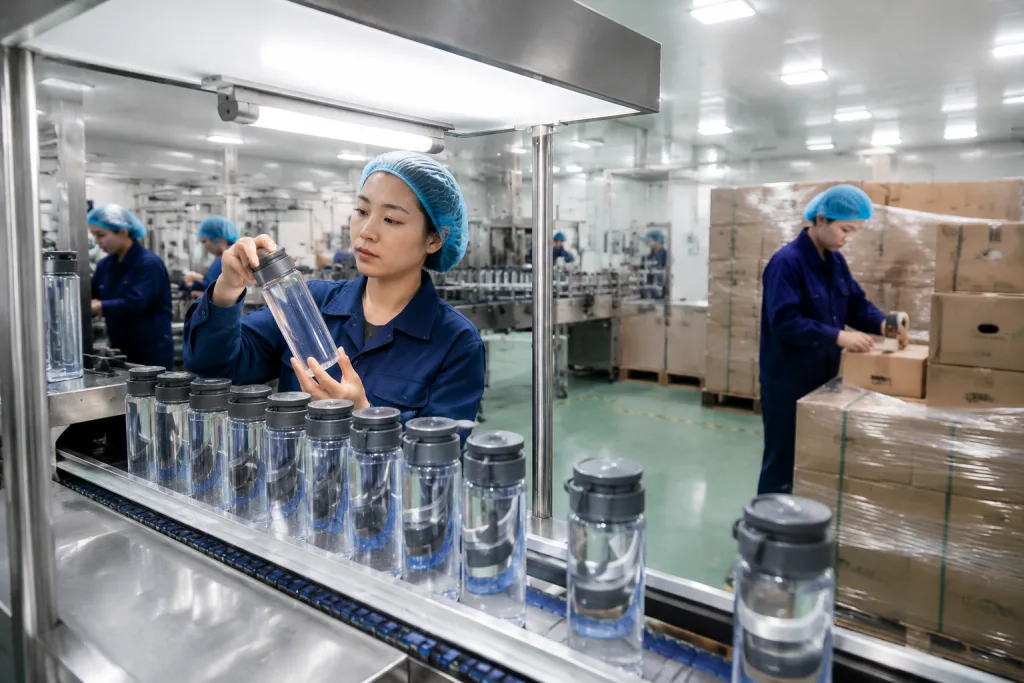
Key Takeaways
- Start Tritan Renew drinkware wholesale RFQs with 3,000-5,000 pcs MOQ per color or model
- Ask for recycled-content documentation and food-contact test reports before sampling
- Budget 25-35 days for standard production after sample approval in Zhejiang, China
- Use AQL 2.5/4.0 inspections for drinkware bulk orders, not random warehouse checking
Tritan Renew drinkware wholesale looks simple until the quotes land in your inbox. One supplier gives a low unit price, then says the recycled-content certificate is “extra.” Another includes testing, but the lead time is 60 days, not 35. A third can mold your shape, but the MOQ moves from 3,000 to 10,000 pcs after the tooling drawing is checked with a caliper on the line. That gap hurts. If you buy bulk drinkware for retail, corporate programs, or distributor stock, these details decide whether the order makes money.
You do not need a prettier catalog. You need specs that the factory can run. The core calls are material claim, product format, decoration method, compliance route, and landed cost, but each one needs numbers: resin grade on the PI, cap leak test at 100% before packing, carton drop standard, AQL level, and shipment term. From our Zhejiang production base in China, we see buyers lose more money on loose specs than on price negotiation; last month QC pulled a sample because the PO said “clear lid” while the approved sample was smoke gray. The math doesn’t work if everyone argues about 3 cents before locking the resin, cap design, carton plan, AQL level, and freight term.
Choose The Material Claim First
Start with the claim, not the bottle shape. This is the wrong question to ask first, but we still see 7 out of 10 RFQs open with “send your best shape.” Tritan Renew gets picked because it keeps the clear, glass-like look and drop strength buyers expect from copolyester, while giving the brand a recycled-content angle. On our line, the first sample check is simple: QC pulls 3 bottles under the light box and looks for haze, black specks, and gate blush before anyone talks about logos.
For Europe, ask for food-contact support, REACH-related declarations where applicable, and migration testing on the final article, not just the raw resin sheet. For North America, buyers usually ask for FDA food-contact statements; kids items often bring CPSIA and ASTM questions into the email chain. Do not accept “eco material” as a material spec. We need the resin source, batch traceability, and a test plan with sample size and lab name; last month one buyer flagged a PO that said “Tritan recycle” instead of “Tritan Renew,” and that one typo held the order for 4 days.
The trade-off is cost and paperwork. Tritan Renew generally prices above ordinary PETG or basic AS, but it holds up better on drop resistance, odor control, and dishwasher exposure when the wall thickness, lid seal, and molding window are right. The math doesn't work if your retail price is under USD 6.99 unless you keep the SKU set tight and decoration simple, say 2 colors with a 1-position print. If your retail price is USD 12.99-24.99, the material story has room to carry better margin; we run 0.8-1.2 mm logo registration tolerance on curved bottles, and buyers notice when it drifts.
At BottleForge Industrial in Zhejiang, China, we normally tell brand owners to set the claim level before sampling: “made with recycled content,” “BPA-free,” “reusable,” or “clear copolyester bottle.” Each phrase triggers a different stack of test reports and declarations. Pick early. It is cheaper to choose honestly at the start than to redesign labels after a compliance review; we have seen finished cartons held because the hangtag claim did not match the SGS report for the final 650 ml bottle.
Match Format To Sales Channel
The second decision is product format. Tritan Renew is a good fit for daily bottles, kids hydration, gym bottles, canteen-style lines, and clear retail sets. It is the wrong answer for some bulk canteen, bulk growler, and alcohol flask bulk inquiries. Match the shape to the sales channel first. Last month our line trialed a clear 750 ml sample with a 38 mm mouth, and QC pulled the sample because the buyer planned to sell it as a sealed beverage container, not a water bottle.
For outdoor and campus channels, canteen wholesale programs usually run 600 ml, 750 ml, and 1,000 ml sizes with leak-proof screw caps, carry loops, and cartons that survive courier handling. If you search canteen bulk or wholesale canteen options, check cap torque and gasket quality before logo size. Start with the seal. We test screw caps with a torque meter at the packing table, and one weak silicone ring can turn a clean AQL 2.5 inspection into 3 cartons of returns after a campus launch.
For beverage and hospitality promotions, buyers ask for growler wholesale, beer growler wholesale, beer tumbler wholesale, or beer tumbler bulk products, but the use case is not always the same. Tritan Renew can work for lightweight event drinkware. Pressure, carbonation, hot-fill use, and alcohol contact still need review before tooling. A beer growler bulk program for sealed carbonated beverage storage needs different cap engineering than a simple promotional water bottle. We have seen this go sideways: the PO said “beer growler,” the artwork file said “water bottle,” and the buyer flagged leakage after a 24-hour inverted sample test.
Alcohol flask wholesale sounds close, but the requirements change again. If you are buying alcohol flask in bulk or alcohol flask wholesale bulk for spirits gifting, verify odor resistance, cap seal, local alcohol-contact rules, and whether the product is only for short-term carrying. A transparent Tritan-style flask looks modern, but do not treat it like stainless steel without testing. On our bench, QC keeps filled samples at room temperature for 48 hours, then checks odor and cap staining before we quote bulk packaging.
For retail hydration, the safest starting point is a 650-900 ml bottle, 1.2-1.5 mm average wall thickness depending on geometry, PP cap, silicone gasket, and a drop test from 1.0 m on filled samples. That specification covers most drinkware wholesale and drinkware bulk programs without overengineering the product. The math does not work if a buyer asks for a thin wall, premium feel, 12-color retail display, and a 1,000 pcs MOQ in the same email.
Set MOQ And SKU Discipline
The third decision is SKU discipline. New buyers often open with six colors, three lid styles, and two logo methods on the first PO. Looks sharp on the line sheet. Then the MOQ math gets ugly, and the warehouse starts holding slow colors by month 4. For tritan renew drinkware wholesale, we usually push buyers toward 3,000-5,000 pcs per model, with 1,000-2,000 pcs per color when the mold is already running and the resin color is a standard chip from our masterbatch supplier. Last spring, QC pulled a 750 ml sample in smoke gray and the buyer flagged only a 0.3 mm logo shift; that kind of standard setup keeps the line moving.
Custom color matching is where cost moves. A Pantone-matched transparent body is not just “change the color.” We run masterbatch trials, scrap 18-25 kg of resin during purge, and sometimes need to buy a resin lot bigger than the order can absorb. For small programs, use clear, smoke, blue tint, or one house color. Save the full color range for the second purchase order after sell-through data is available. We’ve seen this go sideways when a buyer asked for 6 translucent colors at 600 pcs each; the math didn’t work, and two colors died before shipment.
Our Hangzhou-area supply chain in Zhejiang can support about 300,000-450,000 plastic drinkware units per month across standard bottle programs, depending on cap complexity and decoration load. Standard lead time is 25-35 days after approved pre-production sample and deposit. New mold development usually adds 25-45 days, and complex flip lids can add another 7-10 days for functional tuning. On the floor, a flip lid with a tight silicone plug can fail the 24-hour inverted leak test even when the CAD looks fine, so the tooling room may need one more EDM adjustment before we release the PP sample.
FOB pricing depends on resin cost, gram weight, lid parts, packaging, and decoration. As a working range, a standard 750 ml Tritan Renew bottle may sit around USD 1.80-3.20 FOB China at 5,000 pcs, while a larger canteen-style build can move to USD 2.60-4.50. Gift box packaging, metal carry handles, or two-color caps can add USD 0.20-0.80. The best wholesale drink bottle is not the cheapest quote; it is the one we can repeat at the same spec for the next 12 months. We check this against the BOM, carton drop test result, and the last confirmed PO, including small mistakes like “Trian” typed on a buyer’s artwork file.
Decide Decoration Before Tooling
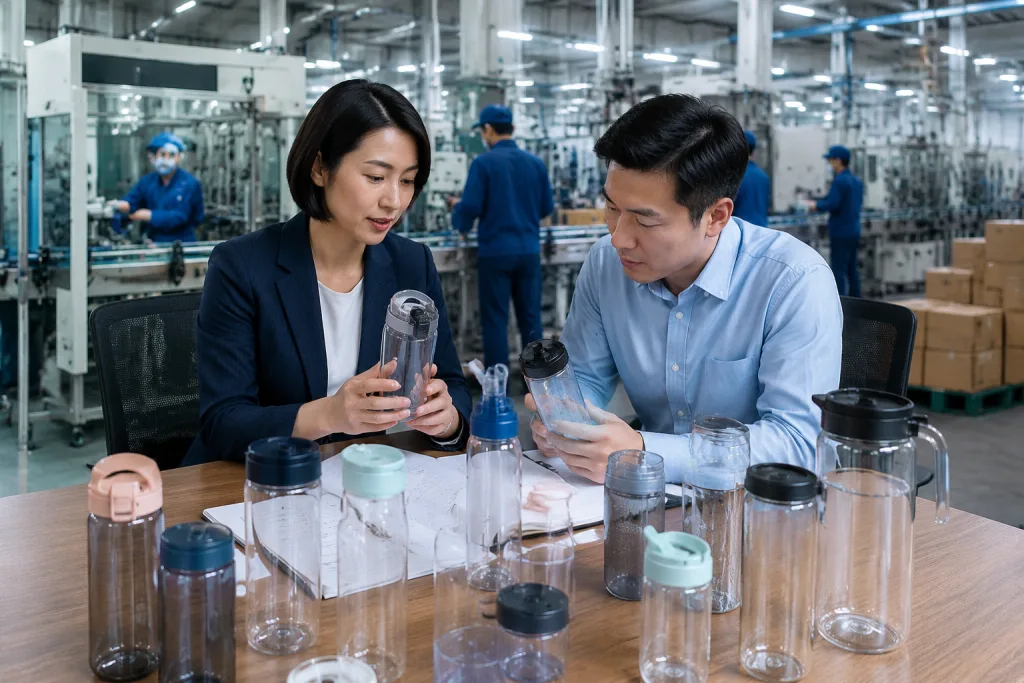
Decide decoration before tooling because it changes the bottle drawing, not just the artwork file. We see this on the line. A curved 650 ml body may look good in a 3D render, then the screen-print jig only gives you a 42 mm safe logo width and QC pulls samples for edge distortion. A flat panel or controlled radius gives cleaner logos and measurement marks, and the reject rate stays closer to 1.5% instead of jumping past 5%. If you run drinkware wholesale for 3 or more customers, leave one clean decoration zone rather than locking the whole body into permanent texture. The buyer usually flags this too late.
Silkscreen printing is still the workhorse for one- or two-color logos. At 3,000 pcs, the math works: one screen, one fixture, steady output around 900 pcs per shift on a clear or tinted bottle. Heat transfer gives stronger full-color shelf graphics, but we test adhesion on copolyester before saying yes because some films lift after hot-water cycling. UV printing fits short runs and fine artwork, but scratch resistance needs a real rub test, not a nice photo from the sample room. Laser engraving is usually the wrong question to ask for transparent Tritan-style bodies; we use it more on cap parts, stainless nameplates, or metal accessories.
Ask for a decoration test before you open the mold: cross-hatch adhesion, 3M tape pull, dishwasher exposure if the claim says dishwasher safe, and 48-hour room-temperature water contact around the print area. QC pulled one sample last season where the logo passed tape pull but showed whitening after sitting with water at the fill line for 2 days. For retail orders, keep a signed golden sample and one approved carton sample at the factory. Simple habit. It avoids arguments when the bulk shipment arrives and someone compares it against a phone photo from a trade-show booth.
Packaging sits inside the decoration cost, even when the PO separates it into another line. Amazon-style or DTC orders often need barcode labels, FNSKU, carton drop testing, and master carton weight kept under 15 kg; our packing table checks this with a 30 kg digital scale before sealing. Distributor orders usually choose bulk pack cartons of 24 or 48 pcs because the cost per bottle drops and the warehouse team can move faster. If you buy drinkware bulk for 2 resale channels, define the selling unit and shipping carton before final pricing. We have seen this go sideways when the PO says “color box” but the carton mark file says “bulk pack.”
Control Compliance And Inspection Risk
The fourth decision is how much risk you want locked down before shipment. In China sourcing, inspection is not “we don’t trust the factory.” It is how serious buyers stop a 1 mm gasket gap from turning into 5,000 pcs of leaking bottles. For Tritan Renew drinkware, we check appearance, real capacity on a digital scale, unit weight, cap fit with a torque gauge, gasket placement, leakage, odor, print alignment, barcode scan rate, and carton strength. QC pulled one sample last month where the barcode was readable on the bottle, but failed after the shrink film wrapped over a curved wall.
A normal inspection plan is AQL 2.5 for major defects and AQL 4.0 for minor defects. Critical defects should be zero. For a 5,000 pcs order, a third-party inspector or our factory QC team usually checks 200 pcs under general inspection level II, depending on the chosen standard. Define the functional tests in writing: inverted leak test for 2 hours, filled drop test from 1.0 m, cap open-close cycle test of 500 cycles for flip lids, and capacity tolerance within ±3%. Be precise. We have seen this go sideways when a PO said “leak test required” but did not say filled, inverted, room temperature, or test duration.
Factory audits matter if your customers request BSCI, ISO 9001, or social compliance records. Not every drinkware factory in China carries every certification, and not every certificate fits the product you are buying. Ask before the deposit. If your retailer needs BSCI, finding the gap after tooling starts is the wrong kind of expensive; 12 days of audit document review can become 18 days once corrective actions are requested. If your distributor requires REACH or food-contact migration reports under its own company name, build that time into the schedule and check the report holder name line by line. We once caught a buyer’s company suffix typed wrong on the test application.
For kids bottles, add stricter small-parts review, bite-valve safety checks, and packaging warnings where required. Use a small-parts cylinder, not just a visual check. For adult sports bottles, focus on leakage and odor, then impact resistance after filling to rated capacity. For canteen wholesale or wholesale canteen outdoor programs, test the strap, handle, and cap tether because those parts break first in real use. The math does not work if a buyer saves USD 0.03 on a thinner strap and then gets 300 return photos from a camping promotion.
Read Quotations Like An Engineer
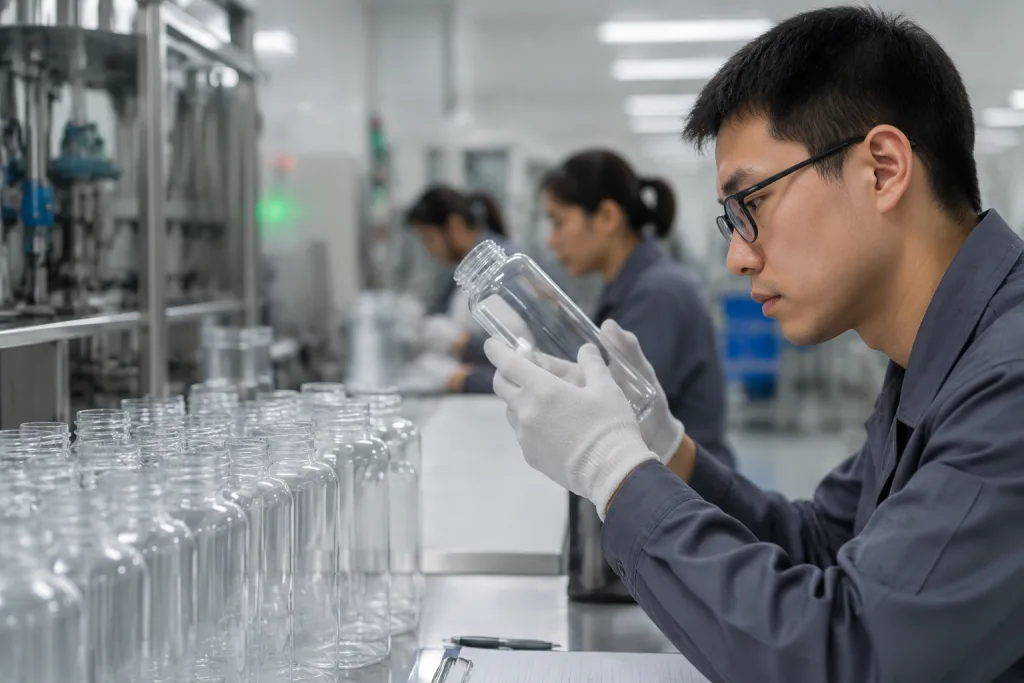
Two quotes can both say 750 ml Tritan Renew bottle and still buy you two different SKUs. Read the BOM line by line before you pick the cheaper one. Ask for the exact body resin grade, bottle weight in grams, cap resin, gasket material, wall thickness in mm, carton spec, print color count, test items, AQL 2.5 inspection level, spare cap ratio, and Incoterm. Last month QC pulled a 750 ml sample that weighed 118 g against a quoted 135 g; same capacity on paper, softer body on the line. If these items are missing, the quote is not ready for approval.
FOB Ningbo and FOB Shanghai are normal for Zhejiang drinkware shipments. EXW looks lower by USD 0.08 to USD 0.18 per piece on some bottles, then the math gets ugly once local trucking, export handling, and customs paperwork move to your side. CIF can work for a first-time buyer, but ask whether destination charges, D/O fee, and terminal handling are excluded. We ship from Hangzhou area factories to Ningbo in 1 day when the booking is clean; a wrong HS code on the forwarder sheet once held a container for 3 days. Compare landed cost, not the FOB number circled in red.
Payment terms change the real risk. A normal first order from China is 30% deposit and 70% balance before shipment after inspection. After 3 or 4 clean shipments, larger buyers sometimes get 20/80 terms or partial credit. Be careful with a supplier offering a 10% deposit while dodging sample photos, FDA or LFGB files, or daily production shots from the line. We have seen this go sideways: the buyer flagged a PO typo from “Tritan Renew” to “Tritan,” and the supplier could not show the resin lot sticker on the carton.
For related categories such as beer tumbler wholesale bulk, beer tumbler in bulk, bulk growler, canteen bulk, or alcohol flask wholesale, do not copy the same RFQ and hope it fits. A growler needs leak testing at the cap; an alcohol flask needs alcohol-contact checks; a canteen may need strap pull testing at 15 kg. One spreadsheet is fine only if it has separate columns for these product risks. Good wholesale drinkware buying is structured, slightly boring, and easy to repeat. That is the point.
Send Your Tritan Renew Drinkware RFQ
Share target size, MOQ, market, logo method, and compliance needs. We will return practical FOB options from Zhejiang, China.
Frequently asked questions
What MOQ should I expect for Tritan Renew drinkware wholesale?
For an existing mold, expect 3,000-5,000 pcs per model as a practical MOQ, with color minimums often around 1,000-2,000 pcs if the color is standard. Custom transparent Pantone colors can require higher resin minimums because masterbatch trials and material loss are real costs. For a new mold, 10,000 pcs is a more realistic first-order target, plus tooling fees that may range from USD 3,000 to USD 15,000 depending on bottle and cap complexity. In Zhejiang, China, standard production normally takes 25-35 days after sample approval.
Is Tritan Renew suitable for beer growler wholesale programs?
It depends on the use case. For lightweight event drinkware, sampling cups, or non-pressurized take-home containers, Tritan Renew can be a good option because it is clear, tough, and reusable. For sealed carbonated storage, you need pressure and cap-retention testing before calling it a beer growler. A beer growler wholesale bulk order should include filled leak testing, cap torque checks, alcohol-contact review, and drop testing. If the product will hold carbonated beer for transport, tell the factory the pressure and filling conditions. Do not approve based on appearance alone.
How do I verify recycled-content claims for bulk drinkware?
Ask for resin documentation from the material supplier, batch traceability, and a written declaration matching the exact claim you plan to print. If your customer requires third-party verification, budget extra time and cost before production. Recycled-content claims should be tied to the material input, not just a sales phrase on a catalog page. For wholesale drinkware going to Europe or North America, also request food-contact test reports on the finished article or an equivalent compliance route accepted by your customer. Keep the resin lot records with your purchase order.
What should I inspect before shipping drinkware bulk orders?
Use AQL inspection instead of only checking carton count. For a 5,000 pcs order, inspect appearance, print position, capacity, bottle weight, cap fit, gasket placement, leakage, odor, barcode scan, and carton strength. AQL 2.5 for major defects and 4.0 for minor defects is a common starting point. Functional checks should include a 2-hour inverted leak test, 1.0 m filled drop test, and 500-cycle lid test for flip caps. If you sell through online channels, add FNSKU placement, master carton size, and carton weight checks.
Can I combine canteen wholesale, growler wholesale, and flask items in one order?
You can combine categories for shipment, but you should not combine them under one loose specification. A wholesale canteen needs strap, cap, and outdoor handling tests. A wholesale growler may need alcohol-contact and pressure-related review. An alcohol flask wholesale order needs odor, seal, and local compliance checks for spirit contact. If all items use existing molds, a mixed shipment may work at 3,000-5,000 pcs per model. The smarter approach is one master purchase order with separate technical sheets, inspection criteria, and packaging rules for each item.