Key Takeaways
- Tritan usually costs USD 0.45-1.20 more per 600-750 ml bottle than polypropylene
- PP is better for low-cost canteen promotional orders; Tritan is better for retail-grade transparency
- Typical BottleForge MOQ is 3,000 pcs per color for custom canteen plastic bottles
- Standard lead time is 25-35 days after artwork, deposit, and pre-production sample approval
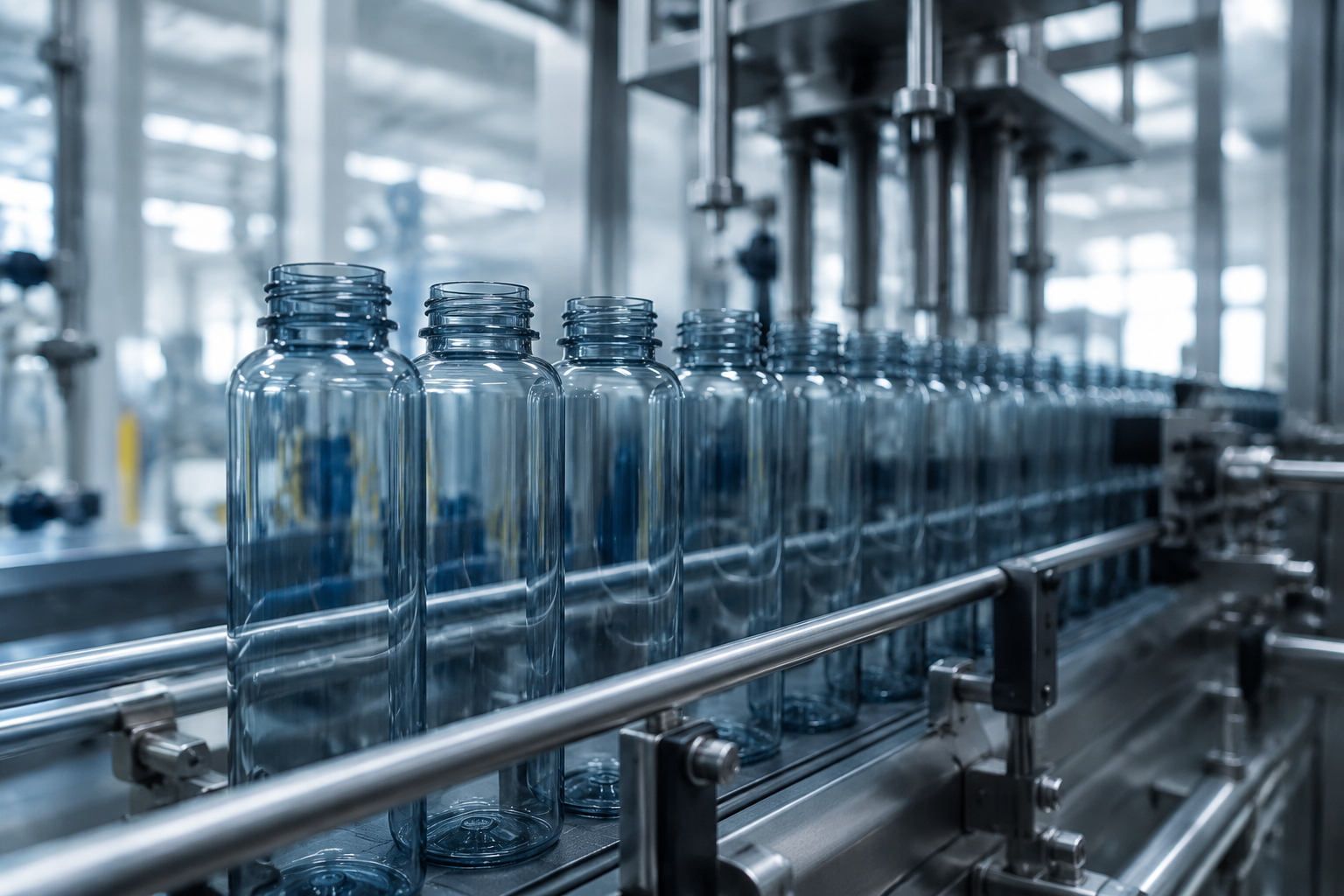
If you are searching for a tritan polypropylene bottle manufacturer, you are not buying 1 bottle. You are choosing a material, mold, lid system, logo process, and carton spec that can survive retail shelves, promo handouts, or distributor drinkware sales without returns eating the margin. We run this check before quoting: cap torque, wall thickness in mm, drop test height, and whether the buyer’s PO says “Tritan” while the reference sample is actually PP. That typo has cost people 12 days.
Tritan and PP both get sold as “plastic water bottles,” but they do not behave the same once the line starts. From our Hangzhou, Zhejiang factory network in China, we quote both materials for custom drinkware, canteen promotional runs, and distributor canteen programs. The right question is not which one looks better in a catalog photo. Ask about hot-fill temperature, impact after a 1.2 m drop, odor after 24 hours, MOQ, compliance paperwork, and how much logo rubbing the surface can take before QC pulled the sample and the buyer flagged it.
Tritan Versus PP At A Glance
Buyers usually need this quick comparison before the meeting gets stuck on tiny details. Tritan is a copolyester, used when the bottle body must look clear like glass, feel stiff, and support a better retail price. PP, short for polypropylene, feels lighter and bends more in hand. It is not cheap junk. Wrong question. The better question is where the bottle will sell, what target FOB the buyer wrote on the PO, and whether the line can hold the wall at 1.2-1.5 mm without sink marks.
| Spec | Tritan | Polypropylene |
|---|---|---|
| Typical bottle size | 500-1000 ml | 400-1000 ml |
| Body clarity | Clear, glass-like shelf look | Milky translucent or solid opaque |
| Heat resistance | Usually up to 90-100°C, grade dependent | Usually up to 100-120°C, grade dependent |
| Impact feel | Rigid, heavier, retail-grade feel | Softer hand feel with better drop forgiveness |
| Typical FOB range | USD 1.65-3.20 | USD 0.85-2.10 |
| Best fit | Retail shelves, gym brands, outdoor shops, premium school lines | Promo orders, sports day giveaways, budget distributor drinkware |
As a tritan polypropylene bottle manufacturer, we do not push one resin to every buyer. A canteen distributor selling into supermarkets often needs Tritan because the shelf look sells the product before anyone reads the hangtag. A canteen vendor supplying an event usually needs PP because the budget is locked at USD 1.20 FOB and the logo only needs to last one season. We’ve seen this go sideways when a buyer approved “clear PP” on the quote sheet, then rejected the milky production sample after QC pulled 8 pcs from the injection line. If a canteen supplier says both materials are “basically the same,” ask for the resin grade, wall thickness, dishwasher claim, and test standard. That separates a working canteen factory from a trading quote sheet fast.
Where Each Material Actually Wins
Tritan wins when the bottle has to look clean on a shelf and survive buyer inspection. For a 600 ml fitness-chain bottle or a university bookstore run at 3,000 pcs, the buyer usually checks transparent color, scratch marks, cap wobble, and whether the straw sits straight. QC pulled the sample under the LED light box last month and caught a 0.4 mm flash line near the shoulder; on clear Tritan, that line shows. Tritan also shows fruit infusion, printed volume marks, and internal straw systems better than PP. It earns the higher unit price because the product looks like retail, not a giveaway.
PP wins when cost, weight, and fast replacement beat a crystal-clear body. For charity events, school sports days, airline amenity packs, or 10,000 pcs employee gifts, PP often makes cleaner math. We run solid colors, simple silk screen logos, and cartons under 9 kg so the freight quote does not scare the buyer. No need to pretend it is premium retail. A good PP bottle is honest. A bad PP bottle usually comes from chasing the lowest quote by USD 0.03 and then accepting thin walls, loose lids, or color drift on the line.
- Tritan fit: retail drink bottles with clear bodies, premium custom canteen lines with printed ml marks, gym shaker-style bottles with tight cap fit, infuser bottles, and higher-end distributor growler accessories.
- PP fit: canteen promotional campaigns, budget canteen customized orders, kids sports bottles for 5,000 pcs school runs, conference giveaways, and high-volume canteen distributor replenishment.
- Mixed-material fit: Tritan body with PP lid, PP handle, silicone gasket, and stainless pin when the buyer wants shelf appeal but the BOM still has to pass costing.
For a custom growler or customizable growler project, we normally discuss stainless steel first. If the buyer means a large plastic bottle in the 1.2-2.0 L range, Tritan is the safer retail material. PP can work for a distributor growler when the end user expects utility, not gift-grade finish. We have seen this go sideways when the PO says “growler,” the artwork file shows a clear body, and the buyer later approves cloudy PP to save USD 0.18 per piece.
Cost, MOQ, And Lead Time Reality
The real buying question is not “which plastic is better?” The better question is “which spec protects my margin at my order volume?” For a 650 ml bottle with a flip lid, single-color body, and one-position logo, PP may quote around USD 0.95-1.45 FOB Ningbo or Shanghai. Tritan may land around USD 1.75-2.80 FOB, based on resin grade, cap structure, packaging, and decoration method. Add a carrying strap, locking button, silicone sleeve, or custom color box, and the gap gets ugly fast. We’ve seen buyers ask for Tritan clarity at PP pricing; the math doesn’t work once the resin invoice hits the desk.
At BottleForge Industrial in Zhejiang, China, a practical MOQ is usually 3,000 pcs per color for existing molds and 5,000-10,000 pcs if you need a special Pantone body or private lid color. New mold tooling depends on structure. A simple bottle body mold can be USD 3,000-8,000; a lid with moving parts can push tooling above USD 6,000 by itself. Our partner lines can handle about 420,000 plastic bottle units per month across Tritan, PP, and mixed assemblies, but capacity still needs booking before peak Q2 and Q3 promotional seasons. On the line, QC pulled a 0.35 mm lid gap last month after the buyer changed the button color late, and that small change cost 2 extra mold-trial rounds.
Normal lead time is 25-35 days after deposit and approved pre-production sample. If you are a canteen distributor asking for FNSKU labeling, Amazon carton rules, drop test packaging, or retailer compliance documents, add 3-7 days for packing confirmation. Rushing production from China is possible. Rushing resin drying, injection stability, or cap leak testing is where defects appear; we run 100% leak checks on sport caps with a simple pressure jig before final packing. A serious canteen manufacturer protects the schedule by freezing artwork, color, and packaging before mass production starts, not after the PO typo gets spotted in carton marking.
Compliance Is Not A Sticker
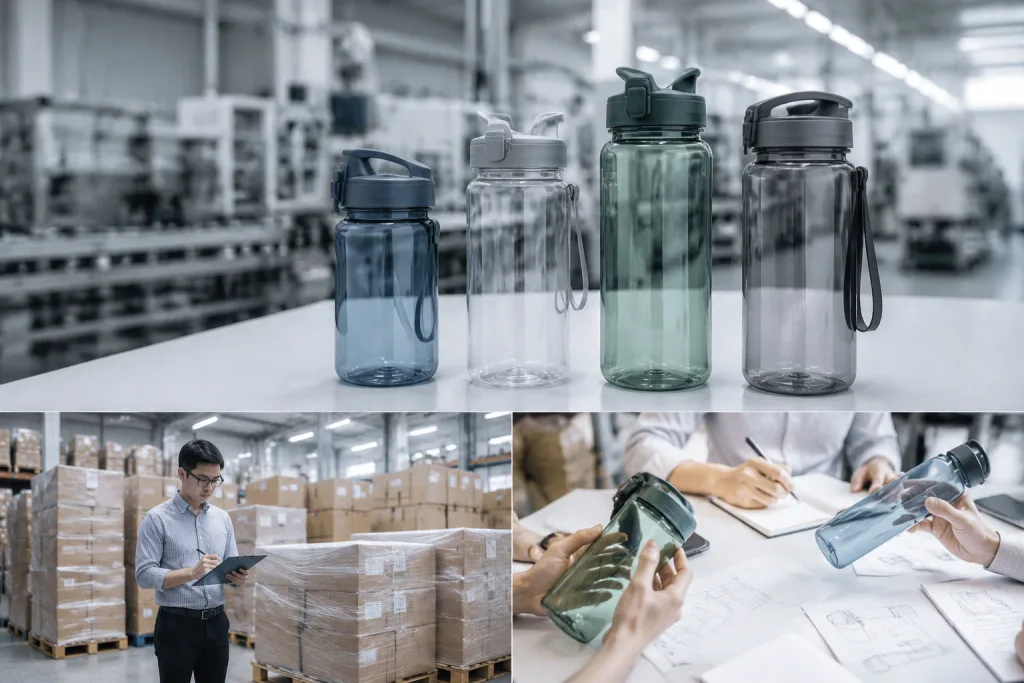
For Europe and North America, a material claim needs paperwork that matches the bottle on the table. BPA-free gets asked for on almost every Tritan and PP inquiry, but this is the wrong question to ask by itself. For EU buyers, we check LFGB or EU 10/2011 food contact testing, REACH screening for restricted substances, and migration reports for the actual food-contact parts. For the U.S., FDA food contact suitability and, where relevant, California Proposition 65 review may be required. For children’s bottles, ASTM and CPSIA questions can enter the PO discussion. Last month QC pulled 8 samples from a 3,000-piece PP sports bottle run because the buyer wrote “Trian” on the PO, while the approved sample was Tritan TX1001. Small typo. Big headache.
Do not accept a generic PDF that does not match the item. If your lid has PP, silicone, Tritan, and a stainless pin, the test report should cover those contact materials, not just the bottle body. If your custom drinkware order includes a printed logo 12 mm from the drinking spout, confirm whether the ink is food-contact safe or kept outside the contact zone. We use a simple caliper check on the line for this, because artwork that looked safe on a PDF can sit too close after pad printing. A canteen supplier that cannot explain this may still ship product, but you carry the risk when customs, retailers, or marketplace platforms ask questions.
Good compliance is boring: correct resin, controlled color masterbatch, documented silicone, clean assembly, and batch traceability. Bad compliance gets exciting when 186 cartons are already on the water.
We normally recommend AQL inspection at Level II with critical defects at 0, major defects at 2.5, and minor defects at 4.0 for standard custom canteen orders. For higher-value customized drinkware, especially retail gift sets, tighten cosmetic criteria before production. Plastic bottles show flow marks and gate marks differently than stainless steel, and the buyer flagged this twice on clear Tritan bodies after carton sealing. The math does not work if you argue about scratches after 24 cartons are packed. Define the acceptance sample early, put it next to the injection machine, and do not wait until the cartons are sealed in Zhejiang.
Decoration Choices Compared
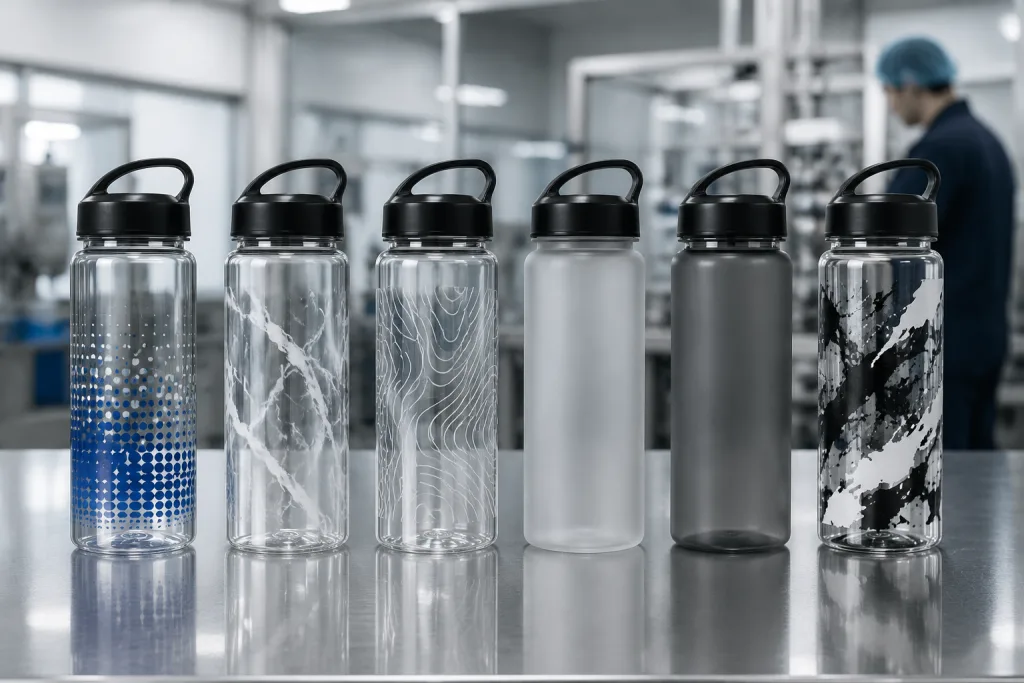
Decoration does not behave the same on Tritan and PP. Tritan is harder and smoother; after flame treatment we run silk screen, heat transfer, or UV print with clean logo edges on a 0.25 mm ink film gauge check. Laser engraving is the wrong first question for clear plastic bottles because the contrast often looks weak unless the buyer accepts a subtle mark. PP is trickier. Its surface energy is lower, so ink adhesion needs real control: flame treatment, corona treatment, or primer, mainly on curved bodies and logos over 45 mm wide. QC pulled a PP sample last month after the 3M tape test lifted one corner of a UV logo.
| Decoration | Best Use | Buyer Warning |
|---|---|---|
| Silk screen | 1-2 color logos, lowest setup cost for MOQ 3,000 pcs | Curved bottles cut the safe print area; our jig normally holds about 60 mm width |
| UV print | Full-color custom drinkware with small text or QR codes | Needs adhesion test on PP before PO approval |
| Heat transfer | Wrap graphics and tall retail artwork | Higher setup cost and 12-day sampling instead of 7 days |
| Embossed mold logo | Long-term private label with repeat orders | Requires tooling change and buyer sign-off on the 3D file |
| Sleeve label | Retail graphics with barcode and claims panel | Can scuff during shipment if the carton divider is too thin |
For canteen customizable programs, we like the first order kept tight: one body color, one lid color, and one logo position. Boring sells. After 2,000 to 5,000 pcs move through the channel, then add two-color caps, gradient bodies, silicone boot colors, or printed measurement scales with their own Pantone chips. Brand owners often ask for 6 custom parts on the first PO. We get it, but the math does not work if the line must match caps, straws, boots, and spare lids while the buyer is still testing demand. One typo on a PO color code, such as 7462C written as 7642C, can hold the whole assembly table.
If you need a customized growler-style large bottle with retail packaging, ask for a decorated pre-production sample, not a blank bottle with nice photos. Ink adhesion, barcode placement, color box compression, and carton drop performance should be checked together. We run the filled-carton drop at 76 cm and check whether the sleeve label rubs against the divider after vibration. A canteen vendor who only sends beauty photos is leaving you blind before mass production, and we have seen this go sideways when the retail barcode landed across a curved panel.
How To Choose A Factory
A capable tritan polypropylene bottle manufacturer should be able to talk plainly about resin drying, barrel temperature, injection pressure, cap torque, gasket compression, and leak testing. Tritan usually runs better after 4 to 6 hours in a hopper dryer; if moisture is still high, QC will see haze, silver streaks, or weak drop-test results. PP is easier on the line, but bad molding still gives you warped bodies, sink marks near the handle, soft threads, and lids that start leaking after 2 or 3 supermarket returns. Ask what defects they record every shift on the injection sheet. We track short shot, flash, black dots, thread damage, and leak rate by cavity number. If the answer is only “our quality is good,” push harder. That answer has burned buyers before.
For B2B buyers, factory selection is not just a price check. Check whether the canteen factory has BSCI, Sedex, ISO 9001, or equivalent audit history if your retailer needs social or quality compliance. Ask whether they run in-line leak testing, random torque checks with a digital torque meter, carton weight verification within ±0.3 kg, and metal detection for stainless components in lids. If you are working through canteen suppliers or canteen vendors, ask whether they own the mold, control the factory schedule, or just forward WeChat screenshots between you and production. We once saw a PO with “matte black” typed as “mate black,” and the buyer flagged it only after 3,000 lids were already sprayed. Small details get expensive fast.
- Request resin grade and food-contact documents before deposit.
- Confirm MOQ by color, not just total order quantity.
- Approve a golden sample with logo, packaging, and gasket installed.
- Use AQL inspection before final balance payment.
- For distributor canteen orders, lock carton marks and SKU labels early.
China still offers strong plastic bottle supply chains because resin suppliers, injection molding shops, silicone gasket lines, printing rooms, and export packing plants sit close together in Zhejiang and nearby provinces. A Hangzhou buyer can check a mold trial in Yuyao in the morning and review carton drop-test results before dinner. Still, not every China quote deserves your deposit. If one supplier quotes 12 days and another quotes 18 days for the same custom color and logo, ask where the time is being cut. Usually it is drying, printing cure time, or final inspection. A real canteen manufacturer helps you remove risk, not hide it behind a low FOB number. The cheapest quote is sometimes the wrong question to ask.
Use-Case Fit For Buyers
If you sell through retail, choose Tritan unless the shelf target forces PP. Clear walls shoot better under a light box, and the buyer can see the water line, fruit slices, tea color, or infuser basket without opening the lid. For a 650 ml retail bottle, a wall thickness around 1.8-2.5 mm is common depending on shape. Thicker is not the whole answer. We have seen 2.8 mm bodies fail because the thread root had a sharp corner; QC pulled the sample after a hinge-area crack showed up in a 1.2 m drop test.
If you supply events, schools, insurance campaigns, or corporate wellness packs, PP usually wins. A canteen promotional program often needs 10,000-50,000 pcs, simple color matching, and cartons under 14 kg so the warehouse team can unload without complaints. The user may keep the bottle for 6 months, not 3 years. Spending an extra USD 0.80 per unit on Tritan is the wrong math if the bottle is mainly a giveaway; we had one buyer flag this after seeing the freight cost jump on a 40HQ quote.
If you are a distributor drinkware buyer, carry both. Use PP as the entry line and Tritan as the upsell, so your sales team has a clean good-better offer without making up benefits. If you are building a canteen custom project for a private label, choose Tritan when transparency and retail packaging matter; choose PP when budget and fast replenishment matter. For customizable canteen programs with 20+ logos, keep the mold stable and change only Pantone color plus print. We run this way on the line because every new lid insert adds trial time, and we have seen mixed-logo POs go sideways from one typo in the artwork file name.
The best sourcing brief is simple: target FOB price, bottle capacity, material preference, lid type, logo method, carton requirements, compliance market, and delivery deadline. Send that to canteen manufacturers before asking for a catalog. You will get fewer random options and more serious answers. Our sales desk can quote 3 matching items in one pass when the brief includes MOQ, test market such as FDA or LFGB, and whether the carton needs a 5-ply export spec.
Send Your Bottle Spec For A Straight Quote
Share capacity, material, logo, MOQ, market, and target FOB. We will recommend Tritan, PP, or a mixed-material build.
Frequently asked questions
Is Tritan always better than polypropylene for custom bottles?
No. Tritan is better when you need a clear, premium-looking bottle for retail or higher-end custom drinkware. PP is often better for canteen promotional orders where price and weight matter more. For example, a 650 ml PP bottle may quote at USD 0.95-1.45 FOB, while a similar Tritan bottle may be USD 1.75-2.80 FOB. If your buyer needs transparency, printed measurement marks, and a giftable look, choose Tritan. If the bottle is for a 20,000 pc event giveaway, PP usually protects your budget better.
What MOQ should I expect from a canteen manufacturer in China?
For existing molds, expect around 3,000 pcs per color for PP or Tritan bottles. If you need a custom Pantone body, private lid color, or special silicone part, 5,000-10,000 pcs is more realistic. New tooling changes the discussion because the factory must recover mold cost and production setup time. A simple custom canteen body mold can cost USD 3,000-8,000, while a lid with locks, pins, and buttons can cost more. Always confirm whether MOQ is per color, per logo, or total order quantity.
Can you make a canteen customized with my logo and packaging?
Yes, but define the decoration and packing early. Common logo options include silk screen for 1-2 colors, UV print for full-color artwork, heat transfer for larger wrap graphics, and molded logos for long-term private label projects. For packaging, buyers usually choose bulk polybag, white box, color box, or retail hang tag. A decorated pre-production sample normally takes 7-12 days after artwork approval. For Amazon or marketplace orders, add FNSKU labels, carton labels, and drop-test packing review before mass production.
Which compliance documents should canteen suppliers provide?
For EU sales, ask for EU 10/2011 or LFGB food-contact testing, plus REACH review where needed. For the U.S., ask for FDA food-contact suitability and check Proposition 65 if selling into California. If the bottle is for children, ASTM and CPSIA questions may apply. The report should match the actual materials: Tritan or PP body, PP lid, silicone gasket, straw, and any stainless pin if it contacts liquid or mouth areas. Do not rely on a generic BPA-free claim for a custom canteen order.
How long does production take for distributor drinkware orders?
For standard existing molds, plan 25-35 days after deposit, artwork approval, and signed pre-production sample. Sampling usually takes 5-10 days for blank or simple logo bottles and 7-12 days for decorated retail packaging. If the order includes multiple colors, custom cartons, FNSKU labels, or third-party inspection, add 3-7 days. Peak season in China can stretch schedules, especially before summer and Q4 promotions. A canteen distributor should book capacity early for 10,000-50,000 pc replenishment programs.