Key Takeaways
- Standard tritan drinkware custom MOQ usually starts at 1,000-3,000 units per SKU
- FOB China pricing commonly ranges from USD 1.65-4.80 depending on lid, capacity, and packaging
- New mold development adds about USD 2,000-8,000 and 25-45 days before mass production
- Mass production lead time is typically 25-35 days after sample approval and deposit
Tritan drinkware custom projects look clean on a quote sheet. Then you compare 3 factories and get 3 prices, 3 MOQ rules, and lead time answers like “about 30 days.” If you buy for retail, promotion, or distributor drinkware programs, USD 0.20 over cost is not the real problem. The bigger risk is signing off a design that fails a 1.2 m drop test, leaks after 6 cartons in transit, or lands 18 days after your launch date. We have seen this go sideways.
We manufacture in Zhejiang, China, and we price Tritan jobs from the parts on the line: mold access, lid structure, logo method, packaging spec, and order tier. A canteen custom order can move fast and keep the math right, but only if the spec is locked before sampling. On our side, QC pulled one pre-production sample last month because the straw lid gasket was 0.4 mm off and the buyer had changed the PO artwork code after approval. Small miss. Big delay.
Start With The Real Unit Cost
For tritan drinkware custom sourcing, “What is your best price?” is the wrong first question. Ask what that price covers. A basic 650 ml Tritan sports bottle with a flip lid, single-color silkscreen logo, and bulk polybag packing may sit around USD 1.65-2.30 FOB Ningbo or Shanghai at 3,000 units. A 1,000 ml canteen customized with a carry handle, silicone grip, time marker print, and retail color box may move to USD 2.80-4.80. We run these quotes off a BOM sheet, not a guess; last month one buyer flagged a USD 0.06 gap because the PO said “OPP bag” while the sample room packed a 0.03 mm PE bag.
The material itself is not the full bill. Tritan copolyester is usually chosen because it is BPA-free, transparent, impact-resistant, and accepted for many North American and European custom drinkware programs. But the bottle body is only one cost center. Lids often decide whether a custom canteen is cheap or expensive. A simple screw cap can cost less than USD 0.25. A leak-resistant flip lid with spring, lock button, silicone gasket, and carry loop can add USD 0.45-0.90. QC pulled the sample on one 1,000 ml order and found the gasket 0.4 mm too loose, so the line had to change the silicone ring before leak testing.
Decoration and packing come next. One-position silkscreen may add USD 0.08-0.18 per unit. Multi-color screen printing can add USD 0.20-0.45 because every color needs setup and registration. Heat transfer or full-wrap printing can reach USD 0.50-1.20 depending on coverage. If you are comparing canteen suppliers, make sure they quote the same artwork size and Pantone count, plus the same packaging spec. We have seen this go sideways: one supplier quoted a 6 cm logo, another quoted 11 cm, and the buyer only noticed after the first PPS came off the UV dryer.
Cheap quotes often hide the expensive parts: lid tooling, carton strength, color box specs, and pre-shipment inspection tolerance. The math does not work if AQL 2.5 is priced in one quote and skipped in another.
MOQ Tiers That Actually Matter
MOQ is not a punishment. It is the point where the line stops losing money on resin purge, color setup, pad-printing plates, and mold changeover. We run about 450,000 units a month at our Zhejiang facility across Tritan, stainless steel, and glass lines. For stock-shape tritan drinkware custom orders, 1,000 units per design is realistic if you use existing body colors plus a simple logo. For custom Pantone body color, expect 3,000 units per color. The math doesn't work below that; our injection tech may purge 18-25 kg of Tritan resin before the color meter reads close on the spectrophotometer.
Here is the tier logic we use when a buyer sends a PO:
- 500-999 units: workable for sample market tests, but unit cost may run 15-35% higher. You will usually get stock clear, smoke gray, or one existing lid color, not a new Pantone match.
- 1,000-2,999 units: workable for canteen promotional orders using stock molds and stock lids. Keep the logo to 1-2 colors; QC pulled one sample last month where a 0.3 mm logo line filled in during pad printing.
- 3,000-5,999 units: the normal range for canteen customizable retail projects with Pantone color plus printed hangtag. Carton customization also starts to make sense here because the carton plate fee spreads across enough pieces.
- 6,000-20,000 units: better for a canteen distributor or distributor canteen program that needs 2-4 colors, barcode labels, and repeat pricing. We ship these as planned batches, not one messy mixed-color run.
Canteen manufacturers in China may advertise low MOQ, but ask what they are quoting. Blank stock is not the same as full custom canteen production. A canteen vendor can sell 200 blank units from inventory. That is different from producing a canteen customized with your resin color, logo, insert card, outer carton mark, and AQL inspection standard. We have seen this go sideways when the buyer flagged “custom blue” on the PO, but the supplier meant stock navy from the warehouse.
Tooling And Mold Decisions
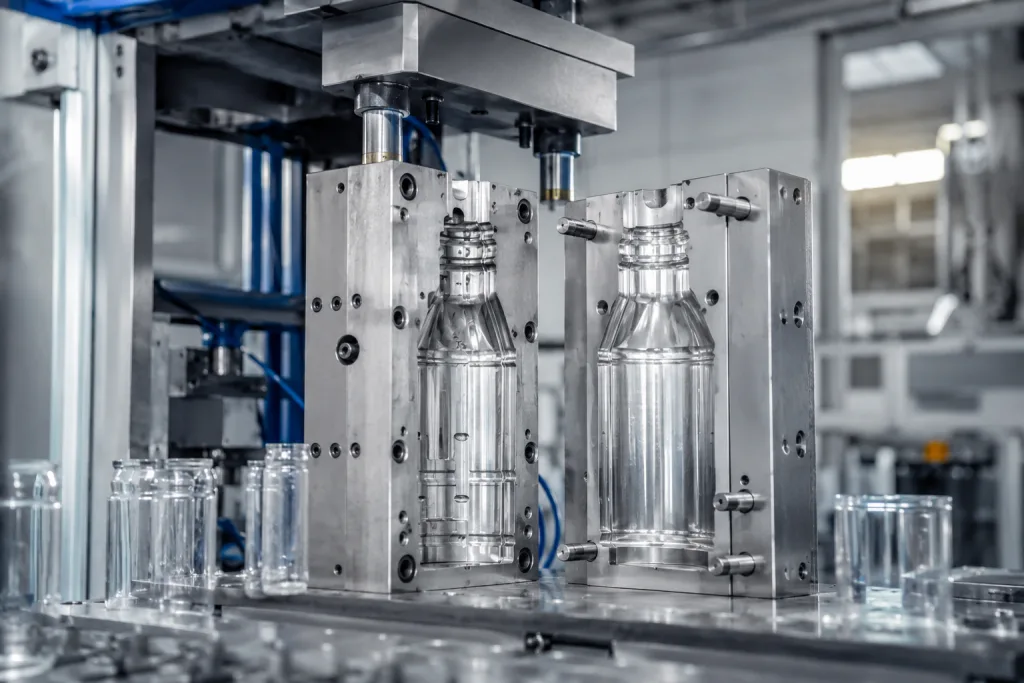
The biggest cost fork is simple: use our existing mold, or cut a new one. Existing molds cost less and sample faster because the lid fit, thread pitch, gasket squeeze, and drop-test behavior already have history in QC files. If your brand can live with a standard 500 ml, 650 ml, 800 ml, or 1,000 ml body, we run logo samples straight from the line after artwork approval. Last month QC pulled a 650 ml Tritan sample with a 0.3 mm logo shift, fixed it on the pad-printing jig, and shipped the revised sample in 9 days.
A new Tritan bottle body mold typically costs USD 2,000-6,000 for a clean shape. A more complex customizable canteen with textured grip, unique shoulder, integrated measuring scale, or special lid interface can reach USD 6,000-12,000. Lid molds are often separate, and this is where buyers get surprised. A flip lid with lock parts may need separate mold sets for the cap shell and button, plus hinge, straw, and silicone tooling. We had one buyer flag a “small lid change” on the PO after deposit; the math did not work because that change touched 4 tooling parts.
Timeline changes fast. Existing mold sampling can take 7-12 days after artwork confirmation. New mold development usually needs 25-45 days for 3D drawing, prototype review, steel cutting, T1 trial, adjustment, and final sample. If your buyer calendar needs goods in a European warehouse in 10 weeks, a new mold is possible but tight once you count 18-22 days on the water and customs buffer. If it needs goods in 6 weeks, use stock tooling. No hero schedule.
For customized growler or custom growler projects in Tritan, watch wall thickness and volume claims closely. A 1.5 L or 2 L body needs enough rigidity to resist side-wall flexing, especially after hot-room testing at 50°C. We normally review wall thickness around 1.8-2.5 mm depending on geometry, because thin walls save resin but raise deformation and complaint risk. We have seen this go sideways when a buyer pushed for a lighter 2 L body; the caliper reading looked good at the base, but QC found flex near the shoulder.
Artwork, Color, And Packaging Costs
About 7 out of 10 buyer-side delays we see start with artwork, not production. A customizable drinkware quote should break out the logo method, body color, lid color, accessory color, and packaging as separate lines, because the math changes fast once the line has to switch ink or fixtures. If you send only a JPEG mockup, the canteen manufacturer has to guess the print size, Pantone reference, and whether your gradient will pass on Tritan. Send AI or PDF vector files, Pantone C codes, logo position in millimeters, and packaging dielines if you have them. Last month QC pulled a pre-production sample where the logo was 38 mm wide on the PO but 52 mm on the mockup. That stopped approval for 2 days.
For tritan drinkware custom decoration, silkscreen works best for simple logos and solid colors, especially 1-color or 2-color marks under about 60 mm wide. Laser engraving is less common on clear Tritan than on stainless steel because the contrast is weak; buyers often flag it after seeing the first sample under office lighting. Heat transfer handles complex artwork better, but it adds cost and we run abrasion testing with 3M tape and a rubbing fixture before we call it safe. UV printing works on some flat or slightly curved areas. Big curved canteen promotional artwork is a different job. The line needs jigs, slower output, and more scrap during setup.
Packaging can quietly add USD 0.10-0.80 per unit. A plain white box is cheap. A 350 gsm printed color box with matte lamination, instruction sheet, and retail barcode is not. Amazon-style distributor drinkware packing may require FNSKU labels, carton drop-test attention, suffocation warnings on polybags, and tighter master carton dimensions, often within a 5 mm tolerance. We have seen this go sideways when a buyer approved the bottle sample but forgot the barcode size, then asked us to relabel 3,000 boxes after packing. If you are a canteen distributor selling through multiple channels, decide early whether every unit needs retail-ready packaging or only export-safe packaging.
For China export orders, our normal carton testing uses 5-ply K=K or similar grade for heavier bottles. The math doesn't work if you save USD 0.06 on cartons and 3% of your goods arrive with crushed retail boxes. We ship enough mixed-carton orders to know where the damage starts: weak corners, loose dividers, and master cartons over 18 kg. Before mass packing, QC checks carton burst strength, gross weight, and whether the bottle shoulder is touching the box wall.
Lead Time From Quote To Vessel
A workable lead-time plan starts before the deposit hits. For a stock-shape tritan drinkware custom order, we usually run it like this: quotation and spec check, 1-3 days, including capacity in ml, carton count, and lid type; artwork proof, 1-2 days, usually a PDF plus a 1:1 print film check; pre-production sample, 7-12 days; sample approval and deposit, 1-3 days; mass production, 25-35 days; QC inspection and booking, 3-7 days. Realistically, that puts a normal order at about 40-60 days from a serious brief to ready-to-ship goods. Short briefs waste time. Last month one PO showed “clear blue” while the artwork called Pantone 2925C, and the line waited 2 days while the buyer confirmed it.
If you need a new mold, add 25-45 days before the pre-production sample is stable. That includes CNC work, first trial shots, and at least one round of fitting the lid thread with a go/no-go gauge. If you need lab testing for EU or North America, add 7-14 days depending on the test scope. For Tritan, buyers commonly ask for FDA food-contact compliance, LFGB for Germany, REACH/SVHC screening, BPA-free declaration, and sometimes ASTM or CPSIA-related checks for kids’ items. A kids bottle is not just a smaller canteen. The testing burden is higher, and we have seen this go sideways when the buyer approved the shape before confirming the bite-valve material.
Freight timing depends on the route. Ningbo to Los Angeles may be roughly 15-25 days port-to-port in a normal market. Ningbo to Rotterdam may be around 30-40 days. Air freight is faster, often 5-9 days airport-to-airport, but the math does not work when the freight cost is higher than the bottle cost on a low-value SKU. For most canteen distributors, rushing production is the wrong question to ask. Freeze the artwork and packing spec 10 days earlier, including barcode size, inner box flute, and master carton gross weight; our booking team has had shipments held because the carton mark missed one digit from the buyer’s PO.
One practical rule: do not book a launch campaign until the golden sample is approved and the factory has confirmed material arrival. QC pulled the sample from one 3,000 pcs pilot run and found a slow leak after 6 hours upside down at room temperature, which pushed the lid adjustment back 5 days. Resin shortage, Pantone rematch, or a failed lid leak test can each consume a week.

Quality Checks Before You Pay Balance
A serious Tritan drinkware supplier should be comfortable with inspection. If a canteen vendor gets defensive about AQL, the math does not work for the buyer. For most customized drinkware exports, we run ANSI/ASQ Z1.4 AQL Level II, with typical limits such as Critical 0, Major 2.5, Minor 4.0. Put those limits on the purchase order before production starts; we once had a PO that said “AQL 2.5” only, and the buyer flagged the missing Minor limit at balance-payment time.
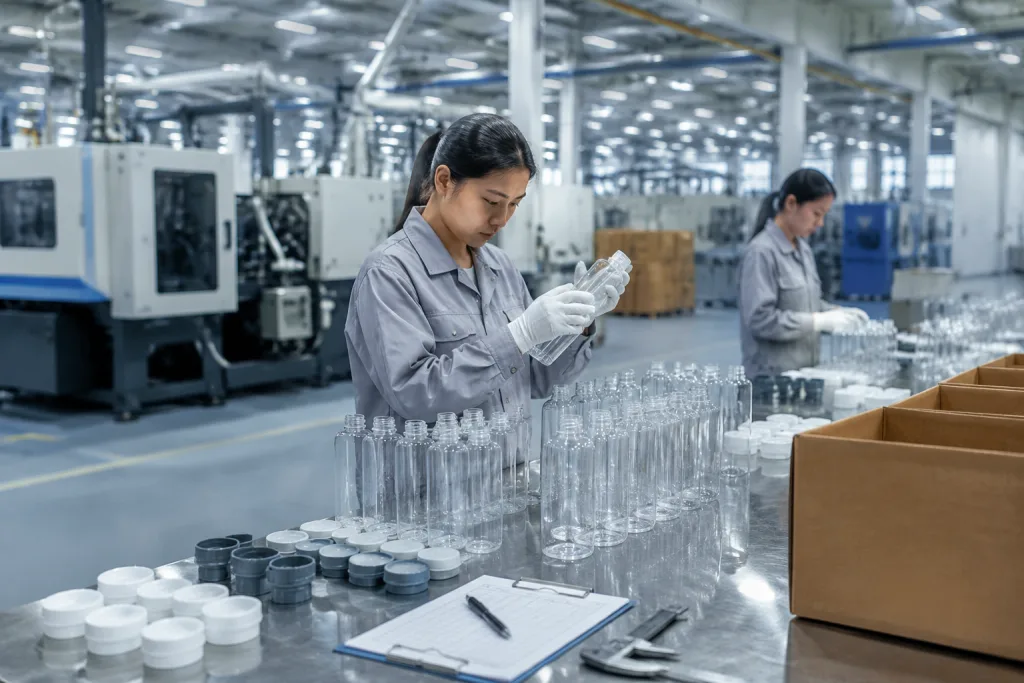
For Tritan bottles, QC should check more than surface scratches. Confirm capacity tolerance with a 500 ml measuring cylinder, wall thickness at the shoulder and base in mm, lid torque with a torque meter, gasket seating, leakage, odor, print adhesion after 3M tape pull, barcode scan, color difference, and carton drop condition. A basic leak test is simple: fill the bottle, close the lid, invert it for 30 minutes, then shake it in different positions. For straw or flip lids, check 100% of samples from inspection cartons, not the first 5 pieces handed over by the line. We have seen this go sideways.
Color tolerance needs physical standards. Pantone on paper does not match translucent resin one-to-one. For transparent or frosted Tritan, color can shift under D65 and TL84 light boxes, sometimes enough for a retailer to reject a shelf set. We usually approve a physical color chip or resin plaque before mass production, then QC pulls the sample against that standard on the line. If you are buying for a distributor growler or customized growler program, keep one signed golden sample at the factory and one with your QC team.
Factory audits matter, but they do not replace inspection. BSCI, ISO 9001-style process control, incoming material records, and traceable resin batch documents reduce risk when the order moves from pilot run to mass production. Zhejiang and broader China supply chains are mature, but maturity does not fix a vague spec sheet. Good factories still need clear acceptance criteria, down to resin batch number, carton gross weight in kg, and the MOQ written the same way on the PI and PO.
Choosing The Right Supplier Type
Not every canteen manufacturer fits the same Tritan drinkware custom project. A trading company works for a 300-piece mixed test order across stainless steel, glass, and Tritan, especially when the buyer only needs a logo and a carton label. A canteen factory makes more sense when you need DFM feedback, repeat orders, or control of a 0.8 mm lid gasket tolerance. Catalogs don’t reduce risk. The better question is whether your canteen suppliers can catch a weak hinge pin before QC pulls 80 leaking samples from the line.
If you are buying 1,000 pieces for a corporate gift, a canteen promotional specialist with stock inventory can cover it. If you are building a retail line with four colors, custom caps, GS1 barcodes, and replenishment every quarter, you need a canteen manufacturer that can keep Delta E under 1.5 and block 3 production slots before peak season. For a distributor canteen buyer serving 6 client programs, confirm mixed carton marks, split shipments, and neutral packing before the PO. We’ve seen this go sideways because one buyer wrote “matte black” on the PO while the approved sample was “soft-touch black.”
Ask direct questions. What is the MOQ per color? What is the resin brand and grade? What is the lid leak-test method, vacuum chamber or upside-down 24-hour test? Can the factory provide FDA, LFGB, REACH, or BPA-free documentation? What is the normal defect rate after final inspection under AQL 2.5? What happens if print adhesion fails after a 3M tape test? Experienced canteen vendors answer with numbers, sample reports, and a photo from the inspection table, not slogans.
At BottleForge Industrial in Hangzhou, Zhejiang, we quote custom canteen and customizable growler projects after checking capacity, lid structure, logo method, and packing. It usually takes 12 days to confirm a proper pre-production sample versus 3 days for a blind low quote, and the math works better once production starts in China. On our floor, the line leader checks first-shot Tritan clarity under a light box before we run mass production. Fast quotes are easy. Bad assumptions are expensive.
Send Your Tritan Bottle Spec For A Real Quote
Share capacity, lid style, logo file, MOQ, and delivery country. We will return a practical FOB China quote with lead-time notes.
Frequently asked questions
What is the normal MOQ for tritan drinkware custom orders?
For existing molds, the practical MOQ is usually 1,000 units per SKU with a simple one-color logo and available body colors. If you need Pantone-matched Tritan resin, expect 3,000 units per color because injection molding setup and color purge waste are not small. For a fully customized canteen with new lid color, printed box, insert card, and barcode labeling, 3,000-5,000 units is more realistic. Some canteen vendors may offer 300-500 units, but that usually means blank stock with post-printing, not true custom production. For distributor drinkware programs, 6,000 units and above gives better unit cost and more stable production priority.
How much should I budget for a custom canteen in Tritan?
A standard 650 ml custom canteen using an existing mold usually lands around USD 1.65-2.80 FOB China, depending on lid, logo, and packing. A larger 1,000 ml customized canteen with a locking flip lid, silicone gasket, time marker, and printed retail box often sits around USD 2.80-4.80. New tooling changes the project budget: body molds may add USD 2,000-6,000, while complex lid systems can add another USD 3,000-8,000. Always ask whether the quote includes logo setup, packaging, export carton, inner bag, and pre-production sample. Otherwise, the final invoice can move 10-20% after approval.
Is Tritan better than stainless steel for promotional canteen orders?
Tritan is better when you need lightweight, transparent, BPA-free, lower-cost customizable drinkware with visible volume marks or fruit infuser designs. Stainless steel is better for insulation, premium retail positioning, and long heat retention. For canteen promotional campaigns, Tritan often wins on price and delivery speed: a stock-mold Tritan order may finish in 25-35 production days after sample approval, while complex stainless vacuum bottles can need longer component coordination. Tritan also works well for gyms, schools, outdoor events, and wellness kits. But it does not keep drinks hot or cold like double-wall stainless steel, so match the material to the use case, not just the target price.
What testing should a canteen supplier provide for Europe and North America?
For North America, ask for FDA food-contact compliance, BPA-free documentation, and relevant CPSIA or ASTM checks if the product targets children. For Europe, many buyers request LFGB for Germany, EU food-contact documentation, and REACH/SVHC screening. If silicone straws, colorants, or printed coatings are used, those components should be covered too. A good canteen supplier should also support AQL inspection, usually ANSI/ASQ Z1.4 Level II with Critical 0, Major 2.5, Minor 4.0. Do not accept a single generic certificate without checking material grade, supplier name, test date, and whether it matches Tritan drinkware rather than unrelated plastic items.
How can canteen distributors reduce lead-time risk?
Freeze the specification early. Most delays come from artwork changes, Pantone rematches, packaging revisions, and unclear barcode requirements. For a repeat distributor canteen program, keep approved golden samples, standard carton marks, and a fixed AQL checklist. Place resin color orders immediately after deposit, because custom color can add 5-10 days if the first match is rejected. If you need goods for a fixed event, work backward from vessel cutoff: allow 40-60 days for stock-mold production planning, plus 15-40 days sea freight depending on destination. For urgent launches, split 5-10% by air and ship the balance by sea.