Key Takeaways
- Standard Tritan bottle MOQ starts at 3,000 pcs/color; new mold projects usually start at 10,000-20,000 pcs
- Factory unit cost commonly moves by USD 0.18-0.65 depending on cap, logo, and packaging choices
- A realistic custom order timeline is 45-65 days including sampling, approval, production, and inspection
- Use AQL 2.5/4.0 inspection and confirm REACH, LFGB, FDA, or ASTM needs before paying deposit
If you are comparing a tritan drink bottle factory in China, do not stop at the catalog price. Landed cost changes fast once we lock resin grade, mold option, cap structure, logo process, carton strength, AQL 2.5 inspection scope, and the paperwork your buyer asks for, such as REACH, LFGB, FDA, or ASTM documentation. We have seen this go sideways when a PO says “Tritan bottle” but the cap drawing is missing a 1.2 mm silicone gasket.
At BottleForge Industrial in Hangzhou, Zhejiang, we quote custom drinkware for distributors, brand owners, and promotional buyers who need dates they can put on a sales sheet. No guesswork. Our Tritan line can run about 450,000 units/month, with standard MOQ from 3,000 pieces per color and typical production lead time of 25-35 days after sample approval. Last month QC pulled the sample because the logo sat 3 mm off center; better to catch that on the line than after we ship 186 cartons.
Start With The Real Cost Stack
A buyer will send us one line: “500 ml Tritan bottle price.” This is the wrong question to ask. A tritan drink bottle factory cannot quote from capacity alone, because the cost sits in the lid, decoration, packing, carton marks, and test work. A 500 ml bottle with a plain screw cap may FOB Ningbo at USD 1.15-1.45 at 5,000 pieces. Use the same body, then add a flip straw lid, silicone carry loop, two-color silkscreen, individual kraft box, and Amazon carton marking, and we usually land at USD 1.85-2.45. Same plastic. Different line setup. Last month QC pulled a 500 ml sample where the PO said “matte lid” but the artwork file showed glossy black, and that small mismatch held the pre-production sample for 2 days.
The base material comes first. Eastman-grade Tritan or equivalent copolyester is not priced like PP or PETG, and the resin invoice moves faster than buyers expect. Resin cost can swing 8-15% across a quarter, and transparent colors expose black specks, flow lines, and gate marks faster than solid smoke or frosted finishes. We run transparent bottles under a 6000K inspection lamp, and one 0.3 mm black dot near the shoulder is enough for QC to flag the sample. If your brand sits in retail or corporate gifting, saving USD 0.06 by switching to a lower-grade plastic is poor math unless you first check odor, dishwasher performance, and compliance paperwork.
Then check the cap. Caps are where 7 out of 10 bottle projects get heavier than the buyer expected. A basic threaded lid has fewer parts and faster assembly. A straw lid may include PP housing, silicone gasket, PE straw, spring pin, button, dust cover, and leak-test labor, which can add USD 0.22-0.48 per unit before decoration. On the line, we use a torque meter and a simple 180-degree inversion leak test before packing, because a pretty lid that leaks still becomes a claim. A canteen customized for outdoor retail with a wide-mouth cap, tether, and carabiner-style handle needs more torque testing than a gym bottle, especially when the buyer asks for a 1.2 m drop test.
Packaging is the quiet cost at the end. Bulk polybag plus export carton may stay under USD 0.08 per unit. Printed color box with insert card, barcode label, and drop-test carton can add USD 0.18-0.42, and the math gets worse if the carton must meet Amazon FBA labeling rules. We ship drinkware every week where the bottle cost is clean, then the buyer flags the carton because the PO says 24 pcs/ctn and the packing spec says 36 pcs/ctn. If you are a canteen distributor or distributor drinkware buyer, ask your China supplier to separate product cost, decoration cost, packaging cost, and freight assumptions. Blended quotes hide problems until purchase order stage.
MOQ Tiers Change The Math
MOQ is not a penalty line on the quote. It is where setup scrap, color changeover, printing screens, carton plates, and QC hours stop chewing up the order. In our Zhejiang plant, most standard Tritan drink bottles start at 3,000 pieces per color when we run an existing mold with a standard cap. If the buyer wants a PMS-matched body, the working MOQ is usually 5,000 pieces because the injection team has to purge the barrel and runner until the color meter is within tolerance. Last month QC pulled 18 off-color bottles from the first purge tray before the shade settled.
For logo work, the minimum can sit below the bottle MOQ, but that is usually the wrong question to ask. A one-color silkscreen setup may cost USD 45-80 per artwork position, and laser or pad printing fixtures may cost USD 60-120. On 500 pieces, the math hurts. On 5,000 pieces, it disappears into the unit price. We have seen canteen promo orders go sideways when a buyer tries three small replenishment batches instead of one campaign run; the line still needs the same screen, fixture, ink mix, and first-article check with 3M tape.
Here is the practical way to read tiers:
- 3,000-4,999 pcs: works for market testing, but unit cost stays higher and color choices are narrow; we usually keep these runs to existing molds only, with cartons using standard marks or a simple sticker.
- 5,000-9,999 pcs: normal custom canteen range, with better color options and stable carton printing; logo setup spreads cleanly across the order after the first 50-piece print approval.
- 10,000-29,999 pcs: stronger FOB pricing and easier production scheduling; this tier fits canteen distributors and retail launch programs because we can book the injection line for full-day blocks.
- 30,000 pcs and above: gives room for dedicated production windows, component stock planning, and tighter shipment batching; we can stage caps, straws, and cartons by PO line instead of chasing parts during packing.
New mold projects run on a different calculation. A customized growler or special ergonomic bottle body can require USD 3,500-12,000 in mold cost depending on cavity count, cap complexity, and texture. For private molds, a serious canteen manufacturer will usually ask for 10,000-20,000 pieces on the first order so the trial shots, mold tuning, and packaging development justify the engineering time. We measure early samples with calipers at the thread and sealing face, and if the cap torque drifts by even 0.3 N·m, the tool room needs time to correct it.
Sampling Is Where Time Slips
Most delays start before mass production. For an existing Tritan bottle with a logo, we run a clean sample in 7-12 days. A new color, new cap match, or revised color box takes 18-30 days. If the pre-production sample goes to Europe or North America, add 3-6 days by DHL or FedEx, then 2-4 days while the buyer’s team signs off internally. The factory should not book all Eastman Tritan resin, silicone rings, and printed cartons before the sample is approved. The math doesn't work. Last month QC pulled a 650 ml sample where the logo sat 3 mm too low, and that small miss stopped the PO from moving to deposit.
Separate the sample types, or the line will lose days later. Start with a blank stock sample to check hand feel, capacity, lid comfort, and drinking angle; if the mold is on our shelf, we ship it in 2-4 days. Next comes the logo sample with silkscreen, laser engraving, or heat-transfer artwork, and your sales team should review it under office light at 500-700 lux, not just on a WeChat photo. The pre-production sample uses the confirmed resin color, cap color, logo method, and packaging, then becomes the control sample for QC. Simple rule. If the buyer writes “matte black lid” on the PO but the approved sample has glossy black, someone will flag it at final inspection.
A canteen customizable program with 4 lid colors and 6 bottle colors needs a sample matrix. Do not approve one blue bottle and assume the smoke gray version will print the same. White silkscreen on transparent amber behaves differently from black print on opaque navy, especially when the pad-printing jig is set for a curved 72 mm body. A solid canteen supplier in China should warn you before production, and the buyer still needs tight artwork and PMS approvals. We've seen this go sideways when a buyer approved PMS 7545C by email, then sent a PO with PMS 7546C in the attachment.
For timing, plan it this way: 3 days for artwork checking, 7-12 days for standard logo samples, 5 days for courier and feedback, then 2-3 days for proforma invoice cleanup and deposit transfer. That puts you near 20 working days before bulk production starts. Buyers who promise retail delivery dates before sample approval often pay air freight to repair a planning mistake. We ship FOB Ningbo often, and one missed sample approval can turn a 40HQ sea shipment into 86 cartons by air at painful cost.

Production Calendar You Can Trust
After deposit lands and the final sample is signed off, we normally run custom drinkware production in 25-35 days at our Hangzhou, Zhejiang plant. That schedule assumes an existing mold, standard resin color, approved packaging artwork, and no extra compliance retest. If the PO is 50,000-100,000 pieces, plan on 40-55 days. The line has to slot injection, printing, assembly, leak testing, and carton packing in order; we had one buyer push for 32 days on an 80,000-piece Tritan order, and the math did not work once 5 injection machines were already booked.
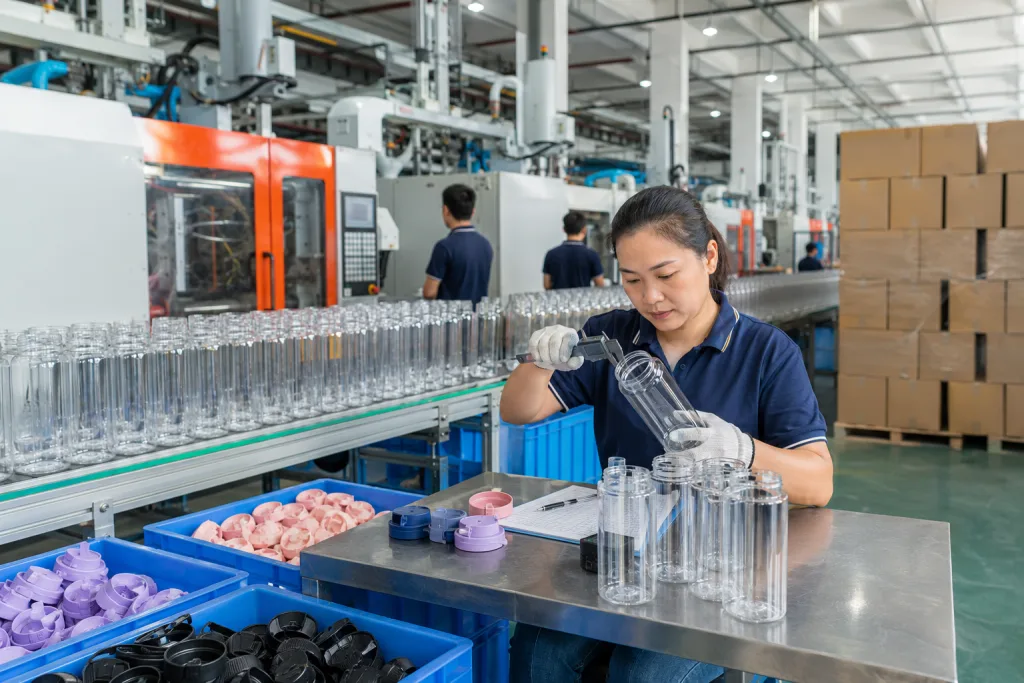
The production flow is simple. The waiting time is not. Resin drying and color mixing go first, usually checked with a hopper dryer and color masterbatch ratio sheet before the first shot. Injection molding follows, with first-article checks for weight, wall thickness, mouth roundness, and visible flow marks. Typical Tritan bottle wall thickness sits around 1.2-1.8 mm depending on capacity and shape. Too thin feels cheap and can deform under dishwasher heat; too thick adds resin cost and slows the cycle time by 3-6 seconds per shot.
Decoration starts after molded parts stabilize. Silkscreen printing moves fast once the screens are set, but curved bodies and large wrap logos need slower speed and create more rejects. Laser engraving is cleaner for metal caps, not always the right choice for transparent plastic. Heat transfer can look retail-ready, but MOQ and defect control are tighter; QC pulled 200 samples on a matte black logo job last month and found edge lifting on 7 pieces before packing. A canteen vendor should give you a real decoration yield, not a perfect number. On custom jobs, 1-3% decoration loss is normal.
Assembly and leak testing are the last factory bottlenecks. Straw lids, gaskets, and locking buttons need manual or semi-automatic assembly, and one missing silicone ring can turn into a carton-level complaint. For leak testing, we run sampling plus functional checks based on order risk; sports lids and kids bottles need more attention than a simple screw-top canteen customized for conference giveaways. Final inspection usually takes 1 day for under 20,000 pieces and 2-3 days for larger lots, using AQL 2.5 for major defects and AQL 4.0 for minor defects unless you specify stricter terms. We have seen this go sideways when the PO says “blue lid” but the approved sample tag says “navy PMS 2965.”
Logo And Packaging Price Traps
Logo choice is a cost decision, not just branding. It changes reject rate and lead time on the line. One-color silkscreen on a straight bottle panel is usually the lowest-cost option, often USD 0.05-0.10 per unit plus setup. Two-color print can add USD 0.04-0.08 per color because registration and drying time increase; our printer usually checks the second color with a 0.3 mm registration tolerance. Wraparound artwork looks good on a rendering, but the math doesn't work on tapered Tritan bodies until we test the print area with a real jig and 10 trial bottles.
For customizable drinkware, buyers often ask for laser engraving because they link it with durability. On stainless steel it works well. On Tritan plastic, laser can leave a soft mark, not the high-contrast retail look buyers expect under store lighting. QC pulled the sample last month and the buyer flagged it as “too light” beside the approved AI file. Pad printing works for small cap logos. Heat-transfer film can deliver full color, but expect USD 0.18-0.35 per unit and sampling closer to 7 days vs 3 days for simple silkscreen. If you need a canteen promotional item for an event date, keep the logo simple.
Packaging has the same trap. A plain export carton is fast. We ship that way all the time. A custom color box needs dieline, artwork, print proof, paper confirmation, and carton drop testing if you care about retail condition; our carton supplier asks for 2 printed sheets before mass run. For Amazon or marketplace programs, you may need FNSKU labels, suffocation warning on polybags, master carton labels, and pallet specs. Those jobs are not hard, but they must be in the RFQ before quotation. Adding them after production starts can cost 3-7 days, and we have seen this go sideways when the PO says “bulk pack” but the email thread says “gift box.”
If you are comparing canteen suppliers, ask for a line-item quote: bottle, cap, logo, packaging, testing, inland freight to port, and FOB charge. A supplier who gives only “USD 1.62 all included” may still be honest, but you cannot compare it against another quote. For canteen manufacturers serving Europe and North America, transparent costing is basic buying discipline. It prevents arguments when your buyer changes from bulk pack to retail box after the price is approved, or when our merchandiser spots one typo on the PO carton mark and has to stop the label printer before 6,000 stickers are wasted.
Compliance Before The Deposit
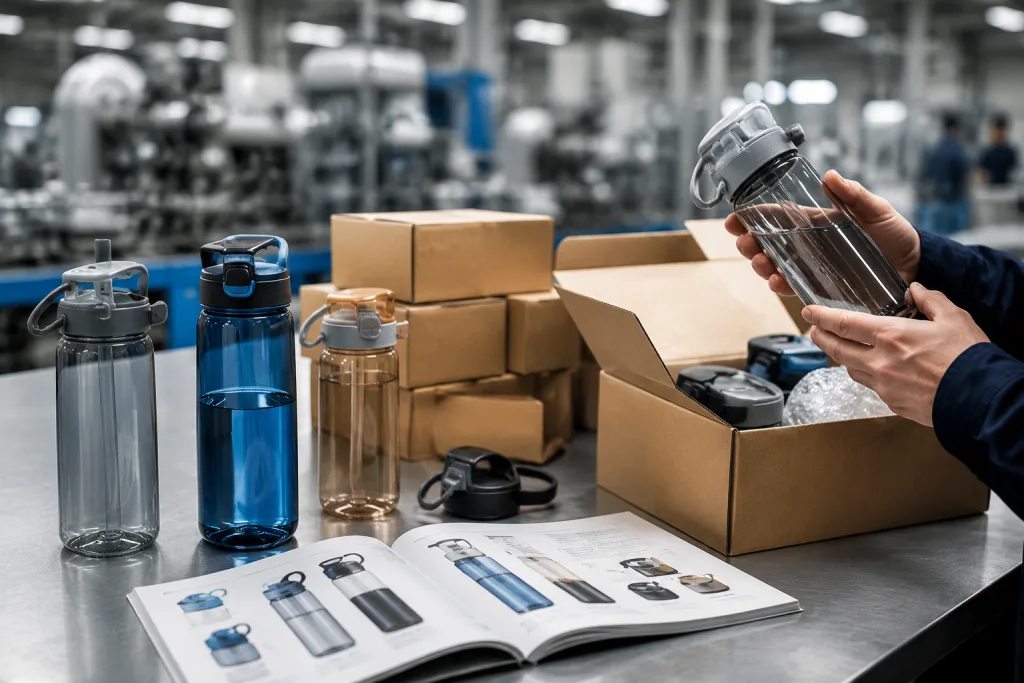
Tritan sells well because the buyer can see the water level, the bottle survives normal gym-bag drops, and the resin is BPA-free. Still, the finished bottle is not “compliant” just because the body is Tritan. For Europe, we usually prepare LFGB and EU 10/2011 food-contact files first, then check REACH for color masterbatch, silicone, printing ink, and packaging contact risk. Some retailers also ask for dishwasher wording, which needs a cycle count, not a nice sentence on the carton. For the United States and Canada, FDA food contact expectations apply, while CPSIA and ASTM small-parts checks come into play for kids’ bottles, flip lids, bite valves, and loose straws. QC pulled one 620 ml sample last month because the straw stopper was 5.6 mm too easy to remove. The buyer flagged it before deposit, which saved the order.
Talk compliance before deposit. Not after we book the vessel. If you need third-party testing from SGS, Intertek, TÜV, or BV, budget USD 250-900 depending on test scope and material count. A simple Tritan body plus PP cap and silicone gasket has at least three material families. Add a printed logo, straw, colorant, or coating, and the lab adds separate line items; the math does not work if the PO only says “test bottle.” On our side, we run a component map from the BOM, then mark each resin lot, gasket supplier, ink code, and carton label spec before sending samples. A canteen factory should help map components, but your importer of record still owns the market decision.
BSCI, ISO 9001, and factory audit documents are buyer-specific. We maintain export production systems in Zhejiang, China, with batch records, injection parameters, and final packing photos, but audit timing still needs a slot. If your retailer requires a fresh social audit or corrective action review, add 2-4 weeks. This is not the bottle taking longer to mold; 12 days on the injection line can turn into 18 days on the calendar because the auditor has not closed the file. We have seen this go sideways when a buyer paid deposit, then sent a retailer manual with a new CAP review request on page 47.
For quality control, put measurable requirements into the purchase order. Capacity tolerance, color tolerance, logo position tolerance, leak-test method, carton drop requirement, barcode scan rate, and AQL level should not live only in email. Give numbers: ±5 ml capacity, ΔE under 1.5 against the approved chip, logo position within 1.0 mm, 30 minutes inverted leak test, 76 cm carton drop, 99.5% barcode scan rate, AQL 2.5 for major defects if that is your standard. For a custom growler, customizable growler, or customized growler with larger volume, specify fill capacity at brim and practical drinking capacity. Those two numbers are not the same. Retail complaints start when the carton says 1,000 ml and the buyer’s measuring cylinder shows 930 ml at normal drinking fill.
Freight And Ordering Strategy
FOB Ningbo or FOB Shanghai is usually the cleanest term for overseas buyers sourcing from Zhejiang, China. We quote it this way because it separates the bottle cost from ocean freight swings; last month one buyer’s Ningbo to Hamburg rate moved USD 420 per 40HQ in 9 days. If you need DDP to a warehouse in Germany, the UK, the United States, or Canada, ask for a separate line and make the forwarder spell out duties, import VAT, insurance, and last-mile delivery. We’ve seen this go sideways when customs asked for the Tritan material declaration and the DDP agent had no FDA file ready.
Carton size changes the freight bill faster than new buyers expect. A 750 ml Tritan bottle often packs 24 pieces per carton, with a carton around 58 x 40 x 48 cm depending on body shape and packaging. QC pulled a sample carton last week and the digital caliper showed the handle cap added 18 mm to the bottle height, which cut the loading plan by 22%. If you choose a bulky handle cap or individual gift box, container loading can drop by 15-30%. On a 40HQ container, that loss beats a USD 0.03 unit-price argument. The math doesn’t work. Distributor canteen buyers should request estimated carton dimensions and gross weight at quotation stage, not after the PO is signed.
Air freight is a rescue tool, not a sourcing strategy. Air shipping a 20,000-piece customized canteen order can cost more than the goods, especially when each carton hits 13-15 kg gross weight. If you have an event deadline, split the order: ship 1,000-2,000 pieces by air for launch, then send the balance by sea. We run this plan for canteen vendors and promotional agencies when logo approval lands late; one buyer flagged the Pantone code 3 days before printing, so the line had to hold the pad-printing jig until the revised artwork came back.
A practical reorder plan beats chasing the lowest first-order price. Keep your first order at 5,000-10,000 pieces if the model is new to your channel. After sell-through data, move to 30,000 pieces for stable colors and caps. For canteen distributors with seasonal demand, reserve production slots 45-60 days ahead of required vessel departure. Factories can move fast, but we cannot squeeze resin procurement, printing, AQL 2.5 QC, and vessel cutoff into 7 days without risk. The buyer may push, but the line still needs dry resin, clean molds, approved print film, and packed cartons before the truck leaves for Ningbo.
Send Your Tritan Bottle Spec For A Factory Quote
Share capacity, cap type, logo method, packaging, MOQ, and destination. We will return a practical FOB quote and lead-time estimate.
Frequently asked questions
What MOQ should I expect from a Tritan drink bottle factory?
For an existing Tritan bottle mold, expect 3,000 pieces per color as a realistic starting MOQ. If you need PMS body color, plan on 5,000 pieces because resin color matching and machine purging create waste. For a private mold or special cap structure, first-order MOQ usually moves to 10,000-20,000 pieces. Logo MOQ can technically be lower, but setup charges of USD 45-120 make small batches inefficient. If you are testing a distributor canteen program, 5,000 pieces is usually the most sensible balance between cost and risk.
How long does a customized Tritan bottle order take?
A normal custom order takes about 45-65 days from artwork confirmation to ex-factory readiness. Budget 7-12 days for logo samples, 3-6 days for courier delivery, 2-4 days for buyer feedback, and 25-35 days for mass production after deposit and approval. If you need a new mold, add 25-45 days for design, tooling, trial shots, and adjustment. If your order needs third-party testing or retailer audit approval, add another 1-4 weeks depending on the requirement.
Is Tritan more expensive than PP or PETG bottles?
Yes. Tritan resin is usually more expensive, but it gives better clarity, toughness, and odor performance for reusable drink bottles. Compared with PP, a Tritan bottle may cost USD 0.25-0.70 more per unit depending on capacity and cap. Compared with PETG, the gap may be smaller, but Tritan generally performs better in premium reusable applications. For retail custom drinkware, that extra cost is often justified. For one-day giveaway canteen promotional orders, PP may be enough.
Which logo method is best for canteen customizable programs?
For most canteen customizable orders, one-color silkscreen is the safest and most cost-effective method at about USD 0.05-0.10 per unit plus setup. Pad printing works well for small cap logos. Heat transfer is better for full-color retail graphics, but it can add USD 0.18-0.35 per unit and increase sampling time. Laser marking on Tritan is possible but often too subtle for brand owners expecting strong contrast. Always approve a physical sample before mass production.
What quality standard should I put on the purchase order?
Use AQL 2.5 for major defects and AQL 4.0 for minor defects unless your retailer requires stricter inspection. Define leak testing, logo position tolerance, color tolerance, capacity tolerance, barcode scan checks, and carton drop expectations. For food-contact drinkware, list the required compliance documents before deposit, such as LFGB, EU 10/2011, REACH, FDA, CPSIA, or ASTM where relevant. A clear purchase order prevents arguments during final inspection and makes your canteen supplier accountable to measurable standards.