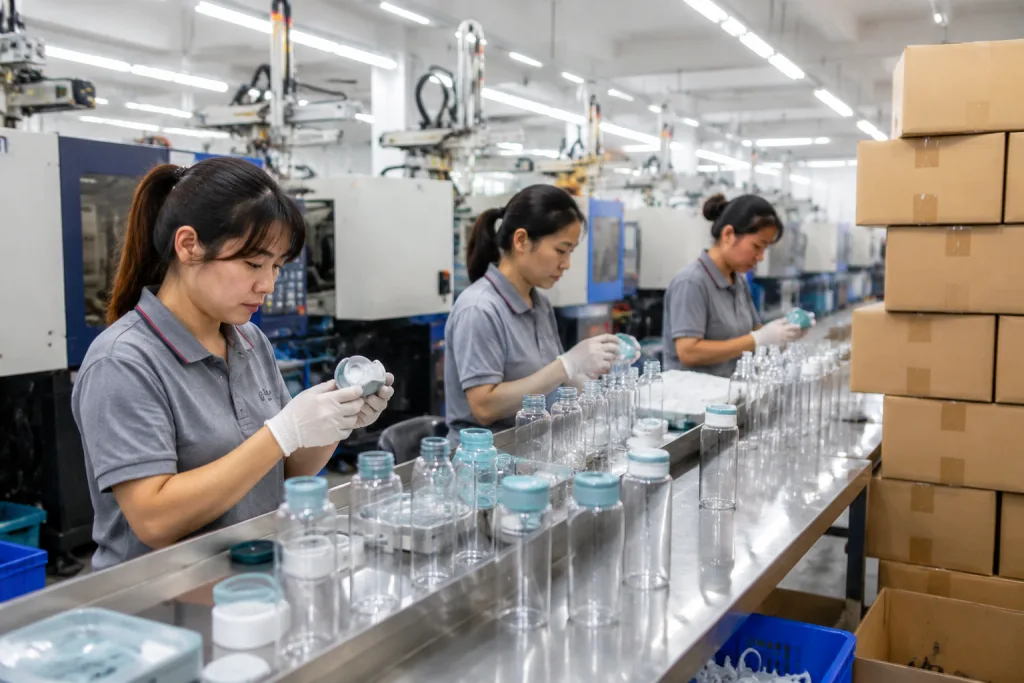
Key Takeaways
- For Tritan bottles, expect practical MOQ from 1,000-3,000 pcs per color, depending on cap mold and logo method
- Body thickness, cap gasket design, and drop testing matter more than a 3-cent FOB price difference
- REACH, LFGB, FDA, and CPSIA requirements should be confirmed before artwork approval, not after production
- A Zhejiang canteen factory with 300,000 units/month capacity can still miss deadlines if packaging specs arrive late
A tritan bottle supplier is easy to find on Alibaba or Global Sources. A reliable one is harder to judge before the deposit leaves your account. You need to lock the material grade, cap structure, decoration method, packaging, compliance scope, then check whether the FOB price still works after AQL 2.5 inspection, Yiwu-to-Ningbo inland freight, and 58 × 42 × 36 cm carton volume are counted.
From the Zhejiang factory network we run around Hangzhou and Taizhou, we see the same buying mistake in about 7 of every 10 bottle RFQs: buyers compare a 650 ml bottle by photo and FOB unit price only. Too thin. QC pulled one sample last month where the lid looked fine in photos, but the silicone ring sat 0.6 mm shallow and failed the upside-down leak test after 3 minutes. Start with 4 decisions: bottle body spec, leak-risk design, brand customization, and production control. Get those right, and the supplier conversation gets cleaner fast.
Start With The Bottle Job
Before you ask a tritan bottle supplier for a quote, lock down the bottle job. A school bottle, fitness bottle, office giveaway, and outdoor canteen for retail shelves should not share the same spec sheet. We see this go sideways. Last month QC pulled a 650 ml sample after the cap leaked at the hinge pin during a 1.0 m drop test, and the buyer’s PO still said “same as cheapest model.” That mistake shows up later as heavier cartons, cracked flip lids, leaking caps, or a logo that scratches off after 3 weeks.
For most B2B buyers, the first filter should be capacity tied to user. A 500-650 ml Tritan bottle works for kids, corporate promotional campaigns, and daily commuting. A 750-1,000 ml bottle suits sports, outdoor programs, and distributor drinkware lines. If you are building a custom growler or customizable growler concept, Tritan can work for cold beverages, but the math does not work for vacuum insulation or hot-fill claims. On our line, a 1,000 ml Tritan body already pushes resin weight and carton cube; sales copy should not promise what the material cannot pass in testing.
Then choose the body shape. A straight wall bottle is easier for silkscreen printing and sleeve packaging; our screen frame can hold a cleaner 1-color logo on a 500 ml straight body than on a contoured grip. A contoured grip looks better in lifestyle photos, but it can reduce printable area by 20-35%, and the buyer flagged that twice when the logo wrapped into the thumb groove. A wide mouth, usually 55-63 mm, is easier to clean and better for ice. A narrow mouth saves on cap tooling and gives better drinking control, but users complain when a 25 mm ice cube will not fit.
Wall thickness is another practical decision. For retail-grade Tritan bottles, we usually quote body wall thickness around 1.2-1.8 mm depending on capacity and geometry. Thicker is not automatically better; it adds resin weight and injection cycle time, sometimes 4 seconds per shot on a 2-cavity mold. You need enough impact strength for a 1.0 m drop test at room temperature, plus stable shape after dishwasher-style heat exposure if you claim top-rack dishwasher safe. Ask for the test condition, not just a pretty sample.
Do not start with “send your cheapest model.” Start with “here is the customer, use case, target capacity, compliance market, and target landed cost.” That gives any serious canteen manufacturer something real to engineer.
Choose Tritan For The Right Reasons
Tritan sells well for clear bottles because the buyer can see the water line, the wall feels solid in hand, and the body stays lighter than glass. We run 600 ml Tritan samples on the line with a 0.9-1.1 mm wall in the grip area, and QC checks haze against the signed PPS under a D65 light box. It also avoids the BPA question and the “plastic taste” pushback we still hear when a buyer compares it with cheaper PC or low-grade material.
Tritan is not a cure-all. It costs more than PP or PE, and the math doesn't work for every promotion. On one simple 600 ml bottle, PP can beat Tritan by USD 0.20-0.45 per piece. It also scratches if the packing team skips PE bagging or tray separators; QC pulled 32 rubbed bodies from a 2,000 pcs pilot run after the caps were packed loose in the same inner carton. Do not use Tritan for boiling water claims. For hot beverage performance, go stainless steel. For rock-bottom promo pricing, PP is the better fight.
A sensible canteen promotional buyer should ask the canteen factory for the exact resin grade, or at minimum a signed material declaration on letterhead. For Europe, confirm REACH and LFGB food-contact direction before mold approval, not after the PO typo gets copied into the carton marks. For the United States, FDA food-contact and CPSIA may apply, especially if the product is positioned for children. If the bottle includes silicone, PP, PE, or stainless parts, each material needs its own confirmation. A clear Tritan body cannot save a cap with a weak gasket or non-compliant colorant.
Temperature claims need conservative wording. We normally recommend cold drinks and warm water below 70°C unless that exact cap, gasket, and body structure has passed testing. We have seen this go sideways: a marketing team printed “boiling water safe” on 8,000 sleeves because the bottle looked premium, then the buyer flagged cap deformation after a kettle-fill demo. That is not engineering.
For sustainability positioning, Tritan fits a reusable bottle story, but do not call it biodegradable. If your buyers care about lower plastic use, talk about refill lifetime, replaceable caps, and carton optimization with numbers: 24 pcs per export carton at 12.5 kg ships cleaner than a bulky 18 pcs layout. A reliable canteen supplier in China should be willing to discuss these trade-offs without pretending every material is perfect.
Cap Design Decides Complaints
About 7 out of 10 quality disputes we see on Tritan bottles start at the cap, not the bottle body. The buyer often wants to argue over USD 0.05, but this is the wrong question to ask if the closure has a weak hinge, a 1.2 mm silicone ring, or a straw socket that moves after assembly. QC pulled one 750 ml sample last month, shook it over a white tray for 20 seconds, and the leak came from the flip lock, not the Tritan body.
There are 4 common cap routes. A screw cap is simple and low-risk for outdoor custom canteen projects, as long as we run a torque check at 8-10 kgf.cm on the line. A flip lid sells well, but the hinge needs cycle testing and the lock must not pop open during a carton drop. A straw lid works for sports channels, but it adds a straw tube, air hole, silicone bite valve, and 2 more cleaning complaints if the drawing is loose. A push-button lid looks premium; we have seen this go sideways when the spring supplier changed wire diameter by 0.15 mm and nobody flagged it before mass production.
For leak testing, ask the tritan bottle supplier what they do on the line, not what looks nice in a quotation sheet. Reasonable checks include 100% visual inspection of gasket placement, random water-fill inversion tests, torque checks on screw caps, and carton drop tests. For export orders, we normally suggest AQL Level II with critical defects at 0, major at 2.5, and minor at 4.0 unless the buyer has a stricter standard. For leak-prone cap designs, add one special test: fill to 80% capacity, invert for 30 minutes, then record any water mark on kraft paper under the cap.
Pay attention to silicone hardness and fit. A gasket that is too soft can deform after repeated washing; too hard, and it will not seal under normal hand torque. For 60% of bottle caps we quote, silicone around 50-60 Shore A is common, but the final number depends on groove depth, compression, and the pressure face. We check this with a Shore A durometer at incoming inspection, and one bad batch was 42 Shore A even though the supplier label said 55.
If you are a canteen distributor or distributor canteen buyer, choose caps that are replaceable across several SKUs. Spare caps cut after-sales pain, especially when a buyer asks for 500 pcs replacement lids instead of returning 3,000 bottles. They also let you refresh the line next season without opening a new bottle mold. We ship mixed spare caps in inner cartons of 100 pcs, and the line runs smoother when the PO does not call the same lid “sport cap” on page 1 and “flip straw cap” on page 3.

Branding Has Real Trade-Offs
Customizable drinkware is where buyers over-design fast. You want a bottle that looks exclusive, but every decoration choice changes MOQ, lead time, scrap rate at QC, and the unit price on the PI. A serious canteen manufacturer should not nod at every artwork idea. We usually ask for the AI file first, then the line checks logo size against a 0.2 mm registration tolerance before we say yes. Some ideas look good on screen and fail after carton rubbing in a 1.2 m drop test.
For Tritan bottles, silkscreen printing is still the clean choice for simple 1-2 color logos. It is cost-effective, usually from USD 0.05-0.12 per print position depending on size and color count. UV printing gives richer graphics and gradients but costs more, often USD 0.18-0.45 per piece, and it needs a cleaner body surface or the edges feather. QC pulled one smoke-gray sample last month because the UV white base showed pinholes under a 10x loupe. Heat transfer can wrap larger areas, but we have seen it scuff on curved grip zones after 300 rub cycles. Laser engraving is not normally the first choice for transparent Tritan body decoration; it works better on stainless lids, handles, or metal badges.
Color customization also needs discipline. A transparent smoke gray, blue, or amber body can look sharp, but custom resin color usually needs higher MOQ than printing on a stock clear bottle. Practical MOQ can be 3,000 pcs per custom body color, while a stock body with custom logo may start from 1,000 pcs. This is the wrong question to ask if your campaign volume is only 1,200 pcs. The math does not work once the resin purge, color chip approval, and two extra injection trials are counted. Spend the budget on packaging and logo placement instead of forcing a new resin color.
Packaging is part of the brand decision. A white box may add USD 0.08-0.18 per unit. A printed retail box can add USD 0.15-0.35 depending on paper grade, size, and coating. For Amazon or other marketplace fulfillment, ask for FNSKU labels, suffocation warnings for polybags where needed, and carton drop testing. We ship these with a 14 kg master carton limit unless the buyer approves heavier packing, because split corners show up fast at receiving. A distributor drinkware program selling to retail chains may need barcode placement, master carton labels, and pallet configuration approved before production. One buyer flagged a PO typo where the barcode on the retail box did not match the carton label; that cost 2 days before mass packing.
If you want a canteen customizable line with multiple capacities, keep the logo area consistent. Use the same print window, for example 38 mm wide on the front body, even if the 500 ml and 750 ml molds have different curves. That makes artwork control easier and helps canteen distributors present the range as one family, not random bottles from different factories. We run this check on the first pre-production sample, not after 80 cartons are already packed.
Price The Whole Export Order
FOB unit price is only one line on the PO. For a 650 ml Tritan bottle from Zhejiang, China, a normal FOB range sits around USD 1.35-2.40, depending on cap structure, resin weight, logo method, and packaging. On our leak test bench, a push-button lid with a 1.2 mm silicone gasket and retail box can land at nearly 2x a plain screw-cap bottle in bulk. If a quotation comes in 25% below market, the math does not work. Something got cut: wall thickness, material grade, inspection time, carton strength, or after-sales support.
Ask each canteen vendor to quote from the same sheet. Include capacity, bottle weight, cap material, gasket material, logo method, packaging, carton size, gross weight, MOQ, sample cost, sample lead time, mass production lead time, payment terms, and Incoterm. On the packing table, we run one spec list for every buyer because a missing line turns the comparison into noise. One buyer once sent a PO with “carton szie,” and the freight number came back wrong by 8%.
For our Hangzhou export work, sample lead time is usually 5-10 days for stock mold with logo, and 25-35 days if new tooling is needed. Bulk lead time is usually 25-40 days after deposit and artwork approval. During peak season, especially before summer retail launches, add 7-14 days buffer. QC pulled the first 20 samples from the line at 3 pm last June, and we still had to wait for confirmed caps, resin color, packaging dielines, and pre-production samples before we could lock the ship date. A 300,000 units/month line does not mean your order jumps the queue.
Tooling is another call. If you need a unique bottle body, expect mold cost from USD 3,000-12,000 for a standard Tritan bottle project, depending on size and complexity. Cap tooling can add another USD 1,500-8,000. On the CNC machine, we have seen buyers spend too much on a full custom body when a stock mold plus a custom cap, strap, or carton would do the job. That is the right place to start if you want a branded drinkware feel without tying up cash in a mold that has not proven demand.
Do not ignore carton cube. A bottle that looks cheap per unit can ship badly because of its shape. Our drop tester showed that a 15% larger carton volume can wipe out the unit-price edge when ocean freight is high, and that is before pallet gaps eat space. This is the wrong question to ask if you only chase the FOB. The freight invoice is where the real cost shows up.

Audit The Supplier, Not The Catalog
A catalog shows what a tritan bottle supplier is trying to move this season. An audit shows whether they can make the same bottle 30,000 times without drama. For B2B orders, especially if you sell to retailers, corporate buyers, or distributor growler accounts, check the line and QC system before anyone calls the PO “safe.” We once had QC pull 12 random lids from a pilot run; 3 leaked after a 30-minute inverted test at room temperature. Pretty photos did not catch that.
Start with business fit. Is the supplier a canteen factory, a trading company, or a hybrid exporter? None is automatically bad. A trading team can handle mixed customized canteen and stainless orders if they own the schedule and inspection points. A direct factory can move faster when a mold insert needs adjustment by 0.2 mm. The wrong question is “factory or trader?” Ask who signs off on incoming resin, production QC, final inspection, and corrective action when the buyer flags a failure.
Factory certifications are useful, but they do not close the case. BSCI, ISO 9001, Sedex, or similar audits screen basic management and social compliance. They do not prove your exact bottle will pass leak testing or REACH. Ask for recent test reports on the same Tritan grade, same lid material, and same color masterbatch, then book third-party testing if the order value is worth protecting. For Europe and North America, the math is simple: one failed container can eat 18 days in claims, rework, and retailer emails; one test plan usually costs less than a single pallet of rejected goods.
Check communication speed and technical detail. Good canteen manufacturers reply with measurements, options, and limits. Weak canteen suppliers reply with “yes friend, no problem” and dodge numbers. When you ask about wall thickness, gasket hardness, carton drop height, and AQL, the answer should name the target, not just agree. We run into this often: the buyer asks for a 1.0 m carton drop test, and the supplier answers only “strong carton.” That is not an answer.
Pre-production sample approval should be formal. Keep one signed sample at the factory and one with you. Confirm Pantone color under D65 lighting, logo size in millimeters, cap torque feel, barcode scanability, and packaging thickness. Small details matter. On one retail canteen customized program, the PO said “mat black” instead of “matte black,” and the print room followed the old artwork file until QC pulled the sample at the silk-screen station.
China remains a strong sourcing base for Tritan and general custom drinkware because the supply chain sits close together: resin distributors, mold makers, injection shops, printing lines, packaging plants, and export logistics. Zhejiang works well for mixed bottle programs because Ningbo and Shanghai port options cut coordination time; we ship both routes depending on vessel space and carton cube. The advantage only pays off if decisions are locked early. Change the lid color after mold trial, and 12 days can turn into 18 days fast.
Build A Cleaner RFQ
The quickest way to spot a capable canteen supplier is still a tight RFQ. Do not send 12 photos and ask for “best price.” We see that go sideways. The quote comes back thin, the buyer flags the lid later, and then both sides argue over 0.18 USD that never matched the same spec. Give the supplier enough detail so the trade-offs show up on the first sheet.
Your RFQ should name the target market, annual volume, first order quantity, capacity, lid type, body color, logo method, packaging, compliance requirements, shipment term, and retail channel. Add numbers where you can: 500 ml or 750 ml body, 1,200 pcs trial order, 5,000 pcs reorder plan, 24 pcs per export carton. If you are a distributor canteen buyer, tell us whether you need open stock replenishment, mixed colors, or exclusive decoration for one chain account. If you are building a customizable canteen line for corporate gifting, say how often artwork changes and whether repeat orders need 7-day logo sampling. Our UV printer operator will ask for the logo size in mm anyway, so put it in the RFQ.
Use this decision order: confirm material and use case, lock the cap risk, choose the decoration method, settle packaging and compliance, then discuss price. Price first is the wrong question to ask. Buyers often spend 2 weeks negotiating a number for a bottle that still has no defined straw length, gasket material, carton drop-test target, or barcode placement. QC pulled one sample last month where the silicone ring was 1.5 mm short; the unit price looked fine, but the leak test failed in 6 minutes.
For BottleForge Industrial in Hangzhou, a normal starting point for stock Tritan bottles is 1,000 pcs per SKU for logo customization and 3,000 pcs for custom resin color. We quote FOB Ningbo or Shanghai, support pre-shipment inspection, and pack export cartons for canteen distributors in Europe and North America. A typical carton is 54 × 38 × 42 cm, but we adjust it after the line checks real bottle height with the caliper. For new mold work, send drawings or a 3D sample before asking for a firm tooling quote; without wall thickness, thread detail, and cap fit, the math does not work.
If you need a custom canteen, customized growler, or broader customizable drinkware range, bring the commercial target with the design idea. Tell us the retail price, margin target, and first shipment date. We ship better projects when the buyer says, “Target landed cost is 3.20 USD, first PO is 2,400 pcs, gift box must pass the buyer’s 1.2 m drop test.” A good supplier should protect your margin, not just praise the design brief.
Send Your Tritan Bottle RFQ For A Practical Quote
Share capacity, lid style, logo, quantity, market, and packaging target. We will return options with MOQ, FOB pricing, and lead time.
Frequently asked questions
What MOQ should I expect from a tritan bottle supplier?
For stock mold Tritan bottles, a realistic MOQ is usually 1,000 pcs per SKU when you use a standard clear or existing color body with 1-color logo printing. If you need custom resin color, expect 3,000 pcs or more because resin mixing, machine cleaning, and color stability checks create setup cost. For a new cap or body mold, many factories prefer 5,000-10,000 pcs for the first run. Some canteen vendors will accept 500 pcs, but the unit price may rise by 15-35%, and decoration options become limited.
Is Tritan better than stainless steel for custom drinkware?
It depends on the job. Tritan is better when you need lightweight, transparent, impact-resistant bottles for cold drinks, sports, school, office, or canteen promotional programs. Stainless steel is better for insulation, hot drinks, premium gifting, and rugged outdoor use. A 650 ml Tritan bottle may FOB around USD 1.35-2.40, while a vacuum stainless bottle of similar capacity may run USD 3.20-6.50 depending on construction. If your buyer expects temperature retention for 6-12 hours, do not choose Tritan. If they want visibility, low weight, and easy branding, Tritan is strong.
What compliance documents should I request for Europe and North America?
For Europe, request REACH and LFGB-related food-contact documentation for the bottle body, cap, silicone gasket, colorant, and any coating or print that may contact food or hands. For North America, ask for FDA food-contact support and CPSIA if the bottle is for children. Test reports should match similar material and construction, not a random product from 3 years ago. For larger orders, budget for your own third-party testing before shipment. AQL inspection checks appearance and function, but laboratory testing confirms chemical compliance.
How long does a custom Tritan bottle order take?
For a stock mold with logo, sample lead time is usually 5-10 days after artwork confirmation. Bulk production often takes 25-40 days after deposit, sample approval, and packaging confirmation. If you need new tooling, add 25-35 days for mold development and first samples, sometimes longer for complex flip lids or straw caps. Peak season can add 7-14 days, especially before summer campaigns. The most common delay is not injection molding; it is late approval of Pantone color, retail box dieline, barcode, or compliance wording.
How do I compare quotes from different canteen manufacturers?
Force every canteen manufacturer to quote the same specification. Ask for capacity, body weight, wall thickness, resin type, cap structure, gasket material, logo method, packaging, carton size, gross weight, MOQ, sample lead time, bulk lead time, payment terms, and FOB port. A USD 1.55 quote and a USD 1.75 quote may not describe the same product. One may include a printed box and 1.5 mm wall thickness; the other may use thinner body material and bulk packing. Also compare inspection terms, replacement policy, and whether the supplier supports third-party AQL inspection.