Key Takeaways
- Set MOQ at 3,000 units per color for most Tritan private label bottle projects
- Lock resin grade, lid material, logo method, and packaging in the RFQ before sampling
- Use 2 approval samples: one construction sample and one decorated pre-production sample
- Write PO line items for AQL, carton strength, barcode placement, and spare parts
Tritan looks simple on a line sheet: clear body, sports lid, logo, color box. Then the RFQ lands on my desk and 3 canteen suppliers quote the same photo at 3 prices, with no resin grade, no PP lid callout, no carton 48.5×34×42 cm spec, and no FDA or LFGB test line.
If you are buying tritan bottle private labeling for retail, promotion, or distributor programs, don’t treat it like a catalog pick. That is the wrong question to ask. We run it as a controlled project: RFQ first, sample brief second, PO with measurable line items third. Our Zhejiang, China team ships custom drinkware from a 420,000 units/month bottle line, and QC pulled fewer rework samples last quarter on orders where the buyer fixed logo size in mm, Pantone number, lid material, carton weight, and barcode position before deposit.
Start With A Real RFQ
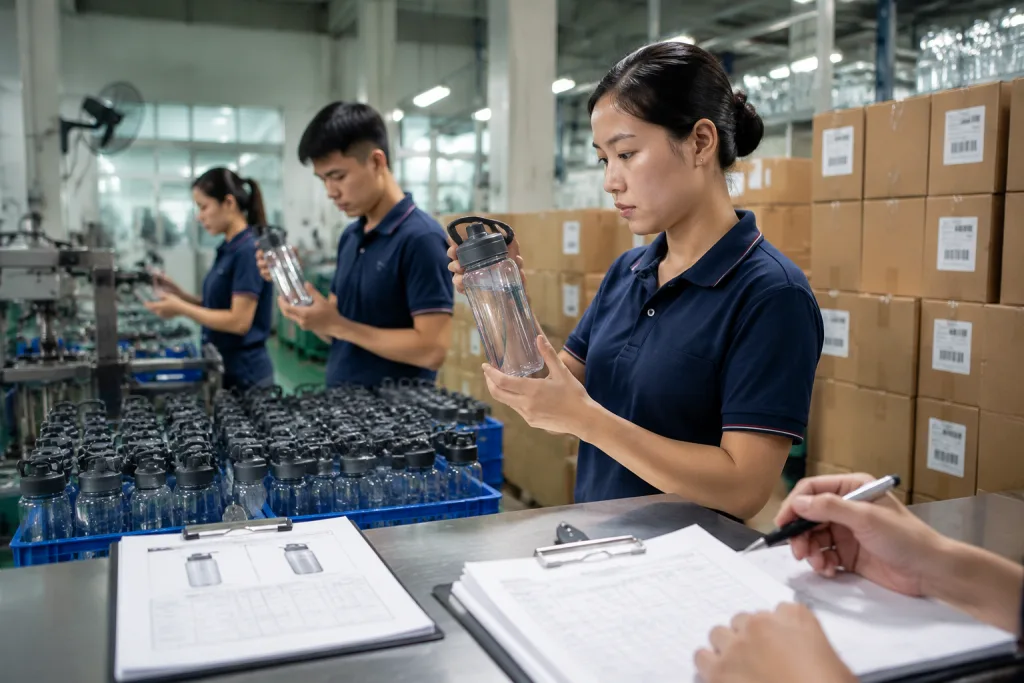
Your RFQ protects the price, or it wrecks it. Do not send one photo and ask for the “best FOB Ningbo price.” We run quotes fast in Zhejiang, but a loose request gives you a low number that usually gets revised after the first sample. Last month QC pulled a 650 ml sample that measured 612 ml to the fill line, and the buyer’s PO still said “same as photo.” That math does not work.
For tritan bottle private labeling, put the working specs in the RFQ: capacity, body weight, wall thickness target, lid type, silicone seal color, logo method, packaging, test requirements, and order split by color. A 650 ml Tritan sports bottle might run 1.8-2.2 mm wall thickness, PP lid, food-grade silicone gasket, and a 60 mm wide silkscreen logo. If this is a canteen promotional program, state one-color imprint or full retail packaging, because the line setup changes from a simple pad-print jig to packed cartons with barcode labels. We’ve seen this go sideways over one missing carton mark.
RFQ line items to request:
- Material: Eastman Tritan or equivalent copolyester, BPA-free declaration required
- Capacity tolerance: 650 ml nominal, minus 3 percent to plus 5 percent acceptable
- MOQ: 3,000 units per color, 5,000 units for custom lid color
- Quote basis: FOB Ningbo or Shanghai, USD, valid for 30 days
- Compliance: FDA, LFGB, REACH SVHC, and California Prop 65 if needed
A serious canteen manufacturer will answer with tooling status, production lead time, packing dimensions, gross weight, and sample cost. We usually add CTN size in cm, GW in kg, and sample timing, such as 7 days with existing mold or 18 days when the lid color needs matching. If a canteen vendor skips those details, the buyer will flag it later, usually after the deposit is paid.
Check Mold And Material Choices
Tritan bottles are not all built the same. We run injection blow molding for some shapes, extrusion blow molding for others, and a two-step process when the neck finish or shoulder line needs tighter control. The neck matters. Existing molds keep the project cheap and fast; on our floor, QC checks the first trial body with a 0.02 mm caliper at the thread and sealing land before we quote decoration. A simple new Tritan bottle body mold in China usually sits around USD 4,500-12,000, while a more complex lid set can add USD 2,000-6,000.
Before you approve a custom canteen direction, ask the factory to write down whether the drawing uses an open mold, semi-exclusive mold, or full private mold. We have seen this go sideways when a buyer thought “exclusive color” meant exclusive tooling. It doesn’t. Open mold is fine for 3,000-5,000 pcs distributor canteen runs where speed matters. Full private mold makes sense when your brand needs a distinct silhouette, a unique carry loop, or one lid platform that fits a wider customized drinkware family.
Material items to lock before sample payment:
- Body resin: Tritan copolyester, clear or tinted, BPA-free; ask for the resin grade on the sample tag
- Lid: PP or Tritan, depending on clarity and impact requirement; we check drop marks after a 1.2 m bench test
- Straw: PE or Tritan, with bite valve only if specified; bite valves change the cleaning claim
- Gasket: food-grade silicone, usually 50-60 Shore A; QC pulls it with a small hook gauge to check fit
- Temperature range: normally cold drink use, not boiling water; print this on the carton if your market complains
Do not let a canteen supplier switch to cheaper PETG without written approval. The math doesn’t work if your listing, carton, and lab file all say Tritan but the incoming resin test points to PETG. PETG fits some price-driven items, but it is a different shelf position. If your PO says Tritan, your incoming inspection should match it; one buyer flagged this after the PO had “Trian” typed on line 6, and we had to reissue the whole sample approval sheet.
Price The Labeling Work
Private labeling is not just putting a logo on a bottle. We price artwork checking, corona wiping on the Tritan surface, fixture setup, expected print loss, carton label changes, barcode checks, and Pantone matching when the buyer locks the color. On our Hangzhou line, a new curved-body jig takes about 35 minutes to set and QC usually pulls the first 12 bottles before mass printing. That is why one canteen customized quote can be USD 0.18 higher than another even when the bottle body is identical.
For tritan bottle private labeling, we quote silkscreen and pad printing most often; heat transfer, UV printing, and laser marking come out when the artwork or lid spec forces it. Silkscreen is the safer choice for one or two colors on a straight body, especially when the logo sits inside a 60 x 80 mm zone. UV printing can carry gradients, but the math does not work if the buyer skips abrasion testing and then argues about scuff marks after packing. For 3,000 units, a one-color silkscreen logo at 60 x 80 mm adds about USD 0.08-0.18 per unit. A full wrap heat transfer may add USD 0.35-0.70 per unit, and it can move sampling from 12 days to 18 days if the film proof is late.
PO line items for decoration: We put these on the job card before the first bottle goes under the screen.
- Logo file: AI or PDF vector, Pantone colors stated; no low-resolution JPG pulled from a website
- Logo position: measured from base or shoulder, tolerance plus or minus 2 mm
- Print adhesion: 3M tape test, no visible peeling after 3 pulls
- Rub test: 50 cycles dry cloth, 20 cycles wet cloth if requested
- Artwork approval: signed digital proof before decorated sample
If you are a canteen distributor managing 6 or 8 buyer accounts, standardize logo zones across models. This is the wrong place to chase a custom position for every small order. We have seen it go sideways when one PO says “centered from base” and the next typo says “centered from lid”; the buyer flagged it after QC pulled the sample, and the whole batch waited one shift for confirmation.
Approve Samples In Two Rounds
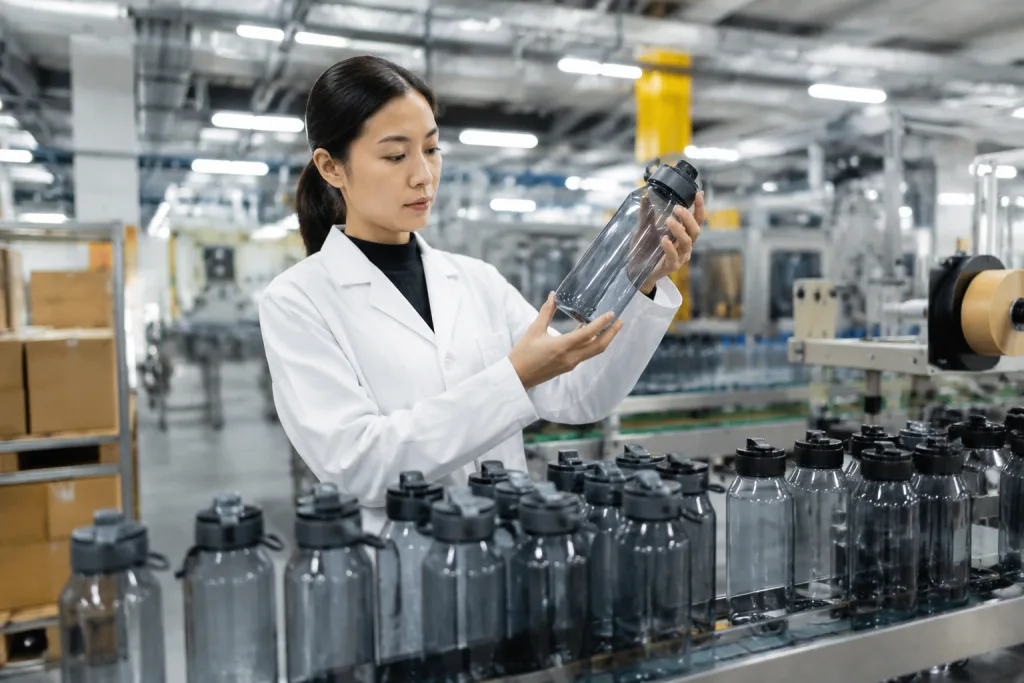
One sample is almost never enough. We run the first round to check the bottle body: neck diameter in mm, lid thread fit on the torque gauge, silicone gasket compression, filled weight, hand grip, opening force, and whether the insert tray survives a 1.2 m carton drop. The second round is for the brand work: logo size against the artwork file, Pantone color under the light box, retail box print, hangtag hole position, FNSKU or EAN barcode scan, and master carton marks.
A normal sample timeline from a Zhejiang canteen manufacturer is 5-7 days for an existing mold blank sample, 7-12 days for printed samples, and 25-35 days for new mold T1 samples after drawing approval. International courier usually adds 3-5 days to Europe or North America. If a buyer needs a trade show deadline, write the sample calendar into the project sheet; we have seen this go sideways when the PO says “ASAP” and the buyer later flags a booth date 9 days away.
Sample PO line items should include:
- Sample quantity: 3 blank units plus 3 decorated units, with one unit cut open if the buyer wants wall-thickness photos from the caliper
- Sample cost: often USD 80-250 including setup, refundable against bulk PO if agreed
- Courier: DHL, FedEx, or UPS account number stated, not “use our forwarder” with no contact name
- Approval standard: signed sample, photos, or sealed master sample with date, SKU, and buyer initials on the label
- Change log: every change numbered before bulk production, including small artwork shifts like logo +2 mm left
For customized canteen work, keep one approved sample at your office and one at the factory. We seal ours in a polybag with the QC card, then store it beside the line file. When a canteen vendor and buyer argue later about color or print position, the sealed sample ends the debate faster than 42 emails.
Convert Approval Into A PO
The bulk PO is where procurement discipline matters. A friendly email saying “same as sample” will not protect you. We had one buyer approve a 650 ml sample, then leave AQL level, carton drop requirement, spare gasket quantity, barcode grade, pallet height, and inspection timing off the PO; QC pulled the sample at packing and the carton barcode scanned C grade on a Honeywell reader. Your PO should be boring, specific, and enforceable.
For a typical tritan bottle private labeling order, expect MOQ of 3,000 units per color, 30 percent deposit, and 70 percent balance before shipment after inspection. Bulk lead time is usually 30-45 days after deposit and final artwork approval for open mold items. New mold projects can run 60-90 days before first shipment. On our Hangzhou line, production planning starts only after two things are locked: final AI artwork with Pantone code and deposit arrival in the bank. If the color box arrives 12 days late from the print shop, the bottle line does not wait empty; your ship date moves.
Bulk PO line items to write clearly, the way our merchandiser enters them into the ERP:
- Item: 650 ml Tritan bottle, clear body, black PP flip lid, lid resin marked PP on the BOM
- Quantity: 9,000 units, 3 colors x 3,000 units, with carton marks split by color
- Unit price: for example USD 2.15 FOB Ningbo including 1-color logo and color box, no separate logo plate charge
- Packing: 1 pc/color box, 24 pcs/master carton, 5-ply export carton, carton size and gross weight shown before mass packing
- Inspection: AQL 2.5 major, 4.0 minor, before balance payment, with leakage test and barcode scan included
- Certificates: FDA food contact, LFGB report if selling into Germany, report holder name checked against your importer request
Good canteen manufacturers will accept this structure. Weak canteen vendors prefer loose wording because it protects them, not you. We have seen this go sideways over one typo on a PO, “Trian” instead of “Tritan,” then the buyer flagged the material declaration two days before vessel closing. The math does not work when a USD 2.15 bottle is stuck because the paperwork was written like a chat message.

Inspect Before Balance Payment
Final inspection is not a slap at the factory. It is normal risk control. On Tritan bottle jobs, QC pulled samples from line 3 and still found the same trouble spots production photos hide: 2 leaking lids in 125 pcs, warped threads over 0.35 mm, loose straw hinges, color drift against the Pantone chip, rubbed pad-print logos, wrong carton marks, and FNSKU labels placed 18 mm too low. A distributor drinkware order can land dead if Amazon, a retail DC, or a promotional agency rejects the labeling. We have seen this go sideways.
Run pre-shipment inspection when at least 80 percent of goods are packed and 100 percent are produced. For most orders, General Inspection Level II with AQL 2.5 major and 4.0 minor is reasonable. Critical defects such as sharp plastic flash, chemical odor, food contact contamination, or leaking under normal inversion should be zero tolerance. The wrong question is “do you trust the factory?” Ask whether the packed goods match the approved sample, PO, barcode file, and carton artwork. One buyer once flagged a PO typo: “matte black” in the PO, “black gloss” on the color card. The math does not work after the container is sealed.
Inspection checklist items:
- Leak test: fill to 90 percent, invert 10 minutes on white tissue, no visible leakage
- Drop test: 1.0 m drop in carton, no functional breakage or cracked lid ears
- Logo check: position in mm, PMS color, adhesion after 3M tape pull, scratch resistance
- Capacity check: measured water volume versus specification, using a graduated cylinder
- Carton check: FNSKU, EAN, shipping marks, country of origin, carton weight on a calibrated scale
If you work with 3 canteen distributors or regional accounts, ask for a photo report by SKU and carton label before booking freight. We ship better when the forwarder gets clean files early. It costs little; a 30-minute carton-label check can catch a USD 2,000 relabeling problem while the goods are still in China.
Plan Freight And Reorders Early
Freight planning starts before bulk production, not when the cartons are stacked by the loading door. A 650 ml Tritan bottle packed 24 pieces per carton may use a carton around 54 x 38 x 46 cm, depending on bottle shape and box style. On our line, QC checks this with a tape measure after the first packed carton, because the math can move from 11.8 CBM to 13.5 CBM per 10,000 pieces if the color box gets 8 mm taller. Weight is not the problem. Volume is. If your buyer compares landed cost, ask for CBM per 1,000 units at RFQ stage.
For North America and Europe, we see about 8 out of 10 buyers use sea freight for main inventory and air freight only for 200-500 urgent units. FOB terms work well if you control the forwarder and know the sailing schedule. DDP is convenient for small distributor growler or customizable growler programs, but ask who is importer of record and how duties are classified. We have seen this go sideways when a buyer treated Tritan bottles as a simple promo item, then customs flagged the HS code because the lid construction changed. Tritan plastic bottles may fall under different HS codes depending on market and construction.
Reorders are easier when the first PO is structured well. Keep the same resin, logo fixture, Pantone color, color box dieline, and carton count unless there is a real reason to change. A canteen customizable program with 6 SKUs gets messy fast if every reorder has a different lid shade or insert card. Last April, one PO said “sky blue” while the approved sample was Pantone 2925C; QC pulled the sample, and the buyer flagged it after 3,000 lids were already molded.
Ask your canteen supplier to hold approved artwork and QC standards for at least 24 months. For a distributor canteen range, this file discipline matters as much as unit price. We run each repeat order against the old logo jig, the signed color chip, and the AQL 2.5 checklist before packing. The wrong question is “can you make it again?” The better question is “can you make it match the last shipment?”
Send Your Tritan Bottle RFQ For Review
Share capacity, logo artwork, MOQ, destination market, and packaging needs. We will return a practical China factory quote with clear PO terms.
Frequently asked questions
What MOQ should I expect for tritan bottle private labeling?
For existing mold Tritan bottles, a practical MOQ is 3,000 units per color with one logo design. Some canteen suppliers may accept 1,000-2,000 units, but the unit price and setup fee usually rise because printing, color mixing, and packing runs become inefficient. For a custom lid color, plan on 5,000 units. For a private body mold, expect 10,000 units or more for the first production run. At BottleForge Industrial in Zhejiang, China, we quote lower trial quantities only when the model is already running and the decoration is simple, such as one-color silkscreen on clear body stock.
How long does sampling and bulk production usually take?
For an existing Tritan bottle mold, blank samples usually take 5-7 days and decorated samples take 7-12 days after artwork approval. Courier to Europe or North America normally adds 3-5 days. Bulk production is commonly 30-45 days after deposit, final artwork, and packaging confirmation. If you need a new mold, add 25-35 days for the first T1 mold sample and more time if the lid or thread fit needs correction. A realistic procurement calendar for tritan bottle private labeling is 8-10 weeks for open mold and 12-16 weeks for new mold development.
Which logo method is best for Tritan bottles?
For most custom drinkware buyers, one-color silkscreen is the safest choice because it is cost-effective, stable, and easy to inspect. It usually adds USD 0.08-0.18 per unit at 3,000 pieces, depending on print area. UV printing is better for multi-color artwork or gradients, but it needs stronger abrasion testing and costs more. Heat transfer works for larger wrap designs but can add USD 0.35-0.70 per unit. If you are buying canteen promotional bottles for events, choose a simple print zone and Pantone color. If you are building retail customized drinkware, pay for decorated pre-production samples before approving bulk.
What compliance documents should a B2B buyer request?
At minimum, request a BPA-free declaration, food contact test report, and material declaration for the Tritan body, PP lid, and silicone gasket. For the US, FDA food contact compliance and California Prop 65 review may be relevant. For Europe, LFGB, EU food contact, REACH SVHC, and sometimes packaging waste documentation may be required by your customer. If the bottle is for children, ask early about ASTM or EN-related requirements because lid parts, bite valves, and straps may change the risk profile. Do not accept a generic canteen manufacturer certificate without checking model name, material, report date, and tested components.
How do I compare quotes from different canteen manufacturers fairly?
Build a quote comparison sheet with the same assumptions for every canteen manufacturer: capacity, resin grade, lid material, wall thickness, logo method, packaging, MOQ, FOB port, lead time, certificate scope, and inspection standard. A USD 1.85 quote may not include color box, barcode sticker, FDA report, or print setup, while a USD 2.15 quote may include all of them. Also compare carton CBM because bulky packing can add USD 0.20-0.50 per unit in landed cost on ocean freight. Ask every canteen vendor to quote spare gaskets, sample cost, and reorder lead time. The cheapest ex-factory price is not always the cheapest delivered program.