Key Takeaways
- Lock resin grade, wall thickness, and cap tolerance before tooling; a 0.2 mm neck drift can cause leaks
- Use pre-production samples and AQL 2.5/4.0 inspection instead of approving decoration only by photos
- Plan 25-35 days for mass production after sample approval, plus 7-10 days for mold or color corrections
- For EU and North America, request LFGB/FDA food-contact reports plus REACH or CA65 screening where needed
A tritan bottle custom made program usually breaks in dull places: cap thread tolerance, ink rub-off after tape test, 5-ply carton crush, wrong resin grade, or a PMS color that looked fine on a laptop but turned gray under 4,000K warehouse lights. Not a photo order. You are buying repeatable plastic parts with a 0.20 mm fit window, packed correctly, delivered on time, and safe for your market.
Our Hangzhou, Zhejiang team gives buyers one pushback early: “Can you just match the sample photo?” is the wrong question to ask. Put the failure modes into the spec before the line starts. China can make solid custom drinkware at scale when the buyer locks drawings, golden samples, migration testing, AQL limits, and drop-test packaging rules; QC pulled one sample last quarter where the PO said “transparent blue” but the artwork file named it “ice gray.” Our Zhejiang line can run 180,000 Tritan bottles/month with typical MOQ from 3,000 units per color.
The wrong Tritan grade gets used
The first failure hides in plain sight. A canteen manufacturer quotes “Tritan,” then the line runs another copolyester or a mixed recycled batch because the PO only says “clear plastic bottle.” We have seen this go sideways on 30,000 pcs: QC pulled the sample under a D65 light box and found haze before the buyer even smelled the odor. For promotional bottles, the problem shows up after shipment as odor, haze, stress cracking, or failed food-contact testing.
Your specification should name the material clearly: Eastman Tritan copolyester, BPA-free, food-contact grade, with supplier certificate and batch traceability. If you accept equivalent material, write the approved resin code on the PO and require the same testing. “Clear plastic” is the wrong wording. For customized drinkware, resin is the product, not a footnote; our ERP locks the resin batch number before injection starts.
Ask the canteen factory for these documents before deposit: resin purchase invoice or certificate of analysis, migration test report for the same material family, and written confirmation that regrind is either prohibited or capped. For retail-grade bottles, we normally recommend zero post-industrial regrind in the bottle body. Regrind in non-food-contact accessories is a separate discussion, but the buyer should still see the % limit; last April a buyer flagged a “≤5%” line hidden in 8-point text on the PI.
Wall thickness matters too. A 650 ml Tritan sports bottle usually needs 1.8-2.2 mm body wall thickness depending on shape. Cut it to save USD 0.08 and the math does not work: you risk paneling, denting, or stress whitening around the shoulder after a 1.2 m drop test. A good canteen supplier in China should state nominal thickness, bottle weight tolerance, and resin batch control on the quotation, not after the container is loaded.
The cap looks fine but leaks
Leak complaints are the No. 1 custom canteen headache we see because the cap is not one part. It is the bottle neck, thread, silicone seal, lid hinge, locking button, straw path, vent hole, and sometimes a carry loop fighting for the same 0.1-0.3 mm stack-up. One small tolerance miss can sink the order. A 0.2 mm mismatch on the neck finish is enough to pass a 3-minute desk flip and leak later inside a buyer’s backpack with catalogs and a laptop.
For any canteen customizable project, ask for a 2D neck drawing showing thread height, pitch, start position, and tolerance. If we run an existing mold, ask for the last QC record, not a clean sales photo. If you are building a new mold, approve T1 samples after real leak testing with a torque meter on the cap, not just a visual check under the light box. Our standard practical test is 100% water fill, cap closed, inverted for 2 hours, followed by shake testing on random samples. For higher-risk straw lids, add a 0.6 m drop test when filled to 90% capacity.
Specify silicone hardness on the PO. Most seals we see sit around Shore A 50-60, checked with a Shore durometer at incoming inspection. Too soft and the gasket rolls out of the groove after 200 open-close cycles; too hard and it does not compress evenly against the neck land. If you are a distributor canteen buyer handling retail returns, ask whether replacement gaskets are packed in 1,000 pcs bags or sold only with full lids. We have seen that go sideways.
If your canteen vendor says “no leak problem” but cannot define the test, this is the wrong answer. It is hope, not quality control. Put the leakage method, sample quantity, and acceptance rule in the PO. For example: test 80 units from production, zero critical leakage accepted. QC pulled one sample last month where the PO said “leak test ok” but gave no time, no angle, no fill level; the buyer flagged it, and the math did not work during the claim call.
Decoration fails after real handling
Logo failure is where 7 out of 10 canteen promotional claims start costing money. The bottle body passes the leak test, then QC pulls a carton sample and the print has rubbed against the PE bag seam during the drop test. Gradient bands come out stripy, or the laser mark on the cap reads like a shadow. Customizable drinkware decoration has to match the resin, mold texture, and handling route, not the cheapest line on the quotation.
For Tritan, we run silkscreen printing, pad printing, heat transfer, UV printing, sleeve labeling, and molded-in color depending on the shape. Silkscreen works for 1-2 color logos, usually adding about USD 0.06-0.18 per unit depending on print area, screen size, and whether the logo crosses a 2 mm radius curve. UV printing handles full-color graphics, but the buyer needs to accept artwork limits before we open the jig. Heat transfer wraps look clean on a straight wall bottle; on an hourglass body, we have seen the film crack after 30 flex checks. The math does not work if the buyer wants a wraparound photo print on a 3,000 pcs rush order and still expects zero scrap.
Put the decoration durability test on the PO. We like a 3M tape test after 24 hours curing, 50 rubs with a wet cloth, 50 rubs with a dry cloth, and dishwasher guidance if the claim is being made. Simple rule: test it. If you want “dishwasher safe,” do not let a canteen supplier add the icon because marketing asked for it on Friday afternoon. Tritan bodies may survive top-rack washing, but inks, caps, and silicone gaskets may fail first; last month QC found a black logo losing edges after 12 wash cycles, while the bottle body still looked fine.
Color matching needs discipline. Use Pantone references for plastic body color and separate Pantone references for printing ink, because transparent Tritan changes the reading on the light box. A transparent blue bottle and an opaque blue logo will not match the same way, even if both say “286C” on the artwork file. For a canteen customized program with 4 SKUs, approve color chips and pre-production samples under D65 lighting before mass production; we once had a buyer flag a PO typo where the body said 2925C but the cap line said 2952C, and catching that saved 18 days of rework.
Packaging passes photos, fails freight
Most buyers check the bottle and skip the carton. Wrong place to save money. We have seen this go sideways: the freight forwarder sends photos of crushed master cartons, scuffed Tritan bodies, or mixed-color cartons missing retail labels. One March PO even had “blue lid” typed as “bul lid,” and nobody caught it until QC pulled the packed sample. Distributor drinkware gets handled through the factory warehouse, truck, port, container, destination warehouse, then parcel or pallet delivery. Packaging has to survive that route.
A standard Tritan bottle usually ships in an individual polybag or paper wrap, then an inner box or egg-crate divider, then a 5-ply export carton. For retail orders, we run color boxes with barcode, FNSKU, suffocation warning on polybags, and carton markings matched to the PO. For Amazon FBA-style handling, keep carton weight below 22 kg and test the packed carton, not a pretty empty box. If you sell to canteen distributors in Europe, raise plastic reduction and recyclable packaging before artwork approval; last year one buyer flagged PE bags after 8,000 sets were already packed.
Do not approve packaging from a studio mockup. Ask for carton dimensions in mm, gross weight in kg, bottle orientation, divider material, and a filled carton drop test. A basic ISTA-style check beats guessing: 10 drops from 76 cm for smaller cartons, then inspect for cracks, scuffs, and cap damage. QC should open the carton with a box cutter and check the worst corner first. If a carton fails, the fix may be thicker dividers or rotating the bottle 90 degrees, but that fix has to happen before 20,000 units are packed.
FOB pricing can hide packaging shortcuts. A canteen vendor may quote USD 2.15 FOB Ningbo with thin retail boxes, while another quotes USD 2.28 with stronger cartons and barcode control. The math does not work if 4% arrives unsellable. On our line in Zhejiang, a 5 mm divider upgrade or 1 kg lower carton load often decides whether the buyer places a clean replenishment order or opens a claim file with 37 damage photos.
Compliance is treated as paperwork
Food-contact compliance is not a folder of PDFs. We had a buyer send a 2021 report marked “plastic bottle”; QC pulled the current tritan bottle custom made sample, and the cap gasket was a different TPE from the report. That report did not cover the order. The paperwork has to match resin grade, pigment, lid material, gasket, printing ink, and destination market. Europe and North America check different failure points, so a serious canteen manufacturer should know which test belongs to which shipment.
For the United States, buyers usually ask for FDA food-contact suitability for the resin and CPSIA when the bottle is for children. California Proposition 65 screening is often written into retail vendor manuals; Target-style channels will flag it during document review, not after booking. For the EU, ask for LFGB or EU 10/2011 migration testing, plus REACH SVHC screening for silicone rings, coatings, and printed parts. Kids bottles need ASTM or EN checks for impact and small parts based on age grading; our lab once measured a loose straw stopper at 28 mm, and that single part changed the test scope.
Colorants are where the math gets ugly. A clear bottle made from approved Tritan is one case; a neon translucent body with a printed sleeve and painted cap is a different bill of materials. Each pigment, coating, and ink can change the result. We run separate drawdown cards for ink samples before mass printing because one buyer flagged a blue logo ink that was never listed on the PO. If your custom growler or customized growler line uses big decoration areas, put ink safety into the test plan from day one.
Build compliance timing into the order. Third-party testing often takes 7-12 working days after samples arrive at the lab; with courier pickup from Hangzhou, that means the calendar is closer to 12 days, not 7. If the first sample fails, reformulation and retesting can eat two weeks, and the line will not wait politely while bottles sit in WIP cartons. We have seen this go sideways. For orders leaving China under a fixed retail launch date, do not wait until final inspection to ask for test reports. Put compliance deliverables into the proforma invoice and make shipment approval conditional on them.
Inspection catches defects too late
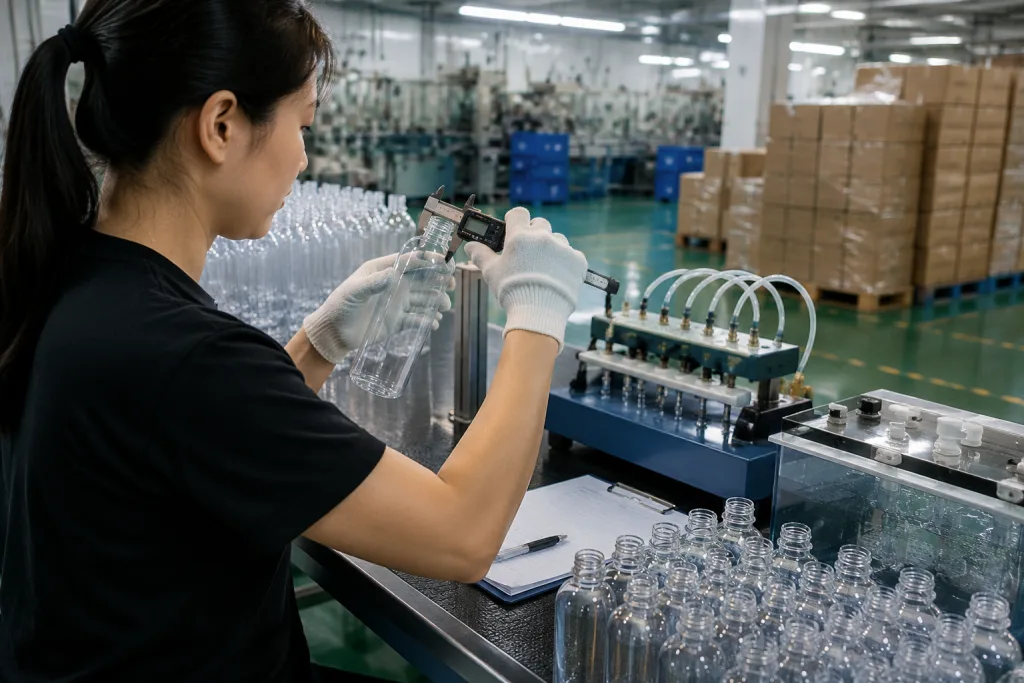
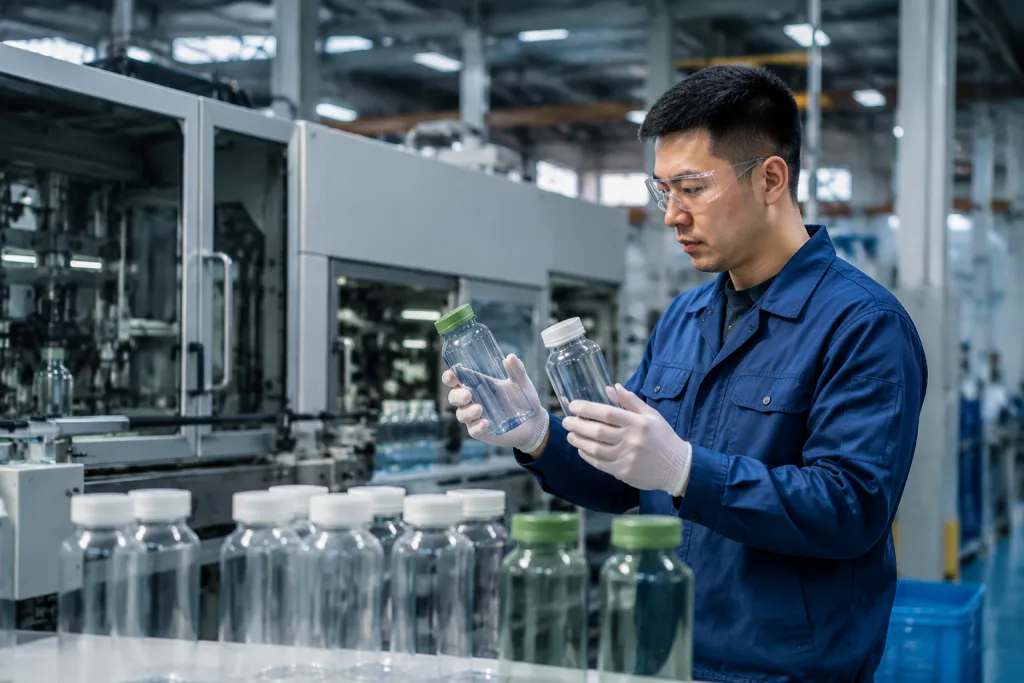
A final inspection helps, but it is not a rescue plan. If QC finds the wrong Tritan resin, a 42 mm logo printed at 50 mm, or a cap hinge cracking after 300 open-close cycles when 30,000 units are already in export cartons, every option costs money. We run staged control instead: a signed golden sample, resin COA and incoming pellet check, first-article inspection on the first 80 bottles off the line, hourly in-process checks with a digital caliper, then final AQL inspection.
For a normal customized canteen order, we recommend 3 golden samples signed by both sides. Keep one at the factory sample room, one with your buyer team, and one with the inspection agency if used. The sample should include bottle body, cap, decoration, packaging, barcode, carton mark, and instruction insert, with Pantone code and logo position measured from the bottom in mm. Do not approve the bottle and leave packaging “to be confirmed later.” We saw this go sideways on a PO where “matte black carton” became “black bottle carton,” and QC pulled 600 mislabeled cartons before loading.
Final inspection should use AQL rules written into the order. A practical structure is Critical 0, Major 2.5, Minor 4.0 under ANSI/ASQ Z1.4 general inspection level II. Critical defects include leakage after a 30-minute inverted test, unsafe sharp edges, contamination, wrong material, or failed barcode scan. Major defects include logo drift over 2 mm, cap function failure, severe scratches longer than 8 mm, and wrong color against the approved sample under a D65 light box. Minor defects include small cosmetic marks inside the signed limit board.
For a canteen distributor or distributor growler buyer, add a random carton check against the packing list. Count units per carton, SKU mix, color ratio, and barcode scan accuracy; our packers scan with a handheld Zebra unit before sealing. The expensive disputes are often not about product quality; they are about 600 cartons with the wrong label or a 12 pcs carton packed as 24 pcs on the shipping mark. China factories can control this, but only when the PO makes it measurable. “Check labels carefully” is the wrong instruction to write.
Price pressure removes the safeguards
The last failure mode is commercial. You push the target price down by USD 0.20, and the canteen supplier starts cutting the quiet safeguards that kept the order safe: K=K carton instead of K=A, ink that passes a 3M tape pull, AQL 2.5 inspection time, branded Tritan resin, spare silicone gaskets, or 12 hours of drying before packing. Nobody writes “quality reduced” on the PI. The quote just looks cleaner. We have seen this go sideways when QC pulled 8 leaking caps from a 200 pcs pre-shipment sample and the buyer said, “But the price was approved.”
Break the price into visible parts. Ask your canteen manufacturer to separate body material and cap type first, then decoration, packaging, testing, and FOB port with notes beside each line. You do not need their full cost sheet. You do need to know what changes when the price drops. A 750 ml Tritan bottle custom made program might land around USD 1.85-3.20 FOB Ningbo or Shanghai depending on cap complexity, logo method, carton standard, and quantity. On our line, changing from UV print to 1-color silkscreen can save about USD 0.06-0.12, but the buyer may lose the gradient logo they approved on the artwork. A custom growler or customizable growler with larger capacity and a heavier cap usually sits higher because the cap mold, gasket seat, and drop-test carton all carry more cost.
MOQ also affects risk. At 3,000 units per color, a canteen factory can usually run custom color and logo with existing molds, and the color masterbatch can be checked against a Pantone chip under a D65 light box. Below 1,000 units, options shrink, unit price rises, and decoration choices become less stable. Small runs are not magic. The math does not work when the PO asks for 6 colors, 500 pcs each, and a different sleeve sticker for every SKU. New mold work can add USD 2,000-8,000 and 20-35 days depending on bottle geometry and cap mechanism, especially if the hinge pin or flip-lock needs a second T1 adjustment.
Choose a canteen vendor who explains trade-offs before production, not after a claim. The best canteen vendors are not always the cheapest. They are the ones who can say, “If you want that price, we must change from UV print to 1-color silkscreen, reduce carton strength, or remove third-party testing.” That is the right conversation. We ship better orders when the buyer accepts the trade-off on the PO, not when someone finds it during carton drop testing at 76 cm.
Send your Tritan bottle spec for a factory check
We will review resin, cap, logo, packaging, MOQ, and compliance risks before you lock the purchase order.
Frequently asked questions
What MOQ should I expect for a tritan bottle custom made order?
For existing molds, a practical MOQ is usually 3,000 units per color for custom body color and logo. Some canteen suppliers will accept 1,000-2,000 units, but unit price rises and color control becomes weaker because resin and pigment setup losses are spread over fewer bottles. For a fully new shape, expect 5,000-10,000 units for a sensible first run, plus mold cost. At BottleForge in Zhejiang, we normally quote from 3,000 units per SKU for Tritan bottles using available molds, with mass production around 25-35 days after sample approval. If you need assorted colors, confirm whether the MOQ applies per color or per total order.
How much does a custom Tritan canteen usually cost FOB China?
A standard 600-800 ml Tritan bottle with existing mold, 1-color logo, and export carton often sits around USD 1.85-3.20 FOB Ningbo or Shanghai at 3,000-10,000 units. Push-button lids, straw lids, silicone sleeves, full-color UV print, retail color boxes, and third-party testing increase the price. A canteen promotional order with simple silkscreen decoration may be at the lower end, while customized drinkware for retail distribution will usually cost more because packaging and QC standards are stricter. Always compare quotations with the same resin, cap, decoration, carton, AQL inspection, and compliance test scope.
Can I use the same supplier for bottles, canteens, and growlers?
Sometimes, but check manufacturing process first. Tritan bottles are usually injection stretch blow molded or extrusion/injection related depending on design, while stainless steel growlers require forming, welding, polishing, and vacuum processes if insulated. A distributor drinkware program may use one export coordinator, but not always one production line. If you source a custom canteen, customizable canteen, and customized growler together, ask which items are made in-house and which are subcontracted. Subcontracting is not automatically bad, but QC responsibility must be clear. One factory should own the golden samples, packing list, inspection coordination, and claim handling.
What tests should I request before shipping Tritan bottles?
At minimum, request food-contact migration testing for your destination market, leakage testing, drop testing, decoration adhesion testing, and final AQL inspection. For the EU, ask about LFGB or EU 10/2011 and REACH SVHC. For the US, ask about FDA food-contact resin documentation and CA65 screening where relevant. For kids bottles, add CPSIA or age-related safety checks if applicable. On production QC, use Critical 0, Major 2.5, Minor 4.0 as a common AQL structure. Also scan barcodes or FNSKU labels during inspection if the order goes directly to retail or e-commerce warehouses.
How long does custom drinkware production take in China?
For an existing Tritan bottle mold, expect 5-10 days for artwork and sample preparation, then 25-35 days for mass production after sample approval and deposit. Third-party compliance testing can add 7-12 working days, so start it with approved samples, not at the end. New mold development may add 20-35 days before production, longer if the cap mechanism is complex. Shipping time depends on route: sea freight to Europe or North America often takes 25-45 days port-to-port, excluding customs and inland delivery. If a canteen distributor has a fixed launch date, build a 10-day buffer for sample corrections.