Key Takeaways
- A practical MOQ for custom travel tumbler in bulk orders is 1,000 pieces per color/spec
- 304 stainless steel with 0.4-0.5 mm inner wall is the safe baseline for coffee use
- Laser engraving costs more than one-color print but avoids peeling on powder coating
- Standard China production lead time is 25-35 days after artwork and sample approval
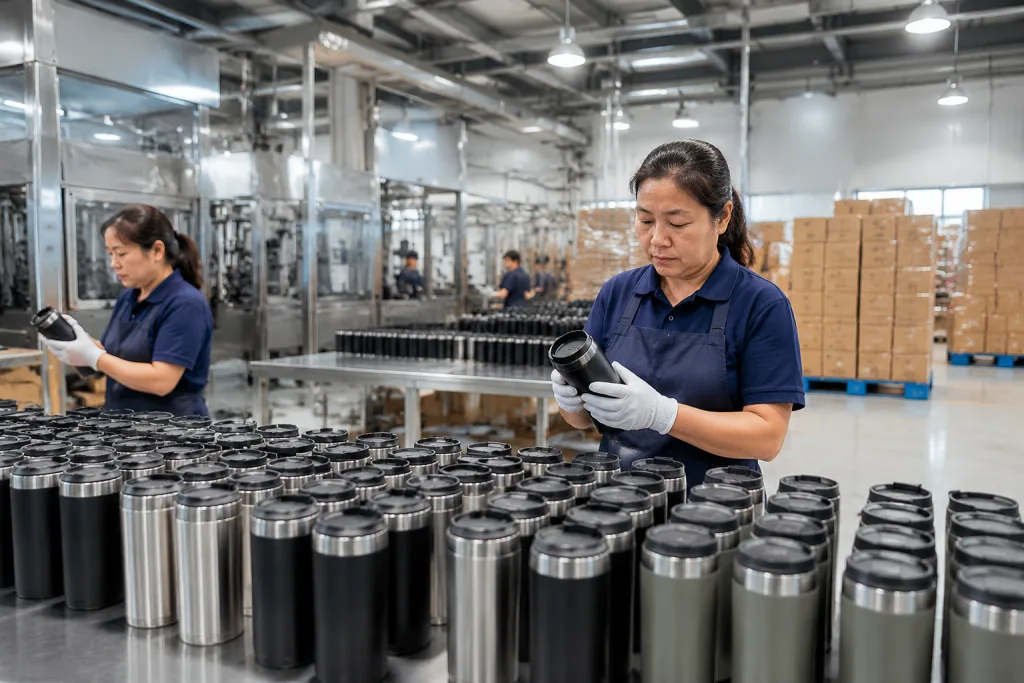
If you are buying a travel tumbler in bulk for a coffee brand or corporate-gift program, finding a coffee mug supplier is the easy part. The harder call is choosing a spec that still looks clean after 180 commute days, 60 dishwasher cycles, and daily cup-holder rubbing; last month QC pulled a returned sample with a 0.7 mm dent right on the lower curve.
BottleForge Industrial manufactures drinkware in Zhejiang, China, and we see one mistake in about 7 out of 10 RFQs: buyers compare capacity and unit price only. Wrong question. A 20 oz bulk coffee tumbler at USD 3.20 and another at USD 4.10 look close on a spreadsheet, but we run the lid fit, steel gauge, powder coating, carton drop test, and logo method through the line before calling it retail-ready; one buyer flagged a 1 mm logo shift on the pre-production sample, and they were right to push back.
The head-to-head spec table
For coffee brands and corporate-gift buyers, the cheapest factory is the wrong question to ask. Start with how the cup will be used: car cup holder, café shelf, onboarding box, or airline-style gift set. Below is the comparison we run when a buyer asks for a travel tumbler in bulk but sends a loose brief; last month QC pulled a 20 oz sample where the lid gap measured 0.8 mm on the feeler gauge, and the buyer flagged it before we even discussed price.
| Spec route | Typical capacity | FOB China target | Best use | Risk if underspecified |
|---|---|---|---|---|
| Budget promo tumbler | 16-20 oz | USD 2.40-3.20 | One-off events, onboarding kits | Thin coating, loose lid feel |
| Coffee retail tumbler | 12-20 oz | USD 3.80-5.80 | Café shelves, subscription boxes | Margin pressure if packaging is overbuilt |
| Corporate gift tumbler | 20-30 oz | USD 4.20-7.50 | Employee gifts, distributor campaigns | Logo mismatch across colors |
| Private label premium | 16-24 oz | USD 6.50-11.00 | Retail launch, influencer bundles | Tooling and sample cycle at 18 days vs 12 days for open molds |
Those FOB numbers assume 304 stainless steel, vacuum insulation, standard color powder coating, and carton export packing from China. They do not include ocean freight, duty, Amazon prep, or local warehousing. Our Hangzhou-area supply chain in Zhejiang can produce about 600,000 stainless drinkware units per month across tumblers, bottles, and mugs, but capacity does not fix a weak spec sheet; we have seen a PO say “matte black” while the approved Pantone note on the artwork was 426C.
If you are a coffee mug distributor, this table keeps quotes from spreading too wide. Ask three coffee mug manufacturers for “20 oz tumbler, custom logo,” and you will receive three different builds. We see it weekly. Ask for steel grade, wall thickness in mm, lid material, leak rating, coating test, logo method, carton drop standard, and AQL level; the math does not work if the buyer expects retail-grade finish at promo-grade FOB and 1,000 pcs MOQ.
Match the tumbler to the buyer
A coffee brand and a corporate-gift buyer should not be asking for the same bulk travel tumbler. The coffee buyer is selling repeat use: lip feel on the rim, how the powder coat sits beside a 250 g bean bag, and whether the cup makes the café look worth a higher ticket. The corporate buyer is buying fewer headaches: deadline control, logo placement within ±1 mm on our fixture, clean gift-box presentation, and no “the lid leaks in my laptop bag” emails after delivery.
For café retail, a 12 oz or 16 oz bulk coffee travel mug usually beats a giant 30 oz tumbler. It fits espresso drinks, lands at a price customers will still pay at the counter, and does not dwarf the packaged beans on a 600 mm display shelf. For corporate-gift campaigns in Europe and North America, 20 oz is the safer middle size: it fits most car cup holders we check with a 73 mm gauge and still feels like a proper gift without pushing carton weight into the expensive bracket.
Use case first. Spec second. We have seen this go sideways when a buyer starts with “what is your cheapest tumbler?” instead of asking where the cup will be used and how long it must survive. On the line, QC pulled the sample after 24 hours of water fill and tilt testing, because the cheap lid looked fine in photos but seeped around the slider.
- Budget event giveaway: choose 201 or 304 stainless steel only when usage is light, the MOQ is tight, and nobody is promising retail-grade insulation or finish life.
- Café merchandise: choose 304 stainless steel with ceramic-look powder coating, then match laser engraving or high-grade screen print to the logo width, coating color, and shelf price.
- Employee gift: choose a 20 oz bulk travel mug with individual kraft box, logo on lid or sleeve if needed, plus ISTA-style drop-tested cartons with 5-ply outer boxes for courier handling.
- Retail private label: choose custom mold, custom lid, UPC/FNSKU label options, and stricter AQL inspection, especially if Amazon or chain-store receiving will scan every carton.
A coffee mug custom made for retail should not share the same QC limit as a conference giveaway. For retail, we normally suggest AQL 2.5 for major defects and AQL 4.0 for minor defects, with the inspector checking rim burrs, coating pinholes, lid fit, and barcode readability before packing release. For low-cost promotional orders, some buyers accept AQL 4.0/6.5; write that on the PO, because the math does not work if the buyer expects retail finish at event-giveaway pricing.
Steel, insulation, and lid choices
The body of a bulk coffee mug is not magic. It is shop-floor engineering. We run 304 stainless steel on the inner wall because coffee, tea, milk drinks, and lemon flavors punish cheaper material fast. A normal retail build is 0.4-0.5 mm on the inner wall and 0.5 mm on the outer wall; our caliper check at incoming QC usually catches the “0.5 mm” shell that is actually 0.32 mm. If one quote comes in 8-12% lower than the rest, ask three questions: is the wall 0.3 mm, is the outer shell 201, and what vacuum failure rate did they record after welding?
Vacuum performance should be tested with 95°C hot water, then checked after 6, 12, or 24 hours. Claims need numbers. A slim 12 oz tumbler will not hold heat like a wide 30 oz bottle because the mouth opening, lid structure, and exposed surface area are different; this is where buyers sometimes ask the wrong question. For a bulk coffee mug, we like to see 60°C or above after 6 hours under controlled test conditions, with room temperature written on the report. QC pulled one 20 oz sample last month at 58.7°C after 6 hours in a 22°C room, and the buyer flagged it before carton printing started.
Lids drive complaints. Sliding lids work for desk coffee, but they are rarely fully leakproof. Flip lids with silicone seals are better for commuting, cost about USD 0.18-0.35 more per set in our line, and need tighter assembly control around the gasket groove. Tritan, PP, and silicone are common, but do not treat them as equal without test reports. For EU programs, ask for LFGB or EU food-contact test reports where applicable. For US programs, check FDA food-contact compliance and, for children’s products, ASTM and CPSIA issues. We have seen this go sideways when a PO typo changed “Tritan lid” to “PP lid” and the buyer only caught it during pre-shipment inspection.
If you are comparing a coffee mug supplier list, do not accept “leakproof” as a promise. Define the test: inverted for 30 seconds, shaken 10 times, or packed horizontally for 2 hours with 300 ml water inside. The math does not work if you ask for a cheap sliding lid and then expect backpack-safe performance. Different claims create different tooling, gasket, and QC costs.
Logo methods under real use
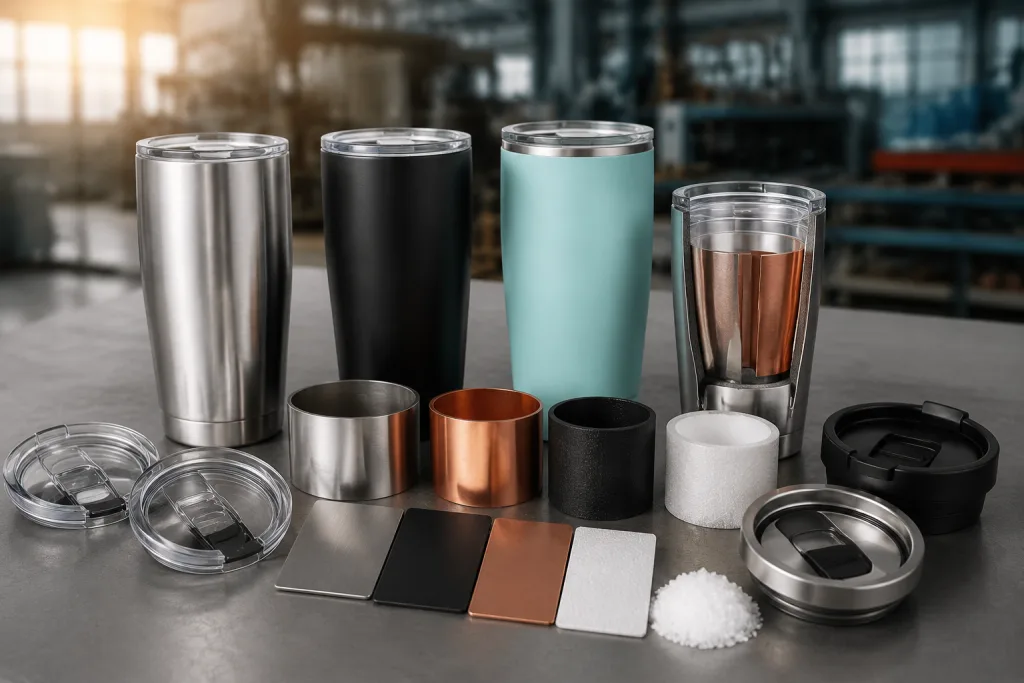
Most coffee mug promotional products lose the buyer’s confidence before the cup itself has any problem. The tumbler still holds coffee, but the logo gets scratched at the corner, fades after 20 dishwasher cycles, or looks like a cheap sticker. We see this during tape tests with 3M 600 tape on the QC bench. Pick the coating first, then choose the logo method. Doing it the other way around is the wrong question to ask.
For a powder-coated bulk coffee tumbler, laser engraving is the safest method if the brand needs to look clean after daily use. The laser burns through the coating and exposes the stainless steel underneath, so there is no ink film to peel off. Simple. The trade-off is a single metal-tone look in most cases, plus higher unit cost than basic printing. On 1,000 pieces, laser engraving may add USD 0.25-0.60 per unit depending on logo size and position. Last month QC pulled a 40 mm wide logo sample from the line because the buyer wanted it 8 mm closer to the curve, and the edge looked thin after engraving.
Silkscreen printing still has a place. One-color screen print works well for corporate logos on a flat panel or a soft curve, and it keeps the math friendly when the MOQ is 500 pieces. Multi-color logos need tighter registration; if the red layer shifts even 0.5 mm, the buyer will flag it on a white tumbler. Heat-transfer printing handles gradients better, but we run abrasion and dishwasher checks before recommending it for retail shelves. We’ve seen this go sideways when a PO says “dishwasher safe” and the artwork was only tested for hand wash.
For coffee mug custom programs, we usually recommend this order of preference after checking coating type, logo size, and carton artwork against the PO:
- Laser engraving: best for premium café retail and executive gifts where a 35-60 mm logo must survive desk use and bag rubbing.
- One-color silkscreen: best for simple corporate campaigns and MOQ-sensitive jobs, especially black, white, or navy logos on powder coat.
- Heat transfer: best for full-color artwork, gradients, or mascot designs when hand-wash guidance is acceptable on the insert card.
- Embossed or debossed mold logo: best for coffee mug private label projects above 5,000-10,000 pieces, since mold cost only makes sense at that volume.
Always approve a pre-production sample under normal office lighting and outdoor light. QC uses a D65 light box, then we walk the sample to the loading door at about 2 p.m. to catch color shift. A white logo on matte black does not read the same as a white logo on stone gray, even when the Pantone reference is correct. The buyer flagged exactly that on a 2024 café order, and the fix took 12 days vs 18 days because we caught it before mass printing.
Packaging, cartons, and freight math
Packaging is where 7 of 10 first-time buyers give back margin. A rigid gift box looks nice in a WhatsApp photo, but it can add USD 0.45-1.20 per piece and push carton volume up by 15-35%. The math gets ugly fast. Last month we ran a 20 oz sample pack on the carton sizer: the gift-box version needed 0.086 CBM per carton vs 0.064 CBM with a white box. If you ship a travel tumbler in bulk by ocean freight, that extra cube hits the freight bill. If you switch to air because the event date is 12 days away instead of 18 days, it hurts more.
For corporate gifting, an individual white box or kraft box is usually enough. Add a printed sleeve if HR cares about the unboxing photo. For retail coffee brands, a printed color box helps shelf impact, but the dieline needs barcode placement, recycling marks, country of origin, care instructions, and Europe may need DE/FR/ES copy in 6 pt text or larger. We check this on the Epson proof before plates are made because one buyer flagged a PO typo, “dishwasher save,” after 8,000 boxes were printed. If you sell through online marketplaces, plan FNSKU labels and carton labels before production. After cartons are sealed, the line stops and nobody is happy.
Typical master carton packing for a 20 oz tumbler is 24 pieces per carton, with carton weight around 9-13 kg depending on body weight and packaging. We normally suggest a 5-ply export carton for North America and Europe, 48 ECT if the buyer wants a number on the spec sheet. For higher-value private label programs, request a carton drop test from 60-80 cm: one corner drop, one long-edge drop, and one flat-face drop after the carton is taped with 60 mm BOPP tape. QC pulled the sample from the third carton, not the top one. Fixing cartons in China is cheaper than handling dent claims in Rotterdam or Los Angeles.
FOB Ningbo or FOB Shanghai is common for Zhejiang factories. Because BottleForge is based in Hangzhou, Zhejiang, we can use both ports depending on vessel schedule and forwarder preference. Ningbo often saves 1 trucking day for our line, while Shanghai sometimes wins when the buyer’s forwarder has a tighter sailing. If you work with a coffee mug factory direct partner, ask them to quote the same Incoterms each time. EXW, FOB, DDP, and CIF are not interchangeable numbers; this is the wrong question to ask if the freight scope is different on every quote.
MOQ, samples, and approval timing
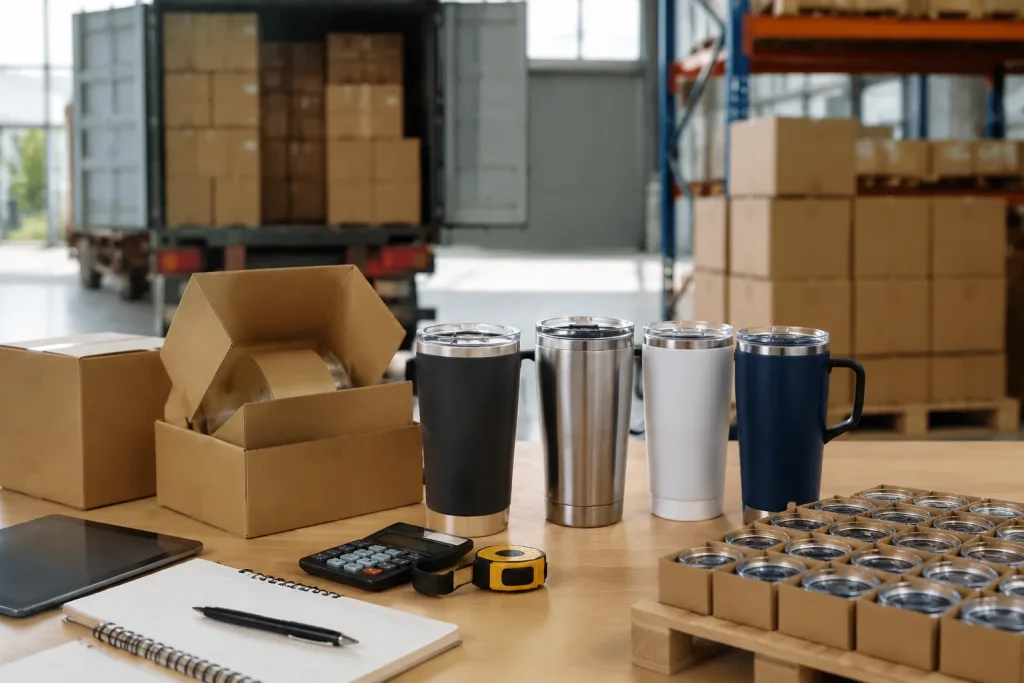
For most custom travel tumbler in bulk projects, we run a practical MOQ of 1,000 pieces per color and model. Stock-shape coffee mug customizable programs sometimes start at 500 pieces, but the unit price usually jumps by USD 0.35-0.80 and the color card may drop from 18 powder colors to 6. For private mold, custom lid, special coating, or retail packaging, 3,000-5,000 pieces is the cleaner starting point. Below that, the math doesn't work once the line changes fixtures, spray guns, and color powder.
A normal timeline from a coffee mug oem manufacturer in China looks like this: 3-5 days for digital mockup, 7-10 days for logo sample on an existing body, 10-18 days for custom color sample, and 25-35 days for mass production after deposit and sample approval. Add 3-7 days for final inspection and container loading. Ocean freight to Europe or North America can add 25-45 days depending on port pair and season. Last month QC pulled the sample because the PO said PMS 5535C, while the artwork file said PMS 533C, and that typo cost 2 working days before spraying.
Do not approve production from a render only if color, coating texture, or logo placement matters. This is the wrong shortcut. Renders work for internal sign-off, but they do not show powder texture, lid fit, or engraving depth. For a coffee mug customized program, approve a physical sample and keep one sealed reference sample for the inspection team. We tape ours in a clear PE bag with the order number, color code, logo size in mm, and lid torque note before AQL 2.5 inspection.
Payment terms vary, but 30% deposit and 70% before shipment is common for first orders. Established distributors may negotiate better terms after 2-3 repeat orders and credit review. If a coffee mug manufacturer offers 300 pieces, 12-day lead time, custom color, and the lowest price in the same quote, slow down and ask what is already sitting in their warehouse. We've seen this go sideways: the buyer flagged a “custom black” tumbler that was actually overstock with a 0.4 mm logo position drift from the approved sample.
Factory qualification without theater
A supplier audit should answer shop-floor questions, not feed a binder. For coffee mug distributors and brand owners, I care about four checks first: monthly line capacity with shift count, food-contact reports tied to the same 304 stainless body and PP lid, social audit status such as BSCI, and how defects get logged after QC pulled the sample. BSCI, ISO 9001, REACH-related material controls, and food-contact test reports matter only when the report name, material grade, and item photo match the tumbler on your PO. We once had a buyer send an LFGB report for a straw cup and ask us to apply it to a powder-coated travel tumbler. The math doesn’t work.
When you screen a coffee mug supplier directory or coffee mug supplier list, ask for production photos from the same category, taken near the welding station or powder-coating line, not polished showroom shots. Ask how many vacuum-insulated tumblers they ship per month; for our line, one normal month is around 180,000 pieces across 20oz and 30oz bodies. Ask their standard AQL, whether they run in-line vacuum testing at 100°C water fill, and where they park rejects after pressure testing. A serious coffee mug factory answers with numbers, AQL 2.5 if that is their standard, and a photo of the red-bin defect area. No drama.
Factory direct does not automatically mean better. Coffee mug factory direct purchasing works when your spec sheet is clean, your forecast covers at least 3,000 pieces per color, and someone on your side can manage AI artwork, pre-shipment inspection, and freight handoff. If you need 12 colors, 24-piece mixed cartons, and local warehousing for weekly drops, a regional distributor may beat us on speed even if their unit price is higher. We’ve seen this go sideways when a buyer saved $0.18 per tumbler, then lost 18 days sorting barcode labels because the PO had “matte balck” typed in one line and “matte black” in another.
For coffee mug private labeling, protect the boring details before the deposit: carton marks, spare lids, replacement terms, artwork files with Pantone codes, barcode rules, and inspection photos for logo position in mm. On the line, a 2 mm logo shift looks small; on a retail shelf, the buyer flags it. A bulk travel tumbler order is not finished when the invoice is paid. It is finished when the goods arrive, match the approved sample, scan at the warehouse gate, and your customer does not send scratched-logo photos two weeks later.
Send your tumbler spec and target landed cost
BottleForge will review capacity, lid, logo, packaging, MOQ, and China FOB options before you lock the bulk order.
Frequently asked questions
What is the best size for ordering a travel tumbler in bulk?
For coffee brands, 12 oz, 16 oz, and 20 oz are the practical sizes. A 12 oz cup suits espresso drinks and café retail shelves. A 16 oz bulk coffee mug works for latte and daily office use. A 20 oz bulk travel tumbler is the safest corporate-gift size because it feels substantial and usually fits car cup holders. Larger 30 oz tumblers sell well for outdoor or gym use, but they increase carton size and freight cost. If you are unsure, start with 20 oz for corporate gifts and 12-16 oz for coffee merchandise.
How much should a custom bulk coffee travel mug cost?
For FOB China pricing, a basic stainless bulk coffee travel mug usually starts around USD 2.40-3.20 at 1,000 pieces. A retail-grade 304 stainless tumbler with powder coating and laser logo is more often USD 3.80-5.80. Premium private label builds with custom lid, special finish, or printed retail box can reach USD 6.50-11.00. These prices exclude freight, duty, import VAT, testing, and local handling. If a quote is 20-30% below the market, check steel grade, wall thickness, lid material, coating test, and carton strength before you celebrate.
Can I order coffee mug custom made packaging and barcodes?
Yes, but treat packaging as a separate specification. A coffee mug custom made program can include printed color box, kraft gift box, belly band, barcode, FNSKU label, carton label, instruction sheet, and country-of-origin marking. For Amazon or distributor warehousing, provide label files before mass production starts. Printed boxes usually need 1,000-3,000 pieces MOQ depending on structure and artwork. Lead time normally adds 5-10 days because packaging proofing and printing must be approved before final packing. Always test the tumbler inside the box with a carton drop test.
Is laser engraving better than printing for coffee mug promotional orders?
Laser engraving is usually better for long-term durability, especially on powder-coated stainless steel. It does not peel because it removes coating rather than adding ink. For coffee mug promotional orders with simple one-color logos, silkscreen printing is cheaper and can look sharp, often adding only USD 0.08-0.25 per unit. Laser engraving may add USD 0.25-0.60 per unit at 1,000 pieces. If the tumbler is a retail item or executive gift, choose laser. If it is a short event giveaway with tight budget, good silkscreen printing is acceptable after abrasion testing.
How do I choose between coffee mug manufacturers in China?
Compare coffee mug manufacturers with the same written specification, not a loose product photo. Ask each supplier for steel grade, wall thickness, capacity tolerance, lid material, coating method, logo method, MOQ, production lead time, AQL level, food-contact reports, and FOB port. A qualified China supplier should also explain sample timing and inspection steps clearly. For a first order, 1,000 pieces per color is a normal MOQ and 25-35 days is a normal production lead time after approval. If you need coffee mug factory direct pricing, be ready to manage artwork approval and QC carefully.