Key Takeaways
- A 500 ml stainless top wholesale water bottle usually lands at USD 2.10-4.80 FOB depending on wall thickness, lid, and finish
- Realistic MOQ starts at 1,000 pcs for stock colors and 3,000-5,000 pcs for custom powder coating
- Normal production lead time is 25-45 days after artwork and deposit, not including sea freight
- AQL 2.5/4.0 inspection, LFGB/REACH checks, and carton drop tests should be budgeted before PO approval
If you are buying a top wholesale water bottle program for retail shelves, a promo drop, or distributor stock, finding a factory is the easy part. The harder call is whether a USD 2.40 FOB quote is workable or just thin on paper. We see this every week: the buyer flags the price, then QC pulls the pre-shipment sample and finds the logo film 1.5 mm off-center, no spare lids counted, and the carton edge crush test missing from the file. Tooling, carton testing, AQL inspection, logo setup, spare lids, and late packaging artwork are where the math can go sideways.
BottleForge Industrial runs from Hangzhou, Zhejiang, with stainless steel, plastic, glass, canteen bulk, and growler wholesale lines for Europe and North America. We ship wholesale drinkware from China because the supply chain still works, but the lowest line-item quote is the wrong question to ask. Price it by material, MOQ tier, and calendar days: 3,000 pcs in 304 stainless is a different job from 10,000 pcs Tritan, and a clean artwork file on Monday can mean 12 days for sampling instead of 18 days after three PO revisions and one Pantone typo.
Price starts with the shell
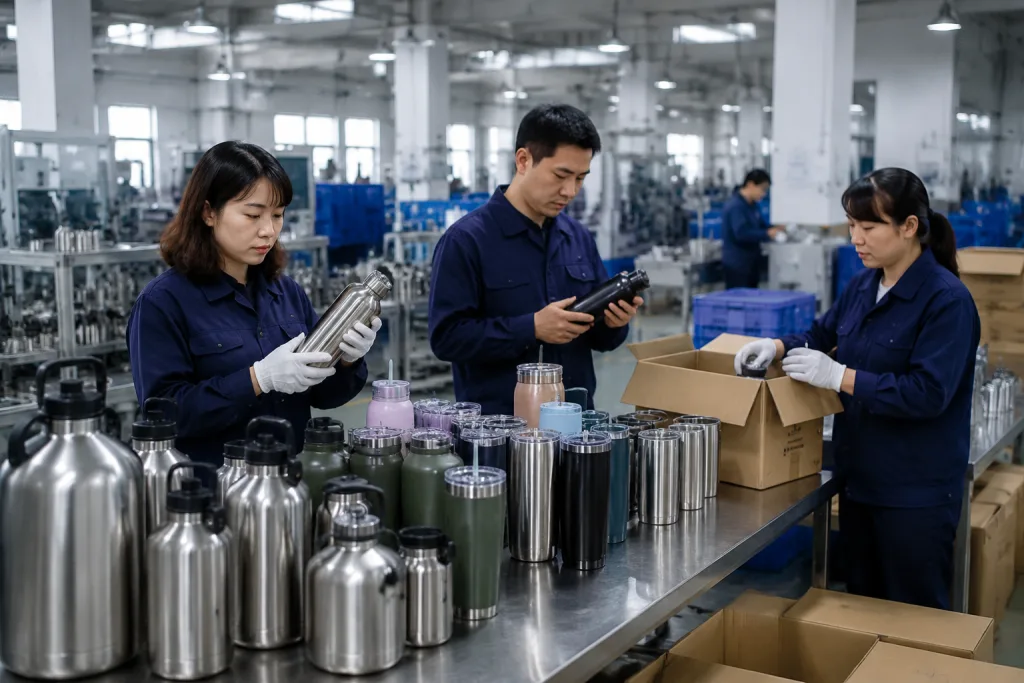
For a top wholesale water bottle, the shell sets the price before the logo artwork even reaches our pad-printing room. A single-wall aluminum or Tritan bottle can still quote under USD 1.80 FOB at 5,000 pcs if the cap is standard and the carton is plain, but a double-wall stainless vacuum bottle runs on another cost sheet. We run separate lines for tube cutting, laser welding, vacuum pumping, polishing, and powder coating; last month QC pulled 32 samples from a 3,000 pcs lot and the failed ones were all shell issues, not logo issues.
For 304 stainless steel, a common 500-750 ml bottle uses 0.4-0.5 mm inner wall and 0.5-0.6 mm outer wall. Push the factory to thinner steel and you might save USD 0.10-0.25 per unit. The math usually does not work. We tested 0.35 mm inner wall on a 600 ml shape in 2023, and the buyer flagged dent marks after a 76 cm drop test on the third sample round. For European buyers, we prefer stable gauge and a clean passivation process over shaving cents, because LFGB paperwork cannot fix a dented shelf display.
As a practical FOB Ningbo or Shanghai range from Zhejiang, China, you can expect these numbers before custom tooling, special lids, or retail packaging. Our packing desk still checks the PO line by line; one buyer once typed “matte back” instead of “matte black,” and that typo held the color card approval for 2 days.
- Single-wall stainless bottle: USD 1.60-2.80 at 3,000 pcs
- Double-wall vacuum bottle: USD 2.10-4.80 at 3,000 pcs
- Powder-coated sports bottle: USD 2.60-5.40 at 3,000 pcs
- Glass bottle with sleeve: USD 1.90-3.60 at 2,000 pcs
- Large bulk growler or beer growler bulk order: USD 5.80-12.50 depending on 1 L, 1.9 L, or 2 L capacity
Bulk drinkware buyers often ask for the “best wholesale drink bottle.” This is the wrong question to ask. The better question is whether your target retail price leaves room for AQL 2.5 inspection, sea freight, duties, spare lids, and a 2-3% defect buffer. We have seen this go sideways: a buyer saved USD 0.18 on the shell, then spent USD 0.42 per unit handling returns after the line found weak vacuum retention at the 24-hour hot water test.
MOQ tiers change the math
MOQ is not a punishment. It is the break-even line for steel coil buying, line setup, powder changeover, silkscreen plates, and carton packing. We run the costing sheet by model, color, logo method, and carton artwork, because those four boxes decide whether a PO is clean or messy. Last month QC pulled a 750 ml sample from the line and the buyer had written “matte balck” on the PO; that one typo held artwork approval for 2 days.
For stock models, BottleForge can usually support 1,000 pcs per SKU with laser engraving or one-color silkscreen. For custom powder color, the practical MOQ is 3,000 pcs per color because our coating oven and powder recovery system lose efficiency below that point. The math doesn't work at 800 pcs in a custom Pantone. For a new mold lid, expect 5,000-10,000 pcs for the first order plus tooling, and we check the lid fit with a 0.05 mm feeler gauge before approving pilot production.
Typical MOQ tiers look like this:
- 500 pcs: workable for sampling, a small market test, or alcohol flask bulk in stock finish; unit cost usually runs 15-30% higher because setup time is spread over fewer cartons
- 1,000 pcs: realistic for stock wholesale canteen, travel tumbler, or beer tumbler wholesale test orders with one logo and standard export carton
- 3,000 pcs: normal tier for custom color, retail packaging with printed insert cards, or drinkware wholesale programs where the line can stay on one finish for a full shift
- 5,000 pcs: better pricing and steadier production scheduling, with stronger carton customization such as 5-layer mail-order cartons or buyer barcodes
- 10,000 pcs: the point where material negotiation starts to matter and FOB price can drop 5-12%
If you need canteen wholesale in several colors, splitting 3,000 pcs into six colors is usually the wrong question to ask unless you accept a higher price. A cleaner first order is 2 colors at 1,500 pcs each, packed 24 pcs per carton so the warehouse team is not chasing mixed labels. For wholesale growler or beer growler wholesale bulk projects, capacity and cap type matter more than color count because large bodies take more fixture space on the line and push carton CBM up fast; we have seen a 64 oz growler order jump from 12 pallets to 18 pallets after the buyer changed the cap from loop lid to swing top.
Logo and packaging are not free
About 6 out of 10 new buyers price only the bottle body and leave the logo route blank on the RFQ. That is where quotes get ugly. A laser logo on 304 stainless may add USD 0.08-0.18 per unit, and we still check depth with a 10x loupe because shallow engraving looks grey after polishing. One-color silkscreen is often USD 0.06-0.15, but multicolor printing needs films, Pantone matching, and tighter rejection control at the line. Full-wrap heat transfer can add USD 0.35-0.90 depending on coverage.
For brand owners, packaging is usually the bigger surprise. A plain white box may cost USD 0.08-0.18. A color retail box with 350 gsm paperboard and matte lamination can be USD 0.25-0.55, and the box die-line alone can push sampling from 7 days to 12 days if the buyer changes the barcode position after artwork approval. If you need Amazon-ready drinkware wholesale cartons with FNSKU labels, suffocation warnings for polybags, and master carton limits under 15 kg, tell the factory before pricing.
Here is the practical decoration view:
- Laser engraving: durable and clean on stainless; weak choice when the buyer wants exact bright color matching
- Silkscreen: low cost for simple logos; needs a flat panel or a controlled curve, or the edge will feather
- UV printing: workable for short-run multicolor branding; slower on the jig table and usually priced above silkscreen
- Powder coating: premium hand feel and better grip; QC pulled samples last month where poor pretreatment caused base-ring scratches
- Retail box: changes unit cost and carton size; it also changes loading quantity and whether the carton survives a 76 cm drop test
For alcohol flask wholesale bulk, logo alignment is the wrong place to save money because flat flasks show a 1 mm tilt immediately. We run a simple fixture check before mass printing. For beer tumbler in bulk, test the coating near the rim and base because those areas take the most handling damage; the buyer flagged rim chips on 320 pcs in one AQL 2.5 inspection. A USD 50 pre-production sample approval can save a USD 5,000 argument later.
Lead time is a chain
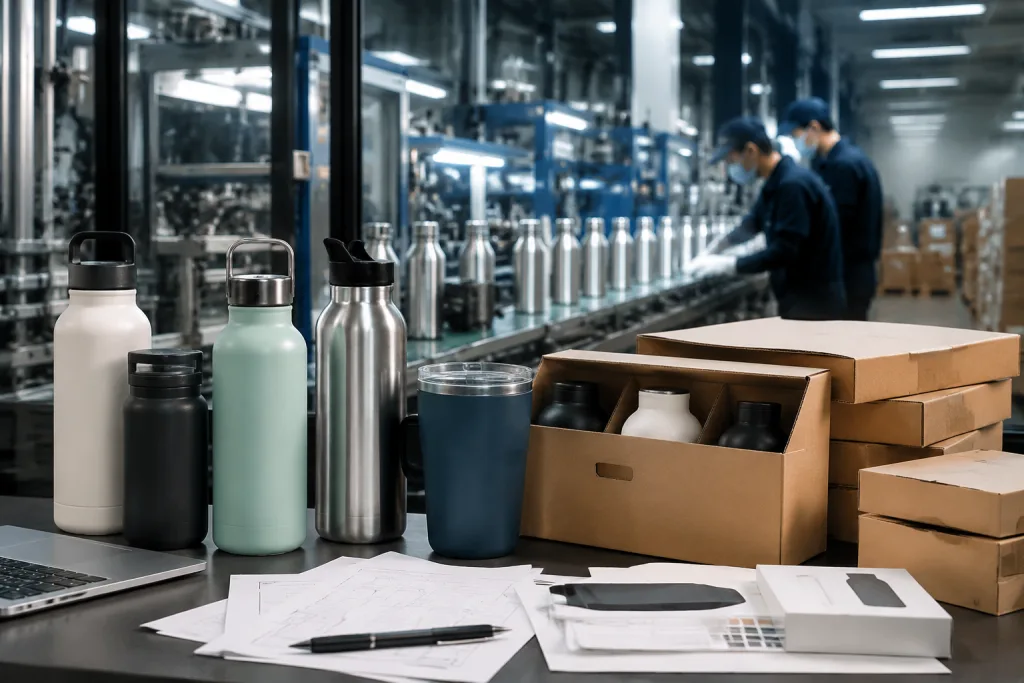
A factory lead time is not one clean number on a PI. It is a chain: artwork approval, pre-production sample, 304 stainless coil booking, tube forming, laser welding, polishing, powder coating, logo printing, lid assembly, AQL inspection, and export loading. One late link stops the line. We learned this the hard way when a buyer sent the Pantone as “PMS 186C” on the PO, then attached artwork marked 185C; QC pulled the sample, and the order sat for 2 days. Build the calendar backward from warehouse arrival, not forward from deposit.
For standard top wholesale water bottle orders from Zhejiang, we run 25-45 days after deposit and confirmed artwork. Add 7-12 days for a new pre-production sample. Add 10-20 days if a new lid mold is involved, because the CNC shop still needs steel cutting, trial shots, and fit testing on the thread gauge. Sea freight to North America or Europe can take another 25-45 days port to port, plus local clearance and trucking. If the buyer asks for “faster production” but approves artwork on Day 6, the math does not work.
A realistic schedule for a 3,000-5,000 pcs order:
- Day 1-3: PO, 30% deposit, final specs, Pantone code, AI logo file, carton mark, and barcode check against the buyer’s packing manual
- Day 4-10: sample production, 1 pc photo approval or 2 pcs courier samples, with coating thickness checked by film gauge before sign-off
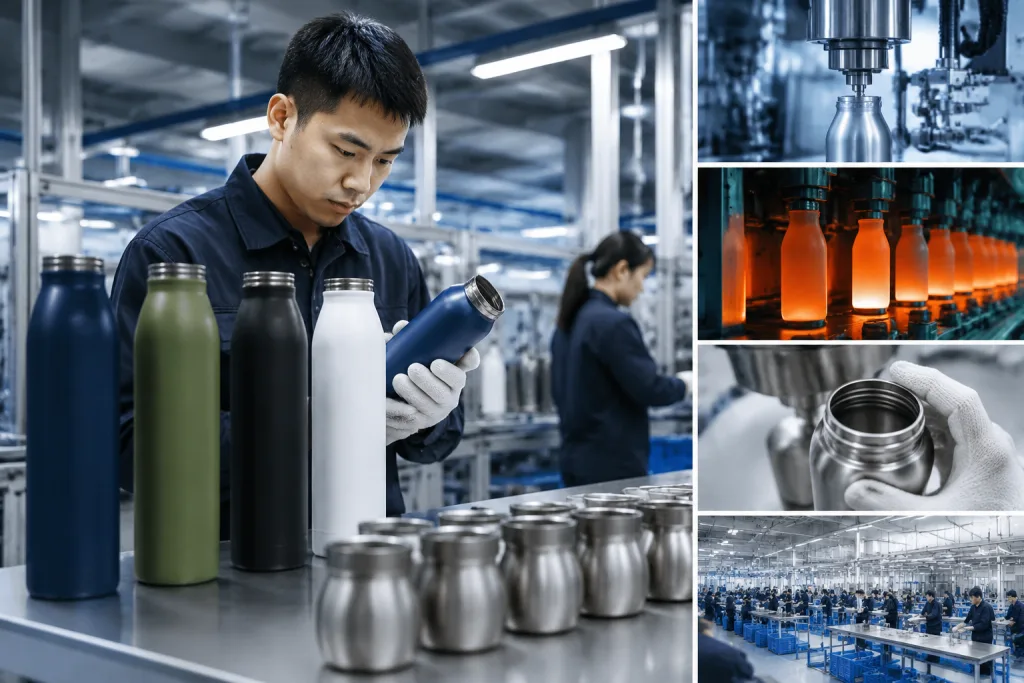
- Day 11-25: material prep, forming, laser welding, polishing, and vacuum testing; the line rejects bottles that lose pressure in the water bath test
- Day 26-35: coating, printing, lid assembly, and inner packing, including a quick rub test on the logo before cartons move to sealing
- Day 36-42: AQL inspection, carton sealing, vessel booking, and customs documents; we check gross weight because one 0.6 kg carton variance can trigger questions at loading
China holidays matter. Orders placed 14 days before Chinese New Year are risky unless raw material is already in our warehouse and the coating line has open slots. For Q4 retail, lock wholesale drinkware orders by late July or August. If you are buying beer growler wholesale for autumn promotions, start earlier because 64 oz bodies eat pallet space and reduce container loading efficiency. We have seen this go sideways: 3,600 growlers looked fine on the sales order, then the loading plan came back 18 cartons short of the buyer’s target.
Quality costs less than rework
Good QC is simple, but it has to be locked before the line starts. For bulk canteen orders, sports bottle programs, growler bulk runs, and alcohol flask in bulk projects, we define defects with photos: critical means safety or food-contact failure, major means the buyer can reject the carton, minor means the unit still sells but looks off. AQL 2.5 for major defects and AQL 4.0 for minor defects is common for wholesale drinkware. For food-contact risk, critical defects should be zero tolerance. Last month QC pulled the sample at pre-production because one lid gasket measured 0.6 mm thinner than the signed sample. Good catch. Rework would have cost 9 days.
Ask for the test list that matches your market. For the EU, buyers often need LFGB, REACH, and sometimes specific migration tests. For the US, FDA food-contact expectations and ASTM-related performance checks may apply depending on product type and channel. If the bottle is for children, the compliance burden rises. Do not assume a generic factory test report covers your exact 304 stainless body, powder coating, silicone lid gasket, and logo ink. We have seen this go sideways when a buyer sent a PO saying “black coating” but the approved swatch was Pantone Black 6C with matte finish.
Factory-side checks should include:
- Vacuum retention: sample testing at 95°C water, checked after 6-12 hours with a probe thermometer on the QC bench
- Leak test: inverted and shaken units for 30 seconds, mainly straw lids and screw caps because buyers flag wet inner cartons fast
- Coating adhesion: cross-hatch tape test on powder-coated bodies, with 3M tape and a 1 mm cutter grid
- Carton drop test: ISTA-style drop sequence for export cartons, including the corner that always gets crushed in LCL loading
- Logo inspection: position tolerance, color consistency, and rub resistance checked against the signed artwork, not a phone photo
BottleForge’s Zhejiang production partners can output about 350,000 stainless units per month across standard bottle and tumbler lines, but capacity means little if inspection criteria are vague. Put your defect photos, packaging standard, spare part ratio, and acceptable color tolerance into the purchase order. The buyer may say this slows sourcing. We disagree. If the PO says 1% spare lids and ±1 mm logo position before mass production, the math works; if it is argued after 120 cartons are packed, it does not. That is not bureaucracy. It is how we avoid rework.
Freight can beat product savings
For drinkware bulk, freight is the profit leak buyers notice too late. A 750 ml vacuum bottle can look good at FOB USD 3.10, then lose the saving because the carton hits 0.085 CBM and the container loads badly. We saw this on a 40HQ trial: the line packed 24 pcs per master carton, but QC pulled the sample carton and the tape measure showed 62×44×31 cm. The math didn’t work. A wholesale growler or beer growler in bulk order has the same problem. You pay for cube, not just kg, especially with LCL shipments and courier sample moves.
Ask for carton dimensions, gross weight, net weight, and loading quantity before you approve the final quote. Get photos with a ruler on the carton, not only a packing list typed by the merchandiser. A small packaging change can improve palletization or container utilization by 5-10%; we have cut one insert from 18 mm to 12 mm and gained 840 bottles in a 40HQ. Air is expensive. If your retail box has too much empty headspace, you are paying ocean freight for nothing. For North America, check whether master cartons stay below your warehouse handling limit, often 15-18 kg; one buyer flagged 19.6 kg cartons because their 3PL charged a manual handling surcharge.
FOB is the cleanest term for most procurement managers because you control freight and insurance after the China port. DDP works for a 300 pc urgent launch, but it hides duty, fuel, and risk margin inside one number. We ship samples by DHL when needed, but for bulk programs I push buyers to compare FOB plus their forwarder quote against any delivered offer. For serious wholesale canteen or beer tumbler wholesale bulk programs, this is the right comparison. One PO came in with “DDU” typed in the remarks while the price line said “DDP”; we stopped production approval until the buyer corrected it.
If you buy mixed SKUs, combine them with a real loading plan. Alcohol flask wholesale cartons are dense; glass bottles need corner protection and drop-test history. Beer tumbler bulk cartons can be light but eat space fast. Mixing helps container balance only when carton strength and stacking are checked with a 5-layer stack test on the warehouse floor. We’ve seen this go sideways: a cheap K=K carton looked fine at packing, then the bottom layer crushed after 30 days at sea and the buyer sent photos with oval cartons at the port warehouse.
Quote sheets should force clarity
A good RFQ makes the factory put its assumptions on paper. A weak RFQ says “send price for water bottle,” then you get 5 quotes with different steel thickness, lid molds, gift boxes, and test costs hidden in the notes. Ask for capacity in ml, material grade, lid type, Pantone color, logo process, packaging, MOQ, target market, compliance requirement, incoterm, and delivery deadline. We run quotes through a 12-column cost sheet; last month QC pulled a 750 ml sample and found the buyer’s “black lid” meant matte black on the PO but glossy black in the artwork.
Use one sheet for water bottles, canteen bulk, beer tumbler wholesale, wholesale growler, and alcohol flask wholesale only when every SKU has its own line number, drawing, and pack-out. Do not mix canteen wholesale and growler wholesale in one loose email thread. We have seen this go sideways. A 64 oz growler may need a 5-layer export carton and drop test, while a 350 ml flask often ships 48 pcs per carton with a different insert; the line, carton knife mold, and test plan are not the same.
Your RFQ should request:
- FOB port, usually Ningbo or Shanghai for Zhejiang and East China production, plus the expected shipment week
- MOQ per model, per color, and per logo, with any surcharge below standard line quantity
- Unit price at 1,000, 3,000, 5,000, and 10,000 pcs, using the same lid, coating, and box spec
- Sample fee, sample lead time, and refund rule; 7 days for a stock sample is not the same as 15 days for a laser logo sample
- Mass production lead time after deposit and artwork approval, counted from signed PI and print file confirmation
- Available test reports and whether new testing is included, such as FDA, LFGB, or buyer lab submission
- Carton dimensions, units per carton, gross weight, and loading quantity, checked against the carton mark draft before booking
The best supplier is not always the lowest first quote. This is the wrong question to ask. Ask who can show where the cost sits, where the schedule can slip, and which approvals must be locked before the line starts. We ship bulk drinkware for buyers who hate surprises; a 2 mm logo shift caught at pre-production is cheap, but the same issue after 10,000 pcs are packed is not.
Send your bottle brief for a costed quote
Share capacity, material, MOQ, logo, packaging, and delivery date. We will return a practical FOB quote and lead-time plan.
Frequently asked questions
What is a realistic MOQ for a top wholesale water bottle order?
For a stock stainless or plastic model, 1,000 pcs per SKU is realistic if you accept existing colors and a simple logo. For custom powder coating, plan on 3,000 pcs per color. For new molds, shaped lids, or special caps, 5,000-10,000 pcs is more practical because tooling and line setup need volume. Some factories will offer 300-500 pcs, but the unit price can be 15-30% higher and color options are limited. If you are testing a new channel, start with 1,000-2,000 pcs using a stock bottle, then move to a custom body after sell-through data is clear.
How much should I budget for wholesale drinkware from China?
For China FOB pricing, a basic single-wall stainless bottle may run USD 1.60-2.80 at 3,000 pcs. A 500-750 ml double-wall vacuum bottle usually sits around USD 2.10-4.80. A premium powder-coated bottle with custom lid and retail box can reach USD 5.00-6.50. Bulk growler and beer growler wholesale items often range from USD 5.80-12.50 because of larger steel usage and carton volume. Add logo, packaging, inspection, freight, duty, and 2-3% spare parts or claims allowance before judging margin. A low FOB quote without these items is not your landed cost.
How long does production take after I place the PO?
For standard drinkware wholesale orders, expect 25-45 days after deposit and confirmed artwork. A pre-production sample normally adds 7-12 days. New tooling can add 10-20 days, sometimes longer for complex lids. Ocean freight to Europe or North America usually adds 25-45 days port to port, depending on routing and season. If your order needs LFGB, REACH, FDA-related checks, or custom packaging approval, build that into the schedule before committing to a retail launch date. For Chinese New Year, add buffer or place the PO at least 60-75 days before factory closures.
Can I combine water bottles, canteens, growlers, and flasks in one order?
Yes, but treat each item as a separate SKU for MOQ, carton size, and QC. A wholesale canteen, beer tumbler in bulk, alcohol flask bulk, and wholesale growler order may use different production lines and different inspection points. Combining can help container utilization if dense flask cartons balance bulky growler cartons, but it can also complicate scheduling. If one SKU needs custom coating and another is stock stainless, the stock item may sit waiting for the custom item. Ask your supplier to provide separate lead times and carton data, then decide whether to ship together or split.
What quality standard should I put on the purchase order?
Use written AQL terms, not vague wording like “good quality.” A common standard is AQL 2.5 for major defects and AQL 4.0 for minor defects, with zero tolerance for critical food-contact or safety defects. Define leak testing, vacuum retention, coating adhesion, logo rub resistance, and carton drop requirements. For EU orders, confirm LFGB and REACH applicability. For US orders, confirm food-contact material expectations and retailer-specific requirements. Include approved samples, Pantone references, packaging drawings, and defect photos as PO attachments. If inspection fails, the PO should state whether the factory reworks, sorts, discounts, or remakes.