Key Takeaways
- A 12 oz 304 stainless custom thermos usually lands at USD 2.65-4.60 FOB China depending on MOQ and decoration
- Sample lead time is typically 7-10 days; mass production is 20-35 days, and peak season can push to 40-50 days
- MOQ changes pricing fast: 300 pcs is workable, 500 pcs is common, and 5,000 pcs usually unlocks the best unit cost
- REACH, LFGB, and drop testing add 5-7 days and roughly USD 180-450 if you use a third-party lab
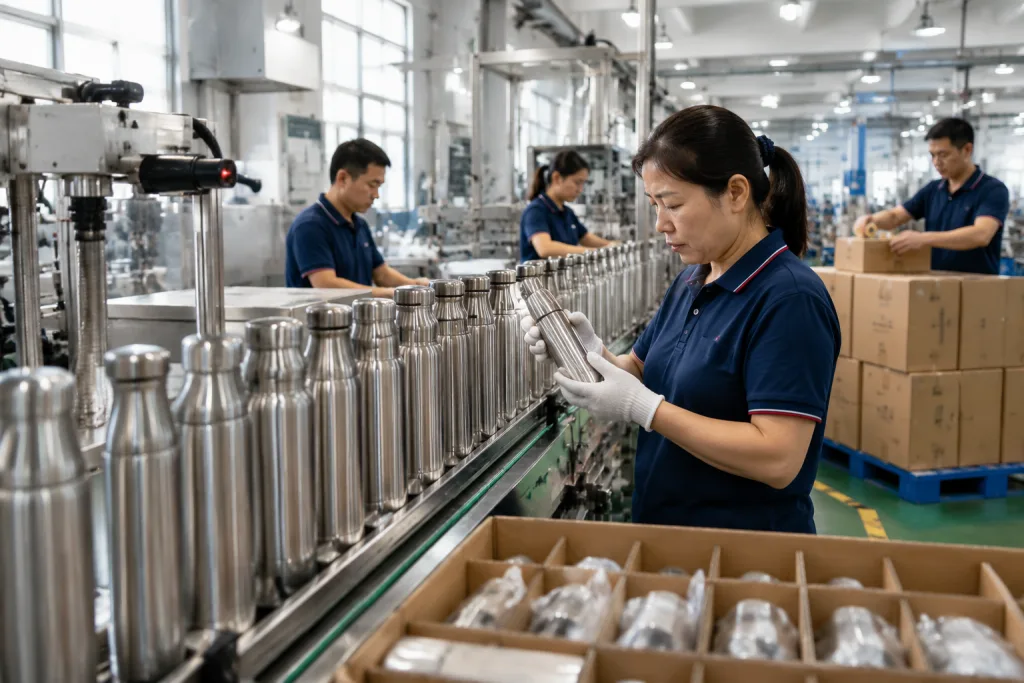
Buying the top custom thermos bottle for outdoor retail or promotional use is not a design problem. It is a cost, lead-time, and risk problem hiding inside product selection. If you are sourcing a custom thermos for a 10,000-piece winter campaign, a trail collection, or a distributor thermos program, the bottle body, lid mold, and carton spec will move your landed cost more than the logo file. We saw this last November when QC pulled a 750ml sample with a 0.4mm wall variance; the artwork was fine, but the buyer flagged the weight and the freight math changed fast.
Stainless thermos pricing gets predictable once you split it by material grade, surface finish, lid structure, and order size. A decent thermos factory in Zhejiang can quote within 24 hours if the RFQ includes capacity, MOQ, packaging, and test standard. At our Zhejiang plant in China, we run 300,000 units a month, and the line tells the same story every week: buyers who chase the lowest FOB number often pay later through 18-day production instead of 12 days, thin gift boxes, or a failed leak test at AQL 2.5. The lowest quote is usually the wrong question to ask.
What Actually Sets the Price
If you want a realistic number for a thermos custom order, start with the shell, not the logo. A standard 12 oz or 16 oz stainless vacuum bottle using 304 inner and outer walls, 0.4-0.5 mm thickness, and a basic PP lid will quote around USD 3.20-4.60 FOB China at 1,000 pcs. We run the caliper check on the body tube before vacuum brazing; if the wall comes in at 0.36 mm instead of 0.4 mm, the math changes. A simpler 350 ml promotional thermos can price lower, but powder coating needs a spray line pass, laser logo adds fixture time, gift box changes the packing table, and a push-button lid brings more parts to inspect.
The main cost drivers are boring. That is why buyers miss them. QC pulled the sample last month because the PO said “304 stainless” but the lid spec showed recycled PP, and the buyer flagged it only after we sent the pre-production photos:
- Steel grade: 304 is the normal commercial choice; 316 adds roughly USD 0.20-0.45 per unit, and we ask the mill for a material report before cutting coil.
- Wall structure: double-wall vacuum is standard; thicker gauge adds durability and weight, so a 16 oz bottle can jump 18-25 g before paint.
- Decoration: one-color silkscreen is cheap for 1,000 pcs, laser engraving is cleaner for matte powder coat, and full-wrap print costs more because registration needs tighter setup.
- Lid tooling: a custom lid can add USD 800-3,500 in tooling if you want a unique shape, and the mold shop will ask for a 2D drawing with gasket groove size in mm.
- Packaging: kraft box versus color box can change carton cost by 8-15%, and a 24 pcs master carton often fails the drop test if the insert is too thin.
If a supplier thermos quote looks too low, check whether it includes a plain lid, no box, and no export testing. In China, that is the usual trick. We have seen this go sideways: the buyer approved USD 2.95, then found out LFGB testing and color boxes were excluded, turning a 12-day quote check into 18 days of rework. For outdoor retailers, compare a true FOB price on the same spec first. The finish comes after the cost sheet, not before.
MOQ Tiers That Matter
MOQ is where the quote stops being polite. We run 300 pcs on a thermos line without drama, but the math often does not work at 300 pcs after mold setup, print jig adjustment, and 2 hours on the leak-test table. For a bulk thermos program, the price curve usually changes once the order clears the first setup layer.
Typical factory thermos tiers look like this:
- 300-500 pcs: useful for market testing or a one-off promotional thermos run; expect USD 3.80-5.20 FOB on a 12 oz bottle, usually with 1 logo position and limited color choice.
- 1,000 pcs: the normal custom thermos MOQ; pricing often drops to USD 3.20-4.20, and QC can pull a cleaner AQL 2.5 sample set from the line.
- 3,000 pcs: stronger fit for distributors thermos programs; production planning is steadier, and cartons can be packed to reduce dead space by 8-12 mm per inner box.
- 5,000+ pcs: where a thermos supplier can usually cut unit cost by 8-18% versus the 1,000 pc tier because steel sheet, lids, cartons, and inserts are bought in full batches.
There is a practical reason. Setup time and print plates cost the same whether we print 420 bottles or 4,200 bottles, and Pantone matching still needs a drawdown card under the D65 light box. A factory thermos order under 500 pcs can work if you accept a higher unit price and simple customization. If you are a brand owner testing a seasonal line, fine. If you are a distributor thermos buyer chasing margin, 1,000-3,000 pcs is usually the better bracket; negotiate carton mix and spare cap ratio, not just bottle price.
For reference, a mature thermos factory in Zhejiang with stable cap and cup supply will quote faster and hold tolerances tighter than a trading desk splitting the same job across 2 or 3 plants in China. We have seen this go sideways: one PO typo changed “matte black” to “black,” and QC pulled samples with two different gloss levels on the same 40HQ plan.
Lead Time From Sample to Ship
Lead time is where 6 out of 10 buyers lose a promotion window. A real thermos manufacturer timeline is not one date on a PI. It is a handoff chain. If we run a standard mold and stock color, the sample can be ready in 7-10 days. If the order needs a new laser logo plate, custom color box dieline, or a 0.3 mm lid-fit adjustment, add another 3-7 days. QC pulled one sample last month because the buyer’s PO said “matte navy” but the Pantone chip attached was 2965C gloss. That cost 2 days.
For mass production, we usually quote these ranges:
- Sample approval: 7-10 days for stock models, 10-15 days for modified specs after artwork, Pantone, and logo position are locked.
- Mass production: 20-25 days for simple custom thermos orders under 3,000 pcs, assuming no lid tooling change and cartons stay standard.
- Peak season: 30-40 days if you order during Q3 or before Q4 gift campaigns, because powder coating lines and carton suppliers both get tight.
- Ocean freight: 25-40 days to Europe or North America, depending on port congestion and whether the forwarder can catch the booked vessel.
If you need a promotional thermos for a trade show, air freight is the wrong rescue plan to assume. It works for 200 pcs gift sets, not for 3,000 pcs of 500 ml bottles in 15 kg master cartons. Air can cut transit to 5-8 days, but the math often kills the margin on a low-cost bottle. Better move fast on the basics: lock artwork, approve the pre-production sample within 24 hours, and keep packaging to a plain white box or standard color box. We’ve seen this go sideways when the buyer flagged a hangtag typo after the line had already packed 60 cartons.
Most delays are not caused by making the bottle. They come from artwork approval, packaging changes, and buyers who keep revising the color chip after production has started.
A disciplined thermos factory separates sample time, production time, and shipping time on the schedule. No guessing. For outdoor retail season or distributor thermos replenishment, we build the plan from the inspection date backward: AQL 2.5 final check, carton drop test, loading slot, then vessel ETD. If the ship date is fixed, the sample approval date is not flexible.
Decoration Choices Change Margin
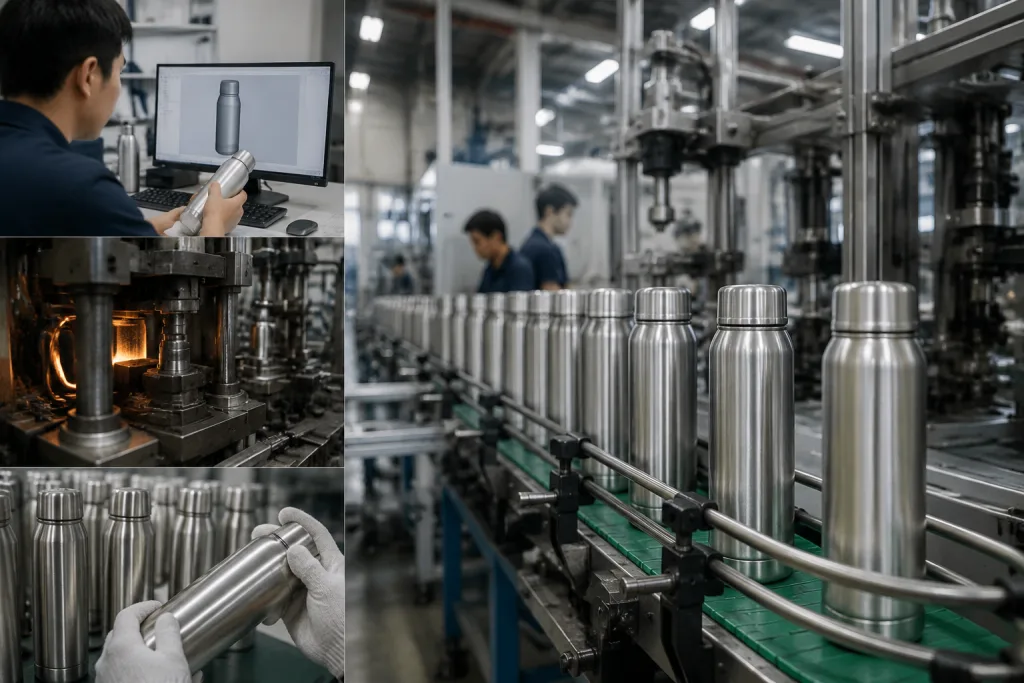
Decoration is not just branding. It changes line speed and margin once QC starts pulling bottles off the belt. On our 500 ml straight-body line, a customizable thermos with one-color silkscreen is still the cheapest route, often adding only USD 0.08-0.18 per unit, and we run about 1,200 pcs per shift when the logo is under 60 mm wide. Laser engraving looks cleaner on brushed stainless and often costs USD 0.12-0.30 per unit. Full-color heat transfer or wrap print can add USD 0.25-0.70, especially if the bottle has a curved body or textured powder coat; the buyer flagged this last month after the wrap seam drifted 1.5 mm on a tapered sample.
For promo buyers, the main mistake is assuming every logo process works on every finish. Wrong question to ask. Powder coating hides small scratches, which helps retail presentation, but it can make 4 pt text look muddy after curing. A matte black custom thermos with laser engraving is a safer bet than a glossy body with a 6-color print that has to survive warehouse handling and field use. QC pulled the sample after a 3M tape test because the orange layer lifted at the rim curve.
The same math applies to packaging. A plain white box may save USD 0.15-0.35, but a printed retail box can improve sell-through if your channel needs shelf impact. If you sell through a thermos distributor network, ask whether the customer wants display readiness or low unit cost. The spec changes. We ship both styles, but for 3,000 pcs the printed box usually adds 7-10 days because the carton factory needs dieline confirmation, color proof, and a 300 gsm board check before mass production.
For decoration process details, see silkscreen vs laser engraving for stainless drinkware and custom logo drinkware options. Ask for the actual logo size in mm before quoting; we once received a PO with “logo same as sample” typed twice, and the line stopped for half a day while sales chased the artwork file.
Compliance Is a Cost Line
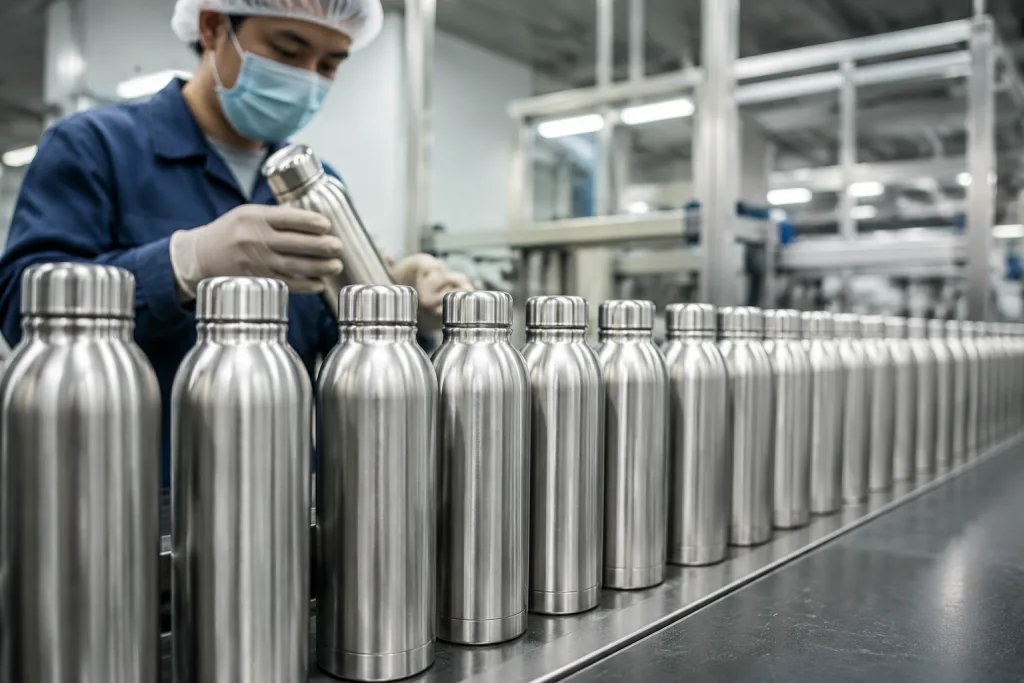
Compliance is not paperwork we file to make the buyer feel safe. It sits in the unit cost, the same as 304 stainless, powder coating, and carton board. A thermos supplier worth using should show food-contact checks, migration testing, and basic durability data without acting surprised. For Europe, buyers usually ask for REACH and LFGB support. For North America, ASTM-style performance checks still matter if the bottle goes into a sporting or outdoor channel. On our line, QC pulled a 750 ml sample last month because the silicone ring measured 0.4 mm thinner than the drawing. That small miss became a compliance question fast.
Typical third-party testing costs run USD 180-450 per test package, and you should expect 5-7 extra days if samples go to an external lab. If the order includes a new silicone gasket, new coating formula, or a different lid insert, the test scope can expand. That is normal. The wrong question is, “Can you include compliance for free?” The math does not work. We run lab samples in sealed PE bags with the color chip, BOM, and PO number attached; one buyer once flagged a PO typo where “PP lid” was written as “PC lid,” and the lab held the report for 2 days.
Ask for these before you place the PO:
- Material declaration: 304 or 316 stainless, PP, silicone, or Tritan components listed clearly, with the lid, straw, gasket, and inner wall separated line by line.
- Test references: REACH, LFGB, and migration results where applicable, matched to the same coating, plastic grade, and silicone color you plan to buy.
- Quality standard: AQL 2.5 for major defects, 4.0 for minor defects is common in export orders; we normally print this on the inspection booking, not just the email thread.
- Drop or leak test: 1 m drop and 24-hour leak check are practical minimums for retail drinkware, with the sample filled, capped, and checked on white tissue paper.
If you are buying from China, especially from Zhejiang, the factory should understand your market standards before production starts. Fix it before the line opens. We have seen this go sideways when a buyer approves the shape first, then asks for LFGB after 8,000 lids are already molded. Sorting claims after the shipment has cleared customs costs more than a 5-day lab delay.
How to Brief a Factory Order
A clean order brief saves time and money. Send “need nice custom thermos for outdoor brand” and the quote will come back soft; last month QC pulled a 500 ml sample because the PO said matte black but the artwork file showed Pantone 426C gloss. If you want a usable price from a manufacturer thermos team, put the spec on one page. No spec, no real price.
Your brief should include:
- Capacity: 350 ml, 500 ml, 750 ml, or 1,000 ml, with the fill line confirmed in ml after the first sample.
- Steel grade: 304 standard or 316 upgrade, and state if the lid insert also needs stainless instead of PP.
- Wall thickness: 0.4 mm, 0.45 mm, or 0.5 mm, measured with a digital thickness gauge on the cut sample.
- Finish: brushed steel, powder coat, matte, gloss, or ombré, with a color chip or Pantone code if you have one.
- Logo method: silkscreen, laser, UV print, or wrap, plus logo size in mm and print position from the bottle base.
- MOQ: 500, 1,000, or 3,000 pcs, and tell us if split colors are needed because the line setup changes.
- Target ship date and port: FOB Ningbo, FOB Shanghai, or another China export point, with carton marks checked before mass packing.
If you compare 4 thermos manufacturers, ask each one for the same quote structure: bottle body, lid, decoration, packaging, carton count, sample charge, and mold cost if the lid is new. That makes the price gap visible. We run quotes this way because buyers often flag “cheap” offers later when they find no inner box, no spare gasket, or 18 days for sampling instead of 12 days. A good thermos distributor or supplier will say what is standard and what needs tooling. A weak vendor sends a nice mockup and skips the lead time. The math doesn’t work.
For a better read on production capability, review stainless thermos product options, factory capabilities, and MOQ basics for custom drinkware. If you need a live quote, use contact our team and send the spec sheet first; we ship faster when the artwork, lid choice, and packing method arrive together. One buyer once typed “FOB Shanghai” in the email and “FOB Ningbo” on the PO, which cost 2 days of back-and-forth before booking. Serious buyers in Europe and North America avoid that by fixing the brief before the factory opens the job sheet.
Get a real thermos quote, not a guess
Send your capacity, MOQ, logo file, and target ship date. We’ll quote a factory thermos price with lead time, packaging, and test options.
Frequently asked questions
What is a realistic FOB price for a custom stainless thermos?
For a 12 oz or 16 oz 304 stainless custom thermos, a realistic FOB China price is usually USD 3.20-4.60 at 1,000 pcs. If you move to 5,000 pcs, that often drops by 8-18% depending on the lid and decoration. A 316 upgrade, powder coating, or retail box can add USD 0.20-0.70 per unit. If a thermos supplier quotes far below that, check whether the offer excludes packaging, testing, or a proper vacuum structure.
How long does sample approval usually take?
For stock thermos models, sample production usually takes 7-10 days. If you need a new logo plate, color match, or lid change, plan on 10-15 days. Add 5-7 more days if you want third-party test samples sent to a lab. In practice, a buyer who approves artwork fast can move from sample to mass production in under 3 weeks. If your team takes a week to reply to every revision, the calendar stretches fast.
What MOQ should I expect from a thermos factory?
Most export-ready thermos factories will quote around 300-500 pcs for a simple promotional thermos, but 1,000 pcs is the more normal MOQ for a custom thermos with branding and export packaging. At 3,000-5,000 pcs, you usually get better pricing and more flexible carton packing. If you want special tooling, like a custom lid or unique cap color, the MOQ may rise to 3,000 pcs or more. That is normal for Zhejiang factories and most of China.
Which decoration method is best for outdoor retail?
For outdoor retail, laser engraving and one-color silkscreen are usually the safest. Laser engraving works well on brushed stainless and durable powder coat, and it typically adds USD 0.12-0.30 per unit. Silkscreen is cheaper, often USD 0.08-0.18, but it needs a clean surface and good ink control. If your bottle will take a lot of handling, engraving usually ages better. If you need high visual impact for a promo campaign, full-color print may be worth the higher cost.
What compliance documents should I ask for?
Ask for a material declaration, food-contact test references, and proof that the bottle meets the standards relevant to your market. For Europe, REACH and LFGB support are common requests. For retail programs, an AQL inspection plan, leak test results, and drop test records are useful too. A serious thermos manufacturer should be able to show component specs for stainless steel, PP, and silicone. If the supplier cannot explain the testing scope clearly, that is a warning sign, not a small paperwork issue.