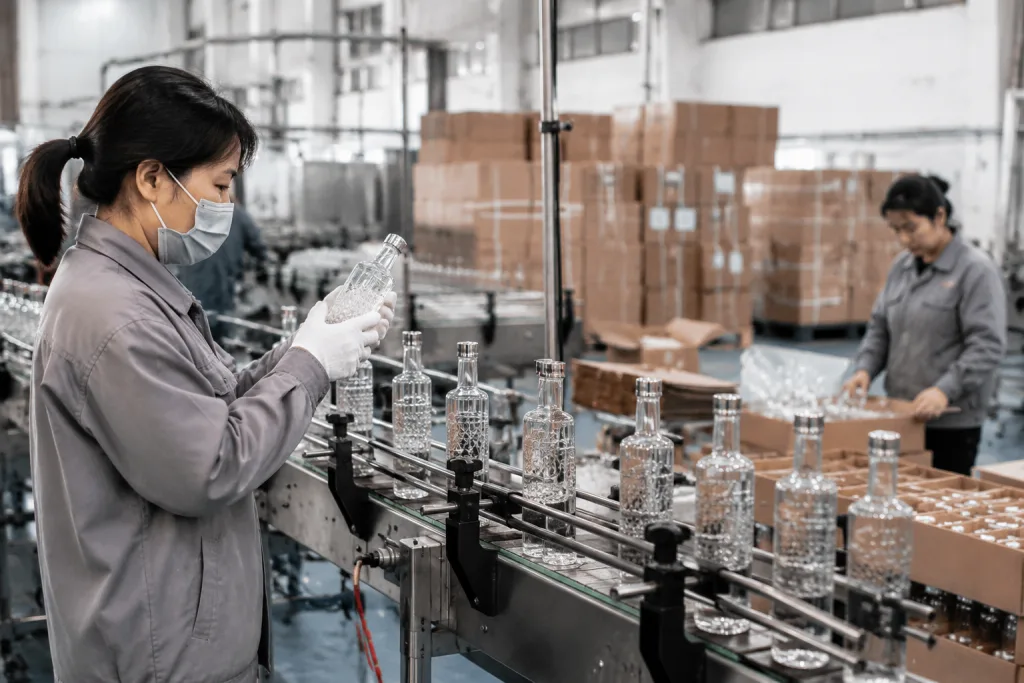
Key Takeaways
- For custom glass bottles, start MOQ planning at 3,000 units per color or shape for stable FOB pricing
- Soda-lime glass is cost-effective, while borosilicate costs 18-35% more but handles thermal shock better
- Use AQL 2.5 for major defects and AQL 4.0 for minor cosmetic defects on export orders
- A 35-45 day lead time is realistic after sample approval for standard custom drinkware production
A top custom glass bottle is not the one with the cleanest sample photo. For a B2B buyer, it is the bottle that gets through filling, carton drop, 28–35 days on the water, warehouse stacking, shelf handling, and daily use without eating your margin in breakage claims. Glass sells well because it feels premium, keeps taste clean, and recycles neatly, but it has no patience for loose specs. We have seen a 0.6 mm wall-thickness gap turn into cracked shoulders after the line ran hot-fill at 85°C.
If you are sourcing from China for retail, promotional, hospitality, or distributor drinkware programs, settle four items before asking for a quote: glass type, capacity with closure fit, decoration with curing limits, and inspection standard with AQL level. BottleForge Industrial in Hangzhou, Zhejiang sees the same mistake on 7 out of 10 early RFQs: buyers send the logo file first, then ask about tolerance after the mold quote is open. Wrong order. QC pulled one sample last month where the PO said “500ml,” the artwork said “550ml,” and the cap thread drawing was missing; that is how a simple bottle job goes sideways.
Start With The Use Case
The first decision is not “custom canteen, custom growler, or top custom glass bottle.” That is the wrong question to ask. Start with where the bottle sits and what failure costs you money: chipped lip on a retail shelf, leaking cap in a hotel room, cracked body at a refill station, or logo rub-off on gym merchandise. On our line, QC pulled 32 pcs from a 1,200 pcs pilot run last May because the buyer’s PO said “matte black lid,” but the approved sample used gloss black. Same drawing. Different use case.
For cold water, juice, tea, and retail lifestyle orders, soda-lime glass usually does the job. It gives clean clarity, familiar hand weight, and a price buyers accept. For hot-fill, tea infusion, or wider temperature swings, borosilicate glass is the safer pick because its thermal expansion is lower. The math is not always friendly: borosilicate is usually 18-35% above soda-lime for comparable capacity and shape, and the MOQ often starts at 3,000 pcs instead of 1,000 pcs. If your market includes cafés or wellness brands, that premium can hold. If you are pushing budget promotional drinkware at USD 1.20 target FOB, we’ve seen this go sideways.
Capacity changes the product category in the buyer’s mind. A 350 ml bottle reads as juice, mini bar, or hospitality. A 500-600 ml bottle works for daily carry. A 750-1,000 ml bottle starts fighting with canteen customized products, sports bottles, and growlers on the same shelf. A custom growler or customized growler for beer, kombucha, or cold brew needs more than a bigger mold: we run heavier wall thickness, check closure torque with a 0.1 N·m torque meter, and add stronger 5-layer carton protection. A simple 500 ml water bottle will not survive the same drop test.
Be clear about the channel too. A canteen distributor or distributor drinkware buyer usually asks for SKU repeatability, pallet count, and carton dimensions first; one buyer flagged a 2 mm carton height change because it cut 48 cartons from the container plan. A brand owner will argue over surface finish and logo color, sometimes down to Pantone coated versus uncoated. A canteen promotional buyer may accept a simpler cap if the unit price hits the campaign budget. Same outline on paper, but we ship different products.
Choose Glass, Wall, And Weight
Glass bottle quality shows up in small numbers. Wall thickness, base thickness, weight tolerance, mouth tolerance, and annealing quality beat a glossy 3D rendering every time. For common 500 ml custom glass bottles, we usually run 2.0-3.0 mm wall thickness; a premium-feel base often lands near 8-12 mm after the mold trial. Thin glass saves maybe 35-60 g per bottle, but QC pulled samples last year with shoulder chips after a 1.2 m drop test. Too much weight has its own bill. The math doesn't work when a heavy bottle pushes FOB cost up, crushes the 5-ply carton corners, and adds freight on every pallet.
Ask the canteen factory or glass bottle supplier for target weight and tolerance in writing. A 500 ml soda-lime bottle might be 280-380 g depending on shape, and we normally control mass with a digital scale at line start, mid-shift, and before packing. A premium swing-top or customized growler can be much heavier, sometimes 520 g before the wire bail and ceramic cap are fitted. If a supplier says only “good quality,” push back. You need a specification sheet, not adjectives. We have seen this go sideways when a PO said “500ml clear bottle,” but the approved sample weighed 318 g and bulk production came out at 365 g.
Annealing is the point buyers miss until the claims arrive. Poor annealing leaves internal stress, which can cause cracking during washing, filling, or temperature change. A competent canteen manufacturer or glass bottle plant should use polarized light inspection or equivalent stress checks during production; on our floor, QC checks the bottle under a polariscope and logs the stress ring before release. You do not need to be a glass engineer. Just require stress testing in the quality plan, with sampling frequency and reject criteria shown before the mold opens.
For Europe and North America, confirm food-contact compliance before the quotation is treated as final. Depending on your market, that may include LFGB, FDA food-contact expectations, California Proposition 65 review, REACH screening for coatings or colored parts, and ASTM-related packaging or child-use requirements if the product is for kids. China factories can support these, but only when you define the target market before production. A Zhejiang supplier quoting a domestic-grade product will not automatically build to EU or US documentation needs; the buyer flagged this on a 20,000 pcs order after the spray coating was already booked, and the re-test added 12 days to the schedule.
Match The Closure To Reality
A bottle earns its reputation at the closure. We see 7 out of 10 leak complaints start at the cap, gasket, or thread finish, not the glass body. Lock the closure choice before artwork: screw cap, bamboo cap, stainless cap, swing-top, cork, silicone sleeve, straw lid, or infuser insert all change the BOM and the packing method. On our line, a 0.3 mm thread mismatch is enough for QC to pull the sample.
Screw caps are the safest default for distributor canteen and distributor growler programs because a warehouse team can replace them fast and inspect the gasket by eye. Bamboo caps sell well in sustainable drinkware ranges, but bamboo brings color spread, swelling risk, and carton storage rules; we had one buyer flag a 2-tone batch after 18 days in a damp Ningbo warehouse. Stainless caps feel premium. The math does not work if the target is a low-price promo bottle, because the cap cost and silicone gasket testing add up. Swing-top closures look strong for a custom growler, but the wire bail, ceramic or plastic stopper, and gasket each need a separate check with a go/no-go gauge.
Leak testing needs a written method, not a promise. For normal water bottles, we run an inverted leak test for 30 minutes on sample sets and random production checks, then QC records any wet carton marks after the wipe-down. For growler-style bottles, especially if carbonation is involved, the buyer and filler must define pressure requirements in bar or psi. Do not assume a decorative glass growler is safe for pressurized beverages. If you are filling carbonated drinks, say so in the RFQ.
Closure MOQ surprises buyers. A standard clear glass body may start from 3,000 units, while a custom-colored cap, private mold lid, or special silicone sleeve may need 5,000-10,000 units; we have seen POs with “black lid” typed once, then the packing list says “matte black lid with logo,” which is a different cost. This is where canteen suppliers and canteen vendors quote low bottle pricing and leave accessory costs vague. Ask for a line-by-line BOM: glass body and cap, gasket and sleeve, decoration and carton, insert and barcode, plus testing.
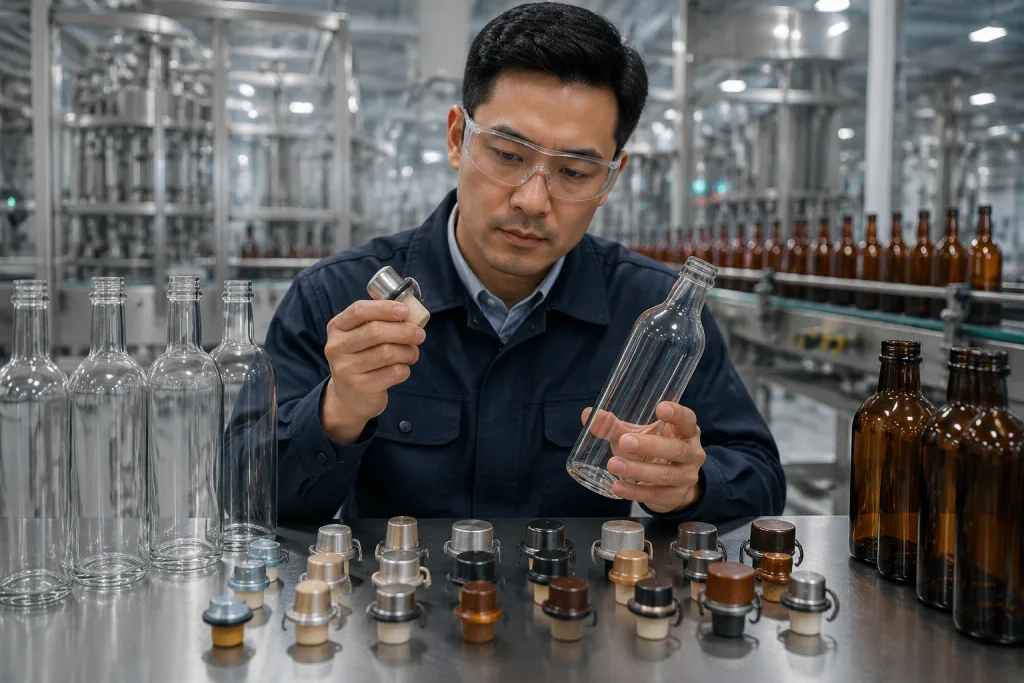
Decide Decoration Before Pricing
Decoration is where 6 out of 10 custom drinkware projects lose days before we even open mass production. A top custom glass bottle can take screen printing for flat logos, decal for full-color wraps, spray color coating for matte or glossy shelf effect, frosting for a soft-touch look, laser marking on metal caps, mold embossing, or paper labeling for short promo runs. The wrong question is “which one is cheapest”; the right question is what your buyer will reject at QC. Last month QC pulled a coated sample after a 3M 600 tape test lifted ink on the shoulder curve.
Screen printing works for simple logos and one to three colors, especially on canteen promotional orders and customized drinkware campaigns where the logo sits inside a 55 mm print window. We run separate screens and Pantone ink matching, so setup fees are normal, not factory padding. Decal is better for multi-color artwork or wraparound designs, but the firing or curing step adds real time on the line and the unit cost climbs. Spray coating gives strong shelf impact, especially matte black, frosted white, or brand colors, but spell out adhesion, abrasion, and dishwasher expectations before pricing; we have seen buyers flag “dishwasher safe” after only 20 wash cycles because nobody defined the test standard on the PO.
Embossing or debossing in the glass looks premium, but it needs mold money up front. For private mold glass bottles, a serious China factory will discuss mold cost, mold ownership, cavity count, and expected mold life before quoting the bottle as if it were stock. If your first order is only 1,000 units, private mold glass is not economical; the math doesn't work once you add sampling, mold trial loss, and extra inspection time with a 0.02 mm depth gauge. If your annual program is 50,000-200,000 units, it can make sense.
Artwork files should be vector format, preferably AI, EPS, or PDF with Pantone references. Do not approve a sample only by phone video. Ask for physical pre-production samples when color, coating, or logo placement affects brand approval; a 2 mm logo shift near the bottle radius looks small on WeChat and obvious in a buyer’s hand. BottleForge Industrial in Hangzhou, Zhejiang typically allows 7-12 days for decorated samples when standard bottles and caps are available. Production lead time after sample approval is commonly 35-45 days, depending on decoration load and packaging complexity, and we ship cleaner when the PO file name, Pantone code, and carton mark all match.
Build A Real Landed Cost
FOB unit price is one line on the cost sheet. Glass is bulky and unforgiving, so carton size, packing density, pallet height, and freight mode can move margin by USD 0.18-0.45 per bottle, not just a few cents. We see 500 ml glass bottles quoted at USD 1.20-2.80 FOB China depending on cap and decoration, but a 5-ply K=A carton with dividers can add cost while cutting breakage from 3% to under 0.8% in a normal sea shipment. QC pulled one sample last month where the bottle passed leak testing, then failed after a corner drop because the carton had 6 mm of empty space around the neck.
For promotional custom canteen programs, buyers often ask us to shave the unit price first. This is the wrong question to ask if the goods will touch retail shelves. A simple bottle with one-color silk print can ship bulk packed in master cartons, 24 pieces per carton, and the math still works. Retail customizable drinkware usually needs individual kraft boxes or color boxes, molded pulp trays, barcode labels, warning inserts, and display-ready cartons. These are not pretty add-ons. They stop distributors from repacking 2,000 pieces by hand, and we have seen that go sideways when a PO typo changed “inner box” to “inner bag.”
Ask your canteen supplier to quote two packing options at minimum: bulk packed 24 pieces per export carton, and individual box packed 12 pieces per carton. Then compare drop-test results, cubic meters per 1,000 units, gross weight per carton, and the breakage allowance written into the proforma invoice. If you sell through e-commerce, ask whether the individual box passes a 60 cm or 80 cm drop test; the line should test it with a packed carton, not one clean showroom sample. For Amazon-style FBA preparation, FNSKU labels, carton labels, and suffocation warnings may be needed even for glass bottles, and the buyer flagged this on 7 cartons in our last pre-shipment check because the label was 4 mm too close to the carton edge.
Compare Incoterms with the same discipline. FOB Ningbo or FOB Shanghai is common for Zhejiang and eastern China suppliers, and we ship both ports every week. EXW can look cheaper on the first quote, but it pushes inland trucking, export handling, and customs coordination onto your side; for glass, one rough warehouse transfer can cost more than the quoted saving. If you are new to importing, FOB is cleaner. If you already consolidate from 3-5 China suppliers, EXW can work, but only with a forwarder who knows glass packing risk and checks pallet wrap, corner boards, and the 1.8 m pallet height limit before loading.
Set Inspection Rules Up Front
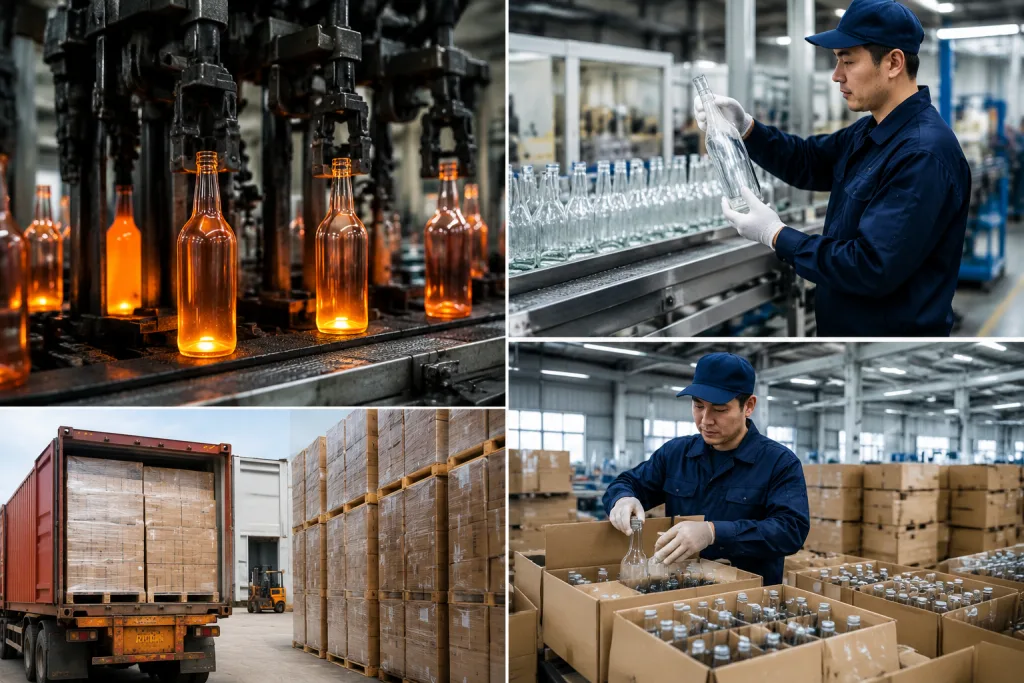
Agree on QC before the deposit lands, not after QC pulled 38 leakers from a finished pallet. For custom glass bottle orders, write the defect sheet in plain terms: critical, major, minor, with photos if possible. Critical defects mean glass cracks, sharp lips over 0.2 mm, dirt inside the bottle, hard leakage, or any broken part that can cut a user. Major defects cover wrong capacity, wrong logo, weak coating adhesion, cap mismatch, visible body deformation, and export cartons that fail a 12 kg stacking check. Minor defects are small bubbles, hairline scratches, slight color drift, or print position off by 1-2 mm but still inside the approved tolerance.
AQL keeps the argument short. For B2B drinkware orders we run, AQL 0 for critical defects, AQL 2.5 for major defects, and AQL 4.0 for minor defects is a workable starting point. Premium brands should tighten cosmetic limits and accept the sorting bill; we have seen a 20,000 pcs order slow from 12 days to 18 days because the buyer wanted every tiny seed bubble rejected. For a low-cost canteen promo, keep safety non-negotiable, but rejecting a 0.5 mm cosmetic mark on a giveaway bottle is the wrong question to ask. The math does not work.
Match the test plan to the bottle. We normally check real capacity with a graduated cylinder, cap fit, torque or closure feel, leak performance, thermal shock where the glass spec calls for it, coating adhesion by cross-hatch or 3M tape, print rub, barcode scan, carton drop, and gross weight on a floor scale. Short tests catch expensive mistakes. On one PO, the buyer typed “500ml” in the item line but approved a 550 ml drawing, so the pre-production sample review saved a full-label reprint. For children’s products, add the right ASTM, CPSIA, or EN review based on market and age grading.
Factory capability still matters. BottleForge Industrial’s drinkware lines in Zhejiang coordinate up to 600,000 units per month across stainless steel, glass, and plastic drinkware categories, with typical custom glass MOQ from 3,000 units per SKU. Scale does not replace inspection; it gives the line room to book incoming glass checks, print checks, and final AQL without fighting for one QC table at 9 p.m. Serious canteen manufacturers and drinkware suppliers should welcome a clear QC file. We ship cleaner when nobody is guessing at the loading bay.
Shortlist Suppliers Without Guesswork
Comparing canteen manufacturers, canteen suppliers, or canteen vendors by the lowest quote is the wrong question to ask. Last March we saw a buyer pick a quote USD 0.06 lower, then QC pulled the pre-shipment sample and found glass weight swinging from 395 g to 432 g on the same 500 ml bottle. Cheap? No. A low price with unclear glass weight, no test route, and thin 5-ply cartons just pushes the risk to your warehouse.
We run a decision scorecard with 100 points. Put 25 points on product fit, 20 on engineering response with drawings or samples, 20 on compliance files such as FDA, LFGB, BSCI, ISO 9001, or Sedex when your retailer asks for them, then split the rest between decoration control and repeat-order stability. Communication speed matters too, but do not overpay for fast replies with weak samples. On our line, a good supplier can answer a neck finish question with a caliper reading in mm, not a “should be okay” message.
Your RFQ needs the buying details, not just a nice photo. State capacity, glass type, target weight, cap material and gasket material, then give decoration method with Pantone codes, packing type, destination market, annual volume, required test standards, and target ship date. We once received a PO with “matte black logo” but no Pantone; the buyer flagged the first print because our screen room matched it to Black C while their brand book used 6 C. One missing line cost 4 days.
Distributors should ask about continuity before they ask for another discount. A distributor canteen or distributor growler program needs repeatable SKUs, not one lucky shipment that looks good in the first container. Confirm whether the bottle uses a stable public mold, whether the cap is regular stock, and whether the supplier can hold the design for 24 months. For customized canteen and customizable growler programs, ask for spare caps, replacement gaskets, and reorder MOQ; we usually see 1,000 pcs as workable, while 300 pcs makes the math ugly. A good China supplier will tell you where flexibility stops. That answer saves trouble later.
Send Your Glass Bottle RFQ For Engineering Review
Share capacity, cap, logo, packing, and target market. We will return practical MOQ, lead time, and FOB options without vague promises.
Frequently asked questions
What MOQ should I expect for a top custom glass bottle?
For a standard public mold glass bottle with one-color logo printing, 3,000 units per SKU is a realistic starting MOQ from many export-focused China suppliers. If you need custom spray coating, special cap colors, silicone sleeves, or retail color boxes, MOQ often moves to 5,000 units. Private mold glass is usually not sensible below 10,000 units unless you accept a high mold cost per unit. For distributor drinkware programs, we normally suggest planning annual volume first. If your reorder path is 30,000-50,000 units per year, a more customized structure becomes easier to justify.
Is soda-lime or borosilicate better for custom drinkware?
Soda-lime glass is better when price, clarity, and normal cold beverage use matter most. It is common for water bottles, juice bottles, hospitality bottles, and promotional custom drinkware. Borosilicate glass is better when the bottle may see hot tea, faster temperature changes, or a higher wellness positioning. Expect borosilicate to cost about 18-35% more than comparable soda-lime glass, depending on shape, capacity, and order volume. If your bottle is only for cold water, do not overpay automatically. If your user may pour boiling water into it, do not gamble with soda-lime unless testing supports the use case.
How long does sampling and production usually take?
For standard glass bottles and available caps, plain samples can often be prepared in 3-7 days. Decorated pre-production samples normally take 7-12 days because printing, coating, curing, and color approval add steps. After sample approval and deposit, mass production is commonly 35-45 days for standard custom glass bottle orders. Add 10-20 days if you need private mold development, complex decals, unusual cap tooling, or custom retail packaging. Peak season before Q4 can stretch schedules, so do not place a Christmas or January retail order as if glass production works like stock apparel.
What defects are acceptable on bulk glass bottle orders?
No buyer should accept cracks, sharp edges, contamination, leaking closures, or unsafe breakage risk. Those are critical defects and should be AQL 0. Cosmetic issues need realistic limits because glass production can have tiny bubbles, small mold marks, or slight base variation. A practical inspection setup is AQL 2.5 for major defects and AQL 4.0 for minor defects. For premium retail bottles, tighten the acceptable scratch, bubble, and print-position criteria before production. If you wait until final inspection to define “premium,” the canteen factory and buyer will argue from different standards.
Can one supplier handle glass bottles, canteens, and growlers?
Yes, some drinkware suppliers in China can coordinate glass bottles, custom canteen products, stainless steel tumblers, and custom growler projects, but you should check whether they manufacture directly or manage partner factories. That is not automatically bad. Many strong export suppliers use specialized workshops for glass forming, cap production, coating, and packaging. What matters is who controls specifications, inspection, and shipment responsibility. Ask for one technical file, one QC checklist, and one commercial owner for the order. For mixed distributor drinkware programs, this reduces mismatched colors, carton errors, and delayed consolidation.