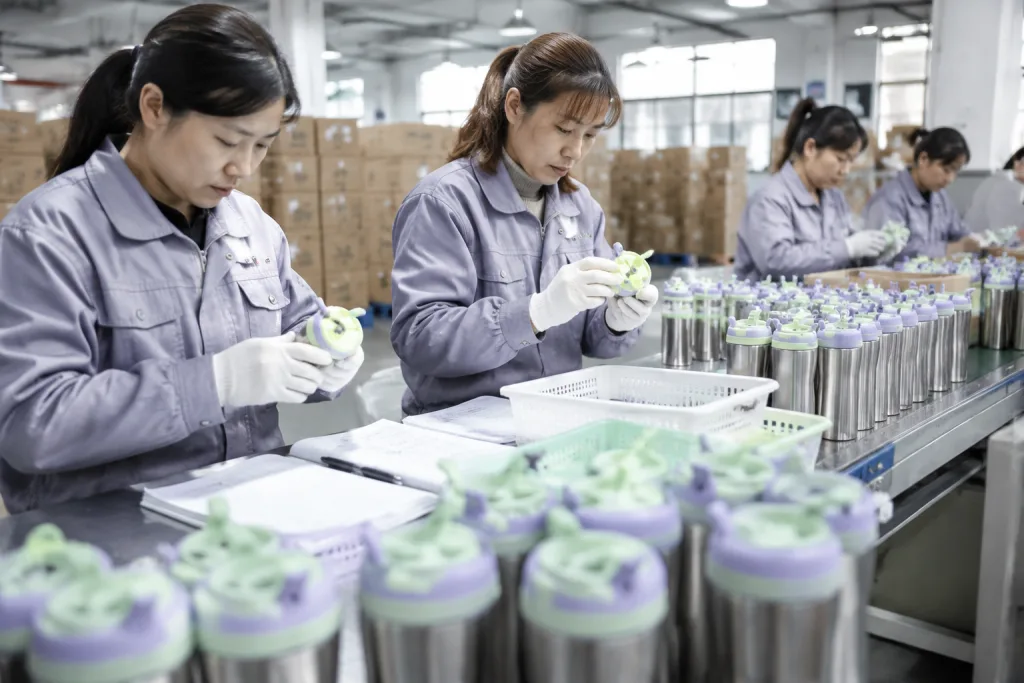
Key Takeaways
- Set toddler bottle MOQ, material, capacity, lid type, test standard, and packing before asking for FOB pricing
- Budget 7–12 days for prototype samples and 35–45 days for bulk production after approval
- Use AQL 2.5/4.0 inspection for leakage, appearance, packing, barcode, and small-part checks
- Put spare lids, straw replacements, FNSKU labels, and carton drop-test requirements into the PO
Toddler bottle wholesale looks simple until the quote sheet lands: PP, PPSU, Tritan, silicone grades, weighted straws, flip lids, and one line that says “food grade” with no test standard named. That line is trouble. For procurement managers and brand owners, the real cost is not only the unit price. It is a 0.8 mm lid gap that leaks in the carton drop test, an LFGB migration report that does not match the resin on the PO, a straw valve small-part complaint, or a launch date missed because the buyer wrote “blue” instead of Pantone 2925C.
From our Hangzhou, Zhejiang factory desk, the good toddler bottle projects follow a plain route: tight RFQ, controlled sample, locked artwork, pre-production approval, then bulk. Boring works. China still makes strong sense for wholesale drinkware, but the math does not work if the buyer leaves lid mold, straw hardness, carton spec, and barcode position open until mass production. We run the first sample through a 24-hour upside-down leak check and QC pulls the pre-production sample before the line starts. Our current toddler bottle MOQ starts at 3,000 units per color, with normal production lead time of 35–45 days after deposit and sample approval.
Start with a usable RFQ
A toddler bottle wholesale RFQ should not start with “send your catalog.” That is the wrong question to ask. Catalogs help with shapes, but they hide the choices that move cost by 20–40%, especially lid tooling and silicone parts. Tell us the bottle type, retail channel, compliance market, then the commercial target. Last month our costing engineer opened an RFQ with no market listed; QC later pulled the sample because the buyer needed LFGB, not FDA.
For a first RFQ, use line items, not paragraphs. Write it like a PO line: 350 ml toddler straw bottle, 304 stainless inner wall, PP lid with silicone straw, carry handle, leak-resistant closed position, 1-color logo, individual color box, 3,000 pcs per color, FOB Ningbo, destination Germany or USA. Good enough. With that one sentence, we run the mold list, check the 0.40 mm coil quote, calculate the color box cube, then decide whether testing needs one report or two.
Do not mix unrelated drinkware bulk needs into the same quote line. If you also want bulk canteen, bulk growler, beer tumbler bulk, or alcohol flask wholesale pricing, put each product group on its own RFQ tab. A toddler bottle is checked around child-contact parts and straw pull force; a wholesale growler is checked around capacity tolerance and cap sealing. We have seen this go sideways when a buyer flagged “bulk drinkware” on one sheet and expected one MOQ. The line does not see it that way.
Your RFQ should include these PO-ready fields: item number, capacity, material grade, lid structure, color count, logo method, packaging, compliance standard, MOQ, target FOB price, shipment term, and inspection rule. For toddler bottles, we usually recommend 304 stainless steel at 0.40–0.50 mm wall thickness for the inner body, PP or Tritan components where appropriate, and LFGB or FDA-grade silicone for straws and seals. Add the target price, even if it hurts. If the target is USD 2.10 and the spec needs a 78 mm powder-coated body plus color box, the math may not work, but we can say that before sampling.
RFQ PO line example: Item TB-350SS, 350 ml toddler straw bottle, 304 inner/201 outer, powder coating, silicone straw, 3,000 pcs mint green, 3,000 pcs navy, logo laser engraving, color box, FOB Ningbo, AQL 2.5/4.0, REACH and LFGB test required. We would add carton qty, barcode position, and inspection date; one buyer once typed “TB-305SS” on the PO, and our merchandiser caught it only when the packing mockup showed 350 ml.
Separate toddler safety from catalog noise
Toddler bottles are not small sports bottles. A sports bottle can get away with a stiff lid, heavier suction, and an opening force closer to 18–25 N. For toddlers, we look for a grip a small hand can hold, controlled flow, soft silicone at the mouth, and zero loose parts under the small-parts cylinder check. We’ve seen this go sideways: the buyer loved the color card, then QC pulled the sample and the straw plug came out with two fingers.
The lid system decides most complaints. A flip straw lid sells well because parents know it and cartons stack cleanly, but check straw pull-out force, hinge cycling, silicone Shore A hardness, and whether a child can remove the drinking tube. We run lid open-close testing for 3,000 cycles on development orders using a simple fixture on the line. For premium programs, 5,000 cycles is fair, but the math doesn’t work if the buyer also wants sample approval in 5 days.
Capacity matters more than the catalog makes it look. For toddlers, 300–420 ml is the working range. Below 300 ml, daycare buyers say it feels like a toy. Above 450 ml, filled weight becomes the complaint. A 350 ml double-wall stainless bottle normally lands around 230–290 g depending on wall thickness, lid size, handle shape, and powder coating thickness; our coating gauge usually reads 60–80 μm on these programs.
Ask for test documents before you approve the sample. Not after production. Common export documents include FDA or LFGB food contact reports, REACH for coatings and plastics in Europe, CPSIA-related checks for the US when applicable, and ASTM F963 small-part logic if the product is positioned near children’s goods. Your importer of record has final responsibility, but a serious Zhejiang supplier should map the test route before bulk; we once had a PO typo list “adult bottle” while the artwork said “3+,” and the lab quoted the wrong scope.
For mixed wholesale drinkware programs, separate the safety-critical SKUs. Toddler bottles, kids bottles, and straw cups need tighter review than beer growler wholesale bulk or alcohol flask wholesale bulk orders. Same factory, different risk profile. On our side, we flag these lines with a red sample tag so incoming QC checks the lid, straw, gasket, and small parts before the carton drop test.
Quote the real landed cost
A low FOB number is the wrong question to ask. We quote landed cost from the BOM up: bottle body, lid shell, 2.0 mm hinge pin, silicone straw, internal tube, gasket, handle set, coating, logo, instruction sheet, polybag, color box, master carton, sometimes 1 spare straw pack. QC pulled a toddler lid last month because the gasket groove was 0.3 mm shallow; that one small part changed the leak rate and the packing plan.
For toddler bottle wholesale quotes from China, ask the factory to split cost by stainless grade, plastic resin, silicone spec, and decoration process. Laser engraving adds USD 0.08–0.18 per unit on our line, depending on logo size and fixture time. One-color silkscreen can land close to that, but 4-color wrap artwork needs films, registration checks, and a higher rejection allowance; the buyer flagged this before after seeing 2.5 mm logo drift on pre-production samples. Powder coating beats basic spray painting for daily toddler abuse, but only if the wash tank, 180°C curing oven, and cross-hatch tape test are under control.
Use freight numbers that match the actual carton. A 350 ml toddler stainless bottle in color box may pack 24 pcs per carton, with carton size around 48 x 36 x 28 cm depending on box design; we measure it after the first packed carton, not from the CAD drawing. That matters for Amazon FBA, retailer DCs, and distributor warehousing because 6,000 pcs means 250 cartons before pallet loss. If you also buy canteen bulk, wholesale canteen, beer growler in bulk, or beer tumbler in bulk, do not use one freight percentage across the category. The math does not work. A bulky 1.9 L growler bulk order has a different cube-to-value ratio from a toddler bottle order that stacks neatly in a 5-layer master carton.
Price talks also need payment terms and tooling on the same sheet. Existing molds mean no tooling fee in most cases, or a small fixture fee if the laser logo sits on a curved shoulder and we need a new jig. A custom lid mold can cost USD 3,000–8,000 depending on complexity. A new bottle body mold costs more when the design asks for a special shape, embossed grip, or patented-looking silhouette; we have seen this go sideways when a PO says “standard mold” but the artwork file shows a new handle radius.
Quote PO line example: Unit price USD 3.18 FOB Ningbo based on 6,000 pcs, existing mold, powder coating, laser logo, color box, 24 pcs/carton, spare straw excluded, LFGB migration test excluded, production lead time 40 days after deposit. Add the carton CBM, payment split, sample approval date, and inspection level on the same PO line; one buyer once typed “spare straw included” in the email but left it out of the PO, and the line stopped for 6 hours while sales and packing checked the version history.
Approve samples like an inspector
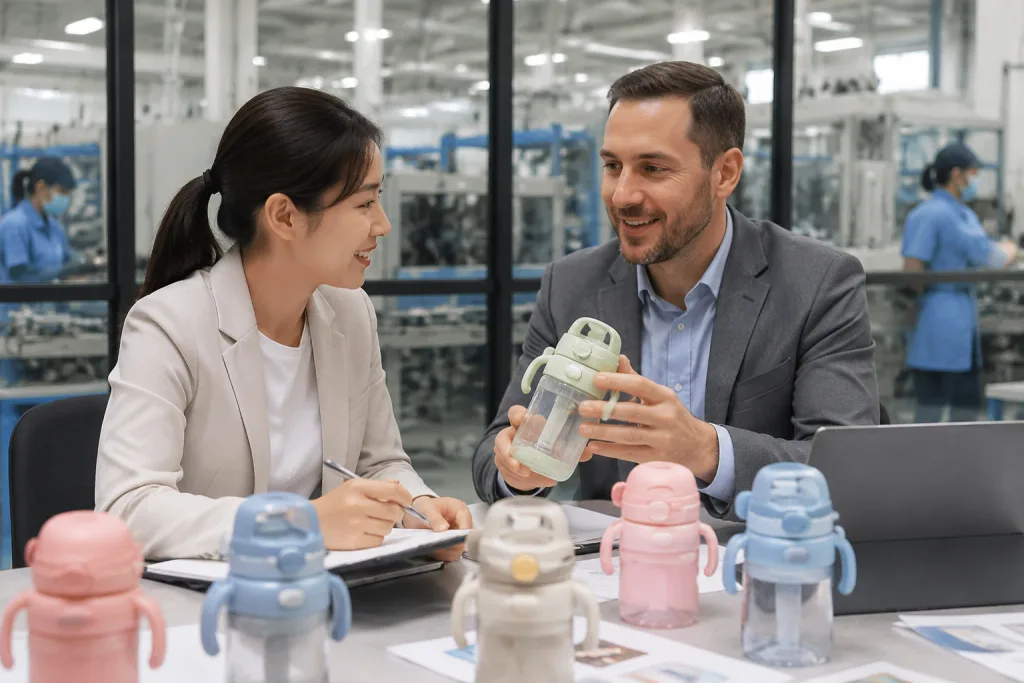
Samples are where sharp buyers save money. Do not approve a toddler bottle sample because it looks close to the rendering; that is the wrong question to ask. At sample stage we freeze measurable points: 210 g body weight, 350 ml fill line, Pantone coating, lid torque, straw cut length in mm, 45° leakage check, logo width, barcode position, and box crush result. QC pulled a TB-350SS sample last month where the logo was 4 mm too high, and the buyer flagged it before we ran the bulk line.
For a standard toddler bottle wholesale project, expect 7–12 days for stock samples with logo, or 15–25 days if a special color coating or new packaging dieline is needed. If the factory is in Zhejiang, courier time to Europe or North America is often 3–6 working days after dispatch. China public holidays can disrupt this, especially around Lunar New Year and Golden Week, so build a 10-day buffer if your retail launch date is fixed. We have seen this go sideways when a PO said “blue” but the artwork file named Pantone 296C, and nobody caught the typo until the sample room mixed the coating.
When the sample arrives, test it roughly before you test it politely. Fill it with room-temperature water, close the lid, shake it for 30 seconds, lay it on its side for 2 hours, then put it upside down for 10 minutes. Run warm water through the straw and check odor. Open and close the lid 100 times by hand. Drop the empty bottle from 80 cm onto a wood or vinyl floor. Not fancy. This is not a lab test, but it shows weak hinges, loose gaskets, and coating chips before AQL 2.5 inspection has to argue with 5,000 finished pieces.
Ask your supplier for a golden sample process. One approved physical sample should stay with you, one with the factory QC team, and one with the production line leader. Mark them with date, version number, Pantone or RAL color, logo method, and packaging revision. We run a red “approved sample” sticker on the bottle and the color box, then the line leader keeps it beside the torque gauge during assembly. Without golden samples, bulk production becomes a memory game, and the math does not work.
Sample PO line example: 3 pcs TB-350SS in Pantone 622C, 3 pcs in Pantone 296C, laser logo 35 mm wide, printed color box V2, courier billed to buyer account, sample approval required before bulk material purchase.
Lock artwork, packaging, and labels
Packaging delays more shipments than buyers expect. In our line meetings, QC pulled 7 ready bottle samples last month while the color box file was still missing a choking warning icon, recycling mark, importer address, or FNSKU label. The bottle was finished. The carton was not. For toddler bottles, packaging sits inside compliance and customer service, not decoration.
Send the factory final AI or PDF files with outlined fonts, CMYK or Pantone references, signed dieline, barcode number, country of origin statement, and retail warning text approved by your team. We check the file in Adobe Illustrator at 1:1 scale because a 2 mm shift can put the barcode across a box crease. If you sell in the US, place the tracking label, batch code, and importer information exactly where your compliance team wants them. If you sell in the EU or UK, confirm language needs, recycling marks, and food contact symbols before plate making. Do not ask a China factory to write legally safe copy for your market. That is the wrong risk to outsource.
For ecommerce, carton and unit labels must be written into the PO, not sent in a WeChat note 3 days before loading. Amazon FBA orders often need FNSKU labels on each unit, carton labels on two sides, and no mixed SKU cartons unless the buyer approves it in writing. Retail distributors may ask for GS1-128 carton labels, pallet height limits, or 5-ply export cartons. We have seen this go sideways on 12,000 units when the PO said “standard carton” and the buyer flagged the missing side label at pre-shipment inspection.
If you are building a wider wholesale drinkware range, keep a master label matrix with SKU, market, warning copy, carton mark, and label position in mm. Toddler bottle wholesale and drinkware wholesale items may share brand design, while beer growler bulk, beer tumbler wholesale bulk, and alcohol flask bulk items need separate alcohol-related wording and carton marks. A bulk growler for beer and a toddler straw bottle should never inherit the same packaging copy. The math does not work when one designer copies 18 SKUs from a single old box file.
Packaging PO line example: Individual 350 gsm color box with matte lamination, 1 instruction leaflet, 1 spare straw pack per unit, FNSKU label applied to box bottom, master carton 5-ply K=A, 24 pcs/carton, drop test to ISTA 1A reference.
Control bulk production before shipment
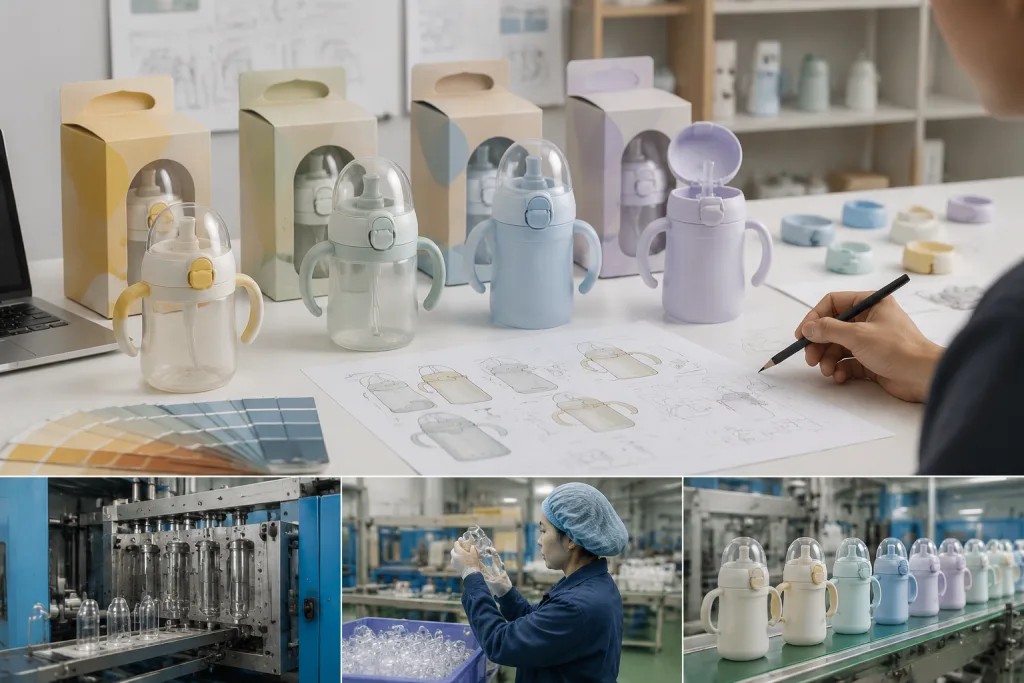
After the 30% deposit lands, sourcing is over. Control starts. A normal toddler bottle wholesale order goes through material purchase, body forming, welding or shaping, polishing, vacuum process if double-wall, coating, logo, assembly, leak testing, packing, and final inspection. We run about 450,000 drinkware units per month in Hangzhou across stainless bottles, tumblers, and related lines, but toddler bottles still fight for line time because lids, straws, and silicone gaskets often come from 2–3 sub-suppliers. Last month QC pulled a lid sample with a 0.4 mm flash on the drinking spout; small issue on paper, rejected by the buyer in 10 seconds.
Ask for a production timeline with dates, not “soon.” “Can you ship earlier?” is the wrong question to ask if artwork or gasket color is still open. For 6,000–12,000 pcs, a workable schedule is: 3–5 days material preparation, 10–15 days body production, 5–7 days coating and logo, 4–6 days assembly and leak checks, 2–3 days packing, then inspection and booking. That timing assumes the color chip, logo file, lid mold, and inner PE bag spec are approved before the line starts; otherwise 12 days can become 18 days fast.
Final inspection should use AQL, normally 2.5 for major defects and 4.0 for minor defects. Critical defects stay zero tolerance. For toddler bottles, critical checks include sharp edges, loose small parts, wrong material contact surface, serious leakage, odor, contamination, and incorrect warning labels. Major checks include poor lid fit, obvious coating chips, unreadable barcode, wrong logo position, or failed carton packing. Minor checks cover light cosmetic marks within the agreed limit, such as a 3 mm rub mark under the base. We use a torque gauge on screw lids and a 30-minute inverted leak test; we have seen this go sideways when a supplier only checks 5 pcs at the packing table.
Do not let the supplier ship before the inspection report and packing list match the PO. Verify SKU, color, quantity, carton count, gross weight, net weight, carton dimensions, batch code, and spare part count. The math doesn't work if the PO says 4 colors x 3,000 pcs and the packing list shows 11,760 pcs plus “240 pcs to follow.” For wholesale drink bottle programs with mixed items such as canteen wholesale, wholesale growler, beer tumbler wholesale, or alcohol flask wholesale, one wrong carton mark can create receiving chaos at the warehouse; the buyer flagged a “TB-350SS BLUE” carton once because the side mark was typed “TB-305SS BLUE.”
Bulk PO line example: 12,000 pcs TB-350SS, 4 colors x 3,000 pcs, 30% deposit, 70% after passed inspection before shipment, AQL 2.5/4.0, FOB Ningbo, no shipment without buyer-approved inspection report. Add the inspection booking date, carton mark file name, and spare gasket count on the PO; our merchandiser checks those against the final packing list before we ship.
Send your toddler bottle RFQ for factory review
Share capacity, material, logo, MOQ, market, and packaging requirements. We will return a practical FOB quote and sample plan.
Frequently asked questions
What MOQ should I expect for toddler bottle wholesale in China?
For an existing mold, a realistic MOQ is usually 3,000 units per color for toddler bottle wholesale. Some factories may quote 1,000 pcs, but the unit price often rises because coating, lid assembly, and packaging setup costs are spread over fewer units. If you need four colors, plan around 12,000 pcs total for clean production economics. Custom molds are different: a new lid or bottle shape may require 10,000–20,000 pcs for the first production run, plus tooling of about USD 3,000–8,000 or more. If you are also sourcing drinkware bulk items like a bulk canteen or beer tumbler in bulk, keep the MOQ separate by product type and color.
Which material is safest for toddler bottles?
For stainless toddler bottles, 304 stainless steel for the inner contact wall is the normal choice. Outer walls may be 201 or 304 depending on price point and market positioning. For plastic parts, PP and Tritan are common, while silicone straws and gaskets should be food-contact grade. You should request FDA or LFGB migration reports depending on your sales market, plus REACH checks for coatings if selling into Europe. Wall thickness around 0.40–0.50 mm is common for stainless bodies, but structure matters as much as thickness. A safe toddler bottle is not only about material certificates; the lid must avoid loose small parts, sharp edges, and excessive leakage.
How long does sampling and bulk production take?
Stock samples without custom color normally take 3–7 days. Logo samples usually take 7–12 days. If you need a custom powder coating color, printed packaging, or a modified straw length, expect 15–25 days before samples leave China. Bulk production is usually 35–45 days after deposit, artwork approval, and golden sample approval. Add 3–6 working days for courier samples from Zhejiang to Europe or North America, and add sea freight time separately. Around Lunar New Year, you should add at least 3–4 extra weeks to the planning calendar because component suppliers and coating lines close or run with reduced capacity.
What should be included in the purchase order?
Your PO should read like a production control document, not just a price confirmation. Include item number, capacity, material, color, Pantone or RAL reference, lid type, straw material, logo method, logo size, packaging, carton quantity, barcode or FNSKU rules, spare parts, compliance tests, AQL level, payment terms, Incoterm, port, production lead time, and inspection requirement. For toddler bottle wholesale, also specify leakage testing and small-part expectations. If your order includes wholesale drinkware extensions such as canteen bulk, growler wholesale, beer growler wholesale, or alcohol flask wholesale bulk, give each SKU its own PO line. Mixed wording creates mistakes during packing and inspection.
How do I compare toddler bottle suppliers fairly?
Compare suppliers on the same specification, not on catalog photos. Ask each factory to quote the same capacity, material, wall thickness, lid design, color count, logo method, packaging, testing, and Incoterm. Then compare unit price, MOQ, sample time, lead time, defect handling, audit status such as BSCI or ISO 9001, and whether they understand AQL inspection. A quote that excludes color box, spare straw, or LFGB testing can look USD 0.30–0.60 cheaper but cost more later. If you want the best wholesale drink bottle supplier for a toddler line, choose the one that answers technical questions clearly before deposit, not the one with the prettiest catalog.