Key Takeaways
- For toddler bottles, set safety compliance first: FDA/LFGB food contact, CPSIA, ASTM F963, EN 14350, and REACH when needed
- A practical MOQ is 3,000 units per color for stainless toddler bottles and 5,000 units for molded PP or Tritan parts
- Normal production lead time is 30-45 days after artwork, deposit, and pre-production sample approval
- Use AQL 2.5 for major defects and AQL 4.0 for minor defects, with extra leak and drop testing for toddler lids
A toddler bottle looks simple until you place a 20,000-unit PO with your logo and Pantone code on it. Then the cheap parts show up fast: silicone bite valves dripping on the 3rd tilt test, lids cracking after a 1.2 m drop, color approval stuck at 12 days instead of 5, or a master carton 18 mm too wide for your distributor’s pallet plan.
If you are choosing a toddler bottle vendor in China, the cheapest FOB quote is the wrong question to ask. Start with four calls: safety standard, bottle structure, decoration method, and supply model. BottleForge Industrial is based in Hangzhou, Zhejiang, and we see this go sideways on the line: QC pulled the sample, the buyer flagged “FDA” on the PO, but the cap material spec was still missing, so the product was not ready for retail, Amazon FBA, or EU compliance.
Start With Safety, Not Shape
The first call is not bottle shape or cartoon artwork. It is whether the item can pass toddler-sale requirements in your target market. We have had buyers send a cute bear-cap design, then QC pulled the sample and found the cap counted as a toy-like part under their compliance file. A toddler bottle vendor who cannot talk through test standards, report scope, and component coverage is not ready for a 5,000 pcs B2B order.
For North America, ask for FDA food-contact material support, CPSIA coverage for children's products, ASTM F963 if the cap, strap, charm, or handle looks like a toy part, lead and phthalate limits, plus tracking label details printed on the unit or carton. For the EU and UK, check LFGB or EU food-contact testing, REACH, EN 14350 for drinking equipment, and packaging rules. If the bottle uses a silicone straw, a PP lid, spray paint, heat-transfer graphics, or a carry handle, each material needs its own line in the report. We run this check against the BOM in Excel, down to gasket size like 8.5 mm ID and 11.2 mm OD, because one missing seal material can hold a shipment for 12 days vs 18 days.
Do not accept “material is safe.” That sentence means nothing on a PO. Ask for the test report date, tested component list, lab name, and whether the report covers the exact color and material you are ordering. A report on clear Tritan does not cover a blue molded lid by default. A stainless body report does not cover the silicone straw. We once saw a buyer flag a report because the PO said “mint green” while the lab sample photo said “light cyan”; small typo, real delay.
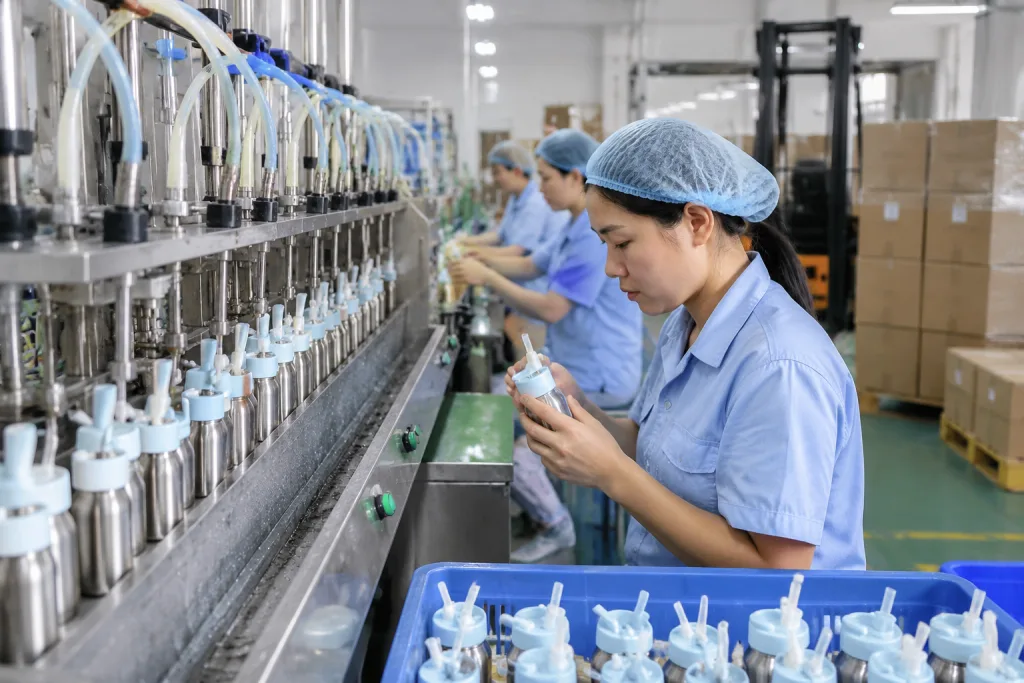
At our Zhejiang facility, we split safety review into raw material certificates before mass production, pre-production sample review, and random finished goods inspection under AQL 2.5. For toddler bottles, we add 100% leak testing on assembled lids when the design uses straw valves or flip caps. The line uses a simple inverted leak rack for 30 seconds per piece, and QC records the failed lid cavity number, not just “pass” or “fail.” It slows packing. Still, asking only for a lower unit price is the wrong question to ask, because one leaking lid can kill a distributor drinkware launch faster than a 3% cost increase.
Cheap toddler bottles usually fail in places buyers do not photograph: valve hardness at 45 Shore A instead of 55, lid thread tolerance off by 0.2 mm, paint adhesion after tape test, and carton compression after two pallets sit overnight.
Choose The Bottle Structure Carefully
Your second decision is structure. A toddler bottle can be single-wall PP, Tritan, stainless steel, or vacuum insulated stainless steel. Each option changes tooling cost, MOQ, decoration method, carton weight, target shelf price, and the type of failure QC will catch at final inspection. We run this check on the sample table with calipers first, because a 0.3 mm lid mismatch can turn into 2,000 leaking cartons.
Plastic bottles are lighter and usually cost less. They work for school channels, canteen promotional programs, and low-price retail bundles. The mold decides the result. If you ask for a canteen customizable handle, straw lid, flip button, or dust cover, mold tolerance matters more than the resin name on the quote sheet. We have seen buyers push back on a PP quote by USD 0.08, then lose 12 days vs 18 days because the button spring seat needed mold repair after T1 samples.
Stainless toddler bottles cost more, but they feel stronger in hand and fit premium customized drinkware programs. For a 12 oz vacuum bottle, common construction is 304 stainless steel inside and outside, around 0.4 mm inner wall and 0.5 mm outer wall, depending on shape. Copper coating improves heat retention but adds cost. Powder coating gives better grip than gloss spray paint, but test abrasion and dishwasher claims before printing them on packaging. QC pulled one powder-coated sample last quarter after 30 dishwasher cycles because the logo edge lifted near the radius.
For buyers who also source a custom canteen, custom growler, customizable growler, or distributor growler line, the same factory platform can save development time. Shared stainless forming, polishing, powder coating, and laser engraving keep the line stable across SKUs. This is the wrong question to ask: “Can your factory make bottles?” Ask whether the team can handle toddler lid safety and large stainless custom drinkware volume in the same month. A canteen factory that only makes adult bottles may miss straw pull-force checks, while a baby product factory may struggle when the PO says 20,000 growlers and 8,000 toddler bottles ship in one 40HQ.
- Entry retail: PP body, simple lid, 5,000-10,000 unit MOQ, usually packed 24 pcs per master carton after the drop test.
- Mid-market: Tritan or single-wall stainless, 3,000-5,000 unit MOQ, with lid fit checked by go/no-go gauge before color approval.
- Premium: vacuum stainless, silicone straw, carry handle, 3,000 units per color is realistic, and the math does not work below that once powder coating and laser setup are counted.
Match Customization To The Channel
Your third decision is how much customization you need. We see 7 out of 10 buyers ask for a fully customized canteen or toddler bottle, then accept a stock body once we show the calendar: stock mold plus custom color and logo can ship about 45 days faster. The line cares about mold schedule, not mood boards.
For brand owners, we run it in this order: stock mold first, then custom PMS color, logo decoration, and custom packaging only after the body is locked. That already covers most customizable drinkware programs. A private mold is the wrong question to ask before repeat sales prove demand. New tooling for a toddler lid can cost USD 4,000-18,000 depending on part count and mechanism. Full bottle tooling can run higher, especially with multiple lid parts and silicone components. Last month QC pulled a lid sample where the silicone straw seat was off by 0.3 mm, enough to make the leak test fail at the fixture.
For decoration, silkscreen is the low-cost choice for one or two colors on flat or gently curved surfaces. Heat transfer handles multi-color graphics, but we still run abrasion testing with 3M tape and wet rubbing before approving bulk. Laser engraving looks clean on stainless steel and works well for premium canteen customized orders, but it will not give you bright color graphics. UV printing can look sharp; on toddler bottles, confirm adhesion after rubbing, soaking, and drop testing. We have seen this go sideways when a cute animal print passed the desk review but lifted after 24 hours in warm water.
Canteen custom and canteen customizable projects often fail because artwork is approved on a PDF, not on a curved bottle. Ask for a printed pre-production sample. For a 3,000-unit order, paying USD 80-150 for a sample is cheaper than discounting a whole shipment because the mascot sits 6 mm too low. QC once flagged a bear face that looked centered in AI artwork but wrapped across the bottle radius and lost 4 mm on the left cheek.
Packaging counts as customization. A hang tag is enough for some canteen distributor channels, especially when the MOQ is 1,000 pcs per color and cartons go straight to a warehouse. A printed retail box works better for gift and ecommerce. For Amazon FBA, you need FNSKU labeling, carton weight control, drop-test packaging, and sometimes suffocation warnings on polybags. Decide this before the supplier quotes, not after production is packed; the math does not work when the buyer adds a barcode sticker after 120 cartons are sealed.
Read Quotes Like An Engineer
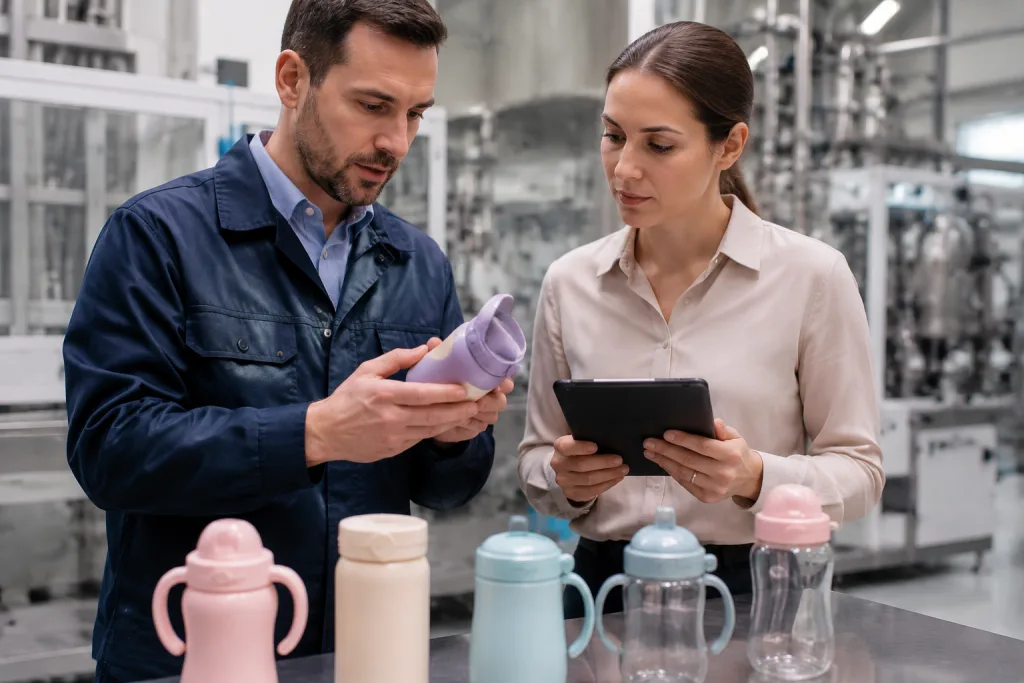
A toddler bottle vendor quote is not just a unit price. Read the scope behind it. FOB Ningbo at USD 3.68 is not the same job as EXW Hangzhou at USD 3.42, especially when the truck to port adds 0.18-0.25 per piece on a 3,000-unit color run. If one quote leaves out SGS testing, 1% spare straws, and retail box packing, do not put it beside a quote that includes all three. QC pulled a sample last month where the straw bag was listed on the PI but missing from the packing worksheet.
For a 12 oz stainless toddler bottle with straw lid, realistic FOB China pricing often sits around USD 3.20-5.80 depending on steel grade, coating, lid structure, artwork method, and packing spec. A simple plastic bottle may be under USD 2.00, but a two-shot injection lid with a soft silicone bite valve can add USD 0.35 before you touch licensed artwork. Cheap can get expensive. If one canteen supplier is 25% lower than the other four quotes on your desk, the math doesn't work; check wall thickness with a 0.01 mm micrometer, coating adhesion, inspection hours, and material certificates.
Ask for a quote sheet that breaks out the bottle body, lid type, decoration method, packaging, test cost, sample cost, spare parts, carton size, gross weight, and Incoterm. I like to see carton data written as 58 x 42 x 36 cm with GW/NW shown, not just “standard export carton.” We had one buyer flag a PO typo where 12.5 kg became 21.5 kg, and the forwarder quoted the wrong pallet plan. This is how you tell which canteen manufacturers are building a real export offer and which are sending a recycled catalog price.
At BottleForge Industrial in Zhejiang, our regular stainless drinkware capacity is about 450,000 units per month across bottles, tumblers, and canteen manufacturer projects. For toddler bottle programs, we run tighter production slots because assembly and leak testing need more hands than a simple sports bottle. The line uses a 0.5 bar air-pressure leak tester on straw lids, and failed lids go into a red bin before rework. Standard MOQ is 3,000 units per color for stainless bodies. For special molded colors or new silicone colors, MOQ can rise because resin and silicone suppliers also have batch minimums.
Do not push the factory to hide costs. Push them to explain costs. We have seen this go sideways when a buyer asked us to “absorb” testing, then the sample approval pack had no paid lab slot and shipment moved from 12 days to 18 days. Cost clarity protects margin without creating quality problems.
Check The Factory Behind Sales
Your fourth decision is the supply model. Are you buying from a trading company, a canteen vendor, a canteen manufacturer, or an export team sitting inside the factory gate? None of those labels kills the deal. The wrong question is “factory or trader?” Ask who signs off production, who reads the AQL 2.5 report, and who pays when QC pulls 80 leaking samples from a 3,200 pcs lot.
A serious canteen factory can walk you through the line without a brochure: incoming 304 stainless check with a caliper, forming or injection molding, polishing, coating, printing, assembly, leak testing, packing, and final inspection. For social compliance, European and North American buyers often ask for BSCI, Sedex, ISO 9001, or customer audit records. If you sell into major retail, your buyer may ask for factory profile documents before they approve the PO; we have seen POs held 12 days because the address on the audit report used “Road” while the factory license said “Rd.”
For toddler bottles, factory capability is not just machines. It is discipline around small parts. Straws, bite valves, gaskets, buttons, handles, and hinges need batch control, usually by material lot sticker and assembly date. If a canteen vendor cannot tell you gasket hardness, such as 55±5 Shore A, or the replacement policy for a lost straw set, be careful. The math does not work. A USD 0.03 gasket can cause a container of returns, and we have seen a buyer flag black specks inside silicone after QC cut open 20 valves under a desk lamp.
Distributors should ask about continuity before chasing the last USD 0.20. If you are a canteen distributor or distributor canteen buyer, you need repeatable colors and replacement lids next season, not a new “almost same” Pantone from another workshop. One-off sourcing from random canteen vendors may save USD 0.20 today and cost you a full account later. Ask whether the supplier keeps color records, mold maintenance logs, and spare lid inventory; on our side, the mold room tags lid tools by cavity number and last service date. For repeat programs, we recommend ordering 1-2% spare lids and straws packed separately for after-sales support.
China has plenty of capable canteen suppliers, but capability is uneven. Hangzhou and wider Zhejiang are strong on export coordination, printing, packaging, and logistics resources. That matters when you need carton marks, FNSKU labels, German warning text, and vessel booking handled cleanly. We ship from Ningbo most weeks, and one missed 3 mm label position can turn into 18 days of relabeling instead of 12 days of normal dispatch.
Approve Samples In The Right Order
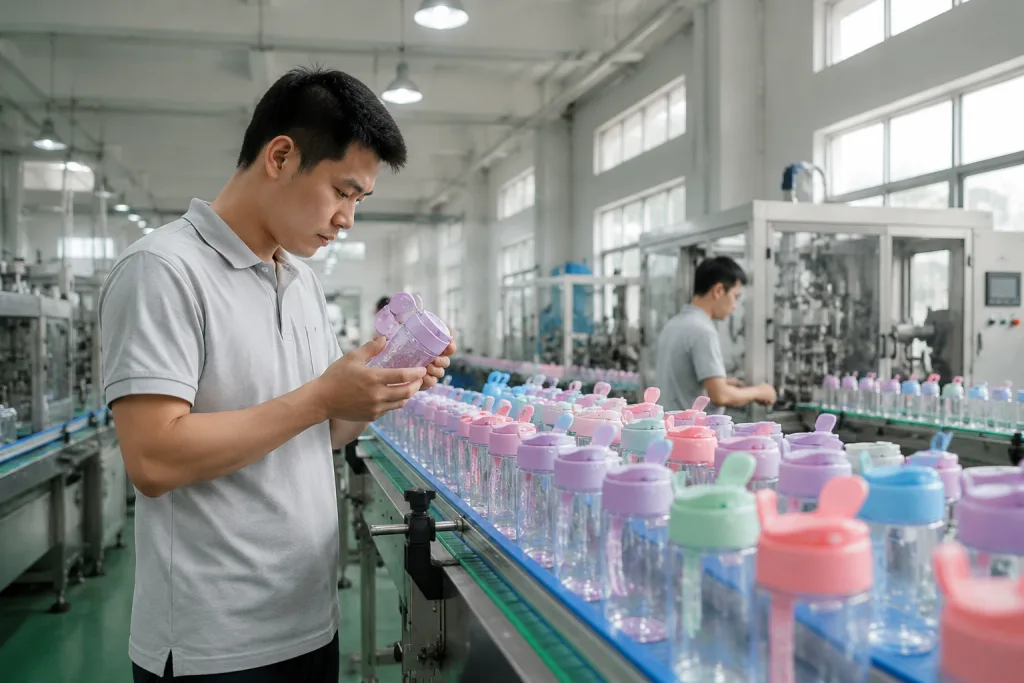
Sampling needs a fixed order, or the line pays for it later. We run it like this: construction sample first, color chip or sprayed color panel second, decorated pre-production sample third, packaging sample last after the dieline is locked. Last spring a buyer approved artwork before the cap tooling was confirmed; QC pulled the sample and found the logo sat 4 mm too high after the lid change. That cost 6 days. A solid toddler bottle vendor will not start bulk production because someone typed “looks fine” in an email.
For stainless toddler bottles, check lid fit and straw suction with water inside, then check rim smoothness with a cotton swab and your finger. Measure capacity and weight on a digital scale, smell the gasket after hot-water soaking, and test leakage. Fill the bottle, close the lid, shake it upside down for 30 seconds, then leave it sideways for 2 hours. Drop a filled sample from 90 cm onto 18 mm plywood or a similar hard surface. Not a lab test. It still catches weak hinges, loose caps, and straw valves that pop out after three drops.
For color, use Pantone references, but do not pretend every material will land on the same shade. Powder coating on metal reflects light one way; molded PP and silicone read softer, and printed paper on the color box shifts again after lamination. Ask the supplier to write the tolerance on the sample report, usually Delta E 1.5-2.5 for controlled surfaces when measured. We still see custom drinkware programs approved by eye under D65 light, and the buyer flagged it only after 3,000 pcs were packed.
For a canteen customized or customized growler line, buyers often sign off adult bottle samples fast and treat toddler parts as small accessories. This is the wrong question to ask. Toddler bottles get bitten, thrown from high chairs, washed with boiling water, and left in school bags with juice inside. During one inspection, our QC team found tooth marks on the silicone straw after 20 bite cycles using a simple clamp jig. A pretty sample that fails daily use is not a product; it is a complaint waiting for a tracking number.
Normal sample timing is 7-10 days for stock color and logo, 12-18 days for custom color, and 25-35 days if new molded parts are involved. If the PO says “blue” but the sample tag says Pantone 2925 C, stop and fix the paperwork before bulk. The math does not work when production starts on a loose email and the golden sample sits only on the supplier’s desk. Mass production should only start after the signed golden sample is stored by both sides.
Plan Inspection And Reorders Early
Put final inspection directly in the PO, not in a WeChat message. We run AQL, name the defect classes, and add toddler-bottle tests line by line: leak test, torque check on the cap, edge feel with a cotton pad, pull test for small parts, material check, warning label readability, logo position, and carton count. For toddler bottles, major defects include leaking, sharp edges, loose small parts, wrong material, unreadable warning labels, severe logo defects, and carton shortage. Minor defects may include small coating specks, slight logo shift within tolerance, or carton scuffing. QC once pulled 32 cartons because the warning label was 2 mm lower than the approved sample. The buyer flagged it.
A workable plan is AQL 2.5 for major defects and AQL 4.0 for minor defects, with function tests added outside the random visual count. If your order is 12,000 units, plan on 200-315 units for visual inspection depending on inspection level, then pull another 80-120 pcs for leak checks on a filled bottle rack. Do not ask only, “How many pieces will the inspector see?” That is the wrong question. For a new lid mold, the line can look clean for 300 pcs and then start leaking after the silicone ring feeder drifts by 0.4 mm. For high-risk new lids, we sometimes recommend inline inspection after the first 500-1,000 units instead of waiting until all goods are packed.
Reorders need the same discipline. If your first shipment sells through, you do not want to rebuild the job from a blurry logo file and a PO with the color written as “blue.” Ask your canteen suppliers to keep approved artwork, Pantone color chips, carton layout, bill of materials, inspection notes, and one signed golden sample in the sample room. We ship repeat drinkware programs faster when the BOM and carton mark files are locked, usually 12 days for pre-production approval vs 18 days when the buyer changes cap color again. For customized drinkware, reorder consistency is where professional operations show. For distributor drinkware programs, stable repeat supply beats saving a few cents on the first PO.
Build your reorder calendar around China production realities. Before Chinese New Year, capacity tightens 45-60 days ahead, and bottle assembly lines get booked by old accounts first. After the holiday, labor and subcontractor schedules need time to settle; one silicone supplier in Ningbo came back with only 60% of workers in the first week last year. If you need spring retail delivery in Europe or North America, confirm production slots before December, not after your customer signs off in January. We have seen this go sideways: cartons ready, bottles finished, but no lid pads because the subcontractor closed two days early.
A toddler bottle program is a small product with a long responsibility chain. Choose the vendor that can explain the chain clearly, from 304 stainless or plastic resin intake to the last carton scan. Ask who signs the leak-test sheet. Short answer, good factory.
Send Your Toddler Bottle Brief For Factory Review
Share target price, market, quantity, artwork, and compliance needs. We will reply with structure options, MOQ, lead time, and FOB China pricing.
Frequently asked questions
What MOQ should I expect from a toddler bottle vendor?
For stainless steel toddler bottles, expect 3,000 units per color for a practical custom order. If you need a special powder coating, custom silicone straw color, or molded lid color, the MOQ may increase to 5,000 units because upstream material suppliers have their own batch minimums. For PP or Tritan bottles, 5,000-10,000 units is common, especially when injection molded parts are customized. If you only need logo printing on an existing bottle color, some suppliers may accept 1,000-2,000 units, but the unit price and setup cost will be higher. For distributor testing, start with stock mold plus custom logo before investing in private tooling.
How long does production take after I approve the sample?
For a stock stainless toddler bottle with custom logo and standard packaging, 30-35 days after deposit and approved pre-production sample is realistic. Custom colors, retail boxes, and multiple lid colors usually push lead time to 40-45 days. New molded parts can add 25-35 days for tooling before normal production begins. Shipping time is separate: ocean freight to the US West Coast may take around 18-25 days port-to-port, while Europe often takes 30-40 days depending on route. Before Chinese New Year, add a buffer of at least 3-4 weeks because China factory capacity and trucking become tight.
Which material is best for toddler bottles?
There is no single best material. PP is lower cost and light, good for promotional or school programs. Tritan gives better clarity and a more premium plastic feel, but you still need food-contact testing and impact checks. Stainless steel is stronger and better for premium custom drinkware, especially vacuum insulated bottles in the 10-14 oz range. For toddlers, the lid design often matters more than the body material. A safe, leak-resistant straw lid with controlled silicone hardness will outperform a beautiful bottle with a weak hinge. If your retail price is above USD 14.99, stainless usually supports the margin better.
Can I use the same vendor for toddler bottles and canteens?
Yes, if the vendor has both toddler component control and general drinkware production capacity. A canteen manufacturer may be strong in stainless forming, powder coating, and laser engraving, but toddler bottles need extra attention to small parts, silicone straws, bite valves, and warning labels. If you also buy custom canteen, customizable canteen, or customized growler items, using one capable supplier can simplify color matching, carton standards, and inspection rules. Ask whether the factory can maintain separate BOMs, spare parts, and test records for each SKU. Do not assume an adult bottle factory automatically understands toddler safety requirements.
What quality checks should be written into my purchase order?
Your PO should list material grade, capacity tolerance, logo method, Pantone color, packaging, inspection standard, and required test reports. For toddler bottles, include leak testing, lid function testing, sharp edge checks, small-part security, odor check, coating adhesion, and carton drop resistance. AQL 2.5 for major defects and AQL 4.0 for minor defects is a common starting point. Define major defects clearly: leaking, loose small parts, wrong material, unsafe edges, missing warnings, or wrong logo. Also state whether inspection happens before shipment and who pays for rework if the goods fail. Ambiguous POs create expensive arguments.