Key Takeaways
- Set toddler bottle AQL at 1.5 for critical leakage and 2.5 for major visual defects
- Ask for FDA, LFGB, REACH, and ASTM-aligned test scope before confirming artwork
- A real canteen factory should state MOQ, capacity, mold ownership, and lead time clearly
- Plan 35-50 days for mass production after approved samples, not after first inquiry
A toddler bottle looks simple until one bad batch reaches parents. A lid that leaks after a 1.2 m drop test, a silicone straw that pulls out at 18 N, a migration test failure, or a paint chip is not a small defect when the user is under age 4. QC pulled 80 samples from a 3,000 pcs trial order last month; 6 lids failed the upside-down shake test. That is the risk your supplier directory has to catch.
At our factory in Hangzhou, Zhejiang, we see the same 4 buyer mistakes repeat: drawings with no straw hardness, test requirements written as “safe material,” logo files approved in a rush, and price targets that cut the checks children’s products need. The math doesn't work. If a supplier quotes 12 days while the line needs 18 days for mold adjustment, printing, odor check, and carton drop test, someone is skipping a step. China is a strong sourcing base when your directory filters out trading-company noise and keeps real bottle makers with tooling, QC records, and working test reports.
Start with failure, not catalogs
Too many buyer directories open with product photos, FOB ranges, and one lazy line like “BPA-free toddler bottle supplier.” That is the wrong starting point. A useful toddler bottle supplier directory should begin with failure points, then show which canteen manufacturer has the process control to stop them. On our floor, the first clue is often simple: QC pulls 12 assembled bottles from the line and checks thread feel before anyone talks about colors.
For toddler bottles, the failure modes are not fancy. They cost money. We see leaking screw threads, flip lids that lose spring force after 300 open-close cycles, silicone straws with odor, plastic parting lines over 0.2 mm, powder coating that fails a 3M tape pull, and cartons crushed after 28 days on the water. If your directory sorts canteen suppliers only by material and FOB price, you will miss the factories that skip incoming silicone checks or assemble caps without a torque meter. We have seen this go sideways.
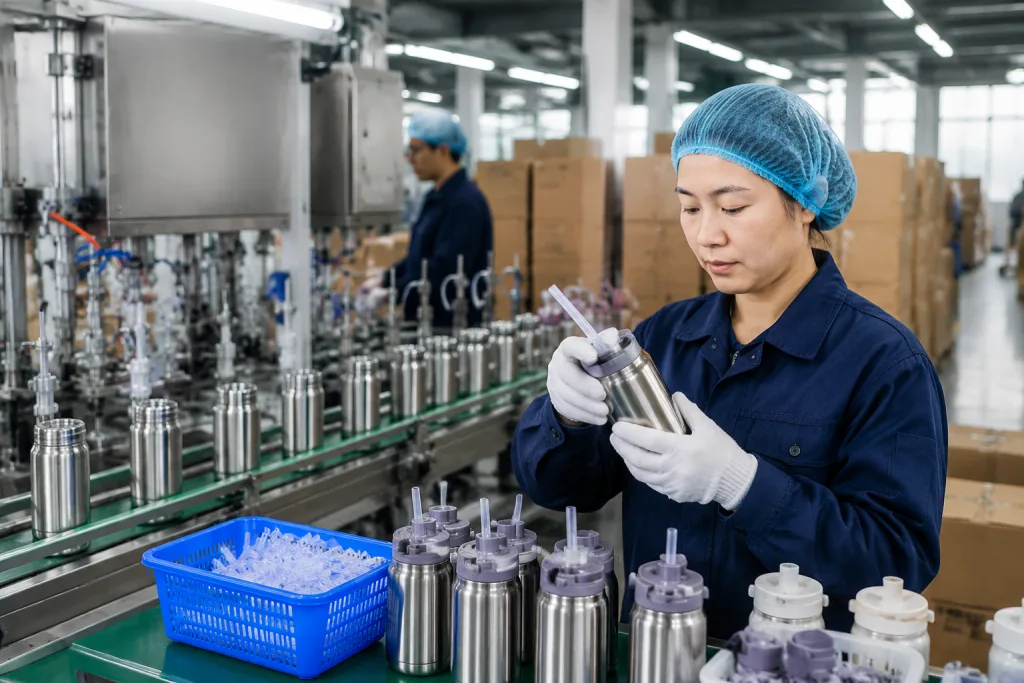
Screening China suppliers starts with the production route. Ask them to walk it. A serious canteen factory should explain resin or stainless input, molding or forming parameters, polishing grade, coating thickness, logo method, assembly stations, 100% leak testing, random pull testing, and final AQL inspection. If the reply is “we have many styles,” push back. Catalog sellers say that; production partners can tell you whether the cap is tightened at 8 kgf.cm or just “by hand.”
At BottleForge Industrial in Zhejiang, our monthly drinkware output is about 480,000 units across stainless thermos bottles, kids bottles, sports bottles, and travel tumblers. For toddler bottle projects, a realistic MOQ is usually 1,000-3,000 units per color for existing molds, with 35-50 days lead time after approved pre-production sample. Custom tooling can add 18-30 days before that clock starts. Last month a buyer flagged a PO typo, “pantone 219C” instead of “2195C,” and the line stopped until the color chip matched under the D65 light box.
Your directory should record these numbers. MOQ, lead time, test standards, and defect history matter more than a polished product page. A canteen vendor that will not put them in writing is not automatically bad, but the math does not work if they sit at the top of your shortlist. Ask for the last inspection report, even if it only shows 3 minor defects out of 200 cartons checked.
Leakage begins at the drawing
Leakage is the first failure mode we spec because it shows up fast and buyers remember it. Parents will not separate cap shrinkage from gasket compression, thread tolerance, or straw venting. They see 180 ml of milk in a school bag. QC pulled one sample last year where the silicone ring sat 0.3 mm proud at one corner; the buyer flagged the carton photos before we even discussed rework.
Do not approve a toddler bottle from photos alone. Ask for 2D drawings with thread dimensions, gasket groove depth, straw diameter, vent hole position, and lid material called out in mm. For stainless toddler bottles, wall thickness should typically sit around 0.4-0.5 mm for the inner and outer shells, depending on capacity and forming method. Too thin dents on the drop jig. Too thick makes the math ugly: we have seen a 350 ml toddler bottle jump from 198 g to 236 g after a buyer requested a “stronger feel,” then complain it was too heavy for a 2-year-old.
Ask the canteen supplier to define leakage testing in shop-floor language. “No leak” is the wrong wording. Use this instead: 100% assembled bottle leak test, filled to nominal capacity, inverted for 30 minutes, then shaken 20 cycles at room temperature; zero continuous dripping accepted. For straw lids, add pressure equalization testing because vent design often causes slow seepage after hot filling or altitude change. On the line we run the inverted test in plastic trays, 24 pcs per tray, so one wet base shows up before it reaches inner packing.
A custom canteen or canteen customized for a promotion may use a lid borrowed from another model. That can work, but only if the cap and body combination has been tested as one assembly. Mixing a stock body with a new flip-top lid is where we’ve seen this go sideways. One PO even had the lid code typed as L-217 instead of L-271, and that 1.2 mm thread mismatch cost 12 days of sorting before shipment.
For your toddler bottle supplier directory, create a leakage field with two hard entries and one number: test method, sample size, and failure rate from the last production run. If the canteen manufacturer cannot provide internal data, you are being asked to fund their learning curve. We ship better orders when the buyer asks for “AQL 2.5 final inspection plus last-run leak rate,” because the factory then knows somebody will check the worksheet, not just the glossy sample.
Materials can pass or poison
Material failure hides better than leakage, and it hurts more when it reaches a child. Toddler bottles see water, juice, milk, and warm 45°C drinks in the same week. Silicone straws get chewed. Paint gets scraped by teeth or a Bosch dishwasher cycle. We once had QC pull 32 painted samples after the cross-cut tape test lifted coating near the handle; the bottle did not leak, but the PO was already in trouble.
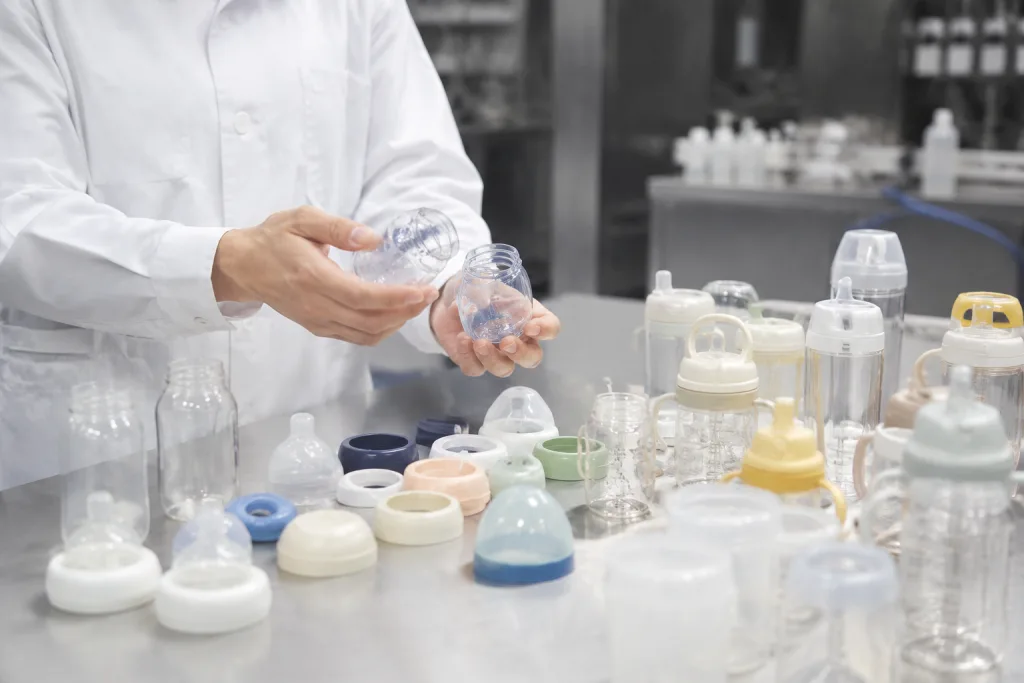
For plastic toddler bottles, write the exact resin on the spec sheet: Tritan TX1001, PP, PE, PPSU, or the grade your engineer approves. “BPA-free plastic” is the wrong wording. It tells the factory almost nothing. For stainless items, call out 304 stainless steel for food-contact surfaces unless your market accepts another grade at a clear target cost. For silicone, require food-contact grade with migration reports tied to the material supplier; our incoming team checks Shore A hardness with a durometer, not a sales brochure.
For Europe, buyers usually ask for LFGB plus REACH, then EU food-contact migration by color and material. For the United States and Canada, FDA food-contact compliance and ASTM-style physical safety checks come up on 8 out of 10 toddler projects we quote. If the product is sold as a children’s item, check small parts, sharp edges, bite durability, and packaging warnings with your compliance consultant. A canteen promotional item for adults is not the same job. The buyer flagged this on a 280 ml straw bottle last March because the hangtag missed the age warning.
Your supplier directory should show whether each canteen vendor holds current third-party reports from SGS, Intertek, TUV, BV, or an equivalent lab. Check 4 lines before you trust it: report date, tested item, material description, and client name. A report for a 500 ml adult sports bottle does not cover a 280 ml toddler bottle with a silicone straw and PP flip lid. We see this shortcut every quarter, and the math does not work when retesting takes 12 days vs an 18-day shipment window.
This is where China sourcing is either clean or risky. Zhejiang factories can get good resin, 304 stainless coil, and certified silicone fast, but the BOM must be locked before the line opens molds. Put resin grade, stainless grade, coating type, silicone hardness, and color masterbatch approval into the PO. One buyer once sent “green lid” with no Pantone number; the subcontractor matched it by eye under warehouse lights. If you leave material open, the lowest-cost decision becomes your brand problem.
Logo work creates child risks
Buyers too often file logo work under “branding.” On toddler bottles, that is the wrong bucket. A raised ink edge of 0.3 mm near the mouth area can turn into a parent complaint after one weekend, and QC pulled samples last month where a cute rabbit print flaked under a fingernail before packing.
For customized drinkware, we run silkscreen printing, heat transfer, laser engraving, pad printing, UV printing, and powder coating with print on top. Silkscreen fits one- or two-color graphics and adds USD 0.08-0.25 per unit depending on colors and order size, but the mesh count and curing time matter. Laser engraving is durable on 304 stainless steel and usually costs USD 0.15-0.40 per unit, though it can look dirty on some matte coatings. Heat transfer carries full-color cartoon art, but if the oven is set 8°C low, adhesion fails after dishwashing or a fingernail scratch test. We have seen this go sideways.
If you are sourcing a canteen customizable for a children’s brand, lock the print adhesion tests before mass production. Put them on the PO, not only in a WeChat message. A practical spec is 3M tape test after 24 hours curing, 50 rub cycles with wet cloth, and dishwasher simulation if you intend to claim dishwasher safety. One buyer once wrote “3N tape test” on the PO; our merchandiser caught the typo before the line started, which saved 6,000 bottles from the wrong check standard.
Color matching needs shop-floor discipline. Use Pantone references for plastic and coating, then approve real material chips or golden samples under a D65 light box. A Pantone code printed on paper will not match powder-coated stainless steel or translucent PP, especially on pink and mint colors. If your distributor drinkware program includes 4 SKUs, keep one approved physical standard at the factory and one in your office, sealed in a PE bag with date and signature.
A canteen customized with cartoon artwork also brings licensing and placement problems. Keep artwork away from drinking edges and bite zones where possible; we set a 6 mm no-print band on toddler spouts unless the buyer signs off. For small bottles, large wraparound graphics stretch over curves, and the buyer usually flags the face distortion only after seeing decorated samples. Ask for flat artwork proof, 3D mockup, and two decorated samples before you release bulk labels, cartons, or Amazon FBA files.
Assembly errors hide in cartons
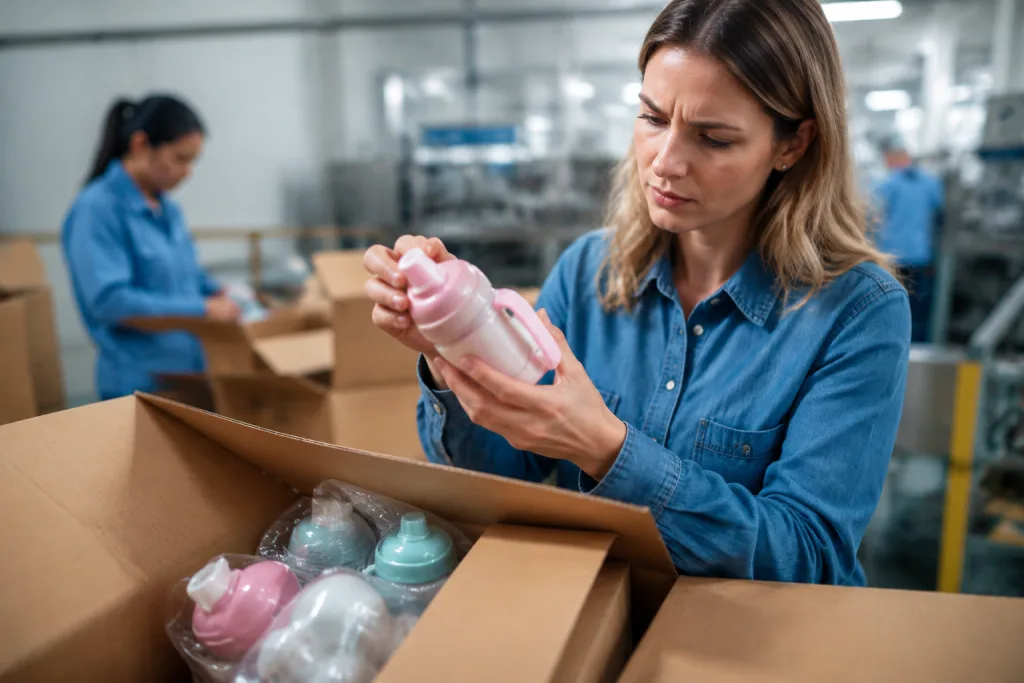
Assembly failure is how a factory passes component inspection and still ships bad toddler bottles. The body is fine. The lid is fine. The silicone straw is fine. Then a buyer opens 12 cartons from a 3,000 pcs lot and finds 3% of units with missing valves, loose handles, reversed gaskets, or color caps from the wrong Pantone batch. QC pulled the sample after packing once; the defect was already buried under dividers and OPP bags.
For toddler bottles, the line needs photo work instructions at each bench, first-article approval signed before mass assembly, and line QC with a simple red-bin system for rejects. Ask whether the factory runs 100% functional checking or only random checks. For a regular adult custom growler, random checks can pass if the risk is low. For a toddler bottle with 4 to 7 silicone parts, 100% visual plus a basic fit check is the safer route. We have seen this go sideways when the buyer flagged leaking straws after arrival, and the factory’s only record was one AQL 2.5 final report.
Write the bill of materials like a packer will read it at 8 p.m., not like a catalog page. Example: 1 bottle body, 1 lid, 1 silicone straw, 1 weighted straw ball if used, 1 gasket, 1 handle set, 1 cleaning brush, 1 instruction leaflet, 1 OPP bag or kraft box. If spare parts are included, list them separately with qty per unit and qty per carton. A canteen distributor handling regional repacking should specify whether spare straws are packed inside the bottle, inside the color box, or in the master carton. One PO typo, “spare straw in box” instead of “in bottle,” can add 2 days of rework on a 5,000 pcs order.
Torque and pull testing matter when handles, hinges, or straw assemblies are involved. You do not need laboratory-grade force testing for every order, but you should define a minimum internal control the factory can run with a torque screwdriver, pull gauge, and sample log. For example, flip lid opened and closed 500 cycles on sample units; handle pull checked at 5 kg for 10 seconds; straw retention checked with reasonable manual pull. These are practical factory checks, not decorative paperwork. If the line cannot show the jig or the test record, the math does not work.
Your toddler bottle supplier directory should ask canteen vendors whether assembly is in-house or outsourced. Outsourcing itself is not the problem; hidden outsourcing is. If the canteen factory molds parts in one place, coats bodies in another, and assembles in a temporary workshop with 18 workers and no incoming checklist, inspection timing must change. You need incoming part QC and final AQL, not only one inspection at the end. We ship better when QC checks silicone gaskets by lot before assembly, not after 20 master cartons are taped shut.
Cheap quotes remove controls
Price pressure is normal. Pretending it has no effect is where buyers get hurt. When two canteen suppliers quote the same toddler bottle at USD 2.10 and USD 1.62 FOB Ningbo, we first check what disappeared from the routing sheet: 6 minutes of incoming QC, 5-ply carton board, Shore A 55 silicone, plasma pretreatment before coating, or the SGS migration test line on the cost sheet.
Ask each canteen manufacturer to split the quote into real cost blocks: bottle body by gram weight and steel grade; lid set with gasket count; silicone parts by hardness and color; logo by pad print, laser, or heat transfer; packaging by color box and master carton; testing by report type; mold or tooling by cavity count. You do not need their full margin. You do need to know what changes when you push the price down by 8%. A practical supplier will say, “At USD 1.62 we must use thinner packaging and no individual color box.” Good. We can work with that. The buyer who accepts “every target is possible” usually finds the missing control when QC pulled the sample and the carton failed a corner drop.
For distributor canteen programs, carton strength is not a small detail. A toddler bottle in a crushed retail box looks unsellable even if the bottle passes leak testing. For export cartons, specify 5-ply corrugated master cartons for heavier insulated items, then write the drop test height, such as 76 cm on 1 corner, 3 edges, and 6 faces. For lightweight plastic bottles, carton spec can be lighter, but do not leave it as “standard export carton” on the PO. We have seen this go sideways after 28 days on the water from Ningbo to Rotterdam, with 14 cartons showing compression marks at inspection.
If you use a toddler bottle supplier directory for canteen distributors, add a “quote assumptions” column. Include Incoterm and port; packaging type with box size in mm; logo method and setup charge; inspection level such as AQL 2.5; test reports included or excluded; lead time in working days. FOB Shanghai and FOB Ningbo may both be fine, but the math changes if your consolidation warehouse is in Zhejiang. Last month a buyer flagged a PO typo that said FOB Shanghai while the quote was FOB Ningbo, and that one line added 12 days vs 18 days to the pickup plan.
Customizable drinkware buyers often want one quote that covers everything. This is the wrong question to ask. A transparent quote sheet lets you compare canteen manufacturers fairly and stops a supplier from winning with a low number, then adding USD 0.18 for logo setup, USD 0.12 for better carton, and USD 300 for a test report after PO. On our line, those items sit in separate boxes on the costing file, and hiding them only makes the first email look cheaper.
Inspection must match the risk
Final inspection is not a magic shield. It is a sampling tool, and the sampling plan has to match the product risk. For toddler bottles, we run AQL 0 for critical safety defects, 1.5 for major functional defects like leakage or missing components, and 2.5-4.0 for minor visual defects based on whether the buyer is selling supermarket grade or gift-box grade. On the line, QC usually pulls 125 pcs from a 5,000 pcs lot under AQL 2.5, then separates leakage failures on a red-tag tray because those are not “cosmetic.”
Define critical defects in plain words: burrs over 0.2 mm on the mouth rim, cracked straw parts, solvent odor after 24 hours airing, metal dust or black specks inside the bottle, leakage after a 30-second inversion test, loose silicone plugs under a 15 N pull, wrong material, wrong warning label, or contamination. Major defects cover color mismatch beyond the signed Pantone chip, logo peeling after 20 rubs with 3M tape, cap threads that cross-lock, dented body panels, wrong assembly, and crushed retail boxes. Minor defects are small surface marks outside the logo face, within the limit you signed on the golden sample.
Pre-shipment inspection should cover carton count, barcode scan, FNSKU check if shipping to Amazon FBA, gross weight, carton drop check, product measurement, capacity check, leakage test, logo rub test, visual inspection, and packaging verification. For an Amazon job last April, the buyer flagged one FNSKU digit typo on the PO, and QC caught it before 38 master cartons were sealed. If your order is canteen promotional for an event deadline, add a during-production inspection at 20-30% completion. At 100% packed, the math does not work; rework that takes 2 days in bulk can take 6 days once every bottle is boxed.
For customized growler, distributor growler, or larger drinkware items, the risk shifts toward dents, insulation performance, handle strength, and freight damage. We check those with a vacuum tester, a 10 kg handle pull, and a 76 cm carton drop on the packed set. For toddler bottles, the risk stays closer to materials, small parts, leakage, and hygiene; QC pulled one sample last season because a silicone straw smelled sweet after hot-water soaking. Your directory should not score all custom drinkware suppliers with one generic checklist. That is the wrong question to ask.
A good canteen supplier will not object to third-party inspection. They will push back on fuzzy standards, and that is fair; we have seen this go sideways when a buyer sent “premium quality required” three days before shipment with no signed sample photo. Send your inspection checklist before deposit. If the supplier accepts AQL, test scope, packaging spec, and golden sample at PO stage, you have a cleaner argument if the batch fails, and the factory has 12 days to correct the line instead of fighting over defects 18 hours before truck loading.
Send your toddler bottle spec for factory review
We will check materials, MOQ, logo method, packaging, and QC risks before you commit to tooling or mass production.
Frequently asked questions
What should I include in a toddler bottle supplier directory?
Include more than company names and photos. Track factory location, in-house processes, monthly capacity, MOQ, lead time, main materials, toddler bottle test reports, AQL acceptance levels, logo methods, mold ownership, and export markets. For example, a useful entry might say: Zhejiang, China factory; 480,000 units/month drinkware capacity; MOQ 1,000 units per color; 35-50 days lead time; FDA and LFGB reports available for selected materials. Also record whether the canteen manufacturer handles assembly in-house. That single field prevents many surprises because toddler bottles often fail at gasket, straw, lid, and handle assembly rather than at body production.
What MOQ is realistic for custom toddler bottles?
For existing molds, expect 1,000-3,000 units per color for most custom drinkware factories in China. If you need a private mold, special lid, custom straw system, or unique body shape, the effective MOQ may move to 5,000-10,000 units because tooling, setup, and material purchasing need to be amortized. Logo-only canteen custom projects are easier: silkscreen or laser on a stock bottle can often start around 1,000 units. If a canteen vendor offers 200 fully customized units at a very low FOB price, ask whether they are reselling stock, using digital print only, or skipping proper testing.
How do I compare canteen suppliers fairly on price?
Normalize the quote before comparing. Ask every canteen supplier to quote the same capacity, material grade, lid type, silicone parts, logo method, packaging, Incoterm, port, inspection requirement, and test report inclusion. A USD 0.20 gap can disappear once one supplier adds color box, 5-ply carton, logo setup, and LFGB testing. For toddler bottles, do not compare an untested PP lid against a documented food-grade silicone straw system as if they are equal. Your directory should include a quote assumptions field so procurement, sales, and compliance teams know exactly what each FOB price covers.
Which certifications matter for toddler bottle sourcing?
Certifications depend on your market, but common requests include FDA food-contact compliance for the US, LFGB or EU food-contact migration for Europe, REACH for restricted substances, and ASTM-style checks for physical safety concerns. Factory audits such as BSCI or ISO 9001 help assess management systems, but they do not replace product testing. Ask for reports tied to the actual materials: stainless steel, PP or Tritan body, silicone straw, coating, ink, and color masterbatch. A canteen factory certificate from 2021 or a report for a different adult bottle is not enough for a toddler bottle launch.
Should I use one supplier for toddler bottles and adult canteens?
It can work if the supplier has both product lines and understands the different risk levels. Adult customized canteen, custom growler, and distributor drinkware programs focus heavily on insulation, coating, dents, and branding. Toddler bottles add small parts, straw hygiene, bite zones, leakage, odor, and child-facing compliance. If one canteen manufacturer can show current test reports, assembly controls, and toddler-specific QC records, using one partner may simplify purchasing. If not, split the program. A strong canteen manufacturer for outdoor adult bottles is not automatically a safe toddler bottle supplier.