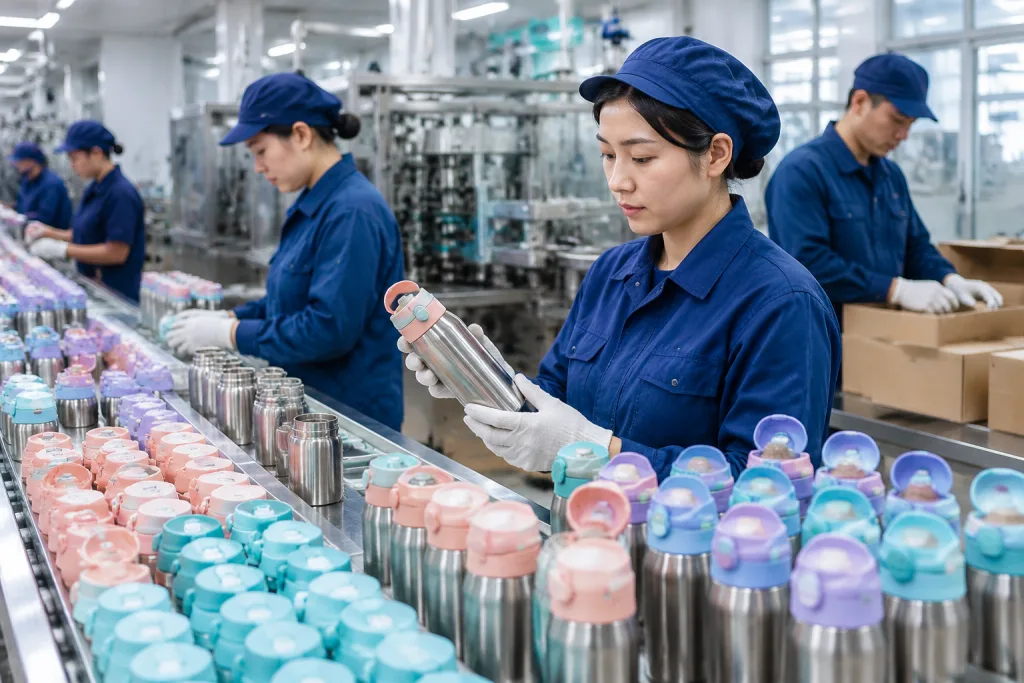
Key Takeaways
- Start with 1,000 units per color for most toddler bottle customized projects
- Use food-contact PP, Tritan, 304 stainless steel, or borosilicate glass only when the use case fits
- Confirm CPSIA, LFGB, FDA, REACH, and ASTM test needs before tooling or artwork approval
- Expect 30-40 days production after sample approval for normal custom drinkware orders
A toddler bottle customized for retail, daycare, school, or promo orders is not a mini sports bottle with cartoons on it. Different risk. We are building for children who chew silicone spouts, drop bottles from 80 cm tables, cross-thread lids, and make parents ask for test reports before the buyer even confirms the PO.
If you buy custom drinkware from China, logo position is the wrong first question to ask. Start with body material, lid locking force, bite-safe spout design, test scope, and landed cost per unit. BottleForge Industrial in Hangzhou, Zhejiang usually starts toddler bottle projects at 1,000 units per color, with standard sampling in 7-10 days and mass production around 30-40 days after approval; last month QC pulled 12 pre-production samples because the straw hole measured 0.4 mm off the approved drawing.
Start With The Use Case
Start with one question: where will this toddler bottle actually sit? A supermarket shelf, a daycare chain, a kids' outdoor subscription box, and a canteen promotion should not run the same spec. Same small user, different buyer risk. Last March, one PO from a promo buyer even spelled “todler” on the artwork file, and QC still had to check the 62 mm logo position against the printed dieline before we opened the mold.
For toddlers aged 18 months to 4 years, the safe capacity band is still 250-420 ml. Below 250 ml, parents come back with “too many refills” complaints. Above 420 ml, the bottle feels heavy in a child’s hand, mainly with stainless steel. For stainless steel, we usually cap it at a 350 ml double-wall body with 0.4 mm inner wall and 0.5 mm outer wall for younger children. For plastic, 350-450 ml works if the grip diameter stays under about 72 mm; our line checks that with a digital caliper before the first 20 pcs go to print.
Decide early: water only, warm drinks, milk, or juice. Milk and juice are where complaints start. Odor sticks around in straw valves and silicone bite pieces, and we have seen this go sideways after one buyer skipped the spare-straw pack to save USD 0.08. If your distributor drinkware program sells to parents, removable straw parts and dishwasher-safe claims need to be clear on the carton. If the buyer is a daycare operator, replacement lids and bulk spare straws usually beat premium packaging; QC pulled one daycare sample last year because the loose straw plug measured 6.8 mm and looked too easy to lose.
For a canteen distributor or distributor canteen buyer, the wrong move is treating toddler bottles like a normal custom canteen line extension. Toddler products need fewer tricks and steadier handling: leak resistance, low choking risk, easy grip, readable care instructions. A custom canteen for adults can live with a narrow mouth and screw cap. A toddler bottle often needs a flip lid, carry loop, bite-resistant straw, and a cap that survives 1,000 open-close cycles without loosening; we run that on a simple hinge-cycle jig before sending the approval sample.
Before asking any canteen factory for pricing, write one sentence: who uses it, where, and how often it is washed. Short sentence. Big filter. It cuts bad quotations fast, because the math does not work when a buyer asks for a 300 ml toddler bottle, dishwasher-safe print, spare lid set, retail box, and 500 pcs MOQ at the same price as a plain adult bottle.
Choose Material Before Decoration
Material decides weight, compliance workload, decoration method, and the way the bottle fails on a real toddler. Decoration comes second. A toddler bottle customized with clean artwork is still a bad buy if QC pulled the sample after a 1.2 m drop and found a cracked shoulder, silicone smell, cap seepage, or a failed extraction test.
304 stainless steel is our safest mainstream pick for premium toddler bottles. It takes drops better than glass, avoids plastic body odor, and we run powder coating, laser engraving, or wrap printing on the same line with different fixtures. A common specification is 304 inner and outer body, 0.4-0.5 mm wall thickness, food-grade silicone seals, and PP lid parts. Vacuum insulation works, but the math changes fast: a 350 ml single-wall bottle might weigh about 145 g, while a vacuum version can move past 230 g before the lid. FOB Ningbo or Shanghai pricing for a 350 ml customized drinkware stainless toddler bottle often lands around USD 3.20-5.80 depending on lid, coating, and packaging. Last month a buyer flagged 0.3 mm coating buildup near the thread because the cap felt tight after assembly.
Tritan or PP works when you need lower cost, transparency, or lighter weight. Tritan looks clearer on shelf; PP wins when the target price is tight and the design needs better sterilization tolerance. Plastic toddler bottles need pigment control and food-contact paperwork, not a casual “BPA free” line on the PI. If you are selling in the EU, ask your canteen supplier for material declarations and LFGB or EU 10/2011 related test options before confirming color. We have seen bright pink masterbatch pass odor in-house, then come back with a buyer complaint after 7 days sealed in a polybag, so we now check color chips before opening the mold.
Borosilicate glass can look right for eco-positioned customizable drinkware, but I would not lead with it for toddlers unless you add a silicone sleeve and accept higher breakage risk. It fits supervised home use, not rough daycare bags or car seats. On our packing bench, the problem is obvious: even with a 2 mm sleeve, a side hit on tile can chip the rim, and one broken bottle in a 24 pcs inner carton gets the whole shipment questioned.
Do not let a canteen vendor push a cheaper resin without naming the grade. “Food grade plastic” is not a specification; this is the wrong question to ask if the supplier cannot give the resin code. You need the exact resin, colorant approach, odor test expectations, and current test reports from a recognized lab. We also check the PO line by line because one typo, like writing “PP lid” when the approved sample used Tritan, can turn into 5,000 pcs of rework before final inspection.
Treat The Lid As The Product
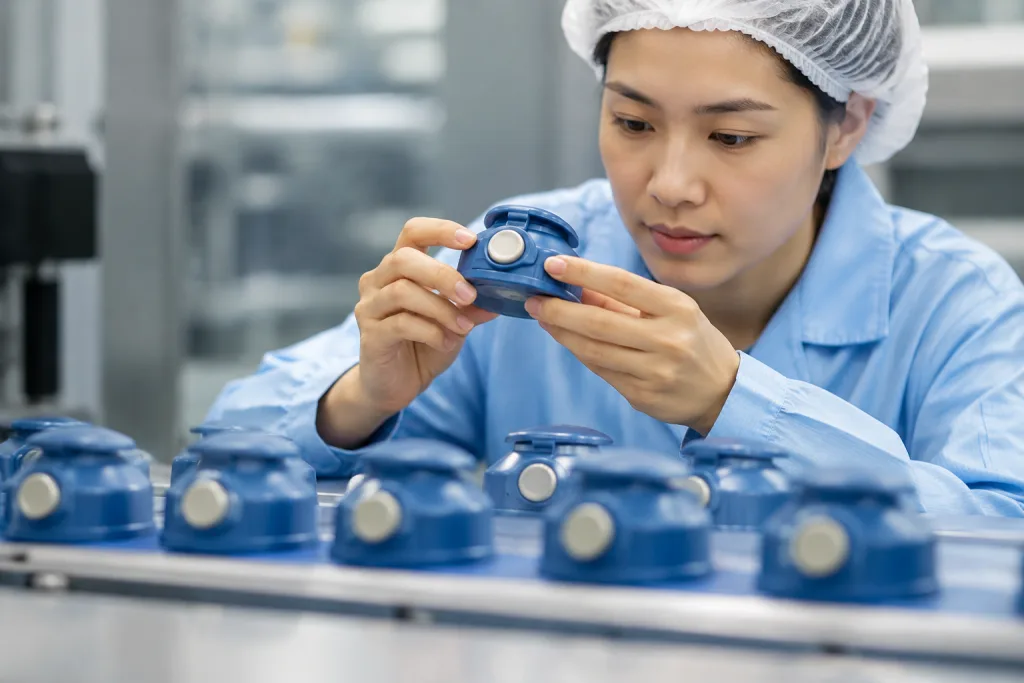
For toddler bottles, the lid creates about 7 out of 10 complaints we see after shipment. The body is simple: check wall thickness with a caliper, confirm powder coat, run the vacuum test. The lid is the troublemaker. It mixes silicone, PP, pins, springs, buttons, straws, and seals in a 45-70 mm area, so leaks, bite marks, choking risk, and mold claims usually start there. QC pulled a 2024 sample where the bottle body passed, but the straw valve had a 0.6 mm flash line that held water after washing.
A toddler lid should pass a real bag-and-carton leak test, not a neat desktop photo test. We run filled bottles upside down for 30 minutes, lay them sideways in an export carton for 2 hours, then open and close the lid before shaking 20 times. For Amazon FBA or retail chain orders, add a drop test: 1.0 meter onto plywood or concrete-like surface, at least 3 drops on different orientations. The bottle may dent. The lid cannot expose small detachable parts. One buyer pushed back on the concrete-like surface because it looked “too harsh”; the math does not work if the bottle fails the first week in a daycare cubby.
For straw lids, silicone hardness usually sits around Shore A 50-60. Softer silicone feels nicer, but a 2-year-old can bite through it faster; harder silicone survives better, but younger children may refuse it after 3 uses. Ask your canteen manufacturer whether replacement straws can be ordered at 5-10% of the main order quantity. If you order 5,000 bottles, buying 250-500 spare straw sets is cheap insurance. On the line, we check straw length with a go/no-go gauge because a 3 mm short straw can leave liquid at the bottom and trigger “doesn’t drink well” reviews.
Button lids need stricter review. Springs and push buttons look premium, but they add failure points, especially after sand, juice residue, or dishwasher heat gets inside the button channel. For toddler products, a simple flip lid with a protected silicone straw often beats a one-touch lid with 6 small parts. If you need a carry handle, choose an integrated loop instead of a thin clip that can snap under load. We have seen this go sideways: one PO even typed “carry handel,” and the approved sample used a thin clip that broke at 8 kg pull force during incoming inspection.
This is where 2 canteen manufacturers offering the same bottle shape can be miles apart. Some own lid tooling; others assemble generic market lids bought from a lid supplier in Ningbo or Yongkang. Owned tooling gives tighter control, but the MOQ is higher, often 3,000-5,000 units for custom color. Generic lids cut cost, but they limit exclusivity and make after-sales matching messy if the supplier changes the mold. For a toddler bottle customized program, lid tooling is not a technical detail; it is a commercial decision we settle before quoting, not after the buyer flags leakage photos.
Compliance Is Not Optional
Toddler drinkware goes into the higher-compliance bucket on day one. For North America, we check the brief against FDA food-contact rules, CPSIA lead and phthalate limits where they apply, and ASTM points for children’s products. For Europe, the first pass usually covers LFGB, REACH, EN 14350 when the bottle works like a child drinking cup, plus packaging chemical restrictions. Your importer of record or compliance consultant owns the final test plan; the factory still needs to read the same language, or the line will miss small details like a silicone straw ID changing from 6.0 mm to 5.5 mm.
China suppliers often send old reports for a “similar” bottle. Good for screening. Not good for final approval. For a new customized canteen or toddler bottle color, ink, coating, or silicone part, updated testing is often needed. A black powder coat from 2022 does not cover your mint green 2026 batch just because the shell is the same 304 stainless. We have seen this go sideways when QC pulled the sample and the buyer flagged printed animals sitting too close to the mouth-contact area.
Ask for these documents before deposit: a material list with grade and supplier name, previous test reports tied to the same construction, and factory audit status with expiry date. BSCI, Sedex, ISO 9001, or an internal quality system will not guarantee compliance, but they show whether the canteen factory runs with process control instead of memory. BottleForge in Zhejiang works with AQL inspection plans such as Level II, AQL 2.5 for major defects and 4.0 for minor defects on standard export drinkware. For toddler items, 7 of our last 10 overseas buyers tightened critical defects to 0, and I agree with them.
Labeling matters more than buyers expect. Age grading, warnings, country of origin, batch code, and care instructions should be checked before mass printing, not after 12,000 color boxes are stacked by the carton sealer. If you sell through distributor drinkware channels, your downstream canteen distributors will ask for traceability when a complaint arrives. A batch code laser-marked on the bottom or printed on the packaging can turn an 18-day email chase into a 2-day lot check.
Cheap testing is the wrong place to save money. If the product touches a child’s mouth, budget for real lab work instead of hoping customs, Amazon, or a retailer QC desk will not ask. We ship toddler projects only after the compliance file matches the PO, because one typo in a color code or silicone spec can make the math fall apart.
Branding Choices Change MOQ
Most buyers ask for “logo price” before we even know the decoration route. That is the wrong question to ask. Branding changes MOQ, lead time, scrap rate, and the safety review sheet. For toddler bottles, the logo has to survive 30 dishwasher cycles in our test room and daily drops from small hands without sharp edges, peeling labels, or ink sitting near the mouth area.
Laser engraving is the clean option for 304 stainless steel. No peeling risk. No color either. We run it on the fiber laser at 0.03 mm marking depth for premium, quiet branding, and MOQ can stay at 500-1,000 units when the base bottle is already in stock. Screen printing fits one- or two-color logos, especially flat panels. Full wrap heat transfer or UV printing looks stronger on shelf, but QC pulled samples last month for a 1.5 mm artwork shift, so the file control and setup cost need to be tighter.
Powder coating sells well on stainless toddler bottles, but color matching is not a same-day job. A Pantone target may require 2-3 lab dips, and the buyer often flags the first dip as “too warm” under office lighting. Expect a tolerance, not perfection. If your brand book demands exact color, approve physical samples under D65 light, not phone photos from our coating line. For plastic bottles, injection color MOQ may be 3,000 units or more per color because resin blending, purging, and machine cleaning can waste 25-40 kg of material before stable color.
A canteen customizable project with names, SKUs, or seasonal artwork should split base product approval from decoration approval. First sign off the body, lid, leak test, and material report. Then approve artwork placement and packaging. We have seen this go sideways when a 2 mm logo move reopened lid discussions and held the line for 6 days. Separate approvals keep the PO clean, especially when one SKU code has already been typed wrong once.
If you are a canteen promotional buyer, do not over-customize the lid unless your volume supports tooling. The math does not work. A new mold for a lid button, straw cap, or handle can cost USD 2,000-8,000 and add 25-45 days before sampling; our tool room usually needs the 3D file, steel grade confirmation, and first-shot review before we quote final timing. For 1,000-3,000 units, use existing tooling and put the budget into better coating, retail box, or spare parts. For 20,000 units, custom tooling starts to make sense.
Price The Whole Landed Program
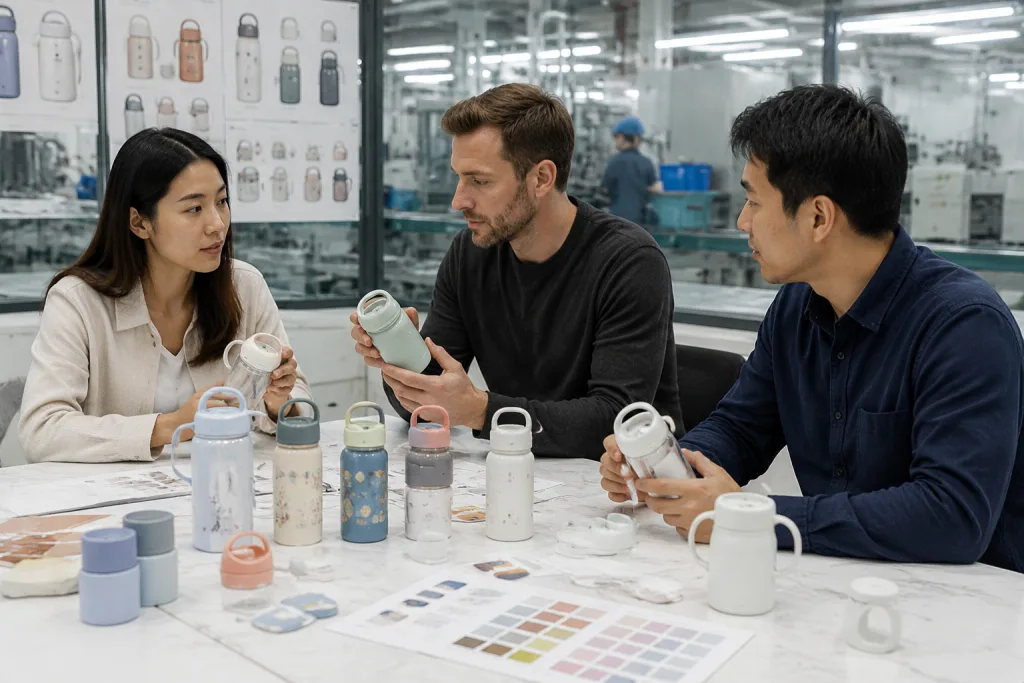
The bottle unit price is one line on the cost sheet, not the program cost. For a retail toddler bottle customized order, we usually price the bottle, color box, instruction leaflet, barcode label, warning label, master carton drop test spec, spare straw kit, and third-party inspection as separate rows. FOB-only comparison is the wrong question to ask. Last month QC pulled a 350 ml sample where the bottle was fine, but the PO missed the warning label artwork version, so the buyer had to reprint 6,000 boxes.
A realistic 350 ml stainless toddler bottle program might look like this: bottle FOB USD 4.20, color box USD 0.25, spare straw set USD 0.18, insert card USD 0.04, outer carton cost included, and inspection around USD 250-350 per day depending on location. Sea freight, duty, customs clearance, and local trucking sit outside that factory quote. For Amazon or marketplace sellers, FNSKU labeling and carton limits add handling cost; we run those labels through a handheld scanner before sealing cartons because one unreadable code can hold a shipment. For chain retail, packaging compression and barcode scanning tests often matter more than saving USD 0.10 on the bottle.
MOQ depends on how deep you customize. Stock color with logo can start around 500-1,000 units. Custom powder coat usually starts at 1,000-2,000 units per color because the spray line wastes powder during color changeover. Custom injection lid color may need 3,000 units, and new mold projects often become sensible at 10,000-20,000 units. Any canteen vendors quoting “any color, any logo, 100 pieces” for a child product are probably cutting corners; we have seen that go sideways on LFGB paperwork and lid fit, especially when calipers show a 0.3 mm mismatch on the straw port.
Lead time needs honest planning. In Zhejiang, China, our normal timeline is 7-10 days for pre-production sample, 3-5 days for buyer review if shipping is fast, 30-40 days for mass production, and 7-14 days for inspection, booking, and loading buffer. Peak season before back-to-school or Q4 can add 10-15 days. The line does not care that a retailer launch date moved up; if the powder coat oven is booked, 12 days cannot become 6 days without risking color drift.
For canteen distributors and distributor growler buyers adding toddler products, forecast by SKU count first. Six colors at 1,000 units each is a 6,000-unit commitment before you test demand. Three colors at 2,000 each may be easier to manage and cheaper to produce because we run fewer color changes, and inventory stays cleaner. One buyer flagged this after receiving 18 pallets instead of the 9 pallets their warehouse had planned for, all because the assortment looked harmless on the spreadsheet.
Select The Right Supplier Type
Not every canteen manufacturer should touch toddler bottles. We have seen factories that run adult sports bottles all day, 40 oz custom growler programs on night shift, or large promotional canteens for supermarket orders, then struggle with child-safe lids and small parts control. The line looks busy, but QC pulled the sample and found a 7.8 mm loose straw stopper. That is a choking-risk conversation, not a pricing conversation. Trading companies can reach 20 canteen suppliers in two hours, but they often cannot push a mold change when the lid hinge is 0.3 mm too loose. Know who is actually making the bottle.
A true canteen factory should answer technical questions without hiding behind sales language. Ask about wall thickness, lid material, silicone hardness, coating line capacity, leak test method, AQL standard, and monthly capacity. BottleForge Industrial in Hangzhou, Zhejiang manages drinkware programs from China with typical capacity planning up to 300,000 units per month across stainless bottles, travel tumblers, kids bottles, and related customizable growler lines. Capacity means little if the factory cannot lock one line for your approved spec. Ask how production is scheduled after deposit, and ask to see the production board or ERP screenshot; we run 18/8 stainless toddler jobs differently from 64 oz growlers because the lid assembly bench needs more hand-checking.
If you use a canteen vendor or sourcing agent, make them document responsibility. Who approves raw material? Who keeps golden samples? Who handles corrective action if 4% of lids leak? Who pays for reinspection? Good canteen vendors are useful when they are transparent. Bad ones only forward photos. We once saw a PO typo change “PP lid, LFGB” to “PC lid,” and the buyer flagged it only after 2,000 units were packed; without a signed golden sample and material approval sheet, the math does not work.
For broader customized drinkware programs, one supplier for toddler bottles, custom canteen products, and customized growler orders can simplify packaging, color standards, and logistics. Use the same Pantone chip, carton drop-test rule, and barcode position if the factory can control them. Do not force one factory to make products outside its strength. A stainless toddler bottle and a 64 oz distributor growler share metalworking knowledge, but the lid risk and consumer expectation are different; a 1.2 mm burr inside a growler mouth is a QC issue, while the same burr on a toddler spout is a complaint waiting to happen.
The practical choice is simple: pick the supplier who asks uncomfortable questions before quoting. If they ask age range, market, test standard, lid preference, packaging channel, and annual forecast, they are protecting both sides. Short questions matter. We ask whether the bottle is for 18-month toddlers or 4-year preschool kids because bite strength, straw length, and drop-test height are not the same. If they only ask for logo file and quantity, keep looking.
Send Your Toddler Bottle Spec For Review
Share capacity, market, material, target price, and artwork. We will check the risks before quoting the project.
Frequently asked questions
What is the normal MOQ for a toddler bottle customized order?
For most toddler bottle customized projects, plan on 1,000 units per color when using an existing bottle and lid. Stock color plus logo can sometimes start at 500 units, but the decoration options are limited. Custom powder coating usually needs 1,000-2,000 units per color because line setup and color change create waste. Custom injection lid colors often need 3,000 units or more. New mold work is usually not sensible below 10,000 units unless the buyer accepts higher unit cost and tooling fees. If a canteen supplier quotes very low MOQ with full custom color, ask whether they are repainting stock, using mixed components, or skipping proper pre-production samples.
Which material is best for toddler bottles?
For premium retail and daycare durability, 304 stainless steel is usually the safest commercial choice. A 350 ml double-wall stainless bottle with food-grade silicone and PP lid parts gives a good balance of weight, insulation, and drop resistance. Tritan is useful when parents want to see liquid level and when lower weight matters. PP is cost-effective and tough, but it looks less premium. Borosilicate glass should be used carefully with a silicone sleeve and clear age guidance because breakage risk is real. Your final choice should follow sales channel, target price, compliance plan, and whether the bottle will hold water only or milk and juice.
How long does sampling and production take in China?
For an existing design from a China canteen manufacturer, expect 7-10 days for logo or color sample if materials are available. International courier delivery usually adds 3-5 days. After you approve the pre-production sample and packaging artwork, normal mass production is about 30-40 days. Add 7-14 days for final inspection, carton marking, booking, and loading. Custom lid tooling can add 25-45 days before sampling, and custom color matching can add 5-10 days if Pantone accuracy is strict. During Q3 back-to-school and Q4 promotional peaks, build in another 10-15 days rather than pressuring the factory into shortcuts.
What tests should I request before importing toddler drinkware?
The test plan depends on destination market and product design, but buyers should discuss FDA food-contact requirements for the US, CPSIA where child-product rules apply, LFGB or EU food-contact testing for Europe, REACH chemical restrictions, and relevant ASTM or EN standards. For a straw bottle, test silicone, plastic lid parts, coating, printing ink, and stainless steel contact surfaces where applicable. Do not rely only on old reports for a similar item. If you change color, coating, ink, or mouth-contact parts, ask the lab whether retesting is required. Also use AQL inspection, commonly Level II with 2.5 major and 4.0 minor, and zero tolerance for critical safety defects.
Can I use the same supplier for toddler bottles and growlers?
Sometimes, yes, especially if the supplier is strong in stainless steel forming, powder coating, packaging, and export inspection. A factory handling custom growler, customized growler, and customizable growler programs may also produce good kids bottles if it has appropriate lid tooling and child-product quality controls. But do not assume adult drinkware capability transfers automatically. Toddler bottles require more attention to small parts, bite-resistant silicone, leak testing, labeling, and compliance. If you are a distributor growler buyer adding toddler SKUs, audit the supplier’s kid-bottle samples separately. Ask for lid cycle tests, drop test results, material reports, and spare part availability before combining programs.