Key Takeaways
- A realistic toddler bottle MOQ is 1,000-3,000 pcs per color for factory-direct custom production
- New mold tooling can add USD 1,200-8,000 and 25-45 days before mass production
- Standard logo customization usually ships in 30-45 days after sample approval
- EN 14350, FDA, LFGB, REACH, and CPSIA checks can add 7-15 days and USD 250-900 per test set
A toddler bottle custom made project looks simple until the quote sheet splits out the cap, straw, silicone grip, Pantone color match, retail box, and lab testing. We run into this weekly: a buyer asks for a 300 ml bottle, one cute animal print, and a 20-day ship date, then pushes back when 3 suppliers come back with 3 different unit prices. The BOM tells the truth.
Ask for the cost and lead-time breakdown before you request a formal quote from a canteen factory in China. BottleForge Industrial is based in Hangzhou, Zhejiang, and our view from the line is blunt: a toddler bottle is not just smaller drinkware. QC pulled a straw sample last month because the cut end measured 1.8 mm off spec, and that is exactly where child-safety risk starts. More parts, tighter control, less room for fuzzy specs.
Start With The Unit Economics
For a toddler bottle custom made order, structure sets the price before the logo does. We run a basic 300-350 ml single-wall stainless bottle with PP lid around USD 2.20-3.40 FOB Ningbo or Shanghai at 3,000 pcs, assuming a plain carton and no retail color box. Move the same size to double-wall vacuum insulation, flip straw lid, silicone bumper, carry loop, and printed retail box, and it sits closer to USD 4.20-6.80. On the quoting desk, the caliper reading matters more than the logo mockup.
Asking a canteen supplier for “your best price” before locking the spec is the wrong question to ask. A 304 stainless body at 0.45 mm wall thickness is not the same as a thinner 201 stainless promotional bottle, and our QC team will catch that with a digital micrometer before polishing. A silicone straw made from LFGB-grade material is not the same as low-cost TPE. A leak-proof toddler lid can have 5-8 separate parts, so one loose valve or rough straw cut can slow the line and lift the defect rate.
For custom drinkware programs, BottleForge separates the quote into body, lid system, surface finish, logo work, retail box, testing cost, and inland freight. Cleaner quote, cleaner fight. If you push only on the final unit price, we have seen weak canteen vendors quietly reduce steel gauge, swap lid material, use a 3-ply export carton instead of 5-ply, or drop AQL 2.5 inspection. The math doesn't work if the buyer saves USD 0.08 and then pays for 2% leaking lids at arrival.
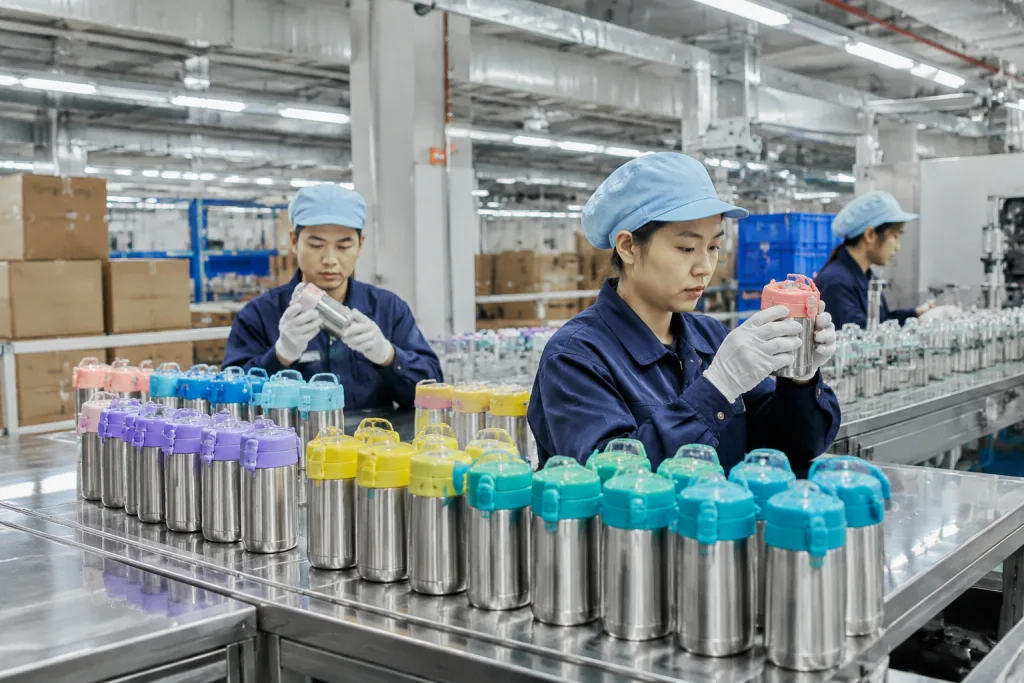
At our Zhejiang production network, a normal toddler bottle line can handle about 180,000-240,000 units/month depending on lid complexity. Capacity is rarely the bottleneck. The bottleneck is whether your BOM, Pantone color chips, logo artwork, and compliance requirements are frozen early enough to protect the ship date. Last month, one PO had “matte blue” in the item line and Pantone 2925 C in the attachment; the buyer flagged it after pre-production sample approval, and that mismatch cost 6 days on the line.
MOQ Tiers Change The Math
MOQ is not a punishment. It is the point where SUS sheet buying, Pantone powder setup, printing jigs, and line balance stop fighting the quote. For a toddler bottle custom made project, “what is your lowest MOQ?” is the wrong question to ask. We run quotes by tier, because a 0.3 mm color tolerance on the body and a 12-cavity lid fixture both change the math.
- 500-999 pcs: possible for stock shapes with laser engraving, one-color silkscreen, or simple pad print. Expect a higher unit price, often 15-30% above the 3,000 pc level, and expect the buyer to push back when the sample fee looks bigger than the margin.
- 1,000-2,999 pcs: workable for one body color and one lid color if the factory has existing molds. This is the usual entry point for a brand trial or distributor drinkware test order, and QC can still pull 80 pcs under AQL 2.5 without stopping the line all afternoon.
- 3,000-5,000 pcs: the better tier for custom Pantone color, retail packaging, and decoration on two positions such as logo plus name scale. At 3,000 pcs, a canteen manufacturer has enough volume to set powder coating, confirm carton drop test at 12 kg, and quote like the order is real.
- 10,000 pcs and above: the tier where component cost, carton design, and production slot planning can be cleaned up properly. We ship inner boxes in fixed counts here, so even a 2 mm carton change matters when the container loading sheet is being checked.
If you are a canteen distributor serving several retailers, do not split the same bottle into six tiny colorways too early. Six colors at 500 pcs each often cost more and run slower than three colors at 1,000 pcs each. We have seen this go sideways: the buyer wanted six Pantones, QC pulled the sample, and two colors failed against the color card under the D65 light box. Color changes mean cleaning guns, powder coating setup, print adjustment, and separate QC records.
MOQ also depends on who controls the mold. A canteen manufacturer with an existing toddler bottle mold can accept a lower MOQ. A new cap mold, new straw geometry, or custom growler-style handle scaled down for children will need tooling and a stronger order commitment. Customizable drinkware is flexible, but every “small change” lands somewhere on the cost sheet, often as a 25-day mold lead time instead of a 12-day stock-body sample run.
Tooling And Sampling Costs
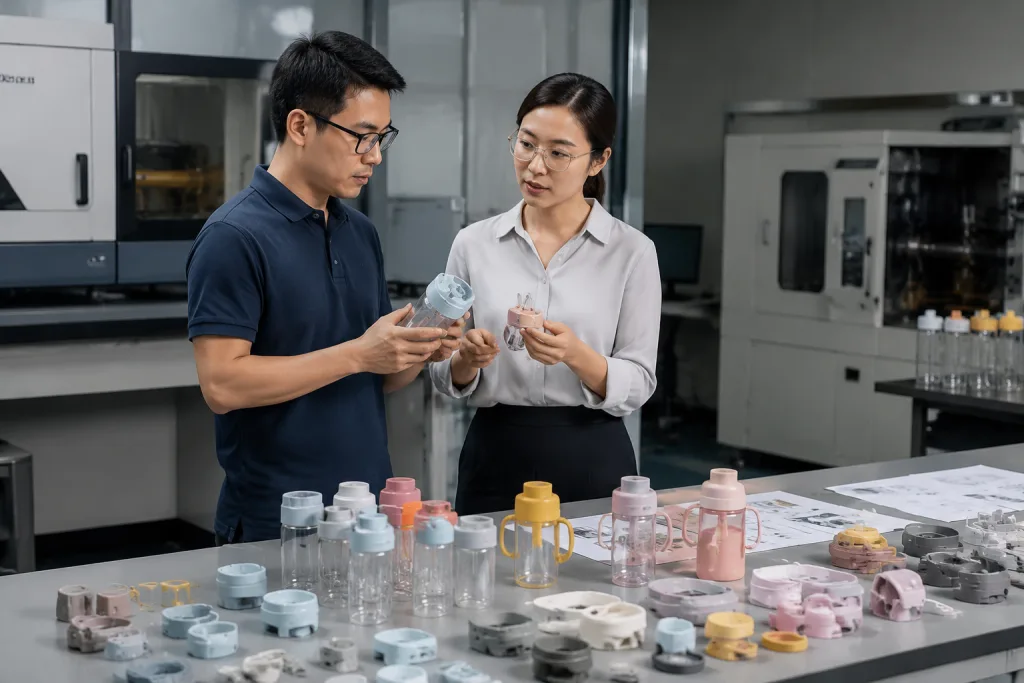
If you use an existing bottle shape, sampling is clean work. A pre-production sample with your logo and near-final packaging usually costs USD 80-250 including setup, not including courier. We run laser engraving on a 20W fiber machine, and the sample room needs 7-12 days for simple laser engraving or silkscreen. Custom lid color or powder coating takes 12-18 days because QC checks color against the Pantone chip after curing, not while the coating is still warm.
New tooling changes the quote fast. A simple silicone bumper mold may cost USD 600-1,500. A PP flip lid mold can cost USD 2,000-5,000 depending on the number of cavities; last month a buyer pushed for 4 cavities on a 3,000 pcs trial order, and the math did not work. A full custom canteen body mold, especially for a shaped stainless shell, can move from USD 3,000 to above USD 8,000. Tooling lead time is 25-45 days before stable T1 samples are ready, assuming the CNC shop does not find a wall-thickness issue under 0.6 mm.
For toddler products, rushing sample approval is the wrong question to ask. QC pulled the sample on one lid because the opening force measured 38N on the push gauge, too stiff for a 3-year-old. Check lid opening force, straw bite feel, leak performance, odor after hot-water soak, logo adhesion after 3M tape pull, and any removable part that fits into a choking gauge. A customized canteen for adults can tolerate a heavier lid or tighter thread. A toddler bottle cannot. Parents will notice if the child cannot open the cap, and retailers will notice return rates.
A practical sample path is: 3D drawing in 2-4 days, prototype or first sample in 10-18 days for existing parts, revised sample in another 7-12 days, then gold sample approval. If tooling is new, add 4-7 weeks. We ship the approved gold sample with a signed label and revision code; one PO typo from “soft straw” to “short straw” has caused a full remake before. We have seen this go sideways, so a serious canteen supplier will not promise mass production before the drinking interface is proven.
Decoration, Color, And Packaging
Decoration is where a quote starts to slip. Laser engraving is steady and usually lands at USD 0.10-0.25 per unit, depending on logo size. One-color silkscreen sits around USD 0.12-0.30. Full-wrap heat transfer or water transfer can reach USD 0.45-1.20, and that line needs scratch checks on the abrasion wheel, not a quick thumb test. If you want a toddler bottle custom made with animal artwork around the body, build extra lead time and a few rejects into the math.
Powder coating usually adds USD 0.35-0.80 over plain stainless. Soft-touch coating can cost more, and we check it against REACH plus food-contact migration limits where the market needs it. Pantone match is never perfect across stainless, PP, silicone, and printed paper; the buyer flagged a “same color” issue on a PO last month, and the sample looked three shades off under daylight. For EU and North American retail, get signed chips and keep them in the file.
Packaging carries its own bill. A white box may be USD 0.12-0.25. A printed color box may be USD 0.25-0.55. A gift box with insert, instruction sheet, barcode label, and master carton mark can add USD 0.45-0.90. On one line we shipped, QC pulled the sample and found the carton failed the 1.2 m drop test because the insert was 2 mm too loose. Amazon FBA prep with FNSKU labeling, drop testing, and carton weight limits can add USD 0.08-0.25 per unit before freight.
If you are comparing canteen vendors, ask whether packaging is in the FOB price or parked outside it. Some canteen suppliers quote the bottle only, then tack on carton marks, polybags, warning labels, and spare straw packs after the PO is signed. We’ve seen that go sideways more than once. The first quote looks clean; the final invoice does not.
Testing Is Not Optional
Toddler bottles are not the same job as a logo tumbler for a trade show. Depending on your market, you may need EN 14350 for drinking equipment, LFGB for Germany, FDA food-contact compliance for the United States, CPSIA for children’s products, ASTM checks, REACH SVHC screening, and California Proposition 65 review. The test plan changes with PP, Tritan, silicone, stainless steel, spray coating, pad printing, and the destination country. On our line, QC pulled one straw-lid sample with a 0.35 mm burr near the drinking slot; that tiny edge is enough to stop shipment for a toddler item.
Budget USD 250-900 for a basic material and migration test set, and expect more if the bottle uses 3 materials, 4 print colors, or full children’s product certification. Lab timing is usually 7-15 working days after samples arrive; our Hangzhou team normally adds 2 working days for sample cutting, labeling, and courier handoff to SGS or Intertek. If the lab fails your coating, silicone, ink, or plasticizer result, the clock starts again. This is why a responsible canteen manufacturer should ask your target market before quoting, not after the PO lands with a typo in the ship-to country.
Quality inspection belongs in the purchase order. No exceptions. For toddler bottles, we recommend AQL Level II with critical defects at 0, major at 1.5, and minor at 4.0 for most retail orders. Critical checks should include sharp edges, loose small parts, leakage, odor, wrong material, and broken packaging. We run a 1.2 m drop test and lid torque check with a digital torque meter because paper certificates do not catch a cap that backs off after 30 turns.
China factories can produce safe customized drinkware, but the buyer and factory must define the standard before tooling, printing, and packing. “Food grade” is the wrong question to ask. Ask for material declarations, previous test reports, and the lab name, then match those documents to the actual resin batch and ink code on the production order. In Zhejiang, we work with third-party labs before shipment when the order goes to a retailer, childcare channel, or regulated distributor canteen program; we have seen this go sideways when a buyer approved “similar silicone” to save USD 0.03 per lid.
A Realistic Production Calendar
For an existing bottle shape with a custom logo and standard factory colors, we usually quote 30-45 days after deposit and signed sample approval. That assumes the AI file is clean, the retail box warning text has no typo, and the payment terms are already stamped on the PI. If the buyer asks for a custom Pantone body, color box, and FDA or LFGB testing, we plan 45-65 days. New tooling is a different job: 70-100 days from confirmed 3D drawing to finished goods, and QC will not release the mold trial if the thread gauge is off by 0.2 mm.
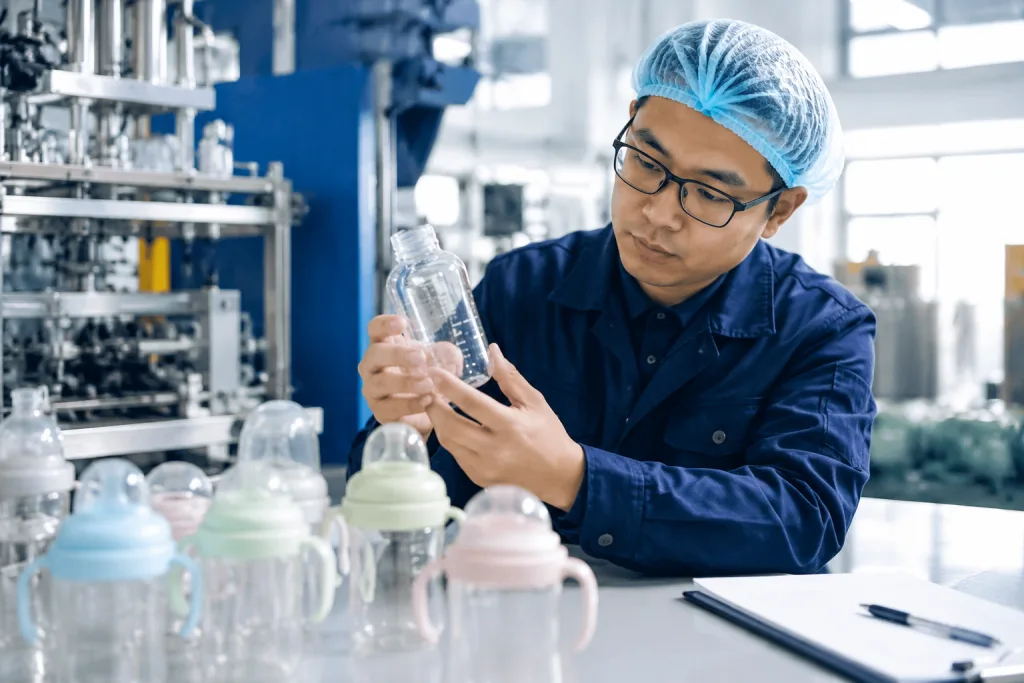
A practical calendar looks like this: quote and specification lock, 2-5 days; artwork and packaging proof, 2-4 days; sample production, 7-18 days; sample review and revision, 5-12 days; bulk material purchasing, 5-10 days; mass production, 20-35 days; inspection and testing, 3-15 days depending on scope; export booking and loading, 3-7 days. We run toddler bottle samples through leak testing with 45°C water, then shake them on the bench before the buyer ever sees a courier photo. Small delays stack fast. One missing “BPA free” line on a PO can cost 2 days while sales, QC, and the packaging supplier recheck the file.
Sea freight adds another layer. Ningbo to Los Angeles is roughly 16-25 days port to port in normal conditions. Ningbo to Rotterdam is usually 30-40 days. DDP truck or rail options vary by season and customs lane. Air freight works for urgent launches, but a stainless toddler bottle with handle lid and retail box eats carton space; our last 12 oz set packed 24 pcs per master carton at about 9.8 kg. The math does not work unless you are moving samples or a small launch quantity.
Do not approve a gold sample and then change the straw color, carton size, or warning label 2 weeks later. We have seen this go sideways: QC pulled the sample, the buyer flagged a straw shade mismatch, and the coating line had already booked 18,000 pcs for another canteen customized order. That creates rework and can push your order behind other projects on the coating or assembly line. A good canteen vendor will warn you; a desperate one will say yes and miss the vessel.
How To Compare Factory Quotes
Compare a canteen supplier, canteen factory, or canteen manufacturer on the same spec sheet, not on a one-line price. We use a 14-column quote grid for toddler bottles: capacity in ml, 304 stainless or plastic grade, inner and outer wall thickness in mm, lid material, silicone grade, logo method, packaging, MOQ, sample cost, tooling ownership, production lead time, payment terms, FOB port, and AQL 2.5 inspection standard. Small misses cost money. Last month QC pulled a 350 ml sample where the drawing said 0.5 mm wall thickness, but the caliper read 0.42 mm at the shoulder.
Ask whether the supplier is a real factory, trading office, or mixed sourcing team. A professional canteen vendor can work with partner workshops, but the answer must be clear before you pay a mold fee. For toddler bottle custom made orders, lid mold control and assembly QC beat a glossy catalog every time. We run 100% leak testing on the line with an air pressure jig at 0.06 MPa for kids’ lids, because one loose silicone ring can kill the repeat order. If the lid leaks, the distributor growler or adult custom growler line in the same catalog will not save the shipment.
Check export experience with documents, not sales talk. Canteen distributors and brand owners in Europe and North America usually ask for carton labels with item numbers, EAN or UPC barcodes, FNSKU labels, pallet plans, and insurance documents. A factory used only to domestic China orders often misses those steps; we have seen a PO where “assorted blue” was typed as “asserted blue,” and the buyer flagged it during artwork approval. BottleForge Industrial ships from Zhejiang through Ningbo and Shanghai, and we handle FOB, EXW, and DDP discussions with B2B buyers who care about carton size, 15 kg gross weight limits, and warehouse receiving rules.
Price matters, but the cheapest quote is often hiding the problem. This is the wrong question to ask: “Who is lowest?” Ask what is included. A customized growler, customizable canteen, or toddler bottle follows the same rule in our shop: a quote works only when the risk is visible. If a canteen suppliers list gives you 5 prices without specifications, you do not have 5 quotes. You have 5 guesses, and we have seen that go sideways when the buyer expected color box packing but the supplier priced bulk white cartons.
Send Your Toddler Bottle Brief For A Real Quote
Share target market, volume, logo method, packaging, and test needs. We will price the cost drivers instead of guessing.
Frequently asked questions
What is the normal MOQ for a toddler bottle custom made order?
For factory-direct production in China, the practical MOQ is usually 1,000-3,000 pcs per color when using an existing bottle and lid mold. Below 1,000 pcs, you normally need to use stock colors and simple logo methods such as laser engraving or one-color silkscreen. If you need Pantone powder coating, custom silicone parts, printed retail boxes, or a new lid color, 3,000 pcs is a more realistic starting point. At 10,000 pcs and above, the canteen manufacturer can usually improve component purchasing, carton planning, and line efficiency.
How much does a custom toddler bottle cost per unit?
A basic 300-350 ml stainless toddler bottle with a simple PP lid may quote around USD 2.20-3.40 FOB at 3,000 pcs. A double-wall vacuum bottle with straw lid, silicone bumper, powder coating, and printed box often lands around USD 4.20-6.80. Full-wrap artwork, spare straws, gift packaging, or FBA labeling can add USD 0.30-1.50 per unit. The final number depends heavily on steel grade, wall thickness, lid complexity, testing scope, and packaging.
Can we make a completely new toddler bottle shape?
Yes, but budget both money and time. A new silicone bumper mold may cost USD 600-1,500, while a new flip lid mold can cost USD 2,000-5,000. A custom stainless body shape can reach USD 3,000-8,000 or more depending on geometry. Tooling usually takes 25-45 days before first samples. After T1 samples, you may still need 1-2 revisions for sealing, cap force, straw fit, or visual finish. For a first order, many buyers start with an existing canteen customized mold and modify color, logo, and packaging.
Which compliance tests should we plan for Europe and North America?
For Europe, many buyers request LFGB or EU food-contact testing, REACH SVHC screening, and EN 14350 where the product is clearly for young children. For the United States, FDA food-contact material review, CPSIA requirements, ASTM checks, and California Proposition 65 assessment may apply. A basic test set may cost USD 250-900 and take 7-15 working days after samples reach the lab. If your bottle has multiple plastics, silicone, coating, and printed ink, test cost and timing can increase.
How fast can a canteen supplier ship a custom order?
For an existing bottle shape with simple logo and stock colors, 30-45 days after sample approval is realistic. With custom Pantone color, retail packaging, and third-party testing, plan 45-65 days. With new tooling, plan 70-100 days from design approval to finished goods. Add ocean freight separately: Ningbo to Los Angeles is often about 16-25 days port to port, while Ningbo to Rotterdam is commonly 30-40 days. Rushed approvals usually create mistakes, especially on toddler lid parts and warning labels.