Key Takeaways
- A typical stainless thermos MOQ is 3,000 pieces, with 25–35 day lead time after sample approval.
- FOB pricing for a 500 ml custom thermos usually starts around USD 2.10–3.60 depending on finish and lid.
- Ask for 18/8 stainless, 0.4–0.5 mm inner wall thickness, and AQL 2.5/4.0 inspection terms.
- A thermos flask supplier should prove lid seal, vacuum retention, and carton drop performance before bulk release.
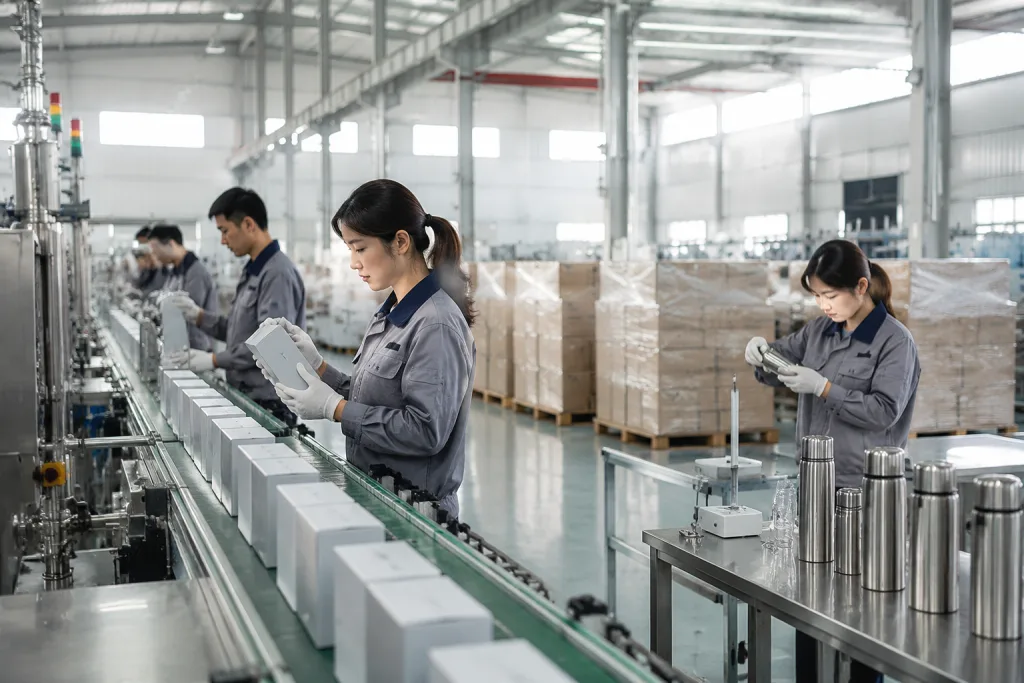
You are not buying a “nice bottle.” You are buying a program that has to survive purchasing, branding, freight, and retail complaints. If you are an outdoor retailer or a promotional brand, the real question is whether your thermos flask supplier can turn a spec sheet into a repeatable stainless thermos order without surprise defects, missed dates, or weak packaging.
That is where most buyers get burned. They approve a sample, then the bulk thermos shipment lands with paint variation, lids that do not seal, or cartons that fail a 1.2 m drop test. A serious thermos flask supplier in Zhejiang or elsewhere in China should quote cleanly, show wall thickness and steel grade, and spell out QC before you issue a PO. At BottleForge in Hangzhou, we run 500,000 units a month, with MOQ starting at 3,000 pieces and standard lead time at 25–35 days after sample approval. That is the number set you should use.
Start with the sell-through plan
I’ll rewrite the section in place, keeping the HTML exactly as-is and tightening the sales-engineer tone.Before you talk decoration, lock the sell-through plan. A promo program usually wants a lower unit cost, a one-color logo, and quick replenishment. An outdoor retailer asks for a tougher powder coat, a lid that survives drops, and packaging that still looks clean on a shelf. Same stainless thermos, different job. We see this split on the line all the time.
Take a real buyer case: 5,000 pieces of a 750 ml custom thermos for a winter promotion. At that point, you are buying margin, lead time, and a lot of risk control. A thermos flask supplier should ask about the channel first: Amazon, retail, distributor thermos, or direct promo. If that talk does not happen, the factory thermos spec starts off wrong. The buyer flags it later, and then the math does not work.
Build the order around these items:
- Target price: for example, USD 2.80 FOB Ningbo or Shanghai for a basic vacuum bottle with one-color logo
- Use case: hiking, office gifting, sports events, or wholesale distributor thermos resale
- Pack-out: color box, mailer, or bulk tray for thermos bulk shipment
- Compliance: REACH, food-contact declaration, and carton test requirements
If your supplier cannot discuss channel fit in hard numbers, you are dealing with a thermos vendor, not a manufacturing partner. QC pulled the sample, checked the 750 ml fill line, and the wrong lid still showed up. We’ve seen that one go sideways.
Lock the structure before decoration
I’ll keep the HTML intact and rewrite the prose to sound like a factory-side sales engineer, with tighter specifics and a more natural export tone.Once the sales plan is fixed, lock the structure first. A serious thermos manufacturer should quote the body build, not just the capacity. For stainless thermos products, we ask buyers to name 18/8 stainless steel for the inner and outer wall, 0.4–0.5 mm wall thickness, and a vacuum gap that supports 6–12 hours of heat retention depending on size and lid type. That is the language that stops arguments later.
For a promotional thermos, a straight-wall body usually costs less than a curved silhouette. For a retail-ready custom thermos, matte powder coat, laser engraving, and a hinged cup lid are common. Each one changes tooling, cycle time, and scrap risk. We had a buyer flag a PO once because the lid was drawn as a universal part, then the sample showed a custom tool; that changed the MOQ and the reorder math. The math does not work if you skip that step.
Use a pre-production checklist like this:
- Steel grade: 304 / 18-8 or 316 if corrosion resistance is a real requirement
- Capacity tolerance: ±3% is normal on a sensible production line
- Weight target: a 500 ml bottle often lands around 260–330 g depending on wall build
- Finish: spray, powder coat, UV print, or brushed metal
When buyers compare thermos customizable options, they often stare at logo size and ignore the lid seal. That is the wrong question. The lid fails first. QC pulled the sample on our bench, and the leak test pointed straight to the seal ring, not the print area.
Sample, then challenge the sample
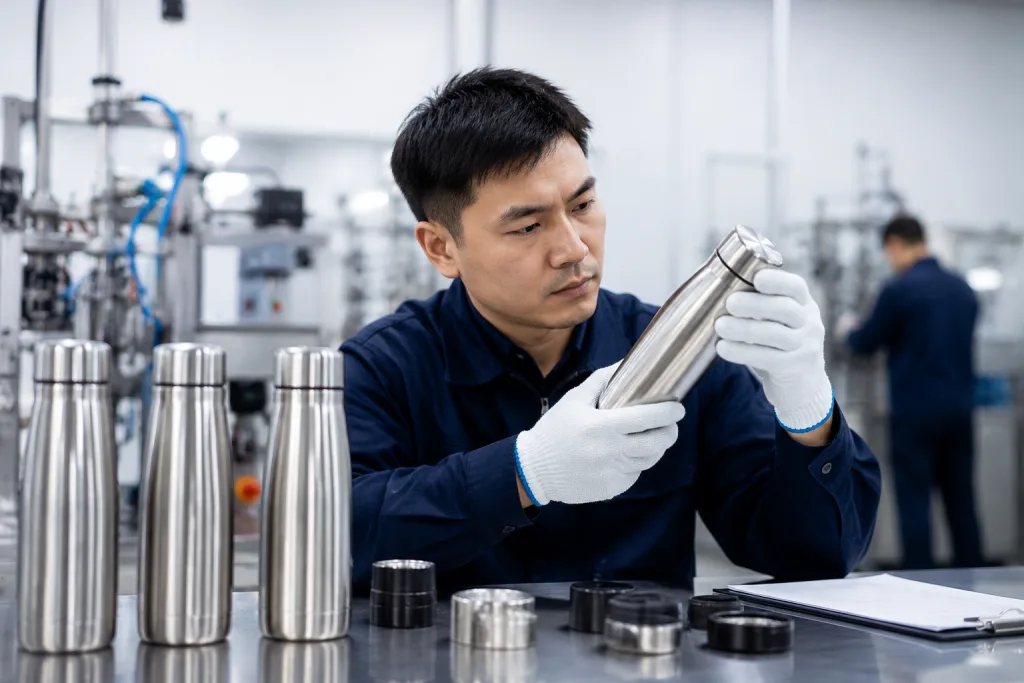
I’ll rewrite the section in place, keep the HTML structure intact, and make it read like a factory-side sales engineer wrote it. Next I’m patching the prose for tighter, more specific buyer language.Do not sign off on a sample because it photographs well. Hold it, fill it, turn it upside down, and leave it overnight on the QC bench. A serious thermos flask supplier will send a pre-production sample, then a decorated golden sample if the order has more than one finish. Test both. If the cap leaks after one hot-fill cycle, that order is already on thin ice, no matter how clean the logo looks.
Here is the buyer check we run. You get two custom thermos samples: one laser-engraved, one silk-screened. Measure the logo position with a caliper, inspect the edge sharpness, and check for paint blistering after a 70–80°C rinse. On function, record the start water temperature, then check again at 6 hours and 12 hours. A decent 500 ml vacuum bottle should still feel warm at 6 hours if the closure system is doing its job. We’ve seen buyers skip the 12-hour read, then complain later; that is the wrong question to ask.
Ask the supplier to document:
- Vacuum test results and the leak-check method
- Drop-test height, usually 80 cm to 100 cm for carton and product samples
- Insulation retention data with ambient temperature stated
- Packaging photos before bulk production starts
Do not let “approved sample” mean “sample looked nice.” It should mean the sample passed function, appearance, and pack-out under your use case.
If you are buying thermos custom goods for retail, the sample stage is where you save money. A lid change or print-method change after tooling costs more than fixing it now, and the math does not work. We run this on the line all the time: one typo on a PO, one wrong lid code, and QC pulled the sample before it ever reached packing.
Know the real bulk price drivers
I’ll rewrite this section in place, keeping the HTML exactly as-is and tightening the pricing language so it reads like a factory-side sales engineer.Thermos bulk pricing stops being mysterious once you strip out the sales talk. The number moves with steel thickness, lid structure, coating spec, print method, inner liner polish, and carton build. On our line, a plain promo thermos with one-color pad print can land around USD 2.10–2.60 FOB, while a powder-coated retail bottle with laser logo and an upgraded cup lid usually sits closer to USD 3.20–4.20. That is the range a real thermos supplier in Zhejiang will quote when the BOM is clean and the PO has no surprises.
Do not chase unit price alone. A cheap quote can hide a weaker outer carton, thinner steel, or a lid that comes back in claims later. We’ve seen that go sideways on a 5,000-piece order: the buyer flagged the box crush test, and the saving disappeared fast. If you buy as a distributor thermos program, price the landed cost, not just the factory number. An individual color box can add USD 0.18–0.45 per set, and that is fine if the bottle is going straight to retail shelves. Same story for a thermos promotional order, where speed and pack weight matter more than a gift case nobody uses.
Ask every thermos manufacturer for these quote lines:
- FOB unit price at 3,000 / 5,000 / 10,000 pieces
- Mold cost, if any, for cap or body changes
- Print setup fee and per-color surcharge
- Carton spec, including burst strength and pallet pattern
If the quotation stays vague, the supplier is not ready for serious purchasing. A proper manufacturer thermos quote should be plain, itemized, and easy to check against the sample; QC pulled the sample, measured the lid at 58.5 mm, and the problem showed up before we shipped. That is the right way to buy.
Build QC into the PO
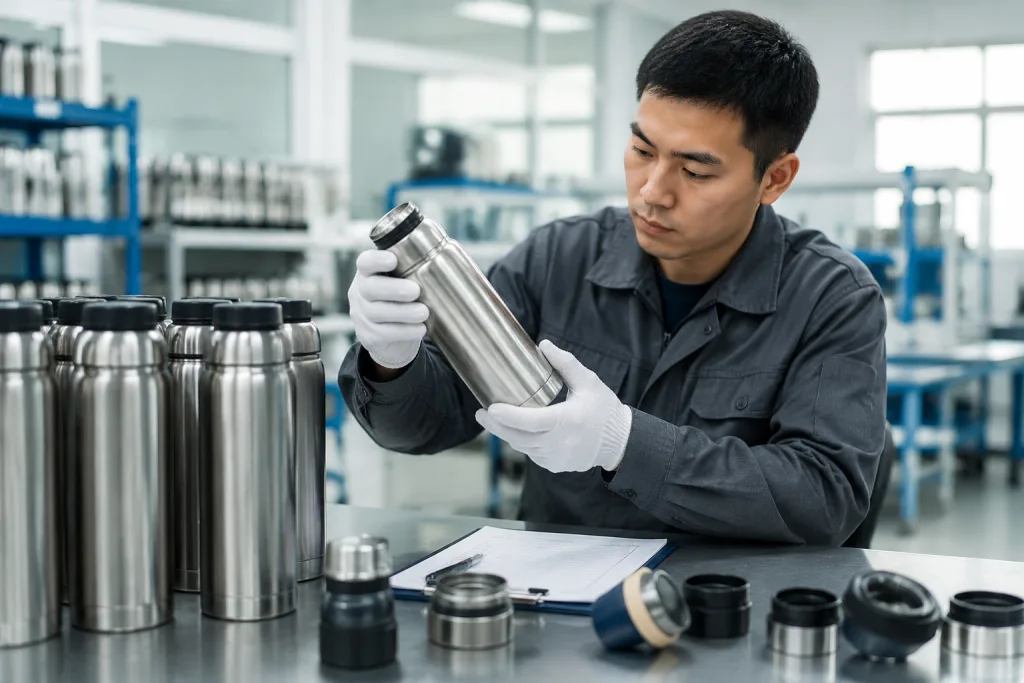
I’ll rewrite this section in-place, keep the HTML structure unchanged, and sharpen the wording so it reads like a factory-side sales engineer.Quality control is not a line item to “check later.” Put it in the purchase order. Spell out AQL levels, test methods, and acceptance criteria before the line starts. For most stainless thermos programs, AQL 2.5 for major defects and 4.0 for minor defects works as a starting point, though a retail chain may ask for tighter numbers.
On a 5,000-piece order, we inspect incoming steel, welding, vacuum sealing, logo output, and carton pack-out. The must-pass checks are plain: no leak, no dent, no coating peel, no odor, no loose cap fit. QC pulled the sample at the 3-hour mark on one run because a buyer flagged a cap that sat 1.2 mm high; that is the kind of issue you want caught before loading. If you buy from a thermos factory in China, ask for line photos and the final random inspection report before shipment. A solid thermos flask supplier in Hangzhou or wider Zhejiang should already run that way.
Your QC checklist should include:
- Vacuum retention and boiling-water holding test
- Lid torque and thread engagement check
- Logo adhesion or engraving depth verification
- Carton drop test and transit compression check
For distributors thermos programs, consistency usually matters more than chasing one extra hour of heat retention. One bad carton in 50 creates a receiving headache fast, especially when FNSKU or retail labeling is on the box. We’ve seen a PO typo on carton labels turn into a full relabel job at the warehouse, and the math doesn’t work if QC is left vague.
Pack, ship, and keep reorders easy
I’ll keep the HTML structure intact and rewrite the prose to sound like a real sales engineer, with tighter shipping detail and fewer AI-ish phrases.The last mile is where orders either stay clean or get messy. A thermos flask supplier should send you carton size, net weight, gross weight, and loading quantity before you confirm booking. On one 12,000-piece run, QC pulled the sample carton at 480 × 360 × 250 mm and the buyer flagged a 1.8 kg gross weight mismatch; that sort of slip slows the whole line. If the goods go to Amazon or another fulfillment channel, ask for FNSKU labels, polybags, and suffocation warnings up front. For wholesale, the inner pack has to hold up on stacked pallets and through rough transit.
FOB is usually the cleaner term for buyers who already run their own freight. You keep control of the forwarder, and the factory stays on production and packing. For a first-time thermos distributor order or a promo program, DDP can work, but the cost split has to be clear. We’ve seen this go sideways when a PO typo puts the consignee in the wrong city; the math doesn’t work if carton marks and shipping data are off by even one line.
Keep the reorder file simple:
- Approved sample photos
- Final artwork in vector format
- Packed carton dimensions
- QC standard and defect photo reference
The best thermos suppliers do more than ship one PO. They make PO2 and PO3 faster because the spec is locked, the carton data is clean, and the buyer stops asking the same questions. That is how a buyer in Europe or North America turns a seasonal run into a steady supplier relationship with a factory in Zhejiang or elsewhere in China.
Get a real thermos quote from Zhejiang
Send your capacity, artwork, and target market. We’ll return a clean spec, FOB price, MOQ, and QC plan with no guesswork.
Frequently asked questions
What MOQ should I expect from a thermos flask supplier?
For a standard stainless thermos, a practical MOQ is 3,000 pieces per design or color. If you need custom tooling, the first run can move to 5,000 pieces because the factory has to amortize mold and setup time. For very simple promotional thermos projects, some suppliers can quote 1,000–2,000 pieces, but the unit cost usually rises by 12%–25%. A serious thermos flask supplier should state MOQ by SKU, not hide it in a vague “flexible” answer. In Zhejiang and other China factories, MOQ also depends on lid type, coating, and whether you need retail boxes.
How long does a bulk thermos order take?
Once your sample is approved, standard production for a bulk thermos order usually takes 25–35 days. If the order includes a new mold, special print, or unusual packaging, expect 40–50 days. Add 3–7 days for freight booking and export documents. If you are buying thermos custom products for a seasonal retail window, build at least 2 extra weeks of buffer. A strong thermos manufacturer should tell you where the schedule risk sits: steel arrival, coating line, inspection queue, or carton supply. That is the level of clarity you want before you send the deposit.
What price range is realistic for custom thermos FOB?
For a 500 ml custom thermos, basic FOB pricing often starts around USD 2.10–2.60 for a simple promotional build with one-color logo. A better retail-ready bottle with powder coating, upgraded lid, or laser marking usually lands around USD 3.20–4.20 FOB. Larger sizes, like 750 ml or 1 L, can move higher depending on steel thickness and cap design. If a quote is far below this range, ask what was removed: steel gauge, vacuum performance, carton quality, or inspection time. Cheap quotes are usually cheap for a reason.
What QC documents should I ask for before shipment?
Ask for the pre-production sample approval record, in-line inspection photos, final random inspection report, carton drop test result, and packing list. For stainless thermos orders, also request leak test and heat-retention data with the test conditions written clearly. AQL 2.5/4.0 is common for consumer drinkware, but the important part is whether the factory actually follows it. If the supplier says they passed inspection, you still want photos of the actual batch, especially if the order is a promotional thermos run with multiple print locations or a distributor thermos shipment headed to a warehouse.
How do I choose between silk screen and laser engraving?
Use silk screen when you want color, larger artwork, and lower decoration cost on a promotional thermos order. Use laser engraving when you want a permanent mark, a cleaner premium look, and better abrasion resistance. On most stainless thermos bodies, silk screen is cheaper by about USD 0.05–0.18 per unit depending on colors and setup, while laser can cost more but avoids ink wear. If the bottle will be washed often or sold as a premium custom thermos, laser is usually the safer choice. For short-run branding, the better method depends on your sell-through channel, not just design taste.