Key Takeaways
- A 500 ml stainless promotional thermos often lands at USD 2.80 to 6.20 FOB China depending on lid, coating, and print method.
- For a simple custom logo order, MOQ is often 500 pcs; for a fully customized thermos body or lid, expect 1,000 to 3,000 pcs.
- Sample lead time is typically 5 to 7 days; mass production is usually 25 to 35 days, or 40 days if packaging is highly customized.
- Wall thickness, vacuum quality, and decoration method can change defect risk more than the logo itself, especially for bulk thermos programs.
If you are buying thermos flask promotional stock for outdoor retail or a branded giveaway program, the expensive mistake is usually not the unit price. It is picking the wrong bottle spec, then paying again for decoration, packaging, and freight changes later. A plain 500 ml stainless thermos may look cheap on the first quote, but a custom lid, 2-colour logo, matte powder coat, and individual box can push landed cost up 15% to 40% fast. We have seen buyers approve the sample, then the carton size on the PO is wrong by 8 mm and the freight bill jumps.
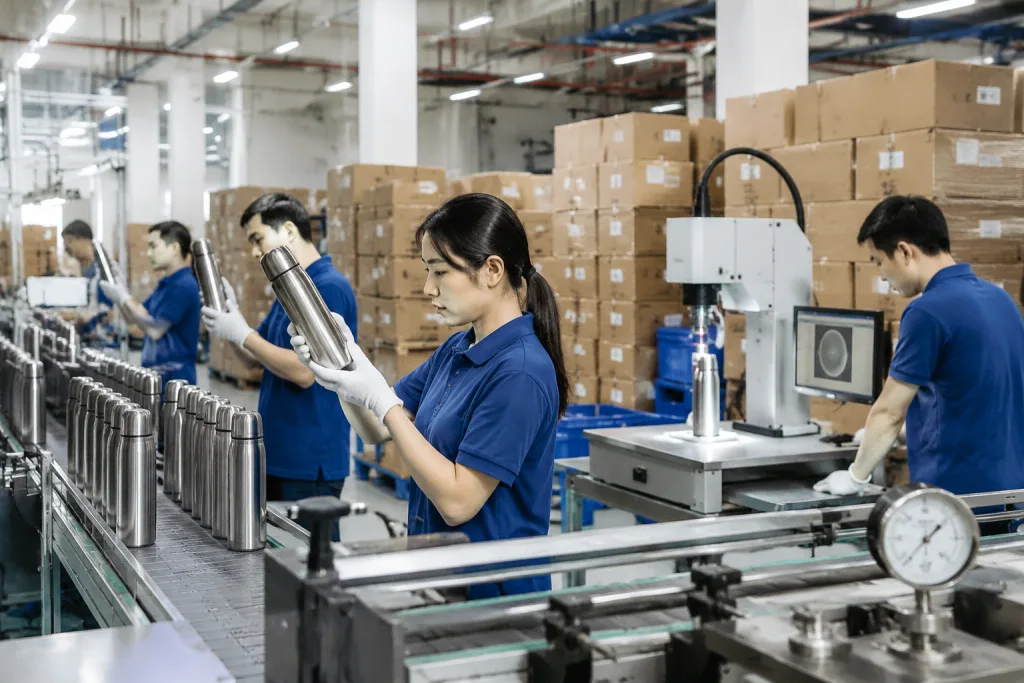
At BottleForge in Zhejiang, we see this every week from Europe and North America. Buyers want a custom thermos that looks premium, ships on time, and clears compliance without drama. MOQ can start at 500 units for a simple SKU, sample lead time is often 5 to 7 days, and mass production for a standard thermos flask promotional order usually runs 25 to 35 days after sample approval. QC pulled the sample last Friday with a 304 stainless callout and a lid torque check, so we know where the line can move. If you are comparing a thermos manufacturer, a thermos supplier, or a thermos vendor, look at the cost structure first; the sales pitch is the wrong question.
What really sets the price
I’ll rewrite the prose in place, keep the HTML structure intact, and make the pricing language sound like a factory sales engineer wrote it.For thermos flask promotional sourcing, we break unit price into five buckets: stainless grade, bottle build, lid, decoration, and packaging. A straight 304 stainless steel flask with a basic screw lid sits at the low end. Add a push-button lid, silicone seal, laser logo, and a one-piece gift box, and the quote climbs fast. On the floor, the difference between 201 and 304 stainless can look small on paper, but the buyer sees it in rust claims and returns.
For a 350 ml to 500 ml promotional thermos with 304 inner and outer walls, matte powder coating, and a one-color silk screen logo, we usually see USD 2.80 to 4.20 FOB Zhejiang at 3,000 pcs. Move to double-lid tooling, copper coating for heat retention, or etched branding, and USD 4.50 to 6.20 is normal. A factory thermos quote that looks cheap often leaves out carton inserts, testing, or the second logo color. We’ve seen that go sideways. For outdoor retailers, price the landed cost, not the factory number. A thermos at USD 3.60 FOB that adds USD 0.85 in packaging and USD 1.40 in freight is not a cheap bulk deal anymore.
Cost drivers you should ask about
- 304 versus 316 stainless steel for the inner liner
- Single wall, double wall, or vacuum thickness around 0.35 mm to 0.5 mm
- Silkscreen, laser engraving, heat transfer, or UV print
- Standard lid versus leakproof locking lid
- Plain bulk pack versus color box, insert, and barcode label
MOQ tiers that make sense
I’ll rewrite the section in place, keeping the HTML structure intact and tightening the sales-engineer tone.The right MOQ comes down to the amount of customization and the risk you want to carry. A thermos custom order with one logo on a stock body runs clean at 500 pcs; we’ve shipped that with the lid and coating already in house. Once the buyer asks for a new lid color, embossing, or a fully customizable thermos shape, 1,000 pcs is the floor that makes sense. If you want multiple colors, retail-ready cartons, and separate regional labels, 2,000 to 3,000 pcs is the normal factory number.
We run a Zhejiang factory with about 180,000 units per month across stainless drinkware lines, but capacity does not make a 300 pcs order cheap. Tooling, coating-line setup, and print registration all eat labor time. QC pulled one sample at 1.5 mm off-center on a recent run, and the buyer flagged it before shipment. That is why a thermos distributor splitting 300 pcs across five variants usually pays more per piece than one buyer placing 2,500 pcs in one spec. For distributors thermos programs, 1,000 pcs per SKU is the sweet spot. It keeps decoration stable and cuts dead stock. If you are testing a new market, start with one body, one lid, one logo color, and one carton. That is the smarter thermos promotional launch. Three shapes on day one is the wrong question to ask.
| Order type | Typical MOQ | Best use case |
| Stock body + logo | 500 pcs | Fast promotional campaign |
| Color change + logo | 1,000 pcs | Retail promo or brand gift |
| Custom lid or packaging | 2,000 pcs | Private label launch |
| New mold or shape | 3,000 pcs+ | Long-run branded program |
Lead time from sample to ship
I’ll keep the HTML exactly as-is and rewrite only the prose for a more grounded factory-sales voice. I’m also watching the timing numbers and adding a couple of concrete shop-floor details without changing the structure.Lead time is where a lot of buyers get the sequence wrong. If you need a customized thermos on hand before a trade show or holiday push, split the clock into sample, production, inspection, and booking. A standard sample for a stainless promotional flask usually takes 5 to 7 days when we only print a logo on an existing mold. If you want a new color finish or a custom carton, plan 7 to 10 days. A new tooling job is a different animal, and the first acceptable sample usually lands in 20 to 35 days. QC pulled the sample on the 3D logo alignment, and the buyer flagged a 1.5 mm shift before we approved it.
After sample sign-off, a normal thermos factory order runs 25 to 35 days on the line. Add 3 to 5 days for in-house QC and carton packing. If you ask for third-party inspection, such as AQL 2.5 sampling with an independent inspector, add another 1 to 3 days. Sea freight to Europe or North America sits on a separate clock. From Zhejiang to a US West Coast port, transit is often 18 to 25 days by ocean; to Northern Europe, budget 28 to 38 days depending on routing. That puts a door-to-door promotional order at 55 to 75 days. The math does not work if your event is fixed and the artwork is still changing after approval. A thermos manufacturer can run fast, but we cannot recover lost days after the PO typo or a last-minute color swap.
Rule of thumb: if your event is in 60 days, place the order now and freeze artwork today.
Decoration choices change margins
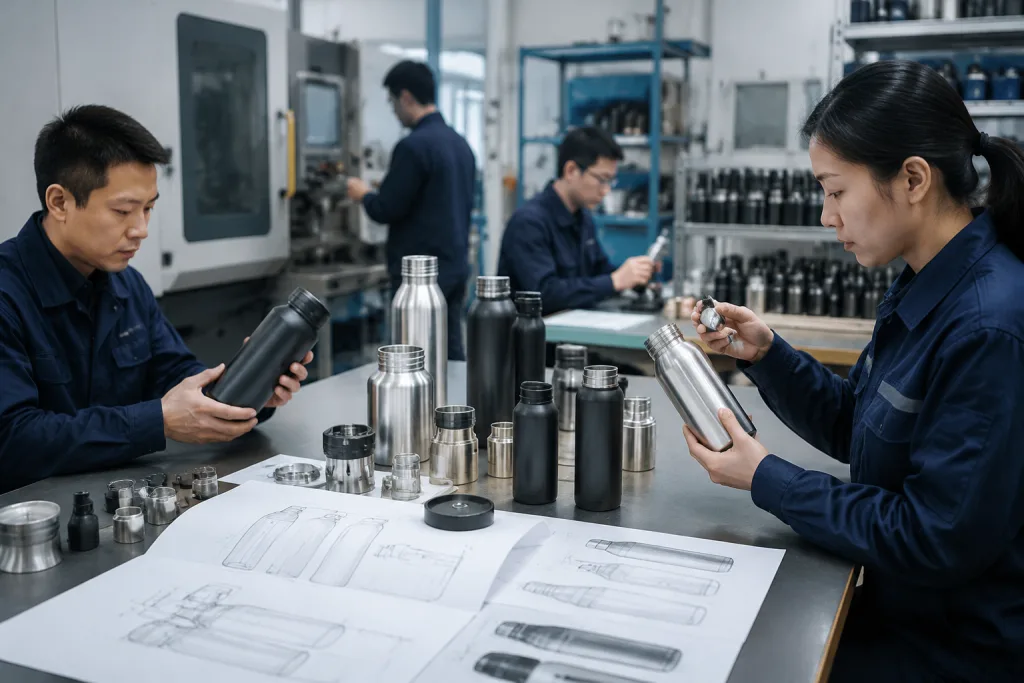
I’ll keep the tags intact and rewrite the prose to sound like a factory-side sales engineer, with sharper numbers and a few floor details.Decoration is where a lot of margin disappears in thermos flask promotional sourcing. A one-color silk screen logo is still the cheapest route, usually adding USD 0.08 to 0.18 per unit on larger orders. Laser engraving costs a bit more, but it holds up and suits outdoor buyers who want a cleaner look. UV printing opens up more color, yet on curved stainless bodies it needs tighter control, and QC pulled more rejects when the wrap moved 1.5 mm off center. A thermos promotional job with gradients, small text, and full-wrap art will price higher than a simple spot logo. That is the math.
If you work with a thermos supplier or manufacturer thermos team in China, ask for the decoration cost by method, not one blended unit price. We run these quotes every week, and the buyer flagged it when the setup fee was buried. You need the print cost, the USD 25 to 60 per color setup fee, and whether a second-side logo brings another registration charge. That split matters for thermos custom and thermos customizable projects because buyers often compare offers without seeing the setup line. For seasonal programs, laser engraving can work out cheaper over 12 months because it skips color matching and fade claims. For a fast promo, silk screen keeps the line moving and the lead time tight.
Packaging changes the real number too. A plain bulk carton is cheap. A color box with die-cut insert, silica gel, and barcode label can add USD 0.25 to 0.70 per unit. We once had a PO typo on the carton count, and the rework ate two days at the packing table. If you need Amazon-ready labels or FNSKU application, that is part of landed cost, not a side note. Do not treat the box as an extra if you are buying thermos bulk for retail or marketplace use.
Quality checks that protect your order
I’ll rewrite the prose in place, keep the HTML exactly as-is, and tighten it to sound like a real factory-side sales engineer.Cheap pricing means nothing if the flask leaks, dents, or misses the insulation claim. For a serious thermos manufacturer or thermos supplier, QC starts with raw material certificates and keeps going through vacuum testing, lid torque checks, and heat-retention sampling. We run vacuum checks to confirm temperature hold, then QC pulled the sample for seam consistency, coating adhesion, and drop resistance. Ask for AQL, not a vague “we checked the batch.” We usually see AQL 2.5 for major defects and 4.0 for minor ones, but your spec sheet still has to spell out leakage, print offset, and scratch limits.
For Europe, REACH matters when coatings, inks, or silicone parts are in the build. For North America, food-contact paperwork and import docs need to be clean on the first pass. If the order uses a custom lid with extra moving parts, the scrap rate goes up, so we often push a pilot run before a full thermos bulk rollout. This is the wrong question to ask: “Can you quote lower?” The better one is, “What is the wall thickness, what vacuum process do you use, and what insulation tolerance do you accept?” A Zhejiang manufacturer thermos partner should answer that without dancing around it. If they won’t name the test method, you are buying risk.
- Ask for leak testing on 100% of units or a documented sample rate
- Confirm print durability with a tape test or abrasion check
- Request carton drop test results for export packing
- Verify any claim of 12-hour or 24-hour thermal retention with a known test protocol
Buying smarter from Zhejiang
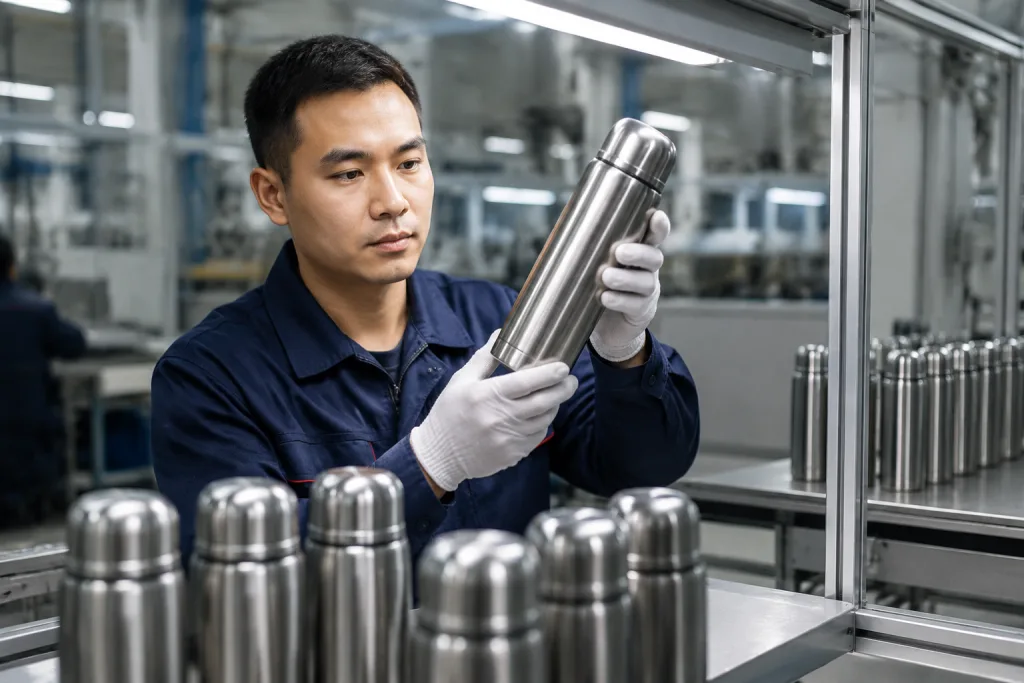
I’ll rewrite the prose in place, keep the HTML exactly as-is, and tighten the language to sound like an actual Zhejiang factory sales note.China still gives the best scale for stainless drinkware buying, but suppliers do not all run the same way. A solid thermos factory in Zhejiang should quote sample fee, mass production, carton loading, and vessel booking without games. The good thermos suppliers tell you when the coating line is backed up, when the lid mold needs a service check, or when an artwork file will push the schedule by 2 days. That beats a polished deck every time. QC pulled one sample at 300mm drop test last week and caught a lid click issue before we shipped.
Compare a thermos distributor with a direct factory by asking who owns coating, printing, and assembly. A distributor works for mixed-SKU buying, but for a repeat thermos promotional program, factory sourcing gives cleaner control on lead time and logo repeatability. If you still need a thermos distributor for local stock, keep the factory in the loop so packing lists, carton marks, and defect sign-off stay aligned. We had one buyer flag a PO typo on carton marks, and that small miss would have cost a day at the port. For outdoor retail, the clean setup is factory production in Zhejiang, QC at origin, FOB shipment, then destination-side distribution. The math works better that way.
Do not make the first run complicated. A custom thermos with one lid, one finish, and one logo is easier to repeat than a so-called thermos customized program with 6 SKUs and 3 pack formats. Start with one spec, watch sell-through, then add the next version. We run that way for a reason. On a 5,000-piece MOQ, a simple launch protects margin and keeps the shelf story clean in the field.
Get a factory quote with real timelines
Send your logo, target quantity, and pack spec. We’ll price your thermos flask promotional order from Zhejiang with MOQ, lead time, and QC clearly stated.
Frequently asked questions
What is a realistic MOQ for thermos flask promotional orders?
For a standard stainless promotional flask with a stock body and one logo, 500 pcs is realistic. If you want a new lid color, special coating, or retail box, 1,000 pcs is more common. For fully customized thermos tooling or a new shape, expect 3,000 pcs or more. Buyers in Europe and North America usually get the best balance of cost and control at 1,000 to 2,500 pcs per SKU. At that level, the factory can hold print consistency and keep setup charges from eating your margin.
How much does a custom stainless thermos cost FOB China?
A simple 350 ml to 500 ml thermos with 304 stainless steel, matte coating, and one-color logo often lands around USD 2.80 to 4.20 FOB Zhejiang at mid-size quantities. More complex customization, such as laser engraving, a premium lid, or upgraded packaging, usually moves the price to USD 4.50 to 6.20. If you ask for multiple logo locations, premium boxes, or a special finish, budget higher. Freight, duty, and destination handling are extra and can change landed cost by another 20% to 45%.
How long does production take for a promotional thermos order?
For an existing mold and standard decoration, sample time is usually 5 to 7 days. After sample approval, production often takes 25 to 35 days. Add 3 to 5 days if you want third-party inspection or special packaging. If you request new tooling, color matching, or custom inserts, the total schedule can stretch to 40 days or more before shipment. From Zhejiang to Europe or North America, ocean freight adds another 18 to 38 days depending on destination and routing.
Which logo method is best for a thermos promotional campaign?
If your goal is low cost and fast lead time, silk screen is usually the best choice. It often adds only USD 0.08 to 0.18 per unit on larger runs. Laser engraving costs slightly more but gives a durable finish and works well for outdoor brands that want a cleaner look. UV printing is better for more complex artwork, but it can increase process control and reject risk. For a giveaway or bulk thermos campaign, the simplest logo method usually gives the best value.
What compliance documents should I ask a thermos supplier for?
Ask for stainless steel material details, REACH-related declarations if selling into Europe, food-contact documentation where applicable, and a written QC standard. You should also request AQL sampling terms, leak test results, and carton drop test records. If your order includes silicone or painted parts, ask how the supplier controls coatings and inks. A serious thermos manufacturer in China should be able to provide clear export paperwork without delays. If they cannot, your risk is higher than the price looks.