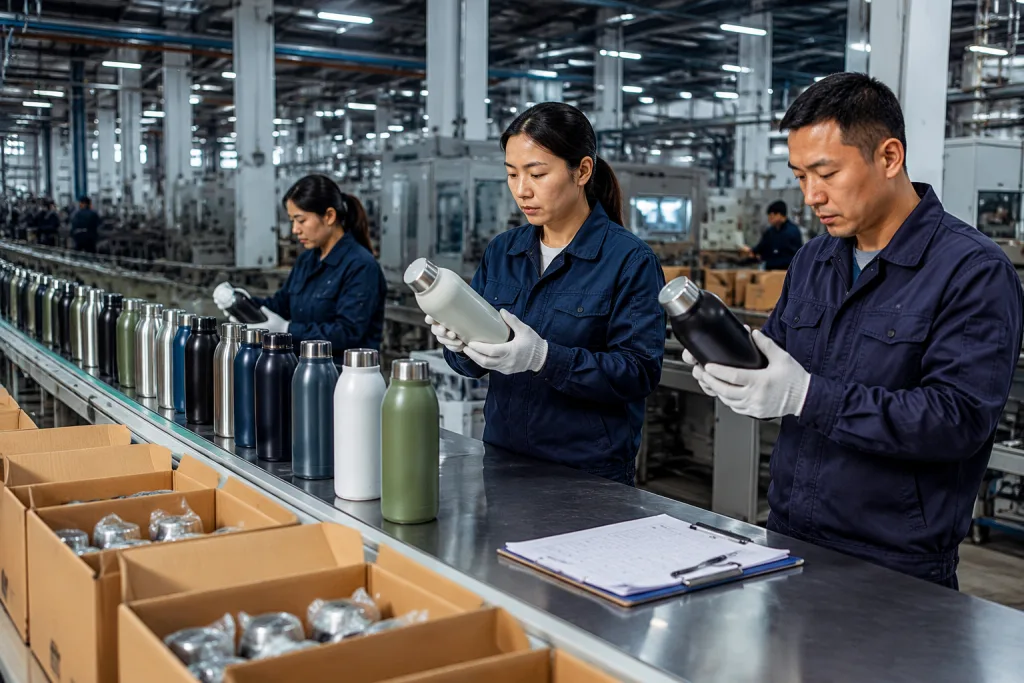
Key Takeaways
- Start with 3,000 pcs MOQ if you need custom color, logo, and retail packaging
- A practical 500 ml vacuum flask target is 304 inner steel, 201 or 304 outer steel, and 0.45-0.55 mm wall thickness
- Plan 7-10 days for samples, 30-40 days for mass production after deposit and artwork approval
- Use AQL 2.5/4.0 inspection and request vacuum retention testing before final payment
You are not buying one nice bottle for one customer. You are placing 5,000 or 50,000 thermos flasks that must survive a 1.2 m carton drop test, retail shelves, weekend trail use, and a finance manager asking why the landed cost moved by USD 0.38 after the PO was signed.
This is the path we run with outdoor retailers and promotional brands when they ask thermos flask manufacturers in China for a custom thermos program. BottleForge Industrial is based in Hangzhou, Zhejiang, so we’ll speak from the factory side: wall thickness in mm, 304 stainless grade, logo position on the silk-screen jig, pre-production samples, AQL 2.5 inspection, and the spots where we’ve seen buyers lose 12 days because one color code was typed wrong on the PO.
The Order Brief We Actually Need
A useful brief for thermos flask manufacturers is not a mood board plus a target retail price. It is a working order map. Example: 8,000 pcs of 500 ml stainless vacuum flask, matte forest green, one-color logo, individual kraft box, FOB Ningbo, delivery before the September retail reset. We run the quote from that. Last month a buyer sent “green bottle, premium box” and QC later pulled the sample because the Pantone callout was missing from the PO.
With that brief, a thermos manufacturer quotes with fewer guesses. We need capacity, lid type, insulation target, steel grade, coating, logo method, packaging, carton limit in kg, compliance market, and use case: retail shelf or giveaway table. A conference promotional thermos can live with a simple white box. A distributor thermos line for outdoor stores needs barcode control, 80 cm drop-test packaging, and tighter color matching under a D65 light box. The buyer flagged this once after 12 cartons looked fine in our workshop but shifted blue under store lighting.
For BottleForge in Zhejiang, a normal MOQ is 3,000 pcs per color for powder coating and 1,000 pcs for a repeat logo on existing stock colors. If you need a new mold, new lid tooling, or a private-shape custom thermos, MOQ usually moves to 10,000-20,000 pcs because tooling, fixture setup, and line changeover become real costs. The math doesn't work on 800 pcs with a new PP lid insert; the injection mold alone can weigh 280 kg, and the line loses half a shift during trial fitting.
Be careful with the words custom, customizable, and customized. A thermos customizable from a factory catalog usually means logo and color. A thermos customized from tooling means you are changing shape, lid structure, handle, silicone parts, or packaging architecture. Different job. Different risk. Different lead time. We've seen this go sideways when the PO said “custom lid,” but the buyer only meant laser logo on the existing push-button cap.
Lock The Steel And Structure
I’ll rewrite the section in place, keeping the HTML tags and all existing specs intact while making the wording sound like a factory sales engineer wrote it.The first technical call is not the logo. It is the body structure. Most stainless vacuum flasks use a double-wall shell with a vacuum gap between the inner and outer layers. For food contact, we start with 304 stainless steel inside. On the outside, 201 stainless steel gives a sharper landed price, while 304 makes more sense when the thermos goes into premium outdoor channels.
For a 500 ml factory thermos, we normally see 0.45-0.55 mm wall thickness before forming. Go thinner and you save cents, but dent claims show up fast in transit and on shelf. Go thicker and the cup feels solid, yet the math does not always work if insulation is the real target. Vacuum quality, neck geometry, lid seal, and copper lining do more than just adding steel. QC pulled a sample at 0.42 mm last month, and the buyer flagged the crease mark before we even reached packing.
Set a measurable insulation target. A normal request is hot water at 95°C holding above 55°C after 12 hours at room temperature. For cold retention, buyers often ask for water below 10°C after 12 hours with ice. “Keeps hot all day” is not a spec. It is sales talk, and we’ve seen that go sideways when the complaint lands on the line test sheet.
For outdoor retailers, we usually run a screw lid with a silicone gasket, a 43-50 mm mouth opening, and 100% leak testing on the packing line. For a promotional thermos, a cup-lid format may be enough. Your supplier thermos quote should state steel grade, capacity tolerance, lid material, gasket material, coating type, and test method in writing before sampling starts. One PO typo on gasket material can cost a full resample, and that is the wrong place to learn it.
Price The Build, Not Hope
I’ll rewrite the section in-place, keeping the HTML tags and the pricing specifics intact while tightening the sales tone and adding a few factory-floor details.A factory thermos quote has layers. Unit price is only the start. For a 500 ml stainless vacuum flask with 304 inner, 201 outer, powder coating, laser logo, and color box, FOB Ningbo often lands around USD 3.20-4.60 at 5,000-10,000 pcs, depending on lid build and packing. A 750 ml customized thermos with handle lid and retail sleeve can move to USD 5.20-7.50. We run the same check on the line with a caliper and a carton spec sheet before we give a number.
Ask for the quote split by body, lid, coating, logo, packaging, and testing if the supplier can do it. Not every thermos factory will open the full costing, but a serious thermos supplier should explain the main cost drivers without dancing around it. Powder coating costs more than spray painting, and the scratch resistance is better. Laser engraving stays clean for logos, while silk screen fits larger flat areas but needs tighter setup on curved bodies. QC pulled a sample last week and the buyer flagged a logo shift of 1.5 mm; that sort of miss costs money.
Payment terms from China are usually 30% deposit and 70% before shipment after inspection. For repeat distributor thermos programs, we sometimes talk about staged releases or rolling production schedules. For a first order, asking for credit before the factory has shipment history with you is the wrong question. We saw one PO with a typo on the consignee name, and the bank hold alone ate two days.
Freight changes the math fast. An 8,000 pc 500 ml thermos bulk order may load about 18-24 cubic meters, depending on packaging. If you switch to air because artwork approval came in late, landed cost can jump by more than the profit margin. That is why FOB date, carton size, carton weight, and packing method belong in the first quote. On our side, we ship the carton test with a 1.2 m drop check before we lock the schedule.
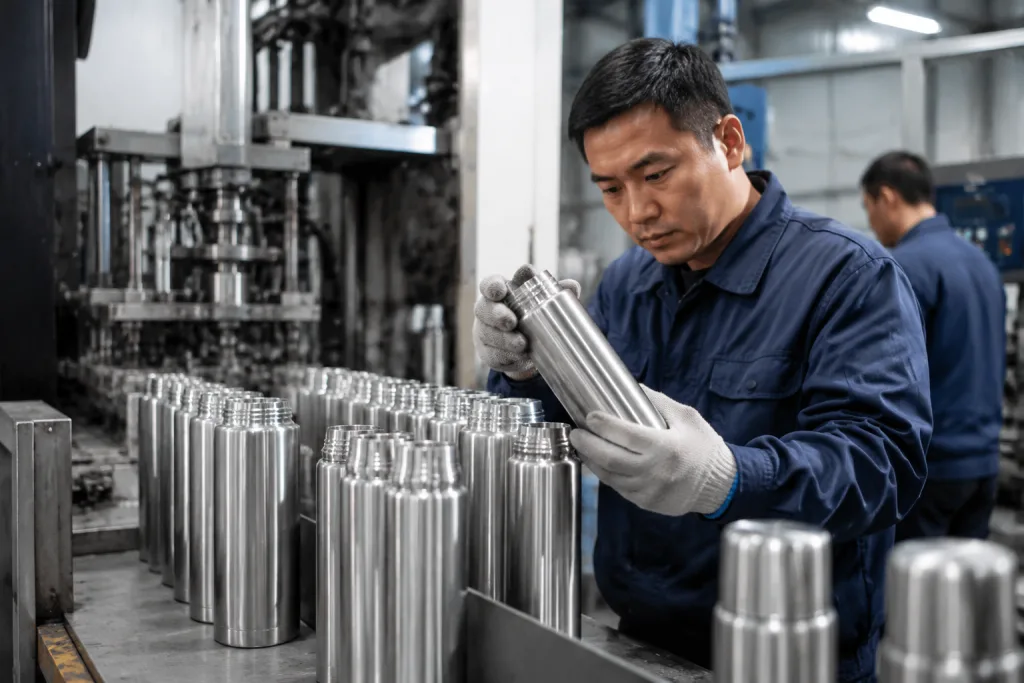
Sample Like You Mean It
I’ll keep the HTML intact and rewrite the copy to sound like a factory sales engineer, with concrete timings and inspection details. Then I’ll sanity-check the tone for the banned filler and AI-like phrasing.The sample stage is where buyers get sloppy. They green-light a clean-looking bottle, then fight us in mass production over color drift, logo size, or a lid that feels loose after 200 opens. Treat the sample as the reference. For a custom thermos, we usually turn pre-production samples in 7-10 days if the body and lid are existing models. New molded silicone or plastic parts add 15-25 days, and the line cannot skip that clock.
Approve these items before you sign off: color chip or Pantone reference, logo position in millimeters from the base or shoulder, logo size, lid rotation feel, gasket fit, bottom stamp, retail box artwork, barcode, warning text, and carton mark. If you sell through e-commerce, add FNSKU placement and the polybag suffocation warning if it applies. If you sell through outdoor retail, check shelf-facing artwork and hangtag strength. QC pulled one sample last month because the barcode sat 3 mm too low, and the buyer flagged it before packing started.
Do not trust phone photos for color. Powder coating shifts under warehouse LED, daylight, and store lighting; we have seen the same blue pass in the office and fail at a 6,500K inspection booth. We keep one physical approval sample with the buyer and one sealed golden sample at the Zhejiang factory. If there is a dispute, both sides check the same bottle. That is the only clean way.
A thermos promotional buyer may only need one logo sample. A distributor building a seasonal range should ask for a full set: every color, every lid, every packaging variant. It costs more at the start, but the math works. We saw a case where the orange coating looked flat next to the blue after 8,000 pcs were packed, and nobody wanted to pay for rework. Better to catch that on the sample bench than on the shipping line.
Run Compliance Before Mass Production
I’ll rewrite the section in-place, keeping the HTML tags and structure intact while making the copy sound like a factory-side sales engineer wrote it.Compliance is not brochure fluff. It decides whether customs clears the carton, whether a retailer books the order, and whether a marketplace listing stays live. For Europe, buyers usually ask for LFGB food contact testing, REACH screening for restricted substances, and packaging checks if inks or coatings touch the product. For the United States, FDA food contact expectations and California Proposition 65 screening may apply. Kids’ drinkware can also trigger ASTM or CPSIA checks, depending on age grade and lid design.
Ask your thermos manufacturers for material declarations before you send samples to the lab. If the inner body is 304 stainless steel, the report should say 304 stainless steel, not “metal material” or some loose supplier code. If the lid uses PP and a silicone gasket, both need to be named. For coatings, check heavy metals and adhesion; we’ve seen a buyer flag a matte finish because the ink rubbed off after 50 wipe cycles. For packaging, confirm carton burst strength if the shipment is going from China to North America or Europe—this is where a 5-layer box with a 32ECT spec saves you from crushed corners.
Factory audits matter when you sell into organized retail. BSCI, Sedex, or ISO 9001 will not fix a bad bottle, but they show whether the supplier thermos line has basic control on paperwork, traceability, and corrective action. BottleForge Industrial runs about 450,000 stainless drinkware units per month across thermos, tumbler, and bottle lines, and QC pulled the sample at the leak test bench before final random inspection. We run the line with inline leak testing and shipment checks because the math does not work any other way.
If a thermos vendor says testing is unnecessary because “all customers use this model,” push back. That is the wrong question to ask. An existing model is not a compliant model for your market, and we’ve seen this go sideways when the PO typo changed the lid material from PP to ABS and nobody caught it before production. Your brand name sits on the box. The recall, retailer chargeback, and customer complaint do not go to the upstream parts supplier.
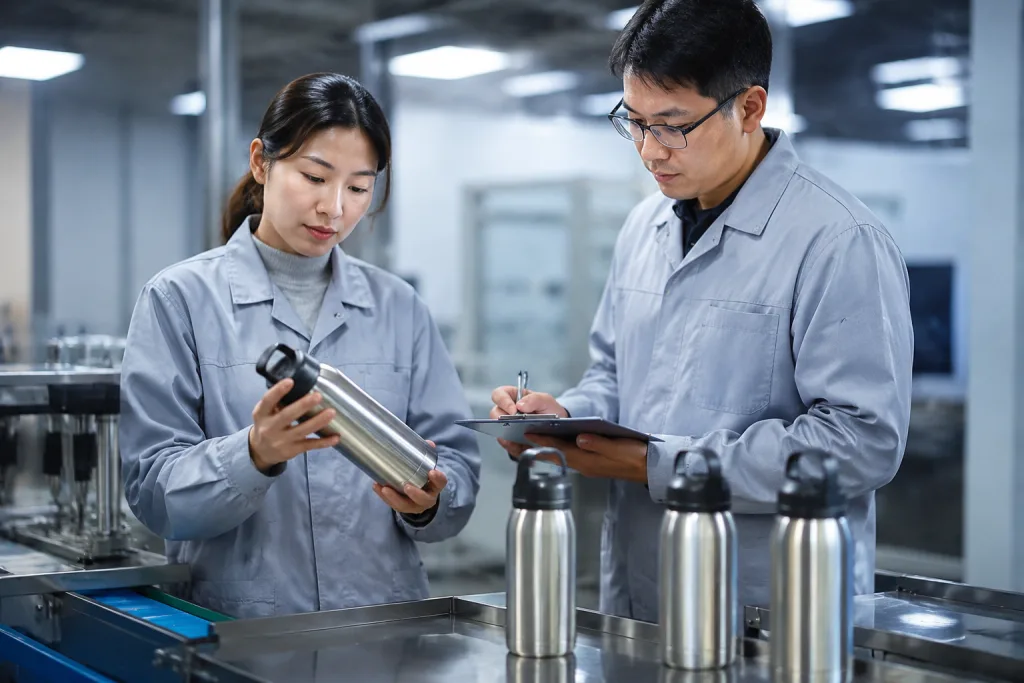
Inspect Before The Balance Payment
I’ll rewrite the section in a more grounded factory-sales voice, keep the HTML tags untouched, and preserve the technical numbers and inspection logic.Inspection should take place after at least 80% of the order is packed and before you release the 70% balance. Use AQL, not a friendly warehouse walk. AQL 2.5 for major defects and 4.0 for minor defects is a common setup. Critical defects stay at zero. For an 8,000 pcs order, the inspector may pull 200 pcs under general inspection level II, depending on the standard you choose.
For stainless thermos, we check more than the outer look. Run capacity verification, vacuum retention test, leak test, coating adhesion cross-hatch test, logo rub test, barcode scan, carton drop test, and carton measurement. QC pulled the sample with a 500 ml cup on the line before, and the numbers were off by 18 ml. For vacuum testing, factories may use temperature retention over time or vacuum detection equipment. If you need 12-hour data, say it before production; it changes the inspection schedule.
Common major defects include leaking lids, weak vacuum performance, wrong logo color, sharp edges, exposed rust spots, severe dents, and wrong packaging. Minor defects include small dust points in coating, slight logo position variation within tolerance, or small carton scuffs. Set the tolerance first. Logo position ±2 mm may pass; random placement does not. We’ve seen this go sideways when the buyer flagged a 1.5 mm shift after mass production.
A distributor thermos order also needs a count check on each assortment. If you ordered 2,000 black, 2,000 green, 2,000 white, and 2,000 blue, one color mix error can throw off the whole season’s stock. The same goes for thermos distributors shipping to two or three warehouses. Carton labels, SKU codes, and pallet plans look boring until the PO has one typo and the whole lot lands in the wrong place.
Ship With Fewer Surprises
I’ll rewrite the section in place, keep the HTML untouched, and make the prose sound like a factory-side export sales note with concrete shipping and QC details.Once inspection passes, the job is still not done. Check the commercial invoice, packing list, HS code, booking date, container loading plan, and the trade term on the PO—FOB Ningbo, FOB Shanghai, CIF, DDP, or something else. A lot of first-time buyers compare unit prices from three thermos suppliers and miss the fact that Incoterms shift who pays for what, and who carries the risk when the carton gets a knock in transit.
For North America, ask the forwarder early whether they need ISF data, because last-minute filings slow the booking. For Amazon or marketplace orders, FNSKU labels, carton marks, and appointment rules need to be ready before the goods leave China; we’ve seen a buyer flag a typo on one carton label and hold the whole batch. For European distributors, pallet height, carton weight, and recycling marks can be part of the receiving spec. A solid manufacturers thermos partner asks for those details before packing, not after the vessel has gone.
At BottleForge in Hangzhou, Zhejiang, our standard lead time for existing stainless thermos models is 30-40 days after deposit and final sample approval. Add 5-7 days for peak-season booking buffer, and more if the order needs new tooling; if the MOQ is 3,000 pieces, the math changes fast once you start moving caps, lids, or a 0.5 mm wall spec. If your retail launch date is fixed, work backward from warehouse arrival, not from factory completion.
The best thermos custom projects are not dramatic. The buyer knows the use case, the factory confirms the structure, QC pulled the sample against the 304 stainless spec, and the shipping docs match the cartons line by line. That is how a thermos bulk order turns into repeat business instead of a fight over dents, leaks, and freight that lands 12 days late.
Send your thermos brief for a factory quote
Share capacity, quantity, logo method, target market, and delivery date. We will return practical MOQ, FOB pricing, and sampling steps.
Frequently asked questions
What MOQ should outdoor retailers expect for a custom stainless thermos?
For existing stainless thermos models, a practical MOQ is 3,000 pcs per color when you need powder coating, logo, and custom packaging. If you use stock colors and only add laser engraving, some thermos flask manufacturers can support 1,000 pcs, but pricing is usually higher. New lid tooling, private molds, or special silicone parts often push MOQ to 10,000-20,000 pcs. For a first order, 3,000-5,000 pcs is usually enough to test sell-through without forcing the factory into inefficient production.
How long does a customized thermos order take from sample to shipment?
For an existing model, plan 7-10 days for pre-production samples and 30-40 days for mass production after deposit, artwork approval, and sample sign-off. Add 5-7 days for booking and export handling from China during normal periods. If you need new tooling, molded plastic parts, or custom silicone components, add 15-30 days before sampling. Promotional brands with fixed event dates should share the delivery deadline at the quote stage, because air freight can add USD 1.50-4.00 per unit depending on size and season.
Which logo method is best for a promotional thermos?
Laser engraving is the safest choice for many promotional thermos orders because it is durable, clean, and works well on powder-coated stainless steel. It is not ideal for full-color artwork. Silk screen printing can reproduce solid-color logos at lower cost on larger runs, but curved bodies require good fixtures and tighter process control. Heat transfer or UV printing can handle more color, though abrasion resistance must be tested. For 3,000 pcs, always request a logo sample and run a rub test before approving mass production.
What inspections should I require before paying the balance?
Use a final random inspection under AQL, commonly 2.5 for major defects and 4.0 for minor defects, with zero tolerance for critical defects. For a stainless thermos order, check appearance, logo accuracy, capacity, leak performance, vacuum retention, lid fit, gasket condition, barcode scanning, packaging count, and carton strength. For an 8,000 pcs order, inspection may sample around 200 pcs under general level II. Do the inspection when at least 80% of goods are packed, but before releasing the 70% balance.
Can one thermos supplier handle both retail and distributor packaging?
Yes, but you must define the packing logic early. Retail packaging may need color box artwork, UPC or EAN barcode, warning text, shelf display orientation, and carton drop-test strength. Distributor thermos programs may require mixed cartons, pallet labels, warehouse routing marks, and SKU separation by color. If you also sell through marketplaces, add FNSKU labels and carton content rules. A capable thermos factory can manage all three, but every label and carton version should be approved before mass packing starts.