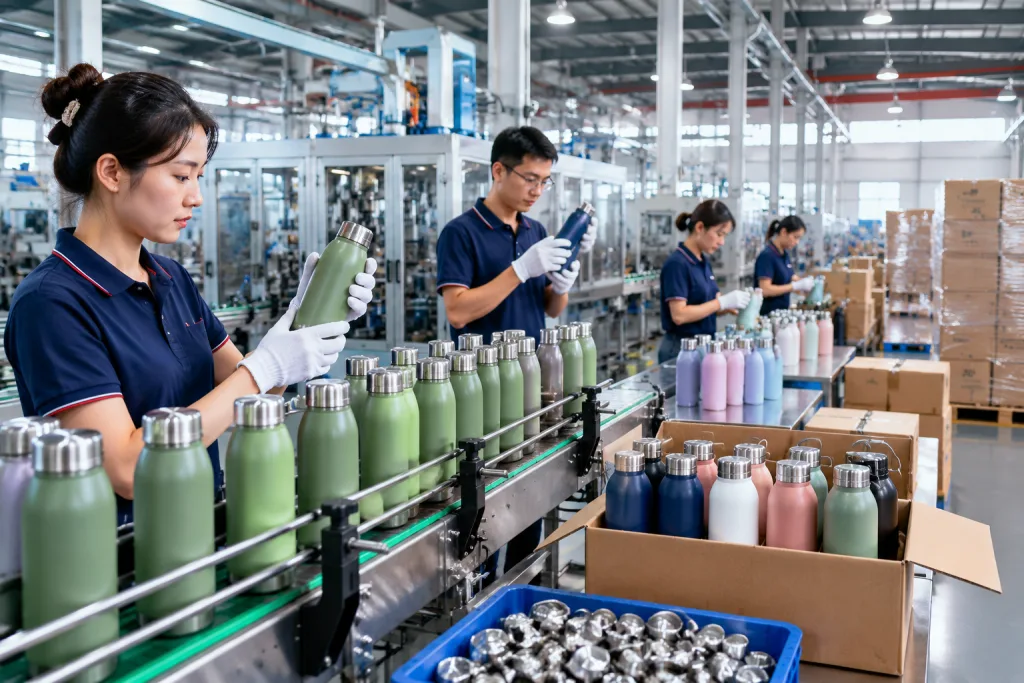
Key Takeaways
- For most custom thermos projects, realistic MOQ starts at 1,000 units per color for standard molds and 5,000 units for new lid tooling
- A 500 ml double-wall 304 stainless thermos often lands around USD 3.20–6.80 FOB China depending on lid, coating, and packaging
- Ask for AQL 2.5/4.0 inspection, LFGB or FDA food-contact reports, and REACH support before approving mass production
- A good thermos factory should quote sample lead time, mass lead time, carton data, spare parts, and decoration limits in writing
A thermos bottle supplier directory looks handy until every listing starts sounding the same: stainless steel, custom logo, fast delivery, factory direct. That does not help a buyer planning an outdoor retail line or a promo program. You need the supplier who can hold a powder coat color across 20,000 units, the lid that survives a 1.2 m drop test, and the quote that actually includes carton specs, REACH papers, and spare gasket cost. We have seen POs miss the sleeve size by 5 mm, and the shipment gets stuck at packing.
The real question is not “China or local stock.” That is the wrong question to ask. The math runs through bottle structure, decoration method, compliance risk, and shipping model. BottleForge Industrial is based in Hangzhou, Zhejiang, China, and we manufacture stainless vacuum bottles for B2B buyers who want a repeatable bulk program, not a pretty directory listing. QC pulled the sample on a 304 stainless run last week, and the buyer flagged a loose cap torque before we shipped the line.
Start with four buying decisions
I’ll rewrite the section in-place, keep the HTML exactly as-is, and make the prose sound like a factory-side sales engineer wrote it.Before you open another thermos bottle supplier directory, lock in four decisions. Otherwise you end up comparing ten quotes that look similar on paper and don’t line up in the workshop.
First, decide the usage scenario. Outdoor retailers care about 8-hour insulation, leak tests, abrasion on the powder coat, and whether we can replace lids after launch. Promo buyers care about logo placement, unit price, carton count, and the delivery date they promised the client. A hiking bottle and a conference giveaway are both custom thermos items, but they should not share the same lid, coating, or inspection standard. We once had a buyer flag a PO because the gift box typo said “500ml” on a 750 ml bottle—small mistake, big headache.
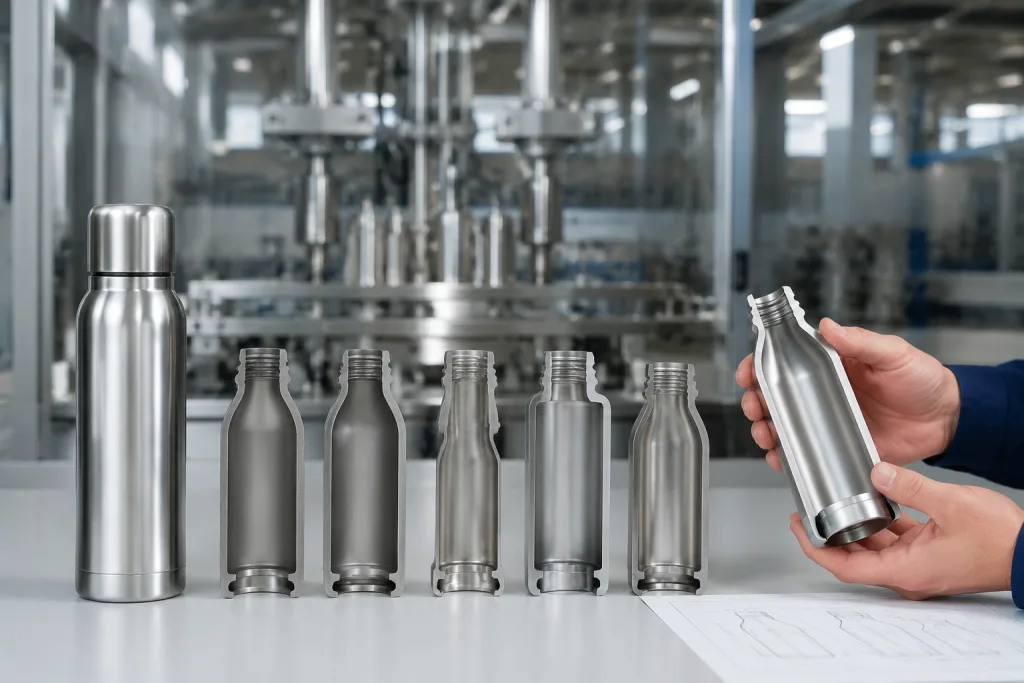
Second, choose your construction. Most manufacturer thermos options use double-wall vacuum 304 stainless steel. For premium programs, we often specify 316 stainless steel on the inner wall, especially for acidic drinks or coastal retail. Common wall thickness is 0.4–0.5 mm for the inner shell and 0.5–0.6 mm for the outer shell. Thinner steel drops cost, but QC pulled the sample and the dent showed up fast after a 1.2 m drop test.
Third, set your customization depth. A thermos custom job can mean a one-color silkscreen logo on an existing bottle, or a customized thermos with private mold body, proprietary lid, retail box, instruction sheet, barcode, and spare gasket set. The first path can ship in 30–40 days after artwork approval. The second usually needs 75–120 days once tooling and validation hit the line. We’ve seen this go sideways when a buyer wants “small changes” on a private mold; the math doesn’t work if the cap thread changes by even 0.3 mm.
Fourth, pick your sourcing model. If you need 300 pieces next week, a local distributor thermos vendor is the safer play. If you need 5,000–100,000 units with your brand system, a thermos factory in China usually gives the better landed cost. Our Zhejiang production network runs about 450,000 stainless drinkware units per month, but that number only helps if the spec is clean and the PO doesn’t bounce between “matte black” and “black sand” halfway through.
Filter directory listings without guessing
I’ll keep the HTML exactly as-is and rewrite only the prose, with sharper sourcing language and a few concrete factory details.A supplier thermos listing is only a starting point, not proof. We see trading firms, small assembly shops, and real factory thermos operations all filed under the same label. That happens all the time in China. The job is to sort them fast.
Before you talk price in depth, ask each thermos supplier for five items: factory address, audit status, monthly capacity, in-house processes, and export markets. A serious thermos manufacturer should tell you whether polishing, vacuuming, powder coating, printing, and leak testing run on-site or go out to subcontractors. Subcontracting is not the problem. Hidden subcontracting is where lead time slips and color control goes sideways. On one line, we traced a batch back to a 1.5 mm lid gasket change the buyer never approved.
For outdoor retail, give more weight to suppliers with drop test records, salt spray results for coated parts, and insulation data at 6 hours and 12 hours. For promotional thermos projects, check the artwork workup: Pantone matching, logo position tolerance, pre-production sample sign-off, and barcode control. A factory thermos team that cannot hold a 30 mm logo placement tolerance will not keep a four-SKU program clean. QC pulled one sample last month because the print sat 4 mm off center. Fair complaint.
Price comparison needs the same discipline. Ask every thermos supplier to quote the same Incoterm, usually FOB Ningbo or FOB Shanghai for Zhejiang factories. A USD 3.90 quote can turn into USD 4.35 once you add the color box, inner tray, spare lid part, carton strength, and third-party inspection. The math does not work if you compare only the first number. We have seen buyers lose two weeks over a PO typo on carton size.
Practical rule: if a thermos vendor answers only with “yes, we can do” and gives no technical limits, the limit is coming back at you later.
Match bottle specs to channel
I’ll keep the HTML structure intact and rewrite the prose with a sharper factory-sales voice, concrete specs, and channel-specific detail. Next I’m patching the section directly, then I’ll check that I haven’t disturbed any tags or required numbers.The right customizable thermos depends on where it gets sold or handed out. Outdoor retailers usually need fewer compromises than promo buyers, because a bad return keeps hurting the brand for 12 months, not 12 days. For a retail-ready stainless thermos, we start with 18/8 304 stainless steel, double-wall vacuum insulation, copper plating if the heat-retention target is tight, and a lid gasket that clears LFGB or FDA food-contact requirements.
Capacity is not just taste. A 350 ml bottle fits commuting and kids’ packs. A 500 ml or 530 ml bottle is the retail sweet spot in Europe. A 750 ml or 1,000 ml bulk thermos works better for camping, field work, and club merch. Bigger size lifts perceived value, but the carton math gets ugly fast. We’ve seen a 500 ml bottle pack 24 pieces per export carton, while a 1,000 ml bottle only takes 12.
Lid choice drives user feedback and defect rate. Screw caps are simple and hold up. Push-button lids sell well, but they add springs, hinges, seals, and more QC checkpoints on the line. Straw lids are popular for sports bottles, but they are not the best thermos customized option for hot liquids. For outdoor retail, we usually push a screw cap or cup-cap design unless the buyer wants one-hand drinking and accepts the extra parts.
Surface finish has trade-offs too. Powder coating gives grip and color depth, but weak pretreatment leads to chipping around the base and shoulder; QC pulled a sample with that exact issue last week. Spray painting costs less, but it scratches faster. Laser engraving stays clean and permanent, which works well on promotional thermos orders with metallic branding. Silkscreen printing is still the cheapest route for a simple logo, with a setup charge around USD 35–60 per color per artwork. The buyer flagged it once on a PO typo, and the whole approval cycle slipped. A directory listing will not spell this out, so ask before you sign off on the quote.
Know the real MOQ logic
I’ll keep the tag structure intact and rewrite the four paragraphs so they sound like a real sales engineer, with tighter wording and a few factory-floor specifics.MOQ is not a trick. It is usually a tooling and line-efficiency question. For thermos bulk orders that use an existing mold and stock powder color, 1,000 units per SKU is a normal working MOQ. For a custom Pantone powder coat, 2,000–3,000 units is where most factories stop losing money on color changeover. A new plastic lid mold usually needs 5,000–10,000 units before the tooling bill makes sense.
At BottleForge in Hangzhou, Zhejiang, standard manufacturer thermos jobs usually start at 1,000 units per color. QC pulled the sample on a 500 ml cup with a 0.25 mm logo edge check, and pre-production samples were ready in 7–12 days after artwork confirmation. Mass production usually takes 30–45 days after sample approval and deposit. August to November is the busy stretch for holiday stock and Q1 retail replenishment, and if you do not reserve the line early, add 10–20 days. That is the number, not a guess.
Price moves on more than quantity. A 500 ml stainless thermos with plain powder coat and one-color logo may land around USD 3.20–4.50 FOB China at 3,000 units. Add a flip lid, silicone boot, copper lining, custom gift box, and four-color print, and the same bottle can move to USD 5.20–6.80. We had a buyer flag a PO typo once because the box spec said 12 pcs/carton but the carton mark showed 24; the math does not work when setup and packaging are still on the first run. For smaller promo orders, the first 1,000 units always look heavy. For repeat distributor thermos programs, the reorder cost drops once artwork and packaging are already locked.
Watch out for suppliers thermos quotes that promise a tiny MOQ on fully customized thermos work. We have seen that go sideways when the factory was clearing leftover stock, not running your approved material and color. Fine for a one-off campaign. Not fine for a retail range that needs repeatable shade and lid fit. Ask straight: is the MOQ for logo only, color change, packaging change, or a new structure? Those are four different cost buckets.
Test quality before shipment
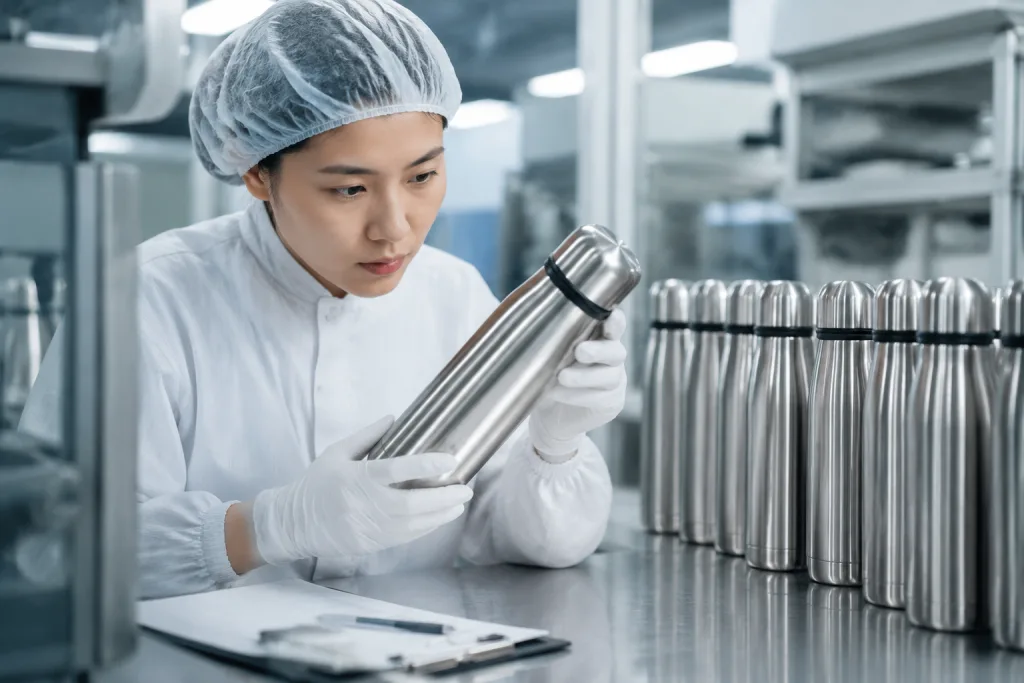
I’ll rewrite the four paragraphs to sound like a factory-side sales engineer, keep the HTML exactly as-is, and preserve all technical numbers and certifications.A stainless thermos can look clean in a showroom photo and still fail on the line. We write the quality plan before the deposit lands, not after cartons are sealed. For export jobs, our standard is AQL inspection: critical defects at 0, major defects at 2.5, minor defects at 4.0. On a $3.20 retail run, one buyer pushed for 1.5 on majors; the math did not work, so we priced it separately and fixed it in the PO.
Core checks are vacuum insulation, leak resistance, coating adhesion, logo position, odor, capacity, and carton drop strength. QC pulled a 500 ml sample and ran the heat test with water at 95°C, then checked it after 6 hours and 12 hours at room temperature. Pass/fail still depends on lid structure and bottle size, so “keeps hot 24 hours” is useless unless the buyer gives a test method. For cold retention, we use chilled water or an ice-water mix and log the same time points.
Leak testing needs inversion and shake checks. Push-button lids get repeated open-close cycling; 300–500 cycles is a fair in-house check for many promo grades, while retail lids usually need more. For coating adhesion, we run a cross-hatch tape test with a cutter blade, then check whether the grid lifts. Printed logos need dry-cloth and alcohol-cloth rub tests; we’ve seen weak curing slip through when a buyer accepted photos only, and that goes sideways fast.
Compliance depends on the market. For Europe, ask for LFGB food-contact testing and REACH support for coatings and plastic parts. For the United States, FDA food-contact documents and, where relevant, California Proposition 65 review may be needed. If the thermos is for children, ASTM and CPSIA questions can apply. A serious thermos factory won’t guess your legal duty, but it should hand over material declarations, test reports, and sample sets for your lab or compliance team. One PO typo on our side once changed “PP lid” to “PE lid”; the buyer flagged it immediately, and that is why we check every spec sheet twice.
Decoration and packaging decide margin
I’ll rewrite the section in-place, keep the HTML tags intact, and tighten the wording so it sounds like a supplier-side sales engineer wrote it.For outdoor retailers and promo brands, decoration is margin control, not decoration. It changes MOQ pressure, lead time, claim rate, and return risk. A thermos customizable program should start with the artwork file, print zone, color tolerance, and rub test target. We want AI, EPS, or PDF. Send a low-res PNG and the line will still quote it, but QC pulled the sample and the logo edge showed jagged pixels.
Laser engraving is the safest call when you need permanent branding and fewer rejects. It holds up on stainless steel, powder coat, and some plated finishes. Silkscreen printing fits one- or two-color logos and 3,000+ pcs runs. Heat transfer handles gradients and complex graphics, but it needs the right curing temp and abrasion checks. A full wrap looks clean on a mockup, yet a tapered bottle can drift 2–3 mm at the seam. Ask for the tolerance, not just the render.
Packaging is where directory quotes get slippery. A plain white box may run USD 0.12–0.25. A printed color box with 350 gsm board may run USD 0.25–0.55, depending on size and quantity. Add molded pulp insert, instruction leaflet, hang tag, barcode label, and a stronger master carton, and the packaging gap can pass USD 0.80 per unit. For retail, that math can work. For event giveaways, it usually does not.
If you sell through online marketplaces or distributors, lock labeling early. FNSKU labels, carton marks, suffocation warnings for polybags, and country-of-origin marking need to sit in the PO, or the buyer will flag it at receiving. We had one order held because the pack list showed “Thermos bottle” but the carton label said “vacuum cup.” Small typo, big delay. In our China export workflow, we lock packaging dielines before pre-production sample approval, because a box change after bottle approval can still push shipment back 7–10 days.
Build a shortlist you can defend
I’ll rewrite the section in place, keeping the HTML tags and structure unchanged, and tighten the prose so it reads like a buyer-facing sales engineer note.A shortlist for a thermos bottle supplier directory should not run to 30 names. Three to five is enough if they match your channel, order size, compliance load, and how they answer the phone. We score on MOQ, FOB price, sample lead time, production lead time, audit status, test reports, decoration options, packaging support, and response quality. On our line, the buyer who flags a missing test report on day one is usually the one who saves the order later.
For a first order, do not customize every part. A proven thermos manufacturer mold with your color, logo, and carton is the safer test run. We have seen 12-day sample approval turn into 18 days when the lid shape was changed too early, and the math does not work on a first shipment. Once sell-through is steady, then you can talk about a private lid, silicone boot, color-matched parts, or your own body shape.
Payment and shipping terms need to be workable. A normal China factory term is 30% deposit and 70% balance before shipment, usually after final inspection. FOB Ningbo or Shanghai gives you control of ocean freight through your forwarder. If you need DDP for a small promo order, lock down duties, VAT, insurance, and delivery appointment rules. “Door to door” alone is not a plan; last month QC pulled a sample because the PO typo said `320ml` instead of `300ml`.
You also need one owner for communication. Outdoor retailers often bring product, compliance, design, and buying into the same thread. Promo brands may add a client, agency, distributor, and end user. One approved spec sheet keeps the job straight. Put in capacity, material grade, finish, Pantone, logo method, packaging, barcode, inspection standard, delivery address, and required documents. A good supplier thermos partner will push for those details. That pushback is useful. It is faster than fixing 10,000 wrong bottles after the line has already run.
Send your thermos brief for a factory quote
Share capacity, quantity, logo method, market, and delivery date. We will return MOQ, FOB pricing, lead time, and compliance notes.
Frequently asked questions
How do I compare suppliers in a thermos bottle supplier directory?
Do not compare only the photo and unit price. Ask each thermos supplier for factory location, monthly capacity, MOQ, sample lead time, mass lead time, audit documents, and the exact FOB port. Then send the same specification sheet to all shortlisted suppliers: capacity, stainless grade, lid type, coating, logo method, packaging, AQL level, and compliance market. A real factory thermos quote should include carton quantity, carton size, gross weight, decoration setup fees, and sample cost. If one supplier is 15–25% cheaper, check whether they excluded color box, copper lining, inspection, or food-contact testing. Directory listings are useful for discovery, but the written quotation and sample response tell you more.
What MOQ should I expect for a custom stainless thermos?
For an existing mold with one logo, 1,000 units per color is a realistic MOQ from many China factories. If you need a custom Pantone powder coat, expect 2,000–3,000 units because the coating line needs setup and cleaning time. For a customized thermos with new plastic lid tooling, 5,000–10,000 units is more practical, plus tooling charges that may run from USD 1,500 to over USD 8,000 depending on complexity. Some suppliers advertise 100–300 units, but that is usually stock goods with limited decoration. It can work for a small promotional thermos campaign, not for a repeat retail program needing consistent color and packaging.
How long does a bulk thermos order take from China?
A standard bulk thermos order normally takes 7–12 days for pre-production samples after artwork approval, then 30–45 days for mass production after sample approval and deposit. Add ocean freight time: roughly 25–35 days to many North American ports and 30–40 days to many European ports, depending on routing and season. Air freight is faster but often too expensive for stainless bottles because they are bulky. If you require custom lid tooling, add 30–60 days for mold development, T1 samples, adjustments, and testing. Peak season can add 10–20 days, so outdoor retail programs should reserve capacity early.
Which logo method is best for promotional thermos orders?
For most promotional thermos orders, one-color silkscreen is the best balance of cost and visibility. Setup is often around USD 35–60 per color per artwork, and the running cost is low at 1,000+ units. Laser engraving costs more per unit but is more durable and looks premium on powder coat or stainless finishes. Heat transfer is useful for complex graphics, gradients, or full-color artwork, but you should request abrasion and alcohol rub testing before approval. If the bottle has a tapered body, avoid full-wrap designs unless the supplier provides a clear alignment tolerance, such as plus or minus 1.5 mm.
What documents should outdoor retailers request before shipment?
Outdoor retailers should request food-contact test reports for the selling market, usually LFGB for Europe or FDA-related documentation for the United States. REACH support is important for coatings, plastics, and silicone parts in Europe. Ask for a material declaration showing 304 or 316 stainless steel, plus inspection records for leak testing, insulation testing, coating adhesion, and logo checks. For shipment, request packing list, commercial invoice, bill of lading, country-of-origin marking confirmation, and final inspection report under AQL 2.5/4.0 or your agreed level. If selling online, confirm barcode or FNSKU placement before production packing starts.