Key Takeaways
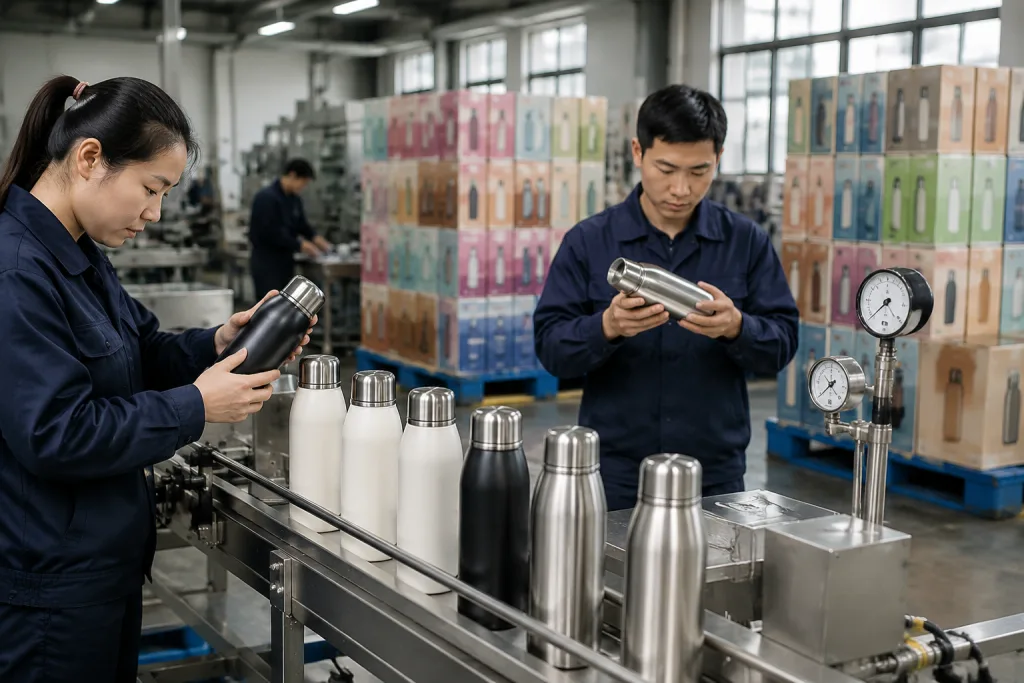
- For thermos bottle online wholesale, MOQ starts at 500 pcs per SKU, with 30-35 day lead time after sample approval.
- 304 stainless is standard; 316 inner liners add about $0.35-$0.90 per unit and help when buyers want stronger corrosion resistance.
- A 0.4-0.6 mm body wall and a food-grade PP lid are the most common factory thermos build for outdoor retail pricing.
- Custom logo methods usually add 3-7 days; laser engraving is best for premium custom thermos orders, while silkscreen fits promotional thermos runs.
If you buy thermos bottle online wholesale for outdoor retail or promotions, the hard part is not finding a stainless bottle. The hard part is reading a spec sheet without guessing what it means for margin, returns, and branding. A 304 body, 316 liner, 0.5 mm wall, powder coat, vacuum level, lid gasket, and carton load all change the buying result.
At BottleForge in Zhejiang, we see buyers waste days on vague samples and pay for the wrong build. QC pulled one sample last month that looked fine in photos, then the heat test came in 20% lower because the liner thickness was off by 0.08 mm. One extra polishing step can add $0.18 to FOB. If you want a bulk thermos program that holds up, read the specs like a procurement engineer, not a catalog shopper.
Read the bottle from steel up
I’ll tighten the prose, keep the HTML exactly as-is, and make the copy sound like a factory-side sales engineer wrote it.The first line on a thermos spec sheet is the steel grade. For thermos bottle online wholesale, that line tells you if you are buying real stainless or just a bright surface finish. We usually see 304 stainless called out on both inner and outer walls. That is the working baseline for a bulk thermos program: it keeps the math sane, holds up against rust, and stays easy to source from a thermos line in China.
If the buyer runs hiking, camping, or gym accounts, 304 usually gets the order. If the bottle will hold acidic drinks, go through heavy dishwasher cycles, or sit in a premium promo kit, 316 on the inner wall makes more sense. The jump is about $0.35 to $0.90 per unit, depending on capacity and finish. On a 5,000-piece order, that is not pocket change, and the buyer who ignores it usually gets a margin headache later. Zhejiang quotes start with 304 for a reason: it fits most distributor programs without drama.
- 304 inner wall: standard spec, solid value, fits most buyers
- 316 inner wall: better corrosion resistance, higher unit cost
- 201 outer shell: lower cost, weak fit for a premium thermos custom program
Ask your supplier thermos team for the full material split, not just the headline grade. QC pulled a sample with 304 on paper and a mixed wall spec in hand; that kind of mismatch shows up fast. We have seen that go sideways.
Wall thickness changes the feel
I’ll rewrite the section in-place, keep the HTML structure untouched, and make the copy sound like a factory-side sales engineer wrote it.Wall thickness is where a custom thermos starts to feel solid or cheap in the hand. For vacuum insulated stainless bottles, we usually see 0.4 mm to 0.6 mm on the outer shell. Go thinner and you shave weight and raw material cost, but dent resistance drops fast and the bottle starts giving off a budget feel. We’ve had buyers flag a 0.4 mm sample on the line before it even went to drop test.
For mid-market wholesale, 0.5 mm is the number we run most often. It gives a steadier hand feel without pushing unit cost out of range. A 0.4 mm shell can trim FOB a bit, but rough retail handling is where it gets exposed. A 0.6 mm shell feels tougher, yet it adds weight and cuts carton count. On a 500 ml bottle, the math changes fast: one carton spec we shipped went from 24 pcs to 20 pcs just from that extra metal.
Don’t stop at the side wall. Check the neck and base too. The base is where dent claims show up first, and that is the wrong place to be stingy. If you want thermos customized for field use, ask us for a base reinforcement drawing and call out the base diameter in mm on the PO. QC pulled a sample once with a 1.2 mm base ring instead of 0.8 mm; that small change saved the buyer from a pile of complaints later.
Vacuum spec drives retention
I’ll rewrite this section in a more seller-engineer voice, keep the HTML intact, and preserve the technical numbers and structure.Heat retention is the number your buyers remember. For thermos bottle online wholesale, you’ll see 6 hours hot, 12 hours warm, or 24 hours cold on the spec sheet. Those figures are not equal. They depend on vacuum level, wall structure, lid seal, and fill volume. We’ve seen a sample look fine on the table, then drop fast in winter because the gasket was loose or the shoulder design leaked heat.
Ask for the test condition, not just the claim. We usually talk through 95°C water, ambient at 20°C, and retention measured under a defined standard method. A buyer once flagged a PO typo on the test note, and that same mistake would have made the report useless. Many suppliers hand over a thermos report that looks tidy but has no traceable QA setup, and that is the wrong question to ask. In practical terms, a 500 ml stainless thermos with solid vacuum and a tight lid should stay above 60°C after 6 hours if the build is sound. If the price is low and the number looks too clean, the math doesn’t work.
Keep the spec that matters: vacuum performance under test conditions, not marketing copy on the sleeve.
For outdoor retail, steady medium performance beats one inflated claim that turns into returns. For promotional thermos programs, we ship more repeat orders when the branding holds up and the bottle does what it says. QC pulled the sample on a 20 mm shoulder mismatch once, and that was enough to stop a bad run.
Lid design is not an accessory
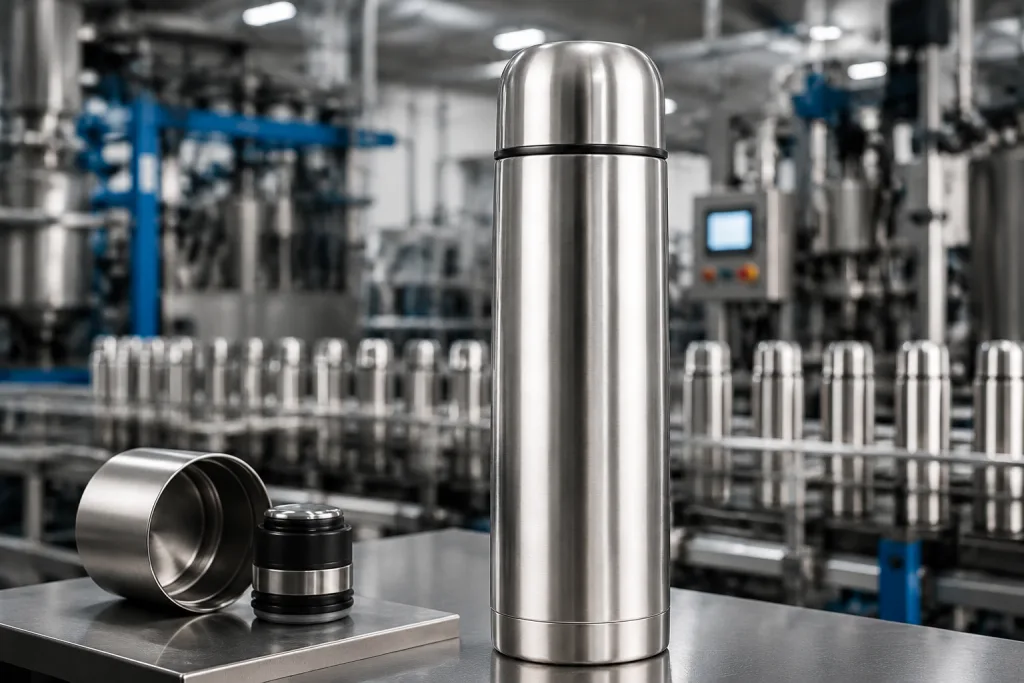
I’ll rewrite the section in place, keeping the HTML and list structure intact while stripping the AI-ish phrasing and adding a few factory-floor specifics.Buyers often treat the lid as an add-on. That is a mistake. The lid is one of the highest-risk parts in a thermos custom order because it sets leak resistance, user feel, and packing work. A screw lid with PP and silicone is standard, while a push-button top or one-hand open lid adds cost and needs tighter QC. For thermos bulk going into travel retail, we test the lid as hard as the bottle body. Last month, QC pulled a sample at 80 N torque and found the cap still weeped after 12 hot-cold cycles.
Silicone gasket quality matters more than most buyers expect. A cheap gasket can harden after heat cycling, and that is how leak complaints start. On a 5,000 pcs order, ask for silicone hardness data and the lid torque spec; the math does not work if the cap is loose by 0.3 mm or too tight for the end user. A good factory thermos supplier should show both. For promotional thermos projects, a simple lid often wins. Fewer parts. Lower defect rate. Cleaner custom logo area. We’ve seen a fancy lid turn into a rework line because the buyer flagged condensation marks on the inner ring.
- Flip lid: better for one-handed use, higher parts count
- Screw lid: simpler, more stable for bulk thermos orders
- Tea infuser lid: useful for premium channel programs
For distributor thermos buyers, the lid choice often decides whether the carton arrives as a product or as a service issue. One PO typo can do it too; we once shipped a batch marked “tea infuse” instead of “infuser,” and the buyer caught it before loading.
Finish affects sell-through
I’ll rewrite the prose in place, keep the HTML untouched, and tune the wording so it reads like a factory-side sales engineer.Surface finish is not just about looks. It changes grip, scuff resistance, and where the price lands. A mirror polish pops on a shelf, but it shows fingerprints fast. A powder-coated thermos custom surface gives better hold and usually hides shipping scratches better. For outdoor retailers, that matters because the bottle gets picked up, dropped, and repacked 5 or 6 times before the buyer sees it.
Matte powder coating usually adds about $0.20 to $0.60 per unit, depending on coverage and color. On our line, we’ve seen a 220 mm body with full wrap coating pass the drop bag test, while a half-coated sample still marked up at the base after two carton cycles. Laser-engraved logos work well on coated bodies because the bare metal gives a sharp contrast. For a custom thermos used for corporate gifts, that finish can make a $6 bottle feel like a $10 item. For a thermos promotional run, simple glossy spray or painted color is enough if the buyer wants volume and a fast turn. The math does not work for every order.
Check whether the finish is food-contact safe and tested for abrasion. QC pulled the sample on one Zhejiang order because the buyer flagged a 3 mm edge chip after a tape rub, and that saved a bigger claim later. Good factories in Zhejiang can show coating adhesion records and salt-spray data on request. If a vendor cannot explain coating durability, they are selling appearance, not a wholesale product.
Branding choices change the economics
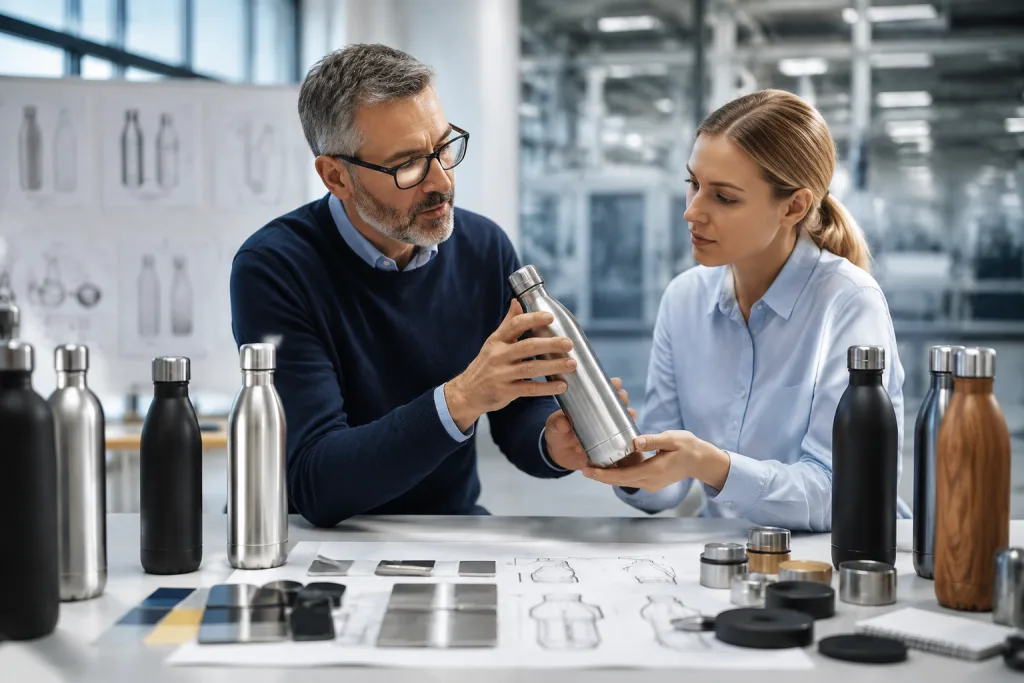
I’ll rewrite the prose in place, keep the HTML exactly as-is, and tighten the copy so it sounds like a factory-side sales engineer wrote it.Custom logo work is where a thermos supplier either protects your margin or burns it. For thermos bottle online wholesale, the usual picks are silkscreen, laser engraving, UV print, and heat transfer. Silkscreen stays the cheapest on a 10,000 pcs promo run; the screen frame is already set, and the line moves fast. Laser engraving costs more, but it holds up on stainless and QC can catch a bad depth mark before packing.
If the order is for outdoor retail, keep the logo plain and tough. If the buyer is a distributor thermos channel selling into gifting, a cleaner mark sells better. We run setup from a PDF or AI file; if the art comes in as a flat JPG, we lose time chasing the vector. Expect branding to add 3 to 7 days to production depending on the method. A setup fee can hit small runs, especially under 1,000 pcs. For a thermos custom project, the right branding method follows the channel, not the mood board.
We often see buyers ask for thermos customized in three colors with a wrap print, then the math lands near a premium gift item instead of a wholesale bottle. We’ve seen that go sideways on PO day, usually after the buyer flags the landed cost. It works if the price point can carry it. It is the wrong question if you are trying to stay under $4.50 FOB China.
Order terms beat pretty samples
I’ll keep the HTML exactly as-is and rewrite the prose to sound like a factory-side sales engineer, with concrete terms and fewer generic phrases.The sample is the easy part. The commercial terms are where thermos manufacturers separate from thermos vendors. For a steady wholesale program, pin down MOQ, lead time, carton spec, payment terms, and inspection standard before you approve a Pantone color. At BottleForge in Zhejiang, our regular stainless thermos line runs above 300,000 units per month across multiple molds, with MOQ starting at 500 pcs per SKU and lead time around 30-35 days after sample sign-off. That is the number you need if you want repeat stock, not a one-off pretty cup on the table.
Inspection should not be vague. Put AQL on the order sheet. For bulk thermos shipments, buyers usually use AQL 2.5 for major defects and 4.0 for minor defects, though your tolerance can change by channel. Confirm carton drop test expectations, leak test percentage, and vacuum retention sampling before production starts. QC pulled the sample at 10 pm on the line last week and caught a lid torque miss at 6.8 N·m; that is the kind of check that saves a shipment. If you are shipping to Amazon or other e-commerce channels, carton labeling, FNSKU prep, and master carton marks need to be settled early, not after packing.
FOB from China is still the cleanest way to compare offers across suppliers thermos factories in Zhejiang and beyond. The lowest unit price is useless if the carton spec is weak or the sample-to-mass-production gap is large. We’ve seen this go sideways when a buyer approved a 0.5 mm wall claim, then the mass run came in short and the math did not work. A dependable thermos distributor program starts with boring paperwork.
Send your thermos spec for a fast quote
We’ll match your channel, MOQ, and logo method to a practical wholesale build from China, with clear FOB pricing and lead time.
Frequently asked questions
What MOQ should I expect for thermos bottle online wholesale?
For a standard stainless model, a realistic MOQ is 500 pcs per SKU from a Zhejiang factory, though some thermos manufacturers ask for 1,000 pcs on custom colors or special lids. If you need multiple sizes, each size usually counts separately. For thermos bulk programs, lower MOQ often means fewer finish options or a simpler logo method. Ask whether the MOQ includes mixed lids or mixed colors, because some suppliers treat those as separate SKUs. On a 5,000 pcs order, you usually get better pricing and more flexibility on packaging.
How much does custom logo work add to unit cost?
Silkscreen printing often adds about $0.05 to $0.18 per unit depending on color count and order size. Laser engraving is usually $0.10 to $0.35 per unit, sometimes more on premium powder-coated bottles. If you want a custom thermos with multi-color art, UV print can be higher still. The setup fee matters on small runs, because a 500 pcs order can carry a tooling or plate charge of $30-$120. For promotional thermos projects, the logo method should match the channel and the target sell price, not just the artwork.
Is 304 stainless enough, or should I choose 316?
For most outdoor retail and promotional brands, 304 stainless is enough and keeps the thermos competitive. It resists corrosion well and is the standard choice for factory thermos production in China. Choose 316 if the use case includes acidic liquids, harsher washing cycles, or a premium positioning where you want to reduce risk. The uplift is often $0.35 to $0.90 per unit, depending on size and design. If your bottle is mainly for water, coffee, or tea, 304 usually delivers better value for a thermos distributor program.
What lead time should I plan for a wholesale order?
After sample approval, a normal production window is 30 to 35 days for standard stainless thermos orders. Add 3 to 7 days if you are doing custom colors, special packaging, or a more complex lid. If your order includes lab tests, carton labeling, or FNSKU prep for e-commerce, plan a few extra days for coordination. In Zhejiang, many factories can move faster, but you should still protect your calendar with realistic buffer time. Rush orders are possible, but they usually cost more and increase defect risk.
What should I check on a sample before I place a bulk thermos order?
Check leak resistance, lid feel, exterior finish, logo alignment, and weight consistency first. Then verify whether the wall thickness matches the quoted spec, because a 0.4 mm bottle can feel very different from a 0.6 mm bottle. Fill the sample with 95°C water and watch for heat loss, seal stress, and condensation. If possible, request an AQL-based production plan and ask for a third-party inspection. A good supplier thermos partner will be comfortable discussing these details before you pay deposit.