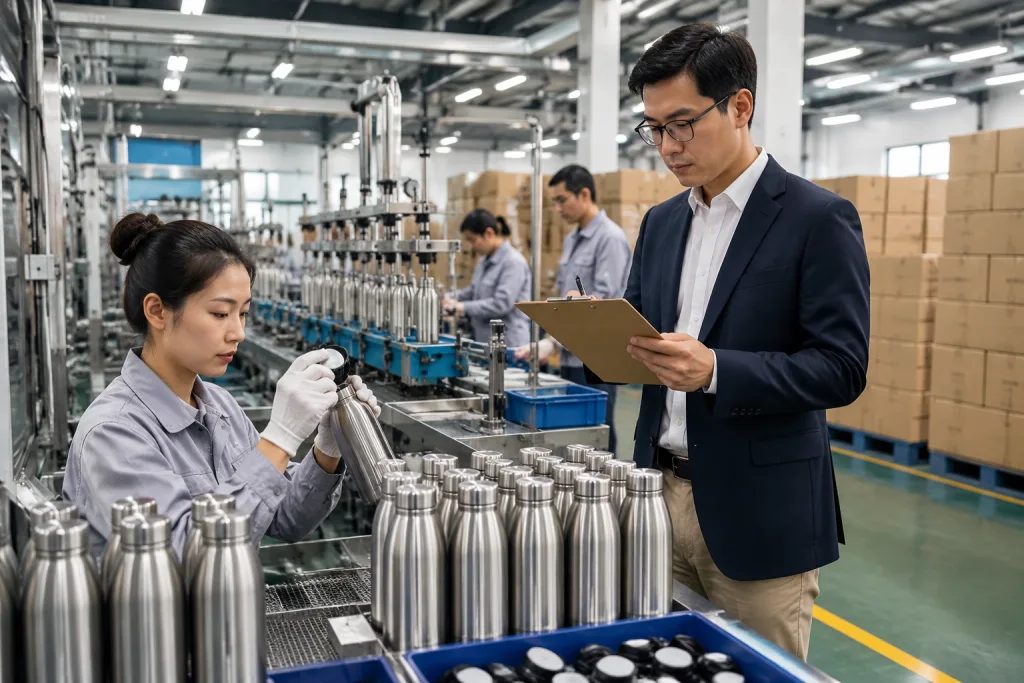
Key Takeaways
- A realistic MOQ for a custom stainless thermos is often 1,000-3,000 pcs, with lead time around 30-45 days after sample approval.
- A 304 stainless inner wall and 0.5-0.6 mm body thickness are common for mid-range bulk thermos orders; 316 is used when corrosion resistance matters more.
- For export, ask for REACH, food contact, and drop-test documentation before you pay the balance.
- A good thermos bottle manufacturer will sample the lid seal, vacuum retention, and carton drop performance before mass production.
You have a buyer asking for 3,000 stainless thermos units for an outdoor retail launch, then a second run for a promo brand in 60 days. That is where a real thermos bottle manufacturer earns its margin. The gap between a clean shipment and a mess is usually not the artwork. It is the spec sheet: capacity, lid type, steel grade, test standard, carton pack, all set before the line starts.
In Zhejiang, where a big share of thermos output sits, the better suppliers ask the annoying questions early. They want the wall thickness in mm, whether you need 304 or 316 inside, and whether the custom thermos ships as bulk cartons or retail-ready units with barcode labels and FNSKU. QC pulled the sample at 500 ml and checked the seam after a 1.2 m drop. A buyer will call that fussing. We call it cheaper than a claim.
Start With the Buyer’s Use Case
I’ll rewrite just the prose inside the existing tags, keep the HTML structure intact, and tighten the language so it sounds like a factory-side sales engineer.Before you ask for a quote, pin down the real use case. A 500 ml custom thermos for a hiking retailer is a different build from a 750 ml promotional thermos for a trade-show giveaway. One buyer wants 12-hour heat retention and a matte powder coat that holds up in backpacks. The other watches unit cost, logo printing speed, and whether the lid can fit a smaller carton. A thermos bottle manufacturer will price those two orders on different terms.
Start with four numbers: capacity, target retail or landed price, order quantity, and delivery date. Give the thermos supplier a brief they can actually run. For example: 500 ml, 304 inner, 201 outer, double-wall vacuum, 0.5 mm inner wall, 6-hour hot above 65°C, 3,000 pcs MOQ, FOB Ningbo or FOB Shanghai, ship in 40 days. That tells the factory thermos team what we can build and what we should not promise. QC pulled the sample on a 0.5 mm gauge; if the spec is loose, the quote is loose too.
For outdoor retailers, I’d push a screw lid with a wide mouth if the bottle will take coffee, soup, or ice. For promotional brands, a slimmer body and a simpler cap usually lift decoration yield and cut unit cost by 8-15%. We run both jobs every week in Zhejiang, so this is the wrong question to ask if you start with “what’s your best price?” Give us the use case first. Then the line can quote cleanly, and the buyer stops chasing revisions.
Lock the Stainless Specification
I’ll rewrite the section in-place, keeping the HTML and the list structure intact while making the language sound like a factory-side sales engineer.This is where a lot of custom thermos jobs go sideways. Buyers write “stainless steel” on the PO and think the spec is covered. It isn’t. For a thermos manufacturer, 304 versus 316 changes price, salt spray resistance, and sometimes coating grip. On one bulk run, the buyer flagged a rust spot after 48 hours of salt test, and the line had to stop while QC pulled the sample apart. For most volume orders, 304 inside and 201 outside is the normal commercial split. If the bottle will sit in salty air, carry sports drinks, or get hit with strong cleaners, 316 inner steel is the better call, though it usually adds 10-20% to material cost.
Ask for the full stack-up. Typical commercial builds are 0.5 mm inner wall, 0.4-0.5 mm outer wall, and a vacuum gap set for heat retention, not brochure talk. We run a micrometer on the forming station; if the sheet comes in at 0.46 mm, that is what goes on record. A decent thermos factory in China should give you the real wall thickness, not a sales line. Ask which powder coat is used, how many spray passes go through the booth, and what adhesion test they actually run. I’d push back hard if someone dodges that.
- Inner steel: 304 standard, 316 for higher corrosion resistance
- Outer steel: often 201 or 304 depending on target price
- Wall thickness: commonly 0.4-0.6 mm
- Capacity tolerance: usually ±5%
If a supplier thermos quote looks too cheap, check the hidden shortcuts: thinner steel, weaker vacuum control, or a low-grade gasket. We’ve seen that go sideways after 3 months in the field. On one PO, the buyer typed “304 ouer” instead of “304 outer,” and the factory came back with the wrong shell spec until we caught it at sample stage. The math doesn’t work if the price is far under market. China has enough thermos manufacturers to give you a clean option, but you need to lock the material stack before the first sample.
Sample the Lid and Seal First
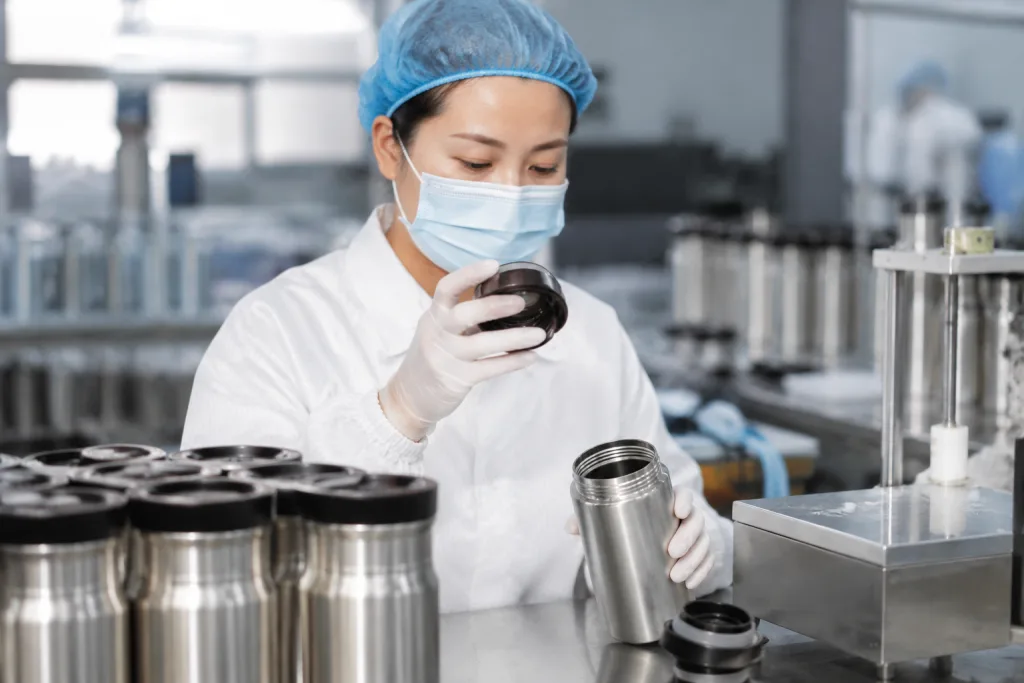
I’ll rewrite the section in-place, keep the HTML structure untouched, and make the wording sound like a factory-side sales engineer wrote it.Most leakage complaints start at the lid, not the bottle body. So do not sign off on a custom thermos just because the shell looks clean. Ask for a lid sample built from the final mold, gasket material, and locking feel. A solid thermos bottle manufacturer should send a pre-production sample with the actual silicone ring, vent path, and button mechanism if there is one. On our line, QC pulled the sample twice when the hinge click felt loose. If the lid is a flip-top, pressure-test the hinge and the lock after 300 openings, then again at 1,000. If it is a screw cap, check thread smoothness and torque, not just the cap color.
For outdoor use, the lid should survive at least 1,000 open-close cycles in testing. For a promotional thermos, that sounds like a lot, but a bad cap still becomes a bad review. The math does not work any other way. Ask your thermos supplier whether the seal uses food-grade silicone and whether the material declaration is ready before you cut the PO. We had a buyer flag a 0.2 mm gap on a cap sample once, and that tiny miss turned into a full rework. For North America and Europe, ask for REACH and food-contact supporting documents at this stage, not after shipment.
Do not approve finish, print, and carton before the lid has passed leak and heat tests. A pretty sample that leaks is just an expensive mistake.
If your project is a thermos customizable for corporate gifting, keep the lid simple so the logo area stays clean and the mold cost stays low. If the order is for retail, pay for the better tooling and make the lid feel premium in hand. We run both jobs. Either way, the seal is what protects your brand.
Quote It Like a Buyer, Not a Tourist
I’ll rewrite the prose to sound like a factory-side buyer quote, keep the HTML exactly as-is, and trim any AI-ish phrasing while adding a few shop-floor details.When you ask a thermos supplier for pricing, do not ask for “best price.” Ask for a clean quote sheet. You want unit price at 1,000, 3,000, and 5,000 pcs, plus logo cost, packaging cost, sample cost, and mold cost if the line needs new tooling. On a standard custom thermos, FOB China usually lands around USD 2.80 to USD 6.50, depending on capacity, coating, and lid structure. A plain promotional bottle with one-color print sits near the low end; a premium vacuum flask with laser engraving and a gift box goes up fast.
Make the factory split the numbers. For example:
- Bulk thermos body only: USD 3.10/pc at 3,000 pcs
- Silkscreen logo: USD 0.12-0.25/pc
- Laser engraving: USD 0.20-0.40/pc
- Color box: USD 0.30-0.80/pc
That breakdown lets you compare thermos distributors and thermos manufacturers without guessing. It also shows where the money sits if you are buying through a local thermos distributor and checking the factory gap. We run quotes like this all the time in Zhejiang, and QC pulled one sample last week because the PO said “matte black” but the buyer wanted “sand black.” If a supplier pushes back, the math does not work in your favor.
For promotional brands, ask for the version with fewer decoration steps. Every extra color, wrap label, or accessory adds labor and gives the line more chances to mix parts. A BOM that names the lid, gasket, carton, and insert is cheaper than a vague promise. We’ve seen that go sideways on a 5,000 pcs order when the buyer flagged the wrong cap code after packing started.
Run the Factory QC Like You Mean It
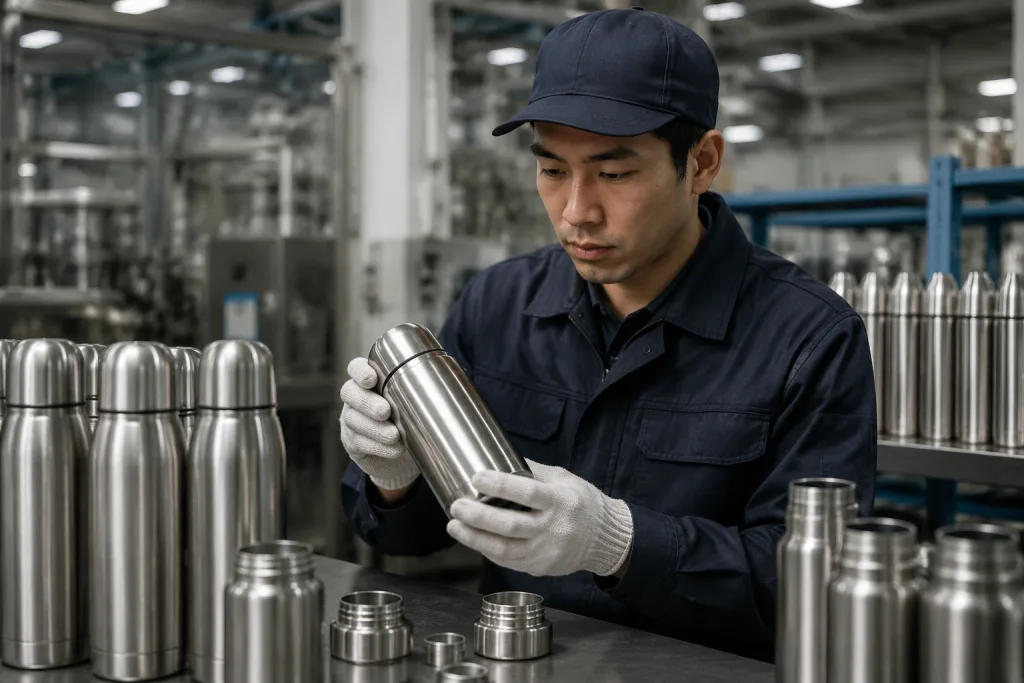
I’ll rewrite the section in place, keep the HTML exactly as-is, and tighten the sales-engineer tone with more factory-floor specifics.QC on a thermos bulk order is not one check at the end. It starts at incoming material and runs all the way to carton drop tests. For a serious thermos factory, the control plan should be plain: verify steel thickness with a micrometer, run vacuum leak tests, check lid torque, test coating adhesion, and finish with random inspection under AQL. A common export standard is AQL 2.5 for major defects and 4.0 for minor defects, though premium retail buyers often push tighter.
Ask the manufacturer thermos team for a pre-production sample approval sheet, then lock the golden sample. During production, we run 3-5 pcs per shift for vacuum retention and boiling-water heat retention. A decent stainless thermos should hold the stated temperature curve after a 24-hour rest test. If the factory cannot show a repeatable setup with the same thermocouple and stopwatch, the numbers are not worth much.
Packaging matters too. A thermos customized for e-commerce should pass 1.2 m drop tests in carton with no lid ejection and no dented shoulders. If you are shipping distributor thermos stock for wholesale, confirm master carton count, carton compression, and pallet pattern. We’ve seen a buyer flag a one-digit PO typo on carton count and the whole load had to be reworked. A good factory in China will document all of this. A weak one says “no problem” and starts asking questions after the cargo is already at the port.
Ship It for Retail and Reorder
I’ll rewrite the section in place, keeping the HTML untouched and tightening the prose so it sounds like a real export-sales handoff.The last step is packing and shipping discipline. For Europe and North America, a custom thermos order needs to be packed for the sales channel, not just the line. Outdoor retail wants barcodes, hangtags, and inner boxes. Amazon or another marketplace wants FNSKU labels, polybags, and carton marks that match the inbound plan. We’ve seen buyers push this to the warehouse and pay for it twice. A thermos supplier that knows the drill cuts that mess fast.
For FOB shipments, check whether the goods leave from Ningbo, Shanghai, or another China port, then lock the export docs early. Commercial invoice, packing list, and product declaration must match the actual model name and quantity. Last quarter a buyer flagged a PO typo on the SKU code, and the shipment sat two days while we fixed it. If you use a distributor thermos model in your home market, keep the SKU map clean so reorder planning stays simple. The question is not “can we sort it later?”—the math does not work.
At BottleForge Industrial in Hangzhou, a standard stainless thermos line can run 80,000-120,000 units per month depending on decoration and packaging mix, with MOQ often starting at 1,000-3,000 pcs and lead time around 30-45 days after sample approval. QC pulled the sample against the carton spec with a tape measure at 0.5 mm tolerance, and that saved a reprint. That is the scale that matters when your outdoor season is tight. Zhejiang factories that do this well do not lean on luck; they run repeatable specs, stable QC, and a reorder file that makes batch two cleaner than batch one.
Send your thermos spec for a factory quote
Get a clean BOM, sample plan, and FOB pricing from a Zhejiang thermos bottle manufacturer that handles bulk thermos and custom thermos orders.
Frequently asked questions
What MOQ should I expect from a thermos bottle manufacturer?
For a standard stainless custom thermos, MOQ usually starts at 1,000-3,000 pcs. If you need special coating, new mold work, or multiple logo colors, some thermos manufacturers will push the minimum to 5,000 pcs. A simple promotional thermos with stock mold and one-color print is easier to start at the lower end. In Zhejiang, a good thermos factory will also quote tiered pricing, so the unit cost drops at 3,000 and again at 5,000 pcs.
How much does a custom stainless thermos cost FOB China?
A practical FOB China range is about USD 2.80 to USD 6.50 per piece, depending on size, steel grade, lid type, and decoration. A plain bulk thermos can sit near USD 3.00-3.50, while a premium thermos customized with laser engraving, gift box, and upgraded lid can go above USD 5.50. Ask for separate line items so you can compare thermos supplier quotes fairly and avoid bundled pricing that hides the real cost drivers.
Which stainless steel grade is better, 304 or 316?
For most thermos promotional and retail programs, 304 stainless inside is the standard choice because it balances cost and performance. If your customers will use acidic drinks, salty environments, or harsher washing cycles, 316 is safer and more corrosion resistant. Expect 316 to add roughly 10-20% to material cost. Many manufacturers thermos projects use 304 inner and 201 outer to stay competitive while still meeting export expectations.
What QC tests should I ask for before shipment?
At minimum, ask for vacuum leak testing, lid torque checks, coating adhesion, temperature retention, and carton drop testing. AQL inspection is standard, with many buyers using AQL 2.5 for major defects and 4.0 for minor defects. For export to Europe or North America, also ask for REACH support, food-contact declarations, and a sample approval record. A solid thermos factory should document these without hesitation.
How long does production usually take?
After sample approval, most stainless thermos orders take 30-45 days for production. If you need a new mold, custom packaging, or a crowded seasonal schedule, plan for 45-60 days. Shipping time is separate. A thermos supplier in Zhejiang or other parts of China can often move fast, but only if you lock the artwork, packaging, and QC standards before the line starts.